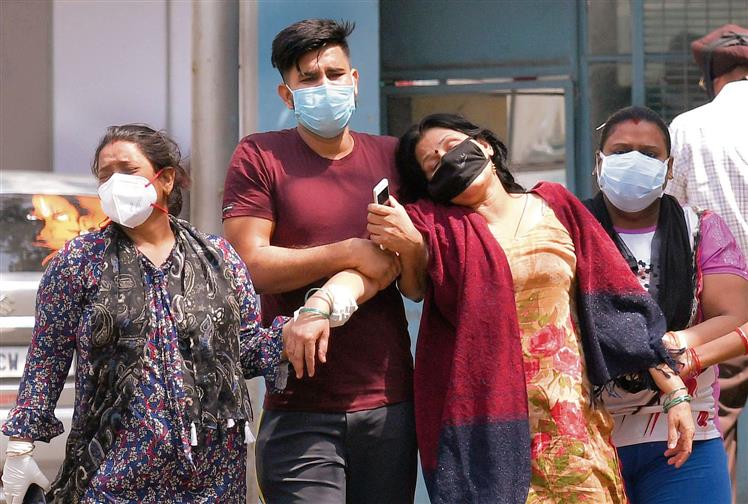
A temporary 250-bed Covid care centre being set up at Gurdwara Rakab Ganj Sahib in New Delhi. Manas Ranjan Bhui
New Delhi, May 2
After winning hearts with multiple ‘oxygen langars’, the Sikh community in the national capital is readying a 250-bed Covid care facility with oxygen concentrators, doctors, paramedics and ambulances.
The Bhai Lakhi Shah Vanjara Community Hall at historic Gurdwara Rakab Ganj has been converted into a makeshift facility. The Gurdwara is located in central Delhi and stands at the place where Guru Tegh Bahadur was cremated. Manjinder Singh Sirsa, president, Delhi Sikh Gurdwara Management Committee (DSGMC), said: “We aim to open the facility in two days. We have 120 oxygen concentrators for now, some have been donated by the community from abroad. The DSGMC is hiring doctors, nurses and paramedics and has 15 ambulances, some are converted from school buses. “The community has supported the move,” said Sirsa as he got emotional. “A few months ago some people on social media were calling us anti-nationals, please come and see what we are doing for the country,” he said. The DSGMC is aiming to convert, within 10 days, its 100-bed hospital facility at Bala Sahib Gurdwara. — TNS
6 Sikh and 5 Sikh troops: Defenders of Poonch, Chhamb
Lt Gen Raj Sujlana (Retd)
Two memorable defensive battles were fought south of Banihal Pass, amidst the rigours of the Pir Panjal mountains of Poonch and the undulating rough plains of Chhamb-Jaurian west of Munawar Tawi. The assaulting enemy numbered several times the men who manned the defences; however, they were met squarely with rare steadfastness, valour and dedication, inflicting crushing defeats on the enemy in both these encounters.
6 Sikh (‘Chhe’, as popularly known) occupied defences over a 13-km frontage on the heights above Poonch; two of these, Points 405 and 406, were of strategic importance, standing as sentinels. Loss of these would directly threaten Poonch town itself. Pakistan always prized this option, and on the night intervening December 3 and 4, it launched a heavy punch with two brigades (six battalions). Coincidently, one of these was 5th Frontier Force, originally the 53 Royal Sikhs! Two enemy battalions launched feint attacks, while one infiltrated to cut off the road leading to Poonch. ‘Chhe’, fully entrenched, lay in their path to upset their well laid out plans.
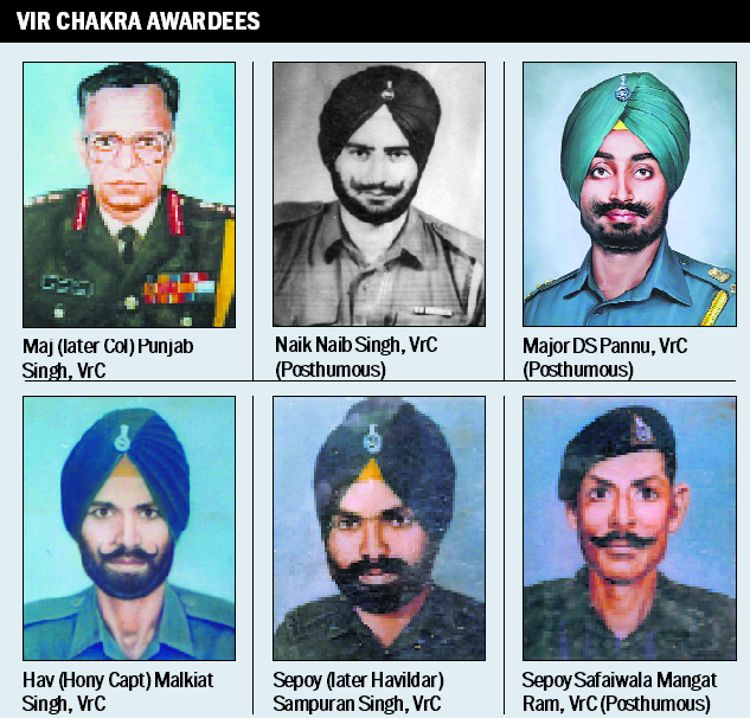
The artillery bombardment announced the enemy’s intent; an advance position at the helipad, held by two platoons under Captain Mamik, received the heavy rush, but they stood rock solid. A young Sepoy, Sampuran Singh, manning a Light Machine Gun (LMG) stood out. ‘He poured ceaseless rapid fire on the incoming enemy; a head injury didn’t perturb him, he stuck to his assigned task till he was unconscious due to loss of blood and was only then evacuated.’ Repeated attacks were beaten back, the heavy casualties inflicted held up the attack. These troops achieved their task to delay the enemy and as planned, pulled back to the defences on Point 405.
Lt Col Rattan, in the middle with turban, and his team. Traditionally non-Sikh officers donthe turban and may also grow a beard to merge identity with the Sikh troops.
Soon, the next position at ‘Tund’ was under bi-directional attack. Major Punjab Singh, the company commander, ‘was the man of the moment; he quickly readjusted the defences and beat back the enemy on the first night. The next night, when the enemy returned, Punjab Singh had skillfully positioned the reinforcements and rushed forward.’ Two junior leaders, Havildar Malkiat Singh and Naib Singh, need special mention who with disregard to their own safety struck the enemy where most wanted. The enemy withdrew, their bodies and weapons scattered all over. Desperate, the enemy sent in their Special Forces (SSG), who managed to come within 30-40 metres of Point 405, but were also forced back.
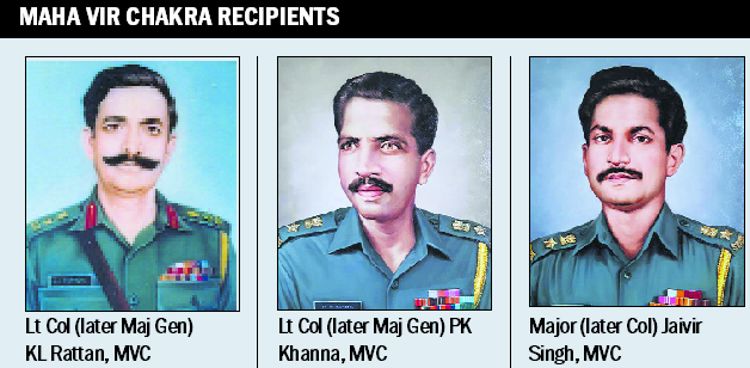
From December 3 till the dawn of December 7, on display was the true mettle of Lt Col (later Maj Gen) KL Rattan — ‘unmindful of the heavy shelling and firing, he was present wherever an attack developed; with his skillful professionalism, he ensured the right moves, his hearty words kept the men in high morale and charged up throughout.’ He was awarded the Maha Vir Chakra. His motivation energised Sepoy Safaiwala Mangat Ram, ‘who without any fear or adversity continuously supplied ammunition to points under attack till his last breath, and was killed in the act.’
Five Vir Chakras were awarded to Maj Punjab Singh, Havildar Malkiat Singh, Sepoy Sampuran Singh, Naik Naib Singh and Sepoy Safaiwala Mangat Ram (the latter two were posthumous).
The defence of Poonch has gone down as one of the most successful defensive actions by a battalion; they were deservedly awarded the Battle Honour ‘Defence of Poonch’ and Theatre Honour ‘Jammu and Kashmir’. After the war, special appreciation of outstanding valour displayed by an enemy soldier, identified as Lance Naik Noor Shahjahan, was conveyed to the enemy, which led to his being awarded the ‘Sitar-e-Jurat,’ the third highest Pakistani award for gallantry.
Protecting Chhamb-Jaurian
The Chhamb-Jaurian sector, west of Jammu bulging towards Pakistan, in military terms, is considered a ‘soft belly’ of the defences, as Pakistan has tremendous advantage which they have repeatedly exploited. 1971 was no different as Pakistan launched their major offensive here, aiming to capture Akhnoor and cut off the main Rajouri-Poonch axis. Pakistan employed its 23rd Infantry Division with five infantry brigades (15 battalions), three armoured regiments (approximately 150 tanks) and paramilitary forces.
5 Sikh went on to fight an epic defensive battle here.
Earthquake-like, the ground shook on and around the Indian forward posts around 2100 hours on December 3 as Pakistani artillery opened its barrage. The initial targets were our posts at Pir Jamal and Moel and by midnight, the posts at Phagla, Mandiala and Point 303. These posts and Point 303 were under the command of Maj DS Pannu, an intrepid soldier and outstanding sportsman, with a special passion for riding. Like a true aggressive horseman, not caring for personal safety, he rushed to join his forward troops at Pir Jamal and Moel, which were soon under intense attack with tanks and infantry. The small Indian force beat back three attacks, which delayed the enemy for 16 hours and upset their overall plan.
The casualties were heavy, but Maj Pannu, with a handful of survivors, pulled back to his main position at Point 303, which too soon came under attack. The enemy was held up through December 4 and on the evening of December 5, Maj Pannu was killed. Point 303 fell for a short time, but the gallant Capt Kamal Bakshi rose to the occasion and counter-attacked; the post was regained but he went missing in action, reportedly killed. In the entire surroundings could be seen the bodies of enemy soldiers; two MMGs and 70 rifles were recovered.
Simultaneously, Phagla, some distance away, also came under heavy attack. The company was led by the dynamic Maj Jaivir Singh, who was at the forefront. The battle raged for 72 hours; repeated attacks were beaten back. The enemy managed penetration at one point, but ‘Maj Jaivir Singh led a counter-attack, stiff hand-to-hand fighting followed, the enemy withdrew. If this was not enough, a nearby post overrun by the enemy was counter-attacked and regained’. The officers and troops were near exhaustion but the inspiring leadership of Lt Col Prem Khanna, ‘whose cool calculated courage, skill and imaginative tactics ensured that incessant attacks by overwhelming numbers of infantry and armour were beaten back, his directions and personal touch ensured a high level of will of his men!’
5 Sikh lost two officers, a JCO and 39 other ranks but the enemy paid with 586 killed and a costly lesson in battling the Sikh troops. An issue of Pak Defence Journal in 1999 acknowledged ‘the tenacious courage of 5 Sikh and troops of 9 Deccan Horse’ and remarked, ‘If the Indian commander now knows full details of what was coming for him on the morning of December 5, he can rightly congratulate the CO of 5 Sikh and the tank troop commander… they saved a sad day for him!’
5 Sikh was decorated with ‘Theatre Honour Jammu & Kashmir’, Lt Col Prem Khanna and Maj Jaivir Singh with the Maha Vir Chakra, and Maj DS Pannu and Naik Richhpal Singh with Vir Chakra. Capt Bakshi was Mentioned in Dispatches.
MOST PAKISTANI LEADERS WHO OPPOSE PEACE WITH INDIA IN PUBLIC FAVOUR IT IN PRIVATE
For the leaders who want to discuss peace with New Delhi, the civil-military divide is a major roadblock The first tentative steps to peace have been taken. The ice is melting. The twins separated at birth are reaching out to each other. Now that India and Pakistan have both confirmed that they are talking to each other, let us dust off all the clichés about peace and dialogue in the subcontinent. For the time being till we hit a speed bump again. The beginning came with the news about the ceasefire at the LoC and then the stories about what led to this change of heart. The trickle of information began from the Indian side and was considerably detailed by mid-March. Pakistan entered the media fray much later to get their point of view out in the public nearly a month later. That India tends to get its side of the story out first is in itself a full-length piece if someone would care to write it. Open Contradiction Now a piece in Dawn and an earlier report in Al Jazeera provide considerable detail on the thinking on Pakistan’s side. Predictably, there will be discrepancies between the accounts emanating from the two sides but this is hardly something new. Neither is the idea of a dialogue. The leadership in Pakistan – civil and military – have since the late 1990s consistently and openly been in favour of talking to India and finding peace. Nawaz Sharif in his second and third term, Gen Pervez Musharraf, Asif Ali Zardari and now Imran Khan. In fact, it is also important to remember former army chief Gen Ashfaq Kayani’s statement to a group of journalists – including one Indian – during a trip to Siachen in 2012. This constant translates into consistent state policy, if one is willing to recognise it as such. In fact, we would do well to remember that all of the parties which contest for and are in a position to win elections in Pakistan’s Punjab, including the Pakistan Muslim League (Q) in its heyday, are known to be in favour of a better relationship with India. An election campaign in Pakistan does not require lashing out at India to secure a victory. In fact, it includes an unspoken but rather obvious desire and policy for peace – it is unspoken because the vague notion of peace is more acceptable than what the reality of such a peace would look like. And when we do speak, we say peace with our neighbour would be a hard sell in Pakistan’s biggest province. Is this just a Khula Tazaad (open contradiction) or a nuance too complex for a sub-editor? Indeed, once in power and/or behind closed doors, most politicians agree that peace with India is the best option if Pakistan is to prosper but few are willing to stick to this position once their rival is in charge, or be this honest once the doors are opened and the camera lights switched on. Then, of course, sanity is replaced by political expediency and cheap rhetoric. And every stakeholder is equally guilty. Domestic Faultiness The efforts to reach out and subsequently talk are usually scuttled because of Pakistan’s domestic faultiness, especially the civil-military divide – another constant in Pakistan’s policy and politics, as consistent as the consensus to aim for peace. This time around, there is little fear of this because of the “one page” but the opposition – having been forced into a different reading space altogether – is not in a supportive mood. Already there is muttering about why a similar effort by Nawaz Sharif led to ugly accusations against him. And the media outcry has already caused a U-turn on the decision to import sugar and cotton from India, which does not bode well for the coming days. Add to this the public mood, fed for years on impossible dreams of changing territorial boundaries, which is easily whipped up to stall any statesmanship. And this includes not just the “masses”, a word we continue to use without any irony but also those who are part of the policymaking circles. From Nawaz Sharif to Pervez Musharraf to the present leadership, it is hard to think of a single moment when anyone in charge has reached out to India and earned accolades. Over the years, any such overture has always been described similarly – “ill-advised” is rather popular. The delusions are far more widespread than we realise. The reaction is negative also because any hint of talks with India, and the debate immediately and suddenly focuses on every end of this process. Ambitious in Pakistan’s thinking, a mere beginning or the first tentative step takes it to the disadvantages of a – possible – “resolution” of Kashmir or other outstanding issues and India’s intransigence. We expect a big bang right at the beginning. No wonder then that the reaction or the backlash is just as strong. Perhaps, this is because the leadership also begins by thinking big. No one wants to dream small. But Pakistan needs an unambitious leadership. So unambitious that it does not want to solve Kashmir or bring peace overnight to the region. It may do well to focus on matters so small that they fly under the radar – though even this seems impossible at times – and attract little praise or criticism. Ideally, they would attract no attention, whatsoever. Can this perhaps set the foundation for something sustainable and more ambitious in the future? The recent discussions and debates – heated and otherwise – remind me of what someone once said. That Kashmir would have to become irrelevant for the subcontinent before it can be resolved. These may seem like harsh words but they are not. (Irrelevance does not mean that the people of the valley are abandoned but the opposite). And in them lie a possible path for the future. But can we dare to dream this small?
CHINA DELETES SOCIAL MEDIA POSTS MOCKING INDIA AFTER BACKLASH
The post that appeared to play on funeral pyres in India drew backlash in China A social media post by China’s top law enforcement body juxtaposing the country’s successful launch of a module into space with grim cremation pyres in India was deleted after it sparked online criticism in China. Photos of the Tianhe module launch and its fuel burn-off were compared with what appeared to be a mass outdoor cremation in India, and captioned “China lighting a fire versus India lighting a fire.” The post on Saturday by the Communist Party’s Central Political and Legal Affairs Commission on its official Sina Weibo account was accompanied by a hashtag noting that new Covid-19 cases in Indian had surpassed 400,000 a day. Later that day, it could not longer be found. Many Chinese social media users expressed shock and anger at the insensitivity of the post. Official social media accounts should “hold high the banner of humanitarianism at this time, show sympathy for India, and firmly place Chinese society on a moral high ground,” Hu Xijin, editor-in-chief of Communist Party-backed Global Times newspaper, wrote on Weibo commenting on the deleted post. Hu said such methods were not an appropriate way for official social media accounts to gain traffic. The Chinese foreign ministry could not be immediately reached for comment during a holiday period. Ties between China and India have been rocky in recent months. A border dispute that killed dozens last year and hurt economic ties between the two nations has fanned nationalistic sentiment in both countries. Tensions remain despite ongoing high-level talks, with India most recently urging early disengagement from all friction points along the border. That didn’t prevent President Xi Jinping from sending a message of condolence to Indian Prime Minister Narendra Modi on Friday and offering to provide assistance to help the South Asian country deal with a fierce surge in Covid-19 cases. Another deleted post that first appeared Friday compared China’s “fire god mountain” — the name of the emergency hospital complex built in Wuhan — with a photo of a mass cremation in India on the official Weibo account of China’s Ministry of Public Security. It too was criticized, with social media users saying it was “morally problematic.” Chinese Foreign Ministry spokesman Wang Wenbin said Friday that the Red Cross Society of China, local governments, non-governmental organizations and Chinese enterprises are “trying their best to collect the anti-epidemic supplies urgently needed by India, and deliver them to the Indian people as soon as possible.”
HANWHA DEFENCE READY TO OFFER NEW LIGHT TANK TO INDIAN ARMY
The company also shared a promo video of its K21-105 tank, which is classified as a medium tank South Korea’s Hanwha Defence is pushing a new combat vehicle with a 105mm turret mounted on its K21 chassis for the Indian Army Just last week, the Indian Army released Request for Information (RFI) to seek prospective vendors to procure around 350 light tanks in a phased manner under the Make in India initiative. Indian Army plans to procure versatile combat platforms, weighing less than 25 tons, to sharpen its edge in mountain warfare as they will be able to exploit the limited space available in mountainous terrains by way of enhanced mobility, thus providing additional firepower. The RFI dated April 22 and published on Friday stated that the Defence Ministry intends to procure a “new generation combat vehicle platform, approximately 350 Light Tanks in a phased manner, along with performance-based logistics, niche technologies, engineering support package, and other maintenance and training requirements.” “The last date of acceptance of receipt of response is June 18, 2021,” the RFI stated. One potential option could be a proposal from a South Korean company based on its K21-105 tank. Hanwha Defence says the vehicle has a 105mm turret mounted on a K21 infantry fighting vehicle chassis. It has strong firepower and manoeuvrability that enables the vehicle to perform a wider variety of tactical operations than main battle tanks. The company also shared a promo video of its K21-105 tank, which they are classified as a medium tank.
Bombs away from 44 Squadron: An IAF officer’s wartime lessons in innovation, courage and leadership
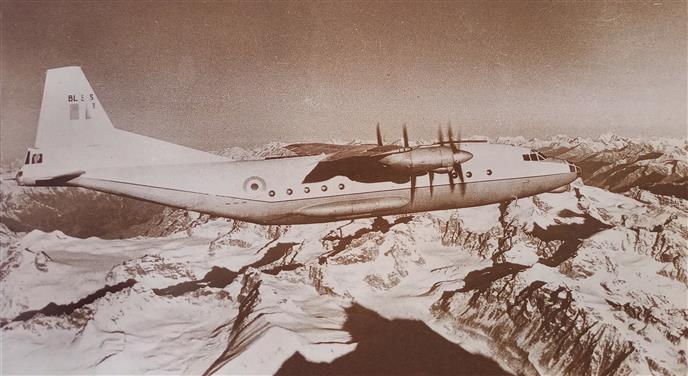
A file photo of An-12 aircraft flying over the Himalayas. Photo courtesy: Official IAF publication
Air Vice Marshal Arjun Subramaniam (Retd)
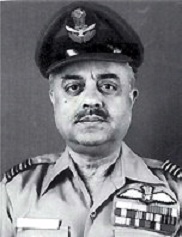
Wing Commander Vidya Bhushan Vashisht (later Air Vice Marshal), among the most experienced An-12 pilots in the IAF at the time, assumed command of 44 Squadron in August 1971 under trying circumstances. The squadron had just lost its commanding officer and an entire crew in an accident while practising a live bombing mission and restoring morale and getting the squadron battle-ready was uppermost in the mind of Vashisht. Thus, emerged the story of how an An-12 squadron under a dynamic commanding officer covered itself with glory in the Western Sector during the 1971 war. No stranger to 44 Squadron, having been the flight commander of the unit, Vashisht knew all the crew and personnel of the unit intimately. With an able and proactive flight commander, it did not take long before the squadron was ready for battle.
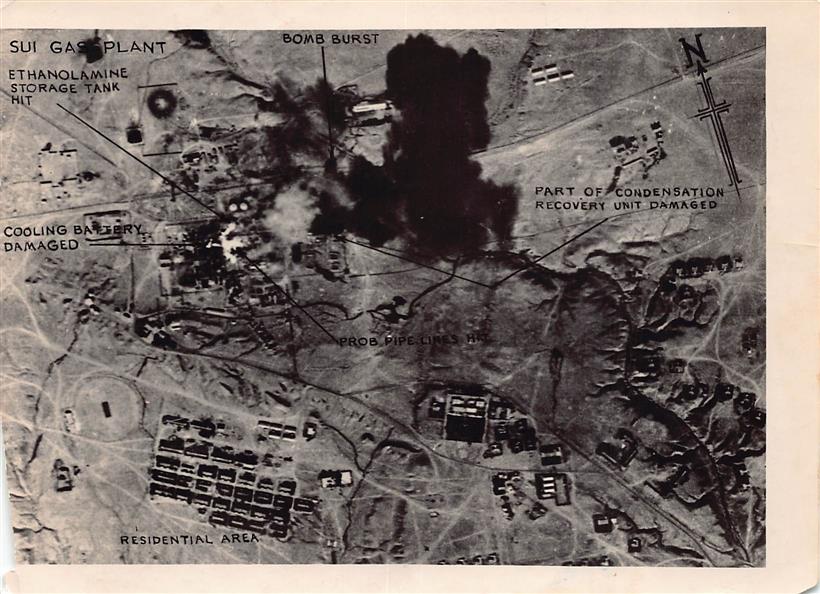
The Sui Gas Plant after the 44 Sqn raid on December 15, 1971. The gas plant was seen burning for several days after the raid.— Photo courtesy: Gp Capt Gursaran Ahluwalia
Honing its bombing skills and modifying the delivery platform with a bomb cradle for each 500 lb bomb, which was designed by an army officer, the squadron moved to Bareilly in Central Air Command a few days before the war commenced. With a maximum bomb load of 40 such bombs, a six-aircraft mission packed quite a punch of TNT. The IAF’s bomber force was concentrated between Bareilly, Agra and Gorakhpur to relieve the pressure on Western Air Command, a wise move as it allowed planners to centrally coordinate all bombing missions from one headquarters.
Wing Commander Vidya Bhushan Vashisht
Group Captain Gursaran Ahluwalia (then a squadron leader and flight commander of the squadron) had a ringside view of the transformation of the squadron into a feared bomber unit during the 1971 war, particularly on the Western Front. He recalls Vashisht as “a quiet and inspirational leader, an exceptional flyer, organiser and a coolheaded and kind person. I never saw him losing his nerve and he always had a pleasant smile on his face. He was exceptional in understanding the abilities of men under his command and had implicit faith in me as his No2 and left all the planning, briefings and debriefing to me.”
Vashisht led the opening night bombing missions over the Changa Manga Forest on the nights of December 3 and 4, 1971. Intelligence reports had indicated that the area had a large ammunition dump and large troop concentrations. Dropping his bomb load from low levels itself, Ahluwalia recollects that sky was lit up with the explosions and that both Pakistan Radio and Pakistani newspapers reported the raid and its effects the next day. Over the next two weeks, the squadron flew around 45 missions against a variety of targets that included a Pakistani artillery brigade at Haji Pir Pass that was harassing Indian operations, a divisional headquarters at Fort Abbas, the Sulaimanke Bridge, a railway yard at Hyderabad, the Sui Gas Plant and a cheeky day raid on Skarduair field with Canberra bombers on the last day of the conflict. By all reports, the night raid over Haji Pir and the day raid over Sui Gas Plant, also flown by Vashisht and Ahluwalia, proved to be the most effective of all. While the gas plant was seen to be burning for several days after the raid, the air and army chiefs personally rang up to congratulate the squadron for the successful Haji Pir raid.
While most of the raids comprised six aircraft, the Skardu airfield raid on December 12 involved only one An-12 acting as a pathfinder-cum-lead bomber for the Canberras. Without taking away any credit from the Canberras, the comfort levels of the An-12 squadron in flying over mountainous terrains prompted Central Air Command to assign Vashisht to lead the formation. Seeing their success in the west, the squadron was also assigned to target a large ammunition dump near Dacca on December 13, a mission that was led by Ahluwalia. Vashisht’s inspirational leadership and good teamwork ensured that no aircraft or crew were lost during the entire conflict, though Ahluwalia recollects three missions in which his aircraft was damaged by ground fire. He was even chased by a PAF Mirage-3 which had locked on to him and was probably seconds away from firing a missile. It was an alert IAF fighter controller, Sqn Ldr ML Bauntra, who saw this on the radar screen and yelled at Ahluwalia on the open channel to duck down to tree-top level, a warning that saved the aircraft and crew — such are bomber tales from 1971.
Describing the mission profiles with remarkable clarity, Ahluwalia recalls, “For the day raid on Sui Gas Plant, we flew from Bareilly to Jodhpur, refuelled there and then flew at 300 feet and got down to 100 feet approximately 150 miles from the border. A minute before the target and at speeds of slightly over 500 km/hr, we pulled up to 300 feet, dropped our bombs and got back to 100 feet till we entered Indian territory. For the Haji Pir night mission, we flew directly from Bareilly to Srinagar at 20,000 feet and descended to 6,000 feet over Srinagar airfield; we then navigated to Poonch airfield and further on to Haji Pir, returning via same route after bombing the Pakistani brigade.
The pilots were responsible for the accurate navigation to the target area, situational awareness and the evasive action to be taken to avoid ground fire or any ongoing aerial threat. The navigator assisted the pilots in the navigation as also used the improvised gun sight to decide the right moment to release the bombs before which the rear door was opened — the tail gunner and flight signaler would then come into action as they would first activate the fuses and then allow the cradles to slide out of the rear doors even as the pilots pitched up the nose and accelerated the aircraft for the bombs to fall under the force of gravity. While 44 Squadron has the distinction of being the first transport squadron to have been awarded with Battle Honours by the President of India, Squadron Leader Gursaran Ahluwalia and his navigator from the squadron, Flight Lieutenant PB Kalra were awarded Vir Chakras. Wing Commander Vidya Bhushan Vashisht was awarded the Maha Vir Chakra for his intrepid and daring leadership of 44 Squadron through the conflict. Excerpts from his citation reveal much:
“On the night of December 5, 1971, he led a formation of his bombers, this time to attack enemy positions in the Haji Pir Pass in Pakistan-occupied Kashmir. The difficulties and dangers of this operation were due as much to the great volume of ground fire in the target area, as to the hazards of flying his large aircraft and leading his formation at low level through mountainous terrain. Wing Commander Vashisht pressed home the attack and achieved marked success in hitting the enemy’s positions. In addition to these, he led many other missions deep into enemy territory where opposition could be expected from fighter aircraft and anti-aircraft fire. In all these raids Wing Commander Vashisht completed the tasks to him without any loss to our aircraft. He has displayed inspired leadership, exceptional devotion to duly, and conspicuous bravery in repeatedly leading attacks against heavily defended enemy targets, night after night.”
— The writer, a former fighter pilot and military historian, occupies the President’s Chair of Excellence at the National Defence College
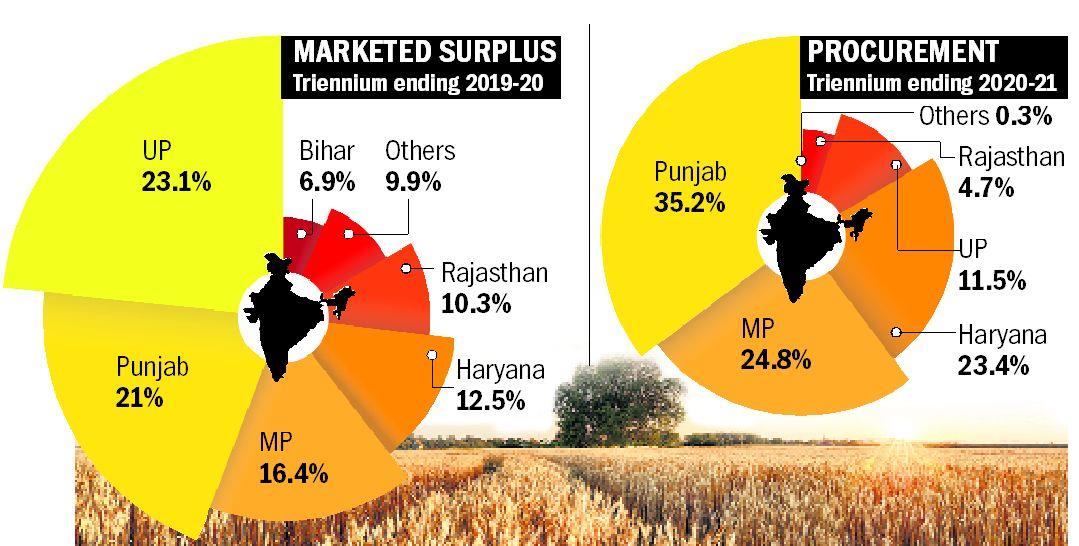
Share of Major States in Marketed Surplus and Procurement of Wheat
Sources: Directorate of Economics & Statistics, Ministry of Agriculture and Farmers’ Welfare; Food Corporation of India
RS Sidhu and BS Dhillon
PROMOTING a free market economy in agriculture in India has been a topic of debate since 1991 when reforms in the industrial and financial sectors were introduced. Then came the WTO agreement in 1995 to which India was one of the first signatories. Under this agreement, quantitative restrictions on agriculture trade were dismantled, bound tariff rates were negotiated for various crops and maximum level of agriculture subsidies were defined for developed and developing countries. It was argued that wide-scale reforms were required to unshackle growth in agriculture. Last year, the Union Government enacted three laws with the avowed aim of making agriculture markets more competitive for better harvest prices to farmers as they would be able to sell their produce outside the designated APMC markets to any buyer (processor, aggregator, bulk buyer, trader, FPO, etc.).
In the past 10 years, perception is being created that benefits of MSP and public procurement accrue largely to only 7-8 states, whereas in other states farmers face market forces and receive prices of their produce accordingly. Further, the narrative is being built that MSP has outlived its utility in the wake of an increase in foodgrain production in states other than Punjab and Haryana, and buffer stocks reaching as high as 80 million tonnes. The food subsidy bill is becoming burdensome, warranting public procurement to be curtailed, rationed and undertaken in the consuming areas itself in the name of rationalisation and cost-effectiveness. The MSP and public procurement system needs to be analysed for its role and benefits against the so-called free market economy in Indian agriculture being promoted through the Acts of 2020.
The Agriculture Prices Commission, now called Commission for Agricultural Costs and Prices (CACP), and the Food Corporation of India were established in 1965 to recommend the MSP of various crops and procure foodgrains for the public distribution system (PDS). During that period, India was facing severe food shortage and depended on food imports. The objectives of the MSP were to incentivise production through better and assured harvest prices, backed by assured marketing by the government, and making food available and accessible to poor consumers at low prices for overall national food security through PDS. Assured prices encouraged farmers to adopt new technologies in the form of improved seeds, chemical fertilisers and making private farm investments in irrigation (tubewells), tractors and other farm machinery. The government created market infrastructure under the APMC Act to handle the produce, facilitated tubewell connections and provided institutional loans at subsidised interest rates. Punjab, Haryana and a few other states adopted new technology and diverted land and other resources towards the production of foodgrains. Consequently, India not only became self-sufficient in food but also an exporter of rice and wheat. The policy also deliberately kept food prices low through MSP to protect the interests of consumers when improved technology had been leading to a substantial increase in agriculture productivity and production during the Green Revolution and thereafter.
Punjab was at the forefront to harness the potential of improved technology. Its foodgrain production increased from 33.9 lakh tonnes in 1965-66 to 306.9 lakh tonnes in 2019-20. Other irrigated regions also followed and benefited to the extent their agro-climatic conditions, natural resource endowments and infrastructure allowed. However, during this process, Punjab and other states overexploited their natural resources of land and water.
The MSP and public procurement system is effectively implemented for wheat and paddy in production-surplus states like Punjab. In states like UP, public procurement at MSP is limited, while Bihar represents the case of a free unregulated agriculture market where the APMC Act was abolished in 2006. Farm harvest prices were examined against MSP for paddy and wheat in these states. MSP was effectively realised by the farmers in Punjab, whereas wheat and paddy prices in the immediate harvest season were lower than the MSP in UP and Bihar. For instance, FHP (farm harvest price) was equal to MSP in Punjab, whereas it was lower by 7-14% (paddy) and 4-5% (wheat) in UP, and 20-25% (paddy) and 10-20% (wheat) in Bihar during 2013-18. It indicates the economic benefits of the presence of the public sector in buying operations. Further, freeing the agriculture markets from the APMC Act in Bihar did not result in better price discovery of the produce for farmers. Conversely, in Punjab, regulated markets ensured MSP to the farmers through public procurement and aggregation of produce at APMC markets as well as better market infrastructure.
The MSP is announced for 23 crops, but is received by the farmers for wheat and paddy in a few states due to economies of scale of procurement operations. In other states, market prices are lower than MSP. This raises many questions about the relevance of MSP. First, it defies the objective of MSP of providing economic incentive for production to farmers, covering the cost of production. It was implicitly presumed that higher demand than supply in deficit regions would result in higher market prices than MSP, which in reality is not happening, causing economic losses to farmers. Second, what is the logic of announcing MSP when it is not assured to the farmers?
Chalk and cheese
It is claimed that the new farm laws will create an alternative market set-up outside the APMC designated market place and improve marketing competitiveness for better price realisation. Producer-sellers are very large in number, poor, less educated or uneducated, unorganised and ignorant about the harsh outcomes of free market forces. On the other hand, buyers (traders and corporates) are relatively less in number, resourceful, better informed, well organised, equipped with demand and supply forces’ information and well connected for leveraging financial resources. MSP is still relevant for agricultural growth because output prices have an assumed primary role. The agriculture sector recorded 4% growth largely steered by prices during the 11th Five Year Plan. Higher prices raise income of farmers directly and subsequently help in the adoption of modern agricultural production technologies and practices for higher productivity. In large parts of the country, there are still large gaps in technology adoption due to deficiency of capital, which can be covered by raising profitability of the farming system. Agriculture engages about 50% of the workforce and ensures food security for the nation, thus the need to ensure livelihood security and better living conditions for farmers. Let the MSP be made mandatory for all transactions and the effect of higher agricultural prices be transmitted to consumers. Farmers have supported consumers through low food prices in the past and now it is the turn of consumers to support farmers. Poor consumers can be covered by expanding the food safety net, if needed, which will also help in bringing in demand-supply balance.
There could not be a better description of the Indian situation than the lament by the Delhi High Court on Friday: the State has failed to protect the most basic fundamental right, the right to life. The State, according to Article 12 of the Indian Constitution, includes the Central government, Parliament, the state governments, state legislatures and all local bodies; and what we witness now in Delhi and elsewhere is a total collapse of what has long been perceived as the State. The anguish of Justices Vipin Sanghi and Rekha Palli was prompted by the death of a petitioner who had sought an ICU bed in Delhi. He died gasping for oxygen.
The same day, in the suo motu hearing of the Covid crisis, the Supreme Court Bench of Justices DY Chandrachud, L Nageswara Rao and S Ravindra Bhat made several important observations and orders, which the Central government should immediately implement. The Bench has warned the state governments and their police forces not to trample on the right of desperate caregivers to air their anxieties or to call for help on social media. Certain state governments have been brazen enough to impose the National Security Act and incarcerate those who take on the government for its policies. This order invoking the contempt law should stop them in their tracks.
The Supreme Court has very pertinently asked the Central government why it is not following its own national immunisation policy and buying 100 per cent of the Covid vaccine doses. The court has rightly pointed out that pricing cannot be left to vaccine manufacturers, who cannot determine equity. Moreover, these manufacturers have received government funding, which needs to be accounted for. Most importantly, the Bench has asked the Centre to look at the possibility of importing Remdesivir from Bangladesh, which as a least developed country is allowed by the WTO agreement to produce patented drugs. Meanwhile, the government has to draw up a uniform policy on hospital admissions while ensuring hospital beds, oxygen cylinders and life-saving drugs. This is the last and final call to save the nation.
State Stalwarts
DEFENCES FORCES RANKS
ARMY, NAVY, AIRFORCE RANKS
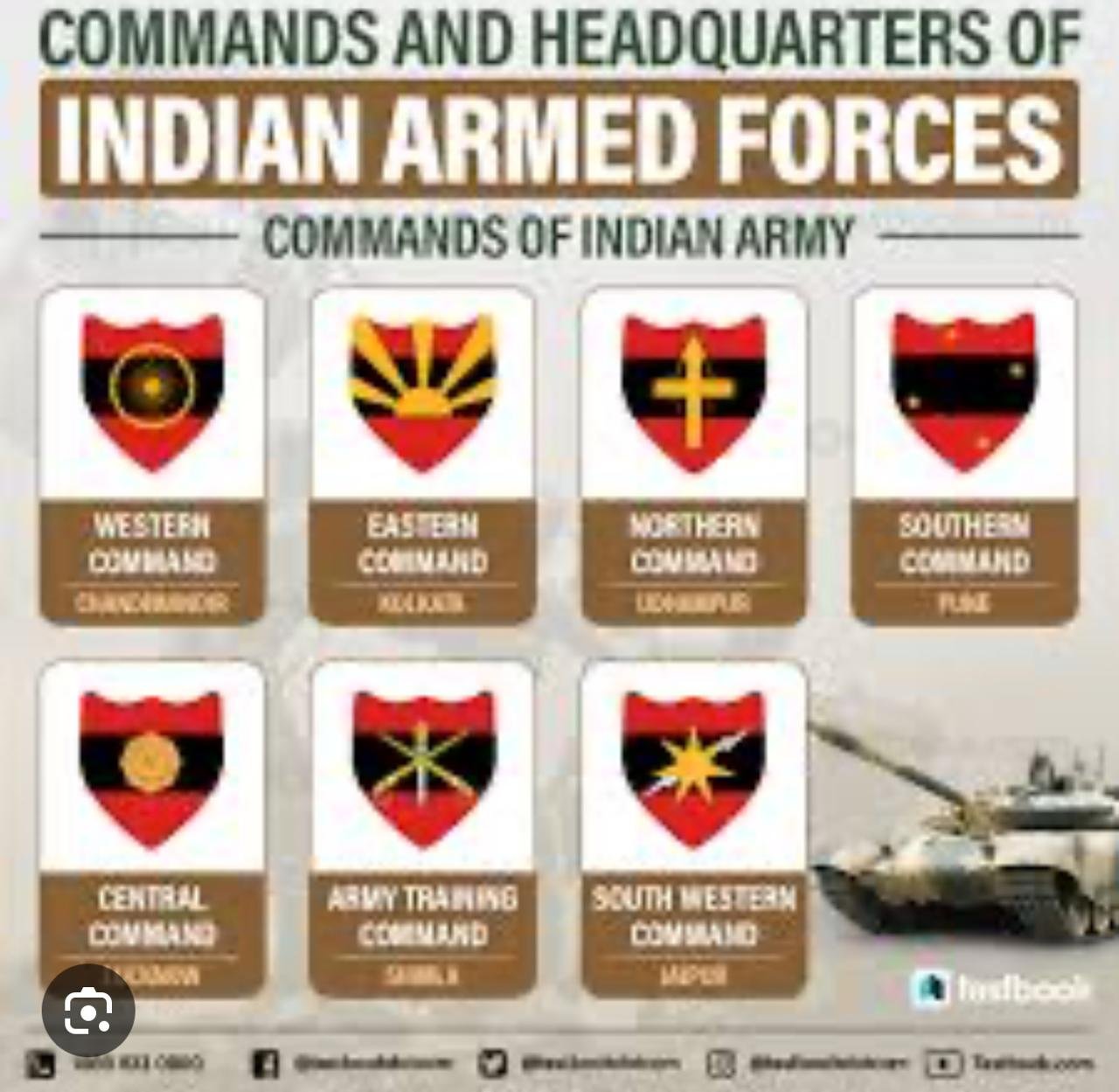
FORMATION SIGNS
FORMATION SIGNS
ALL HUMANS ARE ONE CREATED BY GOD
HINDUS,MUSLIMS,SIKHS.ISAI SAB HAI BHAI BHAI
CHIEF PATRON ALL INDIA SANJHA MORCHA
LT GEN JASBIR SINGH DHALIWAL, DOGRA
SENIOR PATRON ALL INDIA SANJHA MORCHA
MAJOR GEN HARVIJAY SINGH, SENA MEDAL ,corps of signals
.
.
PATRON ALL INDIA SANJHA MORCHA
MAJ GEN RAMINDER GORAYA , CORPS OF
sanjhamorcha303@gmail.com
PRESIDENT HARAYANA STATE CUM COORDINATOR ESM
BRIG DALJIT THUKRAL ,BENGAL SAPPERS
PRESIDENT TRICITY
COL B S BRAR (BHUPI BRAR)
PRESIDENT CHANDIGARH ZONE
COL SHANJIT SINGH BHULLAR
.
.
PRESIDENT PANCHKULA ZONE AND ZIRAKPUR
COL SWARAN SINGH
PRESIDENT SAS NAGAR (MOHALI)
COL BALBIR SINGH , ARTY
INDIAN DEFENCE FORCES
DEFENCE FORCES INTEGRATED LOGO
FORCES FLAGS
15 Th PRESIDENT OF INDIA SUPREME COMMANDER ARMED FORCES
Droupadi Murmu
DEFENCE MINISTER
Minister Rajnath Singh
CHIEF OF DEFENCE STAFF (2nd)
General Anil Chauhan PVSM UYSM AVSM SM VSM
INDIAN FORCES CHIEFS
CHIEF OF ARMY STAFF(29th)
General Upendra Dwivedi, PVSM, AVSM (30 Jun 2024 to Till Date)



















































 6 Sikh (‘Chhe’, as popularly known) occupied defences over a 13-km frontage on the heights above Poonch; two of these, Points 405 and 406, were of strategic importance, standing as sentinels. Loss of these would directly threaten Poonch town itself. Pakistan always prized this option, and on the night intervening December 3 and 4, it launched a heavy punch with two brigades (six battalions). Coincidently, one of these was 5th Frontier Force, originally the 53 Royal Sikhs! Two enemy battalions launched feint attacks, while one infiltrated to cut off the road leading to Poonch. ‘Chhe’, fully entrenched, lay in their path to upset their well laid out plans.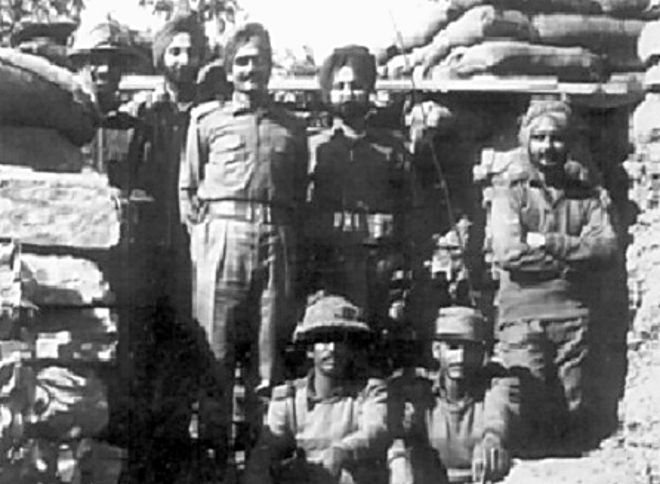

 Five Vir Chakras were awarded to Maj Punjab Singh, Havildar Malkiat Singh, Sepoy Sampuran Singh, Naik Naib Singh and Sepoy Safaiwala Mangat Ram (the latter two were posthumous).