Sanjha Morcha

What’s New

Click the heading to open detailed news

Current Events :

web counter

Print Media Reproduced Defence Related News

Delhi govt reduces Base Hospital’s oxygen allocation, Army says no need to panic

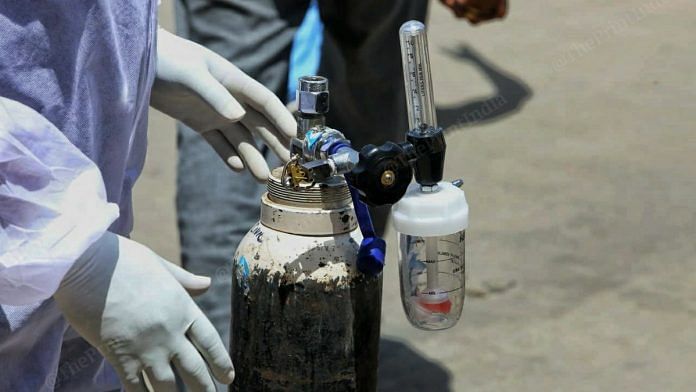
Representational image of a healthcare worker handling an oxygen cylinder | Photo: ThePrint

New Delhi: In a move that gave Army doctors some tense moments in the national capital, the daily oxygen quota of the Base Hospital was cut by the Delhi government Monday. This forced the Army to approach the Ministry of Defence for additional allocation of oxygen and also arrange it on their own.

However, according to Army sources, there is currently no need to panic as oxygen levels are being maintained in the hospital and more arrangements are being made.

They noted that there was no issue with the Research and Referral Hospital since its oxygen requirement was less, but there were some concerns about the Base Hospital, which has been converted into a 450-bed Covid facility. The majority of its patients, including civilians, need continuous oxygen supply.

“There is no need to panic. Oxygen levels are being maintained. The Base Hospital in Delhi Cantonment has enough oxygen for the time being. The defence ministry has been approached for additional allocation and arrangements are being made,” a senior officer told ThePrint.


Also read: Nearly 15% Covid beds in select military hospitals could be made available to civilians


Base hospital’s oxygen allocation halved

According to sources familiar with the matter, the crisis began Monday when the Delhi government informed the Base Hospital that its daily allocation was being cut.

The hospital requires about about 3.4 MT of oxygen daily but the Delhi government, which is facing an acute shortage of oxygen, was able to provide only about 1 MT.

On Monday evening, the doctors were informed that this has been reduced further by nearly half.

The sources added that while the Army has systems in place to cater to their hospitals, the force finds itself stretched thin because of the civilian demand for hospital beds and oxygen.

ThePrint had earlier reported that the armed forces’ Medical Corps has been reeling under pressure because of the increasing demand from the civilian side as well as its own. The Corps has a limited number of doctors, nurses and paramedics to spare.

Meanwhile, Delhi Deputy Chief Minister Manish Sisodia wrote to Defence Minister Rajnath Singh Monday, calling for the Army to set up 11,000 beds, including 1,000 ICU ones, in the national capital.

However, many in the defence establishment wondered where the infrastructure, including oxygen and medical staff, would come from for these additional beds.


Also read: Rajnath Singh grants emergency financial powers to armed forces to set up health facilities
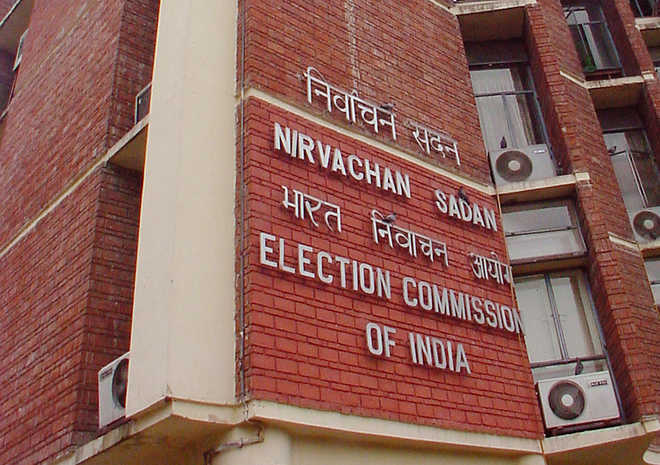

EC panel counsel in Supreme Court resigns

Advocate Mohit D Ram says ‘my values are not in consonance with the current functioning of the EC’

EC panel counsel in Supreme Court resigns

Tribune News Service

New Delhi, May 6

Advocate Mohit D Ram, who has been panel counsel for the Election Commission in the Supreme Court since 2013 — on Thursday resigned due to incompatibility of his personal values with those of the poll panel.

“It was an honour to represent the Election Commission of India (ECI). I had a cherishing milestone of my career, in the journey which began with being part of the office of Standing Counsel of ECI and progressed as one of the panel counsels of ECI (since 2013),” Ram wrote in a letter addressed to the Director, Law of the Commission.

“However, I have found that my values are not in consonance with the current functioning of the ECI; and hence I withdraw myself from the responsibilities of its panel counsel before the Supreme Court of India,” he wrote.

“I undertake to ensure smooth transition of files, NOC and vakalatnamas in all pending matters,” Ram wrote.


EASTERN LADAKH: CHINESE FORMATIONS UNDERTAKING ROTATION

by Nitin A Gokhale
Indian military and intelligence sources have revealed, that the Chinese People’s Liberation Army (PLA) has rotated two large field formations it had deployed along the Line of Actual Control (LAC) in Ladakh in 2020-21 by inducting two fresh divisions earlier this month. In 2020, China’s move towards the LAC with India after finishing the annual spring exercise in Aksai Chin was led by the 4th and the 6th Divisions. They have now been replaced by the 8th and the 11th Divisions, the latest assessments show.
Troops of the 4th and 6th Division, which had spent almost 10 months in the high altitude area and were involved in the tense standoff with Indian soldiers from May 2020 to February 2021 before disengaging in the first phase from the north and south bank of Pangong Tso, were stationed in the Chinese bases, 60-70 km from the LAC until they started going back to their permanent bases in Xinjiang for rest and recuperation over the past three weeks, sources added. This swap keeps intact the number of Chinese troops meant for deployment along the LAC at par with what it has been since last year.
Both these formations are part of the Xinjiang Military Division and are officially known as Highland Mechanised Infantry Divisions. Their replacements have also come from the same military division and more or less have the same composition of troops and equipment. The 8th and the 11th Motorised Infantry Divisions both reportedly have two motorised infantry regiments, one armoured regiment, one artillery regiment and one anti-aircraft regiment.
Indian military planners have deduced two main points from this Chinese move: One, the Chinese PLA troops also need—like Indian soldiers–frequent rotation because of the difficulties of prolonged deployment in super high-altitude areas and two, the Chinese have no intention as yet of de-inducting from the Aksai Chin area which means more discussions and negotiations are in store between Corps Commanders in the coming months.

Two rounds of Corps Commander level talks after the first phase of disengagement in February have already taken place to finalise the resolution of the standoff at Depsang, Gogra and Hot Spring areas. Very little headway has been made in the last two rounds, although both sides have officially maintained that they will remain engaged.
Indian satellites and intelligence operatives have picked up the movement of other formations from Tibet and Xinjiang to their annual exercise areas north and east of the Tibet Highway (G-219)—much farther from the LAC—in areas such as Xiadulla, Tianshuii Hui, Kanxiwar etc. Those movements are under constant watch and there is no reason to be alarmed at the moment, military decision-makers say. However, given last years’ experience, the guard is up and adequate forces have been kept in-depth on the Indian side. Many of the troops are freshly inducted in the past couple of months and have undergone extensive acclimatisation, sources say.
Like the Chinese, India has also reorganised and rotated its formations in Ladakh to ensure adequate rest to those who were deployed eyeball to eyeball last year. The 39 Division, rushed into Ladakh in May-June 2020, is gradually going back to its peacetime location in Himachal Pradesh and will continue to be the Northern Command reserve. It has been replaced by freshly arrived troops from Jammu and Kashmir. India has now inducted a Rashtriya Rifles Force (equivalent to a Division) in Eastern Ladakh. This force will be responsible for securing areas south of the Pangong Tso. The 3 Infantry Division, for long the only Division-level force under 14 Corps, has been entrusted with the security of areas north of the Pangong Tso. Additional brigades drawn from other formations are also available to 14 Corps for any contingency in Ladakh. Elsewhere too, India is beefing up its resources all along the northern borders as detailed in this piece in January.
The spring-summer months this year is likely to witness further fine-tuning of the plan to rebalance Indian military forces (both the Army and the Air Force) to the northern borders even as the western front against Pakistan remains a perpetual area to be watched. The reorientation of the Indian military in treating the northern front as the primary challenge—which began slowly almost 15 plus years back—has now well and truly gathered speed. In the long run, the Chinese would perhaps wonder if they were instrumental in quickening the pace of change in India’s ORBAT (Order of Battle), thanks to their provocations in Doklam and Eastern Ladakh.


A DEFENCE MINISTER WITH MILITARY BACKGROUND — A RISK INDIA NEEDS TO TAKE

by Lt Gen Prakash Menon (Retd)
In December 2019, a long-pending and critical evolutionary process of structural reforms in defence was unleashed by the Narendra Modi government. It was a commendable PMO-driven initiative. It encompassed the creation of the post of Chief of Defence Staff, triple hatted as military adviser to the defence minister, the permanent chairman of the Chiefs of Staff Committee and the head of the newly created Department of Military Affairs. Notably, the position has mandated the CDS to establish the Theatre/Joint Commands.
The fact that defence reforms were required to be driven by the PMO reflects the platitude that India requires a strong PMO to override narrow interests of individual central ministries and state governments in order to serve national objectives. It is never the ideal solution, but has been found to be an effective method in a diverse and complex country inhabited by a plethora of domestic power centres. Post-Kargil, the creation of the National Security Council Secretariat (NSCS), directly under the PMO to act as the think tank for it, has strengthened its ability for policy formulation. However, the downside is the human proclivity to pander to perceived desires of strong prime ministers. Such a possibility will be perennial. In the case of this round of defence reforms under the Modi government, national security interests seem to be the predominant driver.



The implementation of the structural reforms in the Ministry of Defence is now a central challenge and a humungous one. Reforms have to be undertaken under the shadows of deepening geopolitical threats and major constraints in financial resources. It is also bereft of political guidance from a National Security Strategy, about which the less said the better. With time and financial resources at a premium, the envisaged defence reforms cannot be left only to the Chief of Defence Staff (CDS) to execute. It requires political oversight and patronage like never before in India’s history. Also, mere political acumen of the defence minister is insufficient to steer the reforms.
Why India Needs A Defence Minister With Military Background
Political acumen now needs sufficient understanding of military matters, preferably along with comprehension of public finances and dynamics of the defence industrial base. The reforms call for choices to be made that has major long-term consequences. Balancing the creation of continental and maritime power is a prime example. This demands knowledge of hard power and its envisaged utility towards achieving political objectives in multiple strategic contexts including the nuclear one. The manifold increase in technological complexity leaves no room for informed choices except through a knowledge base derived from military experience.
It is no coincidence that political heads of several defence ministries across the world are increasingly those who have worn uniform and gained experience in combat. Currently, the US, Russia, China and the UK, apart from several other countries, have persons with military background as defence ministers. Himmatsinhji in the first Nehru cabinet and Jaswant Singh with a very short stint in the Vajpayee cabinet have been two persons with military background who have tenanted the MoD. Both were appointed more for their political skills and not so much due to military experience.
It is perhaps time now for India to have a politician with a military background to head the Ministry of Defence. Such a move is highly desirable and there are various reasons why.
The primary reason is India’s growing security concerns. The threat from China is growing for the first time, in both continental and maritime domains. A possible collusion with Pakistan is a distinct possibility and must be factored in for defence preparations, the pace of which is being propelled and shaped by global geopolitical tensions. There is no time to waste. Preparations demand additional fiscal resources that may not easily be provided by a Covid-19-hit economy with the second wave currently running seemingly out of control. For sure, the economic impact will be tremendous. A defence minister with a military background could be extremely useful to mastermind the direction and pace of military preparations in such an environment even while steering reforms.
The primary framework of defence-related decision making in the MoD is about balancing the weight of the strategic objectives with the fiscal support and other means available. This is an art that requires a blend of the political and the military aspects in multifaceted strategic contexts. Obviously, knowledge of both sides is necessary and cannot possibly be easy for full-time politicians who have never worn a uniform. At the defence minister’s level, deciding which decision is to be left to the military and what requires a higher perspective of the defence ministry and PMO is key to formulation of actions required. The situation is admittedly worsened by sub-optimum cooperation between the Services and is also one of the major reasons necessitating the reforms. To expect, that since the political leadership has decided, it can be left to the military to take things forward without informed political oversight and patronage, would be a mistake.
A Calculated Risk
Agreeably, this can also lead to militarisation of our democracy and is not an issue that can be ignored. The lessons of pre-1962 politicisation of the military under Krishna Menon and its implications must serve as a grim reminder. The suggested predominant role of the military in the MoD must be seen as a contingent measure that is temporary and is cognisant of the dangers of military-specific thinking in statecraft. A strong PMO, if backed by an NSCS with intellectual integrity, could exercise sufficient oversight over the reform process, provide valuable strategic national-level insights and push for speedy resources provision. Such a defence minister might be a political lightweight in terms of political popularity. What would matter is the knowledge base they would bring to the discussions held at the Cabinet Committee on Security, the National Security Council, and all other forums national and international.
In any case, the defence minister would have to be politically chosen and has to be someone who enjoys the complete confidence of the PM. Being a political appointment, non-performance can be quickly penalised by depriving the holder of that portfolio. Hence, the PM’s control remains paramount. The major danger and an all-weather threat will be of the military colluding with the PMO for domestic political gains. There is no easy answer to this except that the current external and internal health situations must, for all national security purposes, be treated as sufficiently challenging, to warrant such risk-taking.
India has plenty of talent and intellectual horsepower. After ensuring careful scrutiny, finding a person who acceptably fits the defence minister’s qualifying requirements should not be difficult. But this is a major political decision that only the PM can make. The choice has to weigh, greater military effectiveness with the possible militarisation of the polity. Hopefully, the danger of militarisation will remain fettered as long as a strong PMO never uses the military to score domestic political points. If this principle is embraced and maintained, the danger of militarisation is reduced substantially. Given the security environment that is juxtaposed with the misgivings on militarisation, the decision will depend on the answer to the query, will the Indian military ever join hands with politicians to undermine democracy?
According to me – having spent 40 years in uniform – the risk can be taken. After all, the apolitical military vaccine is administered regularly through an institutional culture that the Indian military is proud of. Admittedly, one may be out of date in sensing contemporary reality, but my bet is on the military.
The time is ripe for the change and it may help better address both the major contemporary threats to India – security and health. Health poses the immediate emergency. The health minister must at least take moral responsibility for failure. The politically and administratively proven skills of the current defence minister should be deployed to face the grave and immediate health threat, and the PM can choose any suitable person with a politico-military experience for defence. This move of the ministerial dice is imperative in national interest.


Delhi oxygen crisis: Why shouldn’t you face contempt, Delhi HC asks Centre

‘You can put your head in sand like an ostrich, we will not,’ says court

Delhi oxygen crisis: Why shouldn’t you face contempt, Delhi HC asks Centre

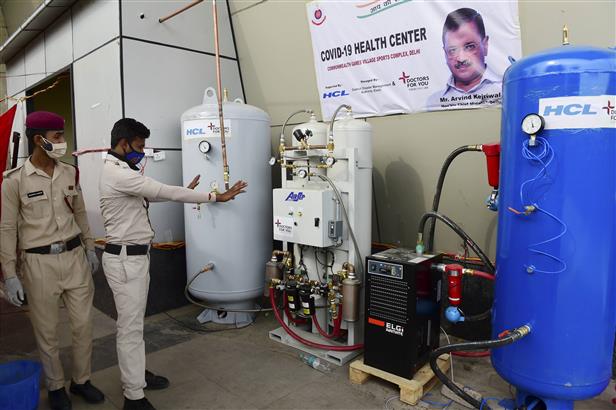
Delhi Civil Defence volunteers near mini oxygen plant set up at the Covid Care Centre at CWG Village, in New Delhi, Tuesday, May 4, 2021. PTI

Tribune News Service

New Delhi, May 4

Piqued over shortage of oxygen in the national capital, the Delhi High Court on Tuesday asked the Centre to explain why contempt proceedings shouldn’t be initiated against it for failing to comply with the order to supply 700 MT oxygen daily to hospitals for treating COVID19 patients.

Coming down heavily on the Centre over inadequate oxygen supply to Delhi, a Bench of Justice Vipin Sanghi and Justice Rekha Palli said, “You (Centre) can put your head in sand like an ostrich, we will not…Are you living in ivory towers?”

It ordered two senior central government officers to remain present before it on Wednesday to respond to the contempt notice.

The Bench rejected Additional Solicitor General Chetan Sharma’s submission that the top court had not directed supply of 700 MT of oxygen per day to Delhi.

As Sharma said a compliance affidavit of April 30 order will be filed in the Supreme Court by Wednesday morning, the Bench said, “We fail to understand what good a compliance affidavit will do when as a matter of fact 700 MT of oxygen is not delivered to Delhi? Even the earlier allocated 490 MT and revised 590 MT is not delivered even for a single day.”

The HC said, “It pains us that the aspect of supply of oxygen for treatment of COVID-19 patients in Delhi should be viewed in the way it has been done by the Centre.”

The April 30 order of the Supreme Court contained a direction to the Centre to provide 700 MT of oxygen per day to Delhi, not just 490 MT, it pointed out.

“We had told you contempt is the last thing in our mind but it is certainly in our mind and doesn’t drive us to that last point. We mean business now. Enough is enough. Be clear on this. We are not going to take a no for an answer. There is no way you won’t supply 700 MT…We would not hear anything except compliance,” the Bench told Sharma.

“We see grim reality everyday of people not able to secure oxygen or ICU beds in hospitals” which have reduced beds due to gas shortage, it noted.

Taking note of 12 deaths at Batra Hospital in the national capital due to lack of oxygen supply, the Delhi High Court had on May 1 directed the Centre to supply 490 MT of allocated oxygen to Delhi during the day itself by whatever means or face contempt of court action.

“Water has gone over our head. Now we mean business. Enough is enough,” a visibly upset Bench had said.


Pakistan intruder shot by BSF

Rangers deny intrusion, refuse to take back body

Pakistan intruder shot by BSF

Ferozepur, May 3

The BSF have shot a Pakistan national in the Khalra area of Tarn Taran district along the International Border.

Sources in the BSF said on the intervening night of May 2 and 3, personnel of the 103 Battalion observed some suspicious movement inside the Indian territory.

The BSF troops challenged the intruder but he failed to respond and was subsequently shot. On search, some Pakistan currency was recovered from the spot, said BSF officials.

Later, the BSF officials approached the Pakistan Rangers, asking them to take back the body. However, the Rangers denied any such intrusion and refused to take back the body. Later, the body was handed over to the police at Khalra for legal formalities. — OC


Navy Chief briefs PM on Oxygen supply

New Delhi, May 3

Prime Minister Narendra Modi was today apprised by the Navy of the quantum of liquid of oxygen Indian warships have loaded from various countries, while the Delhi Government asked the Ministry of Defence to hand over the oxygen supply management to the Army.

Delhi Deputy CM Manish Sisodia has written to the Defence Minister Rajnath Singh for Army assistance in tackling the pandemic. The Delhi Government wants the Army to handle supplies and transportation of oxygen. Modi interacted with Chief Admiral Karambir Singh to review the Navy’s role in tackling Covid. The PM has already reviewed the working of the Army and the IAF. — TNS


ECHS निर्देशिका : कोविड-19*

1. कोविड-19 की दूसरी लहर के चलते, ECHS शाखा, पंजाब हरियाणा और हिमाचल प्रदेश सब एरिया हमारे सम्मानित भूतपूर्व सैनिकों तथा उनके आश्रितों को चिकित्सा तथा अन्य सहायता का आश्वासन देते हैं ।

2. आपकी सहायता के लिए निम्नलिखित उपाय किए गए हैं :-

क. ECHS आपको हर सम्भव मदद करेगा जिसमें शामिल है इम्पैनेल अस्पतालों में भर्ती और इलाज ।

ख. तुरंत प्रभाव से ECHS Polyclinics में OPD के लिए पहले से telephone द्वारा नाम लिखाना होगा ।

ग. अपने आप से दवाई खरीद कर पैसे claim करने की सुविधा की आखिरी तारीख बढा कर 31 जुलाई 2021 कर दी गई है । आपको Polyclinic आकर दवाई लेने की जरूरत नहीं है ।

घ. ECHS Polyclinic भूतपूर्व सैनिकों और उनके आश्रितों के लिए  कोविड-19 के टीकाकरण का पंजीकरण कर रहा है । इसका लाभ उठायें

ङ. सेहत OPD ऐप का इस्तेमाल घर पर रहकर चिकित्सक (Doctor) की सलाह लेने के लिए करें ।
https://www.sehatopd.in में चिकित्सक दवाई की पर्ची बना देंगे जिसे बाजार से लेकर claim करें ।

च. अगर आपको कोविड-19 के  लक्षण हैं तो तुरंत जांच कराएं । अपना इलाज अपने आप न करें ।

3. निम्नलिखित telephone number आपकी सहायता के लिए उपलब्ध हैं । किसी भी मदद के लिए संपर्क करें ।

4. *स्टेशन सैल अम्बाला*.

(a) स्टेशन कमाण्डर – Brig RS Matharu – 7087408366
(b) ECHS अधिकारी – Col JP Kaushik – 9469138041
(c) OIC Polyclinic अम्बाला – Col MS Mahal – 9896455585
(d) OIC Polyclinic कुरुक्षेत्र  – Col Y Sood – 9771433935
(e) OIC Polyclinic करनाल – Col Sunil Sharma – 8683858875
(f) OIC Polyclinic पानीपत – Lt Col Kala Singh – 7702636683
(g) OIC Polyclinic सोनीपत – Cdr AL Krishnia – 9414083626
(h) OIC Polyclinic खरखोदा – Lt Col RS Gill – 7347647641
(j) OIC Polyclinic गोहाना – Col Ravinder Singh – 9459377415
(k) OIC Polyclinic कैथल – Lt Col RC Kaushik – 8504969965
(l) OIC Polyclinic यमुनानगर – Col Ranbir Singh – 9467762447
(m) OIC Polyclinic नारायणगढ – Col BS Sandhu – 8146383266
(n) OIC Polyclinic नाहन – Wg Cdr RK Sharma – 8685837219

5. *स्टेशन मुख्यालय चण्डीमंदिर*.

(a) स्टेशन कमाण्डर – Brig TS Mundi – 9811772254
(b) ECHS अधिकारी – Col Shamsher Singh – 9633012117
(c) OIC Polyclinic चण्डीमंदिर – Col RK Sheoran – 9501399755
(d) OIC Polyclinic चण्डीगढ – Col BB Sharma – 9417276220
(e) OIC Polyclinic मोहाली – Col GS Chugh – 9697516400
(f) OIC Polyclinic रोपड़ – Col GS Bains – 9876699478
(g) OIC Polyclinic फतेहगढ साहब – Col Narinder Singh – 9463826069
(h) OIC Polyclinic सरकाघाट – Lt Col Karan Singh – 7508383115

6. *स्टेशन मुख्यालय पटियाला*.

(a) स्टेशन कमाण्डर  – Brig Vivek Kohar – 9854089771
(b) ECHS अधिकारी – Lt Col Raminder Singh – 9418610787
(c) OIC Polyclinic पटियाला- Col Ameet Singh – 9478169479
(d) OIC Polyclinic संगरूर – Col Jagdev Singh – 7009248106
(e) OIC Polyclinic समाना – Col SS Sangha – 9779988005
(f) OIC Polyclinic नाभा – Col AS Randhawa – 988800066
0

7. *स्टेशन मुख्यालय शिमला*.

(a) स्टेशन कमाण्डर – Brig Rajesh Sihag – 9826388119
(b) ECHS अधिकारी – Col Upkar Sharma – 9582891316
(c) OIC Polyclinic शिमला – Col A Aggarwal – 9816672227

8. *स्टेशन मुख्यालय कसौली*.

(a) स्टेशन कमाण्डर – Brig Naveen Mahajan – 9459158891
(b) ECHS अधिकारी – Col Bharti – 8108098433
(c) OIC Polyclinic सोलन – Col TS Chaudhary – 9872949275

9. निदेशक ECHS, सब एरिया – Col S Sengupta – 8731855773

10. *निदेशक ECHS क्षेत्रीय कार्यालय*.

(a) RC अम्बाला – Col Sandeep Azad, SC – 9800822020
(b) RC चण्डीमंदिर – Col NMS Thakur, VSM – 9501212044

11. हम आपकी अच्छी सेहत और लम्बी उम्र की कामना करते हैं ।
*घर में रहें और स्वस्थ रहें*.

जय हिन्द


Hospital Bed Availability Online: How to Check Vacant Beds Availability Online in Hospitals in COVID 19 Emergency*

Gurgaon
http://covidggn.com/

Delhi
https://coviddelhi.com

Thane
https://covidthane.org/availabiltyOfHospitalBeds.html

Bengaluru
https://covidbengaluru.com/

Andhra Pradesh
https://covidaps.com

Telangana
https://covidtelangana.com

West Bengal
https://covidwb.com

Pune
https://covidpune.com

Ahmedabad
https://covidamd.com
https://ahna.org.in/covid19.html

Vadodara
https://covidbaroda.com

Nagpur
http://nsscdcl.org/covidbeds/AvailableHospitals.jsp

Nashik
https://covidnashik.com

Madhya Pradesh
https://covidmp.com

Uttar Pradesh
http://dgmhup.gov.in/en/CovidReport

Rajasthan
https://covidinfo.rajasthan.gov.in/COVID19HOSPITALBEDSSTATUSSTATE.aspx

Bhopal
https://bhopalcovidbeds.in/

Haryana
https://coronaharyana.in/

Tamil nadu
https://covidtnadu.com
https://stopcorona.tn.gov.in/beds.php

Beed, Maharashtra:
https://covidbeed.com

Gandhinagar, Gujarat:
https://covidgandhinagar.com

Kindly share it.
This is too important.


Nodal officer for all the Veterans

Jai Hind.
1. I am mandated as a nodal officer for all the Veterans of Indian Air Force settled in Punjab,Chandigarh & HP concerns to COVID issues.
2. If you know,any of the veterans facing any difficulty concerns to any issue ( e.g. Admission,
Medication,
Treatment, Transportation,
Oxygen etc) you may share my contact number with them. We are  here for the well beings of our respected Veterans.
Group Captain
PS Lamba, VSM,
Advance Headquarter, WAC.
Western Command,
Chandimandir.
Mob: 9871532225.
Email: psinghlamba1@yahoo.com

Although Gp Capt Lamba is designated as the nodal officer for AF veterans/families, he will be more than willing to assist Navy & Army vets & families.