Sanjha Morcha

What’s New

Click the heading to open detailed news

Current Events :

web counter

Print Media Reproduced Defence Related News

From ‘Good Man Di Laltaen’ to ‘Yes’ Man: Rise of Sycophancy in the Army

LT GENERAL VIJAY OBEROI


 “A ‘YES MAN’ is a dangerous man. He is a menace. He will go very far. He can become a Minister, a Secretary or a Field Marshal, but he can never become a leader nor, even be respected. He will be used by his superiors, disliked by his colleagues and despised by his subordinates.

So, discard the ‘YES MAN’.”

– Field Marshal Sam Manekshaw


This article is on a fairly serious yet current subject, as veterans like me have observed a tendency amongst military officers of drifting away from that famous phrase ‘Courage of Conviction’ that was drummed into us from the first days of our joining the military training academies. Even today, I have no doubt that equal, if not more emphasis is given to this hugely important aspect of Military Leadership.

Even in other fields of endeavour, its importance is no less, yet nearly all civil government employees have been and are ‘Yes Men/Women’. The main reason is that when the governing hierarchy holds loyalty higher than professional competence; sycophancy flourishes and the nation suffers.

What the highly respected Field Marshal had stated was again highlighted by yet another Army Chief, General K Sunderji on assuming command of the Indian Army on 01 February 1986, in his famous personal letter to all officers of the Indian Army, wherein he had minced no words when he said: “As a whole, the Corps of Officers is becoming increasingly careerist, opportunist and sycophantic; Standards of integrity have fallen and honour and patriotism are becoming unfashionable.”

Till about two decades back, the military (by and large), had adhered to the advice of these great commanders and had displayed excellent leadership qualities. However, it is sad to observe that thereafter many military leaders have succumbed to the lure of the next rank and the filthy lucre!

The fall has been progressive and despite many military men and women of impeccable character, larger numbers are becoming prone to this virus. This has had a highly deleterious effect on the rank and file. Without character qualities of the highest order, militaries deteriorate rapidly and will not deliver when the chips are really down.

While many reasons are internal to the military, the deteriorating character of our political leadership has contributed in no small measure in encouraging this, initially among the civil officials and lately in senior military officers too.

This essay is not aimed at the politicians, for whom votes are the be-all and end-all of life! Nor is it for all civilian government employees, including the police, as they revel in being ‘yes men/women’ and know that this is the way to become upwardly mobile! My aim is to appeal to all military officers not to ape them but to shun such actions, as the security and sovereignty of the country rests on their shoulders. Military leaders must hence have impeccable character.

Let me digress at this stage to tell the reader about a phrase that was frequently used in the Indian Army in the past and is still in vogue among officers.

In undivided Punjab, a common phrase heard was “Good Man the Laltaen”. It was obviously hybrid like many that Punjabi’s had formulated! It was a phrase that conveyed one’s appreciation in an informal/friendly way. The last word, as you must have guessed, was the Punjabi equivalent of Lantern. Let me quote only one other example.

In the 1940’s, the struggle for Independence was at its peak. In Punjab, there were many firebrands, especially among the youth. Every day, there were slogan-shouting processions, against the British Raj. The then Governor of Punjab had a game leg, so he was promptly nick-named “Tunda Laat”. So, when someone cautioned a firebrand not to say or act violently against the government, the person’s reply was “Parwah Nahin Tunde Laat Di”, or I could not care less even about the lame Governor!

With this as the background, let me revert to “Good Man the Laltaen”. The basis for the phrase was that there was indeed a good quality lantern in the market, sold under the brand ‘Goodman’s Lanterns’. So, Goodman’s Lanterns became ‘Good Man Di Laltaen’!

The phrase was soon picked up by Army Officers and often used as a pat on the back for junior officers, while the Hindustani word ‘Shabash’ (Good Show) was used for JCO’s and Jawans.

Many years later, another line was added to it, more like a humorous riposte: “And Bad Man Da Diva”, although it was rarely used in the army.

As far as civil government institutions and officials are concerned, starting from the politicians, it was never “Good Man Di Laltaen” for most, but “Yes Man Di Laltaen”! The reasons were and are obvious, as sycophancy in all its forms was and continues to be the easiest ladder to success for those who are weak or inept professionally.

Despite all types of governments coming to power in the Centre and the states, no effort has been made to get rid of the sycophants and opt for professionals. It appears that sycophancy, which massages the ego of the superiors, has now become all pervasive among the civil officials.

It is unfortunate and I daresay highly dangerous from the security point of view that the

‘Yes’ syndrome has now crept in to the military. The new phrases in the military are “Yes Man Di Laltaen” and “No Man Da Diva”! Consequently, the armed forces are also veering away from the straight and narrow path of leaders with character. This is in stark contrast to the much ingrained ethos of the armed forces, when exemplary character was the hallmark of military Leadership.

In earlier times, a ‘Yes Man’, was not only shunned but was made to suffer the ignominy of isolation and little social contact. Unfortunately, spinelessness has resulted in more ‘yes men/women’ surfacing. While correct orders are never questioned, especially in the army, the army permits the questioning of wrong or unlawful orders.

It is a great pity that the military hierarchy is succumbing to ‘chamchagiri’ that was the preserve of most civil officials. The fallout is that even unlawful commands are answered by ‘yes sir’ and ‘will be done sir’!

This rot needs to be curbed ruthlessly as it is against the ethos of the armed forces. I can recall many instances of the past when firstly a senior officer hesitated to give an unlawful or even a wrong order to his subordinates; and secondly, the officer receiving such an order displayed ‘courage of conviction’ by going back to his senior, advising him that the order was wrong and requesting that it be changed.

The armed forces especially and even others, need to revert back to “Good Man Di Laltaen” from the current “Yes Man Di Laltaen, which unfortunately we see more and more, while the junior leaders look askance and curse under their breath!

Our young officers on commissioning are full of pep and most start their adventurous career in the forces on a high note, but as they rise in service and rank, they start losing respect for those seniors who display the ‘Yes Man’ syndrome. Resultantly, when they become senior officers, many sadly join the ranks of the “Yes Man Di Laltaen”.

Our senior military leaders need to re-learn the importance of character and professional competence. They must not be mere ‘Yes Men’ and revert to the basics of soldiering, which is not just professional competence, but also the highest level of personal integrity and belief in themselves; the personnel they command; and the ‘Izzat’ of their units, formations and the armed forces.

A great army with an enviable record must change and regain its lost high levels of Leadership and Character qualities.

(The writer is a former Vice Chief of Army Staff)


Challenging China

India lacks self-belief to build itself as a counterweight the world would respect

Challenging China

Charged: Despite the Galwan clash, the Chinese expanded their share in the Indian smartphone market from 71 per cent to 75 per cent in 2020. PTI

Rajesh Ramachandran

The first anniversary of the death of 20 Indian soldiers of the 16 Bihar Regiment, including its Commanding Officer Colonel B Santosh Babu, during the Galwan Valley clash with the People’s Liberation Army is being marked by claims of an apparent rupture in India-China relations. Since June 16, 2020, the completely baffled Indian officialdom and commentariat have been searching for Chinese strategic objectives in reviving the terrible memory of the 1962 defeat. Well, after a year, it has to be accepted that the Chinese objective was to establish Asian hegemony, destabilise Indian dominance in South Asia, highlight the limits of the US power and hence the futility of Quad — and still continue to remain India’s most important trade partner. Have the Chinese achieved their goals? If we assume trade to be the single biggest determinant, then the answer ought to be in the affirmative.

Despite the Galwan clash, the Chinese expanded their share in the Indian smartphone market from 71 per cent to 75 per cent in 2020, thus conclusively disproving the theory that the lure of the Indian market would be a deterrent to Chinese military pursuits. In fact, it is now the Indian market that is dependent on Chinese telecom instruments, electronic instruments, components and consumer goods, computer hardware and peripherals, and pharmaceutical ingredients. The latest trade figures put out by the Ministry of Commerce and Industry show that we imported goods worth $65.21 billion from China in 2020-21, topping the charts, whereas our US imports were not even half of that value at just $28.86 billion. Sure, we export more to the US and hence have a trade surplus, but the trade deficit of $45.9 billion with China tells the real story of our dependence on Chinese manufacturing.

Even when our import bill fell by about 17 per cent, the Chinese goods as a share of our total imports only grew in the year of the standoff at the Line of Actual Control. No wonder the Chinese believe that India has no option but to gulp its pride, lick its wounds and carry on with the India-China trade to ensure that our digital economy, telecom connections and computer terminals remain hooked and running. In fact, it is high time Indian economists started taking a hard look at the generational losses the country incurred in stymieing its manufacturing by entering into the World Trade Organisation regime gamed by American investors and Chinese manufacturers. While China became the global manufacturing hub in the last couple of decades, India was reduced to a glitzy global shopping mall buying cheap Chinese goods and remaining happy about it.

But then, bilateral trade is not the only defining factor; and the Chinese perception of the Indian reaction is not entirely correct because India had, at least in the last few decades, completely forgotten the 1962 debacle and started believing in a benign China. India’s security apparatus was forever preoccupied with its western neighbour, convincing itself that China is a friend. Even this writer, as late as in 2018, wanted to believe that India could remain a swing state in a simultaneous and mutually exclusive, opportunistic relationship with the US and China. That was what Indians wanted to believe — that a growing China will not be a threat but could actually help us also grow. Doklam was the first jolt, which India did not understand, and then came the territorial aggression in Ladakh. With the death of those 20 bravehearts, India began understanding Chinese designs.

Finally, the Gwadar-to-Xinjiang China-Pakistan Economic Corridor has begun making military sense as we confront the Sino-Pakistan arc in the subcontinent from Doklam to Gwadar. To this should be added the sea arc from Gwadar port to Hambantota port in Sri Lanka to the third largest Bangladesh port, Payra, which is being developed by the Chinese. Reuters had in 2014 reported the docking of a Chinese submarine and a warship at the Colombo port, where China is now developing the Colombo port city project on reclaimed land. China’s encirclement of India is a reality that has dawned on Indians thanks to the Galwan martyrs.

Once we acknowledge the land and the sea arcs for what they are, there are two ways to respond to this encirclement: Acceptance of China as a superpower while still trying to play the opportunistic swing game between the two competing global superpowers for investments, military concessions and regional peace; or complete rejection of the Chinese hegemonic claims in the neighbourhood and an attempt to build itself as a counterweight that the world would respect. The emerging Indo-Pacific alliance becomes crucial in this context. But the problem here is the complete lack of self-belief: Let alone pensioners in the US or Europe, how many Indians would be willing to invest their life savings in Indian companies?

It is not easy for a society in which the rule of law is becoming increasingly arbitrary to convince itself and others of its destiny. For instance, anyone who wants to invest in northern India ought to look at Delhi’s satellite cities of Noida or Gurugram as prime destinations; but then, what would they see? From auto-rickshaws parked in the middle of a flyover, rickety buses stopping where they want, “wrong-side driving” (a Gurugram contribution to the English language) to mob lynching over cows, civic unrest, police cases against journalists and the threat of eviction to digital companies like Twitter. All this is not going to lure the fleeting dollar, which has easier and better destinations. Unless we rewire ourselves to get plugged into the Anglo-Saxon economies and reignite our manufacturing dreams, we may get squeezed by the Sino-Pak military corridor. It is also time for reflection for all those WTO champions who ridiculed local manufacturing, asking why India should reinvent the wheel — well, if you don’t have your own wheel, you will get crushed under the neighbour’s.


JOINT MILITARY COMMAND IS THE FUTURE BUT INDIA CAN’T RUSH INTO IT

The amalgamation of 19 military commands into a cohesive joint or theatre command will be India’s biggest defence reform. The challenge will be to take everyone along. The ongoing Ladakh stand-off with China has taught us one thing – a unified military approach along with diplomatic and economic measures is the way forward
When the Galwan clash happened a year ago, India pushed both the Air Force and the Navy into full operational mode besides ramping up the economic counter steps and increasing diplomatic push. The three Service chiefs and the Chief of Defence Staff, General Bipin Rawat, used to meet on a daily basis and jointly work out what needs to be done.
The end result was that China realised India is no pushover, even though the stand-off continues and the People’s Liberation Army (PLA) still controls areas that India claims as its own.
Amid all the tension with China, silent work to reform Indian military went on – and the result is the proposal to amalgamate the 18 military commands (including the tri-services Andaman and Nicobar Command) into a few joint or theatre commands.
As the secretary of the Department of Military Affairs, General Rawat is mandated with “facilitation of restructuring of military commands for optimal utilisation of resources by bringing about jointness in operations including through establishment of joint/theatre commands”.
This massive change, which will be the biggest reform that the forces will see, will streamline the world’s fourth largest military into a leaner and stronger cohesive fighting unit. It will also cut long-term costs because common resources and logistics would be pooled instead of each Service spending separately. But challenges remain. At a crucial meeting held last week on the concept note, it emerged that all stakeholders, including the three Services, are not on board on the exact structure of the joint or theatre commands. The Narendra Modi government is of the view that there should be more discussion on this.
Army chief General M.M. Naravane had in October 2020, while welcoming the integrated theatre commands, said that the process “needed to be deliberate, thoughtful and well-considered, and its fruition will take a number of years.”
Sources in the defence and security establishment say that since joint or theatre commands will have drastic and far-reaching implications on the military’s future war-fighting strategy, it is important that all stakeholders are completely on board.
The Current Plan
As per the current plan, the 18 commands are to be brought together under five theatres — Northern Land Theatre (Jammu and Kashmir, Ladakh and Central sector) Western Land Theatre (Pakistan centric), Eastern Land Theatre, Maritime Theatre Command, and Air Defence Command. There could be one or two additional commands to look after logistics and training.
The first two to be rolled out are Maritime Theatre Command (MTC) and Air Defence Command (ADC).
The MTC will see a merger of the Eastern and Western naval commands besides getting elements from the Army and the Air Force. The plan is also to bring the Coast Guard assets from all five regions under its operational control. The MTC will be headed by a three-star Naval officer. It will also have one two-star officer from the IAF and a three-star from the Army.
Similarly, the ADC will be headed by a three-star IAF officer, along with a three-star Army officer and a two-star Naval officer. The other theatres planned will be headed by three-star Army officers with elements from the IAF and Navy. Also, the Border Security Force (BSF) is being planned to be part of the Northern Land Theatre and the Indo-Tibetan Border Police (ITBP) of the Eastern Land Theatre.
Concerns Raised
A heated debate within the defence establishment is on regarding the structuring of the theatre commands.
A number of issues have been raised. Will the theatre commands be based on challenges (China and Pakistan) or will there be one theatre command for the whole country?
The larger fear is that the Theaterisation is heavily tilted in the Army’s favour with nomenclatures like “Land” not helping the cause.
It has also been pointed out that in case of a war with Pakistan, at least four theatres will come into action. In case of a war with China, at least four theatres will take part while the fifth, the Western Land Theatre, will be on high alert.
However, from the Chinese side, the Western Theatre Command will take care of the entire borders with India. The only additional theatre to get involved will be the one with naval assets – either Eastern, Southern or Northern Theatre. The counter argument to the fear that multiple theatres would get involved in case India faces a war, is that there will always be a primary theatre of war and a secondary theatre and this has been taken into account while planning.
As per the Theaterisation plan, all commands will have elements from all the three Services. The Navy assets are unlikely to see much division but the IAF assets will be. At present, the IAF assets are centrally controlled and operated through the Air Headquarters even though there are multiple Air Commands.
As per the proposed plan, each theatre will get its own IAF assets. There is a view that this will impact operational capability as the assets are limited and the fighter squadron strength is already very low — 30 squadrons against a sanctioned strength of 42.
Former Air Force chief ACM B.S. Dhanoa, while in office, has said that there can be only one theatre — India — and the focus should be on institutionalised structure of joint planning by the three Services.
While the Navy supports the creation of the Maritime Theatre Command, there are also voices within the force who say that there already exists the independent Western Naval Command and the Eastern Naval Command who look after their specific areas of operations.
“The equipment/assets of each Service is not large enough to be distributed up and locked in theatres. Forget the IAF, which anyway has a lower number of aircraft and surveillance equipment, even the Army had to push in additional reserves and additional equipment into the Northern Command during the ongoing standoff with China,” a source said.
Another source explained that China had been focusing on a new war-fighting strategy since the 1980s and it began by slowly cutting down the personnel strength and expenditure while increasing focus on indigenous technology for missiles, vessels and aircraft.
But China has the numbers and money to spend on more military assets and have specific theatres, something that India cannot afford to replicate.
Incidentally, with approximately 1.4 million personnel, the Indian Army has become the world’s largest ground force, pulling ahead of China, which cut down its strength by half and is instead focusing on its navy, air force and technology. Some retired top military officers have written to concerned government positions against rolling out the Theaterisation in its current format. Another issue of concern is the question of who will head these theatres. As per the current plan, the theatre commanders will report to the CDS and the respective Service chiefs will become more administration- and training-oriented.
In the US and China, the theatre commanders report to the political leadership.
Some have also expressed concern of moving ahead with a concept without war gaming the plans and seeing how effective or ineffective the whole process is going to be. Another school of thought is that the first step towards joint mashup should be joint training. The idea is that people need to learn and train together for them to plan and fight together.
Fears Expected But Unified Approach The Way Forward
The concerns expressed by various quarters to the Theaterisation was expected. The Modi government would need to handle it deftly because militaries are seldom open to change.
As Harsh V Pant and Javin Aryan wrote in October 2020, “the inter-services competition wherein each service zealously oversees its own assets and strives for a greater share of the defence budget and influence might prove to be an obstacle in creating synergy among the services.”
However, there is no doubt that while concerns and fears need to be understood and taken care of, a unified war-fighting strategy along with exponential capability increase in our cyber and space warfare is the only option going forward.
But given India’s limited experience with integrated command structures, I would go back to what the Army chief said, “The process should be deliberate, thoughtful and well-considered.”
There is no doubt that this journey may require a fair bit of mid-course corrections, but it is important to get off on a firm foundation.


Lessons from a father and a teacher

This Father’s Day, a chance encounter at the railway station got me thinking about the things my father has practised, taught and passed on to his students and children

Lessons from a father and a teacher

GUL PANAG

A few days back, I was in Himachal Pradesh waiting for the train at the Kandaghat railway station with my son when a gentleman, either an ex-serviceman or a serving officer (obvious to me from his carriage and bearing), walked up to me and enquired if I was General Panag’s daughter. Considering that I was wearing a mask, I was a little surprised, but, of course, admitted to being guilty as charged. This is quite a routine occurrence — to be approached as my father’s daughter.

The officer went on to tell me that he was my father’s student in the Indian Military Academy (IMA), and later again at Staff College, and that he holds dear all that he learnt from him. Customary pleasantries exchanged, we said goodbye.

My father has spent a significant part of his 40-year military career teaching as an instructor, something I, as a child, knew at the back of my mind, but didn’t actively reflect on. This Father’s Day, and that chance encounter at the railway station, got me thinking about the things my father has practised, taught and passed on to his students and, of course, to his children.

Here are some key learnings that I endeavour to imbibe, and that have resonated over many such chance encounters with his former students:

Making a point without making an enemy. This is an important skill to have in order to navigate fragile egos while still being able to make a difference. My father didn’t rise to the top of his profession by being a ‘yes man’. But the fact that he did get as far as he did while continuing to call a spade a spade is something to learn from. Even today, he continues to do the same, actively engaging with those he disagrees with on social media — with a dose of wit thrown in.

Intellectual pursuit — over and above the perceived job requirement. The only way to grow is to learn more and read more, especially when most around you will point out the redundancy of the additional effort, given that things appear to be on track. This is the reason I have continued academic pursuits, along with my professional commitments.

Physical fitness. The one tool that one has to live life to the fullest with is one’s body — be it pursuing a sport, or simply moving with ease in one’s younger years and without pain in later years. Many of us don’t devote adequate time, energy and resources towards the pursuit of physical fitness — only to pay for it dearly later. Physical fitness isn’t just about physique. It’s an outcome of critical character traits — discipline, consistency, commitment and perseverance — that are essential for a fulfilling life.

Raise the bar higher. Be highly competitive but ultimately strive to compete with your own self. As Ernest Hemingway said, “There is nothing noble in being superior to your fellow man; true nobility is being superior to your former self.”

Say the right thing, even if it’s unpopular. Especially when it’s unpopular. When in doubt about how to conduct yourself, always choose to be a role model because you never know who may be watching and getting influenced. Speaking up for what you believe in is very important, especially in times like these.

Never compromise on integrity. Integrity is the quality of being honest and having strong moral principles. And there’s really no room for grey in this regard. Because it’s not others that you do it for. You must maintain the highest standards of integrity so that you can look yourself in the eye.

Always apologise when wrong. It’s not easy to eat crow and admit a mistake or an error of judgment, especially when one is perceived to be successful or a ‘rising star’. However, I’ve seen my father do this over the years, and he continues to do so. Although such admissions to his children, understandably, are cloaked in sermons!

This Father’s Day, I thought I’d share some learnings from my father that have shaped the person that I am. I do have a long way to go.

Papa, I know you’re reading this, and I’d like to say that it is my constant endeavour to live up to your ideals. Thank you for being a true role model. I constantly strive to achieve the high standards set by you.


BRO projects stuck in red tape, China on infra-building spree

BRO projects stuck in red tape, China on infra-building spree

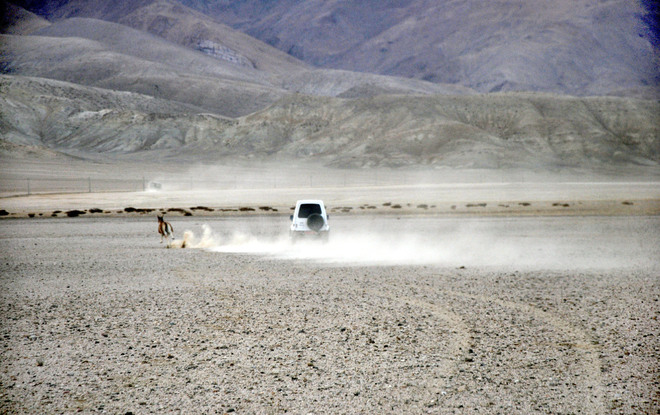
Large parts of barren eastern Ladakh have wildlife sanctuaries. File

Ajay Banerjee

Tribune News Service

New Delhi, June 18

Even as China is quickly building infrastructure on its side across the Line of Actual Control (LAC) in eastern Ladakh, the Border Roads Organisation (BRO) has flagged serious concerns about procedural delays hampering its projects in the UT.

Sources in the Ministry of Defence confirmed that the BRO had recently intimated the ministry about difficulties being faced by it. These pertain to delay in taking clearances under environment and wildlife laws.

Await wildlife, eco clearances

  • The Border Roads Organisation has apprised the Centre about procedural delays hampering its projects in Ladakh
  • These pertain to difficulties in getting clearances under environment and wildlife laws
  • The MoD has reportedly taken up the matter with the authorities concerned

The MoD had taken up the matter with all stakeholders to resolve the issue keeping in view the projects of national importance, the sources said. An official pointed out that in November 2014, the Ministry of Environment, Forest and Climate Change, accorded a general approval under

Section 2 of the Forest (Conservation) Act, 1980, to expedite the forest clearances for taking up border infrastructure works. This mandated that no prior clearance was needed from the environment impact assessment committee for raising infrastructure within 100 km of aerial distance from the LAC. The dispensation was to start work and then seek exemptions and clearances. The order also permitted diversion of land for strategic road building.

Notably, this exemption does not apply for wildlife protection issues under the Wildlife (Protection) Act of 1972. Each project needs an independent bio-diversity impact assessment by a committee of experts, which submits a report to the National Board of Wildlife.

The Ladakh plateau had seen major battles in the 1962 war. Some 9,000 sq km (15.22 per cent) area in Ladakh is under wildlife sanctuaries. Some of these include mountain ridges which are strategically vital and provide a deep view across the LAC in Tibet.

A proposal to remove the blanket ban on building infrastructure was first proposed in 2012, but non-official members of the National Board for Wildlife protested. Earlier in October 2011, an independent survey of the animal population was completed.

Meanwhile, China, on similar terrain and ecology on the Tibetan side, has gone ahead to provide all-weather connectivity.


India, 3 EU nations begin naval drill

India, 3 EU nations begin naval drill

INS Trikand participates in the maiden IN-EUNAVFOR joint naval exercise in the Gulf of Aden. PTI

India and three European nations on Friday began a two-day naval wargame in the Gulf of Aden with the aim of improving operational inter-operability and promote peace.

The Indian Navy has deployed INS Trikand. The other warships are Italian Navy’s ITS Carabinere, Spanish ship ESPS Navarra and two French Navy ships FS Tonnerre and FS Surcouf. PTI


Security guard impersonates Army man to impress women, held

The accused told police that he posed as Captain Shekhar of the Indian Army to impress women on social medi

Security guard impersonates Army man to impress women, held

Photo for representation only. Source: iStock.

New Delhi, June 19

A 40-year-old man has been arrested for allegedly impersonating an army officer to impress women on social media, police said on Saturday.

The accused, Dilip Kumar, a resident of Sainik Enclave, Mohan Garden, works as a security guard at a school, they said.

On Friday around 3 pm, the accused was arrested near Archana Red Light, Greater Kailash 1, they said, adding he was in the area to meet a date.

“He was in army uniform. One fake army ID card and one mobile phone were seized from him,” Deputy Commissioner of Police (DCP), South, Atul Kumar Thakur said.

The accused told police that he posed as Captain Shekhar of the Indian Army to impress women on social media.

He was fascinated by the Army and realised that he could connect with people wearing uniform, police said, adding he had been doing so for about four months.

On examination of his mobile phone, it was found that he was a member of several WhatsApp groups and had made video calls to International numbers as well, the DCP said, adding his links abroad were being examined.

A case under relevant sections of the law has been registered against him. — PTI


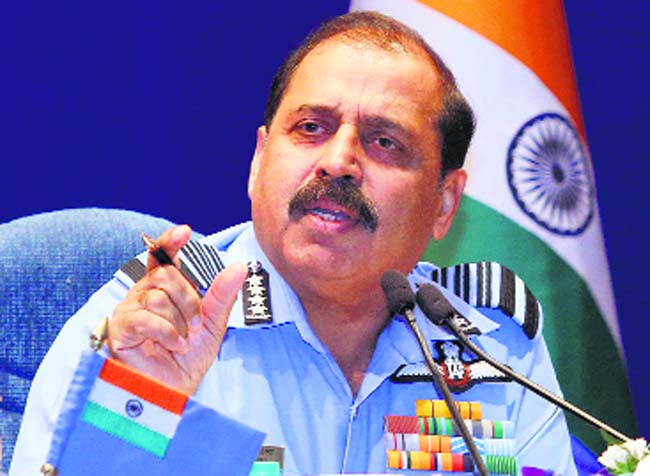
Enhancing capabilities: IAF Chief RKS Bhadauria

On target, 36 Rafales to be inducted by 2022, says Bhadauria

Enhancing capabilities: IAF Chief RKS Bhadauria

The Air Force is undergoing monumental transformation with rapid infusion of niche technology and combat power in every facet due to rapidly evolving security challenges, said the IAF Chief, Air Chief Marshal RKS Bhadauria while addressing the combined graduation parade at the Air Force Academy in Hyderabad.

Tribune News Service

New Delhi, June 19

The Air Force is undergoing monumental transformation with rapid infusion of niche technology and combat power in every facet due to rapidly evolving security challenges, said the IAF Chief, Air Chief Marshal RKS Bhadauria while addressing the combined graduation parade at the Air Force Academy in Hyderabad.

RKS Bhadauria, IAF Chief

Tech to play vital role

Rapid infusion of niche technology, combat power in every facet of our operations has never been as intense as it is now.

He said the past few decades had clearly established the critical role of air power in achieving victory in any conflict. “It is in this backdrop that the IAF’s ongoing capability enhancement assumes tremendous significance,” the IAF Chief said. He said the officers passing out today were fortunate to be joining the IAF at this juncture. “The pilots will get to fly fighters carrying an array of potent weapons. The transport and helicopter fleets are well-equipped and capable of contributing effectively in war,” he said.

“Flight controllers will have to adapt to vectoring fighters in large formations using digitised and networked systems,” Bhadauria said.

He said the induction of 36 Rafale aircraft into the Indian Air Force would take place by 2022. The IAF is absolutely on target with respect to the Rafale induction plan, he said.


Flying Sikh’ Milkha Singh dies of Covid complications at 91 after month-long battle

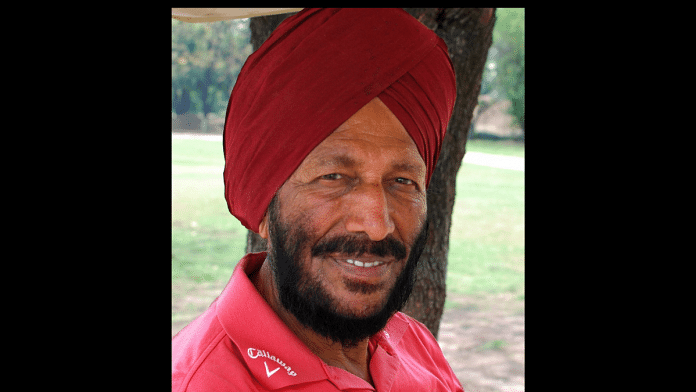
ile photo of Milkha Singh | Wikipedia CommonsText Size: A- A+

New Delhi: One of independent India’s biggest sporting icons, ace sprinter Milkha Singh, died on Friday after a month-long battle with COVID-19, during which he lost his former national volleyball captain wife Nirmal Kaur to the same ailment.

The Padma Shri awardee, who was nicknamed ‘The Flying Sikh’ for his accomplishments, was 91 and is survived by his golfer son Jeev Milkha Singh and three daughters.

“It is with extreme sadness that we would like to inform you that Milkha Singh Ji passed away at 11.30 pm. on the 18th of June 2021,” read a statement from the family.

“He fought hard but God has his ways and it was perhaps true love and companionship that both our mother Nirmal ji and now Dad have passed away in a matter of 5 days,” it added.

His condition turned critical this evening as he developed complications, including fever and dipping oxygen saturation levels, after a bout with COVID-19, in the Intensive Care Unit of the PGIMER hospital here.

“We are deeply indebted to the doctors at PGI for their valiant efforts and the love and prayers we received from across the world and from yourselves,” the family stated.

The PGIMER also issued a statement and expressed its condolences.

“…despite best of the efforts by a medical team, Milkha Singh ji could not be retrieved from his critical condition and after a brave fight, he left for his heavenly abode at 11:30 pm,” the hospital stated.

PGIMER Director Prof Jagat Ram said Milkha “will be remembered for his exceptional accomplishments on and off the field and his endearing and humane personality.”

Milkha had contracted COVID-19 last month and tested negative for the virus on Wednesday when he was shifted to general ICU in another block of the hospital.

He had been “stable” before Thursday evening.

Milkha’s 85-year-old wife Nirmal, who had also been infected by the virus, passed away at a private hospital in Mohali on Sunday. The couple were suspected to have contracted the infection from a house help.

Milkha was admitted to PGIMER on June 3 after his oxygen levels dipped at home following treatment at the Fortis hospital in Mohali for a week.

The legendary athlete is a four-time Asian Games gold medallist and the 1958 Commonwealth Games champion but his greatest performance remains the fourth-place finish in the 400m final of the 1960 Rome Olympics.

His timing of 45.6 sec at the Italian capital remained the national record for 38 years before Paramjeet Singh broke it in 1998.

He also represented India in the 1956 and 1964 Olympics and was bestowed the Padma Shri in 1959.

After testing positive for COVID-19 on May 19, Milkha had remained in home isolation at his Chandigarh residence till May 23 and was admitted to Fortis hospital in Mohali on May 24 as he kept running fever, had body aches and experienced loss of appetite.

His golfer son Jeev, who was in Dubai at that time, had reached here on May 22 while another daughter Mona Milkha Singh, a doctor in the United States, also arrived here later.

Fortis hospital had earlier diagnosed the couple with “COVID pneumonia”.

While in Fortis, the couple also shared the same room for a few days.

After being admitted to PGIMER earlier this month, Milkha had received a phone call from Prime Minister Narendra Modi, enquiring about his health.

Modi, while condoling Milkha’s demise, remembered that conversation on Friday and said that “little did I know that it would be our last conversation.”


Also read: Dingko Singh — the ‘hot-blooded’ Asian Games gold medalist who inspired a generation of boxers


“In the passing away of Shri Milkha Singh Ji, we have lost a colossal sportsperson, who captured the nation’s imagination and had a special place in the hearts of countless Indians.

“His inspiring personality endeared himself to millions. Anguished by his passing away,” the Prime Minister tweeted.

Milkha died at Chandigarh’s PGIMER hospital, less than a week after he lost his wife Nirmal Kaur, a former national volleyball captain, to the same ailment.

India’s sporting fraternity also paid homage to one of its most inspiring figures, who continued to be a keen observer even after quitting the track.

Olympic-bound star javelin throwers Neeraj Copra tweeted “We lost a Gem. He will always remain as an inspiration for every Indian. May his soul Rest in peace.”

Condoling the death, Home Minister Amit Shah said the one of the brightest stars of Indian sports has been lost.

“India mourns the sad demise of legendary sprinter Shri Milkha Singh Ji, The Flying Sikh. He has left an indelible mark on world athletics. Nation will always remember him as one of the brightest stars of Indian sports. My deepest condolences to his family and countless followers”

Sports Authority of India (SAI) expressed “immense sadness at the demise of one of India’s greatest ever sportspersons ‘The Flying Sikh’ Milkha Singh.

“A gold medalist at the CWG & Asian Games, he held the 400m National record for 38 years. Condolences to his family & the millions whom he inspired,” the SAI said in a tweet.

Athletics Federation of India said in a tweet: “Very very sad news for all #Indians, legend Shri Milkha Singh Ji passed away.”

AFI President Adille Sumariwalla called Milkha “a Titan who lifted the profile of athletics in a young nation…”

“…his sharp observations on Indian sport will be missed. His towering legacy will continue to inspire generations of young Indians. Rest in peace legend.”

“A huge loss for the sport of athletics today. Rest well #MilkhaSingh ji,” Olympian Anju Bobby George tweeted.

“Really shocked by the demise of the legend Milkha sir. You will forever have a very special place in my heart.The Flying Sikh will live forever. RIP” Indian sprinter Mohamad Anas Yahiya.

Former India off-spinner Harbhajan Singh also expressed also expressed his condolences on the micro-blogging site.

“Very sad,heartbreaking to hear flying sikh Sardar Milkha singh ji is no more… waheguru RIPMilkhaSinghji.”

Indian tennis star Sania Mirza said “Had the honour of meeting you and you blessed me so many times .. the kindest and warmest Palms up together RIP Milkha Singh sir .. the world will miss a legend like you ..MilkhaSingh

“Really shocked and sad to learn about the passing away of the legend Milkha Singh ji. Om Shanti,” Javelin thrower Devendra Jhajharia said.

Decorated doubles badminton player Jwala Gutta also joined in expressing her sadness.

“What an inspiration you were to the millions like us . There will be none like you sir Rest in peace legend MilkhaSingh,” she posted.

The official handle of the Indian football team also mourned Milkha’s death.

“We join the nation in mourning the loss of the iconic ‘Flying Sikh’ Milkha Singh. His incredible achievements will continue to inspire future generations. May his soul rest in peace RIP.”

Assam Chief Minsiter Himanata Biswa Sarma said: “Saddened at the demise of Flying Sikh’ Captain Milkha Singh. His laurels had not only made India swell with pride but also inspired generations of sports enthusiasts. My condolences to his family. Om Shanti!”

Indian wicketkeeper batsman Wriddhiman Saha, squash player Joshna Chinappa and shooter Sanjeev Rajput also paid homage to the sprint icon.

“Saddened by the passing away of #MilkhaSingh ji. RIP the Flying Sikh. An inspiration for millions. A great loss to our nation,” Saha tweeted.

“Very saddened to hear about the passing of Milkha Singh Sir. A True Legend and Champion. You will be greatly missed. RIP Sir,” Chinappa wrote.

“A great loss to the nation. Rest in Peace legend #MilkhaSingh ji. Om Shanti,” Rajput tweeted.

All India Football federation president Praful Patel said: “Deeply pained to learn about the passing of ‘The Flying Sikh’ Shri #MilkhaSingh Ji. The legendary athlete made India proud with his sporting achievements & his legacy will continue to be one of the most inspiring stories in Indian sports. May his soul rest in eternal peace”

“Sad to hear about the passing away of legendary Indian sprinter Sardar #MilkhaSingh . He will always remain an inspiration for all. Om Shanti,” Union Minister Praksh Javadekar said.


Also read: Ahead of India-NZ world Test cricket final, only 1 Indian, no Kiwi in Boycott’s ‘fantasy’ teams