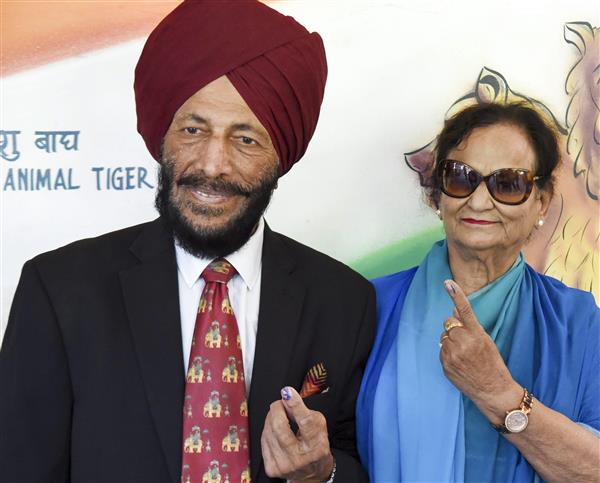
The mortal remains of Milkha Singh were immersed in the Sutlej at Gurdwara Patalpuri Sahib here on Sunday. – File photo
Kiratpur Sahib, June 20
The mortal remains of Milkha Singh were immersed in the Sutlej at Gurdwara Patalpuri Sahib here on Sunday.
After a long battle with Covid, the 91-year-old sprinter died at the PGI, Chandigarh, late on Friday night.
His son and ace golfer Jeev Milkha Singh along with sisters and other relatives reached Gurdwara Patalpuri Sahib in the morning where an ‘ardas’ was offered for the departed soul. Following this, his ashes were immersed in the Sutlej. Later, the relatives paid obeisance at the gurdwara. — TNS
NGO makes blankets, bags, masks for old-age home inmates
Tribune News Service
Tribune News Service
New Delhi, June 20
With large stacks of military uniform awaiting “graceful” disposal, a retired Army officer has set up an NGO, Sewaj Neesim Foundation, which collects used uniform and uses it to prepare blankets, schoolbags, masks, aprons, bibs and other useful items.
Maj Gen Ashim Kohli (retd) says, “We have so far collected 4,000 pairs of uniform, but the work was affected due to the Covid-19 pandemic.”
An associated NGO is getting the stitching work done from women working from homes in slum areas. It has employed nearly 10 women in NCR and another seven in Pune.
The NGO aims to collect old uniform from across the country. The products made from recycled cloth would be donated to the needy, especially in children and old-age homes.
Maj Gen Kohli says, “The military uniform cannot be thrown away or given to the poor as non-authorised persons are allowed to wear it or may misuse it. We thus came up with this idea of gracefully disposing of the uniform.”
From Milkha Singh to wife Nirmal Kaur, couples who succumbed to Covid: Till death do them part – and not even then
Psychiatrists have a term for it ‘broken heart syndrome’
India’s Flying Sikh Milkha Singh has died, five days after his wife Nirmal Kaur succumbed to Covid. — Tribune Photo
New Delhi, June 19
India’s Flying Sikh Milkha Singh has died, five days after his wife Nirmal Kaur succumbed to Covid.
As the pandemic swept through India, many other couples faced the same tragedy—partners for decades or perhaps beginning their journey together giving up on life, within weeks and sometimes just days of each other.
Psychiatrists have a term for it – ‘broken heart syndrome’. And the legendary Singhs may have epitomised it.
While Singh, one of India’s greatest sporting icons, died late Friday in a Chandigarh hospital after a long battle with Covid at the age of 91, his wife, national volleyball player Nirmal Kaur, passed away on June 13, 58 years after they got married and 65 years after they first met.
Their children, three daughters and a son, golfer Jeev Milkha Singh, doffed their hat to “true love and companionship”.
“He fought hard, but God has his ways, and it was perhaps true love and companionship that both our mother Nirmal ji and now Dad have passed away in a matter of five days,” a statement from the family said.
And they are not the only ones.
Former Rajasthan chief minister Jagannath Pahadia and his wife, former MLA and Rajya Sabha MP Shanti Pahadia, lived together and died together – well almost. He took his last breath at the age of 89 on May 20 in a Gurgaon hospital. She, two years younger, was in the same hospital and passed away three days later.
“Both of them lived together for their entire lives and remained politically active and left together for their heavenly abode. They were married in their childhood by their parents and lived happily thereafter,” their son Om Prakash Pahadia said.
Senior journalists Kalyan Baruah and Nilakhshi Bhattacharya also lost their battle to Covid in a Gurgaon hospital in May. Like the Pahadias, they, too, passed away within three days of each other.
After a lifetime of togetherness, Bikaner-based couple Om Prakash and Manju Devi couldn’t, it seems, bear to be apart either. They passed away in November within 15 days of each other.
Married for nearly four decades, the couple stuck together through many ups and downs, including financial woes and the weddings of their five daughters.
Their nephew, who did not want to be named, said it was possible his aunt could not bear the news of her husband’s death.
“While my uncle passed away in the hospital due to Covid complications, I think it was the grief of his death that likely resulted in my aunt suffering a brain haemorrhage that eventually led to her death,” he told PTI.
In such cases—where one partner has passed away while the other is still recovering—medical experts recommend that the news of the death be shared only after the spouse is well out of danger.
According to Mumbai-based psychiatrist Harish Shetty, lack of knowledge helps recovery.
“Informing the spouse when one is physically devastated can destroy mental equilibrium, thereby causing deterioration.
“I have been part of teams that have been involved in informing the other spouse after recovery. The presence of family, a doctor and a counsellor is ideal. Allowing the process of grieving to begin effectively with support is the key,” Shetty told PTI.
Gurgaon-based psychiatrist Jyoti Kapoor added that the news of the demise of a partner often makes the other suffer from what is known as a ‘broken heart syndrome’ – a temporary heart condition caused due to high stress and overwhelming emotions.
She said it was natural for couples who had lived together for decades to share a strong emotional dependence, where the loss of one can create significant stress for the other.
“Our personal experience, as well as research, has suggested that depending upon circumstances of the living partner and individual vulnerability to handle stress, the risk of death in male spouse after wife’s death is 18 per cent, and risk of women’s death following the death of the husband is around 16 per cent.
“This has sometimes been described as ‘broken heart syndrome’, a sort of physical ramification of extreme emotional stress among individuals with pre-existing physical vulnerabilities like chronic illness or frail health,” Kapoor said.
Losing a partner in the best of circumstances is challenging. People take years to come to terms with the death of a terminally ill spouse whose death is almost inevitable.
The pandemic has magnified this ordeal for couples—not only were the deaths sudden, but the partners also left behind were fighting for their own lives as well.
Arpita Basu Roy’s parents passed away within four days of each other. Both were in hospital together. Not visibly romantic, they were “soulmates” married for 30 years, she said. One would never eat, unless sure that the other person has eaten too.
So when her mother passed away, it was almost like her father knew, and gave up on his desire to live.
“The last day I saw my father, (after my mom expired), he was all numb. He did not even respond to my sister. He was staring blankly, as if in a state of shock. We think he understood that she was gone, and was unable to accept the news.
“They were soulmates and probably could not live away from one another… so they decided to depart together,” the Kolkata-based Roy told PTI.
While there is no data to establish the number of couples who succumbed to Covid-19, the National Commission for Protection of Child Rights (NCPCR) gives an estimate – that 3,261 children were orphaned during the pandemic.
This data, released earlier this month, only takes into account children from 0-18 years. The actual numbers would be much more.
An official in Tamil Nadu estimated that at least 50 couples succumbed to Covid-19 days after either one contracted the infection during the first wave last year.
District Child Protection offices in the state have identified about 50 children who had lost both parents.
Describing his enormous sense of loss at losing both parents to the virus, comedian Bhuvan Bam said nothing would ever be the same again.
“Lost both my lifelines to Covid. Aai aur Baba ke bina kuch bhi pehle jaisa nahi rahega. Ek mahine mein sab bikhar chuka hai. Ghar, sapne, sab kuch.
Meri aai mere pass nahi hai, baba mere saath nahi hain. Ab shuru se jeena seekhna padega. Mann nahi kar raha. (Nothing is same without my father and mother. Everything is shattered within one month. My home, my dreams, everything. Will have to learn living from scratch. I don’t want to.)
“Was I a good son? Did I do enough to save them? I’ll have to live with these questions forever. Can’t wait to see them again. I wish the day comes soon,” the Mumbai-based artist wrote on Instagram last week.
In Karnataka’s Mandya district, Nanjunde Gowda was anxiously awaiting the birth of his child, but died of Covid-19 on April 30. On May 11, his wife Mamata gave birth to their daughter. Three days later, she, too, was dead.
He was emotionally very upset after the unfortunate demise of his wife Nirmal Milkha Singh on 13 Jun and his condition became unstable since then. Time n again he was uttering, since his wife s death, that ” Nirmal how could you go first, why I have lost this race to you, at least we could have been joint winners … 🙏🏽🎀🙏🏽 Perhaps the untold story of mutual love & regard made Milkha follow his wife. Whole of Chandigarh is in pain….!! Heartfelt Condolences!!💐💐
NATION bids farewell to legendary Flying Sikh Milkha Singh
Punjab Governor Badnore, Union MoS Rijiju, Punjab CM Amarinder, VVIPs pay tributes
Tribune Web Desk
Chandigarh, June 19
India’s legendary “Flying Sikh” Milkha Singh, who died at the PGIMER late on Friday night after a month-long battle with Covid-19, was cremated with full state honours at the Sector 25 cremation ground here today.
A police contingent accorded the 91-year-old legendary track and field athlete the guard of honour and his son and ace golfer Jeev Milkha Singh lit the pyre.
Milkha was bid a tearful adieu in the presence of his family members and several dignitaries, including Union Sports Minister Kiren Rijiju.
Punjab Governor and Chandigarh Administrator V P Singh Badnore, Punjab Finance Minister Manpreet Singh Badal, Haryana’s Sports Minister Sandeep Singh were among the other dignitaries who attended the last rites.
Prof Jagat Ram, Director of PGIMER where Milkha was admitted, was also present.
A police contingent reversed arms and sounded the last post in the sprinter’s honour. Milkha was also given a gun salute.
The Punjab Government had declared a one-day state mourning and a holiday as a mark of respect to the legend.
Earlier, a wreath was also laid on behalf of Prime Minister Narendra Modi. Wreaths were also laid on behalf of the Army.
Chief Minister Amarinder Singh had earlier in the day said the Punjab government will accord state funeral to Milkha Singh
Earlier, the funeral procession started from Milkha’s Sector 8 residence.
His body was carried in a bedecked vehicle, with common people turning up along the short route to the Sector 25 cremation ground to pay their last respects to the legend.l
Interacting with reporters after the cremation, Rijiju spoke about Milkha’s last wish was to see India win an Olympic gold in athletics.
“Today, Milkha ji is not among us, but we will fulfil his wish. He has given a big message,” he said.
When asked if any award would be instituted in his name, Rijiju said these things will be discussed with family at an appropriate time and whatever needs to be done by the Sports Ministry in this regard will be done.
“We have told the family that right from the Prime Minister to Governor Sahab, who is present here, we are with them in their hour of grief. Entire nation is with them,” he said.
He said he was also carrying the message of Prime Minister Narendra Modi for the family.
Governor Badnore said Milkha “was our pride”.
“Whenever I used to meet him, sometimes even in the golf course here, he would meet with great affection. Not only Chandigarh, Punjab and India, but Milkha ji’s demise is a loss to the entire world. He was an inspiration for millions,” said Badnore.
Milkha died on Friday night after a month-long battle with COVID-19. He had lost his former national volleyball captain wife Nirmal Kaur to the same ailment on Sunday.
The Padma Shri awardee, who was nicknamed ‘The Flying Sikh’ for his achievements, is survived by Jeev and three daughters.
The legendary athlete was a four-time Asian Games gold medallist and the 1958 Commonwealth Games champion but his greatest performance remained the fourth-place finish in the 400m final of the 1960 Rome Olympics.
His timing of 45.6 sec at the Italian capital remained the national record for 38 years before Paramjeet Singh broke it in 1998.
He also represented India in the 1956 and 1964 Olympics and was bestowed the Padma Shri in 1959. —with PTI
Earlier, a number of VVIPs visited his family in Chandigarh to offer condolences.
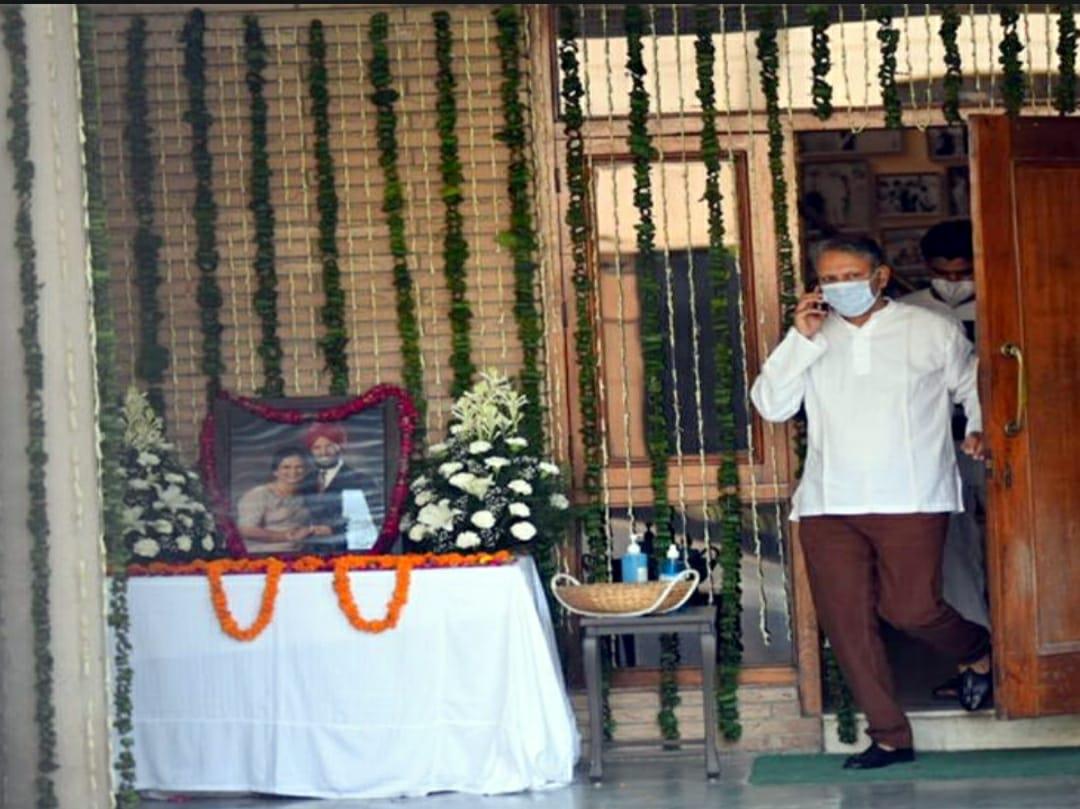
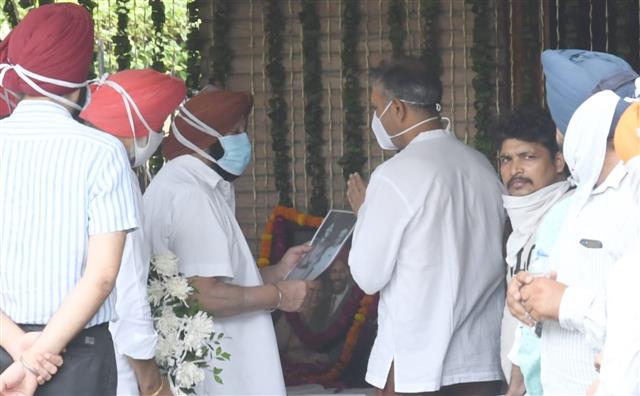
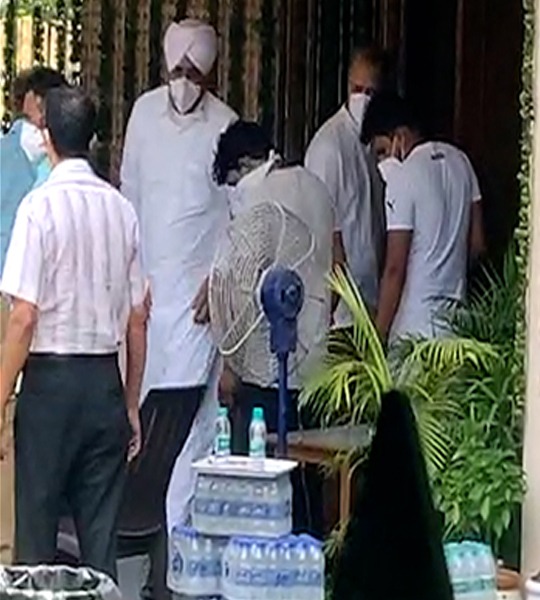
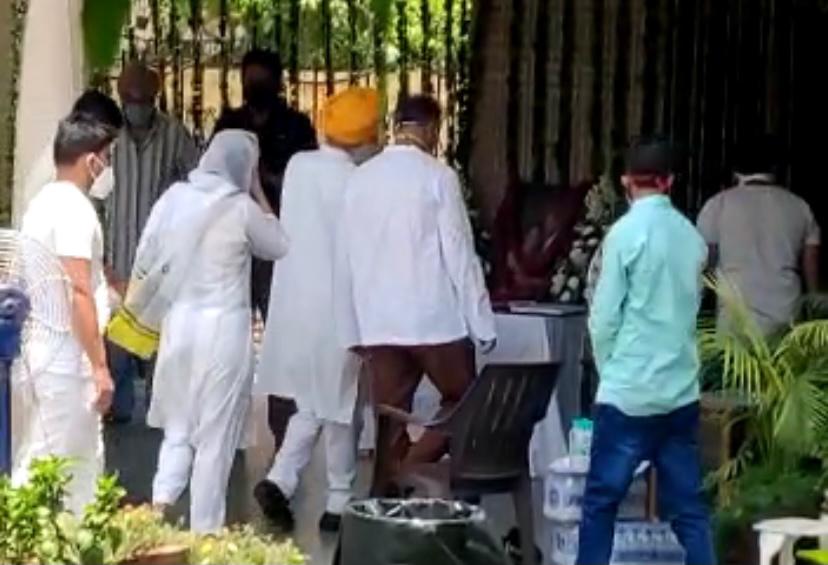
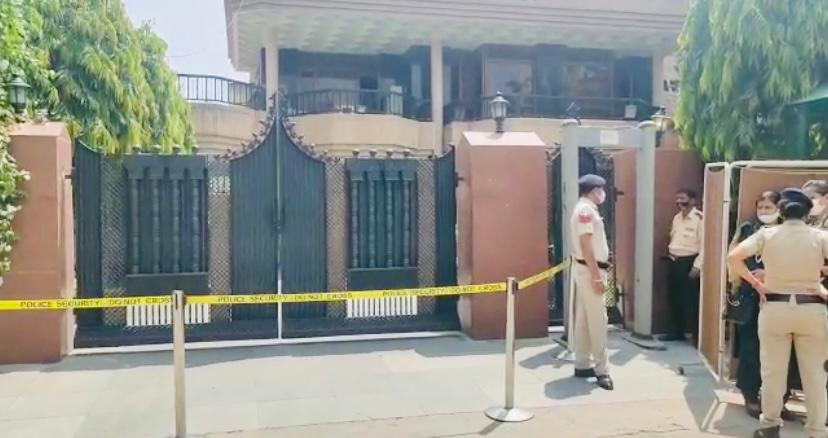
Milkha Singh’s son Jeev. Jeev Milkha Singh handovers a photo of late Milkha Singh with Pandit Jawaharlal Nehru to Punjab CM Capt Amarinder Singh on Saturday. Tribune photo: Pradeep TiwariPunjab Finance Minister Manpreet Singh Badal visited the Milkha family’s residence around noon.Rajya Sabha member Sukhdev Singh Dhindsa at Milkha’s residence.Security outside Milkha’s residence.
Punjab Chief Minister Capt Amrinder Singh, Sports Minister Rana Gurmit Sodhi, Health Minister Balbir Sidhu, Sports Director DPS Kharbanda along with other officials visited Milkha Singh’s residence to pay tributes to the late legendary athlete.
Punjab Finance Minister Manpreet Singh Badal also visited the Milkha family’s residence around noon on Saturday while Union Sports Minister Kiren Rijiju and Punjab Governor and UT Administrator VPS Badnore will pay tribute to the former international sprinter around 2 pm.
Two cadets of Mohali institute commissioned as Flying Officers in IAF
Two cadets of Mohali institute commissioned as Flying Officers in IAFMohali, June 19, 2021:The Combined Graduation Parade (CGP) was held at the Air Force Academy, Dundigal, Hyderabad on Saturday. The parade was reviewed by the Chief of the Air Staff, Air Chief Marshal RKS Bhadauria PVSM, AVSM, VM, ADC.A total of 152 cadets of various branches of the IAF, including 24 women cadets graduated as Flying Officers to join the elite cadre of the IAF. Two cadets of Maharaja Ranjit Singh Armed Forces Preparatory Institute, Mohali, were commissioned in the rank of Flying Officer and awarded their flying wings by the Chief of Air Staff.Cdt Sehaj Sharma has been commissioned into the Helicopter stream. He joined the AFPI in 2014, and on completion of his training there, joined the National Defence Academy as an Air Force cadet. His father, Dharvinder Sharma is a Senior Assistant in the Indian Red Cross Society in Amritsar. His mother, Geeta Sharma, is a house wife.Cdt Preetinder Pal Singh Bath joined AFPI in 2015 and went to NDA in 2017. His father, Rajinder Singh Bath, is a lecturer and mother, Amanpreet Kaur, a teacher. They belong to Pathankot. Preetinder Pal has achieved his dream by joining the fighter stream of the IAF.Maharaja Ranjit Singh AFPI has so far sent 162 cadets to NDA and other military training academies from 2013 onwards. Of these, 85 have already become officers in the armed forces. 68 Cadets have joined the Army; 08 have gone to the Navy and 09 to the Air Force. The rest of the cadets are at different stages of their training in various military academies.Recently a new programme has been started in AFPI called Cadet Training Wing. The aim of CTW is to further enhance the number of boys from Punjab joining the armed forces. Seven schools have been identified in the state to be a part of this programme. AFPI staff will visit these schools frequently to motivate and guide the students to join the armed forces. They will also carry out mirror image of AFPI training in these schools so that students can take the benefit of AFPI training and achieve their cherished goal of joining the armed forces as officers.Currently 92 cadets of the Tenth and Eleventh AFPI courses are under training in Mohali. Due to COVID-19 all training has been in the online mode since March 2020.
Milkha’s achievements are amazing, especially for a man who didn’t even know for the first 22 years of his life that you could make a living by running & winning races
Rohit Mahajan
The seemingly indestructible Milkha Singh — strong and wiry, his gravely voice firm and unwavering, his mental faculties excellent at age 91 — falls to Covid-19.
The greatest Indian runner, reintroduced to younger generations with the movie ‘Bhaag Milkha Bhaag’, was a legend in his own lifetime. The regret of losing a medal at the 1960 Rome Olympics pained him for 61 years, and he’d often say that before he “left this world”, he wanted to see an Indian athlete take the “gold medal that fell out of my hand”.
Milkha didn’t really have the 400m Olympics gold in his hand — however, the medal was well within his reach, and he was one of the favourites to win it. But Milkha’s tale, extraordinary and brutal, inspirational and edifying, is a near-mythical superhero story that has acquired layers with time. The core, though, is crystal clear — the limitless power of the human will. Milkha often repeated an Urdu couplet to explain how he did it:
“Haath ki lakeeron se zindagi nahin banti Azm hamara bhi kuchh hissa hai zindagi banane mein”
Witnessing the killing of his parents and siblings, surviving as a penniless refugee in Delhi, joining the Army and becoming a world-class athlete — Milkha did it all because of his ‘azm’, will.
Not a joke
In the 1980s, to us schoolkids, Milkha Singh was a mythical character, possibly invented for the noble purpose of raising laughter — he was the Sardarji who didn’t catch the thief because he sprinted past him; he didn’t take the bus because he travelled faster than it; he was the man who, when asked if he was relaxing, answered: “No, I’m Milkha Singh.” Before the Rajinikanth memes of paranormal achievements, we had the Milkha Singh and Dara Singh memes.
Milkha’s achievements were indeed extraordinary — he remains the only Indian track athlete to win a gold at the Commonwealth Games, where the athletics competition is markedly stiffer than at the Asian Games; his fourth-place finish at 1960 Rome is the best result for an Indian in track and field at the Olympics (PT Usha emulated him in the boycott-affected Los Angeles Olympics in 1984); his 400m national record stood for 38 long years. An aside — when this reporter called him after Paramjeet Singh broke his record in 1998, Milkha was frank in expressing his doubt over the new ‘record’ because it was set in India — he said an athlete’s top performance comes against tougher competition, i.e. abroad. Milkha had announced an award of Rs2 lakh for the athlete who broke his record, and he did give away Rs1 lakh to Paramjeet, despite the doubts.
Milkha’s achievements are amazing, especially for a man who didn’t even know for the first 22 years of his life that you could make a living by running and winning races.
Milkha ran and won races, 77 out of the 80 that he ran in his lifetime. He made a comfortable life for himself and his family, and his son Jeev Milkha Singh is one of India’s greatest golfers.
Five days before he died, his wife, Nirmal, had passed away. For the Milkha family, their remaining separated for only five days is a sign of “true love and companionship”.
Lamenting over the passing away of the great runner, a friend who was inspired by Milkha said: “Surely, we’ll meet in a better world.” But one would argue that, surely, meeting and knowing of Milkha in this one world we know of, in this one life that we know of, is enough — the lessons that his life can teach us are precious and timeless: azm, blood and sweat, acceptance of the fruits of one’s labours, living life to the fullest. Unlettered and wise, naïve and worldly, Milkha teaches us how to live life — only if one’s willing to be taught. Milkha’s chalice was bitter and sweet, as it is for most of us, but he drank it to the dregs.
Manish Tewari | Modi pause on Chumar set the tone for Galwan
In Doklam, in the June of 2017, the NDA/BJP government was more interested in a propaganda triumph rather than a substantive outcome
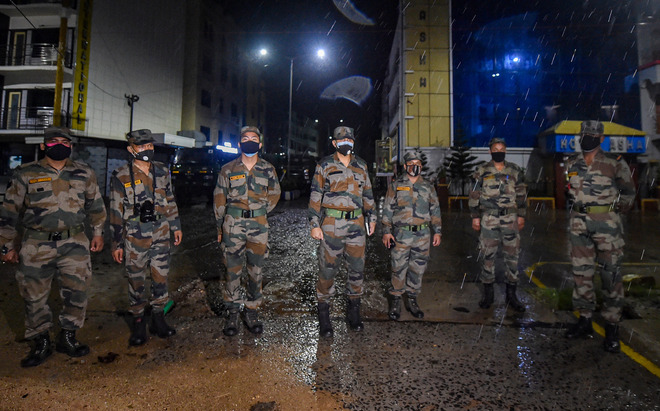
Galwan clash was the most grave confrontation after the October 20 1975 ambush by the Chinese at Tulung La in which four Assam Rifles personnel lost their lives. (Representational image: PTI)
On June 15, 2020, 20 Indian soldiers were martyred in a barbaric clash with the People’s Liberation Army (PLA) in the Galwan Valley. It was the most grave confrontation after the October 20 1975 ambush by the Chinese at Tulung La in which four Assam Rifles personnel lost their lives.
On June 20, the Prime Minister gave a rather bizarre twist to the entire tragedy when he told an all-party meeting that “neither have they intruded into our border, nor has any post been taken over by them (China)”. Then why did we lose 20 braves? Did India then intrude into Chinese territory?
Herein lies the nub of the problem qua China. The NDA/BJP government by repeatedly underplaying both the aggressiveness of Chinese intent and blatant intrusions into areas that lie within the Indian perception of what is the Line of Actual Control (LAC). This has exposed a serious chink in their armour that the Chinese have now exploited to the very hilt. That fissure is the government’s desperation to protect its narrative of muscular nationalism at any cost. It makes them both muddle and mask the truth.
The problem started way back in 2014 when Modi decided to swing with Xi Jinping in Ahmedabad deliberately playing down the Chinese transgression into Indian territory in Chumar. It is inconceivable that the PLA would embark on this adventurism on the LAC without explicit political clearance from the standing committee of the politburo especially when Xi was visiting India.
The Chinese had tried this stunt a year earlier too in Depsang plain’s area. The 19-kilometres deep incursion by an armed patrol of China’s People’s Liberation Army (PLA) into the strategically delicate Daulat Beg Oldie sector in the Aksai Chin region was noticed on April 16, 2013, and immediately interdicted by the Indo-Tibetan Border Police (ITBP). It came just weeks before Chinese premier Li Keqiang’s visit to India between May 19 and 21 and Prime Minister Dr Manmohan Singh’s visit to Japan later that month between May 27 and 30.
The Depsang incursion was designed to send twin messages. First, Chinese were experimenting their new found assertiveness after Xi’s triple anointment as general secretary of the Chinese Communist Party (CCP), president of the People’s Republic of China (PRC) and the chairperson of the Central Military Commission (CMC). Second, it was also a caution to India against expressing overt support to Japan against the background of steadily worsening tensions between China and Japan over the Senkaku (Diaoyu) Islands.
The Chinese were as worried then as they are today about the Quad then. The Standing Committee of the Politburo China’s top decision making forum apprehended that the US was again engaged in putting together a broader alliance in the Asia Pacific comprising India, Japan, Vietnam, the Philippines and Australia to contain China’s rise.
The Depsang intrusions were handled firmly but with élan by the then UPA government. It was acknowledged upfront that the Chinese had indeed come across India’s perception line. A firm message therefore was sent to Beijing that Premier Li Keqiang who was undertaking his first foreign trip would not be very welcome in Delhi if status quo ante was not restored. On May 5, 2013, the Chinese fell back to their default position on the LAC.
As B.G. Verghese pointed out in a signed column on May 28, 2013, “that the government can stand its ground and take farsighted decisions was proven by the way it handled the Chinese intrusion into the Depsang plain without getting rattled or pushed by chauvinistic clamour. At the end of the day, the Chinese blinked and pulled back. That the joint statement issued later did not mention the word ‘intrusion’ — the PM used the phrase ‘incident’ — signified a welcome restraint and desire to avoid teasing statements”.
However, a year later when Chumar happened on the cusp of Xi Jinping’s visit from September 17 to September 20, 2014, an over-sanguine Prime Minister desperate to flaunt his newfound importance in his backyard of Gujarat did not send word to Xi Jinping that he would not be very comfy in India if the Chinese did not withdraw before the visit commenced. Having recently won an election, Prime Minister Modi had the political capital to do that but he blinked. This set the tone for the future.
In Doklam, in the June of 2017, the NDA/BJP government was more interested in a propaganda triumph rather than a substantive outcome. Not only was the withdrawal sequential rather than simultaneous with India withdrawing first, but the Indian government took its eye off the ball and allowed the Chinese to occupy substantial parts of the Doklam plateau within one year of the standoff.
This was followed by the opaque summits in Wuhan in 2018 and Mamallapuram in 2019. A subservient media and a deferential strategic community did not ask the hard questions as to what really was achieved at these informal tête-à-tête’s. By that time the Chinese had sussed out the Indian leadership and had concluded that were they to launch an intrusion across a broad front along the LAC the NDA/BJP government would cover it up rather than deal with it candidly.
This is precisely what happened in April 2020. When the Chinese decided to saunter across the LAC first the government tried to palm it off to differing perceptions of the LAC.
In fact, they had already started running this narrative from December 2019 onwards. Speaking in the Lok Sabha on December 4, 2019, defence minister Rajnath Singh said, “Due to different perceptions of the LAC, sometimes incidents of incursion occur. I accept it. Sometimes the Chinese Army enters here and sometimes our people go over there.”
The government stuck to this chicanery from April to the June of 2020 as a mortified country bristling under a harsh lockdown was trying to keep body and soul together. Only after the Galwan tragedy when the body bags could not be kept under the wraps did the nation wake up to the enormity of the challenge. There again the Prime Minister unleashed the mendacities that he has perfected to an art form much to the delight of the Chinese as it endorsed their position that they have never intruded into Indian territory.
One year later this sad saga continues unchecked. After vacating significant territorial positions on the South Bank of Pangong Lake under a yet-to-be-microscopically-evaluated disengagement plan the government tries to escape the antiseptic glare of sunlight by not even allowing Parliament to have a full-fledged debate on perhaps the most portentous national security challenge that India faces today.end-of
New Delhi: In a huge defence reform Wednesday, the Union Cabinet approved the corporatisation of the Ordnance Factory Board (OFB), a plan which was first mooted two decades ago to streamline the functioning of the 41 ordnance factories across the country.
The corporatisation of ordnance factories — which have become synonymous with poor quality products, delayed timelines and lack of technological advancements — will see these 41 factories subsumed as seven 100 per cent government-owned corporate entities, registered under the Companies Act 2013.https://08de951075cacc62d7fd1f879ba78673.safeframe.googlesyndication.com/safeframe/1-0-38/html/container.html
The ordnance factories are the oldest and the largest organisation in the country’s defence industry with a history that dates back to 1787, when a gunpowder factory was established at Ishapore by the British. The Ishapore factory had started production in 1791.
Headquartered at Kolkata, the OFB is a conglomerate of 41 factories, nine training institutes, three regional marketing centres and five regional controllers of safety. At present, these factories are divided under five clusters or operating groups and they produce a range of arms, ammunition, armoured and infantry combat vehicles, clothing items and others such as parachutes for the services.
The OFB, which has a total workforce of around 81,500 personnel, comes under the administrative control of the Department of Defence Production in the defence ministry.
The government has now approved the corporatisation of OFB, which will give the organisation autonomy and take it out of the direct control of the Department of Defence Production.
The three recognised federations of ordnance factory workers, with affiliations to the RSS, Left and the Congress, have, however, opposed the move and threatened to launch an agitation.
The government though has made up its mind to finish off the corporatisation by the end of this year.
To implement its decisions regarding the move, the government has decided to delegate the authority of the Cabinet to an Empowered Group of Ministers (EGoM), constituted under Defence Minister Rajnath Singh.
Other members of the EGoM are Home Minister Amit Shah, Finance Minister Nirmala Sitharaman and Labour and Employment Minister Santosh Gangwar.
Global consulting firm KPMG has been selected for the corporatisation move.
Cabinet Committee on Security had in July last year approved to convert OFB into one or more than one 100 per cent government-owned corporate entities, registered under the Companies Act 2013.
In less than a year, the Union Cabinet has approved it. Government sources have said that the restructuring is aimed at transforming the Ordnance Factories into productive and profitable assets, deepening specialisation in the product range, enhancing competitiveness besides improving quality and cost-efficiency.
Under the plan, the 41 factories would be subsumed into seven 100 per cent government-owned corporate entities with professional management.
These will be like other government-owned Defence Public Sector Undertakings like the Hindustan Aeronautics Limited and Bharat Dynamics Limited (BDL) among others.
Under the seven entities, there will be an Ammunition and Explosives Group, which would be mainly engaged in production of ammunition of various caliber and explosives with huge potential to grow exponentially, not only by way of Make in India but also by manufacturing for the world.
The Vehicles Group would mainly engage in production of defence mobility and combat vehicles such as tanks, trawls, armoured personnel carriers and mine-protected vehicles. It is expected to increase its share in the domestic market through better capacity utilisation and also explore new export markets.
The Weapons and Equipment Group would be mainly engaged in production of small arms, medium and large caliber guns and other weapon systems. It is also expected to increase its share in the domestic market through meeting domestic demand as well as product diversification.
In addition, the Troop Comfort Items Group, Ancillary Group, Opto-Electronics Group and Parachute Group constitute the entire structure.
During the past two decades, several high-level committees — such as the TKA Nair Committee in 2000, Vijay Kelkar Committee of 2006, Vice Admiral Raman Puri Committee in 2016 and the Lt Gen D B Shekatkar Committee in 2016 — called for ordnance factories to be converted from a government department into a corporate entity.
As mentioned earlier, the OFB had become synonymous with poor quality products, delayed timelines and lack of technological advancements.
The production cost is also too high because the production value per employee is very low.
Because of this, despite the OFB products being priced without charging any profit over the cost of production (as it is barred from making profit from the supplies to the armed forces), the military complains that the cost is just too high.
Apart from the armed forces, which have been complaining for years, the Comptroller and Auditor General of India (CAG) has in multiple reports criticised the department for its way of functioning.
A CAG report in 2018 said that a large number of production orders given to the OFB remained outstanding as of March that year. The oldest of these production orders were from 2009-2010.
The latest example of OFB failing to deliver to the armed forces in a fixed timeline is that of the Dhanush guns.
Since April 2019, when the induction of the Dhanush guns started, only 12 of the indigenously built long-range artillery guns have been delivered as of now. This is far below the 18 guns required to make a full regiment.
This development comes at a time when the armed forces are involved in a conflict with China in Ladakh and have been seeking more artillery guns to “overcome operational voids in the medium artillery in HAA (High Altitude Area) along the northern borders”.
Late last year, an internal army assessment had said faulty ammunition and armament supplied by the OFB caused army casualties and bled the exchequer. The report said that there were 403 accidents over the last six years, which had resulted in the deaths of 27 soldiers and a loss of Rs 960 crore.
The 27 fatalities cited in the Army assessment included the 19 that occurred in the 2016 accidental mine explosion at a depot in Pulgaon, Maharashtra.
The OFB hit back with a statement saying only 19 per cent of the accidents involving defence ammunition between January 2015 and December 2019 could be attributed to the board.
Accusing the Army and the media of selective reportage, the OFB said its own records showed that between 2011 and 2018, there were more than 125 accidents involving ammunition procured from other sources, both domestic and foreign.
It even went on to point out that the Pulgaon accident involved anti-tank mines that had been developed by the Defence Research and Development Organisation (DRDO) and were manufactured strictly according to their design. “Design deficiencies were subsequently noticed and suitable changes are being evaluated,” it had said.
The public spat last year showed the state of affairs between the armed forces and the OFB.
Government says workers will be protected
The OFB Unions have been protesting the corporatisation for years fearing that it would eventually lead to job losses.
The government has told the Unions that it is committed to safeguard the interests of the employees. It has been decided that all the employees of OFB (Group A, B & C) belonging to the production units would be transferred to the corporate entities on deemed deputation initially for a period of two years without altering their service conditions as central government employees.
The pension liabilities of the retirees and existing employees will continue to be borne by the government.





















































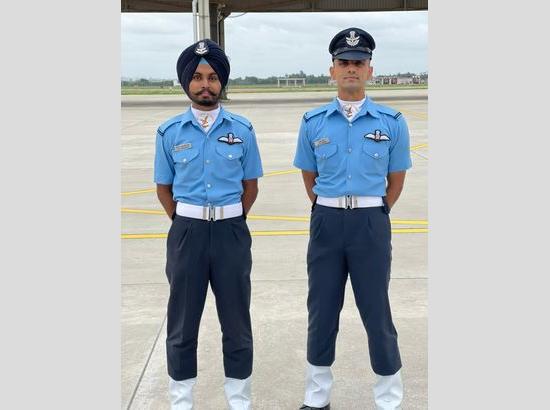 Two cadets of Mohali institute commissioned as Flying Officers in IAFMohali, June 19, 2021:The Combined Graduation Parade (CGP) was held at the Air Force Academy, Dundigal, Hyderabad on Saturday. The parade was reviewed by the Chief of the Air Staff, Air Chief Marshal RKS Bhadauria PVSM, AVSM, VM, ADC.A total of 152 cadets of various branches of the IAF, including 24 women cadets graduated as Flying Officers to join the elite cadre of the IAF. Two cadets of Maharaja Ranjit Singh Armed Forces Preparatory Institute, Mohali, were commissioned in the rank of Flying Officer and awarded their flying wings by the Chief of Air Staff.Cdt Sehaj Sharma has been commissioned into the Helicopter stream. He joined the AFPI in 2014, and on completion of his training there, joined the National Defence Academy as an Air Force cadet. His father, Dharvinder Sharma is a Senior Assistant in the Indian Red Cross Society in Amritsar. His mother, Geeta Sharma, is a house wife.Cdt Preetinder Pal Singh Bath joined AFPI in 2015 and went to NDA in 2017. His father, Rajinder Singh Bath, is a lecturer and mother, Amanpreet Kaur, a teacher. They belong to Pathankot. Preetinder Pal has achieved his dream by joining the fighter stream of the IAF.Maharaja Ranjit Singh AFPI has so far sent 162 cadets to NDA and other military training academies from 2013 onwards. Of these, 85 have already become officers in the armed forces. 68 Cadets have joined the Army; 08 have gone to the Navy and 09 to the Air Force. The rest of the cadets are at different stages of their training in various military academies.Recently a new programme has been started in AFPI called Cadet Training Wing. The aim of CTW is to further enhance the number of boys from Punjab joining the armed forces. Seven schools have been identified in the state to be a part of this programme. AFPI staff will visit these schools frequently to motivate and guide the students to join the armed forces. They will also carry out mirror image of AFPI training in these schools so that students can take the benefit of AFPI training and achieve their cherished goal of joining the armed forces as officers.Currently 92 cadets of the Tenth and Eleventh AFPI courses are under training in Mohali. Due to COVID-19 all training has been in the online mode since March 2020.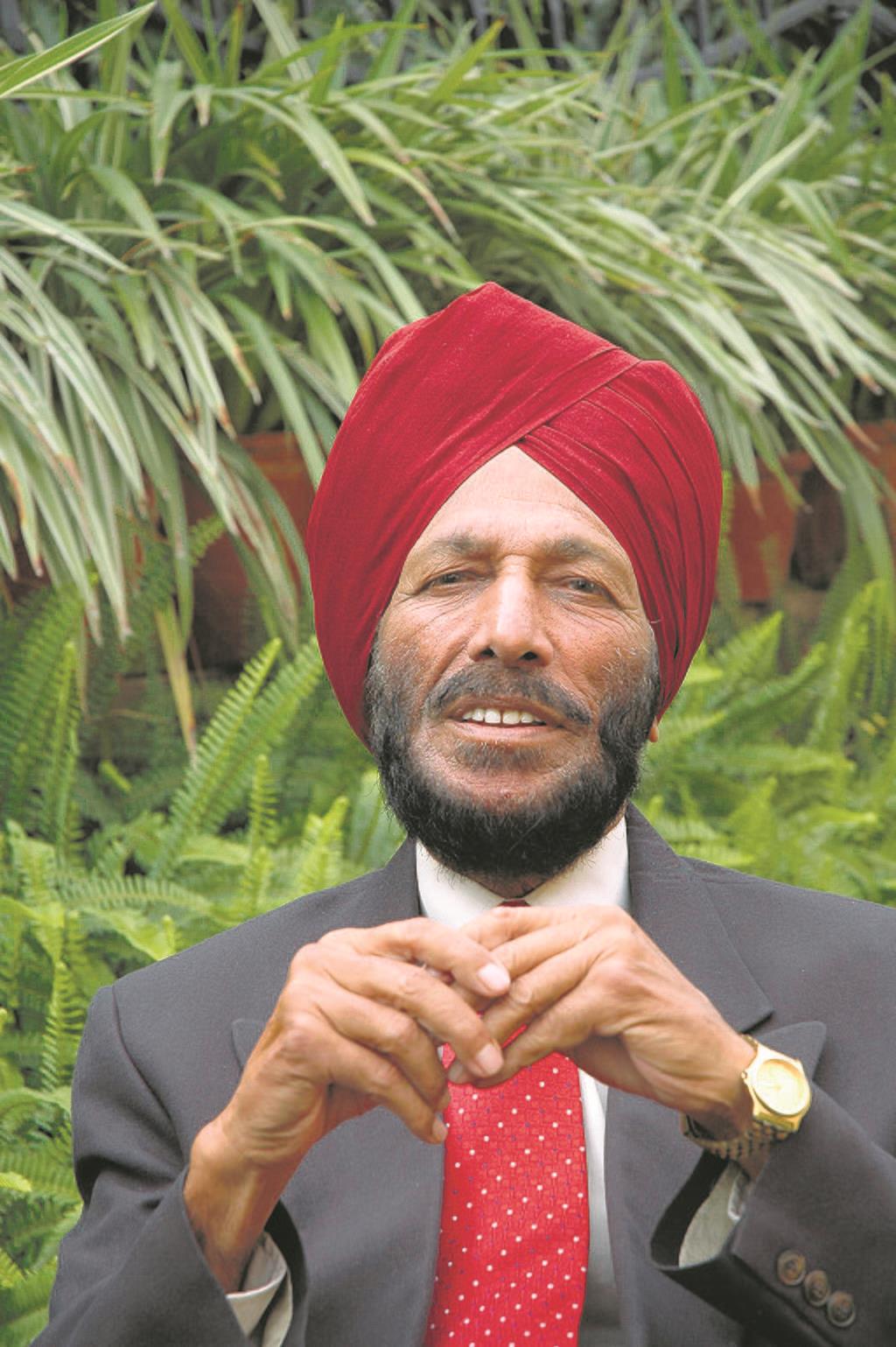

 Galwan clash was the most grave confrontation after the October 20 1975 ambush by the Chinese at Tulung La in which four Assam Rifles personnel lost their lives. (Representational image: PTI)