LONDON, OCTOBER 18 compares US President Biden to Hitler The UK government said on Tuesday that it is taking decisive steps to stop Chinese recruitment schemes attempting to headhunt serving and former British military pilots to train the People’s Liberation Army personnel in China. According to reports, around 30 former UK military pilots are thought to have gone to train members of China’s Army and an intelligence alert is being issued to warn Royal Air Force (RAF) and other Armed Forces personnel against such recruitment drives. While the recruitment does not breach current UK laws, the Ministry of Defence (MoD) said the new National Security Bill would create additional tools to tackle such “security challenges”. “We are taking decisive steps to stop Chinese recruitment schemes attempting to headhunt serving and former UK Armed Forces pilots to train People’s Liberation Army personnel in the People’s Republic of China,” an MoD spokesperson said. “All serving and former personnel are already subject to the Official Secrets Act, and we are reviewing the use of confidentiality contracts and non-disclosure agreements across Defence, while the new National Security Bill will create additional tools to tackle contemporary security challenges – including this one,” the spokesperson said. Armed Forces Minister James Heappey told ‘Sky News’ that the recruitment of UK pilots to train Chinese counterparts had been a concern within the MoD “for a number of years”. “Don’t go and train foreign air forces without checking with the MOD whether they are a foreign air force we want to see you train – would be a good rule,” he said. The retired British pilots are reportedly being used to help understand the way in which Western planes and pilots operate, information which could be vital in the event of any conflict. “It is a lucrative package that is being offered to people. Money is a strong motivator,” the BBC quoted a Western official as saying, with some pay packages thought to be as much as USD 270,000. The UK first became aware of a small number of cases of former military pilots being recruited in 2019, which were dealt with on a case-by-case basis. The COVID-19 pandemic slowed attempts down, when travel to China was almost impossible but the attempts have now increased, leading to an alert. P
Missiles, exploding drones again hit Ukraine’s power, water
HANNA ARHIROVA Airstrikes cut power and water supplies in a repeatedly bombed Ukrainian city and pounded critical energy facilities elsewhere on Tuesday, part of what Ukraine’s president denounced as a quickening Russian campaign to drive Ukrainians into the cold and dark and making peace talks impossible. President Volodymyr Zelenskyy said nearly one-third of Ukraine’s power stations have been destroyed in the past week, “causing massive blackouts across the country.” “No space left for negotiations with Putin’s regime,” he tweeted. The campaign of strikes using missiles, drones and other weaponry has opened a new phase in Russian President Vladimir Putin’s nearly eightmonth invasion, as winter begins to bite. Even far from battlefields, water, heating and power are no longer certainties, with daily strikes reaching far into the country to slam utilities, sometimes faster than they can be repaired. The latest city to lose power and water was Zhytomyr, home to military bases, industries, leafy boulevards and about 250,000 people some 140 kilometers (85 miles) west of the capital, Kyiv. City and regional officials said hospitals in Zhytomyr had to run on backup power after a double missile strike Tuesday targeted an energy facility and that other settlements in the area also lost electricity. In Kyiv, missile strikes damaged two power facilities, said Mayor Vitali Klitschko. The attacks killed one person and injured six others, he said. As well as missiles, Russia is mixing up its modes of attack. Suicide drones — so called because they slam into targets and explode — set ablaze an infrastructure facility in the partly Russian-occupied southern Zaporizhzhia region, the regional governor said. Air-defense S-300 missiles that Russia has been repurposing as ground-attack weapons as its stocks are being depleted were used to strike the southern city of Mykolaiv, killing a man whose body was found in the debris of a two-story building, the region’s governor said. In the eastern city of Kharkiv, rockets were used to hit an industrial area. The regional governor said the eight rockets were fired from across the nearby border with Russia. Waves of explosives-laden suicide drones had also struck Kyiv on Monday, hitting energy facilities and setting ablaze and partly collapsing buildings. One drone slammed into a four-story residential building, killing four people. Ukraine says Russia is getting thousands of drones from Iran. The Iranian-made Shahed drones that nose-dived with their explosive charges into targets in Kyiv on Monday have also been widely used elsewhere in recent weeks. In the past week alone, more than 100 drones have slammed into power plants, sewage treatment plants, residential buildings, bridges and other targets in urban areas, Ukraine’s Foreign Ministry said. In a televised address on Monday night, Zelenskyy said Russia is using kamikaze drones because it is losing ground in the war. “Russia doesn’t have any chance on the battlefield, and it tries to compensate for its military defeats with terror,” he said. “Why this terror? To put pressure on us, on Europe, on the entire world.” PTI The Prime Minister Narendra Modi call for a global response to global terrorism could not have come at a more opportune time. The world is facing the threat of terrorism like never before. Terrorism is faceless and recognizes no borders. Its victims too are for the most part innocent civilians. It is in this context that the Prime Minister has urged the global community to work faster to “eliminate safe havens” for terrorists, criminals and the corrupt. He went on to emphasise that when the forces of good cooperate, the forces of crime cannot operate. The Prime Minister was inaugurating the 90th General Assembly of Interpol being held in New Delhi. He warned about the harmful globalised threats that the world faces — terrorism, corruption, drug trafficking, poaching and organised crime. The pace of change of these dangers is faster than earlier. When threats are global, the response cannot be just local! It is high time that the world comes together to defeat these threats, the Prime Minister emphasized. The conference is being attended by 195 member countries of Interpol which included a delegation of Pakistan led by its Federal Investigation Agency (FIA) Director General Mohsin Butt. Modi said India has been combating trans-national terrorism for several decades. Long before the world woke up to it, India knew the price of safety and security. Thousands of our people made the ultimate sacrifice in this fight. A safe and secure world is a shared responsibility of the global community. When the forces of good cooperate, the forces of crime cannot operate. There can be no safe havens for the corrupt, terrorists, drug cartels, poaching gangs or organised crime. Such crimes against people in one place are crimes against everyone, crimes against humanity. Further, these not only harm our present but also impact our future generations. Police and law enforcement agencies need to devise procedures and protocols to increase cooperation. Interpol can help by speeding up Red Corner Notices for fugitive offenders. India has 780 active Red Notices as of now, of which 205 are related to criminals wanted by the Central Bureau of Investigation (CBI). The Prime Minister pointed out that terrorism is not limited to physical space and has spread its presence through online radicalization and cyber threats. At the click of a button, an attack can be executed or systems can be brought to their knees. Each nation is working on strategies against them. But what we do within our borders is no longer enough. There is a need to further develop international strategies. Establishment of early detection and warning systems, protecting transportation services, security for communication infrastructure, security for critical infrastructure, technical and technological assistance, intelligence exchange, many of these things need to be taken to a new level. The Prime Minister said corruption and financial crimes have harmed the welfare of the citizens of many countries. The corrupt find a way to park the proceeds of crime in different parts of the world. This money belongs to the citizens of the country from which they have been taken. Often, this has been taken from some of the poorest people in the world. Illicit money is pushed into evil activities and becomes one of the major sources of terror funding. From illegal drugs that destroy young lives to human trafficking, from weakening democracies to the sale of illegal arms, this dirty money funds many destructive enterprises. Yes, there are diverse legal and procedural frameworks to deal with them. However, there is a need for the global community to work even faster to eliminate safe havens. India is hosting the Interpol General Assembly after a gap of about 25 years to coincide with celebrations for the 75th year of India’s independence. The proposal in this regard was conveyed by Home Minister Amit Shah to Interpol Secretary General Jurgen Stock during his visit to India in 2019. The proposal was put to vote in the last General Assembly which was accepted with an overwhelming majority. SPIRITUAL WORLD DISCLAIMER: The opinions expressed in the articles published in these columns are the personal opinions of the authors. The facts and opinions appearing in the articles do not reflect the views of Bright Punjab Express and Bright Punjab Express does not assume any responsibility or liability for the same.
in order to enhance its regional status vis-a-vis China, India takes its role in the Quad very seriously. And yet, New Delhi’s refusal to slam Russia’s aggression risks generating tensions within the group. Firstly, this is because both China and Russia oppose the Quad. Secondly, Japan, the US and Australia have imposed some of the harshest sanctions on Moscow. India has been a party to Quad’s joint statements that support ‘democratic values’ and ‘democratic resilience’.
Anita Inder Singh
Founding professor, Centre for Peace and Conflict Resolution, New Delhi
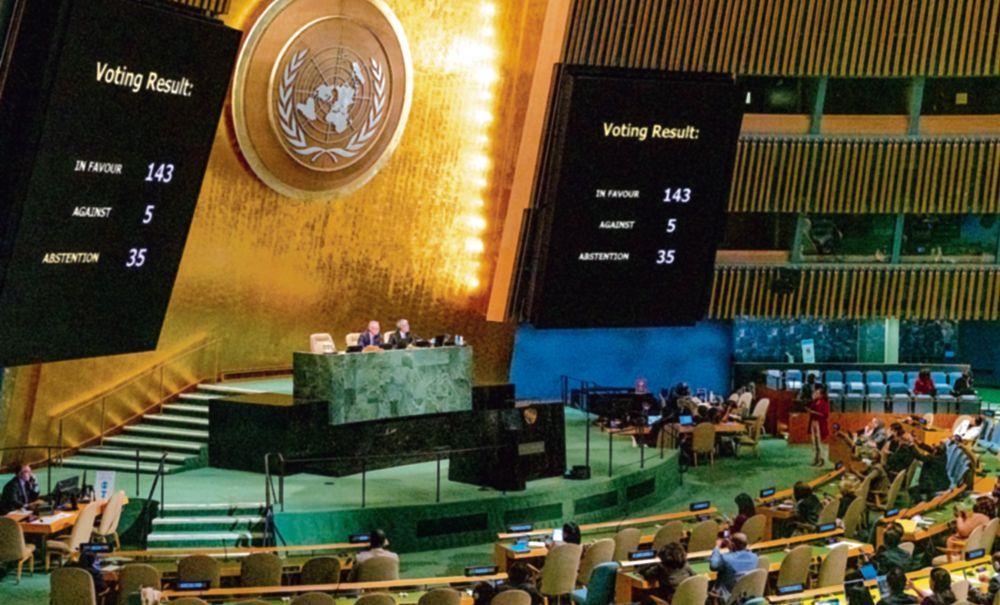
INDIA’s vote at the UN General Assembly on October 11 against Russia’s demand for a secret ballot on a draft resolution to condemn its annexation of four regions of Ukraine is merely one indication of the challenges Russia’s assault on Ukraine has created for Indian diplomacy.
Earlier, justifying India’s decision to abstain from condemning Russia’s invasion of Ukraine at the Globsec 2022 forum in Slovakia in June, External Affairs Minister S Jaishankar asserted that “Europe has to grow out of the mindset that Europe’s problems are the world’s problems, but the world’s problems are not Europe’s problems.”
This reflects scant concern for the resounding impact — extending far beyond Europe — of Russia’s decision to conquer a country whose independence it recognised after the Soviet Union collapsed in 1991.
One result of that invasion has been a global food crisis, which has affected developing countries adversely. Another is that India’s partners in the Quad fear that China, the superior economic partner in the Sino-Russian relationship, could follow Russia’s example and embark on expansionist adventures in the Indo-Pacific.
Additionally, Russian President Vladimir Putin’s perception of himself as a 21st-century ‘Peter the Great’ trying to win back Russian lands through war and his contempt for international law and the rules-based order (RBO) suggest that his ideal world lies somewhere between the 18th and 20th century. Evidently, he is determined to remake the international order by conquest, which was outlawed by the UN Charter after the Second World War.
As a member state of the Quad, which believes that the RBO can advance security and progress in the Indo-Pacific, India should, together with the US, Japan and Australia, find this contempt unacceptable. India says it is on the side that respects the UN Charter and its founding principles. However, it has condemned neither Russia’s invasion nor the annexation of some Ukrainian territories through illegal referenda. Russia’s recent threat to wage nuclear war also goes against India’s commitment to nuclear disarmament and strengthening the non-proliferation order. But what is India’s reaction to this threat?
“Where was Europe when China was expanding in Asia?” asked Jaishankar. Well, the EU was strengthening its trading ties with China. So was India. The difference is that no EU country’s sovereignty is menaced by China, while India and most of China’s Asian neighbours face its threats to their territorial integrity. True, the EU has no defence policy and lacks military clout in Asia or even in Europe. But whatever its deficiencies, the EU is not as narrow-minded as New Delhi alleges. Actually, the EU has invested heavily in Asia and in developing countries generally, to counter China’s economic clout.
Between 2013 and 2018, the EU provided €410 billion in official development aid worldwide, and China only €34 billion. It gave ASEAN €800 million to fight the Covid-19 pandemic — more than any other partner of the regional organisation. And India itself could benefit from the EU’s €300 billion Global Gateway fund, which aims to expand connectivity, including in the Indo-Pacific. In 2019, EU investment in ASEAN amounted to €313.6 billion (over $300 billion). Indian investment into ASEAN from April 2019 to March 2022 was $55.5 billion.
At another level, as a military power, India’s horizons extend to the defence of its own borders with China and Pakistan. But India faces strong Chinese military and economic competition, even in its immediate South Asian neighbourhood. Militarily, India cannot defend ‘Asia’ against Chinese expansionism any more than the EU.
Why has India abstained from voting against Russia? The main reason is that Russia has been India’s major arms supplier for more than half a century. In the UN Security Council, India regretted that “the path of diplomacy was given up” in Ukraine. That sounds weak since India did not say by which country. By abstaining and by dismissing Ukraine as a European problem, India may have lost the chance to reach out to Moscow and Kyiv to find the middle ground through dialogue and diplomacy. Significantly, Russia and China welcome India’s abstention as being against the US. Their applause may not work to India’s advantage in Washington.
New Delhi’s claim that developing countries have turned to India in the wake of the food crisis caused by the Ukraine war needs substantiation. In fact, head of the African Union President Macky Sall of Senegal and President Joko Widodo of Indonesia, heading the G20, met Putin in June to discuss the food, fertiliser and fuel crises caused by Russia’s blockade of Ukrainian ports.
Prime Minister Narendra Modi met Putin for the first time since Russia’s invasion began last February at the China-led Shanghai Cooperation meeting in September. Meanwhile, G7 countries, which include Japan, will contribute over $4.5 billion to address the global food security. Over half of this amount will come from the US, which will give $2.76 billion in additional funding to help mitigate the impact of the Ukraine war on growing food insecurity and malnutrition.
In order to enhance its regional status vis-a-vis China, India takes its role in the Quad very seriously. And yet, New Delhi’s refusal to slam Russia’s aggression risks generating tensions within the group. Firstly, this is because both China and Russia oppose the Quad. Secondly, Japan, the US and Australia have imposed some of the harshest sanctions on Moscow. India has been a party to Quad’s joint statements that support ‘democratic values’ and ‘democratic resilience’. If Russia continues and escalates its war in Ukraine, and if India maintains its current position, it could raise embarrassing questions about the Quad’s commitment to maintaining the RBO and become a political burden for its Quad partners.
On another plane, India — like its territorial contestant China — is entitled to buy Russian oil in the wake of Russia’s aggression in Ukraine, just as EU countries were purchasing far greater quantities of energy from Moscow since 2014, when it invaded Ukraine after 1991 and annexed Crimea. But India can learn something from the EU’s experience — reliance on territorial spoilers for energy or trade, whether the spoiler is Russia in Europe or China against India, can be self-defeating in the long run.
The legal, political and economic repercussions of Russia’s war in Ukraine extend far beyond Europe — to the Indo-Pacific and Africa. Perceiving itself as a leader of the developing world, India should carve out a bigger international role for itself to end the conflict and reduce its unfortunate impact on developing societies.
Unveiling of leadership line-up on Oct 23 to offer clues about future direction
JAYADEVA RANADE
President, Centre for China Analysis and Strategy
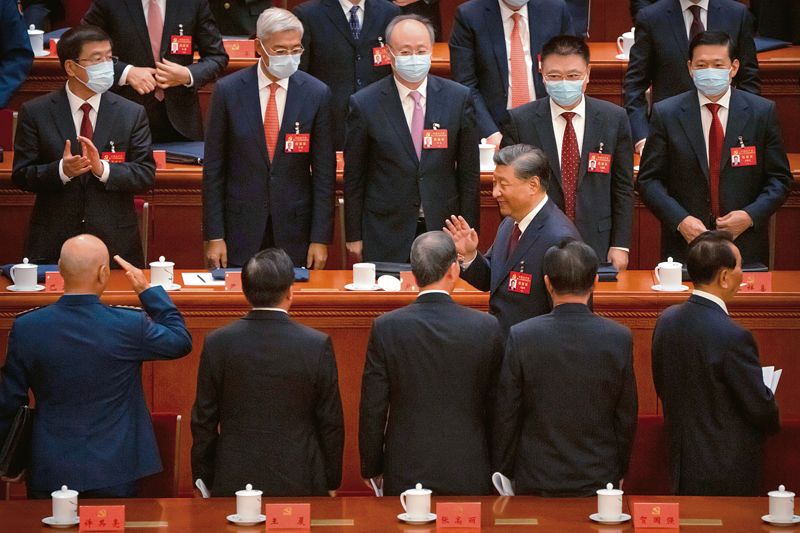
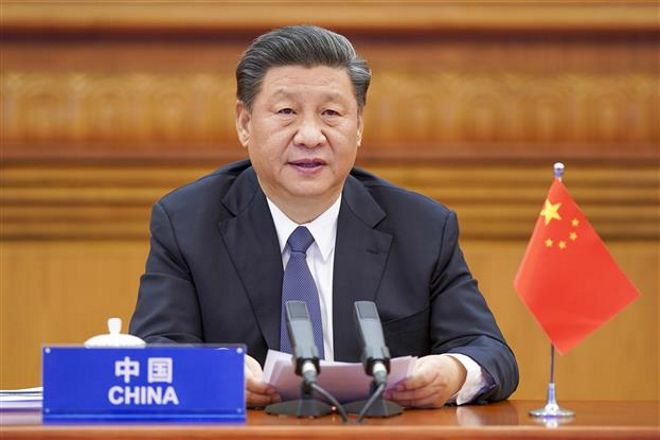
The 20th National Congress of the Chinese Communist Party (CCP), which started on October 16, is a watershed event in China’s post-Deng Xiaoping history for a number of reasons. Attended by 2,340 out of 2,379 delegates, including 83 specially invited delegates, it will be closely monitored by capitals around the world. CCP Central Committee (CC) general secretary Xi Jinping’s work report to the Congress as well as the new leadership line-up that will be unveiled on October 23 will similarly be scrutinised for clues as to China’s future direction.
The development will also reveal the extent to which Xi has consolidated power and secured the party’s support.
Former leaders Jiang Zemin and Zhu Rongji were absent, probably due to ill-health, but veteran revolutionary, 105-year-old Song Ping, sat on the podium along with other retired leaders, including Xi’s immediate predecessor and former Premier Wen Jiabao.
On the opening day, Xi read excerpts from the 72-page report, focusing on its main points. Unlike at the 19th Party Congress in 2017, the state-owned CCTV said this year Xi got a long, standing ovation when he entered and didn’t share the stage with anyone but stood alone.
He struck a confident note in his speech even while warning that China must be prepared for ‘strong winds and high waves and even dangerous storms’. He declared that ‘China’s international influence, appeal and power to shape the world has significantly increased’. He said ‘Confronted with drastic changes in the international landscape, we have maintained a firm strategic resolve and shown a fighting spirit’, adding ‘Throughout these endeavours, we have safeguarded China’s dignity and core interests and kept ourselves well-positioned for pursuing development and ensuring security’. Pointing to ‘scientific socialism’ and ‘Chinese wisdom’ in the report, Xi said China offered a ‘new choice for humanity’!
As in the previous congress, Xi reiterated ‘the commitment to socialist market economy and high-quality opening up’ and asserted that development was the party’s ‘top priority’ in governance. He reiterated the importance of the recent policies to ‘balance development and security’, ‘common prosperity’ and ‘dual circulation’. While he underscored the need to ‘regulate income distribution and regulate the mechanism behind the accumulation of wealth’, he underplayed ‘common prosperity’. Implying an emphasis on self-reliance and innovation, the report incorporated new sections on science and education, national security and the legal system. Technology was another priority area. The references to security and ‘balanced development’ confirm that the two will be interlinked.
This congress is especially significant as it signals a break in the convention established by the leadership since the 17th Party Congress of a two-term tenure for the general secretary of the Chinese Communist Party CC — China’s most powerful post. There is no defined term limit in the party constitution for the general secretary, but Xi’s continuance for a third term will be a break with the practice since Mao’s death in 1976.
Important is that by re-electing Xi for a third term, the 2,340 delegates will have endorsed his policies. They will have also implicitly approved his style of governance, thereby acquiescing to the concentration of all power in his person. His reappointment will signal that the practice, followed in varying degrees by the CCP’s higher echelons of taking decisions by consensus, has been discarded. This will be reaffirmed if, as mentioned by the politically neutral Hong Kong newspaper Ming Pao on June 23, the party congress decides to designate Xi as lingxui, or ‘leader’.
There was a visible effort in this direction by the CCP CC’s just-concluded 7th plenum. Disclosing on October 13 that there will be amendments to the party constitution, a report in China’s official Xinhua news agency said ‘the latest achievements of adapting Marxism to China’s context and new circumstances will be fully epitomised and so will the new ideas, new thinking and new strategies of governance developed by the CPC Central Committee since the party’s 19th National Congress in 2017.’ If this results in the ‘Xi Jinping Thought’, it will elevate Xi to the level of Mao Zedong!
In the two months between mid-August and October five books on his thoughts on various subjects have been published. These covered a variety of subjects, like governing the party, socialist spiritual civilisation, on strengthening the army, and a volume on ‘Xi Jinping’s stories’.
The announcement on October 23 of the members of the Politburo Standing Committee and politburo will reveal the extent to which Xi has been able to induct loyalists into these bodies. It will demonstrate the extent to which he has consolidated power and secured the party’s support. In other words, the fig leaf of inner party democracy, together with steps (albeit tentative) towards separation of Party and State sought to be put in place by Xiaoping — precisely to prevent the emergence of an all-powerful leader like Mao — will have been given a quiet burial by Xi. This congress will accord it the party’s approval
The contours of Xi’s policies in certain important areas like security and the economy are already visible. The ‘zero-Covid’ policy is unlikely to be relaxed. No foreign countries were mentioned, but Hong Kong and Macau figured with tough language for Taiwan ‘separatists’. Indicating the continuing importance of security and social stability, Xi declared in the report that ‘national security is the foundation of national rejuvenation’. He reiterated the goal of making China prosperous and strong by the middle of the century and of building a community with a shared future for mankind.
China’s focus on military modernisation ominous for India
President Xi Jinping. AP/PTI file photo On course to get a third five-year term, Chinese President Xi Jinping has announced that his country’s military modernisation programme would continue at full steam over the next five years. He has set his sights on expeditiously making the People’s Liberation Army (PLA), which will celebrate its centenary in 2027, an armed force of world-class standards, even as the long-term goal is to achieve ‘the great rejuvenation of the Chinese nation’ by 2049. Xi has declared that the Chinese military will intensify troop training and combat preparedness to ‘fight and win’ wars, along with establishing a strong system of strategic deterrence. Cocking a snook at the US, he has warned that China will not renounce the use of force to unify Taiwan with the mainland.
Xi’s speech at the 20th National Congress of the ruling Communist Party makes it obvious that he is in no mood to tone down his belligerent rhetoric, even though the world’s second largest economy is in the throes of a slowdown, triggered by the draconian zero-Covid policy and the Russia-Ukraine war. National security and sovereignty are likely to take precedence over economic resurgence as China looks to throw its weight around on a larger scale. The accelerating pace of Beijing’s nuclear expansion should be a major cause for concern for the international community: China is expected to have up to 700 deliverable nuclear warheads by 2027, and at least 1,000 by 2030, according to a Pentagon report.
Though India did not find a mention in Xi’s address, the presence of military commander Qi Fabao, who was injured in the 2020 Galwan valley clash, among the delegates and the screening of video clips of the bloody faceoff in the Great Hall of People were clearly aimed at rubbing New Delhi the wrong way. The PLA’s modernisation overdrive makes it incumbent on the Indian armed forces to considerably raise their level of battle preparedness. In view of China’s incorrigibly overbearing demeanour, the challenging task of achieving jointness of the three services under the supervision of the new CDS needs to be completed on priority.
Ukraine to get anti-drone systems in coming days, NATO’s Stoltenberg says
NATO will deliver air defence systems to Ukraine in coming days to help the country defend itself against the drones, including those from Iran, that Russia is using to target critical infrastructure, the alliance’s secretary-general said on Tuesday.
Ukraine said attacks by swarms of drones had destroyed almost a third of its power stations over the past week after Russia stepped up its attacks on infrastructure far from the front line after suffering a string of military setbacks at the hands of Ukrainian troops.
Addressing a security conference in Berlin, NATO chief Jens Stoltenberg said the answer to the attacks was for the allies to step up their deliveries of air defence systems.
“The most important thing we can do is deliver on what allies have promised, to step up and deliver even more air defence systems,” he said.
“NATO will in the coming days deliver counter-drone systems to counter the specific threat of drones, including those from Iran.”
Iranian officials told Reuters that Tehran had promised to supply Russia, whose military efforts in Ukraine are being hampered by Western sanctions, with missiles as well as more drones.
“No nation should support the illegal war of Russia against Ukraine,” Stoltenberg said. Reuters
Army celebrates diamond jubilee of the Battle of Walong where it gave a ‘bloody nose’ to the Chinese in 1962
The Indian Army is celebrating the diamond jubilee of the Battle of Walong which is as an example of bravery and sacrifice made by the bravehearts of the force in the face of Chinese aggression in 1962.
Sixty years ago the Indian Army gave a “bloody nose” to the Chinese in the Battle of Walong, Tezpur-based Defence spokesperson Lt Col AS Walia said in a statement.
“The Indian Army launched its only counterattack during the war to stall the advancing People’s Liberation Army (PLA) soldiers. The bravehearts of Indian Army held back the Chinese troops for 27 days, which forced them to deploy its reserve division from Tawang to Walong.
“Outnumbered and with little ammunition and no resource of any kind, the valiant troops continued to hold their ground in a classic example of fighting till last man, last round,” the statement said.
This saga of valour and sacrifice serves as a tale of inspiration for generations to come, it added.
#IndianArmy is celebrating 60 yrs of Battle of #Walong, a shining example of unparalleled bravery, guts & sacrifice by soldiers fighting Chinese onslaught in 1962. The month long celebration inaugurated by GOC @Spearcorps by paying homage at the war memorial.@SpokespersonMoDpic.twitter.com/aA1lbzWwd9— PRO Kohima, Ministry of Defence (@prodefkohima) October 18, 2022
The month-long celebrations which are aligned with the operations and events as it occurred in between October and November 1962, would include lectures on the Battle of Walong at Army War College Mhow, Defence Services Staff College Wellington and in Kolkata, the statement said.
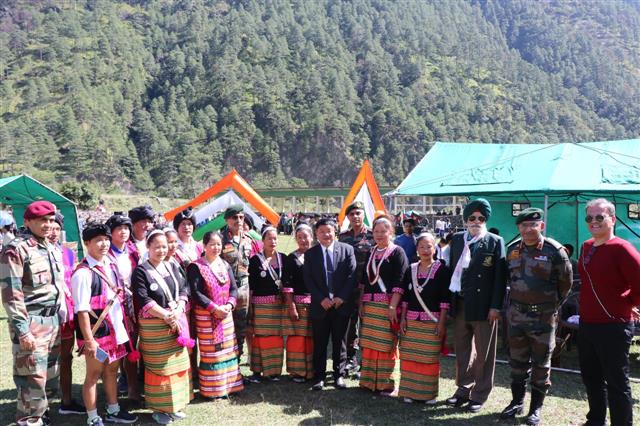
The event was inaugurated at Walong in Anjaw district of Arunachal Pradesh by General Officer Commanding of Spear Corps on Monday.
He paid homage at the war memorial and interacted with the war veterans and also honoured the porters who participated in the battle.
An equipment display was also organised for the locals as part of ‘Know your Army’ campaign.
The event would also include a motorcycle rally, to be flagged off from Tezpur, which will traverse the battlefields of 1962, collecting soils from those areas, which will thereafter be instated at Walong War Memorial, the statement said.
The celebrations would culminate on November 17 at Walong.
A large number of war veterans and their relatives would also be honoured, the statement said.
Indus Waters Treaty: World Bank appoints neutral expert, chairman of Court of Arbitration
Decision in view of disagreements and differences between India, Pakistan over the 1960 treaty
Washington, October 18
The World Bank has appointed a “neutral expert” and a chairman of the Court of Arbitration regarding the Kishenganga and Ratle hydroelectric power plants, in view of disagreements and differences between India and Pakistan over the 1960 Indus Water Treaty.
Announcing the appointments, the World Bank said on Monday that it is confident that the highly qualified experts appointed as Neutral Expert and as members of the Court of Arbitration will engage in fair and careful consideration of their jurisdictional mandate, as they are empowered to do by the Treaty.
Michel Lino has been appointed as the Neutral Expert and Sean Murphy has been appointed as Chairman of the Court of Arbitration. They will carry out their duties in their individual capacity as subject matter experts and independently of any other appointments they may currently hold, the World Bank said in a statement.
There was no immediate reaction from India to the appointments.
India and Pakistan signed the treaty in 1960 after nine years of negotiations, with the Washington-based World Bank being a signatory. The treaty sets out a mechanism for cooperation and information exchange between the two countries regarding their use of the rivers. However, India and Pakistan disagree over whether the technical design features of Kishenganga and Ratle hydroelectric power plants contravene the Treaty.
Pakistan asked the World Bank to facilitate the establishment of a Court of Arbitration to consider its concerns about the designs of the two hydroelectric power projects, while India asked for the appointment of a Neutral Expert to consider similar concerns over the two projects, the statement said.
“The World Bank continues to share the concerns of the parties that carrying out the two processes concurrently poses practical and legal challenges. The World Bank is confident that the highly qualified experts appointed as Neutral Expert and as members of the Court of Arbitration will engage in fair and careful consideration of their jurisdictional mandate, as they are empowered to do by the Treaty,” it said.l
Under the Indus Water Treaty (IWT), all the waters of the eastern rivers – Sutlej, Beas, and Ravi – amounting to around 33 million acre feet (MAF) annually is allocated to India for unrestricted use. The waters of western rivers – Indus, Jhelum, and Chenab – amounting to around 135 MAF annually have been assigned largely to Pakistan.
India is permitted to construct the run of the river plants on western rivers with limited storage as per criteria specified in
GOG Purpose: they kept watch on 26 welfare scheme: without executive powers but DC’s,SDM’s, failed them : data reveals’:: a false allegation by APP govt that they were not competent a lame excuse
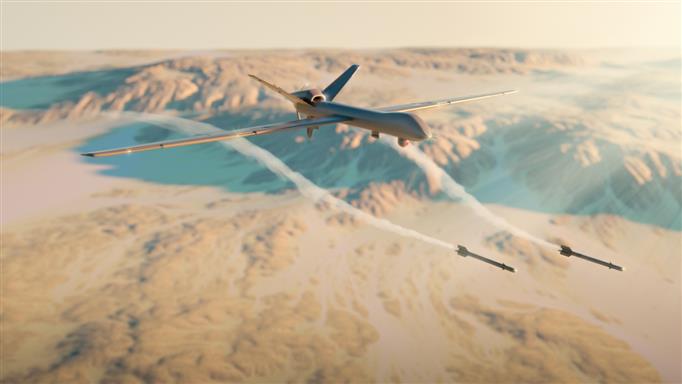
A top Ukrainian official on Monday claimed that Russia used kamakaze drones to attack Kiev, the latest in a series of recent strikes targeting the capital city. Taking to Twitter on Monday morning, Andriy Yermak, head of Ukrainian President Volodymyr Zelensky’s staff, said: “The capital was attacked by kamikaze drones. The Russians think it will help them, but such actions are like agony. “We need more air defence systems ASAP. More weapons to defend the sky and destroy the enemy.” Also known as loitering munitions, kamakaze drones are small aerial weapons which are destroyed after striking the target. Unlike other drones, which are supposed to return home after dropping missiles, kamikaze drones are disposable. The name derives from the Japanese pilots who volunteered to crash their planes in suicide missions in World War Two. Also confirming the drone attacks which occurred between 6.30 a.m. to 8.10 a.m., Kiev Mayor Vitalii Klitschko warned residents of the capital not to go to the city centre unless there was an urgent need. In a series of tweets, he said that the attacks triggered an explosion in a residential building in the Shevchenko district, from where a woman’s body was recovered, while 18 people were rescued. While three people have been hospitalized, one remain trapped under the rubble, the Mayor said, adding that search and rescue operations were ongoing. In a social media post, Zelenksy said: “Kamikaze drones and missiles are attacking all of Ukraine. A residential building was hit in Kiev. “The enemy can attack our cities, but it won’t be able to break us. The occupiers will get only fair punishment and condemnation of future generations. And we will get victory.” Meanwhile, Mayor of Mykolaiv Oleksandr Senkevich said that three drones had ignited the tanks in the port city late Sunday evening, just hours before the attack in Kiev. A Ukrainian air force official said the drones had flown into the country from the south, reports the BBC. Last week, Russia attacked Ukrainian cities, including Kiev, with at least 83 missiles which led to the killing of 14 people, while several regions were left without electricity and water. This was the first time since the war began on February 24 that the centre of Kiev had been directly targeted. The Russian attacks came in retaliation to Ukraine blowing up a key bridge in Crimea. I
State Stalwarts
DEFENCE MINISTER
Minister Rajnath Singh
ALL HUMANS ARE ONE CREATED BY GOD
HINDUS,MUSLIMS,SIKHS.ISAI SAB HAI BHAI BHAI
CHIEF PATRON ALL INDIA SANJHA MORCHA
LT GEN JASBIR SINGH DHALIWAL, DOGRA
SENIOR PATRON ALL INDIA SANJHA MORCHA
MAJOR GEN HARVIJAY SINGH, SENA MEDAL ,corps of signals
.
.
PATRON ALL INDIA SANJHA MORCHA
MAJ GEN RAMINDER GURAYA ,MADRAS REGIMENT
sanjhamorcha303@gmail.com
PRESIDENT SOUTH ALL INDIA SANJHA MORCHA
COL SS RAJAN BOMBAY SAPPERS,
PRESIDENT UTTARAKHAND ALL INDIA SANJHA MORCHA
COL B M THAPA ,BENGAL SAPPERSS
PRESIDENT HARAYANA STATE CUM COORDINATOR ESM
BRIG DALJIT THUKRAL ,BENGAL SAPPERS
PRESIDENT TRICITY
COL B S BRAR (BHUPI BRAR)
PRESIDENT CHANDIGARH ZONE
COL SHANJIT SINGH BHULLAR
.
.
PRESIDENT PANCHKULA ZONE AND ZIRAKPUR
COL SWARAN SINGH
INDIAN DEFENCE FORCES
DEFENCE FORCES INTEGRATED LOGO
INDIAN AIR FORCE
Air Officer C-in-C WESTERN AIR COMMAND
AIR MSHL S PRABHAKARAN AVSM VM
AOC-IN-C, EASTERN AIR COMMAND
Air Marshal Inderpal Singh Walia
AOC-in-C SOUTH WESTERN AIR COMMAND
Air Marshal Vikram Singh
AOC-IN-C, SOUTHERN AIR COMMAND
Air Marshal J.Chalapati
AOC-IN-C TRAINING COMMAND
AIR MARSHAL SK GHOTIA VSM
AOC-IN-C MAINTENANCE COMMAND
Air Marshal Jagdish Chandra
Flag Officer Commanding in Chief, Western Naval Command
ice Admiral R Hari Kumar, PVSM, AVSM, VSM
Flag Officer Commanding in Chief, Eastern Naval Command
Vice Admiral Sanjay Bhalla, AVSM, NM
Flag Officer Commanding in Chief, Southern Naval Command