













Sanjha Morcha

What’s New

Click the heading to open detailed news

Current Events :

web counter

Print Media Reproduced Defence Related News

Netra early warning aircraft to get Final Operational Clearance on June 25

The FOC follows the Initial Operational Clearance (IOC), an operational phase where a limited number of aircraft are inducted into service and further modifications as required are suggested and carried out

Amidst a push for developing additional Airborne Early Warning and Control (AEW&C) Systems, the Netra AEW&C developed indigenously by the Defence Research and Development Organisation (DRDO), will be formally awarded the Final Operational Clearance on June 25, about a decade after the first aircraft was inducted into service.

“A ceremony for the declaration of Final Operational Clearance (FOC) of Netra Airborne Early Warning and Control System is planned on 25 June 2026 at Centre for Airborne Systems (CABS), DRDO, Bengaluru,” DRDO said on Friday. “The FOC is a major milestone achieved for an indigenous system of systems such as the Netra AEW&C.”

The FOC officially certifies that a military aircraft is fully combat-ready, structurally sound, and equipped with all the required operational capabilities. The FOC follows the Initial Operational Clearance (IOC), an operational phase where a limited number of aircraft are inducted into service and further modifications as required are suggested and carried out.

The IAF, at present, has three Netra Mark-1 systems based on the Embraer – 145 airframe, which are based at Bhisiana Air Force Station near Bathinda in Punjab with No. 200 Squadron.

Inducted in 2015, these aircraft have been deployed in war like situations, first during the airstrikes on terror camps at Balakote in Pakistan’s Pakhtunkhwa area in 2019, then during the India-China border stand-off in 2020 and then during Operation Sindoor in 2025. These aircraft are complemented by three Beriev A-50 Airborne Warning and Control Systems that are based on the Russian IL-76 platform.

AEW&C aircraft form a critical element of network centric operations. Equipped with advanced radars and sensors, they act like an eye in the sky, not only keeping a watch on hostile platforms from a long range, but also guiding friendly aircraft during operations and relaying battlefield data to command centres.

In 2003, the Indian Air Force (IAF) and DRDO carried out a joint study for the development for an AEW&C system and after the project received government approval, DRDO’s Centre for Airborne Systems (CABS), was made the nodal agency for the design, system integration and testing of the system.

Four other DRDO laboratories were also actively involved, with the Electronics and Radar Development Establishment responsible for developing the primary radar, Defence Electronics Application Laboratory for communication systems and data link, Defence Avionics Research Establishment for self-protection suite and electronic warfare measures and the Defence Electronics Research Laboratory for communication support.

Three ERJ – 145 were procured from Brazil and were extensively modified with additional features like in-flight refueling, satellite communication capability, avionics and electrical systems and various aerodynamic and structural changes. The first fully modified aircraft made its maiden flight in December 2011 at the Embraer facilities in Brazil and the aircraft was delivered to DRDO in August 2012.

The first Netra aircraft was delivered to the IAF by DRDO in February 2017 and it received initial operational clearance in October 2017 after trial runs at the Bhisiana Air Force Station. The second and third aircraft were received by the IAF in 2019 and 2023.

The central government has accorded its approval for developing another six Netra AEW&C of the Mark-1A variant, which would be more advanced with an enhanced mission suite, upgraded sensors and longer range radar for effective detection of low‑observability aircraft like drones and stealth jets and better human‑machine interface and tighter integration into IAF systems.

Plans are also under way to develop Netra’s Mark-2 variant involving a larger aircraft, more powerful radar with a detection range of over 500 kms and improved all‑round situational awareness. Six Airbus A-321 have been procured by the IAF from Air India for the project.


‘Baseless, pathetic’: Iran rejects Trump’s claims, alleges US attacks killed 3 Indian seafarers

The Embassy of Iran in India on Saturday rejected the US President Donald Trump’s allegations regarding an Indian vessel in the Strait of Hormuz, calling them “baseless”.

It also accused Washington of attempting to deflect attention from recent attacks on commercial ships carrying Indian seafarers.

The Iranian Embassy said the US attacked three Indian vessels in less than a week, resulting in the death of three Indian sailors, and described the actions as “brutal” and “pathetic”.

In a post on X, the official account of the Embassy of the Islamic Republic of Iran in India shared, “The U.S. president’s accusation against Iran regarding an Indian vessel in the Strait of Hormuz is simply baseless. It is an attempt to divert public attention from the brutal fact that the U.S. has attacked 3 Indian vessels in less than a week and killed 3 innocent Indian sailors. That’s pathetic!”

The U.S. president’s accusation against Iran regarding an Indian vessel in the Strait of Hormuz is simply baseless. It is an attempt to divert public attention from the brutal fact that the U.S. has attacked 3 Indian vessels in less than a week and killed 3 innocent Indian… https://t.co/2UiXWAMulM

This comes after Trump alleged that Iran was behind the attacks on three vessels carrying Indian seafarers near the Hormuz Strait, which resulted in the deaths of three, despite the US Central Command having confirmed that the strikes were carried out by American naval forces, calling the incident “totally unacceptable”.

His remarks followed Iran’s condemnation of the United States attacks on commercial vessels carrying Indian seafarers, resulting in the death of three in the Gulf of Oman, describing the actions as “brutal” and accusing Washington of engaging in “lawless conduct” that threatens global peace and maritime security.

In a statement on X, Esmaeil Baqaei, Spokesperson of the Ministry of Foreign Affairs of Iran, expressed condolences over the deaths of Indian nationals killed in the attacks and called for international accountability.

“The brutal U.S. attacks on Indian commercial vessels, which have killed at least three Indian nationals, stand as clear evidence of America’s ongoing policy of armed robbery and State piracy. We extend our sympathies to the families and friends of the slain Indian sailors and offer our sincere condolences to the Indian people and government,” the statement said.

He further urged the international community to take action against the repeated violations of international norms.

“The international community must hold the United States accountable for its lawless conduct, which continues to threaten global peace and security while endangering the freedom of navigation,” the spokesperson added.


India successfully tests multi-layered air defence against ballistic missiles

Three successful interceptor trials put the country in the elite group of nations having BMD capability to engage up to ranges of Intercontinental Ballistic Missiles

article_Author
Ajay Banerjee

Taking the country’s air defence capabilities to the next level, the Defence Research and Development Organisation (DRDO) has successfully conducted three consecutive flight tests demonstrating a multi-layered defence system against long-range ballistic missiles.

The DRDO has also tested a naval missile designed to target enemy ships at sea.

The Ministry of Defence on Saturday said that the multi-layered Ballistic Missile Defence (BMD) capability was successfully demonstrated during a series of tests carried out on June 10 and 11.

“The interceptors (missiles fired to bring down the incoming threats) successfully engaged their respective targets. The systems have been designed and developed with the latest technologies to address emerging missile threats,” the ministry said.

According to the ministry, these tests have put the country in the elite group of nations having BMD capability to engage up to ranges of Intercontinental Ballistic Missiles (ICBMs).

In military terminology, an ICBM refers to a missile with a range more than 5,000 km. A BMD – like the once developed by India—should be able to intercept the incoming threat.

Among the series of tests, the DRDO also successfully carried out the maiden flight test of the Naval Anti-Ship Missile-Medium Range (NASM-MR).

India has been developing missile interceptors in the past two decades. The first test of the Prithvi Air Defence (PAD) interceptor for high-altitude engagements was conducted in 2006-07, followed by trials of the Advanced Air Defence (AAD) interceptor for low-altitude interceptions.

The system was further fine-tuned over the years, with multiple successful tests of the PAD and AAD systems conducted off the Odisha coast during 2017 and 2018. These trials demonstrated the capability to intercept simulated ballistic missile targets with high accuracy.

In April 2023, India successfully conducted the maiden flight test of a sea-based (naval) BMD interceptor.

The tests done over the past two days are part of the next stage of development to have long-range, high-speed interception capabilities, including the ability to counter ICBM-class threats.

Prior to tests announced on Saturday, a series of BMD tests have also been conducted in 2022 and in July 2024.

Defence Minister Rajnath Singh has congratulated the DRDO on the successful demonstration of these crucial technologies.

Rajesh Kumar Singh, Secretary, Department of Defence R&D and Chairman of the DRDO, closely monitored the trials and applauded the combined efforts of DRDO and industry partners.


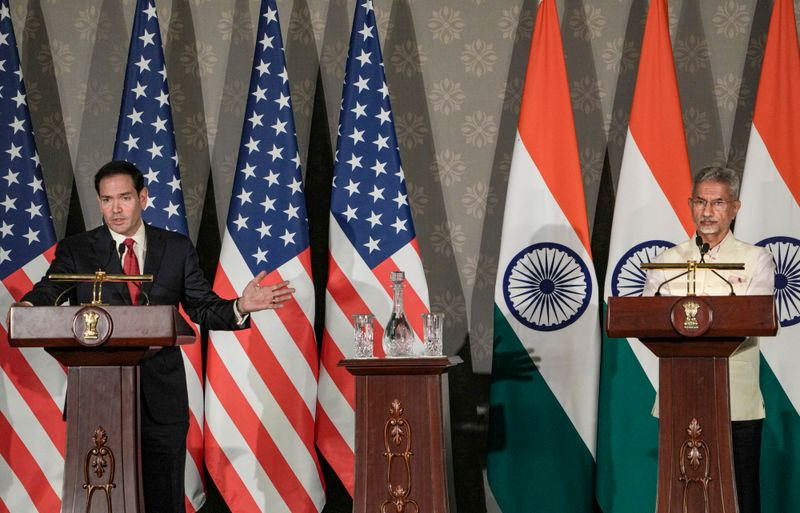
‘Not justified’: Jaishankar to Rubio on killing of 3 Indian mariners in US strike off Oman coast

External Affairs Minister S Jaishankar and US Secretary of State Marco Rubio during a bilateral meeting. PTI file

External Affairs Minister S Jaishankar on Saturday raised with US Secretary of State Marco Rubio the killing of three Indian mariners in a US military strike on a merchant vessel in the Gulf of Oman.

Jaishankar, currently on a visit to Europe, spoke to the US Secretary of State on the phone.

“Spoke to US Secretary of State Marco Rubio this evening. I reiterated India’s strong protest at the attacks by the US Navy in the Gulf that killed three Indian mariners,” the External Affairs Minister said on social media.

“Such lethal actions against commercial shipping are not justified,” he said.

India on Friday summoned Charge d’Affaires Jason Meeks and told him that the American military’s lethal strikes on commercial vessels with Indian crew members off the coast of Oman are unacceptable.

A Palau-flagged oil tanker, Marivex, carrying 24 Indian seafarers, was disabled by US forces on June 8. All crew members were safely rescued.

On June 10, the US struck another Palau-flagged tanker, Settebello, killing three out of the 24 Indian sailors on board.

Another vessel, Jalveer, a Guinea-Bissau-flagged tanker wi


HEADLINES : 11 JUN 2026

ARMED FORCES PREPARATORY INSTITUTE HOSHIARPUR: LAST DATE 18 JUN2026

First batch of women cadets for permanent commission to pass out from IMA on June 13

Mohali’s Major Arshdeep Singh Gill receives Kirti Chakra for gallantry

Army Havildar dismissed for filming women at Command Hospital, AFT grants bail 

Indian mariner killed, 2 missing in US attack

MoD inks Rs 449-cr contract for 20 jammers for Indian Navy

ITBP floats tender to get body of jawan lost on Mt Everest 30 years ago

Dhaka’s Pakistan pivot

Bill Gates testifies Epstein pressured him using knowledge of his affairs

Stranded British paraglider heli-rescued by IAF after crash in Himachal’s Kullu

No Tejas delivered yet, HAL may face penalty

3 Army personnel among 5 critically ill patients airlifted from Ladakh to Chandigarh

Army opens fire at Pakistani drone along LoC in J-K’s Poonch

India-EU tie has a Pak feeling

Op Bluestar’s unfinished lessons for Punjab

US Army Apache helicopter crashes near Strait of Hormuz amid tensions over Iran conflict


First batch of women cadets for permanent commission to pass out from IMA on June 13

Armed Forces began inducting women officers in streams other than medical in 1992, initially only under the short service commission

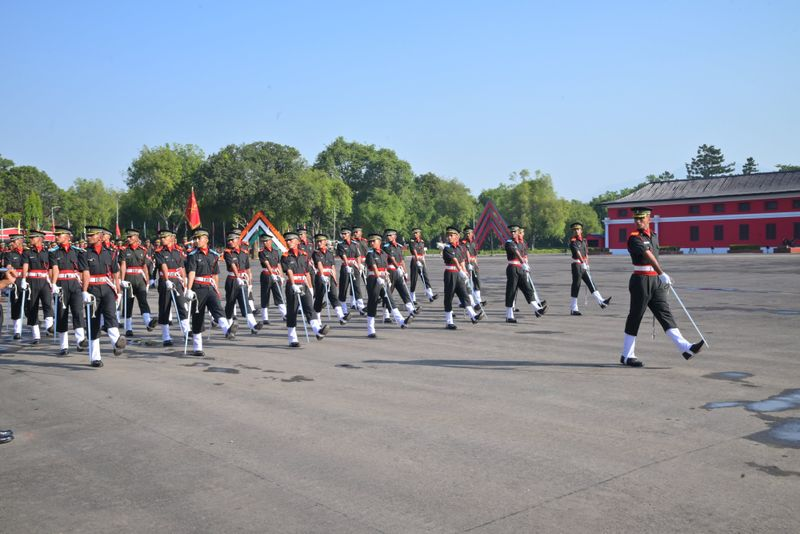
Over 93 years after it was established, the Indian Military Academy (IMA), Dehradun, will witness a historic moment when the first batch of women cadets for permanent commission take the ‘Antim Pag’ (final step) from the academy’s hallowed parade ground on culmination of the passing out parade of the Spring Term – 2026, scheduled for June 13.

Eight women cadets of the pioneering batch will be pipped as Lieutenants alongside their male counterparts after having completed a four-year grueling training regimen, including the first three years at the National Defence Academy (NDA) Kharakvasla.

The first batch of 17 women cadets, including 10 for the Army, six for the Air Force and three for the Navy had passed out from the NDA in June 2025 and proceeded to their respective service academies for pre-commission training.

NDA alumni have a one-year training programme at the IMA, whereas the training period for direct entry cadets after graduation is 18 months. While permanent commission has been extended to women officers across all arms they are a part of following directives of the Supreme Court, they are still not eligible to join the IMA directly and have to become officers either through the NDA or the Officers Training Academy (OTA) in Chennai.

Since its inception in October 1932, IMA has trained close to 68,000 officers, including about 3,000 from more than 30 friendly foreign countries. Women officers from foreign countries are trained at OTA.

In 2021, the Supreme Court had directed the Central Government to admit women in the NDA following a suit filed by several aspirants for a permanent career in the Armed Forces. Subsequently, the first batch was admitted in 2022. By early 2026, a total of 158 women cadets have joined the NDA, according to government figures.

The Armed Forces began inducting women officers in streams other than medical in 1992, initially only under the short service commission. After some women officers took recourse to legal action, the Supreme Court directed in 2020 that women officers also be granted permanent commission. In 2022, entry of women soldiers into the rank and file was also opened in some branches under the Agnipath Scheme.

As the maiden regular batch of women cadets at the IMA prepares to take its first out of the academy after wearing the two stars of a Lieutenant of their shoulders, the achievement of becoming the first woman to pass out from the IMA as an officer goes to Sai Jadhav, who became a Lieutenant in the Territorial Army (TA) in December 2025.

After completing her six-month training at IMA alongside 15 male officers, Sai, who is an MBA, was assigned to the TA’s 130th Ecological Battalion of the Kumaon Regiment. The TA is a trained volunteer force of gainfully employed civilians who can be called to supplement the regular Army and serve in an emergency.

The entry of women into the Indian Armed Forces dates back to 1888, with the formation of the Military Nursing Service, though it was then staffed with British personnel. The first Indian nurses were enrolled in 1914.

In 1958, for the first time, women doctors were granted regular commissions in the Army Medical Corps on the same terms as men. Following limited roles in support and logistics branches during the formative years after induction in 1992, women officers now form part of almost all combat arms and services except the Infantry and the Armoured Corps. In 2014, the Army increased the annual vacancies for women officers from 80 to 144.


Mohali’s Major Arshdeep Singh Gill receives Kirti Chakra for gallantry

Major Arshdeep Singh Gill, a brave officer of the Army and a resident of Sector 79, Mohali, has been awarded the Kirti Chakra, the country’s second-highest peacetime gallantry award, for his exceptional courage and devotion to duty. The honour was conferred by President Droupadi Murmu during the Defence Investiture Ceremony held at Rashtrapati Bhavan in New Delhi.

Major Gill, who serves with The Armoured Corps and 1 Assam Rifles, displayed extraordinary bravery, leadership and determination during a challenging counter-insurgency operation in Manipur. During the nearly 84-hour-long operation, he led his team from the front and successfully carried out action against militants, ensuring the successful completion of the mission.

According to Army sources, Major Gill demonstrated remarkable courage and professionalism despite adverse and highly dangerous conditions. In recognition of his gallant actions and outstanding service, he was selected for the prestigious Kirti Chakra award.

The achievement has brought immense pride to Punjab and the nation. Family members, friends and well-wishers have expressed happiness and admiration over the honour bestowed upon him. Officials associated with the armed forces and security agencies have described his accomplishment as an inspiring example for the youth of the country.

Major Gill’s recognition is being seen as a testament to selfless service, courage and unwavering commitment to the nation, reflecting the highest traditions of the Indian armed forces.


Army Havildar dismissed for filming women at Command Hospital, AFT grants bail 

Examination of the phone revealed 28 videos and images of women engaged in private acts inside a washroom

Army authorities who seized a Havildar’s mobile phone while probing possible espionage allegations instead found videos and images of women engaged in private acts recorded in a washroom at Command Hospital (Western Command), Chandimandir. He was subsequently dismissed from service and sentenced to one year’s rigorous imprisonment after a District Court-Martial found him guilty.

The Armed Forces Tribunal (AFT) has now granted bail to former Havildar More Sandip Sadashiv.

Sadashiv, 45, was posted at HQ 474 Engineer Brigade in 2020. On June 24, 2022, he reported to Command Hospital (Western Command), Chandimandir, for treatment of a skin infection and was admitted on June 30 after being diagnosed with scabies.

On July 25, 2022, Military Intelligence personnel confiscated his mobile phone to examine it for confidential information linked to suspected espionage. He was discharged from the hospital two days later.

Examination of the phone revealed 28 videos and images of women engaged in private acts inside a washroom.

He was charged under Section 354C of the Indian Penal Code, which criminalises watching or capturing images of a woman engaged in a private act without her consent. Army authorities alleged that he used his mobile phone to record videos and capture images inside the women’s washroom at the hospital between July 21 and July 25, 2022. The washroom was located opposite the ward where he had been admitted.

A District Court-Martial in Ambala found him guilty and sentenced him to one year’s rigorous imprisonment. He was also dismissed from service and reduced in rank. The punishment was promulgated on March 24 this year.

During a hearing before the Chandigarh Bench of the AFT on May 29, the tribunal noted that Sadashiv had already spent more than nine months in custody. His counsel, Rajesh Sehgal, sought suspension of the sentence pending disposal of the appeal, arguing that the punishment awarded was less than three years.

The bench of Justice Sudhir Mittal and Lt Gen Ravendra Pal Singh observed that the appeal, filed this year, was unlikely to be decided in the near future.

“Thus, the application is allowed. The remaining prison sentence of the appellant is suspended during the pendency of the appeal. The appellant shall be granted bail subject to his furnishing bail and surety bond…,” the tribunal said.


Indian mariner killed, 2 missing in US attack

Delhi issues demarche to Chargé d’Affaires

An Indian mariner was killed and two others were reported missing at sea following a US military attack on a merchant vessel —Settebello — off the coast of Oman on Wednesday.In response, New Delhi tonight issued a demarche to US Chargé d’Affaires Jason Meeks in protest against the attack.

Meanwhile, amid fresh escalation between the US and Iran, President Donald Trump warned against possible military action, saying, “We’re going to be attacking them, and attacking them very hard.”

Trump’s warning came hours after Bahrain, Kuwait and Jordan — all of which host US troops — came under Iranian fire. It was the second time this week that back-and-forth strikes have tested a two-month ceasefire.

On Settebello, the UK Maritime Trade Operations said it received a report of an incident some 20 nautical miles (nearly 40 km) northeast of Sohar, Oman. “The local authorities have reported a tanker has experienced a fire in the engine room and are on the scene assisting with the evacuation of the crew. The vessel has reported one casualty while two crew members are missing,” it said.

Sources in India said the two missing mariners “have not been accounted for” on board the vessel. Another 21 mariners — all Indians — on board the ship have been rescued by the Omani authorities. Settebello was supposedly moving around as “a dark ship”, meaning its automated identification system was not switched on. The ship has not sunk, the sources said.

The Ministry of External Affairs condemned the attack on the commercial vessel. “Our Embassy in Oman is closely monitoring the situation and proactively coordinating with the Omani authorities in the ongoing search and rescue operation,” an MEA statement said.

The continuing incidents of attacks on shipping in the region are deeply worrisome and a direct result of the ongoing conflict in the region, the statement said. The MEA reiterated the immediate need for de-escalation of tension and the conclusion of ongoing negotiations for a diplomatic solution.

The targeting of commercial shipping and civilian infrastructure in the region must end, and free and unimpeded navigation and commerce through the international waterways in the region in keeping with international law must be restored at the earliest, it said.

Meanwhile, tensions between the US and Iran escalated sharply after Iran’s Islamic Revolutionary Guard Corps (IRGC) said it launched drone and missile attacks against US-linked military targets in Bahrain, Kuwait and Jordan in response to American strikes on southern Iran.

Earlier, the US Central Command said it carried out “self-defence strikes” against Iranian targets in response to the downing of a US attack helicopter — the Apache — over the Strait of Hormuz.

The US Central Command said it struck Iranian air defence, ground control stations and surveillance radar sites near the Strait of Hormuz with precision munitions.

Iranian Foreign Minister Abbas Araghchi warned that Iran would “leave no attack or threat unanswered”, raising fears of further escalation between the two countries.

The IRGC claimed that it launched a drone attack against the US Fifth Fleet in Bahrain and added its Aerospace Force launched long-range missiles at an airbase in Jordan that hosts US military personnel. The IRGC claimed the attack destroyed four key targets, including F-35 fighter jet hangars and a command-and-control centre, though the claims have not been independently verified.

The Kuwaiti army said its air defence systems were intercepting “hostile aerial targets”.