Sanjha Morcha

What’s New

Click the heading to open detailed news

Current Events :

web counter

Print Media Reproduced Defence Related News

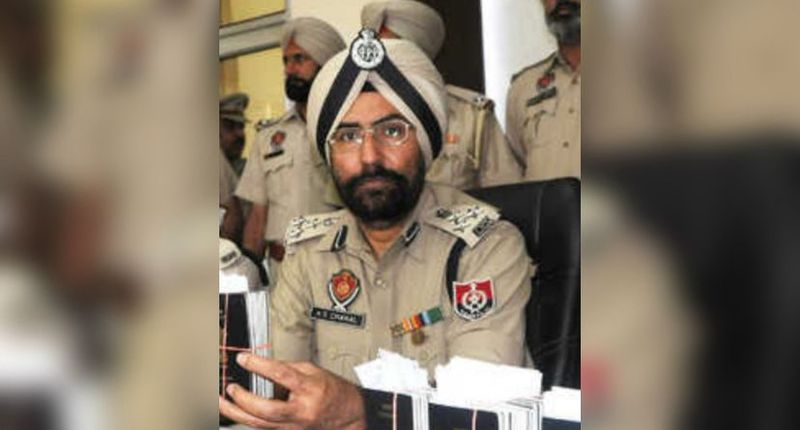
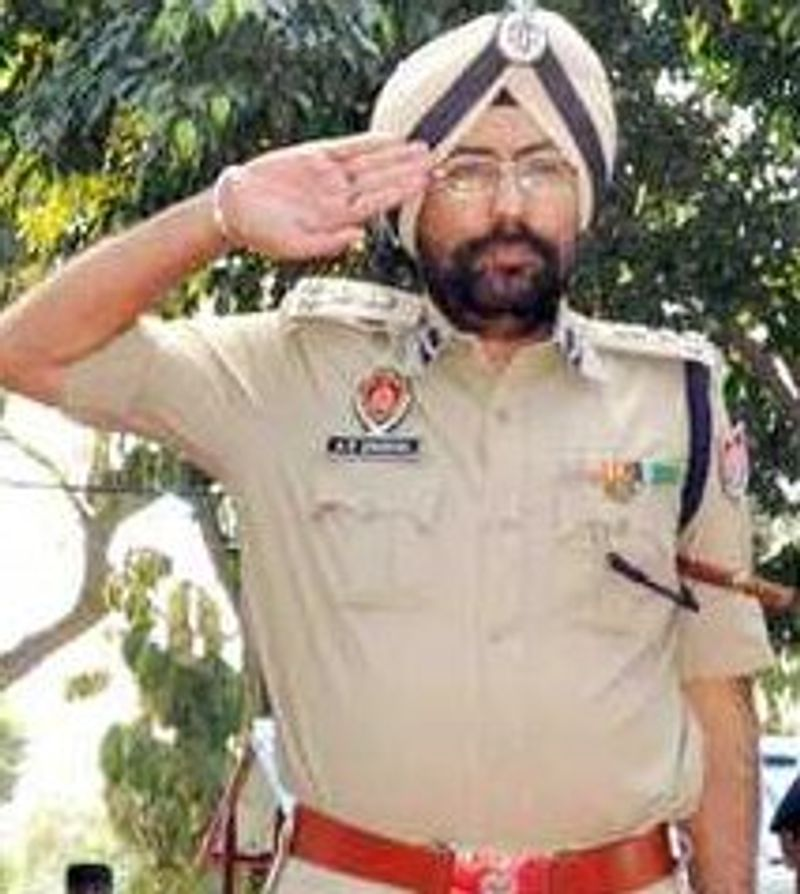
Duped of Rs 8 crore, Punjab ex-IPS officer Amar Singh Chahal shoots self

Former Punjab cadre IPS officer Amar Singh Chahal allegedly shot himself on Monday after being “defrauded” of over Rs 8 crore by online scammers. He was rushed to a private hospital with a critical injury.

In a note, he wrote, “I am in deep trouble. I have been scammed out of crores of rupees by very sophisticated investment and wealth managers. Most of the money I borrowed was from friends and relatives whom I am not able to face as I have no money to repay them. I am left with no option other than to take my life.”

Known to be a very public-friendly police officer, Chahal alleged that he had invested the money over the past decade, but instead of any returns, the company continued to ask for more money.

The former cop further mentioned that the main culprit used a picture of a CEO of a reputed company on his WhatsApp account and that “all transactions were made online through a bank”.

Before taking the step, the former Inspector General, who retired in 2019, wrote to the PM, Home Minister, Finance Minister and the Punjab DGP, highlighting the scam and how he was defrauded and demanded a CBI probe.

The note was recovered by the police from his residence and a probe is underway.

In the note, Chahal mentioned he used a service weapon allotted to his gunman and that he (gunman) should not be held responsible in any manner. “I hope criminals will not go unpunished and my family will get justice. I also request all my friends from whom I borrowed money to let my family come out of the shock before they are in a position to repay the loans,” he mentions.

“The site is named as F777 Wealth Equity Research Group and they have multiple numbers. I had borrowed over Rs 7 crore from friends and relatives and I was ashamed to face them,” read the excerpts from the handwritten note that was sent to many persons.

The former IG demanded that a CBI probe or an SIT be formed by the state police to arrest these online scammers who dupe gullible people of their hard-earned money. “A similar case of an Andhra Pradesh-based engineer who was cheated of Rs 1 crore was also reported. Therefore, the matter requires proper investigations so that money can be recovered and returned,” reads the note.

Chahal is one of the accused in the 2015 Faridkot firing case. In February 2023, a Special Investigation Team (SIT) led by ADGP LK Yadav filed a chargesheet in a Faridkot court naming several political leaders and senior police officials, including Chahal.

The police have started an investigation into the matter and ruled out any foul play in the incident, terming it a case of “attempted suicide”. “We are looking into the details and it is too early to reach any conclusion, though an FIR will be registered soon,” said Patiala SSP Varun Sharma.

Navy’s ‘stitched’ wooden vessel INSV Kaundinya to sail on December 29

INSV Kaundinya revives India’s ancient shipbuilding and seafaring traditions

The Indian Navy’s pioneering stitched sailing vessel, INSV Kaundinya, that revives India’s ancient shipbuilding and seafaring traditions, will undertake her maiden overseas voyage on December 29.

The vessel will be flagged off from Porbandar, Gujarat, for Muscat, Oman, symbolically retracing historic maritime routes that connected India with the wider Indian Ocean world for millennia.

Inspired by depictions of ancient Indian ships and constructed entirely using traditional stitched-plank techniques, INSV Kaundinya represents a rare convergence of history, craftsmanship and modern naval expertise. Unlike contemporary vessels, her wooden planks are stitched together using coconut coir rope and sealed with natural resins, reflecting a shipbuilding tradition once prevalent along India’s coasts and across the Indian Ocean.

This technology enabled Indian mariners to undertake long-distance voyages to West Asia, Africa and Southeast Asia long before the advent of modern navigation and metallurgy.

The project was undertaken through a tripartite Memorandum of Understanding (MoU) between the Ministry of Culture, the Indian Navy and M/s Hodi Innovations as part of efforts to rediscover and revive indigenous knowledge systems. Built by traditional artisans under the guidance of master shipwright Babu Sankaran, and supported by extensive research, design and testing by the Indian Navy and academic institutions, the vessel is fully seaworthy and capable of oceanic navigation.

Named after the legendary mariner Kaundinya, who is believed to have sailed from India to Southeast Asia in ancient times, the ship embodies India’s historic role as a maritime nation.


HEAD LINES 22 DEC 2025

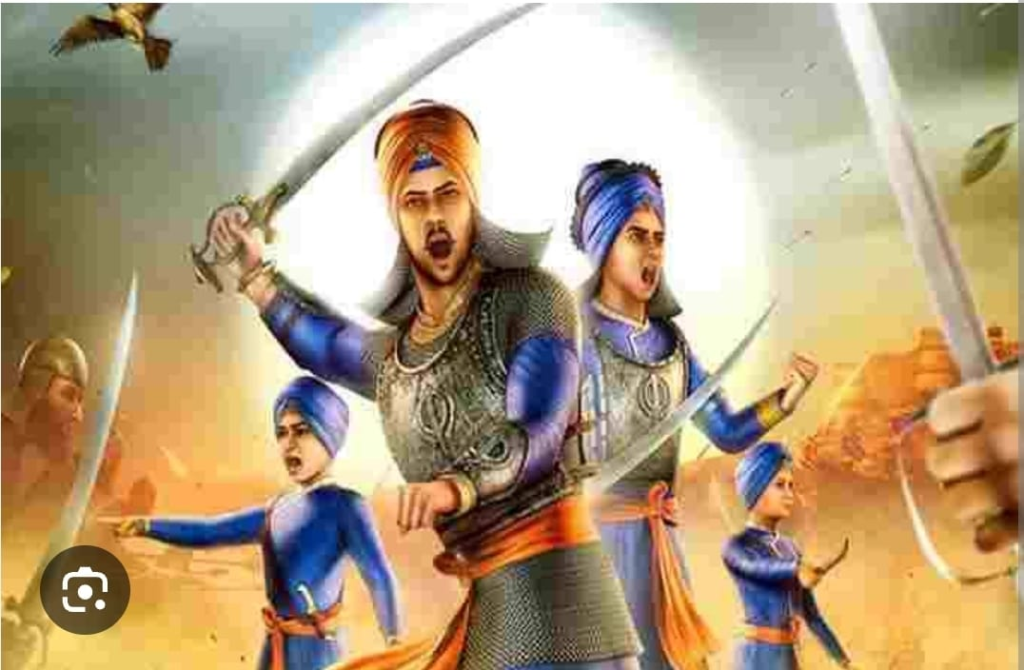
SHADEEDI OF SAHIBZADA BABA AJIT AND JUJHAR SINGH JI :1,000,000 Mughals against 42 Sikhs

Video: What happened during Nagar Kirtan in New Zealand and why some locals are concerned

Punjab ex-IPS officer Amar Singh Chahal, accused in 2015 Faridkot firing case, critical after alleged ‘suicide’ attempt

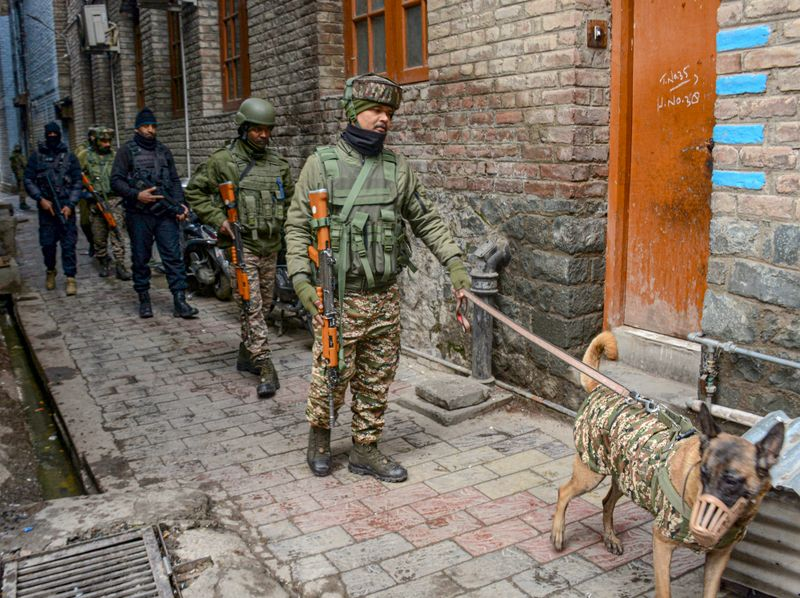
Snowfall blocks vital roads across Kashmir valley, disrupts flight operations

IAF MI-17 helicopter transports Pench tigress from MP’s Sukatra airstrip to Rajasthan

DEFENCE: As INS Sindhughosh signs off, Navy down to 1990s’ strength

‘We felt it’: Pakistan’s Asim Munir says country received ‘divine help’ during Operation Sindoor


SHADEEDI OF SAHIBZADA BABA AJIT AND JUJHAR SINGH JI :1,000,000 Mughals against 42 Sikhs.

Major General Garuv Khusal writes: If you truly understood what happened on December 22, 1704… 🤯
You would NEVER look at Baba Ajit Singh Ji and Baba Jujhar Singh Ji the same way again.

Because at Chamkaur Sahib, they weren’t just children.
They were Khalsa warriors, stepping into their destiny with their eyes open, fully aware of what awaited them. 🦁⚔️

Baba Ajit Singh Ji was 17.
Baba Jujhar Singh Ji was 13.
But in Sikhi, age NEVER defines courage.

8 Poh: ( 22 December)The Battle of Chamkaur began.
It was ,

Everyone knew this would be a battlefield of Shaheedi. 🏹
And still… the Vadde Sahibzaade chose Sikhi over life.

THE MOMENT THAT CHANGED HISTORY:
As the Sikhs attained Shaheedi, Baba Ajit Singh Ji asked Guru Gobind Singh Ji:
“Pita Ji… give me permission to go.” 🙏…
[05:41, 12/22/2025] Major General Garuv Khusal : dear Sir’s, Jai Hind
Am sure you are aware.
Yet I shared, lest we forget-
why they Sacrificed Themselves
Who the Evil Was
&
To Fight the Evil- 40 are not Always Adequate

Sat Shri akal (SSA)–jai Hind

After Guru Gobind Singh left Anandpur Sahib on the night of 5 and 6 December 1704,[1] or 1705[14] he crossed the Sarsa River with his disciples. While they were crossing, the Mughals and hill kings attacked. Guru Gobind Singh and his followers asked permission of the city chief for shelter to rest for the night in their garhi or haveli. He refused, but his younger brother allowed the Sikhs to stay in the haveli.[3]

At the Battle of Chamkaur in December 1704, Guru Gobind Singh’s two elder sons, Sahibzada Ajit Singh (around 18) and Sahibzada Jujhar Singh (around 13), fought valiantly against a massive Mughal army and attained martyrdom after leading charges from the mud fortress, demonstrating immense courage and commitment to their faith, inspiring all Sikhs. They chose to die as warriors defending their father and the Sikh cause rather than surrender, following the path of selfless sacrifice. 

Despite giving assurance of safe conduct, the Mughal soldiers were looking for Guru Gobind Singh, to take his head as a trophy. After learning that the party of Sikhs had taken shelter in the haveli, they laid siege upon it. The actual battle is said to have taken place outside the haveli where Guru Gobind Singh was resting.[3] A council of Panj Piare was convened during the battle, whom ordered Guru Gobind Singh to leave the battlefield to preserve his life and continue leading the Sikhs, a request which the Guru obeyed.[15] Negotiations broke down and the Sikh soldiers chose to engage the overwhelming Mughal forces, thus allowing their Guru to escape. Another Sikh who resembled the Guru, Sangat Singh, donned the Guru’s clothes and remained with the soldiers. The next morning the remaining Sikhs were killed by Mughal forces.[16]

he Guru emphasised how he was proud that his sons had died fighting in battle, and that he had ‘thousands of sons – the Singhs‘. He also said that he would never trust Aurangzeb again due to the broken vow he took on the Quran.[17]


Sahibzade Shaheedi Divas: Beyond “Bal Veer Diwas” — Understanding Sikh Itihas and Gurmat

As the Shaheedi Divas of the Sahibzade approaches , the Sikh collective memory once again bows before one of the most defining moments of Sikh Itihas —the martyrdom of the younger Sahibzade of Guru Gobind Singh Ji .

In recent years, this day has also been referred to as “Bal Veer Diwas.” While the intent behind the term may be to honor courage, it is important—especially from the lens of Sikh philosophy (Gurmat) —to reflect deeply on whether this terminology truly aligns with Sikh thought, tradition, and historical consciousness.

Sikh Philosophy Does Not Define Spirituality by Age

Sikhism does not measure wisdom, courage, or spiritual authority by physical age.

One of the clearest examples from Sikh Itihas is Guru Har Krishan Ji, who became Guru at the age of five.
Yet, Sikh history never refers to him as “Bal Guru.”

Why?

Because in Gurmat, once divine responsibility (Guruship) is bestowed, age becomes irrelevant.
What matters is spiritual maturity, divine consciousness, and commitment to truth.

Calling Guru Har Krishan Ji a “child guru” would diminish the spiritual stature that Sikh philosophy so clearly upholds. The same principle applies to the Sahibzade.

Who Were the Sahibzade in Sikh Consciousness?

The Sahibzade were not “children” in the worldly sense. They were Khalsa in spirit, warriors in resolve, and saints in consciousness.

The younger Sahibzade— Sahibzada Zorawar Singh Ji and Sahibzada Fateh Singh Ji —stood before tyranny with a clarity and courage that many adults could not summon.

Their choice was clear:

To abandon Sikhi and live,
or
To uphold truth and embrace martyrdom.

They chose Shaheedi.

This was not innocence.
This was a conscious sacrifice.

In Sikh philosophy, such awareness places them among the highest exemplars of Gurmat jeevan (a life aligned with divine truth).

Why the Term “Bal” Needs Reconsideration

The word “Bal” (child) is often associated with:

Dependency
Innocence without awareness
Lack of agency

But Sikh Itihas tells us the Sahibzade:

Understood the consequences of their decision
Refused conversion with full awareness
Accepted death without fear, hatred, or compromise

To call them merely “Bal” risks reducing Shaheedi to victimhood, whereas Sikh history remembers them as martyrs by choice, not victims by circumstance.

In Sikh thought, Shaheedi is not tragedy—it is triumph of truth.

Shaheedi in Sikh Itihas Is an Act of Conscious Choice

From Guru Arjan Dev Ji to Guru Tegh Bahadur Ji , from the Sahibzade to countless Singhs and Singhnis , Sikh martyrdom has always been:

Intentional
Principle-driven
Rooted in justice and righteousness (Dharam)

The Sahibzade’s martyrdom stands in continuity with this tradition—not as an emotional episode of lost childhood, but as a towering moral stand against injustice.

Sikh Itihas Teaches Us How to Remember

Sikh remembrance (Yaad) is not symbolic—it is instructional.

We remember so that:

We understand why they sacrificed
We learn how to stand for truth
We internalize f earlessness, equality, and sovereignty of conscience

Reducing the Sahibzade to a modern label, however well-intentioned, risks disconnecting the event from its Gurmat foundation.

Sahibzade as Complete Khalsa, Not “Bal Veer”

The Sahibzade were:

Khalsa in conviction
Saint-warriors in spirit
Fully conscious defenders of Sikhi

They do not need prefixes to amplify their greatness.

Their Shaheedi stands on its own—as one of the highest expressions of Sikh philosophy, human dignity, and moral courage .

As we approach their Shaheedi Divas, let us remember them not through simplified labels, but through the depth of Sikh Itihas and the clarity of Gurmat .

Because in Sikhi:

Truth is not measured by age,
and courage is not defined by years lived,
but by the values one refuses to abandon—even in death.


Video: What happened during Nagar Kirtan in New Zealand and why some locals are concerned

A Sikh Nagar Kirtan (religious procession) in South Auckland was disrupted when a group of protesters linked to Destiny Church gathered nearby, prompting police intervention to prevent any risk to public safety.

The Nagar Kirtan, held along Great South Road, involved Sikh families, religious music, prayers, and community participation. The event itself was peaceful and lawful.

However, around 50 protesters, associated with groups promoted by Destiny Church leader Brian Tamaki, assembled close to the procession. The group displayed slogans such as “Kiwis First” and “Keep NZ, NZ,” and opposed immigration and multiculturalism. Some protesters were seen performing haka and blocking sections of the road in an apparent attempt to disrupt the parade.

Police intervened quickly, physically separating the protesters from the Sikh participants and clearing parts of the road. Officers remained at the scene until the procession ended to ensure no one was harmed.

Police stated they respect the right to protest, but stressed they would take action when protests threaten public safety or interfere with lawful events.

No serious injuries were reported, and the Nagar Kirtan was able to continue under police protection.

The incident occurred amid heightened security awareness following a recent deadly stabbing at a religious gathering in Sydney, Australia, where 16 people were killed. Authorities said the attack was ideologically motivated and targeted a religious community.

In response to that incident, New Zealand police increased monitoring and security at religious and community events nationwide as a precaution.

Some members of the public and community leaders have expressed concern that targeting religious or cultural events with opposing protests could escalate tensions or create fear among minority communities, even when no violence occurs.

Background on Destiny church

Destiny Church was founded in Auckland in 1998 by Brian and Hannah Tamaki and at its peak claimed nearly 10,000 followers. Tamaki has previously sparked controversy with strong public statements about immigration, including describing Indian immigration as an “invasion” during a Facebook Live broadcast in October 2024.

Videos from the South Auckland incident show protesters aligned with the “True Patriots of NZ” standing on one side of the road, while Sikh families participating in the Nagar Kirtan remained on the other, separated by police.

Authorities have reiterated their commitment to:

Freedom of religion

Peaceful protest

Public safety for all communities

Police have emphasised that while protest is a democratic right, religious and cultural events must be able to take place without intimidation or disruption.


Punjab ex-IPS officer Amar Singh Chahal, accused in 2015 Faridkot firing case, critical after alleged ‘suicide’ attempt

Former IPS officer Amar Singh Chahal is in critical condition after an alleged suicide attempt reported on Monday, police said.

He was rushed to Park Hospital with a serious chest injury and is undergoing treatment. Doctors have not yet declared him dead.

Police officials said a note recovered from the scene reportedly refers to financial distress allegedly caused by an online fraud.

An investigation has been initiated to ascertain the exact circumstances of the incident.

Patiala SSP Varun Sharma said police teams immediately reached Chahal’s residence after receiving information about the incident.

“As soon as we received information of bullet fired, our teams rushed to his house and he was rushed to the hospital in a very critical condition”, confirmed Patiala SSP Varun Sharma.

Chahal was one of the accused in the 2015 Faridkot firing case. In February 2023, a Punjab Police Special Investigation Team (SIT) led by ADGP LK Yadav filed a chargesheet in a Faridkot court naming several political leaders and senior police officers, including Chahal.

Police said more details are expected once the investigation is completed.

Chahal was one of the accused in the 2015 Faridkot firing case. On February 24, 2023, a Punjab Police Special Investigation Team (SIT) led by ADGP LK Yadav filed a chargesheet in a Faridkot court.

The chargesheet named former chief minister Parkash Singh Badal, his son and former home minister Sukhbir Singh Badal, along with five police officers, including former DGP Sumedh Singh Saini, IG Paramraj Singh Umranangal, former DIG Amar Singh Chahal, former SSP Sukhminder Singh Mann and SSP Charanjit Singh Sharma.

Police said further details will emerge after the probe is completed.