
















Sanjha Morcha

What’s New

Click the heading to open detailed news

Current Events :

web counter

Print Media Reproduced Defence Related News

“Civil-Military Relations: Let’s Not Weaken the Corporate Character of Our Forces by *Lt Gen (Retd) DS Hooda*

Two groups are today dominating discussions about civil-military relations in India. The first group is the veterans who continue to protest over the definition of OROP. Recent images of soldiers and their wives being pushed and shoved into police vans has again brought into focus their long-standing demand. The second is a group of junior officers from the services who think that their career interests have been ignored and have gone to the Supreme Court. Grant of NFU to the military is another case pending in the same court.
There is also considerable consternation in the military leadership over the issue of status parity. And this leadership is not the few Generals, Admirals and Marshals but the approximately 50,000 officers, a vast majority of whom are middle and young level officers. They directly lead men on land, sea and air and put themselves at maximum risk. The whole issue of the military being a Group A or Group B service is bewildering to them. And justifications about the military being neither Group A nor B, being advanced by some of our own senior officers, are inexplicable.
It is often argued that it is only a handful of veterans and serving officers who are actually complaining, and that their demands are unreasonable. Both these statements could be true but it does not naturally follow that these will not have any impact on the character of the military ethic. This is what should worry us all.
One of the cornerstones of the military ethic is its Corporateness. Members share a strong group identity based on common values and pride in their very critical responsibility towards the nation. Within this corporate structure is a strict hierarchy of ranks. If today members of the military prefer to take to the streets or the courts of law, rather than relying on their senior leaders, it could weaken the corporate character of the military.
The military is a unique profession. No other profession demands that your primary role is to lay down your life in the pursuit of your duty. General John Hackett, in his book The Profession of Arms, called it the concept of “unlimited liability”. In Jammu and Kashmir alone we lose more than 200 soldiers each year, not only battling terrorists but also to the brutal terrain and weather.


To get men and women to accept this huge sacrifice requires a forging of character where the best of values come to fore. Hackett wrote that qualities such as courage, fortitude and loyalty are deliberately fostered, not because they are desirable, but because they are “essential to military efficiency.”
What is the current civil-military dispute about? Is it about more pay, privileges or a better lifestyle? There can be no comparison in lifestyle because no individual in any other profession earning an equivalent salary lives in a 10 x 10 foot bunker where you are snowed under for six months. The soot from the 1945-style heater, which is fired by kerosene oil, is an all pervading presence, from your hair to the fingernails to the choked nostrils. The privilege is nothing more than a bunch of great comrades who are suffering the same privations.
The real fight is about honour. Honour or ‘Izzat’ is the edifice on which the ethical and moral foundation of any military rests. Traditionally, the Indian military has given great value to the concept of honour — the honour of the unit which must always be protected and personal honour which drives a man even in the face of certain death. If officers and men feel unwanted and under-privileged it could weaken this edifice. Unfortunately, this fact is not given enough attention. Putting out tweets and spending time with soldiers during festivals is a great gesture but is not enough to assuage the angst.
There are two different models in the structure of civil-military relations. In The Soldier and the State, Huntington recommends ‘‘objective civilian control’’ that ensures civilian control and maximizes professionalism at the same time. He argues that a highly professional military seeks to distance itself from politics, thus strengthening civilian control. In contrast to Huntington, Morris Janowitz, in The Professional Soldier, argued that the military will invariably come to resemble a political pressure group, and that this is not necessarily a problem as long as it remains ‘‘responsible, circumscribed, and responsive to civilian authority’’. He recommends the military’s ‘‘meaningful integration with civilian values’’.
There are supporters of both models but in India, objective control has been followed and has stood the military in good stead. There is no real need for change, and political parties need to be sensitive to this. Constantly evoking the sacrifice of the Indian Army in every political debate is harmful. It could politically influence soldiers. The loyalty of a soldier is to the military ideal, which is a constant, and not to a political ideology. This is the correct democratic way.
Surely it is nobody’s case that the military is completely losing its professionalism. But problems, however small, if not tackled in time can blindside you. If some cracks are visible, they need to be quickly repaired and not papered over. The government practice of forming of one more committee has now lost its credibility. Decisions will have to come from the political executive.
Minor changes in OROP, grant of NFU (non-functional upgrade), an improvement in career progression, and an honourable status to military personnel are a very small price to pay for ensuring that the character of the military ethic is not diluted. Political leaders, the bureaucracy and senior military leadership must join hands and work towards that goal. This will ultimately not only empower the military but also the nation.
I close with a quote from Huntington, “If the civilians permit the soldiers to adhere to the military standard, the nations themselves may eventually find redemption and security in making that standard their own”.
(The author is former Northern Commander, Indian Army, under whose leadership India carried out surgical strikes against Pakistan in 2016. Views are personal.)

Soldier hurt in truce violation

Our Correspondent
Rajouri, October 28
After a lull of one day, the Pakistan army resorted to unprovoked heavy mortar shelling and firing with automatic weapons on Indian forward posts in Shahpur, Kirni and Kasba areas and in the Mendher sector in Poonch district around 8.45 pm on Friday.
Sources said Naik Abdul Haq of Jak Li unit and resident of Gursai village in Poonch district received multiple splinter injuries while manning a forward post and was rescued to an Army hospital where he is said to be out of danger.
Sources added Indian troopers retaliated Pakistan mortar shelling effectively and forced the enemy to stop truce violation.


HEADLINES ::25 OCT 2017

  • MAJ GEN SATBIR MUST LEARN FROM GURDASPUR LOK SABHA ELECTIONS , MESSAGE FOR MILITARY LEADERSHIP?
  • FROM ‘GOOD MAN DI LALTAEN’ TO ‘YES’ MAN: RISE OF SYCOPHANCY IN THE ARMY BY LT GENERAL VIJAY OBEROI
  • 39 SOLDIERS KILLED IN J&K FROM 2015 TO ’17
  • IAF BIG BIRD LANDS ON UP HIGHWAY
  • ICRA TO GET 5 MILITARY FARMS ON LEASE
  • ARMY CHOPPER MAKES ‘PRECAUTIONARY LANDING’ IN JODHPUR
  • ONLINE RADICALISATION A CHALLENGE: NS
  • CAN INDIA STOP RAFALE SCAM?
  • WHATSAPP SHARES LOCATION WITH FRIENDS

China, India can help solve Rohingya crisis: Chinese daily

China, India can help solve Rohingya crisis: Chinese daily
The exodus of Rohingyas to neighbouring Bangladesh began on August 25 when the Myanmar Army launched an offensive in the region following an attack by Rohingya rebels on multiple government posts.

Beijing, October 16

India and China can jointly lead efforts to solve the Rohingya crisis by offering humanitarian aid to Myanmar’s conflict-ridden Rakhine state, an article in the state-run media has said.“Given the interests Beijing and New Delhi share with Myanmar, the two could cooperate in offering humanitarian aid to Rakhine state, assist Bangladesh in resettlement of refugees, enhance economic cooperation with Myanmar,” according to the article in the Global Times.“… China and India can also promote greater integration of trade and investment in the area, including the Bangladesh-China-India-Myanmar Economic Corridor.”

(Follow The Tribune on Facebook; and Twitter @thetribunechd)

The exodus of Rohingyas to neighbouring Bangladesh began on August 25 when the Myanmar Army launched an offensive in the region following an attack by Rohingya rebels on multiple government posts.“As Myanmar’s neighbours, the last thing China and India want is terrorist violence on their doorstep. In the meantime, both countries are well aware of the complexity of the Rakhine ethnic and religious conflict, knowing it will take time for the government to solve such a complex question,” the article stated.“In terms of economics, there are more reasons for the two to cooperate. China’s investment in Myanmar reached $18.53 billion in January 2017 and the country plays a unique role in Beijing’s Belt and Road initiative.“It is impossible for Beijing to remain indifferent. Nor can India’s interests be divorced from peace and stability in a nation (Myanmar) that forms a bridge between South Asia and Southeast Asia,” the article stated.“Myanmar, the gateway for New Delhi’s northeastern states to Southeast Asia, is crucial to India. Prime Minister Narendra Modi’s visit to Myanmar last month, during which the two sides inked a series of economic, trade, defence, energy and strategic agreements, is proof enough.”The support and sympathy offered by Beijing and New Delhi to Myanmar’s ruling National League for Democracy party over its efforts to deal with the Rohingya crisis was portrayed by the Western media as a “scramble” for influence between China and India, the article said.“The possibility of the two big countries (China, India) cooperating to help resolve the ethnic conflict in Myanmar went largely unnoticed,” it said. IANS


MAHARANI SAHIBA PRANEET KAUR SHOWS CONCERN ABOUT WELFARE OF EX-SERVICEMEN AT :PATHANKOT RALLY

Its a tradition in Army, that Ladies of the Army Personnel takes keen interest in the welfare activities of their subordinates in all unit welfare activities.

The Tradition has be found and proved beyond doubt that Its not Capt Amarinder Singh Honorable CM, Punjab is concern about welfare and to restore Respectability,Pride and dignity of EX-Servicemen in Pun jab but The Lady Maharani Praneet Kaur has equally shown concern about the welfare of ESM at Pathankot Rally.

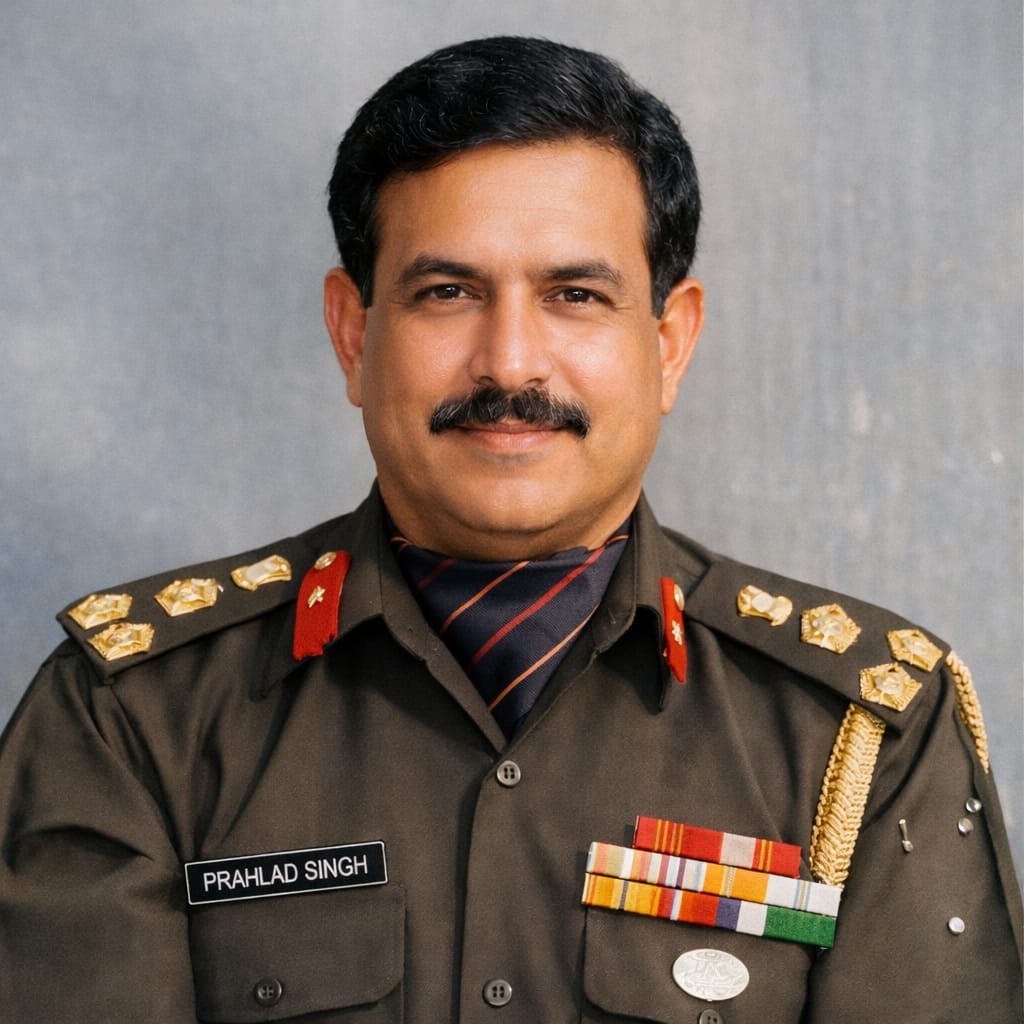
A Rally which was organised by Big Prahalad Singh, Chairman Sanjha Morcha and President ESMUF ( Pathankpt) and Capt Harminder Singh to support Mr Sunil Jakkar was held at  SARNA,Pathankot attended bu ESM,Veer Nari and Sunil Jakkar and Maharani herself .

AT the end of the function she openly asked ESM who were present to speak out their problems that they  are facing from the Punjab Administration. One of the The point regarding ESM facing the problems from various departments was that they are not given due respect when they approach them for personal works and are harassed  lot.

The result can be seen with 24 hours that Instructions by Capt Amarinder Singh to all DC’s were given.

We Salute Capt Amarinder and Maharani Praneet Kaur to continue the Army traditions in letter and spirit even as CM of Punjab and First Lady of the State.

IMG-20171008-WA0061 IMG-20171008-WA0062 IMG-20171008-WA0063 IMG-20171008-WA0077 IMG-20171008-WA0078 IMG-20171008-WA0079 IMG-20171008-WA0080 IMG-20171008-WA0081 IMG-20171008-WA0082 IMG-20171008-WA0083 IMG-20171008-WA0084 IMG-20171008-WA0085 IMG-20171008-WA0086


NS makes aerial survey of Doklam-Nathula area

NS makes aerial survey of Doklam-Nathula area
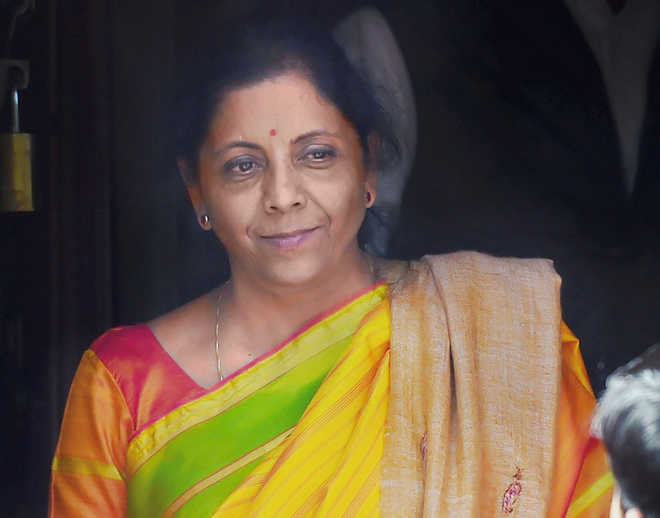
Nirmala Sitharaman

Gangtok, October 7

Defence Minister Nirmala Sitharaman today made an aerial survey of the Doklam-Nathula area on the Sino-India border, a day after the government said the status quo at the site has not changed since the disengagement on August 28.Sikkim government officials said the defence minister also made a survey of the new Pakyong Airport in East Sikkim and neighbouring areas this afternoon.Sitharaman is on a day-long visit to Arunachal Pradesh and Sikkim today.(Follow The Tribune on Facebook; and Twitter @thetribunechd)The survey follows the external affairs ministry statement yesterday that there were no new developments at the India-China military face-off site in Doklam and its vicinity since the August 28 disengagement.The statement had come amidst reports that China has maintained a sizeable presence of its troops near the Doklam standoff site and even started widening an existing road around 12 km from the area of face-off.“We have seen recent press reports on Doklam…The status quo prevails in this area. Any suggestion to the contrary is incorrect,” the external affairs ministry had said in the statement.Sitharaman is scheduled to meet Sikkim Governor Sriniwas Patil and Chief Minister Pawan Chamling at the Raj Bhavan and they are likely to discuss several issues related to defence in the border areas with China, the officials today said.Improving strategic infrastructure like border roads in Sikkim, the new airport which is to be inaugurated in November, and development in areas along the Sino-India border in Sikkim are likely to be discussed, they added. — PTI


China maintaining sizeable troops near Dokalam: Sources

China maintaining sizeable troops near Dokalam: Sources
The 73-day-long standoff in Dokalam ended on August 28. — File photo

New Delhi, October 5

China has maintained a sizeable presence of its troops near the site of the 73-day-long Dokalam standoff, in an indication that the border tension between Chinese and India armies has not yet subsided.Sources said China has been slowly increasing its troop level in the Dokalam Plateau which could further escalate the current situation as India has reasons to be concerned over it.The indication to the underlying tension due to presence of Chinese forces in the Chumbi Valley in the Dokalam Plateau was also given by Chief of Air Staff Air Chief Marshal B S Dhanoa today.”The two sides are not in a physical face-off as we speak. However, their forces in Chumbi Valley are still deployed and I expect them to withdraw as their exercise in the area gets over,” Dhanoa told reporters.There have been territorial disputes between China and Bhutan over Dokalam and India has been staunchly supporting Thimphu over the issue.Troops of India and China were locked in a 73-day-long standoff in Dokalam since June 16 after the Indian side stopped the building of a road in the disputed area by the Chinese Army. Bhutan and China have a dispute over Dokalam.Bhutan and India were in touch with each other during the course of the face-off that ended on August 28.Days after the face-off ended, Army Chief Bipin Rawat had said China has started “flexing its muscles” and warned that the situation in India’s northern border could snowball into a larger conflict.There are also reports that People’s Liberation Army (PLA) has increased more troops on its forward post in Yatung.Sources said though Chinese troops have been deployed in Dokalam Plateau, they leave the area during winters.But, there were indication that they may leave the areas this time, they added. — PTI


Lahaul residents excited as tunnel work nears completion

Lahaul residents excited as tunnel work nears completion
A view of Rohtang tunnel. File Photo

Dipender Manta

Tribune News Service

Kullu, October 4

Residents of tribal district Lahaul Spiti are eagerly awaiting the moment when BRO will connect both portals of 8.8-km-long  Rohtang tunnel which will provide all-weather connectivity to the people with the rest of the state. They are planning to throw up big celebration and rejoice the achievement as the ambitious project suffered several delays over the years.On their part, BRO authorities have declined to disclose the details of the completion of digging work of the Rohtang tunnel. The BRO personnel are working relentlessly to connect both the portals of the tunnel by the end of this month. Merely 60 m digging work remains to be done.Rigzin Samphel Heyreppa, a resident of Lahaul, said that it would be a great moment for people of this tribal district, who face immense hardship availing transportation facilities during winter season for at least six months, when mighty Rohtang Pass receives heavy snowfall at the advent of winter. The mighty Rohtang is considered gateway to Lahaul Spiti.“Every year people of this district suffer in emergency situation when they fail to transport patients (their near and dear one) in time out of the district to provide medical relief. The remote district is bereft of adequate health facilities. Due to lack of transportation facility in time, many patients even lose their lives”, he remarked.It was expected that Defence Minister Nirmala Sitharaman will join the event, when BRO completes the tunnel digging work.Chander Mohan Parsheera of Lahaul Spiti said the tunnel should be named after former Prime Minister Atal Bihari Vajpayee and his childhood friend Arjun Gopal of this tribal district. They played a vital role in the execution of the project.The project suffered several delays due to extreme tough weather and other inhospitable conditions. The project was then rescheduled for completion in the year 2015 but this time water ingress in Seri Nullah in the region hampered the digging work drastically.The BRO authority has now set the target to hand over the tunnel to the nation in year 2019. Once completed, the passage will help accelerate troop mobility to the strategic frontiers in Jammu and Kashmir besides providing a road link to Lahaul and Spiti in winter. This will give tremendous boost to tourism in the hitherto unexplored areas of Lahaul Spiti.The estimated cost of the project in 2010 was Rs 1,700 crore. It was revised to Rs 2,000 crore in 2015 and now the projected cost by 2019 is Rs 4,000 crore.


China Is Developing An Underwater Probe To Bolster Claims In Disputed Seas

Workers install Jiaolong, China’s manned deep-sea research submersible, onto its carrier Xiangyanghong 09 at Jiangyin Sunan International Container Terminal on November 23, 2014 in Jiangyin, Jiangsu Province of China. The threat of a Chinese aircraft carrier is not one that is easily disguised. Taiwan’s defense ministry, ever vigilant toward its old political rival China, spotted one moving around the island in December and January. Some reports expect a carrier will return here soon for the 20th anniversary of Hong Kong’s handover from the United Kingdom to China, reminding self-ruled Taiwanese of the war that might happen if they declare formal independence someday from China. Photos of China’s second carrier were easy to spot online.

But now China is planning for 2020 what official media describe as a global scientific expeditionof ocean floors using a harder-to-see “submersible” vehicle named Jiaolong. A submersible is defined as a vehicle that operates underwater and usually refers to small research craft. This one probably works something like a bathyscaphe (see full definition here). The Jiaolong, which finished five years of trials in February, is equipped to dive to depths up to 7,000 meters for info on marine life, hydrothermal movement and “multi-metal nodule mining,” the official Xinhua News Agency says. It can be manned, as well.Like a lot of underwater missions that China pursues, this submersible comes off at first like another harmless research effort. Chinese officials are also protecting a rare oceanic “blue hole” in the disputed Paracel Islands of the South China Sea and planning an underwater observation system to send real-time seabed information back to shore and explore its chemistry, Chinese media reported in March. The system would cover the South and East China seas, both disputed by neighboring Asian countries. 

The Liaoning, China’s first aircraft carrier, sailing during military drills in the Pacific. Taiwan’s defence minister warned in December 2016 that enemy threats were growing daily after China’s aircraft carrier and a flotilla of other warships passed south of the island. You can see from those descriptions an obvious location issue – Japan’s control over parts of the East China Sea overlaps Chinese claims. Five other governments including the easily angered Vietnamese leadership contest Beijing’s sphere of influence in the South China Sea. The submersible may be gathering info on what other countries are doing. It can at least lock in Chinese claims by getting to know disputed tracts of sea better, as less developed countries such as Vietnam and the Philippines are unlikely to have advanced submersibles.

“A relatively uninformed observation is that (Xinhua) mentions metal nodule mining in the South China Sea as one of its purposes,” says Jeffrey Wilson, senior international political economy at Murdoch University in Australia. “One can, of course, only mine a seabed over which one has sovereignty.”

The undersea diving machine will add to Chinese pride as an advanced maritime nation, not just a land-based one, says Collin Koh, a maritime security research fellow at Nanyang Technological University in Singapore. The State Oceanic Administration has shared deep-see findings before with other countries, Koh says. So it may offer up the same in 2020. But although Chinese officials would never say so, the undersea mission might be murkily linked to ever-secretive military use, he says. Outsiders have raised the same fear about the Chinese space program. Japan with its international deep-sea drilling program could vie with China’s Jiaolong technology. Weaker rival maritime claimants could only watch, fret and fear.

“This is a problem that highlights the challenge in blurring the lines between civilian and military technologies used for marine scientific and technological work, and the duality of use of such data that is obtained,” Koh says. “We need to recall that back during the Cold War, major navies were reported to have used deep-sea submersibles for underwater espionage activities.”


Air force planning to celebrate Marshal Arjan Singh’s legacy


NEW DELHI: The Indian Air Force is planning to celebrate the legacy of the late IAF Marshal Arjan Singh to inspire the youth to emulate the qualities of the iconic aviator, a top officer has said.

Singh, the only officer of the IAF to be promoted to five-star rank, equivalent to a Field Marshal in the army, died last month at the age of 98.

“He was an icon, widely admired, not just for his great professional achievements but also for his human qualities. He was a towering figure and his life will continue to inspire us all,” vice-chief of air staff Air Marshal SB Deo said.

At the “14th Subroto Mukherjee Seminar” held at the IAF auditorium here on Friday, a moment of silence was observed in honour of the hero of 1965 India-Pakistan war.

“Yes, we are planning to celebrate his legacy. He was a hero and still remains so,” Deo said on the sidelines of the event. However, he did not divulge details about the plans.

When asked what qualities of Singh the youth should learn from, he said: “Fitness, that’s the first thing that comes to my mind. He was inching towards 100 but still remained a young man at heart forever. And, his courage and commitment are qualities that are worthy of emulation,” he added.

The vice-chief of air staff said the IAF celebrated him while he was still alive, and the Air Force Station, Panagarh in West Bengal, was renamed as Air Force Station Arjan Singh in 2016.

Air Marshal Vinod Patney (retd), director general of the CAPS (Centre for Air Power Studies), which organised the seminar, in his opening remarks said: “We recently lost a hero (Singh) and he leaves behind a void.”

“The auditorium is located in the area (Subroto Park) named after Air Marshal Subroto Mukerjee, another of our icons, who was the first chief of air staff of the IAF. And, now late IAF Marshal Arjan Singh will join the league of extraordinary men, who have left us, but continue to inspire us,” he said.

A senior official of the IAF said plans were afoot to pay tribute to Singh on the Indian Air Force Day (October 8) in a befitting way. “We are planning to put up a huge image of him on a celebratory banner alongside the pictures of aircraft. His legacy is unmatchable,” he said

Singh was entrusted with the responsibility of leading the IAF when he was only 44, a task he carried out with élan. He was the chief of the IAF when it found itself at the forefront of the 1965 conflict.

Born on April 15, 1919 in Lyallpur in Punjab in undivided India, he had flown more than 60 different types of aircraft, and had played a major role in transforming the IAF into one of the most potent air forces globally and the fourth biggest in the world. He was awarded the Padma Vibhushan, the second highest civilian honour, in 1965.