







Sanjha Morcha

What’s New

Click the heading to open detailed news

Current Events :

web counter

Print Media Reproduced Defence Related News

Cyclist crushed to death under doc’s car

Tribune News Service

Panchkula, August 13

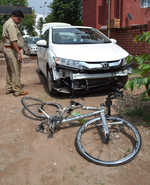
A 45-year-old man was crushed to death by a Honda City car being driven by a Command Hospital doctor near Bella Vista at Sectors 1/2/5/6 roundabout this morning. The victim, Ajay Gupta, was the son of the Director of Ashiana Public School, Sector 46, Chandigarh.The police said Dr Sunil, who had bought the car a few days ago, pressed the accelerator in a hurry instead of brakes. He was not found at the spot after the incident, but was arrested later.A case under Sections 279 (rash driving) and 304-A (causing death by negligence) of the IPC has been registered at the Sector 5 police station. “We have now arrested Dr Sunil of the Command Hospital and a case has been registered against him,” said SHO Lalit Kumar.According to the police, the incident occurred at 7:45 am when the victim Ajay Gupta, who used to go cycling for several kilometers daily, was today heading towards Red Bishop hotel from near Sector 6 chowk, when Dr Sunil’s car hit him from the rear, dragging him for some distance before hitting a road berm. The car was coming from Sikhsa Sadan to the Bella Vista hotel chowk. Following this, passersby informed the police and he was shifted to the Civil Hospital in Sector 6, where he was declared brought dead.His mother Lalita Prakash rushed to the hospital after hearing the news while his father Lalit Prakash Gupta, who had gone to Delhi at 10 this morning, returned at 4 pm to the city. The police, after conducting the post-mortem examination, handed over the body to the family of the victim.A relative of Ajay said his family was about to hand over him the reins of the school. The victim runs an event management business in Delhi but his father wanted him to settle down in Chandigarh. His relatives said the victim was looking forward to his son’s birthday which falls on September 30, before the tragedy struck him.Had come to meet familyAjay’s mother Lalita Prakash is the director and founder of Ashiana Public School, Sector 46, Chandigarh. His parents reside in Sector 9, Chandigarh. His elder brother, Uday Gupta, lives in the US. Ajay was living with his wife and an 11-month-old son in Delhi. He had come to meet his family in Chandigarh a few days ago.

Military might fascinates students

Military might fascinates students
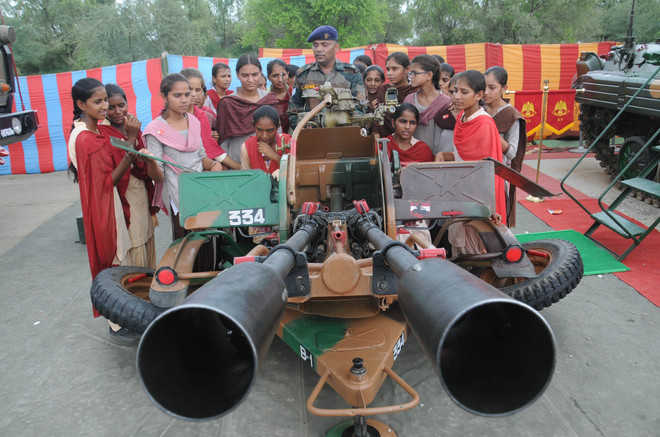
Students look at Army equipment and weapons at the Bathinda cantonment on Friday. Tribune photo: Pawan Sharma

Tribune News Service

Bathinda, August 12

Chetak Corps organised an equipment and band display to commemorate the 70th Independence Day at Army Convoy Ground here today.The day-long event was inaugurated by Brigadier SI D’Cunha, Officiating Station Commander, Bathinda Military Station.A large number of people witnessed the event that showcased military might and capability of the Army.The youth were enthralled to see infantry weapons, tanks, artillery and other equipment.The pipe band display was highly appreciated, a press release said.The section depicting Army adventure activities drew the youth who were keen to learn about them. The event was marked by rain.Many students from local schools and colleges, civil dignitaries and people from all walks of life appreciated the efforts of the Army in organising the event and motivating the youth to choose Army as a career option.


SC asks AFT to hear pleas on Army doctors’ retirement age

New Delhi, August 12

The Supreme Court on Friday asked the Armed Force Tribunal (AFT) to constitute a Special Bench to hear and decide the plea of Army doctors seeking raising of their age of superannuation, from 58 years to 65 in view of the public announcement made by Prime Minister Narendra Modi.

A Bench of Justices Dipak Misra and UU Lalit directed the tribunal to expeditiously decide all the matters pending before it on the issue within three months.

“Since there are various similar matters pending before the Armed Force Tribunal (AFT), the chairman of AFT is directed to constitute a bench to decide these matters expeditiously within three months,” it said.

During the hearing, Additional Solicitor General Maninder Singh, appearing for the Centre, said that several similar matters are pending before the tribunal which has jurisdiction to decide the issue at hand.

The Bench granted liberty to the counsel Indrasen Singh and Sarvesh Singh, appearing for the army doctors, to withdraw the pleas and approach the tribunal.

The apex court had earlier issued notice to the Centre on a batch of pleas but refused to grant any interim stay on the superannuation of the army doctors.

The doctors, all of Colonel rank, including Amitabh Thapliyal, AK Hota, Yogesh Verma, have sought a direction to ministries of Defence, Health, Chief of Army Staff and Director-General Armed Forces Medical Services that the notification of May 13 be followed to enhance their age of superannuation to 65 years.

Their plea said that the notification, issued after the announcement made by the Prime Minister, is being followed in paramilitary forces like the CRPF, BSF, CRPF, CISF, ITBP, NSG and Assam Rifles.

“Executive instructions have been issued by the Railway Ministry and other ministries/departments of the Central Government, thereby enhancing the age of superannuation of all medical doctors serving under the respective ministries/ departments to 65 years.

“However, no such executive instructions have so far been issued in respect of the medical officers serving under the Ministry of Defence, including the medical officers belonging to the Army Medical Corps/Army Dental Corps (AMC/ADC) of Indian Army,” the plea said. — PTI


Lt Gen Surinder Singh to be Western Command chief

THE OFFICER HAS COMMANDED A MECHANISED INFANTRY BATTALION, AN ARMOURED BRIGADE AND AN INFANTRY DIVISION

CHANDIGARH: Lieutenant General Surinder Singh, who is heading 33 Corps in Sukna, was named as the Western Command chief on Tuesday.

Lt Gen Surinder Singh was commissioned in the infantry in Brigade of The Guards Regiment in 1979. In a career spanning over three decades, the officer has held various prestigious appointments and has commanded a mechanised infantry battalion, an armoured brigade and an infantry division.

Lt Gen KJ Singh retired as Western Command chief on July 31.

There were two officers in the race for the Western Command chief — Lt Gen Surinder Singh and Lt Gen DR Soni, who is GOC of Bathinda-based 10 Corps. Lt Gen Soni has been appointed as the commander of Army Training Command (ARTRAC) at Shimla. The current ARTRAC commander, Lt Gen PM Hariz, has been appointed as Southern Command chief.

The outgoing Southern Command chief Lt Gen Bipin Rawat is joining as vice chief of the army staff. The present vice chief Lt Gen MMS Rai is retiring on August 31.


Martyrs Shankla, Swarn Singh remembered

THE TWO WERE MARTYRED IN A COUNTER-TERRORIST OPERATION AT J&K’S KUPWARA DISTRICT IN AUGUST 1991; NINE TERRORISTS WERE NEUTRALISED AND 22 APPREHENDED IN THE OPERATION

PANCHKULA: Floral tributes were paid on Monday to the Dogra Regiment 18th battalion’s Maj Sandeep Shankla and Sepoy Swarn Singh of who were martyred in a counter-terrorist operation at Zafarkhani village of J&K’s Kupwara district in August 1991.

SANT ARORA/HTMajor Sandeep Shankla’s parents (behind soldiers) during the wreath-laying ceremony in Panchkula on Monday.

Nine terrorists were neutralised, 22 were apprehended and a huge cache of arms and ammunition was recovered in the operation.

Maj Shankla had sacrificed his life while trying to save one of his soldiers, energising his troops. An IMA pass out of 1986 batch, Major Shankla was posthumously awarded with Ashok Chakra. Sepoy Swaran Singh was awarded (posthumously) with Kirti Chakra while Capt BJS Sandhu was given Shaurya Chakra.

The battalion earned five Sena medals, two Chief of Staff commendation cards and one GOC-in-C commendation card.

Maj Gen IJS Hundal, paid homage and laid a wreath to honour brave martyrs on behalf of the Western Army Commander. Serving officers, JCOs and veterans of the unit, who had participated in this operation, were also present. Next of kin of the martyrs also took part in the ceremony and were felicitated.


SC asks Centre to improve working conditions of army porters

SC asks Centre to improve working conditions of army porters
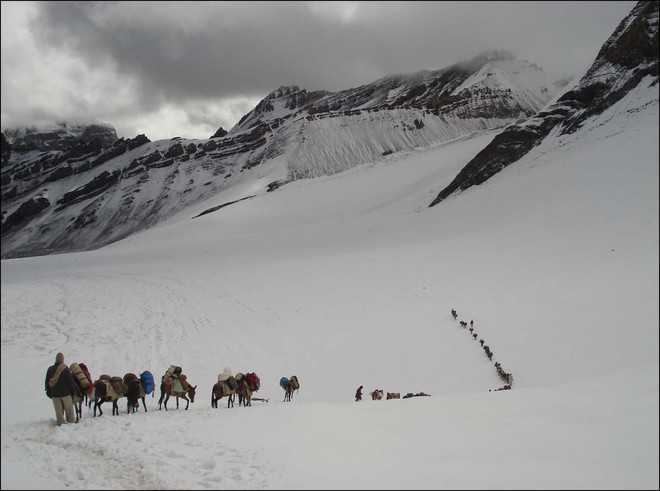
Porters ferrying supplies in Siachen. Tribune file photo

New Delhi, July 29

The Supreme Court on Friday asked the Centre to come out with a suitable policy or scheme to improve the working conditions of ‘army porters’ who are utilised for carrying arms, ammunition and ration for soldiers and officers in hilly border areas.The apex court while examining the plea for improving the service conditions of army porters, the number of which as per Centre’s estimate is around 1,000, said there employment should not be terminated during pendency of the matter.A bench headed by Chief Justice T S Thakur gave three weeks to the Centre to formulate and file before it the draft rules and schemes for bringing out better working conditions of large number of porters in the army.“The people in army know the utility of porters. So some light is needed at the end of the tunnel. They are in darkness. Show us for what period and years they have served army,” the bench, also comprising Justices A M Khanwilkar and D Y Chandrachud observed.Additional Solicitor General (ASG) P S Patwalia, said army had maintained the records of such porters since 2007.“If the records of 10 years are maintained, they (porters) are entitled for some relief,” the bench said and sought an assurance from the Centre that it would come out with a scheme to improve their conditions.At the outset, Government said there were proposals to come out with the wage structure on the issue and examine the nature of work keeping in view the altitude at which these porters were deployed.The ASG said the scheme would cover facilities like medical, accommodation, terminal benefits and compensation etc for porters and their family members.Canteen facility up to Rs 2,000, leave encashment, festival grants and fund allocation for porters’ children are also in the proposal.“The proposals are under examination and will take three to four weeks for formulation,” the law officer said, adding that the porters were employed where mechanical transport is not applicable and they carry goods weighing around 20 kg and their working hours are up to eight hours a day for 24-25 days in a month.The bench said it would be wrong to say that only locals were appointed as porters and there were instances that people came from a distance of 200 to 300 km to take this job.The ASG said “we are open for improving the service condition of porters”. — PTI


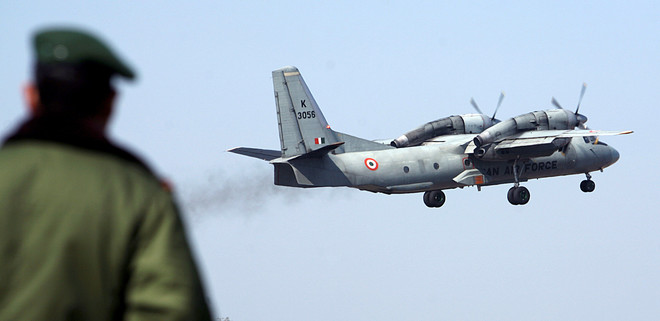
IAF plane with 29 on board missing over Bay of Bengal

The Indian Navy has diverted one submarine to look for the missing plane.

Ajay Banerjee

Tribune News Service

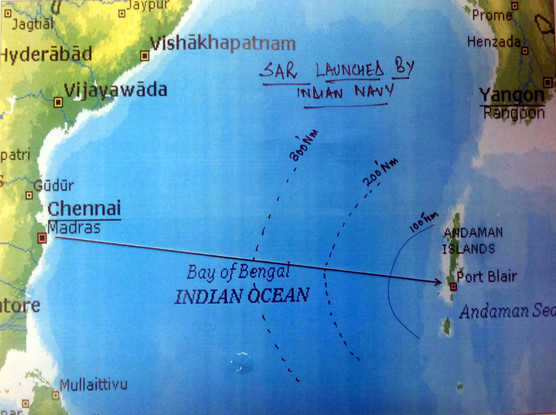
New Delhi, July 22An Indian Air Force (IAF) transport plane, AN-32, is missing over the Bay of Bengal with 29 people on board. The plane, a Soviet manufactured one, had taken off around 8.30 am from the Tambaram air base, Chennai, Tamil Nadu, and was scheduled to land around 11 am at Port Blair in Andaman and Nicobar Islands.The plane was on routine flight to carry men and material to Port Blair and most of the people on board were service personnel.When the pilot did not radio his approach a search was launched using the assets of the Navy, the IAF and the Coast Guard.Among the 29 persons on board were four IAF officers, including the two pilots and a navigator of the missing plane. The plane had six crew, including the three officers. A fourth officer was among the passengers.Also on board were 10 other IAF personnel, two people from the Indian Army and nine from the navy, among them eight from the civilian staff of the force.A staff member of the Defence Services Corps and one from the Indian Coast Guard were also among those on board.

The Indian Navy has diverted one submarine to look for the missing plane.

The search area is some 200 nautical miles east of Chennai. The Navy’s P8-I surveillance aircraft has been pressed into service along with the Dornier surveillance planes of the Navy and the Coast Guard. Warships are also involved in the search operation. The plane has been declared ‘overdue’ to land. This is first step before the plane is declared missing. The plane was carrying fuel for some four hours.

The AN-32 fleet was imported from Soviet Union in the early 1980s.

The plane was last in contact with Chennai Air Traffic Controller at 8.46 am that is 16 minutes after the take-off from Tambaram. The plane is from the Sulur (Coimbatore) IAR base of the IAF. It was on a routine sortie. The Chennai-Port Blair IAF flight is termed as a ‘çourier’ and flies thrice a week. The plane is equipped with a locating beacon that will emit a signal for rescue teams to follow. The IAF have pressed a C-130-J and an AN-32 plane for search.


141 more Colonel posts for 5 batches, not six: SC Clarifies order on Army promotion policy

Legal Correspondent

New Delhi, July 14

The Supreme Court today clarified that the newly-created 141 additional posts of Colonel in the Army should be offered to five batches from 1992-97, not six batches (1992-98).A Bench headed by Chief Justice TS Thakur passed the order on a petition by some officers, complaining that the Army was not properly implementing a judgment delivered by the SC on February 15 for redressing combat support units’ grievances arising from the Command Exit Policy for promotions.“You were generous in creating the posts, but miserly in offering these. It is a clear case of misinterpretation of our order. If you had any doubt, you should have come to us, instead of deliberately misinterpreting it,” the Bench told Additional Solicitor General Maninder Singh at today’s hearing.The Bench had, in its February 15 ruling, endorsed the promotion policy meant for reducing the age profile of the commanding officers and achieving optimal combat effectiveness as suggested by Ajay Vikram Singh in the light of the 1999 Kargil war.“There is nothing perverse, unreasonable or unfair about the policy that the age of officers serving in Combat Arms and Combat Arms Support will be lowered by creating additional vacancies to be allotted on Command Exit Model,” the court had ruled, directing the government to create 141 additional posts of Colonel to be allocated to the Combat Support stream.


Pakistan’s foreign policy: Liberals vs realism

The strategists with a liberal mindset towards geo-politics have been marginalised in Pakistan. It is this current policy that has led to the growing isolation Pakistan faces at the international level.

Pakistan’s foreign policy: Liberals vs realism
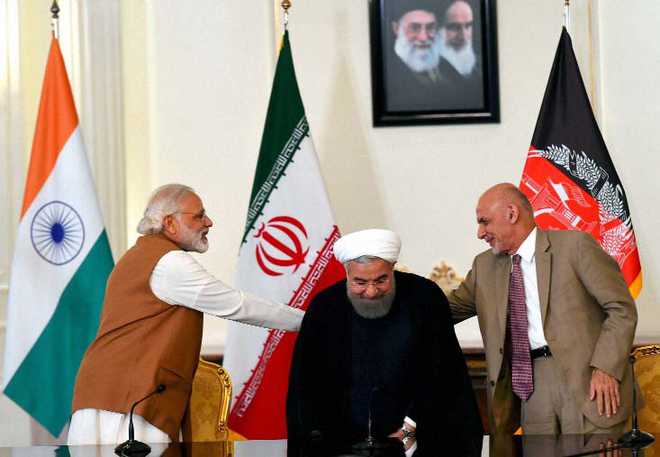
Prime Minister Narendra Modi with Iranian President Hassan Rouhani and Ashraf Ghani, President of Afghanistan after signing a trilateral agreement in Tehran. PTI

The Pakistani state’s strategic outlook is a classic case of the tail wagging the dog. Security policy drives overall foreign policy rather than the other way round. The establishment has spearheaded this agenda. One reason the prevailing strategic paradigm seems under no real pressure is the increasing irrelevance of “strategic liberals” (I am referring to strategists with a liberal view on geopolitics, not liberals writ large). Given their knowledge of strategy and liberal orientation within this domain, one would expect them to spearhead the challenge to the status quo. The state has been myopic in keeping them at bay. But they haven’t done themselves any favours either. The Pakistani liberal discourse on strategy tends to present the realist framework as something of an anathema. Realism personifies the “if-you- want-peace, prepare-for-war” mindset. States tend to be realist beings — those in conflict zones more than others. They see logic in defining national interest in hard security terms and manoeuvring to secure themselves as they see fit — irrespective of normative concerns like morality of their choices. The liberal paradigm challenges this mindset on multiple counts — generally the least effective in influencing policy is what I see Pakistani strategic liberals employ the most: declaring this mindset paranoid, self-contradictory, immoral, etc. (Western policy discourse on Pakistan often takes this line as well).They are not wrong. Taken too far, realism leads to these perversions. And the establishment has developed somewhat of a habit of living dangerously close to this zone. Yet, while a challenge merely pointing to these fallacies and highlighting liberalism’s normative superiority may be powerful for public intellectuals of liberal leaning, it does little to effect realist policy minds. Not in Pakistan, not anywhere else. Achieving this requires engaging the state’s brand of realism in its specific context and highlighting how it may be undermining its self-defined “national interest”. It is about talking realism and presenting realist alternatives to the status quo, but ones that proximate liberal outcomes. Take the example of the regional policy debate in Pakistan. The liberal pushback against the establishment’s outlook argues that: (i) the state must not interfere in Afghanistan’s affairs if we expect others not to do the same to us; (ii) the state should promote regional economic integration to improve Indo-Pak ties; and (iii) we should not use militant proxies against neighbours because of the instability it creates. All undisputable on normative grounds. But a hard-core realist would calculate otherwise: (i) will my opponent not gain if I stop interfering in Afghanistan? India has favourable geography with all other regional countries. Why should I not take advantage of my geography vis-à-vis Afghanistan to outmanoeuvre it in this theatre? (ii) Trade with India is my bargaining chip. If I give it up, I’ll lose leverage and my core interest in Kashmir would be permanently compromised. (iii) Am I the only one using proxies? Isn’t this a game that goes on in South Asia and elsewhere?How does one anchor in liberalism while engaging realism? By explaining that Pakistan’s current strategic outlook is not realist, it is “hyper-realist” (an example of realism gone wrong); it defies the two most cardinal principles of realism: the costs of your policy choices must match your capacity and resources; and policy outcomes must be in line with your self-defined goals. (i) Afghans see Pakistani policies negatively. The sentiment has made it politically beneficial for Kabul to reach out to New Delhi, increasing the latter’s manoeuvring space in Afghanistan, precisely the opposite of what the establishment wants; (ii) engaging regionally on the economic front will increase, not reduce, Pakistan’s leverage over India. Any deal that makes Pakistan the transit route for energy, trade, or transport that a sizeable part of the Indian population depends on will strengthen Pakistan’s bargaining position. And (iii) proxies are directly responsible for much of the internal militant chaos Pakistan has faced since 9/11. Pakistan’s capacity and resources no longer allow use of this tool, irrespective of how others may be approaching the option. Overall, Pakistan’s current policy has led to its growing isolation in the region — the Indo-Iranian-Afghan clique being the latest example. This is self-inflicted. Of course, my intent is not to dismiss either Pakistan’s legitimate security concerns or the intrinsic value of the liberal public discourse. But separately, neither is optimal. Pakistan’s foreign policy would gain tremendously if the two sides were to speak more directly and constructively to (instead of past) each other. The state can help create this space by making the strategic liberals feel more welcome — for starters, by stopping the ridiculous trend of declaring naysayers unpatriotic or anti-national. And the liberals would do themselves a favour by stepping out of their social media echo chambers and recognising how irrelevant they have become. By arrangemnt with the Dawn


Hard times for Nawaz

Hard times for Nawaz
Paper-tiger: A plan is afoot to destabilise the Sharif government.

PUBLIC attention is now focused on what one sees as blatant efforts by Pakistan to foment terrorism and violence in J&K. While dealing with this, New Delhi has to carefully monitor internal developments in Pakistan. Returning home after a bypass surgery in London, Pakistan’s beleaguered Prime Minister Nawaz Sharif must be preparing for difficult times ahead. Even prior to his departure for London, Mr Sharif had to suffer the pretensions of his ubiquitous army chief Gen Raheel Sharif, who actedpretentiously with Pakistanis and visiting foreign dignitaries alike. General Sharif sought to convey that he was the de facto head of government and at the very least, a co-equal of the Prime Minister.With the Prime Minister convalescing in London, the army chief summoned virtually the entire Cabinet, including the hapless defence minister Khwaja Asif, to the GHQ in Rawalpindi. He then read out the riot Act to the ministers nominally led by finance minister Ishaq Dar, holding charge in Sharif’s absence. The army chief then informed the entire Cabinet what he believed needed to be done on a series of issues, commencing with the China-Pakistan Economic Corridor. General Sharif also reportedly dwelt on the conduct of international relations, with focus on the US, India and Afghanistan. Significantly, interior (home) minister Chaudhry Nissar Ali Khan was spared this humiliation.Mr Sharif can take no consolation or comfort at his interior minister being spared humiliation. Nissar Ali Khan is known to have prime ministerial ambitions and is a protégé of the army. Faced with relentless pressure from the army to undermine and eventually remove him, Mr Sharif was trying to mend fences with Asif Ali Zardari, so that the PPP would not join a “remove Sharif” bandwagon. Sensing this, Chaudhry Nissar jumped into the fray to launch a tirade against Mr Zardari and his Peoples’ Party, causing Mr Zardari to threaten to retaliate politically. While General Sharif has sworn that he has no intention to continue after his term ends on November 30, Mr Sharif knows that like Generals Zia, Musharraf and Kayani, General Sharif would love an extended four-star tenure! He could achieve this by totally discrediting and weakening Mr Sharif, or even having him replaced by someone like Chaudhry Nissar, or the army’s favourite, Imran Khan.In these circumstances, Mr Sharif’s major focus of attention will lie on how to manage the intrigues and challenges posed by his army chief, at least till November 30. The effort to destabilise him will revolve around the “Panama Gate” revelations, involving Panama bank accounts of his two sons who live in London, and his daughter Maryam who is evidently being groomed to succeed him. While this issue can be managed in parliament, especially with PPP support, Mr Sharif knows that the army will create circumstances through Imran Khan and people like Canada-based cleric Tahir-ul-Qadri, to destabilise him. Moreover, the army has made it clear that it will play the lead role in implementing the much-touted China-Pakistan corridor and will, in any case, give very little space to the Prime Minister on relations with the US, China, India and Afghanistan.  This, combined with the army’s propensity to undertake military operations within Pakistan, without governmental or parliamentary approval, will inevitably seek to reduce Mr Sharif to a mere figurehead.Domestic problems alone, however, are not the only challenges Mr Sharif faces. Less than a week before his return, four Iranian border guards were killed in clashes along Iran’s border with Baluchistan. The Iranians were clearly displeased with the conduct of Raheel Sharif during the visit of President Rouhani to Pakistan. In the meantime, tensions along the Pakistan-Afghanistan border have been ratcheted up, following clashes at the Torkham crossing point along the Pakistan-Afghanistan border. Both armies reportedly used heavy weaponry and took casualties in these clashes. Quite clearly, Pakistan wishes to use these developments to compel Afghanistan to formally recognise the Durand Line as the international border, by also threatening to force the return of 1.5 million Afghan refugees residing in Pakistan since the 1980s.The Afghans have clearly no intention of pandering to Pakistani ambitions. While visiting Afghanistan recently, the veteran Pakistani Pashtun nationalist leader and chief of the Awami Milli Party, Mehmood Khan Achakzai, shot back, saying he would not allow anyone to harass the refugees in their own land “because it also belongs to them”. He asserted that Pakistan’s Khyber Pakhtunkhwa Province “belongs” to the Afghans and they can live there without fear or invitation. He added that if Afghans are harassed in other parts of Pakistan, they could come to Khyber Pakhtunkhwa Province. His  comments rocked Islamabad. It was the first time in recent years a Pashtun leader had challenged the legitimacy of the Durand Line as the border between Pakistan and Afghanistan. He also asserted that the traditional border extended up to Attock on the banks of the Indus, and includes parts of Baluchistan.Pakistan media’s paranoia about Iran and Afghanistan is growing. Obviously, based on ISI briefings, sections of the media are alleging cooperation between the intelligence services of Afghanistan and Iran to assist Baluch national leaders in their “freedom struggle” against Punjabi domination, with Achakzai acting as the facilitator. It also appears that the Americans are going to look the other way. But given the fact that the Afghan Taliban, which has publicly not taken any view on issues like those raised by Achakzai is dependent on Pakistan’s support, it is inevitable that the ISI support to it will continue, raising the hackles of the Afghan government. Pakistan’s western borders are set to become even more volatile. China now remains Pakistan’s only supporter on its border.Can India expect any relief on cross-border terrorism because of these developments? While General Raheel Sharif is no fundamentalist, he passionately loathes India. His uncle and brother lost their lives in conflicts with India in 1965 and 1971. Institutionally, the Pakistan army uses tensions with India to wield unchallenged influence in Pakistan. In these circumstances, there is little that Mr Nawaz Sharif can deliver on issues like trade, economic cooperation and terrorism. While responding firmly to Pakistan-sponsored terrorism, New Delhi should realistically remember that the prospects for moving forward in relations with Pakistan are bleak at present