Sanjha Morcha

What’s New

Click the heading to open detailed news

Current Events :

web counter

Print Media Reproduced Defence Related News

Dharamshala Military Station Outreach programme Veterans

Veterans Outreach programme was organised at Dharamshala Military Station on 23 Mar 18 under the aegis of 33 Mountain Brigade by 3/11 Gorkha Rifles for welfare and interaction with veterans & veer naris. Plethora of facilities established for their benefit.


Is Enforced Army Service for Civil Service Aspirants Necessary?by Lt Gen SYED ATA HASNAIN

The Parliamentary Committee on Defence is reported to have recommended five years of compulsory military service for anyone who wants subsequent employment with the state or the central government. The committee apparently wants the Department of Personnel and Training (DoPT) to prepare such a proposal and take this to the Centre.

On the face of it, the perception and recommendation of the Committee reflects the core feelings of most Indians that a dose of compulsory military training for ‘all citizens’ will only do good for the people and the nation. It is reflective of the deep reverence the nation has for its armed forces, their basic value system, discipline, training, sense of duty, and patriotism.

However, on the outset it is necessary to explain that executing such a desire is impractical given the sheer size of our recruitable male and female population (gender equation being a compulsion too). Examples of nations such as Israel, Singapore, Switzerland or the Nordic states, which follow such a system, cannot be taken as a model. Their population bases and nature of threats are altogether different. However, giving the Parliamentary Committee its due, there is nothing such as conscription in the recommendations set out.

All that the committee has done is that it has sent a broad proposal concerning only aspirants for government service and that too for only gazetted ranks. Five years compulsory service in the armed forces will, as per its perception, achieve two things:

  • First, it will instil in the civil services (aspirants) an inherent discipline that the men in uniform follow, along with their regimentation, ethics, morals and values.
  • Second, it will help overcome the acute shortages that continue to persist, especially in officer ranks, the army in particular.
(Photo: Reuters)

Also Read: Nagrota Attack: Anti-Terror Training Is the Chink in Army’s Armour

Advantages of the Proposal

Some more advantages can be perceived with a closer examination of the proposal. Among them is the likely progressive improvement in civil-military relations as more civil services officers having undergone military service reach higher ranks of bureaucracy or police services.

This is an aspect of functioning in India which has drawn much negativity. In future years, the bond of the uniform, the respect for camaraderie built in the ranks, essentials of regimental bonding and much more will come forward to overcome traditional rivalry.

No one is denying that rivalry may still exist but denting it will help the system.

There can be no doubt about the fact that the proposal will need many summers before it can be approved, and refinement will include experimentation and lessons, besides a full look at terms of service for each type of personnel.

But the issue it will impact in full is the shortage of officers; there is no need to address shortage of soldiers as that is self-corrective, being an issue of exit and entry statistics at a given time.

The armed forces are always accused of having a pyramidal system for the officer cadre where wastage is extremely high. This is because the majority joins the ‘main cadre,’ thus becoming aspirants for long service and higher rank. This makes competition intense. Existing alongside is a ‘support cadre’ – those in service for a shorter duration and not aspiring for long service and higher selection rank.

Army chief Bipin Rawat.
(Photo: The Quint)

Also Read: Soldier Speak: How the Army Upholds Unity in Linguistic Diversity

Bolstering Support Cadres, Overcoming Deficiency

Ideally every service of the armed forces should have a large officer based ‘support cadre’ and a lean ‘main cadre’ so that the force remains young in profile with quicker promotions and less competition. In India, however, it’s the other way around. Any reversal of this cannot happen in isolation.

Those exiting also have to be taken care of, by side stepping them into other services that don’t require stringent standards of physical fitness. In India, no other service accepts them despite a Cabinet-approved proposal of 2004, on what is called the ‘peel factor’ (employing those peeling off from the cadre at different stages).

The induction of civil service aspirants will obviously be to the ‘support cadre’ to strengthen that and overcome the problem of deficiency of officers. Both men and women aspirants can join the support cadre through a short service commission for five years or so.

Stringent medical and physical fitness standards will need to be adopted and can be anticipated as one of the obstacles to the final clearance of this proposal.

In addition, there can be consideration for ante date seniority for those who do military service and then join the civil services; that is if the civil services cadre could have acceptance with a dual intake pattern, combination of those who serve the armed forces and those who come in directly. All these details will obviously be examined with a fine tooth comb, and the DoPT is adept at evolving cadres with varying terms and conditions.

The Indian Army stands for discipline and rigour.
(Photo: The Quint)

What the recommendations of the Parliamentary Committee do not deserve is outright rejection as some kind of a hare-brained idea. It needs to run the gamut of serious examination followed by short-term experimentation. If successful, it will have achieved much, but a conclusive decision appears to be a good distance away.

(The writer, a former GOC of the army’s 15 Corps, is also former commander of the Uri-based Kala Pahar Brigade. He is now associated with Vivekanand International Foundation and Institute of Peace & Conflict Studies. He can be reached at @atahasnain53. This is an opinion piece and the views expressed above are the author’s own. The Quint neither endorses nor is responsible for the same.)


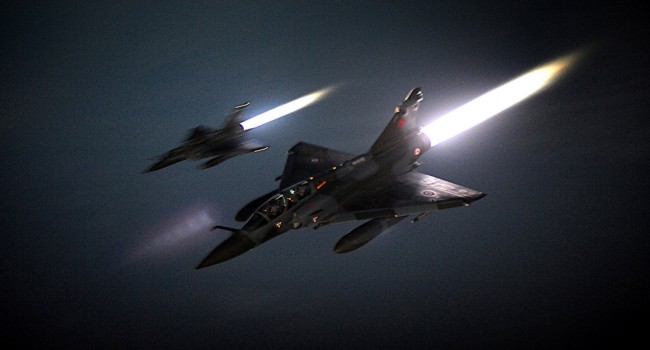
PIL in SC for independent probe into Rafale deal with France

PIL in SC for independent probe into Rafale deal with France
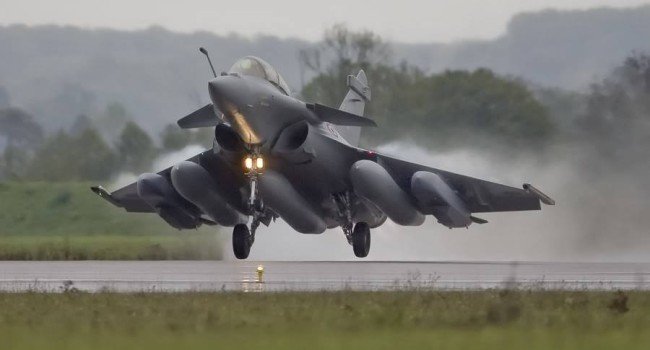
Rafale deal is a defence agreement signed between India and France for purchase of 36 Rafale fighter aircraft in fly-away condition.

New Delhi, March 13

A plea was on Tuesday filed in the Supreme Court seeking an independent probe into the Centre’s decision to procure 36 Rafale fighter jets from France and disclosure of the cost involved in the deal before Parliament.The petition, which may come up for hearing during the week, alleged that it was the responsibility of the Ministry of Defence (MoD) to disclose the cost involved in the entire deal to Parliament and the citizens.”Direct the respondents (Centre and MoD) to disclose a consolidate transaction cost involved in procuring 36 Rafale fighter aircraft,” the plea, filed by Congress leader Tehseen S Poonawalla, said.It also sought issuance of a direction against the Centre as to why the Cabinet’s approval was not sought as part of the Defence Procurement Procedure (DPP) before signing the procurement deal with France on September 23, 2016.The plea claimed that the defence deal of procuring 36 Rafale fighters from Dassault was announced during the prime minister’s state visit to France.”It was an attempt to put a sheen on Prime Minister’s visit to Paris. This pronouncement was a premature announcement of the deal without going through the usual practice, the formal process and procedure which is otherwise involved in similar international covenants,” it said.Rafale deal is a defence agreement signed between the governments of India and France for purchase of 36 Rafale fighter aircraft in fly-away condition as a part of upgrading process of Indian Air Force equipment.Rafale fighter aircraft is a twin-engine Medium Multi Role Combat Aircraft (MMRCA) is manufactured by French aerospace company Dassault Aviation.Indian Air Force had advanced a proposal to buy 126 fighter aircraft in August 2007 and floated a tender and an invitation was sent to various aviation companies to participate for the bidding process.The petition said in 2012, the deal for 126 Rafale fighter aircrafts was proposed, and out of the total of 126 number, 18 Rafale fighter aircrafts were to be delivered by Dassault Aviation company in fly-away condition, the rest 108 Rafale fighter aircrafts were to be manufactured in India at the Hindustan Aeronautics Limited (HAL) which is an Indian public sector aerospace and defence unit, under a transfer of technology agreement.That the deal was nearly finalised by 2014 by the then UPA government, it said.”In April 2015, Narendra Modi made a state visit to France and during a state event the Prime Minister in Paris made an announcement to purchase 36 Rafale fighter aircrafts in fly-away condition and immediately within few days after the big announcement of procuring of 36 Rafale aircrafts. On 13th April 2015, the then defence minister made an announcement that the Rafale deal is ‘effectively dead’ and that India officially withdrew the 126-aircraft MMECA tender on 30 July 2015,” it alleged.The plea said the MoD had withdrawn the 2007 tender which was for procurement of 126 Rafale fighter aircrafts, the deal announced for procurement of 36 Rafale fighter aircraft was all together a fresh procurement.The plea has also sought a direction to the Centre  put on record the agreement signed between India and France on September 23, 2016. – PTI


Pakistan violates ceasefire in Krishna Ghati sector in Poonch

Pakistan violates ceasefire in Krishna Ghati sector in Poonch

Poonch, March 10

The Pakistan Army on Saturday initiated unprovoked and indiscriminate firing in Jammu and Kashmir’s Krishna Ghati sector of Poonch along the Line of Control (LoC).The troops resorted to firing of small arms, automatics and mortars; while the Indian Army is retaliating strongly and effectively.Further details are awaited.

This comes a day after Pakistan resorted to ceasefire violation in Jammu and Kashmir’s Poonch sector. ANI


Central govt staff get 2% hike in DA

Central govt staff  get 2% hike in DA

New Delhi: The Union Cabinet on Wednesday approved the release of an additional instalment of dearness allowance (DA) and dearness relief (DR) for Central Government employees and pensioners. The decision to hike the DA by 2 per cent was taken at a meeting chaired by PM Modi.(Follow The Tribune on Facebook; and Twitter @thetribunechd)The employees will now get DA and DR at 7 per cent of the basic pay and pension. The same will be given with retrospective effect from January 1, 2018. The government said the DA and DR had been hiked to compensate for the price rise. The hike will benefit 48.41 lakh employees and 61.17 lakh pensioners. The impact on the exchequer would be Rs 6,077.72 cr per annum. TNS


Global Firepower ranks India’s military as fourth strongest, Pakistan on 13th

India’s has managed to maintain its position in the top five military powers in the world on the Global Firepower List 2017 in comparison to Pakistan, which only managed to break in the top 15 last year. India was trailed by major military powers like France, the UK, Japan, Turkey, Germany and to complete the top 10.

indian army photo, army day pics, army day images, army day jan 15 images, army day 2018 pictures, 70th army day, defence photos, army tank pics, indian army missiles, defence chopper, indian soldiers, indian express

India’s military is placed fourth on a global index that has ranked 133 countries on the basis of their global military prowess, trailing behind only the US, Russia and China in that order. India’s western neighbour Pakistan ranks 13 on the Global Firepower (GFP) list 2017.

India has managed to maintain its position among the top five military powers in the world on the GFP list while Pakistan could break in the top 15 only last year. Major military powers, France, the UK, Japan, Turkey and Germany, complete the top 10.

Meanwhile, China also crept up behind Russia and is poised to take the second place soon. It has more aircraft and naval ships than Russia but is hugely outnumbered in total tanks in service.

The rankings for the index are reached after judging the countries on 50 parameters, including military resources, natural resources, industry and geographical features and available manpower. India and China being placed higher on the index are helped to a great degree with the sizeable number of armed forces personnel with the respective countries.

According to GFP’s assessment, India leads China in terms of total armed personnel with India’s 4,207,250 personnel against China’s 3,712,500. China, however, leads in terms of active personnel with 2,260,000 troops compared to India’s 1,362,500. India’s reserve components were assessed to be 2,844,750 while China trailed with 1,452,500.

The index didn’t count nuclear stockpiles for the ranking but gave points for nuclear capability, whether recognised or suspected. Another aspect for consideration was the defence budget allocation with China allocating over three times the amount India set aside for its military.

When compared with Pakistan, India led the way on all aspects except the number of attack helicopters, self-propelled artillery and waterway coverage.

On their assessment methodology, Global Firepower said in a statement: “Our formula allows smaller, though more technologically-advanced, nations to compete with larger, lesser-developed ones. Modifiers (in the form of bonuses and penalties) are added to further refine the list.”


Four more bodies, terror toll 6

Four more bodies, terror toll 6
JCO Madan Lal Choudhary’s inconsolable wife Charnjeet Kour and other family members in Kathua on Sunday. She too received splinter injuries during the terror attack. Inderjeet Singh

Arteev Sharma

Tribune News Service

JAMMU, FEBRUARY 11

The operation to flush out Jaish terrorists from the Sunjuwan military base here stretched into the second day on Sunday, with the number of casualties rising to six as Army commandos recovered the bodies of another Junior Commissioned Officer, two soldiers and a civilian during sanitisation of residential quarters. All four were killed by the terrorists in the initial stage yesterday, the Army said. Editorial: Army camp attacked
The six deceased were identified as Subedar Madan Lal Choudhary from Kathua, Subedar Mohd Ashraf Mir from Kupwara, Havildar Hahibullah Qurashi from Kupwara, Naik Manzoor Ahmed from Qazigund, Lance Naik Mohd Iqbal from Pulwama and his father. (Follow The Tribune on Facebook; and Twitter @thetribunechd)The Army said three heavily-armed terrorists, who managed to enter the military base in the wee hours of Saturday, had been killed. The state government had initially said four to five terrorists had stormed the camp. Unconfirmed reports suggested that two more terrorists had been eliminated. While a team of the National Investigation Agency also reached the Army camp, sources said Army Chief General Bipin Rawat and Western Army Command chief Lt  Gen Surinder Singh took an aerial survey of the operation.Meanwhile, a soldier, Gunner Kishore Kumar Munna of Chautham in Bihar, who was injured in ceasefire violation in Poonch on February 4, succumbed to his injuries today.


In 2018, stabilising of J&K is a key challenge by Lt Gen Syed Ata Hasnain

In recent weeks, some important events outline just how the Deep State’s strategy has been panning.

Recent incidents of stone-throwing and intimidation of the Army in Kashmir should not have surprised keen observers who are aware of the dynamics of this and other proxy conflicts. Pakistan won’t allow the stabilisation process in Kashmir to persist because turbulence there reflects the success of its core strategy. This situation has been seen in the past with varying dynamics, in 1999, 2006-07, 2011-12 and somewhat in 2015 too. However, each time Pakistan’s Deep State and the separatists were able to turn the tables with triggers which helped to recreate turbulence.

This really means India’s strategy has been effective in countering the military domain of proxy war, but failed to take that success to eventual peace. In conflict theory terms, this means that conflict stabilisation has been largely successful but conflict termination has fallen prey to the machinations of the Deep State and the separatists.

In recent weeks, some important events outline just how the Deep State’s strategy has been panning. Being aware that domination by the security forces is something India always seeks and focuses upon before any other efforts, the Deep State has focused on the social and psychological factors to enhance alienation, with women and youth the key entities. The use of mosques to run the alienation agenda is rampant with vigilantism on the rise immediately after Burhan Wani’s death in 2016. With religion, and particularly Islamic radicalism, becoming a worldwide phenomenon, especially since the advent of Islamic State (Daesh), the Islamic factor has been frequently used to show Kashmiri Muslims how they need to be outside the ambit of India’s pluralist tradition and support their faith. The frequent use of clarion calls from mosques and social media messaging to impress flash mobs to encounter sites has been a huge facilitator towards alienation. These actions ensure that after or during each such encounter, one or
two young Kashmiris die in attempting to intimidate the forces. That is sufficient fodder with a follow-up by the media and shrill demands by rabble-rousers, that helps create further alienation. With the security forces having effectively synced their operations and created better standard operating procedures the feasibility of success of vigilantes and overground workers is slowly on the wane.

The attempt to directly target the 11-vehicle convoy of 10 Garhwal Rifles near Shopian, in south Kashmir, on January 27 was a change in tactics, to give confrontation a different colour. The strategy is obviously being drafted across the LoC by observers who are keeping a keen eye on developments in the Valley. They are fully aware that an effective transition by J&K state, and therefore India, from conflict stabilisation to conflict termination will spell the death knell of the entire Deep State strategy. With dwindling strength of terrorists and arms, ammunition and other wherewithal, the ability to conduct terrorist operations has been marginalised. With low snow levels, a surge in infiltration can be expected to regain flexibility in operations. Pending that, time is slipping away. Ways and means to draw the forces, particularly the Army, into negative situations where civilian deaths can substantially increase, is the crying need for trans-LoC planners. That will also raise demands to reduce the Army’s presence so that its domination is compromised. Calls for abrogation of the Armed Forces (Special Powers) Act will get more weight from the political Opposition, and lead to embarrassment for the state government. The issue of the FIR against the Army, with much disinformation about charges against the officer of 10 Garhwal Rifles, is a typical aspect of information warfare, with doubts sowed and passions raised across India, leading to greater alienation. In such circumstances, a single spokesman and a single statement outlining the government’s position would have effectively quelled all rumours. It’s a lesson repeatedly learnt by the establishment, but never implemented. It only substantiates the need for a “Unified Command” approach, in which a spokesman speaks jointly on behalf of the state government, the Centre and the Army. The scope for controversy will lessen, but all will need to seek ways of remaining on the same page in all future contingencies.

In the light of all this, J&K chief minister Mehbooba Mufti’s bold and candid speech in the Assembly is indeed a brave one. In fact, she flagged almost every relevant issue in her 46-minute intervention. It takes courageous prudence on a politician’s part to admit and even advise the people that if they wish to see the back of AFSPA, they will have to stop their support to violent activities. The logic is simple. The Army’s largescale presence is to prevent a resurgence of violence. If violence drops substantially and for a sustained period, only then can the public’s demand for AFSPA’s removal or dilution be considered. The CM, while denouncing the misuse of mosques for vigilantism and condemning the separatist calls for bandhs, also coined a fine slogan in “Connectivity, Productivity and Employability”. The refreshing aspect of this slogan is the obvious focus on governance, but the real test is how effective this is going to be in transforming the daily lives of people in Kashmir. It has always been my abiding belief that it’s the psychological connect between the three regions of J&K which must receive the state government’s focus. The key is Jammu, which has its legitimate aspirations that cannot be ignored, and it’s through it that Kashmir must connect to rest of India. This realisation is emerging, but still insufficiently. It needs a strategic political mind to peg this to our thinking.

The need of the hour is to ensure that the Deep State’s intent of creating turbulence through diverse means is countered and a combined approach is projected. The Army’s strong presence, along with the CRPF and J&K police, is vital, and 2018 will be a crucially testing year due to the unpredictability of the Sino-Pakistani collusion on the borders and within. But the governance domain must receive the fullest support of all agencies. Stability through military domination, effective governance and increased intra-state connect must form the cornerstone of India’s strategy through 2018.
Indo-Pak border heats up The human cost of “matching response

Indo-Pak border heats up

Union Home Minister Rajnath Singh has solemnly assured us that the deaths of Captain Kundu and his three troopers in Pakistani firing on Sunday will be duly avenged. That he offered the placebo from a poll-bound Tripura speaks of the BJP’s approach of making politically palatable a diplomatic-political failure to stabilise Kashmir and the border. The fallen soldiers, the shut schools and maimed civilians become part of an anti-Pakistan rhetoric that resonates well with the Hindutva constituency during elections. It was little surprise that Rajnath Singh’s colourful broadside against Pakistan — kisi ne maa ka doodh nahi piya jo Kashmir ko alag kar sake — were picked up by junior ministers and assorted Hindutva spear-carriers. Doubtless, Pakistan makes similar assertions for its domestic audience when its soldiers fall to bullets in what has been an unrelenting tit-for-tat for over three years. After so many deaths on the border, the government needs to be asked, especially after the surgical strikes failed to temper the Pakistanis, about the end game behind this approach. The people need to be told whether this daily dose of attrition has an expiry date. Since neither side has or will ever achieve a decisive military edge over the other on the border, both governments are content with framing the recurring casualties in a grander nationalist vision where these small pains must be endured for an undefined but bright future. The strategy of a “matching response” appears deceptively low-risk at face value. Yet, there is no guarantee that cross-border incidents may get degenerated to a full-blown military entanglement. Clearly, both sides have not done enough to create a less aggressive space for political disagreement that then gets reflected in military behaviour. The only tangible accrual from Modi government’s policy of hostilities on border has been to ensure a nationalist high ground for the BJP. But the law of diminishing returns may be setting in. The Pakistanis seem to be on familiar turf with the policy of “matching response”, happily exchanging bullet for bullet and sacrificing a life for a life. And Kashmir remains still far removed from normalcy.

Pakistan offers scholarship to influence Kashmir students: NIA

Pakistan offers scholarship to influence Kashmir students: NIA
NIA claimed the students visas were recommended to the Pakistani High Commission in New Delhi by various Hurriyat leaders, including hardline Hurriyat leader Syed Ali Shah Geelani.

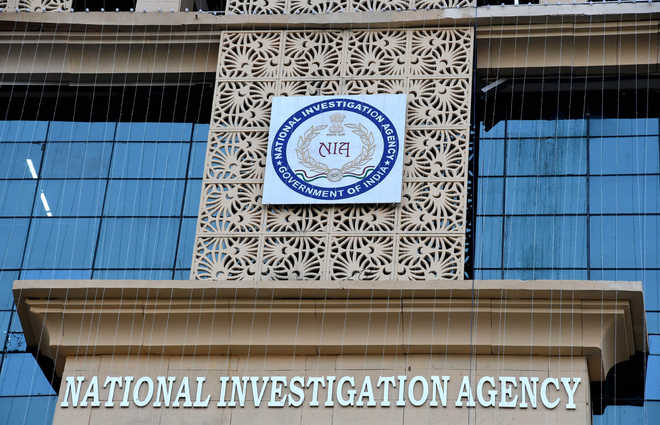
New Delhi, February 3Pakistan is offering scholarships to Kashmiri students to prepare a generation, which will be inclined towards it and most of the youth on student visa in the neighbouring country were relatives of militants, the National Investigation Agency said in its chargesheet in the terror funding case.”During the course of investigation, it was ascertained that students who were proceeding to Pakistan on student visas were either relatives of ex-militants or relatives of families of active militants who had indulged in various anti-national activities and had migrated to Pakistan or they were known to Hurriyat leaders,” it said.The probe agency also claimed that their visa applications were recommended to the Pakistani High Commission in New Delhi by various Hurriyat leaders, including hardline Hurriyat leader Syed Ali Shah Geelani.The chargesheet filed in a court here on January 18 revealed that militants who fled to Pakistan had pursued their admission matters with the help of Hurriyat leaders based in Pakistan and Pakistan administered Kashmir.The NIA said that scholarships are offered for MBBS and engineering seats under various schemes of the Pakistan government.”This shows a triangular nexus wherein the terrorists, the Hurriyat and the Pakistan establishment are the three vertices and they are ostensibly patronising the Kashmir students in order to prepare a generation of doctors and technocrats in Kashmir who will have leanings towards Pakistan,” the NIA said in the chargesheet, a copy of which is in the possession of IANS.NIA seized a document from the house of Nayeem Khan wherein he recommends a student for admission in a “standard medical college” in Pakistan because “her family has remained committed to the freedom struggle through thick and thin”.Similarly, a document seized from the house of Shahid-Ul-Islam clearly shows that the Hurriyat leaders were sending recommendation to the Pakistan High Commission for the issuance of visa, it said.The chargesheet has named Pakistan-based terrorist leaders Hafiz Saeed and Syed Salahuddin, seven arrested Kashmiri separatist leaders and three others in the case.The Hurriyat leaders are Aftab Hilali alias Shahid-ul-Islam, Ayaz Akbar Khandey, Farooq Ahmad Dar alias Bitta Karate, Nayeem Khan, Altaf Ahmad Shah, Raja Mehrajuddin Kalwal and Bashir Ahmad Bhat alias Peer Saifullah.Shah is the son-in-law of Geelani who is a strong votary of Jammu and Kashmir’s merger with Pakistan. Hilali is a close aide of moderate Hurriyat leader Mirwaiz Umar Farooq.The NIA has alleged that the separatists, arrested on July 24 last year, conspired with Saeed and Salahuddin to wage war against India and secede Jammu and Kashmir from India. All of them have been booked under stringent anti-terror laws.The NIA also chargesheeted businessman Zahoor Ahmad Watali and two alleged stone pelters — Kamran and Javed Ahmed Bhat.Watali has been associated with the LoC trade and has worked as the president of the LoC Traders’ Association in the past.

IANS