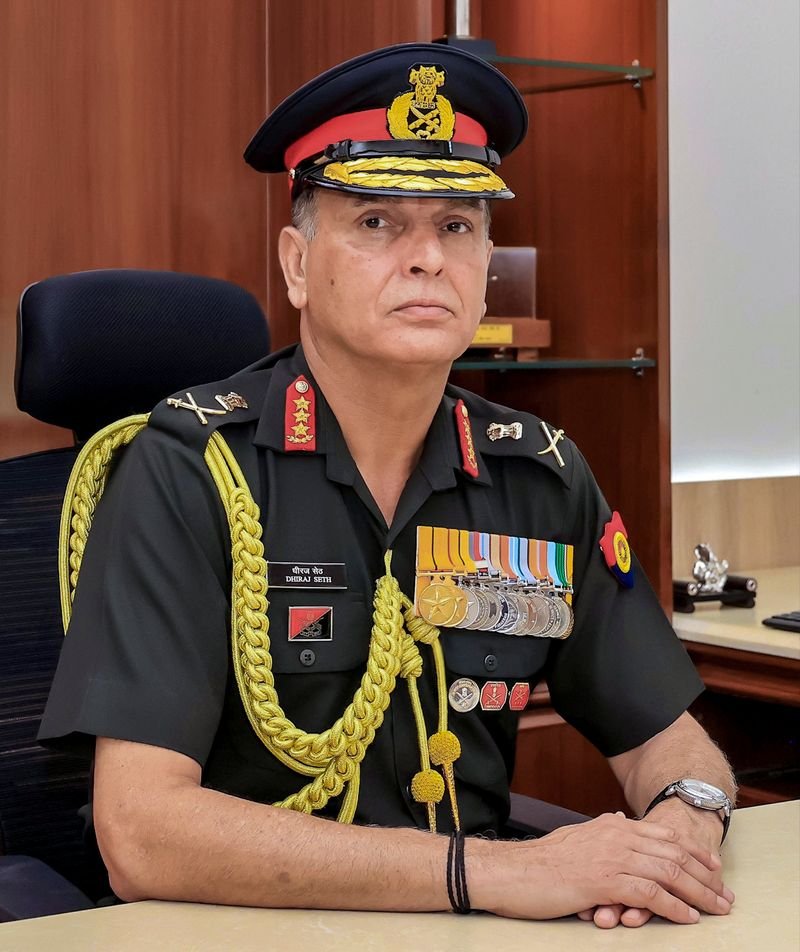
 Capt Amarinder Singh, PPCC chief
Tribune News Service
New Delhi/chandigarh, Jan 14
The Congress today queered the pitch in Punjab with state party chief Capt Amarinder Singh announcing he was keen to contest against Chief Minister Parkash Singh Badal from Lambi. In that case, a source said, Ludhiana MP Ravneet Singh Bittu may take on Deputy CM Sukhbir Singh Badal in Jalalabad. Meanwhile, former BJP leader Navjot Singh Sidhu is likely to join the Congress on January 16.Capt Amarinder, who is also fighting from Patiala, phoned Rahul seeking his approval to take on Badal Senior. The ball is now in the high command’s court. The announcement provoked a terse reaction from Delhi CM Arvind Kejriwal, who asked whether he would fight from one segment or two. “If you are fighting two, people will call you a coward,” he tweeted.January 18 is the last date of filing nominations. Re-strategising, the Congress is thinking of fielding bigwigs against the Badals to blunt the AAP rhetoric that the Congress and Akalis have a tacit understanding. The original plan was to field Bittu from Lambi and Sidhu from Jalalabad. The latter is learnt to have declined the proposal. He might contest from Amritsar East. After Bittu came on board “to fight from wherever asked”, Capt Amarinder today offered to contest from Lambi. Gidderbaha candidate Amrinder Singh Raja Warring said he too was ready to contest “from any seat”.Meanwhile, Phillaur candidate Karamjit Kaur has been replaced with her son.
Father of all battles: Amarinder to take on CM Badal in Lambi bastion
CHANDIGARH/AMRITSAR: It’s an idea whose time had come. After first refusing to accept the dare of Aam Aadmi Party (AAP) chief Arvind Kejriwal to contest against Punjab chief minister Parkash Singh Badal, state Congress president Capt Amarinder Singh seemed to have realised that it’s a masterstroke worth a shot.
 “anti-Badal” credentials Show his pan-Punjab appeal to high command, boost cadres’ morale I won’t mind taking on Rahul Gandhi in Lambi… it will hardly change Congress fortunes.Restrict the CM to his seat by taking fight to his den Counter AAP propaganda and steal its thunder over PARKASH SINGH BADAL, Punjab chief minister
Amarinder on Saturday declared to take the fight to the Badal den, Lambi, while also contesting from home seat Patiala.
It would be the first time in the history of Punjab that a former CM will take on an incumbent one, that too in the latter’s bastion.
“I want to fight the CM on his home turf to defeat top Akali leaders responsible for destroying the state through their drugs, mafia and goonda raj, and guilty of ruining its trade, industry and agriculture. It would free Punjab from the vicious and destructive rule of the Badals,” Amarinder said in Amritsar. He later tweeted that he would make the formal announcement soon.
Meanwhile, Ludhiana MP Ravneet Bittu has agreed to take on the CM’s son and deputy, Shiromani Akali Da (SAD) president Sukhbir Singh Badal, from Jalalabad. The Congress is, however, persuading Navjot Singh Sidhu to fight Sukhbir to further elevate its challenge.
Though Congress vice-president Rahul Gandhi was keen to field top guns against the ruling Badals, Amarinder had his reservations, mainly that it would confine him to one seat.
Now, behind the Congress strategy to pitch its tallest leader against CM Badal is also to checkmate the AAP, the third challenger in poll fray, which has been alleging a “Badal-Amarinder nexus”.


The Delhi CM and other AAP leaders have been citing that Amarinder opposed transfer of investigation into the multi-crore drug scam to the CBI after alleged kingpin Jagdish Bhola named Sukhbir’s brother-in-law and revenue minister Bikram Singh Majithia. The AAP has fielded former Delhi MLA Jarnail Singh against the CM, and Amarinder had called him “small fry”.
CAPTAIN TO KICKSTART CAMPAIGN FROM NATIVE VILLAGE
BATHINDA: Punjab Congress president Captain Amarinder Singh will kickstart the party campaign for the February 4 assembly elections from his native village Mehraj in Bathinda district on Sunday.
After paying obeisance at the village gurdwara, Amarinder willl address a rally in support of Congress candidate from Rampura Phul assembly constituency, Gurpreet Singh Kangar. Mehraj village falls in this segment. Later, he will address another rally in Talwandi Sabo in support of local party candidate Khushbaz Singh Jatana.Party sources said Capt, who had been camping in Delhi for the past several days for deliberations over ticket allotment, will soon try to give a boost to the Congress campaign.
Sidhu looking for best deal: Badal
Our Correspondent
Garhshankar, January 14
Chief Minister Parkash Singh Badal today called former BJP MP Navjot Singh Sidhu a wheeler-dealer. “He will join a party when the best deal is struck,” Badal told reporters. He was here to address a rally in support of Akali candidate Surinder Singh Bhullewal Rathan.The CM said everyone wanted to contest against him from Lambi or against Sukhbir Badal from Jalalabad. “It’s just a gimmick to befool the people. Does it matter who contests from where? I don’t mind even if Rahul Gandhi is fielded from Lambi,” Badal added. He said AAP convener Arvind Kejriwal planned to oust Punjabi leaders by making them contest against senior leaders of other parties. “When they will lose, he will show them the door,” the CM said.
Ex-AAP leader joins Cong
Calls Kejri an anarchist, a threat to national security
 PPCC chief Capt Amarinder Singh with party leader Om Parkash Soni and former AAP leader Dr Daljit Singh (left) in Amritsar on Saturday. Photo: Vishal Kumar
GS Paul
Tribune News Service
Amritsar, January 14
Noted eye surgeon and former AAP leader Dr Daljit Singh joined the Congress here today in the presence of PPCC president Capt Amarinder Singh.Dr Singh had unsuccessfully contested the 2014 Lok Sabha elections against Amarinder and BJP’s Arun Jaitley from Amritsar on the AAP ticket. He was expelled in 2015 for alleged anti-party activities.He said today, “Arvind Kejriwal is a threat to national security. He is an anarchist who should be refrained from grabbing power and disturbing peace. His success would be our failure.”Dr Singh, who had accused senior AAP leaders Sanjay Singh and Durgesh Pathak of trying to ruin the party, said he was disillusioned by the way the party was being run.Amarinder said Kejriwal had been running a New Delhi-based NGO that was funded by the Ford Foundation which, in turn, received funds from US spy agency CIA.On when Navjot Singh Sidhu will join the Congress, Amarinder said, “Talks between him and AICC vice-president Rahul Gandhi are in progress. I can assure you that Sidhu will contest from Amritsar East on the party ticket.”
Vikramjit to replace mother in Phillaur
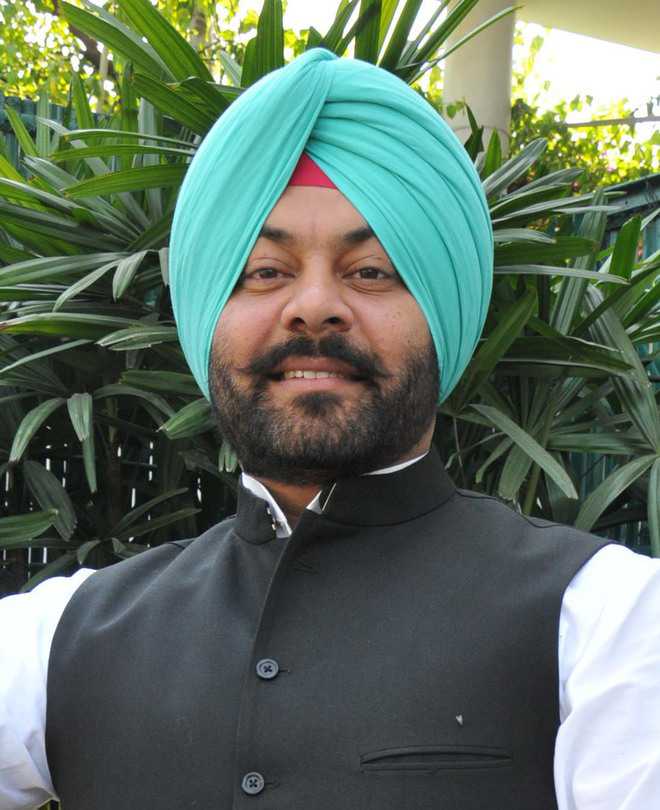 Vikramjit Chaudhary
Tribune News Service
New Delhi, January 14Punjab Congress incharge Asha Kumari told The Tribune today that the party had decided to replace Karamjit Kaur, the candidate from Phillaur, with her son, Vikramjit Chaudhary.“The decision was taken after Karamjit met Congress vice-president Rahul Gandhi and expressed her unwillingness to contest, being a housewife. She requested that the ticket be given to her son instead. The party has agreed.” Vikramjit, former president of the Punjab Youth Congress, is the son of party MP from Jalandhar Chaudhary Santokh Singh. His cousin, Chaudhary Surinder Singh, son of former minister late Chaudhary Jagjit Singh, is contesting from the Kartarpur seat on the Congress ticket.
Property dealers’ body to back Cong
Our Correspondent
Hoshiarpur, January 14
The Colonisers and Property Dealers Association has decided to go with the Congress in the Assembly elections.A decision in this regard was taken at a meeting held here today. The meeting was chaired by state president of the association Kultar Singh Jogi.Jogi, addressing the meeting, said, “Under the current government, the drop in real estate business has hit property dealers, colonisers and the people. Business has come to a halt and people are facing difficulties. Due to the wrong policies of the SAD-BJP government, business is on the verge of ruination. So the association has decided to go with the Congress.”It was also decided to help their colleague and Congress candidate Sunder Sham Arora win from Hoshiarpur.
TROUBLE BREWS IN CONGRESS
Ticket aspirants boycott Dutti’s candidature
 Supporters of Congress ticket aspirant Karamjit Singh Rintu protest against the candidature of Sunil Dutti from Amritsar (North) constituency on Saturday. A Tribune photograph
Tribune News Service
Amritsar, January 14
With the Congress fielding Sunil Dutti from the Amritsar (North) constituency, the party has clearly tried to check opposition from within for its probable candidate from South Navjot Singh Sidhu, but at the same time has agitated the ticket aspirants from north.One of the aspirants, Karamjit Singh Rintu, who had unsuccessfully contested last elections, has already announced to boycott the candidature of Dutti.Giving a one day ultimatum to the Congress leadership, supporters of Rintu stated that they might take a big decision if the party did not correct its mistake.During previous election, Dutti had unsuccessfully contested from the South constituency against Dr Navjot Kaur Sidhu. However, with Sidhu already joining the Congress and her husband expected to follow suit, the party is expected to field him from south.Other aspirant from the constituency, Ashwani Kumar Pappu, has decided not to support Dutti.Talking to The Tribune, Pappu said his supporters would not support Dutti. Pappu said he would chalk out his next strategy after consultation with his supporters. The three main aspirants from the constituency — Rintu, Pappu and Joginderpal Dhingra — also had a meeting last night to discuss their plans as they felt that an outsider was given the party ticket.While Captain Amarinder Singh was in the city and most Congress leaders from the city were present in his meeting, but the trio — Rintu, Pappu and Dingra — were conspicuous by their absence.During the 2012 Assembly elections, the party had first announced the name of Ashwani Kumar Pappu from the constituency. However, his name was dropped few days later and Rintu was announced as party candidate. The political observers in the constituency stated that opposition from within for the official party candidate may prove lethal as probable BJP candidate Anil Joshi was already on a strong foot due to large number of development works completed in the area.
Chhajjalwaddi’s move changes equation in Baba Bakala
 Congress leader Ranjit Singh Chhajjalwaddi (left) with PPCC president Captain Amarinder Singh. A file photo
Tribune News Service
Amritsar, January 14
The political scene in Baba Bakala constituency changed after rebel Congress leader Ranjit Singh Chhajjalwaddi today announced to contest Assembly polls as an independent candidate in protest against ticket to Santokh Singh Bhalaipur.Poll experts have been observing that SAD candidate Malkit Singh AR may benefit from the current situation. The anti- incumbency vote will be divided between the Congress, Aam Adami Party and Chhajjalwaddi. Also in 2012, the position was same. It favoured Manjit Singh Mianwind, the Akali candidate.Although there is factionalism among SAD activists, it is not on the forefront. Shiromani Akali Dal (SAD) has transferred sitting MLA Manjit Singh Mianwind from Baba Bakala to Shri Hargobindpur, but his group in the constituency is yet to support Malkit Singh AR. Meanwhile, Baljit Singh Jalalusma, the SGPC member and Akali leader, is not on good terms with Malkit. He may not extend support to AR.The Congress candidate will again suffer due to the factionalism in the party. In 2012, Akali leader Manjit Singh Mianwind had defeated Chhajjalwaddi, the rebel Congress leader, who had contested independently.Only one political party, which is not facing any factionalism, is the Aam Adami Party (AAP). Although, AAP candidate Dalbir Singh Tong is not a popular face in the party, people are supporting him.Master Arjan Singh, a retired government teacher from village Nagoke said,” The Congress will defiantly suffer due to factionalism. Everything is not good in Akali Dal too, but there is no open opposition to its candidate. The AAP candidate is getting good response from towns and villages.”Harnek Singh, an activist said, “The Congress has announced the ticket after much delay. The party candidate has no time to visit all villages in the constituency.”
BATTLE FOR PUNJAB
Blow to SAD as senior leaders join Congress
Senior vice-president of district, other SAD leaders say they were feeling ignored; 500 families may join Cong soon
 Chamkaur Mann, Bhupinder Singh Bhullar and Pirthipal Singh Jalal with Manpreet Badal after joining the Congress in Bathinda on Saturday. Tribune photo: Pawan sharma
Sukhmeet Bhasin
Tribune News Service
Bathinda, Janaury 14
In a major blow to the Shiromani Akali Dal, its leaders Chamkaur Mann, senior vice-president, Bathinda district, Bhupinder Singh Bhullar, former municipal council president and Pirthipal Singh Jalal, along with their supporters, today joined the Congress in the presence of Gurdas Badal and Manpreet Badal at the residence of Pirthipal Singh Jalal.While addressing a gathering, Pirthipal Singh Jalal said he was with SAD since 1962. He said he had even remained in jail.“Veteran leaders had been ignored by SAD for the last five years. We are feeling suffocated due to which we have decided to join the Congress,” he added.He also appealed to the people to vote and support Manpreet so that if Congress formed the government then Manpreet Badal would be the deputy chief minister.Chamkaur Mann and Bhupinder Singh Bhullar claimed that Sarup Chand Singla was surrounded by four-five aides and because of them SAD had lost ground in the city.They said for their personal gain, these aides had sidelined veteran SAD leaders in the city.Mann said in the coming days, 500 families in the trans-railway line area, previously supporting SAD, would join the Congress.The first case of infighting in sad surfaced when Sarup Chand Singla and SAD city president Sudhir Bansal released a list of new office-bearers of the Bathinda unit on September 16, 2015.In the list, SAD Canal circle president Chamkaur Mann was made the vice-president of the city unit.As Nirmal Singh Sandhu was made the Canal circle president in his place, a large numbers of SAD office-bearers from five wards lodged a protest over this and tendered their resignations.Chamkaur had even announced not to accept the new responsibility assigned to him by the party.At that time, they held a meeting in which they announced to boycott Sarup Chand Singla and submit their resignations.In a joint statement issued by them, they had alleged that all senior posts were being given to businessman, rich, Congressmen and non-SAD workers.They also alleged that CPS Sarup Chand Singla was directly responsible this situation.They had appealed to SAD president Sukhbir Singh Badal to rein in the situation or the party would have to face huge loss in the upcoming 2017 Assembly elections.Later, things were resolved as Sarup Chand Singla held a meeting with Chamkaur Mann and appointed him district SAD senior vice-president.
Ex-SAD leader joins Cong
Harmeet Pathanmajra joined the party in presence of Preneet Kaur
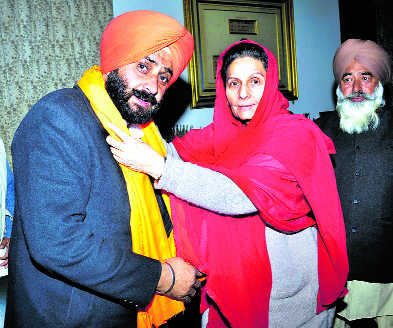 Preneet Kaur welcomes Harmeet Singh Pathanmajra after joining the Congress in Patiala on Saturday. photo: Rajesh Sachar
Tribune News Service
Patiala, January 14
After quitting the Shiromani Akali Dal (SAD) a few months ago, Harmeet Singh Pathanmajra, a youth leader from Sanaur, joined the Congress here in the presence of Patiala MLA Preneet Kaur.Welcoming Pathanmajra into the party fold, Preneet Kaur said the joining of the young Turk, who had a strong base in Sanaur would improve the Congress prospects in Patiala. With Lal Singh’s son Rajinder Singh getting ticket from Samana, the Congress could opt for a new leader in Sanaur, the home constituency of Lal Singh. Preneet further said the inclusion of the former SAD leader indicated that not only the people of Punjab but Akali leaders and workers were also feeling suffocated under the misrule of the Badals. “The way senior Akali leaders are deserting leaving their party to to join the Congress vindicates the fact that only the Congress, under the leadership of Capt Amarinder Singh can bring Punjab back to the path of progress,” she added.Expressing full faith in the leadership of PPCC president Capt Amarinder Singh, Pathanmajra said he joined the party unconditionally. Pathanmajra, who was a member of the Youth Akali Dal Core Committee before quitting the party in September last year, said the Badals had been looting Punjab with both hands.“Only Capt Amarinder Singh can bring back the heydays of Punjab,” he said, after his formal induction into the Congress at the Moti Bagh palace. Along with Pathanmajra, hundreds of his supporters also joined the Congress.Associated with SAD for two decades before quitting the party, Pathanmajra was the former Patiala Youth Akali Dal president and had also been chairman of the Bhunerheri Bock Samiti.
About Pathanmajra
- Associated with the SAD for two decades before quitting the party, Pathanmajra was the former Patiala Youth Akali Dal president and had also been chairman of the Bhunerheri Bock Samiti.