Sanjha Morcha

What’s New

Click the heading to open detailed news

Current Events :

web counter

Print Media Reproduced Defence Related News

Brig BD Mishra (retd) Arunachal Governor takes pregnant woman to hospital in own chopper

Arunachal Governor takes pregnant woman to hospital in own chopper

Itanagar, November 30

In a humanitarian gesture, Arunachal Pradesh Governor Brig BD Mishra (retd) took a woman, who was in urgent need of medical attention, in his helicopter from Tawang to a hospital here, Raj Bhawan sources said.

When the chopper developed a snag after refuelling at Tezpur, the governor requisitioned an Indian Air Force helicopter and let the woman and her husband leave first for the Arunachal Pradesh capital. He returned later in another chopper.

Not stopping at that, Mishra also arranged for an ambulance with a lady gynaecologist at the Raj Bhawan helipad at Itanagar to take the pregnant patient to hospital without losing time, sources said on Thursday.

At the Heema Hospital here, the patient underwent a successful emergency caesarean delivery.

The distance between Tawang and Itanagar is over 200 kilometres by road in the hilly terrain and it takes around 15 hours. But by air, it is around two hours.

The chain of events started at an official programme in Tawang on Wednesday after the Governor overheard a conversation between Chief Minister Pema Khandu and the local MLA.

The MLA was informing Khandu that a patient was in a critical condition, but there was no helicopter service between Guwahati and Tawang for the next three days, sources said.

Mishra offered to take the patient and her husband with him to Itanagar in his helicopter and the two officers, who had travelled with him, would stay back at Tawang to accommodate the couple.

The helicopter had to land at Tezpur in Assam for refuelling, but after that, the pilot noticed a technical snag in the chopper and the flight had to be aborted.

Concerned over the condition of the patient, the Governor made a requisition bid to the Air Officer Commanding of the Air Force Station, Tezpur, for another helicopter. The patient and her husband were taken to Itanagar, sources said.

He followed them in another chopper later.

After coming to know about the woman’s successful surgery, Mishra conveyed his best wishes to her and her baby, they added. PTI


223 militants killed in 11 months Number surpasses ‘Operation All-out’ figure of 2017; ‘big names targeted this year’

223 militants killed in 11 months

Army personnel near an encounter site in the Sirigufwara area of Anantnag district. Tribune file Photo

Majid Jahangir
Tribune News Service
Srinagar, November 27

Surpassing last year’s militant death toll of 209, the security force have killed 223 ultras in 2018 even as there is still one month to go for this year.

Last year, the security forces had launched an ‘Operation All-out’ to flush out the militants who had managed to strengthen their base following the killing of militant commander Burhan Wani. The incident had triggered a nearly five-month-long unrest in 2016.

The high toll of militants this year — highest since 2010 — was despite the fact that the security forces had halted anti-militancy operations during Ramzan.

This year the security forces targeted the leadership of the militants, and in the process have killed many big names such as Jaish-e-Mohammad commanders Mufti Waqas who the police claimed was the mastermind of the Sunjawan attack near Jammu, Mufti Yasir, Usman Hyder (nephew of Masood Azhar), scholar-turned-Hizbul Mujahideen militant commander Manan Wani, Altaf Dar, Saddam Paddar, Sheikh Tauseef, Sameer Tiger, Umar Majeed, Abbas Bhat, Azad Baba, Mehraj Bangroo, Shakoor Dar, Eisa Fazili and Shakir Hassan Dar.


“Big names have been targeted this year,” a senior police officer said. “There are a few top names left in the militant ranks.”

According to officials, of the 223 militants killed, 130 were locals.

The successful operations that led to the high number of killings indicate that the militants are facing the heat. However, this year the youth continue to join militant ranks.

“The militants have been on the backfoot due to intense anti-militancy operations and we see that they have not been able to carry out any sensational attack on forces,” the officer added. In 2017, militant group Jaish had carried out at least three deadly fidayeen attacks in Kashmir that left many security men dead.

The militancy-infested districts of south Kashmir saw 131 militant killings. Shopian district recorded 44 militant killings — the highest — among four districts of south Kashmir.

In north Kashmir, 45 militants have been killed in the hinterland and 47 were eliminated along the Line of Control (LoC).

According to figures, the Hizbul Mujahideen — the indigenous militant group — has lost 60 militants, followed by the Lashkar-e-Toiba whose 59 militants were killed this year. The Jaish-e-Mohammad has lost 32 militants in Kashmir this year out of whom 10 were locals.

At least 16 militants of other groups, Al-Badr, Tehreek-ul-Mujahideen and radical groups Ansar Ghazwat-ul-Hind, and the Islamic State of J&K were also killed this year.


Don’t need surgical strike to stop another 26/11, have many options: Army chief Bipin Rawat

The Indian Army now has ‘options’ to tackle a major terror attack like Mumbai 26/11, says General Rawat.

Bipin Rawat

General Rawat stressed that the Army is capable and ready to take action against any provocation. (Photo: Indian Army)

HIGHLIGHTS

  • General Rawat said situation where Army is unprepared to respond to attack will not arise
  • Said Kashmiris will soon shun Pakistani militants from region
  • Also warned of a potential attack on Army cantonments in Punjab

Ten years after the 26/11 Mumbai attacks, Army chief General Bipin Rawat, speaking to India Today Magazine, assesses the changing nature of Pakistan’s proxy war, the possibility of the threat spreading to Punjab and how the Indian Army’s response to such atrocity need not only be ‘Surgical Strikes II’.


Q. On Monday, it will be the tenth anniversary of the 26/11 Mumbai terror attacks. I believe the Army then was asked for options and it said that it was not prepared. If there is another attack like Mumbai today, what will be the Indian Army’s response?

BR: We’ve come a long way from those days. You saw the attacks in Uri, prior to this you saw the attacks in Manipur, we respondedwhen we responded in Uri, it was messagingit could have been more. So, it was just signalling and, therefore, the Indian Army today is much more prepared to take action based on the directions given by the government.

Photo: PTI

I’m not trying to say that we are war-mongering, but if we are told to take some action, we are capable and ready for it. So, there is never going to be a situation where you will not have options to tackle something like a big terrorist attack.

Q. What are the kinds of options you have as a response to a major attack like this?

BR: We have options. We have numerous options. Everybody is talking ‘Surgical Strike 2’, but you don’t have to use the same formula time and again, because an action taken once puts the adversary on the alert because he knows what’s going to happen.

When we responded in Uri, it was messagingit could have been more.

– General Bipin Rawat

So you have to look at options, look at the way forward and the action will depend on the kind of acts that are perpetrated by the adversary. And finally, if you feel now that water is flowing over the brim and the political hierarchy feels it is now time to take action and we are tasked for taking any action, we will do so.

Q. How has the nature of the proxy war that you are fighting with Pakistan changed in the last couple of years? Do you detect a change at all or is it more of the same?

BR: Yes, there is a change. From across the borders now Pakistan is trying to give this (proxy war) an indigenous flavour. Our political hierarchy and diplomats have done a great job with the international community in isolating Pakistan.

READ| Pakistan wants to keep its pot boiling by terrorising Kashmir: Army chief Bipin Rawat

Pakistan has now been identified as a nation which is sponsoring terror not just in India but in many other parts of the region and the world. They’ve been nailed.

They’ve now realised they are on the radar of the international community, they are trying to give the uprising in the Valley an indigenous flavour.

Photo: Reuters

They’re getting their terrorist conglomerate to recruit local youth. But I don’t think they can befool us and the international community. Everybody understands that terrorism (in the Valley) is being sponsored from across the borders.

Q. In that sense, how is your messaging to GHQ Rawalpindi — which is pushing this proxy war — changed?

BR: The messaging is very clear. It has been going on from 1989 — 30 years — and it can continue for another 30. But that is not the way forward. We’ve gone with this proxy war for 30 years, don’t test our patiencesomeday the government will decide that enough is enough and that we’ve crossed the brim. The message to Pakistan is this: The losers from this proxy war have been Pakistan and the people of Kashmir. And within Kashmir, it’s only the Valley which has been affected.

The only people who have suffered are Pakistan. See where they stand today — they stand isolated, their forex reserves are down, development is not taking place.

The losers from this proxy war have been Pakistan and the people of Kashmir.

– General Rawat

A similar thing has happened in the Kashmir Valley. People are saying there are no jobs, no investments coming in. How will investment happen in a climate of violence? It’s important for people to understand that if you want jobs, please do not resort to violence. Both we (the Army) and the government have been asking the people to support Panchayati Raj and participate in local self-governance.

Q. Are you referring to the recent beheading incident in the Valley?

BR: Everything that has happened in the last year-and-a-half. They [terrorists] have burnt homesof panchayat members and school buildings. They’ve targeted policemen. Now, they are targeting the unemployed, alleging that they are police informers.

READ| Value life and don’t join militants, says Rawat

Locals now feel [terrorists] aren’t acting in the best interests of the people of Kashmir. What we are seeing are acts of frustration in the final stages of an insurgency. It will lead to an uprising from the people who will then shun militants.

Q. Something like what happened in Punjab in the early 1990s?

BR: Perpetrating these kinds of barbaric acts is something which the Islamic State (IS) was doing in Syria and Iraqthis is not what Kashmiris stand for. This is not Kashmiriyat, this is not Kashmiri Sufism, and this is not Islamiyat.

I think at our leadership level, between the Prime Minister and President Xi Jinping, politically, they have been able to resolve issues.

– General Rawat

Q. When will the situation be ripe for the political process to begin? Can it ever take place in this kind of a violent situation?

BR: The first stage has begun with the panchayat elections. Let’s see how successful they are. People of Kashmir need to take a cue from the Maoist-affected areas, where people came out to vote in large numbers despite threats of violence by the Maoists. You can’t be held hostage by a couple of gun-wielding terrorists.

Photo: Reuters

Q. Your statement on ‘external linkages’ in Punjab seemed eerily prescient given the fact that there was a grenade attack a few days later. Do you see a deliberate ploy to restart insurgency in Punjab?

BR: I made the statement based on recent intelligence inputs. We saw a terrorist act in Pathankot in 2016. We’ve seen some movement by terrorists taking place in areas bordering Jammu and Kashmir and Punjab, especially the northern part of Punjab. I was only reading the writing on the wall and warning the Army to be alert because there might be a possible terrorist attack on our cantonments in Punjab.

READ| Amritsar attack: Accused reveals how Pakistan’s ISI provided instructions, grenade to carry out blast

Across the border, frustration is setting in. After Burhan Wani’s death, they expected Kashmir to go out of control and ‘liberation’ would come. It didn’t happen. They know people aren’t going to indefinitely support this kind of violence. So they want to expand the scope of the insurgency into the neighbouring states.

The people of Punjab are not going to let this happen. How do you think we brought the situation to normalcy in such a short time in Punjab? It was because of the people of the state.

Q. Recent satellite photos suggest that the Chinese have built an almost permanent establishment on the Doklam plateau. Does that alter your security perception there?

BR: There is nothing untoward happening in Doklam. After the standoff, Chinese troops that have remained in the area have built structures for themselves. This is because they have to stay where they were earlier. The agreement was that we will carry out a separation of our troops so that there is no scope for a confrontation.

They’ve only done some billeting for their troops to stay in winter. I don’t think there is a very significant change we are witnessing and there should be no cause for concern. I think at our leadership level, between the Prime Minister and President Xi Jinping, politically, they have been able to resolve issues.

Photo: Reuters

At the military level also, right at the grassroots levels, at the local formation commander levels, we’ve got good understanding and mechanisms to ensure that things do not escalate. Troops on both sides are being briefed well to see that while we may have differing perceptions of the Line of Actual Control, there should be no confrontations when we attempt to reach those perceptions. Confrontations are being amicably resolved. Whenever we see a situation escalating out of control, we quickly call for a flag meeting at the brigade commander level and now I think we are also upgrading it to the division commander’s level.

Q. The hotlines that are being set up?

BR: The hotlines are being set up, but those are at a different level. Whether you call it a hotline, there are communication channels existing at the local level but now we are talking of getting those [hotlines] at the level of the government.

READ| We will cross again, says General Bipin Rawat

WATCH| Army better prepared to tackle 26/11-like attacks, says General Bipin Rawat


Army aims to cut troop strength by 1 lakh Focus on automation, the number of officers could be brought down by at least 4,500

Army aims to cut troop strength by 1 lakh

Most modern armies across the world have been opting for ‘right-sizing’ to facilitate modernisation.

Ajay Banerjee
Tribune News Service
New Delhi, November 23

Finer details emerging on restructuring of the 13.50-lakh strong Army indicate that the force’s strength is likely to be brought down by 1 lakh, the downsizing including cutting down the authorised number of officers by around 4,500.

As modern technology takes charge and several defence operations get automated, most modern armies have been going in for “right-sizing”. China too cut its numbers by 3 lakh in 2014.

As on January 1 this year, the Army had 42,365 officers in its cadre against the authorised strength of 49,933. If the downsizing plan gets the go-ahead — the Union Government and the Ministry of Defence will take the final call — the authorised count of officers will be capped at 45,000 (a cut of around 4,500).

Some quarters, however, have suggested against reducing the authorised strength and advised a cut in recruitment to control over-staffing, if any, top sources told The Tribune.

Similarly, the formula suggests cutting the number of soldiers per unit to achieve an overall reduction of about 90,000-1 lakh, this again resulting from automation of various Army units, communication equipment, better managed logistics, etc.

In order to check stagnation, the Army, meanwhile, is looking to promote more officers from the post of Lt Colonel to Colonel by raising the promotion percentage from the current 35 to 55.

The selection for Colonel takes place when an officer is around 35 years of age. Those who don’t make the cut at this stage can continue serving till 54 years of age and, thus, attain the rank of Colonel at around 46 years of age. The suggestion is to reduce the percentage of officers who will be promoted from Colonel to Brigadier —at present, some 35 per cent get promoted and the plan is to bring it down to 25 per cent. The Army currently has around 4,300 Colonel-level posts and 1,100 of Brigadier. The proposal is to automatically promote Brigadiers as Major General after two to three years of service.

Another proposal is to curtail the direct entry of officers through the Indian Military Academy (after graduation) and keep it only through the National Defence Academy (NDA), which takes in cadets immediately after school.

The Army is also looking to have more of Short Service Commission entry where officers serve for 10 or 14 years. The suggestion is giving 25 per cent of such officers a permanent commission. However, an irritant remains that the career progression of commissioned officers will still be lower than what the government provides even in civilian group-B service, which is lower than group-A category comprising IAS, IPS and other central services.


A war hero who returned with his horse

A war hero who returned with his horse

RS Dalal

The world has been celebrating 100 years of the end of World War I, with the signing of Amistice on November 11. On the occasion, Haryana remembered thousands of its brave sons who fought in Europe in the first Great European War.

Capt Ami Lal of Balland village of Rohtak district is one such proud son. Born in 1878 to a farmer’s family, from childhood he was determined to make a name for himself and joining the armed forces was the surest way to do it. He grew to be a tall and lanky. At the first opportunity, he stood in the queue for army recruitment, but was rejected for being too lean. He did not lose heart and reappeared, but was rejected. Not the one to give up, he was in the queue again after a year. The recruiting officer recognised him. Impressed by his determination, he was recruited this time.

After gruelling training, he was allotted to ‘Ist Skinner Horse’, the famous cavalry battalion. In no time, he proved his mettle and was known as the master horseman, excelling at equestrian skills and dare devilry. Thus, though only a sepoy, he played polo alongside maharajahs of Rajasthan. Twice he forsook his turn for annual leave as he didn’t want to miss any chance to take part in military action. The opportunity for this brave soldier knocked at the door when World War I broke out. And soon, he was shipped across the sea to fight in France against the central powers arrayed against the Allied forces. For his feat of bravery in fierce battles, he was conferred the title of ‘Bahadur’. In the second half of the war, his unit was deployed in Mesopotamia. In one of the actions, a platoon of his unit was surrounded by the enemy on all sides. The commander called for volunteers for assault at night to open a safe passage for the encircled platoon. True to his valour, Ami Lal volunteered and led the assault with his machine gun firing incessantly all through the night, breaching enemy lines. The British commander was stunned at this unbelievable display of courage in the face of sure-death.

He was awarded the Military Cross  (Order of the day No. 108 dated 01-06- 1918 Great European War) for extraordinary courage and commitment to duty. The war was fought on horses. Promoted as Hony Captain, Ami Lal returned to his village along with his horse, which also survived fierce battles. He retired and settled in his village and worked for social uplift and spread of education.

Incidentally, I am married to the granddaughter of Capt Ami Lal. His saddle has been passed down to me through my father-in-law and is a proud possession in our house.


Undeclared war’ between Afghanistan, Pak must end: Ghani

‘Undeclared war’ between Afghanistan, Pak must end: Ghani

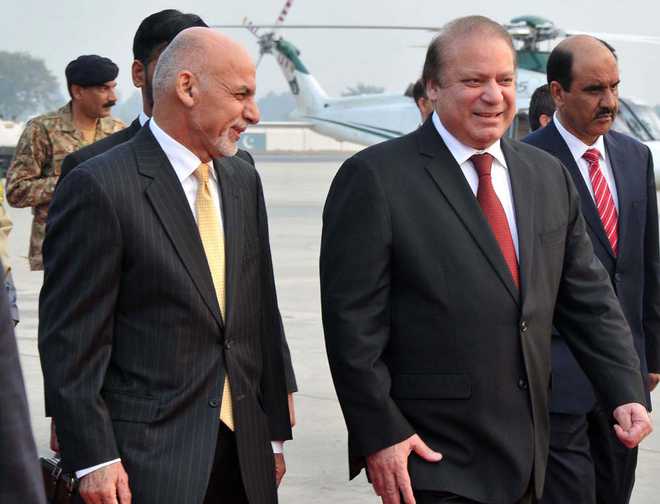
Afghan President said the spectre of violence needs to be removed. Reuters file

Washington, November 15

Asserting that Islamabad’s support to violence has not benefitted either Pakistan or Afghanistan, Afghan President Ashraf Ghani has said that the “undeclared war” between the two neighbours must end.

Ghani said the spectre of violence needs to be removed and that Pakistan needs to support direct discussions between the Afghan government and the Taliban.

“The undeclared war between Afghanistan and Pakistan must end,” he told a Washington audience through video conference from Kabul.

“We have not supported any movement against Pakistan from Afghanistan. The Afghan soil is not being used. We’ve exercised immense restraint and control because we seek a cooperative relationship,” Ghani said in response to a question at the School of Advanced international Studies of the John Hopkins University on Monday.

Of the view that there is a need to define “what is a normal relationship” between Afghanistan and Pakistan, he said Kabul can offer a lot in the way of cooperation. “We are the key to Central Asia. How will Pakistan get to Central Asia without a stable Afghanistan?” he asked.

Ghani said Afghanistan and Pakistan need to together agree with the US and the rest of the world community on counter terrorism. These three sets of relationship, he said are the key.

“From the day that President Donald Trump announced the South Asia strategy, I extended the hand of friendship. We have engaged in several rounds of discussion,” he said, adding that Afghanistan and the US have arrived at a document on what is their expectation, what needs to be done to translate commitments into reality and to help reduce the level of violence in moving forward to lasting peace.

Ghani said that he has not seen “urgency” from the new Pakistan Prime Minister Imran Khan regarding holding concrete dialogue with Afghanistan to fight terrorism or to assist in holding fruitful talks with the Taliban.

“We have not yet seen the sense of urgency. We hope that sense of urgency can be brought to the picture. We have a framework which is a Afghanistan-Pakistan agreement. The key is to move from talking to taking action,” Ghani said.

“Our national interest is to keep engaging with Pakistan. We seek a stable Pakistan. We need to see substantive and measurable change. As of now that substantive and measurable change with the government of Prime Minister Imran Khan has not been seen. This is what needs to take place,” said the Afghan president.

Ghani said that the Taliban is not in a winning position. “Let them disclose their casualties. Let them answer to the mothers who have lost their children. Let them answer to the wounded and let them answer to communities that because of their interference, have been deprived of education, of health, of services. Where is the positive model of the strength?” he said. PTI


Their war yes, but our heroes Remembrance Day, Nov 11, commemorates the dead of both World Wars by Lt Gen NS Brar (Retd)

Lt Gen NS Brar (Retd)

Ex-Deputy chief, Integrated defence staff

The year 2018 marks the centenary of the end of World War I. ‘The War to End All Wars’ or ‘The Great War for Civilisation’ did not achieve what the belligerents or its protagonists imagined. Neither did it end ‘Before Christmas’, as the British expected, nor ‘Before the Leaves Fall’, as per the German objectives. The armistice was signed at 11 am on the 11th day of the 11th month of 1918 in the railway carriage of Marshal Ferdinand Foch in the Forest of Compiegne, north of Paris. The Treaty of Versailles of 1919 ended the war between Germany and the Allied Powers. November 11 is commemorated as Remembrance Day.

Major-Gen Ganga Singh (Maharaja of Bikaner) was a member of the Imperial War Council in 1917. India was a separate signatory to the Treaty of Versailles and a founding member of the League of Nations. It was the only non-independent territory to have this status. Ganga Singh was the sole Indian or ‘non-white’ representative at the signing of the treaty. The iconic painting, The Signing of Peace, shows an imposing Ganga Singh in uniform with the traditional safa.

The Great War was dominated by technological developments of the barbed wire, heavy artillery, magazine-filled rapid-fire rifles and belt-fed machine guns. All contributed towards the butcher work. The industrialised fighting changed the nature of war. About 70 million military personnel were mobilised and 16.5 million killed. Of the million horses employed, only 60,000 survived. India provided 1.73 lakh horses, mules and camels for the war and recruited over 14.40 lakh men, sent more than 13.81 lakh for service overseas, of which 74,187 officers and men were killed and another 70,000 wounded. Of the killed, 13,516 names are inscribed on the India Gate Memorial, New Delhi, completed in 1933. India bore the cost of these men, besides an outright contribution of £100 million towards the overall war effort. India’s contribution was never fully acknowledged by Imperial Britain. Independent India remains indifferent, labelling it as ‘not our war’ and participating reluctantly in events commemorating the war centenary.

An Indian soldier wrote home from the Western Front: And so the war is raging by sky and land and sea,/And underneath the water, five kings are fighting three/The cannon roar like thunder, the bullets fly like rain,/And only the hurt, the maimed and blind will ever see home again. (Shrabani Basu; For King And Another Country.)

Renewed interest and research prompted by the war centenary 2014-18 has thrown up material on India’s critical contribution, especially in the initial phases on the Western Front and in the closing stages in the Middle East. While the larger issues of empire, colonialism, class and its effect on an entire generation impacted the world at large, the war also left some memorable terms and phrases on the military and everyday lexicon. Even vernacular languages felt the effect. When the German warship ‘Emden’, prowling in the Bay of Bengal, shelled Madras harbour and the city on September 22, 1914, causing mass evacuation, it brought the war to India before Indian troops went into action on the Western Front. The Tamils, evidently impressed with the demonstrated German capability, coined a new word — ‘emden’, meaning ‘an enterprising, resourceful and meticulous person’. Sikh soldiers returning from the war and evidently impressed by officer ranks went on to name their children Kaptan, Major, Karnail and Jarnail Singh.

The war produced some outstanding poetry and prose, mostly by young men who saw the horrors first-hand in the trenches. Some are universally inscribed on memorials and cemeteries. The fourth stanza of Laurence Binyon’s For the Fallen, published in The Times on September 21, 1914, has come to be the universal ‘Ode of Remembrance’ read at most commemorations: They shall not grow old, as we that are left grow old/Age shall not weary them, nor the years condemn./At the going down of the sun and in the morning/We shall remember them.

Lt Col John McCrae, a Canadian, seeing poppies near the grave of his dead friend, in lament wrote In Flanders Field: In Flanders fields the poppies blow/Between the crosses, row on row,/That mark our place; and in the sky/The larks, still bravely singing, fly/Scarce heard amid the guns below.

In Flanders Field struck a chord with the public and poppies soon came to be associated with the war dead. Poppy wreaths are today symbolically laid on war memorials. Some countries like Canada have a poppy imprinted on the car number plate to signify the owner as a veteran. Remembrance Day is also called Poppy Day. In India, we do not have any such symbolic association to remember and commemorate the war dead, though in our tradition and culture marigold flowers find prominence both to celebrate and to mourn. In Indian life, colours hold especial importance. White is widely accepted as the colour of peace and purity. Yellow symbolises sanctity and therefore yellow marigold are used on auspicious occasions while saffron represents courage and sacrifice.

The Armed Forces Flag Day observed on December 7, since 1949, is the only official annual event related to the soldier. It is a day dedicated to the collection of funds from people for the welfare of the armed forces personnel. Perhaps it would be appropriate to institute the saffron marigold as our symbol of recognition of the dead soldier and upgrade the Flag Day into Remembrance Day.


Indian Army checks out Innefu’s Predictive Intelligence framework

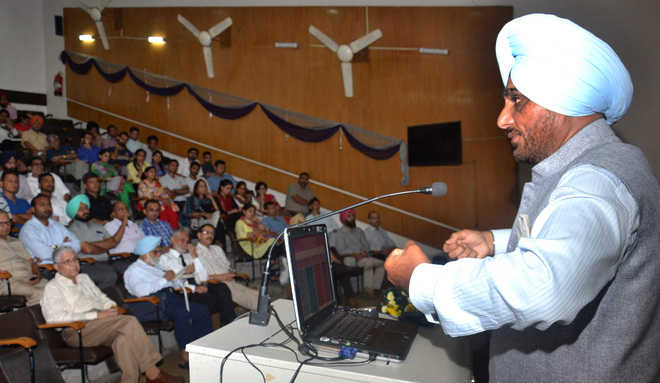
Innefu an AI & Predictive Intelligence Research Lab showcased their solutions to Indian Army on Artificial Intelligence at Military College of Telecommunication Engineering, Mhow MP. The two day seminar saw discussions on the increasing application of artificial intelligence in military context.

Artificial intelligence has a wide scope of applications in military context and is widely getting used by Armies all over the world to enhance their capabilities and optimize resources. Innefu showcased their trademark product – Prophecy which is in use multiple intelligence organizations in the country and abroad. Prophecy has trained Artificial Intelligence models to provide valuable insights such as predicting border infiltration routes, identifying potential suspects, predicting CFV’s, border incidents, force preparedness, intelligence grading and validation etc

Prophecy is a Big Data Analysis framework developed by Innefu. It uses state of the art AI models for Text analytics, Image and Video Analytics, Satellite Images and Predictive Intelligence specifically trained for Law Enforcement Agencies. The system merges data from disparate sources including CCTV/Body worn cameras, crime dossiers, Intelligence inputs etc under one roof for a 360-degree view.


Hafiz Saeed’s JuD, FIF add to Pakistan’s nuisance value which compels global powers to grant bailout packages by Lt Gen Syrd Ata Hasnain

Pakistan is indeed a strange country beyond any sense of rationalism. Only three days ago Human Rights Minister Shireen Mazari presented a strategic conflict resolution model for Jammu and Kashmir with the intent that the international community could get India to negotiate on the alleged dispute.

Since his election to office, Prime Minister Imran Khan has urged India a number of times to engage in talks without offering any commensurate commitment towards cessation of sponsored terror in Jammu and Kashmir or elsewhere in India.

The Financial Action Task Force (FATF), which identifies national-level vulnerabilities with the aim of protecting the international financial system from misuse, has placed Pakistan on its grey list for its failure to take sufficient action to curb financial networks that support and assist terror-related activities.

File image of Jammat-ud-Dawah (JuD) chief Hafiz Saeed.AP

Down to just $8.5 billion in foreign exchange reserves, Pakistan, which has been struggling with a failing economy, has just been given a short lease of life in the form of a $3billion deposit and similar quantum of energy support, by Saudi Arabia.

Even as Pakistan reportedly seeks a $9-10 billion bailout from the International Monetary Fund (IMF), an organisation majorly controlled by the US, on 26 October, 2018, Pakistan took the decision to lift its internal ban on the JuD and Falah-e-Insaniyat Foundation (FIF), headed by 26/11 mastermind and well-known terrorist leader Hafiz Saeed. Both the organisations and Saeed had been banned by a presidential ordinance after they came on the UN Security Council terror list. Saeed recently challenged the ordinance on grounds that the Khan-led Pakistan Tehreek-e-Insaf (PTI) government has taken no action to convert the ordinance into law within the prescribed 120 days.

The United Nations Security Council had designated JuD as a terrorist organisation under Resolution 1,267 after the Mumbai attacks. In 2014, the US administration had added JuD in the global terrorist organisations’ list.

Though Khan’s government has the option of extending the ordinance for another four months after which if not converted to law by the legislature, the ordinance will lapse, it hasn’t.

Most times, it’s extremely difficult to understand Pakistan as a nation. At one end, its citizenry fully acknowledge that Saeed and his organisation only mean trouble for Pakistan’s already low international reputation, especially at a time when the nation is in dire straits on the economic front. But internally, there is, a fairly large segment which is enamoured by the JuD and FIF’s social activities. The organisation under its original avatar Lashkar-e-Taiba (LeT) was at the forefront of rescue and relief work during the 2008 earthquake in Pakistan-occupied Kashmir and runs several charity organisations which draws to it a degree of emotional support but does not manifest into political dividend.

Since the JuD creates no internal disturbances and largely focuses on terror activities in India (more specifically in Jammu and Kashmir) and to an extent in Afghanistan, it’s supported by the deep state and evokes a positive response from common citizens.

Fund collection drives in the name of jihad in Jammu and Kashmir are extremely popular. However, the reputation it carries internationally, especially after the 26/11 Mumbai Attacks, has placed it on watch lists and constant surveillance. Branded as friendly terrorists in the parlance of Pakistan’s strange internal security environment the JuD’s virulent anti-India stance helps keep it afloat and accepted despite a $10 million bounty on Saeed’s head.

It’s not as if the JuD’s nuisance potential is not recognised by the deep state. A senior retired US Army officer mentioned that when the Pakistan Army Chief was once privately queried on why doesn’t, in the interest of better India-Pak relations, the Pakistan Army stop the JuD from carrying out infiltration into Indian territory, the reply was that: it was a good safety valve to let out the steam. He felt that by being focused towards India, the JuD remained a strategic asset which could otherwise be an immense nuisance internally if restrained from its objectives.

None can, however, explain how Pakistan runs the risk of large scale hostilities with India given that the JuD’s actions lead to events that act as triggers for India to respond militarily.

Pakistan appears convinced that India is unprepared to risk a nuclear conflagration and therefore feels confident that it can continue this policy within India’s limits of tolerance. A greater Indian demonstration of will could act as a restraint on Pakistan’s use of JuD as a strategic asset.

The above notions now appear at risk. Clearly, the combined effect of national financial bankruptcy, FATF monitoring, application for IMF bailout, India’s diplomatic offensive, the lack of any commensurate Chinese initiative for economic bailout, and the questioning about the viability of coercive debt traps in nations partnered by China for the Belt and Road Initiative (BRI) (Pakistan being one of the flag bearers with its CPEC), should place Pakistan under immense pressure. The only explanation for Pakistan remaining fairly unconcerned about the risk it is running for — a potential meltdown financially as well as from a law and order angle — is that it realises its own nuisance potential. Its geostrategic location being such it demands international attention.

The US under President DOnald Trump has displayed a higher level of coercive capability against Pakistan but at the end of the day it’s only Pakistan’s cooperation which can stabilise Afghanistan to allow the US to leave with its head held high. Its strategic nuclear assets remain a source of great worry so a meltdown is not something that the international community can ever allow in Pakistan.

The deep state led by the Pakistan Army thus has its stakes high and is willing to run risks. Actions against Saeed and JuD constitute disturbing the internal balance, and drawing down from a proxy war against India — that Pakistan perceives it is winning — is not acceptable. So, nothing is likely to happen on the lapse of the ordinance.

At the most, a second ordinance for another 120 days will be issued and a forced constitutional amendment could well be on the cards to overlook the JuD and 66 other organisations which come under the purview of the ordinance. While many in the Pakistan government will offer oversight as a reason for this lapse with supposed ‘more important’ issues occupying Khan’s mind, it is clear that Saeed, JuD and FIF are strategic assets in more ways than just terrorists aimed at India. They give enough cause for concern to those who worry for Pakistan’s overall nuisance potential especially in the context of the compulsive issue of strategic nuclear assets. The more that threat is subtly played out, the greater the chances of bailout packages being made available. As stated earlier rationality is not something which can be applied in analysing Pakistan.