Sanjha Morcha

What’s New

Click the heading to open detailed news

Current Events :

web counter

Print Media Reproduced Defence Related News

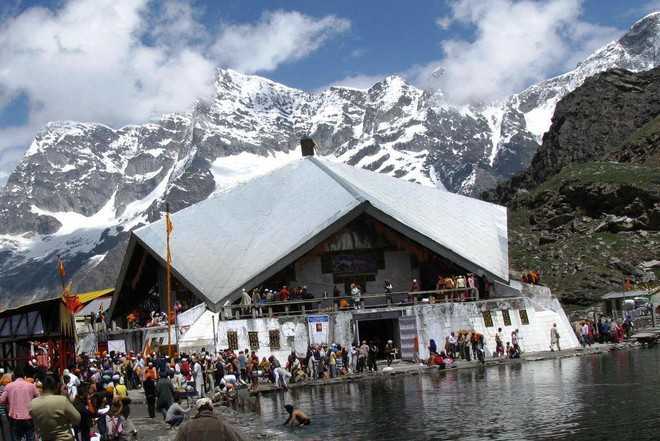
Hemkund Sahib in Uttarakhand closes for winters

Hemkund Sahib in Uttarakhand closes for winters

Gurdwara management committee officials said over 2.5 lakh people visited Hemkund Sahib this year. File photo

Gopeshwar, October 10

The portals of Hemkund Sahib, a high-altitude Sikh shrine in Garhwal Himalayas, were closed on Thursday for the winter season.

Over 3,000 Sikh devotees braved the chill to pay obeisance at the temple located at a height of 14202 feet before its ceremonial closure in the afternoon after recital of prayers.

Gurdwara management committee officials said over 2.5 lakh people visited Hemkund Sahib this year.

Doors of the temple will be reopened in May, they said. — PTI


Pak leadership at crossroads by Vivek Katju

Pak leadership at crossroads

Wishful thinking: Pakistan hopes that major powers would not only condemn Indian ‘repression’, but also ultimately compel India to accept mediation on J&K.

Vivek Katju
Ex-secretary, ministry of external affairs

THE intense media attention in India and Pakistan over the presence, approaches and statements of PM Narendra Modi and his Pakistani counterpart Imran Khan at the high-level segment of the recent session of the United Nations General Assembly (UNGA) in New York has receded. Consequently, for the time being, the decibel level surrounding bilateral ties has also come down, providing opportunities for sober assessments and prognosis. This is never an easy task for policy-makers and analysts on account of the relationship’s historical baggage and inherent emotion.

Pakistan’s aggressive, if not irrational reaction to the constitutional changes in J&K on August 5 has ensured that bilateral relations have entered a new and particularly difficult phase. This period is marked by aggressive Pakistani attempts to divert international attention from its policy of using terrorist proxies in J&K to Indian ‘irresponsibility’ which could result in violent confrontation between two nuclear- armed countries. Another feature of this phase consists of Pakistan’s desire to convince the international community that India is ruthlessly crushing a ‘freedom struggle’ and in the process brutally violating human rights. To make the global community receptive to its messages, Pakistan has ensured that terrorist groups based on its territory have not undertaken any major attacks in the Kashmir valley or elsewhere, though it is infiltrating terrorists into J&K. Pakistan hopes that the major powers who naturally do not want an India-Pakistan armed conflict would not only condemn Indian ‘repression’, but also ultimately compel India to accept mediation on J&K.

Pakistan has not achieved any of its post-August 5 objectives. Pakistani leaders have accepted as much when they expressed their disappointment at the international community’s indifference to the Kashmir situation. The UN Security Council, UNGA and the UN Human Rights Council have remained virtually unmoved by the Pakistani push. Some countries, including the US, have called for the removal of movement and communication restrictions in J&K and the release of political leaders and workers. While these demands may grow, they have not developed any real international traction as yet. This is largely because of the absence of large-scale demonstrations or damage to life and property in the Valley since August 5. It is, of course, desirable that the situation should return to normal in J&K in the shortest possible time. Naturally, the security situation will play a major role in determining the timing of the government’s moves.

Pakistan has been particularly distressed by the largely continuing indifference of the Islamic ummah to its all-out diplomatic campaign on J&K. Only Turkey and Malaysia were critical of India in their UNGA statements. The Arab peninsular states, including Saudi Arabia, have steered clear of the issue. It has, though, been difficult for them to do so because all have close ties with Pakistan and Saudi Arabia, and the UAE has significant connections with the Pakistani army. These two countries engaged India and Pakistan after the Pulwama terror attack. Such engagements are undertaken with the aim of defusing tensions.

 After August 5, the Saudi minister of state for foreign affairs and the UAE foreign minister jointly visited Pakistan to assuage its hurt over their not going along with it on the J&K developments. Imran Khan visited Saudi Arabia on his way to New York for the UNGA. He would have undoubtedly raised the Kashmir situation with the Saudi leadership in a big way. Now, Modi is scheduled to visit Saudi Arabia. While the primary focus of his discussions will on bilateral ties, the issue of India-Pakistan tensions would undoubtedly come up. 

Pakistan has pushed itself into a corner in the present phase of bilateral relations. It took very aggressive steps against India immediately after August 5. It asked the Indian High Commissioner in Islamabad to leave and stopped trade. Later, Pakistan gratuitously insulted India by denying President Ram Nath Kovind and PM Modi the use of its airspace on their way to the West. Further, it laid down the condition that India would have to reverse its August 5 steps before Pakistan would agree to the resumption of talks. The decisions were directed at the major powers to get them more actively engaged with India-Pakistan relations.

As the Pakistani civilian leadership and the generals watch their moves fail, they confront two basic questions: should they pursue their present policy of holding back their terrorist groups in the hope that continued Indian restrictions on communications and movement in J&K would lead to the major powers and liberal sections of international opinion putting India under greater scrutiny and possibly pressure? Or should they unleash the terrorist groups to undertake terrorist attacks in J&K and elsewhere in India in expectation that a kinetic Indian response will precipitate a crisis and immediately draw in the major powers not only to defuse the crisis but hopefully compel India to accept mediation on J&K? It is difficult to predict which path Pakistan will take in the near future but there is no doubt that the default preference of the Pakistani army has been to pursue the path of violence and terror against India. The chances are that Pakistan would seriously consider to undertake terror strikes in J&K. No doubt India’s security managers would be aware of this possibility.

Where does the Kartarpur corridor’s inauguration, scheduled for next month, figure in this bleak bilateral landscape? It is unlikely to positively impact bilateral ties because for Pakistan, the Kartarpur initiative is a gesture not to India but to the Sikh community in India and outside. Pakistan has for long desired to attract Indian Sikhs. It has not succeeded and never will, but it will never stop trying.


War exercises in Arunachal on, Xi Jinping may put off India visit

War exercises in Arunachal on, Xi Jinping may put off India visit

New Delhi, October 5

Chinese President Xi Jinping may put off his India visit till the dust settles down on the reorganisation of Jammu and Kashmir. Xi was to arrive here next week for the second summit with PM Narendra Modi in the informal settings of Mamallapuram in Tamil Nadu, without the trappings of formalities and bureaucratese. In 2018, the two leaders had interacted for more than 10 hours in the sylvan surroundings of Wuhan on the banks of the Yangtze.

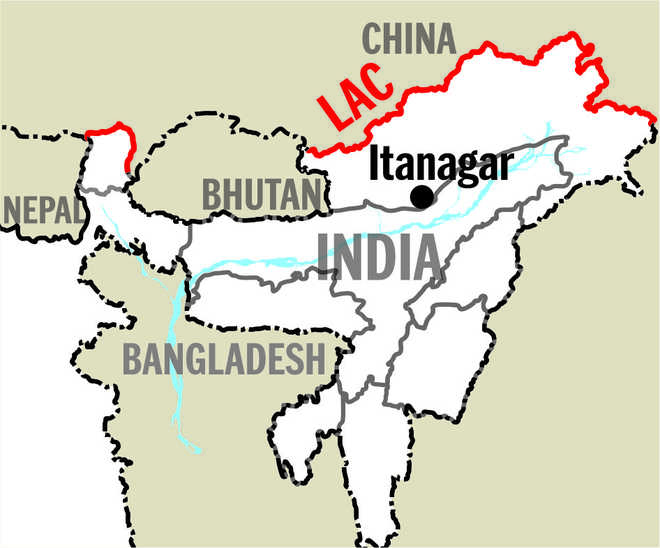
It may be awkward for the Chinese President to visit India when the Army is staging one of its biggest war exercises in Arunachal Pradesh, an area of extreme sensitivity for Beijing, with recently bought American equipment.

“One can’t expect Xi to visit when Indian troops are doing a war exercise in Arunachal Pradesh. The Chinese have even objected to visits by our Prime Ministers and Presidents,” said strategic analyst Pravin Sawhney.The Army exercise, HimVijay, does conform to two Sino-India agreements and one protocol on peace and tranquility on the Line of Actual Control (LAC) with China. As per this arrangement, the Chinese would have been notified in advance about the size, scope and duration of the exercise. Yet Xi would not like visuals of him attempting normalisation of ties with PM Narendra Modi while the Indian Army conducts war games in Arunachal.

A bigger sticking point though could be J&K. “The boundary in the western sector (Ladakh) was never defined. There is no boundary,” says Sawhney, disagreeing with External Affairs Minister S Jaishankar’s observation that China had misinterpreted New Delhi’s decision to bifurcate Jammu and Kashmir into two Union Territories — J&K and Ladakh. “We are sort of reformatting this within our existing boundaries,” Jaishankar had told the Chinese.Explaining his position, he had said, “I went a few days after the legislation (removal of Article 370 and reorganisation of J&K) to China and explained to them that as far  as they were concerned, nothing had changed. India’s boundary had not changed, the LAC had not changed.” — TNS


Name of IAF officer killed by JKLF militants in 1990 to be added to war memorial

Name of IAF officer killed by JKLF militants in 1990 to be added to war memorial

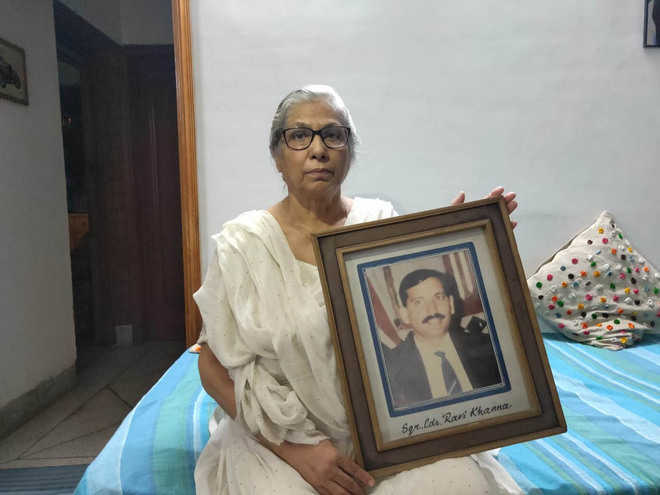
Nirmal Khanna, wife of late Squadron Leader Ravi Khanna with his photograph. Tribune file photo

New Delhi, October 5

The name of Squadron Leader Ravi Khanna, who was killed by JKLF militants in 1990, will be added to the National War Memorial after it was approved by the Indian Air Force, sources said.

Khanna, along with three other IAF personnel, was killed in January 1990 in Kashmir allegedly by Yasin Malik.

Twenty-seven bullets were pumped into Khanna’s body.

An Air Force official said the Khanna’s name was missed out in the National War Memorial and the error has now been rectified.

The National War Memorial at the India Gate is dedicated to the defence personnel who laid down their lives for the country. The NWM has names of such defence personnel with details of their acts.

The three armed services approve the names of the soldiers after which they are included in the NWM.

The trial against Malik had resumed last month in Jammu. — PTI


Potential danger, 100 ft above Indo-Pak border

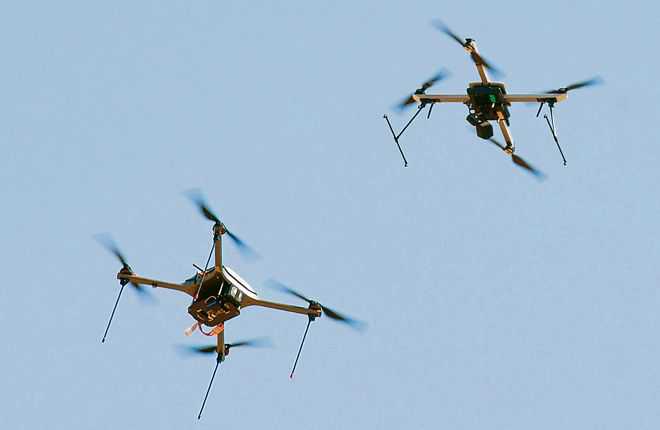
Drones with 10-kg payloads were used by Pakistan’s intelligence agencies to AK-47 rifles, counterfeit currency and narcotics at Tarn Taran. Unmanned aerial vehicles (UAVs) or drones are among the major growing technologies that have beneficial applications in security and other logistical employment, but at the same time, they are being misused by terrorists and smugglers.

Potential danger, 100 ft above Indo-Pak border

New challenge: Who should be allowed to use UAVs — and more specifically, who is responsible for the damage from drone use?

RK Arora
Counter-terror analyst

The drone technology is a double-edged sword. To the utter shock of the Indian security agencies, Chinese-made drones with 10-kg payloads were used by Pakistan’s intelligence agencies to drop AK-47 rifles, counterfeit currency and narcotics at Tarn Taran in Punjab. The arms and ammunition were dropped by drones that came from across the Pakistan border in 10 sorties spanning over eight days. The aim was to carry out 26/11-like terror attacks in Punjab and Jammu and Kashmir.

This dangerous plan was revealed when the Punjab police seized a drone during its probe into the weapons seizure. The Punjab police recovered this drone, which used to drop arms and ammunition in Punjab, on the basis of information provided by the Khalistan Zindabad Force (KZF) terrorists arrested from Tarn Taran on September 22. An attempt was made by the terrorists to burn the drone.

Punjab Chief Minister, Captain Amarinder Singh, has urged the Central Government to alert the Air Force and the Border Security Force about the possibility of drones being used to supply weapons from across the border. He also requested Union Home Minister Amit Shah to handle the drone problem at the earliest. He tweeted, “Recent incidents of Pakistan-origin drones dropping consignments of arms and ammunition is a new and serious dimension on Pakistan’s sinister designs in the aftermath of the abrogation of Article 370.” This is a serious issue which needs to be thoroughly investigated. Actually, unmanned aerial vehicles (UAVs) or drones are among the major growing technologies that have many beneficial applications in security and other logistical employment, but at the same time, they can pose a significant threat to the very purpose for which they were invented. The Punjab incident is an example of this challenge. The use of UAVs was started with the beginning of the Cold War by the superpowers for the purpose of security and surveillance.

Irrespective of the rising popularity of UAVs among the civilian population, combined with expanding technological capabilities, there are significant challenges to regulating the use of UAVs. These challenges can be placed into three broad categories. First, where should UAVs be allowed — or not allowed — to fly? This includes the difficulty in identifying the proper airspace for the different uses and sizes of UAVs.

The second problem is about who should be allowed to use UAVs — and more specifically, who is responsible for damages from drone use. As UAVs increase in physical size and technical capability, the level of skill required to operate them safely has increased. Due to its smaller size, made of plastic body and use of electric batteries, it is nearly impossible to detect drones by conventional radars. Traditionally, radar technologies are used to detect flying objects in the sky, but technologies are often not suitable in this case. The reason is simple: for many years, radar technology and software was specifically made to avoid small objects, such as birds, and view them as noise. Most commercial drones are constructed of plastic and are difficult to detect electronically because of their small size. They also fly low in relation to the ground.

All these factors make it a favourite tool for carrying out terrorist and other illegal activities.

Unlike military drones that can cost more and look like small aeroplanes, small-use drones can be obtained for a few hundred dollars. Criminals have used drones to drop drugs into prisons. Mexican smugglers have flown them above the border to spy on the movement of patrolling federal officers. The dreaded terrorist organisation, ISIS, used them to drop crude bombs on American and allied forces in Iraq and Syria.

Although the Director-General of Civil Aviation (DGCA) has recently notified certain clauses in the context of the use of UAVs, there are gaps in appreciation and understanding regarding the use of UAVs, among other security agencies. Registration of drones remains a problem and even more problematic will be the UAVs which are smuggled into India whose identification and accountability will always pose a challenge for security agencies.

The long-term solution to identification of UAVs can be by manufacturing drones indigenously. But the main concern remains the easy availability of knowhow and simple technology which make it a preferred tool for terrorists and other anti-national elements. The real threat would emanate from UAVs operated by criminal-minded individuals with the intention of causing harm to vital and security installations. It will be difficult to control them as not only could the toy UAVs be modified, but drones could also be made out of components using ‘do-it-yourself’ kits. UAVs could easily be innovated from commonly available material in combination with electronic components. In such an unregulated environment, the potential of this threat is still to be fully appreciated by the security agencies.

The India-Pakistan border is one of the most dangerous borders of the world. I had argued in an article that “Pakistan-based drug syndicates may now adopt the measures of their Mexican counterparts with the construction of elaborate and sophisticated tunnels underneath India-Pakistan border along with the use of drones to circumvent India’s border security infrastructure. Worst of all, in any future war with Pakistan, the metastasizing nexus of criminality and terrorism will create a second front for India’s security forces. Given the sophisticated nature of the threat, the only way to effectively secure India’s border with Pakistan from drug trafficking and weapons smuggling is to conceptualise and put in place an omni-directional border security with a mix of air and underground detection system.”

Now, there should be no doubt that drones can be used by smugglers to keep a watch on border guards and their positions so that at an appropriate opportunity, they can smuggle their consignment. Terrorists and smugglers are beginning to employ UAVs for transporting their logistical and surveillance needs by modifying the UAVs for carrying payload so that these can deliver across the border without any physical hindrance. The biggest question now is: how well are our border guarding forces prepared in face of this new emerging threat? Till now, their tactical planning and obstacle system was based on ‘man-oriented negotiation’ of land-based boundary, but this new tool has now made military strategists and policy planners scratch their heads in dealing with the new security threat from drones.

Pay ex-servicemen on Haryana pattern: SAD

Tribune News Service

Chandigarh, September 23

The ex-servicemen wing of the SAD on Monday asked the Punjab Government to immediately stop the “exploitation” of ex-servicemen and pay them remunerative salaries on the basis of the Haryana government’s pattern.

In a statement here, SAD ex-servicemen wing president Gurjinder Singh Sidhu said it was shocking that PESCO (Punjab Ex-Servicemen Settlement Corporation) was exploiting ex-servicemen by taking huge amounts from the government as well as private players, but giving them a pittance as salary.


Air bases, military installations on high alert in Jammu

uthorities on Friday sounded a high alert in Jammu province.

“Air bases and military installations in Jammu have been asked to remain in every ready mode with additional deployment troops on borders and sensitive locations,” an official told Greater Kashmir.

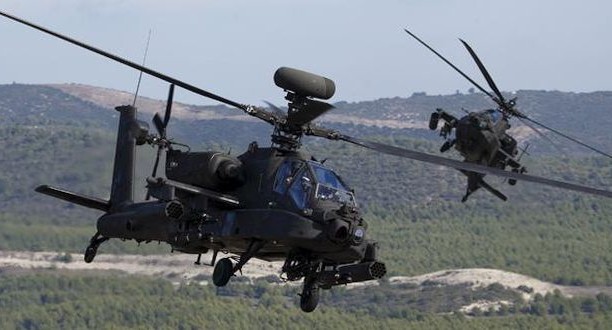
“Jammu Air Force station put on ultra alert since morning with drones hovering over and around air force station and Jammu’s only civil airport,” said a source.

He added that many battalions of paramilitary forces have been deployed in Kishtwar, Bhaderwah, Doda, Banihal and Ramban areas of Jammu in addition to extra deployed of Army and Border Security Force at the International Border (IB) and Line of Control (LoC).

“Romeo, Delta and Uniform forces of Rashtriya Rifles and other regular units of Army deployed on Line of Control and hinterland have been asked to be prepared for any situation,” the source maintained.

Meanwhile,  Rapid Action Force and paramilitary BSF have been moved in Rajouri and Poonch districts to deal with any internal trouble, said the sources.
Similarly, a large number of security forces personnel have been provided at the disposal of district police in Jammu to strengthen the security grid in all sensitive areas.

Soldier killed in truce violation Two Pakistani soldiers gunned down in retaliation

Soldier killed in truce violation

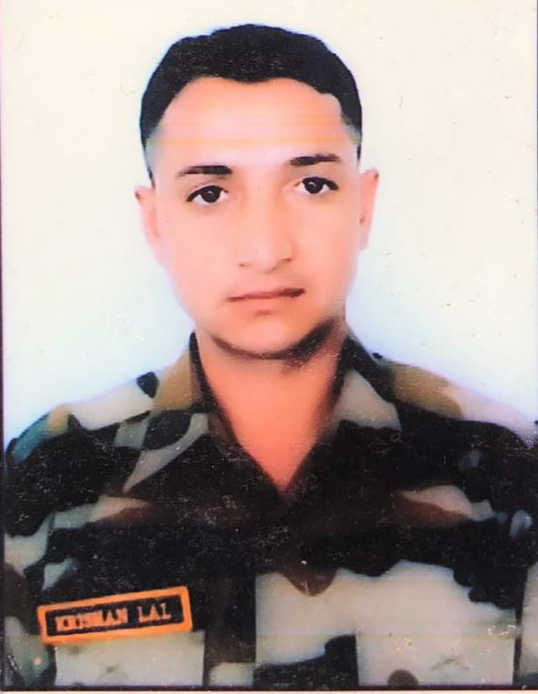
Naik Krishan Lal

Shyam Sood

Rajouri, July 30

Within 24 hours of killing of a 10-day-old baby in mortar shelling from Pakistan in Poonch district, a soldier attained martyrdom in a skirmish along the Line of Control (LoC) in the Sunderbani sector in Rajouri district on Tuesday.
The soldier has been identified as Naik Krishan Lal (34), who was a resident of Ghagriyal in Jammu district. The soldier is survived by his wife Shashi Devi.

Defence sources said the Indian Army retaliated strongly, killing 2 Pakistani soldiers besides inflicting an extensive loss on infrastructure across the border.

In a tweet, Northern Command chief Lt Gen Ranbir Singh and all ranks saluted the supreme sacrifice of Naik Krishan Lal and offered their deepest condolences to the martyr’s family. “The Pakistan army resorted to unprovoked ceasefire violation along the LoC in the Sunderbani sector which was retaliated befittingly by the Indian Army,” said the PRO, defence.

“A heavy damage to Pakistan posts and casualties have been inflicted by our troops,” said Lt Col Davender Anand, PRO, defence.

On July 22, Rifleman Mohammad Atif Sahfi Alam Khan of Gujarat had attained martyrdom in the Sunderbani sector.

For the last two or three weeks, the Pakistan army has been targeting Indian forward posts and civil areas, injuring border residents and damaging houses, in Rajouri and Poonch districts.


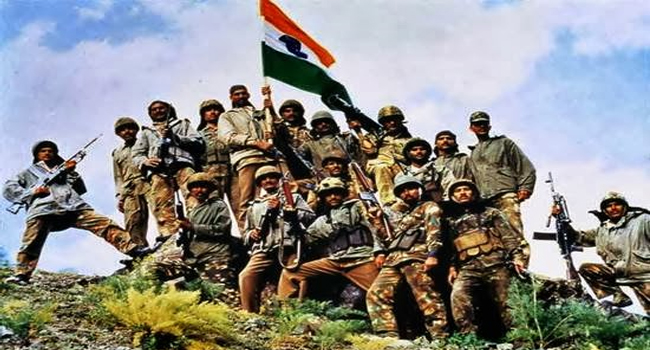
20 years after Kargil Mounting challenges, renewed resolve

20 years after Kargil

There are moments in history that define a nation, its resolve, its character. Kargil Vijay Diwas, July 26, stands out. As India pays tributes to soldiers who drove out enemy forces and reclaimed Kargil heights 20 years ago, it is also a time to reflect on the mounting challenges. Like Pakistan Prime Minister Imran Khan’s ‘glaring admission’, as New Delhi described it, a couple of days ago that there were ‘30,000 to 40,000 armed people’ in his country ‘who have been trained to fight in some part of Afghanistan or Kashmir’. India has demanded ‘credible and irreversible action’ against terror groups, but what exactly was Khan alluding to? With the FATF breathing down its neck, possibly a message that considering how far Pakistan has come on the terror highway, expecting it to retrace steps while dangling the stick won’t work.

On his return after his visit to the US, an exultant Pakistan premier had this to say: ‘Feels as if I’m coming home after winning the world cup.’ From Khan’s point of view, it’s been nothing short of a diplomatic coup by managing to regain a foothold in Washington, and staring at the opportunity to play its hand on the Afghanistan table considering Donald Trump’s desperation to exit the war-torn country. Twenty years after Kargil, a moment of truth again for India. Something spelled out abundantly while paying tributes to the bravehearts. In Parliament, Defence Minister Rajnath Singh minced no words: ‘Our neighbouring country (Pakistan) cannot fight a full-fledged war or a limited war with India. It is fighting a proxy war.’ And Eastern Army Commander Lt Gen MM Naravane: ‘Some people just don’t learn their lessons; you have to keep teaching them till they learn.’


Any mention of the victory in 1999 should start and end with the daring junior leadership. Here’s the IMA’s tribute: ‘The raw courage of Indian jawans at the tactical level and the swift execution of tri-services military strategy will remain legendary. We rejoice by celebrating the victory in Kargil and renew our resolve to safeguard the honour of the Tricolour.’