Sanjha Morcha

What’s New

Click the heading to open detailed news

Current Events :

web counter

Print Media Reproduced Defence Related News

HEADLINES PRINT MEDIA NEWS :::::06 OCT 2017

ADVANCING NATIONAL CAUSES ARE FINE BUT THE ARMED FORCES’ PRIMARY MISSION IS TO SAFEGUARD THE NATION. BY LT GEN H S PANAG 

CLEARING GARBAGE IS NOT THE JOB OF ARMY BY LT-GEN HARWANT SINGH (RETD)

NOT IN A FAUJI’S NAME….BY BRIG GURINDER SINGH (RETD)

IAF: READY FOR TWO-FRONT WAR CHIEF: CAPABLE OF STRIKING PAK TARGETS

IAF CHIEF WARNS PAK: CAN LOCATE, FIX, STRIKE TARGETS

PLA widens road near Doklam, no strategic impact says India

500 CHINESE SOLDIERS PRESENT WHERE ROAD BEING BUIL

PAK WARNS INDIA AGAINST SURGICAL STRIKES ON ITS SOIL

AKHNOOR: TERROR STRIKE AVERTED

CHINA MAINTAINING SIZEABLE TROOPS NEAR DOKALAM: SOURCES

SLUGGISHNESS IN ECONOMY PM’S MID-COURSE CORRECTION

Democracy, ‘darr’ can’t go together, says defiant Sinha

NO PROTESTS AT JANTAR MANTAR FROM NOW: NGT


Major killed, 3 hurt as BMW car hits tree

Major killed, 3 hurt as BMW car hits tree
The mangled remains of the car.

Tribune News Service

Jammu, October 4

A Major was killed and three others were injured when the BMW car they were travelling in met with an accident at Akhnoor at about 3.30 am today.The police said four Army personnel were travelling in the BMW car (UK06B-9000) when it hit a tree at the Thati area on the Jammu-Poonch highway, resulting in death of one passenger.“In preliminary investigation, it looks like the vehicle went out of control as it was being driven at a high speed. It hit the tree, resulting in death of one person,” Munish Kumar, SDPO, Akhnoor, said.The deceased has been identified as Major Ashish Tawari of the 10th Division of the Army. His body was shifted to the Military Hospital, Akhnoor. The three injured persons have been identified as Colonel BK Jha, Majors Mandeep Singh and Sandeep Singh. All have been taken to the Military Hospital, Satwari, where their condition was said to be stable.An FIR regarding the accident has been registered at the Akhnoor police station.


Lawrence Founder’s Day celebrations draw to close

Lawrence Founder’s Day celebrations draw to close
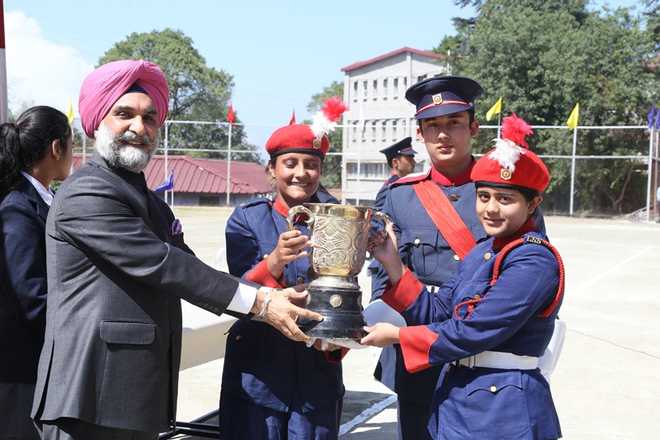
Indian High Commissioner to Sri Lanka Taranjit Singh Sandhu presents a trophy to students at Lawrence School, Sanawar, on Wednesday. Tribune photo

Solan, October 4

A parade at the historic Arun Khetrapal stadium marked the grand finale of the three-day founder’s day celebrations at Lawrence School, Sanawar. Taranjit Singh Sandhu, Indian High Commissioner to Sri Lanka, who was the chief guest exhorted students to choose a career as per their passion. He said India had a demographic advantage of having a young population which offered unprecedented growth opportunities.Being an alumnus of the 1979 batch, he reminisced his student days and expressed his deep sense of gratitude to the school and the teachers for bringing out the best in him.He also gave away awards to young achievers. The much coveted Chief of the Army Staff’s Trophy for being the best all-rounder boy of the year 2016-17 and the The Som Dutt Trophy for Excellence went to Dhruv Guleria of Himalaya House. Sukhrit Kaur of Vindhya House received the Jajodia Community Service Prize for her selfless service to the community.The Thimmaya Cup for Organisational Ability went to Himani Yadav of Nilagiri House. The Khetarpal Trophy for the School Band Leader for the year 2016 was bagged by Devansh Vadehra of Himalaya House. — TNS


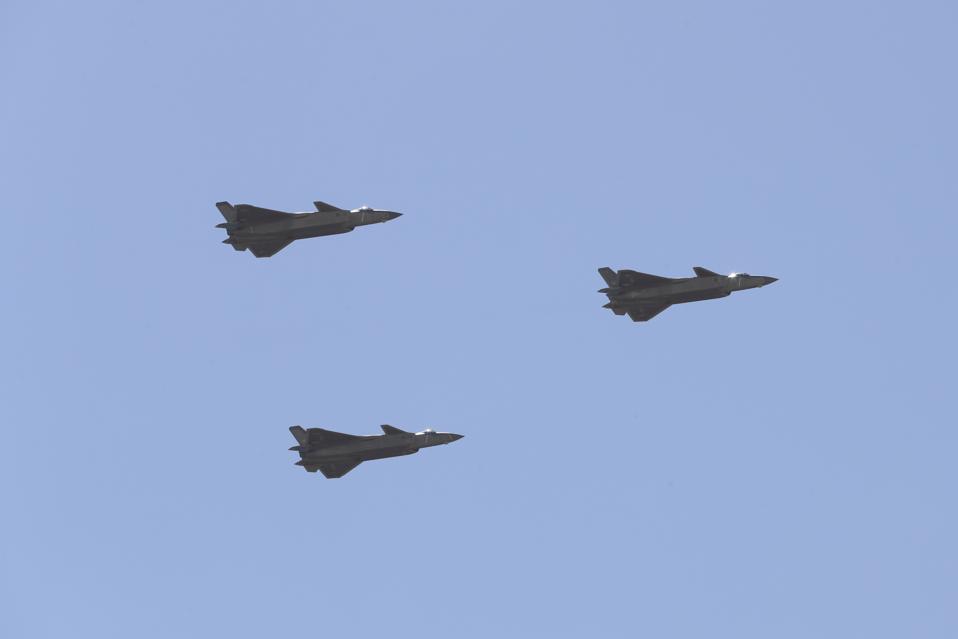
China’s New J-20 Fighter Jets Outclass Regional Rivals

Chinese J-20 stealth fighter jets fly past during a military parade at the Zhurihe training base in China’s northern Inner Mongolia region on July 30, 2017. (STR/AFP/Getty Images)

China just started using its Chengdu J-20 fighter jets, a military official announced last week via state-run Xinhua News Agency. The long-range stealth fighters are evidently China’s best in their class. They should help the People’s Liberation Army air force with long-range interception or position it to strike first at infrastructure targets on the ground. China will probably focus on its coasts and land borders, the most likely sites of skirmishes given China’s turbid neighbor relations. “The PLA Air Force, like the PLA Navy, lagged behind for many years and is eager to acquire cutting-edge capabilities now that the Chinese industrial base has grown stronger and budgets are flush,” says Joshua Pollack, editor of The Nonproliferation Review in Washington.China’s latest can beat three other weighty countries that are developing similar aircraft, although this is largely because rival aircraft have yet to be released or proven yet in service. They are:

    1. India: Indian aerospace and defense firm Hindustan Aeronautics Ltd. is working with Russian aircraft maker JSC Sukhoi Co. to develop what this news report describes as a fighter aircraft with stealth capability. It would be in the same class as the J-20. But the project is “complicated,” and work will go slowly, the head of a Russian state-owned export promotion firm was quoted saying in the report. The two countries have worked together since 2007. Russia’s military is considered stronger than China’s, but India is a step behind and troops from the two countries faced off over a disputed border region for 70 days in mid-2017.
 Japan: An R&D institute under Japan’s Ministry of Defense has contracted Mitsubishi Heavy Industries to develop a stealth fighter called the X-2 Shinshin. After eight years of development, a test flight delayed due to parts failure went smoothly in April 2016, per this industry news report. The aircraft is built expressly to dodge radars. But the plane is still in development. On top of that, Japan is reportedly considering development of another fighter jet, dubbed the F-3. Why so many fighters? The rise of China’s military strength troubles Japan. The two face off regularly over a dispute tract of the East China Sea, and Tokyo is taking an ever stronger role in checking Beijing’s expansion in the South China Sea.
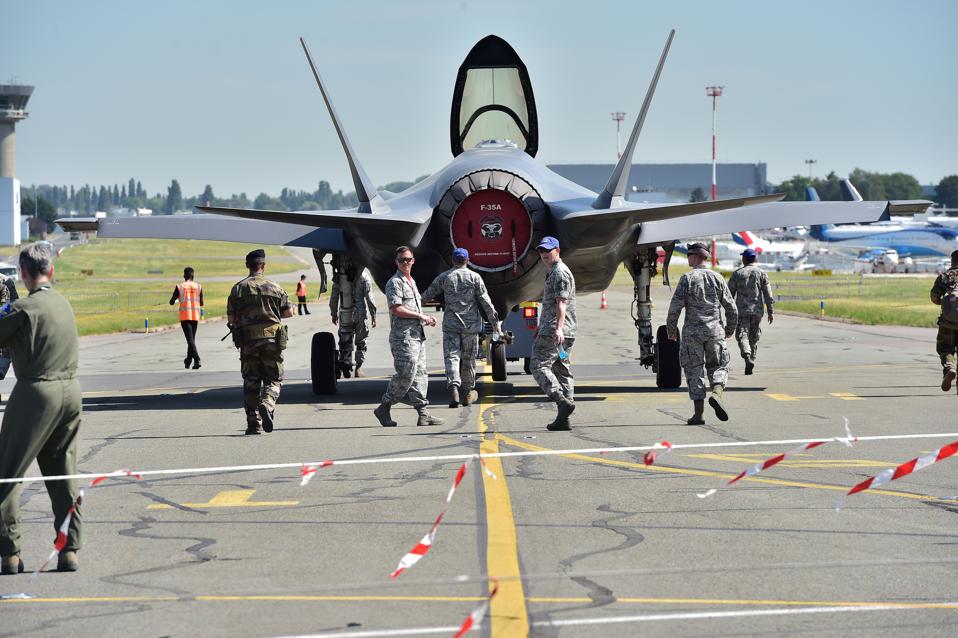
    1. Russia: In addition to the fighter being developed with India, Sukhoi will finish research and development on another J-20 peer, the PAK FA T-50, in 2019 with initial trials due next year, the country’s news service TASS reports. This aircraft, two of which got into a mock dogfight at an aviation show in July, was originally due for use this year. China got there first. The two countries have lived in peace for the past 25 years, following several border clashes. But China’s J-20 would also be a tough rival against the American-made, U.S. Air Force’s hundreds of

U.S. military personnel escort a Lockheed Martin F-35 fighter jet towards the runway at the International Paris Air Show in Le Bourget outside Paris on June 20, 2017.The United States is the “only country with a fully operational fifth-generation fighter,” think tank Center for Strategic & International Studies says in this analysis of the J-20. The F-35, first shipped in 2011, differs from the J-20 in its wing layout and the sources of key components such as engines, per this analysis. China and the United States, two old Cold War foes, regularly disagree now over geopolitical issues, though decades of dialogue have reduced the threat of war to near zero.


Army veterans fume at garbage order

Army veterans fume at garbage order
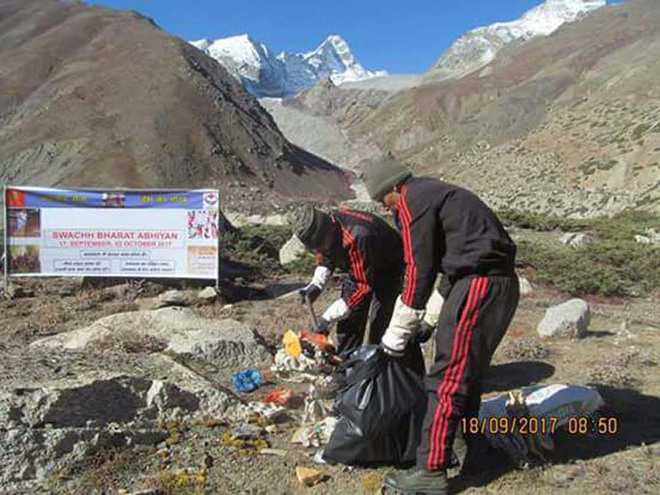
Army lifting garbage left by tourists at a high altitude area.

Rachna Khaira

Tribune News Service

Jalandhar, September 28

Training guns at the BJP-led Union Government asking armed forces to clean up high altitude areas (HAAs) and operational (OP) areas under the Swachata Abhiyan, veterans of the armed forces have slammed the Centre for “further degradation of armed forces”.Defence Minister Nirmala Sitaraman had announced during her recent visit to Kasauli that the PMO had desired that the HAAs be cleaned of litter left behind by tourists and that this order would be carried out by the Ministry of Defence.Launching a full-fledged war against the “wild” decision on social media sites, the veterans have uploaded photographs of serving personnel carrying an AK-47/INSAS rifle in one hand and a garbage bin in the other.Some have even uploaded caricatures with a whole Army squadron giving guard of honour to a political leader with “inverted brooms”. The war veterans have condemned the government for degrading the Army that carried out 18 surgical strikes by making them part of the ‘Kachra division’ having a div sign ‘Red Broom’.Coming down heavily on the Union Government, Lieutenant- General HS Panag (retd) has questioned its silence over the ambiguity of the orders. “Despite much uproar and confusion reported over the issue, the Union Government has not clarified the role of the armed forces in the cleanliness drive. If the government wanted them the role of an educator, it should have provided them funds. However, if it wanted to utilise them as a labour force, no act can be more shameful and degraded for our armed forces till date,” said Gen Panag.He further questioned the need of such orders to be given in the first place. “Why have the state governments in J&K, Uttrakhand and North East not developed the sanitation infrastructure in tourists places and if so, why have they allowed tourists to come to such places? Why should the Army be made a scapegoat everytime?” asked Gen Panag.He also slammed the serving officers to carry out the orders without seeking a clarification on the orders.Maj-Gen Satbir Singh too has slammed the Union Government for the move. “With the recent moves of the degradation of Army ranks, a huge cut in the canteen and other defence welfare services, the government seems to be testing the patience of our serving personnel which is soon running out. It is high time the the Supreme Commander of the Armed Forces should intervene to further prevent the degradation of the armed forces in the country,” said Gen Satbir.Meanwhile, the Army veterans have mooted a proposal to the Union Government to extend employment schemes like MGNREGA in these areas to provide employment opportunities to people living in HAAs and OP villages.The veterans felt that the cost-cutting plan of the Union Government to upgrade the technical expertise of the Army will serve no purpose if its men are made busy to lift the garbage left by tourists in HAA and Op areas.

‘Degradation of armed forces’

Veterans feel that the cost-cutting plan of the Union Government to upgrade the technical expertise of the Army will serve no purpose if its men are made busy to lift the garbage left by tourists in high-altitude and operational areas. The veterans have mooted a proposal to the Union Government to extend employment schemes like MGNREGA in these areas to provide job opportunities to people living in these areas.


“Why have the state governments in J&K, Uttrakhand and North East not developed the sanitation infrastructure in tourists places and if so, why have they allowed tourists to come to such places? Why should the Army be made scapegoat everytime?” — Lieutenant-Gen HS Panag (retd)


MIAF Arjan Singh takes last flight

Tribune News Service

New Delhi, September 18

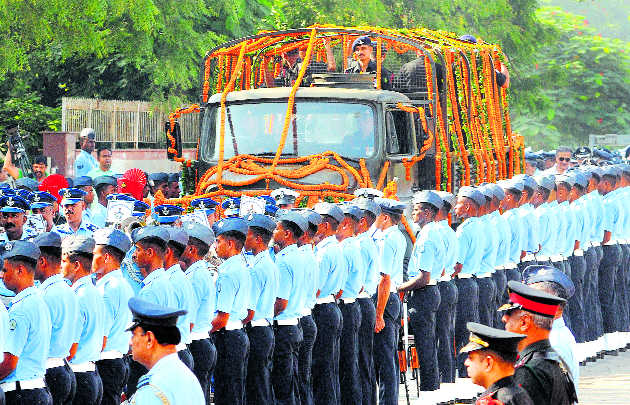
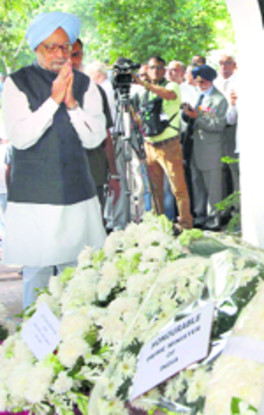
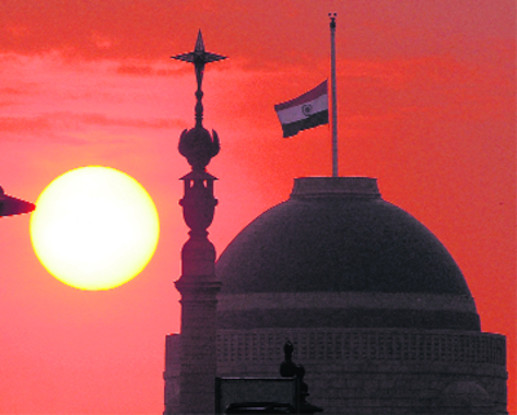
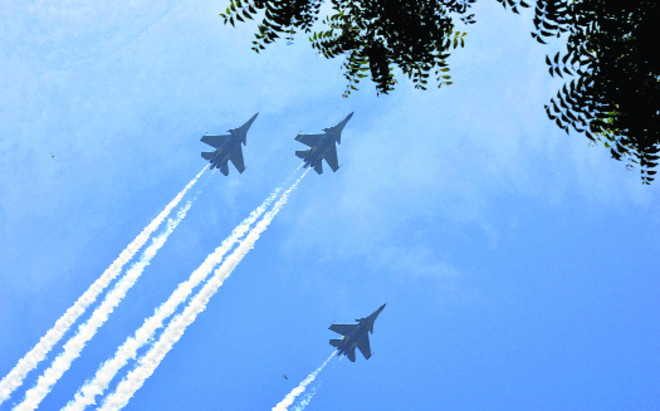
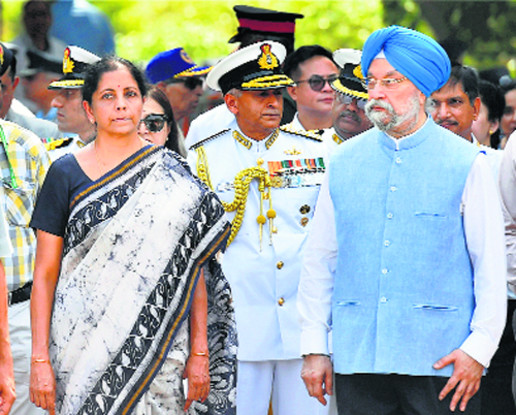
A solemn military ceremony marked the final rites of Marshal of the Indian Air Force Arjan Singh at Delhi Cantonment this morning.His son Arvind Singh, who flew in from the US, lit the funeral pyre amidst an “ardas” recited by a Sikh priest. Family members of the IAF patriarch, members of the civil society and politicians were present at the cremation.(Follow The Tribune on Facebook; and Twitter @thetribunechd)Minutes before the final rites, a 17-gun salute was accorded to the veteran officer. It was followed by a fly-past by three Mi17 V5 helicopters. Sukhoi-30MKI fighter jets gave the final salute in what is called “missing man formation” for Marshal Arjan Singh’s “final flight”. The “missing man formation” flying is marked to signify the loss of a fallen comrade. It is reserved as a high honour in the IAF.Defence Minister Nirmala Sitharaman, former Prime Minister Manmohan Singh, former Deputy  Prime Minister LK Advani, Union Urban Development Minister Hardeep Puri were among the mourners who paid their respects. A wreath was laid on the mortal remains by IAF Chief Air Chief Marshal BS Dhanoa.President Ram Nath Kovind had yesterday led the nation in paying tributes by visiting the home of the Marshal. Prime Minister Narendra Modi had also met his family members.The Marshal was accorded a state funeral and the National Flag flew at half-mast in New Delhi on Monday.The rank of Marshal of the Indian Air Force is equal to a Field Marshal of the Indian Army. The Marshal had died on Saturday.Earlier, the mortal remains were carried in a gun carriage procession that started from his residence at 8.15 am. As the funeral pyre was lit, the tri-services guard ‘lowered arms’ — holding the rifle close to the left side of the chest while standing in a static position. In July 2008, then Defence Minister AK Antony and the three Service Chiefs had not attended the state funeral of Field Marshal SHFJ Manekshaw in Ooty, Tamil Nadu, and had faced a barrage of criticism.On the Republic Day in 2002, the Atal Bihari Vajpayee government had elevated Air Chief Marshal Arjan Singh to the five-star rank. He is the first and the only Air Force officer to have been decorated with the five-star rank. He is also the third military officer, after former Army Chiefs SHFJ Manekshaw and KM Cariappa, to hold that rank.Last year, the Panagarh Air Force station in West Bengal was renamed Air Force Station Arjan Singh after the veteran officer.


Govt focussed on strengthening armed forces: Sitharaman

Govt focussed on strengthening armed forces: Sitharaman
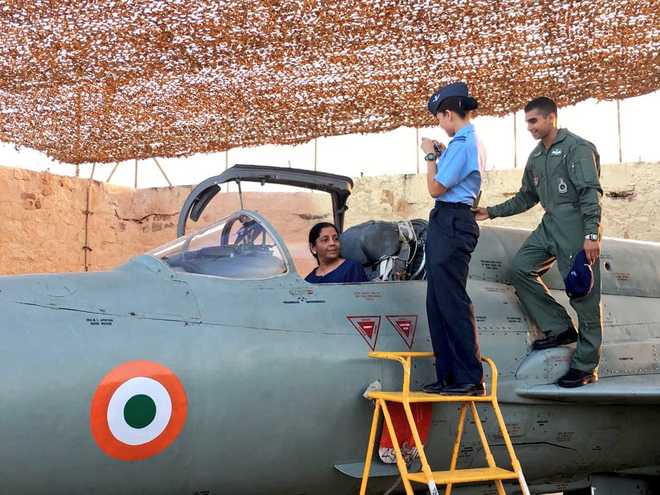
Defence Minister Nirmala Sitharaman sitting in the cockpit of a fighter jet plane at the Air Force Station in Uttarlai, Rajasthan, on Sunday. — Photo: @DefenceMinIndia/Twitter

Barmer (Rajasthan), September 10Defence Minister Nirmala Sitharaman on Sunday said maintaining optimum state of readiness of the armed forces on “all fronts” would be given top priority, comments which came amid concerns over security challenges on the country’s northern and western borders.After interacting with senior officers of the Indian Air Force at the frontline Uttarlai airbase in Barmer in Rajasthan, Sitharaman also said the government’s priority was to strengthen all three armed forces.Sitharaman was the first defence minister to visit the sensitive airbase in 16 years, after George Fernandes in 2001.Air Chief Marshal B S Dhanoa was also present at the base.The defence minister was apprised of the role of the airbase and the nature of its operations, the IAF said.Talking to mediapersons, Sitharaman said meeting the demands of the armed forces with a view to maintaining optimum state of readiness and preparedness on all fronts would be accorded priority.There would not be any lack in efforts on the part of the government to strengthen the defence forces, she said.The 58-year-old defence minister said, “I am obeying Prime Minister Narendra Modi’s directions to meet the jawans posted on the frontiers.””I was in Goa earlier in the morning to flag off Indian Navy women crew’s attempt to circumnavigate the globe and now have come to Uttarlai Air Force base in Barmer,” she said.The newly-appointed defence minister said that Uttarlai airbase was important from the strategic point of view. — PTI 


Arrest the slide in ties with China

We need an agreement on restraint that aims to address mutual interests and concerns

The ongoing standoff near Sikkim underlines the deterioration in India-China relations over the past few years. As ever, the Chinese have chosen the place and time carefully. India and China have a delimited and demarcated international border in Sikkim, going back to the Anglo-Chinese convention of 1890. But the boundary between Tibet and Bhutan is disputed and hence the location of the trijunction remains contested. Bhutan does not directly negotiate with China and its stance on the disputed boundary has developed in close consultation with India.

So, the Chinese can claim with a straight face that this is a bilateral problem between them and Bhutan. Similarly, when Indian troops support Bhutanese opposition to road construction in the disputed area, it is easy for Beijing to accuse New Delhi of violating an established international border. Never mind that the two sides have also agreed that the trijunctions with Bhutan and Myanmar will finally be decided in consultation with these countries.

That said, we need to understand the Chinese action at three interconnected levels.

At the operational level, there are a couple of considerations in play. The Chinese have long sought to widen their room for manoeuver in this area. The construction of the road could enable them to outflank Indian military deployments in east Sikkim and make straight for the vital Siliguri corridor connecting West Bengal with the northeastern states. More broadly, such attempts at altering the status quo along the IB and the Line of Actual Control are aimed at compelling the Indian Army to stretch itself thin.

At the strategic level, the current standoff serves China’s wider objectives along the border. In recent years, Beijing has sought an agreement with India that would freeze the operational status quo on the border. Having built impressive military infrastructure and capability in Tibet, China seeks to prevent India from catching up. During the incursion in Depsang in 2013, for example, the Chinese wanted India to dismantle its bunkers in Chumar. In agreeing to stop military construction in the Doklam area, China may insist that India should extend that principle to the entire border.

At the political level, the Chinese move signals an acceleration of Sino-Indian competition along the South Asian periphery. By picking on Bhutan, Beijing is testing New Delhi’s ties with its closest partner in the region. The timing of the incident is important too. It comes on the heels of India’s unwillingness to participate in the Belt and Road jamboree in Beijing. We may debate the wisdom of staying out this initiative altogether, but in refusing to participate in the meeting New Delhi sent out a clear signal that it would not accept China’s hierarchical notions of reordering Asian politics. It is no coincidence either that the standoff occurred just ahead of the Prime Minister’s visit to the United States. Beijing has orchestrated several highly visible incursions along side diplomatic visits in order to assert its ability to embarrass India.

In attempting to wind down the standoff, India must take into account considerations at each of these levels. Operationally, we cannot afford to allow the Chinese to change the status quo near east Sikkim. Nor can we admit any suggestion that infrastructure development should be put on hold all along the border. Rather we must insist that this is a discrete event and that the Chinese attempt to change the status quo near the trijunction area is unacceptable.

At the same time, New Delhi must make a strong diplomatic effort to arrest the slide in ties with China. We need an agreement on mutual restraint that aims at addressing the core interests and concerns of both sides. The discussions between the Prime Minister and President Xi Jinping in May 2015 provide an ideal platform on which to mount such an effort. But this also requires a conceptual shift in our approach to China.

We must abandon the notion that our grand strategic choices boil down to either balancing against China in concert with the United States or bandwagoning with China.

The history of international politics suggests that this is too simplistic a reading of the options open to us — especially in the current global conjuncture. It is time we demonstrated strategic creativity and diplomatic agility.


India’s combat primer By Lt Gen Syed Ata Hasnain

Comprehensive national security is about taking measures to ensure that the path to the chosen aspirations of a nation, both externally and internally, is not obstructed

In India, even within the intellectual community, security is synonymous with borders or terrorists. Seldom is it viewed from a comprehensive angle.

Therefore, although this analysis is about external and internal security from the geopolitical and geo-strategic angles (mostly the robust and kinetic type), it would be unfortunate if it did not commence with a broad understanding of Comprehensive National Security (CNS).

CNS is all about taking measures to ensure that the path to the chosen aspirations of a nation is not obstructed. Anything, which obstructs that path, is actually a threat to the nation’s security.

The situation in the Persian Gulf region may not necessarily impinge threats on India’s borders. However, if it prevents the flow of oil or gas, it definitely adversely affects our energy security, which has a bearing on the achievement of our national aspirations.

Similarly, an ethnic agitation for reservation is essentially a law and order problem, not even one of public order. On the face of it, it is hardly an issue of national security. Yet, if Rs 30,000 crore worth of property is burnt in three days, it surely affects our national aspirations.

Likewise, there are cases of human security involving farmer suicides or rural migration, which adversely affect national security. If CNS is understood with these explanations, we can safely proceed to deal with the described aspects of external and internal security, without a guilt hangover.

External security

India’s geo strategic location may not give it the advantage that Pakistan has, of facilitating direct access to the heart of Asia or vice versa. However, India does sit like a crown on the Indian Ocean with the ability to exploit and control the most strategic sea lanes, which carry vast quantities of international trade and energy.

That gives quantum strategic advantage. If we consider the Indian subcontinent as an entity for strategic analysis we need to look at some unique geo-strategic aspects.

Two characteristics of this region need to be understood. Firstly, it is the southern ‘near abroad’ region of China that offers scope for China’s direct reach into the Indian Ocean from different points of the sub continental expanse.

Secondly, it provides both, the maritime and the continental bridge between the East and the West. Thus it has the scope to control the flow of seaborne traffic through the Indian Ocean.

This is particularly significant in view of the fact that China is yet developing. It is dependent very largely on the flow of energy through the Indian Ocean to keep its high levels of manufacturing, which sustain its economy.

Those manufactured goods also need worldwide markets, which have to be accessed in reverse through the very same routes. Thus China is dependent on good relations with India and for contingencies where that may not happen, given India’s own regional ambitions, it is important for China to have good relations with India’s neighbours through cultivation.

China is a relatively land locked country; this statement needs qualification. Its access along a long coastline in the east is to the seas that do not matter in its economic security; they do in other strategic domains, which in comparison matter less. Thus exists the importance of both Pakistan and Myanmar that give China land access to the Indian Ocean.

MJ Akbar, India’s minister of state for external affairs, is often known to utter a famous quip. He states that standing at New Delhi one can see a stark difference; to the east there is relative calm and stability, while to the west is relative chaos and unpredictability.

This in many ways sums up the predicament of India’s external security because of the sandwich effect of competing forces with the fulcrum being India. It manifests in some deductions, which form the framework of India’s approach.

In no particular order of priority, the first is the need for India to stabilise its energy security and secure its large diaspora existing in West Asia. This means that political and diplomatic relations with West Asian nations need to be strong and enduring.

Much of the 75 per cent of energy imports come from Wet Asia. The stability of the Gulf region, where an eight million strong diaspora exists and on which India is dependent for majority of its energy imports, is crucial for India.

It also receives annually approximately $35 billion in remittance from the region, assisting in financial stability. Paradoxically it is also dependent on Israel for its defence technology and other defence-related imports.

The relationship between Israel and most West Asian countries remains rooted in past problems, especially the Palestinian issue, which emerges centrestage from time to time.

Balancing the relationship with Israel and its West Asian neighbours is thus essential, although this is now facilitated by a far better equation than the past, especially with the Saudi-Israel relationship having assumed strategic proportions.

Prime minister Modi’s balancing act of strengthening India’s relationship with the Gulf countries through three years of proactive engagement before embarking on his visit to Israel, was a reflection of statesmanship.

In the above balancing act, a sub factor is important in the form of India’s enduring need for a strong relationship with Iran, which has political and ideological differences with the majority of Arab countries of the region.

Apart from some energy imports from Iran, India needs it as a balancing entity in troubled Afghanistan to obviate the run away advantage to Pakistan, which enjoys a special strategic status due to its shared border with that country.

Iran’s Chabahar port can help India overcome the Pakistani cussedness of denying it overland routes to Afghanistan, Central Asia and the North South Corridor of Russia. This advantage can only accrue with a strong working relationship with Iran.

However, the latter is virtually an international pariah due to its estranged relationship with the US and its allies, besides Israel and Saudi Arabia. The July 15, 2015, Nuclear Deal has helped, but only partially and with the coming of president Donald Trump has once again become an uncertain agreement.

This poses India a major challenge. When PM Modi was visiting Israel, some analysts wondered why India could not play intermediary to smoothen Israel-Iran relations and thus facilitate improvement in the US- Iran equation.

The issue is fraught with problems due to India’s dependence on a strong relationship with the Gulf Cooperation Council and cannot be leveraged for any advantage.

An issue, which often emerges, is the sentiment of Indian Muslims. The large majority being Sunni, equanimity in relations is also important.

Pakistan remains an anathema and a serious challenge due to its increasing strategic confidence and independence. The Afghanistan imbroglio has helped it resist US pressure. The diluted US influence has pushed Pakistan more firmly into the Chinese fold and consequently given it greater ease to pursue proxy war and other anti-India activities with impunity.

Indian efforts to diplomatically isolate Pakistan through US pressure may appear successful with recent US actions and threats, but this is unlikely to go the full way due to US dependence on Pakistan for its presence in Afghanistan.

Calls for likely Indian deployment of its army in Afghanistan need to be taken with caution as India already has ‘two and a half fronts’ in terms of physical threats. Opening another front would seem imprudent unless there is a strong coalition support, which is unlikely.

In the north, China continues its blow-hot blow-cold policy of pursuing its strong economic relationship with India and combines it with coercive actions at the Line of Actual Control (LAC) each year.

It fears Indian maritime capability in the Indian Ocean, as its own PLA Navy is yet to acquire a full status blue water capability to contest faraway in the Indian Ocean region, well away from its bases.

To overcome its vulnerability, it wishes to ensure that India’s maritime power does not grow. It hopes this can be achieved by ensuring that its military standoff remains pegged to the continental domain with yearly walk-ins at the disputed border.

The challenge before India lies in the domain of strategic balancing between the land-based and the maritime forces with the Indian Air Force remaining the force multiplier for both.

The desire to move up by a few notches in capability in the continental domain is supported by its intent to move from dissuasion to deterrence with reference to China. The real challenge for India lies in the rapid improvement of maritime capability without compromising in air and land-based military capability.

Look East has been a policy that India has wished to adopt and sustain. This is due to the growing economic clout of ASEAN and the East Asian nations.

In addition, the US has for long desired a shift of focus from the west to the east to balance the growing sphere of China’s power. Thus far, India’s Look East policy, although far more robust than the past, has remained without realisation of full potential, essentially aimed at not irking China.

Although it is yet early to say so but the Doklam standoff may have provided India an altered calculus in pursuance of partnerships without too much concern for China’s sensitivity. However, the Indian media’s quick pronouncement of victory once the mutual disengagement commenced on August 28 was a poor understanding of the strategic domain.

The idea of ‘no victor, no vanquished’ does not create the aura or romance of conflict. I classified it as ‘Advantage India’ and nothing more, primarily because China did not succeed in gaining its strategic objectives.

While caution must not be thrown to the winds, the necessity of strong partnerships based on growing realities of China’s irksome power cannot be overemphasised. India will be much less hesitant hereafter in pursuance of its interests in the East. Strategic equations with Japan, Vietnam and the US itself should become partnerships.

Need for NSS and policy decisions on defence structures

With growing improvement in India’s strategic culture and far greater public interest in matters of national security, this domain should no longer be kept reserved only for government and security agencies.

There is a yearning for debate on issues in the security domain. Among them are border and internal threats, capability and capacity development, intelligence, cyber-related issues, strategic exploitation of space, civil- military relations, defence procurement and manufacturing and personnel management issues, to name just a few.

A basic rudimentary document on the lines of the first Indian Army Doctrine issued in 2004 could whet initial appetite for intellectual debate and discourse, which must take place in universities, civil services and defence institutions and even corporate organisations that appear to be emerging as potential areas for strategic thought.

What needs to be understood is that NSS would only be a doctrinal guideline to give a direction on the government’s line of thinking in the comprehensive security domain.

It does not constrain the government’s decision-making in contingencies. However, some transparency in this domain will give a boost to public confidence and perhaps improve the overall approach through debated inputs.

For the sake of better military security, the recommendations of the Kargil Review Committee need a revisit. The implementation was stalled at a point after initial enthusiasm and needs to be re-visited even if a fresh Group of Ministers has to review it.

Among these, the most important one remains the integration of the ministry of defence (MoD) to give it a uniformed presence. Enough models around the world are available provided there is an appreciation of the need by the political leadership.

The various steps undertaken by the current government to speed up procurement and give defence manufacturing a greater indigenous colour, have been partially effective. However, bureaucratic hurdles continue and effectiveness remains in question. The recent decision to delegate financial powers of Rs 40,000 crore to the Indian Army’s vice chief to procure essential shortfalls in ammunition and ancillaries is a bold step.

Will the arrangement continue, is the question. Similarly the surge of interest in the Border Roads Organisation (BRO) and its inability to fulfil the charter related to border infrastructure is only a recent phenomenon after Doklam.

While constant review of the China Study Group’s recommendations of infrastructure is carried out, the urgency to act remains the greatest challenge. The BRO needs serious restructuring to bring it in line with the Indian Army’s professionalism and the mixed army/civil cadre itself needs review as personnel management issues take priority in its professional orientation.

The need for a military corporate industrial complex under the Make in India concept must necessarily replace the aging and inefficient complex of public sector undertakings such as those under the Ordnance Factories Board.

This will ensure optimum availability of military wherewithal such as ammunition and body armour. Sustaining a national war effort will have to be with the full and complete working efficiency of such an industrial complex on a footing akin to what the armed forces themselves undertake.

In the external security domain, India’s greatest challenge lies in meeting collusive threats from China and Pakistan with a half front being added by ongoing insurgency/terror problems, which can be exploited by adversaries.

War gaming and contingency planning at the military strategic level along with briefings to the apex political leadership have been a norm.

However, it is time more extensive national level war gaming involving crucial organisations such as Indian Railways, Indian Oil and Air India besides core ministries, are also involved. Exercise Brasstacks in 1987 was reputed to be such an exercise in its first phase.

Internal security

It needs no rocket science to know that in a nation with a multi-faith, multi-cultural, multi-lingual and multi-ethnic construct, there would be intense competition among communities for respective space.

Unfortunately, the political discourse instead of overcoming this constraint and working towards exploiting its otherwise many advantages has pushed towards creation of greater fault lines for the sake of vote banks.

The reservations issue is now threatening the plural and tolerant character and vigilantism in narrow domains is leading to major security challenges.

India’s respect in the international community earned through sensitive handling of these challenges thus far may get diluted. This affects the overall security environment as well as public and business confidence and sentiment.

Security lies in the ability of Indian citizens proudly wearing their nationality abroad and being a cynosure for their reputed tolerant and plural culture. The media has a challenge before it to help retain India’s strong international reputation and promote it even further.

I have often been asked by international institutions of repute to speak on India’s undoubted ability to retain its principled unity in diversity and the lesson that offers for nations with similar make on a much smaller canvas.

India’s significance enhances considerably when it is observed that 65 per cent of its population is below the age of 35. While this contributes positively, the negative aspect is equally applicable. There is nothing as destructive as youth power when the youth is unskilled and uneducated.

Among the other major challenges for India in the internal security domain are its continuing nagging problems in the North East, Jammu & Kashmir and the tribal heartland, often referred as the Red Corridor.

All of them have different dynamics in terms of nature of aspirations, levels and type of violence, and the methodology applied thus far in overcoming them.The common thread here has been our inability to take the measures beyond the counter violence phases when security forces have placed a cap on dangerous dimensions of violence by anti-national elements.

In the North East, it is primarily Manipur, Nagaland and areas of Lower Assam that remain a worry. The failure to bring diverse militant groups to realise the huge potential in waiting for the region and its people, should the infrastructure for overland connectivity to South East Asia be realised, has prevented peace and stability.

While Nagaland has moved half way, it’s conflicting interests with Manipur remain. The inability of the central government to sell the benefits of peace, calls for a renewed focus well beyond kinetic means. Time for this is at a premium.

This is because post the ongoing standoff with China, the dynamics of Beijing’s approach could change drastically. One of the areas that China would seek to weaken India’s security is in the internal security of the North East.

It would attempt to coerce Myanmar into assisting in this intent. Notwithstanding the 2015 accord with NSCN (IM), the entire approach to the North East needs a comprehensive review.

The political outreach initiated by the government of India would need a deep psychological content to motivate the people of the North East. There are many positives, which have developed in the recent past and need to be cashed upon. The enhanced visibility of many young and dynamic people from North Eastern states in sectors such as hospitality, travel and tourism goes far in mainstreaming the states and creating a positive image in the minds of heartland India.

The government must continue to encourage private industry to hire more people from the region. A challenge that would remain live is whether India can be a part of the Bangladesh, India, Myanmar, China (BIMC) initiative in connecting the four countries.

This has been proposed by China, but although it will benefit the North Eastern states, the degree to which it may assist Chinese influence in these areas is uncertain.

J&K has witnessed positive and negative dynamics over 28 years. Positive because the Indian Army has several times brought the situation to a status of stability and military domination, awaiting political initiatives and ground breaking outreach to the people.

It remains a sponsored proxy conflict zone because the nation and state have failed to innovate and seize the moment. Resolution with Pakistan does not appear on the horizon. Thus our intent here should be to isolate the issue, prevent Pakistan from internationalising it, work towards once again stabilising the security situation to an optimum level, undertake outreach programmes to the people and seek internal political initiatives to mainstream the estranged elements of the population.

That remains the broad doctrinal guideline. Within this lies tremendous scope for flexibility. The challenges lie in being different and yet attract enough fence sitters and pro-India elements to feel motivated enough to join the campaign to mainstream the people.

An opportunity appears to be emerging once more with the run of counter terror success that the joint operations of the army, JK Police and CRPF have enjoyed over the last three months.

Any serious security practitioner who knows irregular warfare will remind us that there is an awkward paradox here. Opportunities come fleetingly, which need to be recognised and exploited.

Yet there is no surety that such opportunities actually present the true picture. In 2012 South Kashmir appeared to indicate rapidly returning peace, suggesting that some troop pullout could give back a peace dividend to the people.

Such pullout actually led to greater destabilisation leading to the disastrous situation of 2016. The sheer complexity of the J&K situation is difficult to comprehend without a closer ear to the ground and premature sounding of success is always shrouded in danger.

In the face of this challenge the government would be best guided by a conversion of the prime minister’s urging on Independence Day to a doctrinal advisory to its agencies, forces and the state government; the by now quite well known and catchy urging – “Na goli se, na gaali se, Kashmir jeetenge gale lagaane se” (Not by bullets, not by abuse, we will win Kashmir by embracing the people).

The doctrine must necessarily include the role of the state government of J&K and the political community, as well as that of the two other parts of the state, Jammu region and Ladakh.

An intra-state dialogue and strengthening of fabric could contribute towards taking Kashmir out of the precipitous situation, which presented itself at the beginning of the year.

Lastly, a review of the Red Corridor. Teething problems in the counter insurgency campaign due to the inability of the armed police forces appear to be receding. Countering the violence and affording full domination by the central armed police forces for a sustained period will not be possible unless these forces are equipped with more modern fighting wherewithal, including a few helicopters.

Moreover, the tactical level proficiency being slowly achieved has to be matched with greater operational and strategic understanding if the socio economic problems at the heart of the Maoist problem have to be resolved.

As India grows economically, the dividend must be an improved national security environment that allows the nation to aspire for a legitimate position of strength. Stable borders and a vibrant society make a heady combine. Yet, it is one, which guarantees the right degree of security for the nation.



GOODS SERVICE TAX AND ITS IMPACTS

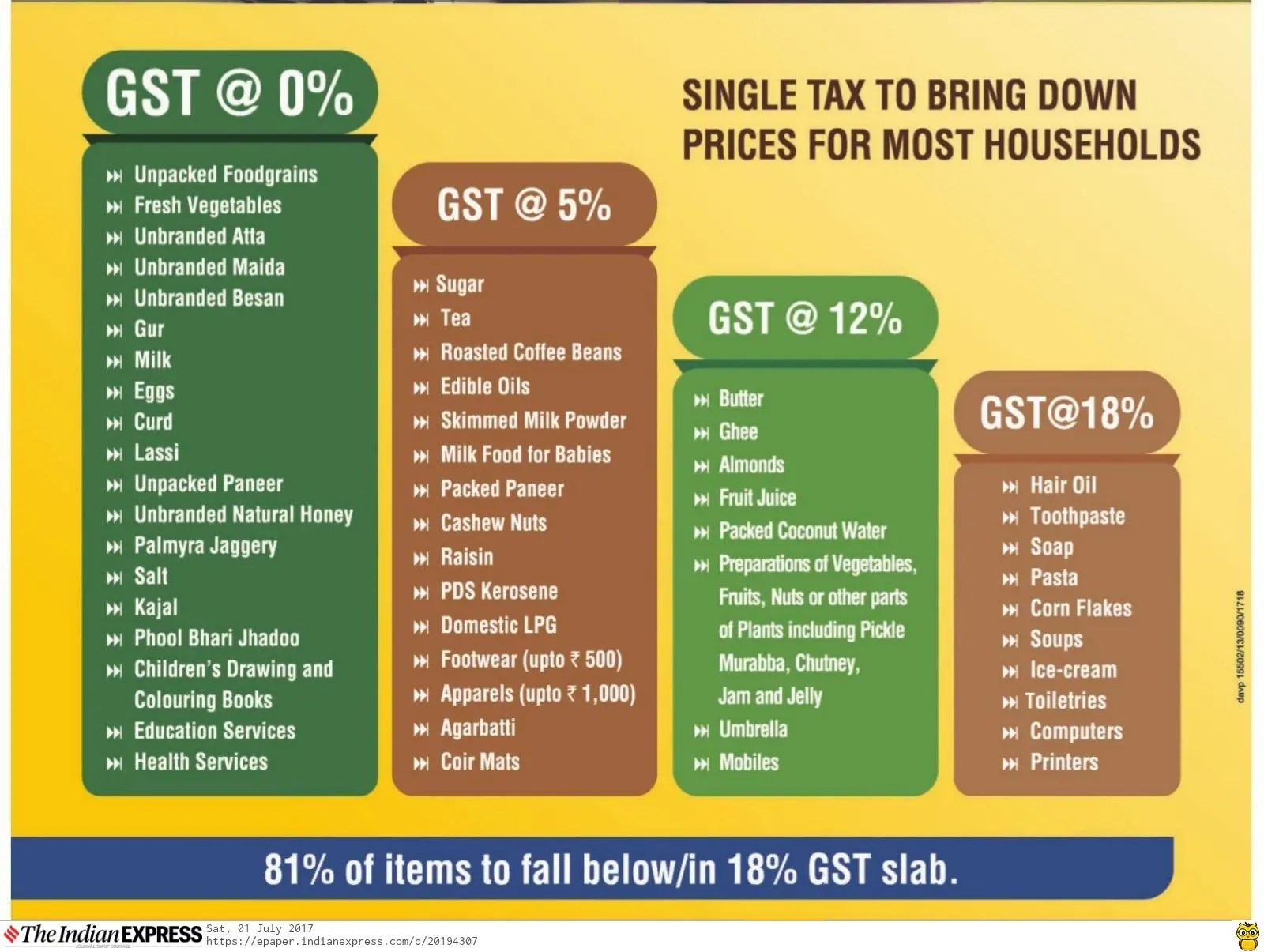
TH GST Rates   —click to open pdf file

‘One nation, one tax’ regime gets rolling

At midnight session, Prez calls GST ‘disruptive change’; PM says it’s collective achievement

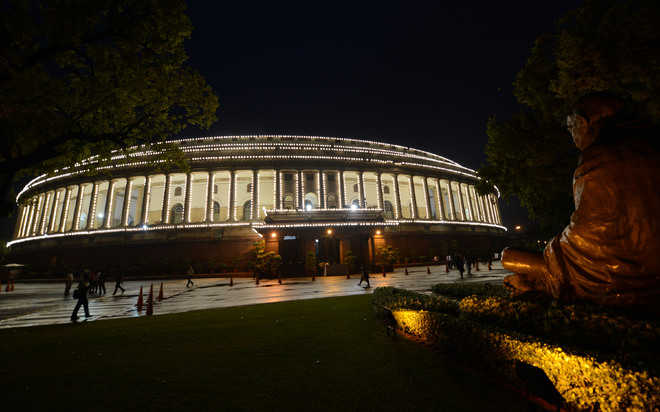
An illuminated Parliament House in New Delhi on Friday night during the midnight rollout of the Goods and Services Tax in the Central Hall. Photo: Mukesh Aggarwal

Sanjeev Sharma

Tribune News Service

New Delhi, June 30

India’s biggest tax reform since Independence Goods and Service Tax (GST) was launched at a special session in Parliament’s Central Hall at the stroke of midnight.The GST, countrywide single taxation system which has been in the making for 15 years, was launched by President Pranab Mukherjee and Prime Minister Narendra Modi by pressing a button in an hour-long special function in Parliament attended by MPs, state finance ministers, GST Council members and other dignitaries.Among those present on the dais along with the President and Prime Minister were Vice President Hamid Ansari, Lok Sabha Speaker Sumitra Mahajan, Finance Minister Arun Jaitley and former Prime Minister HD Deve Gowda. Former Prime Minister Manmohan Singh skipped the event as the Congress had decided not to attend the function.(Follow The Tribune on Facebook; and Twitter @thetribunechd)The GST seeks to create a national market for goods and services by subsuming multiple taxes at the national and state level, thereby creating a paradigm of “one nation, one tax, one market”.President Mukherjee said GST was a “disruptive change” and similar to the introduction of VAT when there was initial resistance. “When a change of this magnitude is undertaken, however positive it may be, there are bound to be some teething troubles and difficulties in the initial stages,” he said.Video courtesy: Facebook handle of PIB


Modi called the GST “Good and Simple Tax” which would replace 500 kinds of different taxes prevalent in the country. Showering praise and thanking political parties, Modi said the GST was the result of combined efforts of all political parties and did not belong to any one party or one government.Invoking the legacy of Sardar Patel, the Prime Minister said the GST would bring about economic integration of India similar to what was done by Patel at the time of Independence to integrate the states and the country.Referring to the vision of New India, Modi said the GST was the economic system of a New India and its scope was not limited to the financial system but now India would move in a new direction.The PM said under the new system due to an audit trail, the harassment of traders and small businesses will end while integrating India into one market with one tax rate.During the initial phase, he said that doubts and anxiety should not be spread and even small traders will adapt to the new system. He added that GST will end generation of black money and corruption, promote new governance culture and help to garner resources for the welfare of the poor.Talking about the teething troubles, the PM said even eyes had to adjust for some days when once wears new spectacles. In his address, Mukherjee said the central tax was a “tribute” to the maturity and wisdom of India’s democracy, as he recalled steps taken during his own tenure as Finance Minister on this key reform measure.“The new era in taxation is the result of a broad consensus arrived at between the Centre and states. This consensus took not only time but also effort to build. The effort came from persons across the political spectrum who set aside narrow partisan considerations and put the nation’s interests first. It is a tribute to the maturity and wisdom of India’s democracy,” Mukherjee said.He said the GST Council should continuously review the implementation and suggest improvements to the taxation regime. After the GST launch, the government imposed levy of 10 per cent basic customs duty on mobile phones, which make imported phones expensive, while inputs and raw materials for manufacture are exempt.Momentous event: PranabIt is a momentous event for the nation. This historic moment is the culmination of a 14-year-long journey which began in Dec 2002. It (GST) is a tribute to the maturity and wisdom of India’s democracy. It will make exports more competitive and provide a level playing field to domestic industry. —Pranab Mukherjee, PresidentGood and Simple Tax: MODIIt’s the best example of cooperative federalism and success of Indian democracy. GST is ‘Good and Simple Tax’ — good because there will be no tax on tax and simple because there will be only one form of tax. It will help eliminate black money and corruption. —Narendra Modi, Prime Minister
Highlights

GST is a tribute to the maturity and wisdom of India’s democracy: Pranab

This historic moment is the culmination of a fourteen-year long journey which began in December 2002: President

Introduction of GST is a momentous event for the nation: President Pranab Mukherjee

It is good and simple tax: PM Modi

Not just economic reform but also social reform

Working with vision of new India by 2022: PM Modi

Foreign investors will get a good opportunity in india

GST is not the legacy of one political party but the collective legacy of all political parties: Modi

GST is economic integration

One nation one tax to replace 500 kinds of taxes

Central Hall is the most appropriate venue for historic GST launch, says PM

Central Hall of Parliament witness to momentous occasions of Indian history

It is the contribution of every party and government

The path we have chosen doesn’t belong to one government or one party

GST process big example of cooperative federalism

125 crore Indians will be witness

India will move in a new direction

PM says at midnight we will steer country direction

Prime Minister Narendra modi starts addressing at GST function

Will boost revenues drive growth and single flow of goods and services

GST has removed multiplicity of taxes and cut tax interface: FM

Jaitley says India will write new destiny and GST being launched in time of global slowdown

GST process started 15 years ago, says FM

Thanks Mps political parties state Finance Ministers

New India will create one tax, one nation, one market, says Finance Minister Arun Jaitley

President Pranab Mukherjee, PM Narendra Modi, VP Hamid Ansari arrive in Central Hall of Parliament for the launch of GST.

Former Prime Minister H D Deve Gowda on dais with President, PM, Vice President and Lok Sabha.

Former PM Manmohan Singh skips GST launch event owing to Congress’ boycott of the ceremony. (With PTI inputs)

Fertiliser rate cut from 12% to 5%

In a farmer friendly move, the GST Council chaired by Finance Minister Arun Jaitley decided that the GST rate on fertilisers will be reduced from 12 per cent to 5 per cent and on exclusive parts of tractors from 28 per cent to 18 per cent. The reduction of tax on fertiliser will benefit farmers to the extent of Rs 1,261 crore. TNS

AT MIDNIGHT, MODI RINGS IN INDIA’S ‘GOOD & SIMPLE TAX’

Govt ushers in an ambitious taxation regime that promises to be a game­changer for the Indian economy

Pressing a button at the stroke of midnight on Friday, President Pranab Mukherjee and Prime Minister Narendra Modi launched India’s biggest tax reform from the historic central hall of Parliament, cheered on by some of the country’s top names in politics, business and law.

PTI PHOTOPresident Pranab Mukherjee and Prime Minister Narendra Modi press a button to launch the GST at a special midnight ceremony in the central hall of Parliament.

GST is not the legacy of one political party but the collective legacy of all political parties NARENDRA MODI, Prime Minister

It was a luxury welcome for the long-awaited Goods and Services Tax (GST), ending a 14-year struggle to enlist political support for a move that will replace some 20 federal and state levies and unify a country of 1.3 billion people into one of the world’s biggest common markets.

The event condensed years of anticipation, frustration and hope into a moment of celebration. A festive air permeated a brightly illuminated, flower-bedecked parliament building. A short film on the GST played out on television screens as soon as Modi and Mukherjee pressed a button.
About 1,000 people packed the hall when Modi began to speak from where India declared itself a free nation and first Prime Minister Jawaharlal Nehru made his famous “tryst with destiny” midnight speech almost 70 years ago.
Modi referred to the central hall’s illustrious history, saying there could be no place more pious to launch what will be a crucial cog in India’s gearwheel of growth.

“From Leh to Lakshadweep, India will now have one tax. GST is actually a Good and Simple Tax,” he said as the audience thumped their desk in approval.Both Modi and finance minister Arun Jaitley struck a note of political conciliation as they shared credit for the rollout of the GST with all political parties and past governments.

What’s up, what’s down: Decoding effect of GST on daily life

Business houses should pass on the benefits of GST to customers. If they do not do that, they will be hit by the anti­profiteering clause. AJAY JAGGA, advocate and member of CPC,Chandigarh

Goods and Services Tax (GST) coming into effect, HT decodes the effect of new regime on the rates of various items used in our day-to-day life. While most of the goods are getting cheaper, services and luxury products will become expensive.

Food grains will become cheap as the government has exempted these items from GST purview. But branded foodgrains and pulses come under 5% tax slab.

In the case of mobile phones, imported phones will become cheap, but locally manufactured ones will get costlier.

City-based lawyer, Ajay Jagga said, “On imported mobile phones, there was 21.85% tax, which included import duty (12.5%) and VAT (9.35%). The government has imposed 12% GST, which makes imported phones cheap.”

WHAT WILL BECOME CHEAPER AND WHAT WILL COST MORE?

There will be 18% tax on hair oil, soaps and toothpaste, making these items cheaper. Before GST, around 25% tax was imposed on these items.

However, one will have to shell extra money for buying shampoo, liquid soaps, shaving creams and other toileteries as these items will be taxed at 28%, costing around 3% more.

COFFEE LOVERS CAN REJOICE

Several food items such as edible oil, tea, coffee, sugar, spices have been kept at 5%, with exemption for fresh milk and foodgrains. Tax on coffee will come down from 12 % VAT to 5% GST.

Similarly, sugar will become cheap as tax will come down from 12.5% to 5%.

SHELL 3% EXTRA ON ELECTRONICS

With 28% tax under GST, electronic items such as televisions, refrigerators, air conditioners and washing machines may get costlier from July 1. Currently, these items are being taxed at 25%.

STAYING AT HOTELS, AC DINING TO COST LESS

Staying at hotels and AC dining will become cheap. Earlier, one used to pay over 18.5% tax on AC dining, but now it has come down to 0.5%.

TAXI RIDES, NON-AC RAILWAY, ECONOMY CLASS FLIGHT CHEAPER

From today onwards, taking taxi rides will become more affordable as tax will be reduced from 6% to 5%. There is a reason to cheer for people travelling in non-AC railways as there is no tax rate on it. Air-fare for economy class will become cheaper, as the tax will be reduced by 1%.

However, those travelling in AC coach will have to pay more than the double of the tax, as it will be increased from 5% to 12%. Similarly, airfare for business class would become expensive. The tax will be increased form 9% to 12%.

“Entertainment duty will be brought down from 30% to 28% under GST, hence watching movies in cinemas will become cheap,” said Jagga.

People will have to shell 1% extra tax for buying gold jewellery,” Jagga said.

“Business houses should pass on the benefits of GST to customers. If they do not do that, they will be hit by the anti-profiteering clause,” he said.

clip

clip

clip