Sanjha Morcha

What’s New

Click the heading to open detailed news

Current Events :

web counter

Print Media Reproduced Defence Related News

Of 527 Kargil martyrs, 13 from Hoshiarpur

Hoshiarpur, July 26

Kargil Victory Day was celebrated today during which martyrs were paid homage at the war memorial here.

Deputy Commissioner Isha Kalia paid tributes saying that the martyrs who had sacrificed their lives for the country could never be forgotten.

Today, the entire country is bowing down to soldiers who laid their lives for the nation, she said.

She added that in the Kargil war, 527 soldiers were martyred, of which 13 were from Hoshiarpur district.

The Deputy Commissioner-cum-District Sainik Board Chairperson said it was due to the martyrdom of these bravehearts that today they were leading a safe life.

She said their acts could never be repaid and the country would always be grateful for the sacrifice of martyrs.

Kalia added that the district administration was with the families of the martyrs and if they faced any problem, it would be solved on priority basis. In addition, full honours will be extended to them at government offices, she said.

She also motivated students of Sainik Institute of Management and Technology and Pre-recruitment Training Center to follow the path of martyrs.

On this occasion, family members of Kargil martyrs were also honoured. Also, 31 beneficiaries were given cheques for Rs 3,43,000 as financial assistance and marriage grant from the Armed Forces Flag Day fund.


20 years on, wounds of martyr’s family yet to heal No action taken to deliver justice, says Saurabh’s father

20 years on, wounds of martyr’s family yet to heal

Ravinder Sood

Palampur, July 26

Twenty years have passed, but time has not healed his wounds. His fight is for justice and he is making all efforts so that the death of his son and other soldiers in the 1999 Kargil conflict could be declared a war crime.

Dr NK Kalia, father of the 1999 Kargil conflict martyr Capt Saurabh Kalia, today said successive Indian governments had failed to get justice for human rights violation of his son and other soldiers. He accused the authorities of adopting a liberal approach towards Pakistan.

In an interview with The Tribune on the 20th anniversary of the war, Dr Kalia said, “The previous governments followed the policy of appeasement and never wanted to annoy Pakistan. All this happened at the cost of valiant soldiers who sacrificed their lives for the security and integrity of this country in the Kargil war. Despite my repeated requests, the issue has not been raised at international forums,” he said.

He said had the issue been taken up in the International Court of Justice, his son would have got justice.

“I have been moving from pillar to post for the last 20 years. I also approached the Centre as well as national and international organisations on several occasions urging them to pressurise Pakistan to identify, book and punish those who indulged in the most heinous inhuman crime and kept his son in captivity for three weeks and subjected him to brutal torture. However, nothing has been done so far,” said Dr Kalia.

He said the wounds of all parents who had lost their sons and brave soldiers in the war were yet to be healed. “It is not only our loss, but of the entire nation,” he said.

He again urged the Government of India to take up the issue with the international community and ensure punishment for those who indulged in the brutal acts of burning bodies with cigarettes, piercing ears with hot iron rods, removing eyes before puncturing them, breaking most of the bones and teeth and chopping off various limbs and private parts of Indian soldiers, including that of his son.

An emotional Dr Kalia said,” I will continue to fight, hoping against hope, till my last breath.”

An unending battle

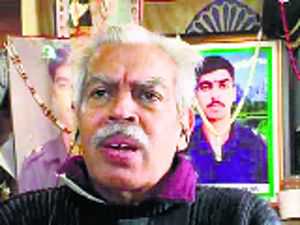
  • Dr NK Kalia (pic) has been waging a constant battle to get the Kargil conflict declared a war crime in accordance with the Geneva Convention so that the guilty can be punished.
  • He had even approached the Supreme Court in 2012 seeking directions to the government to raise his son’s case in the International Court of Justice at The Hague.
  • He had also filed a petition with the United Nations Human Rights Council.

China’s Chump: Why America Can’t Trust Pakistan

by Michael Rubin
Pakistani prime minister Imran Khan hopes that his visit to the White House today will jumpstart relations with the United States after years of tension. Within the U.S. political context, President Donald Trump is a polarizing figure and his political opponents usually blame him exclusively for all ills on the international stage. When it comes to Pakistan, however, they should not. Pakistan’s problems are made in Pakistan and Trump should continue the recent bipartisan consensus to hold Islamabad responsible.
Those who seek a revitalized U.S.-Pakistan relationship can say history is on their side. Pakistan became a U.S. ally shortly after its 1947 creation, largely because Jawaharlal Nehru rejected U.S. partnership. As India drifted closer to the Soviet Union, Pakistan grew in U.S. strategic calculations. Between 1954 and 1965, Pakistan received more than $1 billion in arms sales and defense assistance, a huge amount for the time. Cooperation only increased after the Soviet invasion of Afghanistan. It was not long until Pakistan became the third largest U.S. aid recipient, after Israel and Egypt.
The Roots of Pakistani Anti-Americanism
The only successful hijacking of an El Al aircraft takes place when a plane carrying 38 passengers is taken over by members of the Popular Front for the Liberation of Palestine.
In the United States, William Austin Burt patents the typographer, a precursor to the typewriter.
Despite close cooperation with the United States, Pakistan grew fiercely anti-American. There were several reasons for this: In 1955, Pakistan joined the Central Treaty Organization (CENTO), President Dwight D. Eisenhower’s equivalent to NATO for countries along the southern rim of the Soviet Union. Muhammad Ayub Khan, Pakistan’s first native commander-in-chief and, after leading Pakistan’s first successful military coup d’état, Pakistan’s second president, quipped that Pakistan had become “America’s most allied ally in Asia.”
Pakistan has a knack for always labeling India the aggressor even when Pakistan—or the terrorists it shelters and funds—start wars. When war between Pakistan and India erupted in 1965 and again in 1971, Pakistan demanded the United States come to its aid. Washington instead chose neutrality and placed an arms embargo on both sides. Pakistani leaders saw this as betrayal since India was larger and had greater resources. The bitterness of that time colors Pakistani anti-Americanism today.
Pakistan’s nuclear ambitions contributed to tension. Pakistan initiated its nuclear program in 1955 and participated in the Eisenhower administration’s “Atoms for Peace” program. A decade later Pakistan inaugurated her first nuclear reactor with U.S. assistance. Pakistani leaders long kept their desire to acquire nuclear weapons private but that changed in 1965. That was the year that Pakistani politician Zulfikar Ali Bhutto declared: “If India builds the bomb, we will eat grass and live, can even go hungry. But we will get one for our own. We have no alternative.” Still, aside from Bhutto’s outburst, the Pakistani government was willing to tell American officials what they wanted to hear: “Pakistan will neither acquire nor produce a nuclear bomb,” Zia ul-Haq said. His formula—technology but no bomb—became the mantra for states like North Korea and perhaps also Iran, which sought covert programs. It also became the reason that an entire generation of American officials began to see Pakistani officials as duplicitous.
Pakistan’s overt drive toward and later acquisition of nuclear weapons led to periodic imposition of U.S. sanctions suspended or lifted only when Washington needed something from Islamabad. This reinforced the perception among Pakistani officials and broader society that the United States was a fair-weather friend and a selfish partner.
The coup de grâce for anti-Americanism, however, was the decision Pakistani military and intelligence leaders took upon East Pakistan (Bangladesh)’s loss in 1971 to embrace and promote Islamist extremism within Pakistani society as a glue to hold together Pakistan’s ethnically-diverse society. The number of madrasas teaching radicalism exploded. It was Pakistan’s fear of ethnic (and specifically Pashtun) nationalism that led Pakistan to exclusively support Islamist groups among the anti-Soviet resistance in 1979 when Pakistani authorities monopolized distribution of aid.
After the September 11, 2001, terror attacks, the United States needed Pakistan desperately. On September 22, 2001, Bush waived nuclear sanctions and declared Pakistan “America’s closest non-NATO ally.” Former president Pervez Musharraf publicly pledged to “unstinted cooperation” to the United States in the fight against terrorism but, privately, Pakistan continued its support for the Taliban. Simply put, eliminating the Taliban was not a Pakistani objective and, at best, Islamabad was agnostic on Al Qaeda. Musharraf partnered with the United States for four reasons: security, economic revival, safety of nuclear and missile assets, and the hope that the United States would support Pakistan on the Kashmir dispute.
Pakistan’s Terror Sponsorship
Pakistan’s double-game on terror has been deadly for the United States, destabilizes South Asia, and risks catalyzing Pakistan’s descent into state failure.
The U.S. Treasury Department’s Office of Foreign Asset Control (OFAC) has declared that 143 Pakistan-based individuals or organizations were guilty of engaging in terror activity. State Department terror lists are populated with Pakistan-based or supported groups, even if diplomatic considerations obscure mention of Pakistan in many of their profiles. Almost two thousand American servicemen have died in Afghanistan as a result of Taliban attacks and, by extension, Pakistani actions. In short, this has put Pakistan on the same level as—or even a level above—Iran when it comes to responsibility for the deaths of American servicemen. That alone is reason not to forgive Pakistan or buy into the fiction that Pakistani authorities are not culpable.
Nor should Congress or the White House do anything to obscure Pakistan’s aggression by proxy toward India and Afghanistan. This year Pakistani-backed terrorists have taken their terrorism to a new level. On January 22, 2019, Taliban terrorists—supported by Pakistan—attacked an Afghan army camp in Wardak and killed more than 120 people.
In February 2019 , a member of the Pakistan-based Jaish-e-Mohammed terrorist group attacked a police convoy in Pulwama, Indian Kashmir, killing forty people. In just the past three years, there have been at least seven major attacks on Indian targets by Pakistanbased terrorists. Certainly, Pakistani groups have repeatedly promised to crack down on terrorism, but the record is clear: they lie. Prominent ministers and allies of former Prime Minister Nawaz Sharif as well as his brother Shehbaz Sharif openly ralliedwith banned militants. While Trump may praise Pakistan’s recent arrest of the mastermind of the Mumbai terror attacks, he ignores that Pakistani authorities have repeatedly arrested Hafiz Saeed—and always released him once the spotlight moved on.
Pakistan’s Embrace of China Completes its Anti-American Evolution
As the United States prepares to cut-and-run from Afghanistan, Trump and his allies may believe that now is the time to reset relations with Pakistan. They are wrong. Under Imran Khan, Pakistan has continued its move to become an instrument of Chinese strategic policies. Successive Pakistani leaders have fallen victim to China’s debt trap. Thus, even if Khan wished to chart an independent course, it would have been impossible for him to do so.
The simple fact, however, is that Khan willingly casts his lot with Beijing. The Gwadar Port today is solidly among China’s “string of pearls.” For all his cynical embrace of Islam as a political tool rather than a deep faith, Pakistan has not only remained quiet on China’s mass-incarceration of its Uighur population into concentration and “re-education” camps, but alsoendorsed China’s strategy at the United Nations. Pakistan’s recent crackdown on army officials on spurious corruption and other charges has less to do with countering the country and military’s endemic corruption and more to do with a People’s Liberation Army-directed purge of pro-American elements within Pakistan’s army. This undertaking was designed to make the Pakistani military more acceptable for long-term Chinese partnership. Simply put, Pakistan is now China’s vassal, and Khan is President Xi Jinping’s jester.
Perhaps Khan feels he has no choice but to kowtow to China. That simply shows his and Pakistan’s weakness. But, Khan had a choice about whether to encourage or discourage anti-Americans, and he chose to fan its flames. He has encouraged a consistent anti-American image in Pakistan, and the Pakistani government and officials continue to suggest the United States is “anti-Islamic” even as Pakistan receives billions of dollars in U.S. aid. Recent attacks by Pakistan’s proxies in Afghanistan show that Islamabad is not simply anti-American in rhetoric, but also in action. Khan may relish what a photo-op in the Oval Office might do for foreign investment, but he should recognize that what condemns Pakistan to its current plight is its continued use terrorism as an instrument of foreign policy.
Trump has reversed decades of diplomatic practice by putting summits with adversarial leaders ahead of diplomatic progress. Khan’s visit, therefore, should be seen in the same light as Trump’s meetings with North Korean leader Kim Jong-un, Turkish president Recep Tayyip Erdoğan, and Russian president Vladimir Putin. That’s unfortunate, but the greater danger is that Trump and the State Department take Khan at his word or put wishful thinking ahead of reality. Khan seeks not a new partnership, but to continue a pattern of duplicity, the cost of which can be counted in billions of dollars of wasted aid, Chinese backslapping, and American body bags.


AFT upholds Lt Col’s conviction for illicit affair with officer’s wife

AFT upholds Lt Col’s conviction for illicit affair with officer’s wife

Tribune News Service

Chandigarh, July 17

The Armed Forces Tribunal, while upholding the sentence of cashiering and two-year rigorous imprisonment awarded by a general court martial to a Lt Col for allegedly having an improper relationship with a fellow officer’s wife, has ruled that a second trial based upon the same facts cannot be barred if the charges levelled in the two trials are different.

The officer had been convicted by the GCM in August 2018 on three charges under sections 45 and 69 of the Army Act for “behaving in a manner unbecoming of his position and character expected of him”, and for committing a civil offence involving dishonesty. As per the charges, he had instigated the wife of another Lt Col to divorce her husband, entered into an illicit affair with her and presented himself as being married to her while leasing out a flat for her.

Though the officer denied the allegations against him and contended some rules were not complied with during proceedings against him, AFT Bench comprising Justice VK Shali and Lt Gen Philip Campose held the three charges were proved beyond reasonable doubt.

In 2016, the woman lodged a complaint of rape and criminal intimidation against the officer, but the court of Additional Session Judge, New Delhi, discharged him. The order was upheld by the Delhi HC. The officer contended since he was discharged, it was illegal to try him afresh by a GCM by splitting the offences.

Pointing out that a second trial is barred only if a person is acquitted or convicted by a court, the Bench said in the case of a discharge, the same court or even for that matter an Army court could try him for the offence of rape and criminal intimidation.


Lalru jawan dies as mortar shell explodes accidentally in Leh

Body to be cremated with full state honours today; had joined Sikh regiment as sepoy in 2014

Lalru jawan dies as mortar shell explodes accidentally in Leh

Gurpreet Singh

Satinder Pal Singh

Lalru, July 10

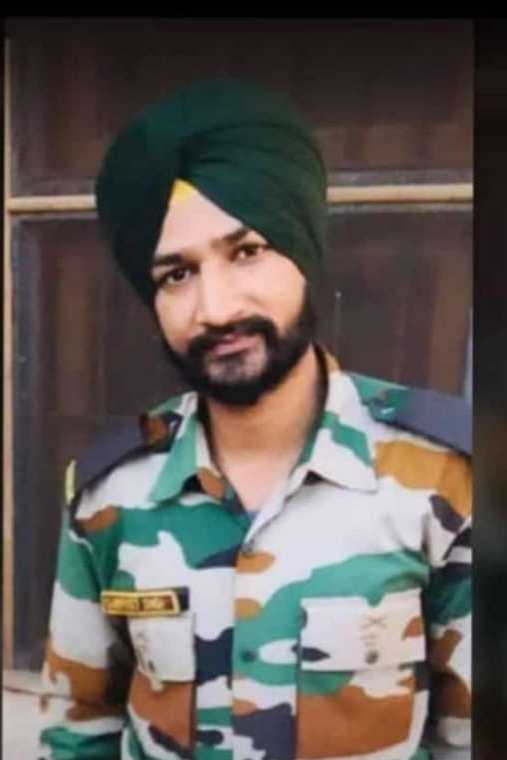
Gurpreet Singh (24), an Army jawan and resident of Dharamgarh village, here, was killed while two others were injured after a mortar shell exploded accidentally during a training activity at Nimu, headquarters of the Nimoo block in Leh district of Jammu and Kashmir on Tuesday.

According to information, the incident took place during a training activity at a firing range at Nimu in Leh district of Jammu and Kashmir. Sources said the soldiers, including Gurpreet Singh, were conducting a training drill with live ammunition when the mortar shell got stuck in the gun and went off.

When Gurpreet, along with his two colleagues Manroop and Sandeep, went to check the mortar gun, the shell that was stuck inside it exploded accidentally leaving them critically injured.

All three were rushed to a hospital at Leh where Gurpreet succumbed to his injuries later on. However the condition of others two is stable, said the sources.

The body of Gurpreet will be flown to the Air Force base in Chandigarh tomorrow from where it will be taken to the soldier’s ancestral village at Dharamgarh near Lalru, it is learnt.

Gurpeet’s family members as well as the villagers are in a shock after receiving the news about his death. People are thronging the jawan’s house to mourn his death.

Gurpreet had joined the Sikh regiment Unit No. 6 as a sepoy in 2014. He was unmarried. A few years after posting in Bathinda, Gurpreet was posted in Leh last year.

Gurpeet is survived by his father, two sisters, and two brothers. One of the sisters was to get married this November. Gurpreet lost his mother a few years ago.

The last rites of Gurpreet Singh would be performed here with full state honours on Thursday.

The incident

According to information, the incident took place during a training activity at a firing range at Nimu in Leh district of Jammu and Kashmir. Sources said the soldiers, including Gurpreet Singh, were conducting a training drill with live ammunition when the mortar shell got stuck in the gun and went off.

The kin

Gurpeet is survived by his father, two sisters, and two brothers. One of the sisters was to get married this November. Gurpreet lost his mother a few years ago.


Architect of Indian unity by Vappala Balachandran

t is not necessary to denigrate Nehru to admire Sardar Patel

Architect of Indian unity

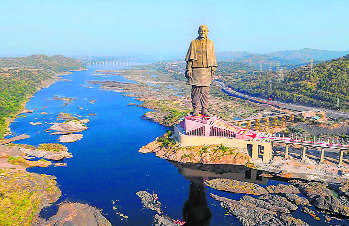
Towering leader: Patel secured peaceful unification of the huge Indian landmass within two months of the June 3, 1947, Cabinet Mission Plan.

Vappala Balachandran 
Ex-special secy, cabinet secretariat

A recent report that the next meet of our foreign missions’ heads would be held ‘under the shadow’ of the towering Sardar Patel statue is welcome news. The occasion will allow  refocus on that great man, the architect of Indian unity. The title ‘Indian Bismarck’ does no justice to him. It took nine years (1862-71) for Bismarck to achieve German unification after waging three major wars. Patel secured peaceful unification of the huge Indian landmass, including integration of most of our 562 princely states, within two months of the June 3, 1947, Cabinet Mission Plan. No other person has achieved this in world history.

The ongoing inquisitorial hypothesis on whether Patel would have faced India’s early security challenges better than Nehru as Prime Minister would be meaningless unless we juxtapose such propositions against our systemic framework existing in the relevant period. Unless this is done, such discourses would do no justice to both leaders who, despite their strategy differences, worked with great affection to each other.

China and Pakistan were our biggest challenges in 1947. They continue to be so even now. An unremitting contention is whether an expansionist China could have been contained more firmly by Nehru after receiving Patel’s long letter of November 7, 1950, about Tibet. By then the intention of the new Communist government that it would reclaim the Qing-era boundaries was known all over the world. This was also after the Battles of Dengke (June 1950) and Chamdo (October 6-19, 1950) to force the Dalai Lama to accept Chinese rule. 

The story of a resurgent and combative China starts in 1919 when signs of a ‘helpless, hopeless, and inert mass of China’ (Lord Curzon) coming alive and exploding were visible. The 1919 Treaty of Versailles, dominated by the big powers, handed over the old German interests in China, including Shantung Peninsula (Cradle of Chinese civilisation, birthplace of Confucius) to Japan. The leadership for the scorching May 4, 1919, ‘anti-imperialist, cultural & political movement’ passed on to the Communists to evict Russians, British, French, Germans and Japanese from their territory. From 1949, China’s quest was to reclaim all its ‘lost territories’.

Praise for the PLA’s prowess came from an unexpected quarter. Barbara Tuchman, biographer of Gen Joseph Stilwell, says that the General had a ‘notable impression’ of the PLA during the Communist resistance of Japan in Shansi (1936). Stilwell was sent by President Roosevelt to help Chiang Kai-shek during World War II. The same impression emerges if we study their tactics during the 1950 Korean War when they deployed 1.3 million ‘volunteers’ who were PLA troops to help North Korea when the UN forces (90% American) crossed the 38th parallel on September 25, 1950. They beat back the best army in the world, pushing them back beyond the 38th parallel. They risked losing 6 lakh lives only because they feared that US would invade their mainland. 

The declassified ‘Top Secret-Eyes only’ White House memorandum on the Nixon-Zhou Enlai meeting on February 23, 1972, also confirms this fear. Zhou alleged that the 1962 incident actually started in 1959 when Khrushchev “tore up the nuclear agreement between China & Soviet Union” and instigated India to attack China. In 1959, it was in Ak-Sai-Chin, Western Sinkiang. The 1962 incident in which India crossed the McMahon Line into Chinese territory was when Russia told Nehru that “China would not retaliate against them”. “So we had no choice but to drive him out.” Zhou told Nixon that Nehru had expansionist ambitions when he wrote Discovery of India.

Nehru wrote a long reply to Patel on November 18, 1950, agreeing with him on the Chinese threat but suggesting that the military build-up simultaneously on the Western and Northern fronts would “cast an intolerable burden on us, financial or otherwise.” He recommended a diplomatic approach to seek “some kind of understanding with China” while preparing for all contingencies.

On Pakistan and Kashmir, it is very difficult to assess what exactly was in Patel’s mind. His closest aide, VP Menon, had mentioned that Lord Mountbatten, during his visit to Kashmir (June 18-23, 1947) had told Maharaja Hari Singh that “if he acceded to Pakistan, India would not take it amiss and that he had the firm assurance on this from Sardar Patel himself.” Mountbatten’s ‘Report on the Last Viceroyalty’ (March 22-August 15, 1947), published in 1948, confirms this. This has been more or less confirmed by Balraj Krishna, Patel’s biographer, quoting MR Masani that Patel had told him that he “could settle the Kashmir issue in no time by arranging that the Kashmir Valley should go to Pakistan and East Pakistan to India.”

Krishna has also reproduced a letter from the then Indian Air Force Chief, Air Marshal Sir Thomas Elmhirst, who was also holding the charge of Chairman, Chiefs of Staff Committee, that he remembered Patel telling him that he would be in favour of a full-scale war with Pakistan, “if at all the decisions rested on me” to “settle down as a united continent”.

The problem is arriving at any historiographical judgment only on private opinion without considering whether such action was legally possible in 1947. India was still a dominion under the Governor General to represent the British Crown till it became a republic in 1950. His assent was necessary under Section 5 read with 9 of the India Independence Act (IIA), 1947, for all purposes, including deployment of armed forces. Also, the Indian Army was under British command till January 1949. On the other hand, Patel had participated in all crucial meetings chaired by Mountbatten and also agreed with all decisions.

The moral of the story is clear: it is not necessary to denigrate Nehru to admire Patel. We owe our freedom and stability to the triumvirate of Gandhi, Patel and Nehru. Each one was indispensable to our nation.


Army jawan beaten to death; 4 held

Mahendergarh, June 28

Sanjay, an Army jawan from Patharwa village in the district who had come home on leave recently, died after being assaulted by some local youths at Satnali village. The police have arrested four youths.

Rajender of Baas Satnali village lodged a complaint at the Satnali police station on June 18 in which he alleged that some youths had attacked him and his friends Arun and Sanjay with batons and iron rods at Satnali on June 17.

An FIR was lodged on the basis of his complaint. Sanjay was badly injured in the assault. He was hospitalised after the assault and eventually succumbed to his injuries.

The Satnali SHO, Inspector Arvind Kumar, stated that four youths, namely Shakti, Amit, Chandan and Pawan, had been arrested in connection with the assault. He said preliminary investigation indicated that it was a case of an old rivalry. “The youths used to be together earlier. However, a quarrel took place some time ago following which a complaint of assault was lodged. Then, they got divided into two groups and developed a rivalry. The reason behind the enmity is not yet clear,” said the SHO. — TNS


Lt Gen Ranbir reviews security for pilgrimage

Lt Gen Ranbir reviews security for pilgrimage

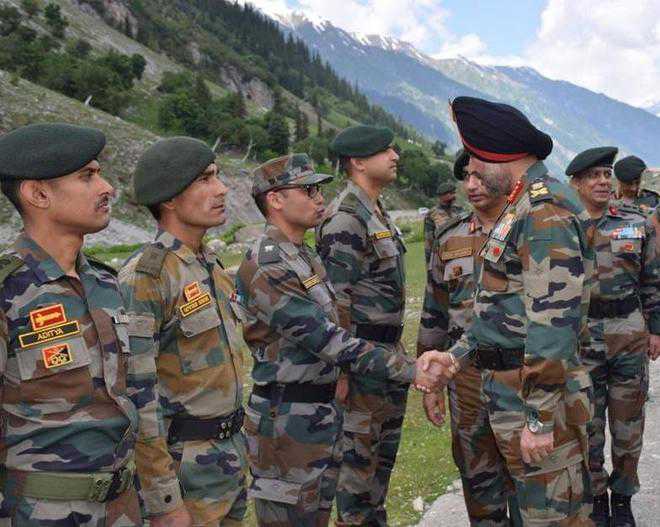
Northern Command chief Lt Gen Ranbir Singh interacts with troops in Kashmir valley on Wednesday. Tribune photo

Tribune News Service
Srinagar, June 26

Northern Command chief Lt Gen Ranbir Singh visited the Army formations and units deployed along both Amarnath yatra routes on Wednesday.

The Northern Command chief was accompanied by Lt Gen KJS Dhillon, General Officer Commanding of the Srinagar-based 15 Corps, also known as Chinar Corps, during his visit in which security and administrative arrangements were reviewed, an Army spokesman said here.

Lt Gen Ranbir Singh was briefed by the commanders on the ground about the deployment and measures taken for close coordination with the civil administration and other security forces to ensure a safe, secure and efficient Amarnath yatra.

Lt General Singh appreciated the synergy among all security agencies and the state administration.

The Northern Command chief said all assistance would be provided to the newly inducted Central Armed Police Forces units and complimented the efforts of troops for coordinating all requisite arrangements. He also lauded the integrated approach and cooperative spirit among the agencies to thwart any possible nefarious designs of the anti-national elements.

Lt General Ranbir Singh had on June 15 chaired a key security review meeting with senior officers of the Army, police, Central Reserve Police Force and other security agencies. Detailed aspects of coordination related to the smooth conduct of the Amarnath pilgrimage were discussed during the meeting.


Briefed by officers on the ground

  • Lt Gen Ranbir Singh was briefed by the commanders on the ground about the deployment and measures taken for close coordination with the civil administration and other security forces to ensure a safe, secure and efficient Amarnath yatra
  • The Northern Command chief appreciated the synergy among all security agencies and the state administration
  • He also lauded the integrated approach and cooperative spirit among the agencies to thwart any possible nefarious designs of the anti-national elements


3 booked for duping army officer of ₹5 lakh in P’kula

TOOK TOKEN MONEY FROM 45-YR-OLD FOR SALE DEED OF A HOUSE THAT THEY HAD ALREADY AGREED TO SELL TO SOMEONE ELSE PANCHKULA : Police on Tuesday booked three men for allegedly duping a lieutenant colonel of the Indian Army of ₹5 lakh in sale of a house which they had already agreed to sell to another person.

Complainant, Amit Yadav, 45, a resident of Sector 10, told the police that the accused, Gaurav Kaushal and Raj Krishan of Sector 9 here and one Kewal Krishan Anand, had taken ₹5 lakh as token money for the execution of a sale deed of Gaurav’s house in Sector 9 in December 12, 2018, which turned out to be a forged document.

Police said Yadav and his wife met the trio through a mediator but it was not disclosed that they have already fixed a deal of the same property with someone else. “The total sale consideration while execution of sale deed was of ₹2.13 crore, for which Raj and Kewal were the witnesses,” Yadav told the police.

However, in the legal scrutiny report of the house dated January 21, it was discovered that Gaurav had already entered into an agreement to sell it to one Anil Goyal, of NAC, Chandigarh. It was also found that Gaurav had been served a legal notice on January 7 for execution of sales deed with Goyal.

Investigating official sub-inspector (SI) Pawan Singh said, “The accused served Yadav a legal notice in February, asking him to pay the outstanding amount of the sale deed within 30 days, or forfeit the token money. Based on the complaint, the three accused have been booked under Sections 406 (criminal breach of trust) and 420 (cheating) of the Indian Penal Code at the Sector 5 police station.”


OROP: Is CGDA an Extra-Constitutional Authority-1

A nation that does not respect its soldiers and veterans is doomed to fail. Veterans across the nation are shell-shocked by the attitude and arrogance of Comptroller General of Defence Accounts (CGDA). CGDA is responsible for financial advice, payment, accounting and internal audit in respect of Expenditure and Receipts of the Defence Services and other Defence related organisations. In other words he is just a government servant and required to implement the instructions given by the government and ensure judicious use of funds allotted by the government. CGDA is not the government and does not have the mandate to alter or comment on the decisions of the Cabinet.
The veteran community that includes not only the retired soldiers, Junior Commissioned Officers (JCOs) and Commissioned officers of all the three services but also the family pensioners (widows) and the martyrs ’wives (Veer Naris) heaved a sigh of relief when the Bharatiya Janata Party Government under the premiership of Narendra Bhai Modi conceded to their four decade old demand and announced its decision in 2015 to grant One Rank One Pension (OROP) to be effective from 01 July 2014. The announcement followed a cabinet decision which was promulgated vide Govt of India Letter No. 12(1)/2014/D (Pen/Policy)-Part II dated 07-11-2015. Majority of the veteran community was happy though a section of the veterans who felt that the government has changed the definition of OROP as approved by the Parliament expressed their resentment. They termed it as “Langdi OROP” (Lame OROP) and staged hunger strike at Jantar Mantar. There is no doubt that there were many anomalies in the implementation of the OROP, mainly because the whole exercise was carried out by the Babus and the representatives of the three services were not associated with them. The government did realise the mistake and appointed One Man Committee headed by Justice Reddy (OMJC) to address the issue of anomalies. Though, Justice Reddy did submit his report, it till date continues to gather dust in the corridors of power due to the lethargy of Babudom. The confrontationist approach adopted by a section of the veterans at the behest of Congress which did not want the BJP to take credit for sanctioning OROP did not go well with the government. Resultantly, OROP till date remains a contentious issue.
Notwithstanding, the contentious issues, the GOI letter quoted earlier stated unambiguously, “In future the pension would be re-fixed every 5 years.” Majority of the veterans who were satisfied with whatever was sanctioned by the government reposed their faith in the leadership of Modi ji and voted overwhelmingly for his return as the nation’s Prime Minister. With the thumping majority with which Modi ji won, veterans were hoping that the new government will not only resolve the anomalies but will also address the contentious issues related to OROP. Various veteran associations kept reminding the Department of Ex-servicemen Welfare (DESW), the government’s face that deals with the veterans that re-fixation was due in July this year which was also acknowledged by the Department in February itself. Accordingly, DESW instructed the CGDA in November last year to finalise the tables for payment so that the payments can be made on the due date to the Veterans. Surprisingly, the CGDA rather than acting on the directive of the government, in a most arrogant and irresponsible manner, shot back a missive to DESW raising number of queries by bringing in extraneous issues like the 7th CPC, One Man Justice Reddy Commission and the Supreme Court. The action of the CGDA smacked of a conspiracy to divide a wedge and create distrust between the government and the veterans. OROP being a settled issue was announced by the government and CGDA was simply required to re-fix the pension to equalise it with the pensioners of 2018. However, he chose to challenge the very concept or requirement of OROP thus challenging the combined wisdom of the Union Cabinet.
The CGDA letter gives an impression that the organisation is unaware of the basics of OROP and they are now being tasked to do something about which they know nothing. Hence a long list of eight clarifications on the implementation of OROP-2018 (equalisation as due on 01 July 2019). The list of clarifications smacks of a conspiracy of not implementing OROP-2018 with a view to adversely influence the mind of newly appointed Raksha Mantri. Interestingly, the same organisation of CGDA implemented the OROP when it was announced by the government initially. They only worked out the methodology of payment to different categories and different ranks. The tables are available and it simply needs to revise the pension with the pension of retirees in 2018 in the same rank with same years of service. For example, the pension of Brigadiers who retired in 2018 with 33 years or more of service varies between Rs.1,04,00 to 1,10,000. The average works out to Rs.1,07,000. Thus, the revised pension of Brigadiers (33 years and above) wef 01 July 2019 should be equalised at Rs.1,07,000 for all pre-2018 defence forces pensioners. This is as per the agreed formula of the government. There is no logic in CGDA seeking clarification about the same without some ulterior motive.
The other clarification sought by the CGDA is about the date of implementation of OROP-2018. By seeking this clarification the CGDA confirms the conspiracy theory. OROP was implemented form 01 July 2014 and the government letter very clearly stated that next equalisation will be done after five years, hence OROP-2018 has to be implemented from 01 July 2019. There is no rocket science needed to work that out.
Next clarification is about what all recommendations of OMJC are to be factored in OROP-2018. The government has not even declassified the OMJC report, so there is no question of its recommendations being clubbed with OROP-2018. The CGDA is questioning the authority and wisdom of the government as if he is not a government servant but an Ombudsman. (To Be Continued)


(The author is a Jammu based political commentator, columnist, security and strategic analyst. The views expressed are personal. He can be contacted at anil5457@gmail.com)