Sanjha Morcha

What’s New

Click the heading to open detailed news

Current Events :

web counter

Print Media Reproduced Defence Related News

Decks cleared for permanent commission for women in Navy appointed this year.

Picture for representational purpose onlyAll women officers completing seven years with the Indian Navy will now be eligible for permanent commission. The Navy was the only wing of the armed forces which had denied the permanent commission to women.

With the decks cleared, the first set of women officers on permanent commission will be appointed this year.

Women officers in the Navy are commissioned for short service with a maximum term of 14 years, which makes them ineligible for pension since it requires a minimum 20 years of service. In fact, no short service commission officer, male or female, is entitled for pension.Three women officers – Commander Suman Kumari, Commander Supriya Sethu and Commander Pawan Preet Mann – had moved the Supreme Court seeking reinstatement in the Navy. They have now been called for their medical tests for the permanent commission.

A total of 17 short service commission women officers had moved various writ petitions seeking permanent commissions. The verdict on the remaining petitions is also expected soon.

In November last year, the apex court had barred the Navy from releasing 17 women officers, who had challenged the government’s decision to extend permanent commission to women officers in education, law and naval architecture to those who joined after September 2008.

In 2010, a similar court order had allowed women permanent commission in the Army and the Air Force, noting that women officers “deserve better from the government”.

https://youtu.be/UTQWqngW184

http://


Rafale deal will be concluded in June: Parrikar

short by Arjun Bhatia / 10:52 am on 27 May 2016,Friday
Defence Minister Manohar Parrikar on Thursday said there is “no reason” why the deal to buy 36 Rafale fighter jets from France should not be concluded in June. He further rejected suggestions of a delay in signing the €7.89 billion (₹59,200 crore) contract, saying any such process takes at least 6-8 months. The deal had been announced in April 2015.

AVM ARJUN SUBRAMANIAM’S BOOK – INDIA’S WARS RELEASED BY CHIEF OF THE AIR STAFF ON 07 APR 16


Air Chief Marshal Arup Raha PVSM AVSM VM ADC Chief of the Air Staff, released AVM Arjun Subramaniam’s book India’s wars on 07 Apr 16

Cover page of the book Indian’s Wars by AVM Arjun Subramaniam

West straining Sino-India ties: State media

Simran Sodhi

Tribune News Service

Beijing, May 25

Amid President Pranab Mukherjee’s ongoing visit, China seems to be softening its stance towards India with state news agency Xinhua running an article blaming the West for the hyped tension between “the dragon and the elephant”. One of the reasons for this could be growing Chinese apprehensions that India, Japan and the US are getting together as a power bloc to challenge Beijing’s dominance in the region.The report talks about the Chabahar port and how this is also being used to drive a wedge between the two Asian giants. “One of the latest targets of their smear campaign is a New Delhi-Tehran deal on developing Iran’s port of Chabahar. The seaport is 100 km from Pakistan’s Gwadar seaport, which is co-developed by China. Those media claim the Elephant-Dragon rivalry is unavoidable,” said the Xinhua report today. The report goes on to add that such hype is both “untrue and harmful”.(Follow The Tribune on Facebook; and Twitter @thetribunechd)The report comes out heavily in its criticism of the Western media, which it blames for creating such tension between China and other nations. The report goes on to state: “Yet the distorted coverage of China-India ties lays bare a deep and unfounded bias against China among Western media”.


Pakistan’s multi-front wars

G Parthasarathy
India shouldn’t have exaggerated expectations of any real breakthrough
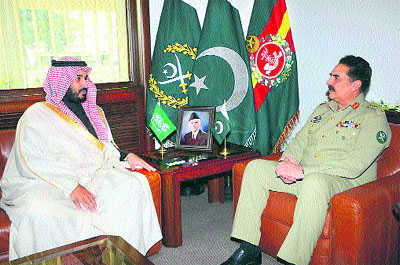
Pakistan’s multi-front wars
The Pakistan army regards itself as being above the law, disregarding even court notices.

PAKISTAN is one of the few countries today, which puts its defence minister in a virtual “purdah”. All those who deal with Pakistan, have heard of, or seen the ubiquitous Gen Raheel Sharif. Does anybody, however, know the name of the person who holds the high office of the defence minister in Pakistan? The peripatetic General Sharif is in Washington on one day, in Kabul on the next. He is also frequently travelling with Nawaz Sharif to countries like Saudi Arabia and Iran. When VIPS, including Afghan President Ashraf Ghani, or US Vice- President Joe Biden visit Pakistan, they visit the GHQ, to pay respects to the army chief. But defence minister Khwaja Asif, a Muslim League stalwart, is rarely seen or heard. Pakistan’s defence ministry hardly has the gumption or authority to turn down anything that the army chief based in the GHQ in Rawalpindi says or does. General Sharif has never been seen accompanying, meeting or talking to the hapless Khwaja Asif. He is only seen sitting opposite, or besides the Prime Minister, behaving like a co-equal of the Prime Minister. Even federal ministers and the Prime Minister’s brother and Chief Minister of Punjab, Shahbaz Sharif, have to seek permission to meet the regal General Sharif in his hallowed GHQ. The army regards itself as being above the law, disregarding notices from the Supreme Court on its operations in Baluchistan and undermining the court’s efforts to bring Musharraf to book for violating Pakistan’s constitution.Given this exalted role of the GHQ, one was surprised to recently read a widely publicised statement made to a parliamentary committee by Pakistan’s defence secretary. Incidentally, given their contempt for “bloody civilians”, the Pakistan army routinely insists that the defence secretary should be a retired army officer.   Defence secretary Lt Gen Alam Khattak told the parliamentary committee on April 6 that India’s “infamous” R&AW had set up a “special cell” to sabotage the much-hyped “China-Pakistan Economic Corridor”, which the Pakistan army believes is the “magic wand” to solve all the country’s economic ills. General Khattak’s statement came the day after General Sharif said the same thing while blaming India for “destabilising” Pakistan. General Khattak added the usual “masala” to his statement by alleging that Indian consulates in Jalalabad, Kandahar and Mazar-e-Sharif in Afghanistan were working with that country’s National Directorate of Security (NDS), the Afghan counterpart of the ISI, by carrying out “subversive activities” in Baluchistan and the Pashtun tribal areas of Pakistan, bordering Afghanistan.Such allegations against India are not new. The recent addition has been the references to that “notorious” Indian “spy” Kulbhushan Jadhav, who was first said to have been arrested along the border with Afghanistan and was later claimed to have been arrested in Baluchistan. But here again, Pakistan finds itself in a bind. By denying India customary “consular access” to an arrested Indian national, statements made by Jadhav while under Pakistani custody will be seen to have been made under coercion. If Pakistan releases him, which seems unlikely for the present, Jadhav will sing a different tune and severely embarrass his captors with the many truths he will reveal. The Jadhav episode has also cast a shadow on Pakistan’s efforts to mend its strained relations with Iran. The bumptious General Sharif chose not to be present when Prime Minister Nawaz Sharif met visiting Iranian President Hassan Rouhani. With his customary swagger stick in his hand, he separately met President Rouhani the next day. The obedient army spokesman dutifully tweeted that his exalted boss had given “evidence” to the Iranian President about the evil Indians using Iranian soil to destabilise the Islamic Republic of Pakistan. An obviously irritated President Rouhani bristled with anger, when he was asked about this, noting that India, like Pakistan, was a friendly country. The Iranian embassy reiterated this a few days later.All this is occurring at a time when Pakistan’s relations with Afghanistan are going through a critical phase. With great difficulty and with significant help of Sirajuddin Haqqani, the head of the infamous Taliban linked Haqqani Network, the ISI has united a number of top Taliban leaders, including members of Mullah Omar’s family, with its handpicked protégé, Mullah Akhtar Mansour. The ISI calculation had been that with the Obama Administration beating a hasty retreat from Afghanistan, its Taliban protégés would take over, with China facilitating this process of transition. China obviously expects that a Pakistan-sponsored regime in Kabul would help it in eliminating the insurgency by its Muslim population in its neighbouring Xinjiang province. With the Taliban determined to seize control of more and more territory, one can expect heavy casualties in the ensuing months in Afghanistan. More so, as the China-US-Pakistan brokered peace talks, which are said to be “Afghan led” and “Afghan owned”, are going to be headed nowhere.Pakistan cannot remain unaffected by the conflict across the Durand Line. General Sharif’s operation Zarb-e-Azb in Pashtun tribal areas has resulted in nearly one million Pashtun tribesmen being uprooted from their homes, with bleak prospects of early return and rehabilitation. The Tehriq-e-Taliban, now operating from Afghan soil, has hit back, with attacks on institutions in Pakistan, linked to the Pakistani military. For the first time, the army is fighting its citizens in all four provinces of Pakistan. With Pashtuns comprising around one-fourth of the army, its generals will have to start looking at the reliability of its Pashtun soldiers. General Sharif has obviously learnt nothing from history. The only time Punjabi soldiers have prevailed over Pashtuns was under the command of a Sikh General, Hari Singh Nalwa, during the reign of Maharaja Ranjit Singh. Sadly for Pakistan, General Sharif does not have the attributes of military leadership of 

Hari Singh Nalwa.

It is clear that the present dispensation in Pakistan has neither the imagination, nor foresight, to escape the inevitable consequences of its blunders in Afghanistan. Moreover, after the revelations of Nawaz Sharif’s family’s offshore accounts in Panama, Pakistan’s Prime Minister himself faces an uncertain future and tempestuous times ahead. While continuing a process of engagement with Pakistan, we should not have exaggerated expectations of any significant “breakthrough”. General Sharif should be left to stew in his own juice, along Pakistan’s western frontiers.



India rebuts China on NSG issue

Tribune News Service

New Delhi, May 20India today gave a firm rebuttal to China on linking signing of the Non-Proliferation Treaty (NPT) to membership of the elite Nuclear Suppliers Group (NSG) and took exception to its increased investment in Pakistan-occupied Kashmir.Countering the Chinese argument, India cited the example of France, which was admitted to the NSG without first having signed the NPT. “I think there is some confusion here. Even the NPT allows civil nuclear cooperation with non-NPT countries. If there is a connection, it is between the NSG and IAEA safeguards and with export controls,” Ministry of External Affairs spokesperson Vikas Swarup said today in a media interaction.“NSG members have to respect safeguards and export controls, nuclear supplies have to be in accordance with the NSG guidelines. The NSG is an ad-hoc export control regime and France, which was not an NPT member for some time, was a member of the NSG since it respected NSG’s objectives,” Swarup added.China has objected to India’s NSG membership on the grounds that isn’t the NPT signatory. Chinese foreign ministry spokesman Lu Kang had said all the multilateral non-proliferation export control regime, including the NSG have regarded NPT as an important standard for the expansion of the NSG.Chinese stand has irked India and it is one of the topics that will also be raised by President Pranab Mukherjee who is travelling to China next week.India also slammed China for its increased investments in the Pakistan-occupied Kashmir. “Chinese activities in PoK have been taken up with the Chinese side, including at the highest level. Pakistan-occupied Jammu and Kashmir is an integral part of India… we have asked them to cease all activities (there),” Swarup said.



केंद्र ने घाटी में भेजे अर्द्धसैनिक बलों के 3600 जवान

Posted On April – 16 – 2016

नयी दिल्ली/जम्मू, 16 अप्रैल (हप्र/एजेंसियां)

 श्रीनगर में शनिवार को जारी हड़ताल के चलते वीरान सड़कों पर गश्त करता सुरक्षाकर्मी। -प्रेट्र

पिछले चार दिन से जम्मू-कश्मीर में जारी हिंसा से चिंतित केंद्र ने घाटी में अर्द्धसैनिक बलों के 3,600 अतिरिक्त कर्मी भेजे हैं। अधिक बल भेजने का फैसला यहां एक उच्चस्तरीय बैठक में किया गया। मंगलवार से जारी हिंसक प्रदर्शनों के दौरान सुरक्षाबलों की कार्रवाई में पांच लोगों के मारे जाने के बाद कश्मीर के हिस्सों में चौथे दिन भी कर्फ्यू जैसे प्रतिबंध बरकरार हैं। पूरी घाटी में मोबाइल इंटरनेट सेवाएं रोक दी गयी हैं। कुपवाड़ा और हंदवाड़ा सहित उत्तरी कश्मीर के कुछ इलाकों में कड़ी पाबंदी लगाई गई है।
गृह मंत्रालय के एक प्रवक्ता ने कहा कि केंद्र सरकार जम्मू कश्मीर में लोगों की जान जाने पर चिंतित है। वित्त सचिव रतन पी वाटल, जिनके पास केंद्रीय गृह सचिव का अतिरिक्त प्रभार भी है, ने बैठक की अध्यक्षता की। बैठक में कश्मीर घाटी में सुरक्षा ग्रिड को मजबूत करने के लिए अतिरिक्त केंद्रीय सशस्त्र पुलिस बल भेजने का फैसला किया गया।
‘वीडियो पर बयान के लिए था लड़की पर दबाव’
श्रीनगर : हंडवाडा में कथित छेड़छाड़ को लेकर कश्मीर में हिंसा भड़कने के बीच लड़की के परिवार ने आज कहा कि घटना से इनकार करने वाले वीडियो बयान के लिए लड़की पर दबाव बनाया गया था। इसके साथ ही परिवार ने घटना की स्वतंत्र जांच के लिए अदालत से संपर्क किया है।
अर्थव्यवस्था को अस्थिर करने की साजिश : पीडीपी
श्रीनगर : सत्तारूढ़ पीडीपी ने आज कहा कि ऐसा लगता है कि निहित स्वार्थी तत्वों द्वारा जानबूझकर हिंसा को बढ़ावा देकर स्थानीय अर्थव्यवस्था को अस्थिर करने का कुटिल प्रयास किया जा रहा है। पीडीपी प्रवक्ता वहीद पारा ने कहा कि ऐसे तत्वों को कामयाब होने से रोकने के लिये एकजुट होना होगा।


Pak court says try Lakhvi for abetting 26/11

Lahore, May 20

Lashkar-e-Toiba operations commander Zaki-ur-Rehman Lakhvi and six others accused in the 2008 Mumbai attack case will be individually charged with abetment to murder of 166 people who died in the carnage, a Pakistan anti-terrorism court ruled today.A senior official said the court did not allow cross-examination of the suspects. The prosecution had filed an application in the anti-terrorism court, Islamabad, two months ago, requesting it to make an amendment to the charges against the suspects of abetment to murder of each individual in the carnage. The trial court had in March reserved the verdict. As many as 166 people, including six Americans, were killed and more than 300 injured in the attack in November 2008 by 10 Pakistan terrorists. — PTI


LCA Tejas, BrahMos, LCH, Akash missile & AEW&C :: 5 defence products India is eyeing for exports

Defence Minister Manohar Parrikar has set himself a target – he wants India’s defence exports to reach $2 billion in the next two years, from the current level of $300 million. Indigenously developed defence products – be it India’s missiles, aircraft or helicopter – have generated interest in the global market, especially from African and Latin American countries. From HAL’s Light Combat Helicopter and LCA Tejas to BrahMos missile, we take a look at five defence products that India can look at exporting:


LCH ::

According to a PTI report, India is in talks with “certain” countries in Africa for possible export of the indigenous Light Combat Helicopter (LCH). LCH is a 5.5-tonne class combat helicopter designed and developed by HAL. Its features include sleek and narrow fuselage, tri-cycle crash worthy landing gear, crash worthy and self-sealing fuel tanks, armour protection, nuclear and low visibility features which makes the LCH lethal, agile and survivable.

Designed for anti-tank and anti-infantry roles with a maximum speed of 275 kilometers per hour, the LCH is also capable of high-altitude warfare since its operational ceiling will be 16,000 to 18,000 feet. “With great value for money, the helicopter is an attractive buy for many countries. The countries interested in the LCH in the current form do not need high features like air to air missiles. For them turret gun along with some other features work,” a senior defence official has said.

BRAHMOS ::

The supersonic cruise missile system BrahMos, which is a joint venture between India and Russia, has caught the attention of countries like Argentina, Venezuela, Chile and Brazil in Latin America and also of South Africa, which is part of the BRICS grouping, because it has been developed at a low cost of $300 million. (Image: DRDO)

BrahMos is a supersonic cruise missile developed by DRDO and Russian NPO Mashinostroyeniya. The missile can be launched from surface, submarine or air. Latin American countries as well as South East Asian countries have expressed their interest for the missile particularly for their naval and coastal defence.

The BrahMos missile has a range of 290 km, has a maximum velocity of 2.8 Mach and cruises at altitudes varying from 10 metres to 15 km, claims BrahMos. It can be launched in either inclined or vertical configuration based on the type of the ship.

Light Combat Aircraft (LCA) Tejas ::

India’s Light Combat Aircraft (LCA) Tejas, which was several years in the making, has now caught the attention of foreign buyers with Sri Lanka and Egypt evincing interest in the indigenously built fighter jet. Sri Lanka had recently rejected Pakistan’s JF-17 aircraft built with Chinese help, while Egypt had last year signed a contract for 24 French-made Rafale fighter jets. The two countries are interested in the current version of the Tejas and not the upgraded one which will be rolled out later.

Tejas is perhaps the world’s smallest lightweight, multi-role single engine tactical fighter aircraft. Tejas is equipped with a quadruplex digital fly-by-wire flight control system to ease handling by the pilot. It has intentionally been made longitudinally unstable to enhance manoeuvrability.

Two things that go in favour of the Tejas are its lower cost and flying ability. Sources have told PTI that enquiries by foreign countries came during the Bahrain air show in January, the first time that Tejas flew outside the country. The decision to send Tejas abroad was of Defence Minister Manohar Parrikar, who has put his weight behind the aircraft.

AKASH Missile System ::

Parrikar recently said that India is willing to export the Akash missile system. Akash, a surface-to-air missile, has a range of 25 km. Akash mobile Air Defence Weapon System has been designed, developed and led to production by DRDO for defending and protecting the important assets of the country from penetrating aerial attacks.

AEW&C ::

AEW&C is one of the flagship programmes of DRDO consisting of state-of-theart Airborne Early Warning and Control system that can detect, identify and classify threats present in the surveillance area and act as a command and control centre to support variety of air operations. “AEW&C India” with Mission Systems, with modular design & integrated on an Embraer 145 aircraft, are very cost effective, claims DRDO. With an eye on export, the DRDO had exhibited the plane during air shows in the past.