Sanjha Morcha

What’s New

Click the heading to open detailed news

Current Events :

web counter

Print Media Reproduced Defence Related News

Rohtak village bids tearful adieu to its martyr son

CHIEF MINISTER KHATTAR HIKES COMPENSATION FROM `20 LAKH TO `50 LAKH AFTER PROTESTS BY SOLDIERS’ RELATIVES

ROHTAK: The mortal remains of BSF head constable Rai Singh Indora, 39, were cremated with full sate honour at his native village, Kheri Sampla, in Rohtak on Tuesday.

HTSecurity personnel placing the Tricolour on the body of head constable Rai Singh who died in cross-border shelling in Jammu region, and (below) guard of honour being given to the martyr, in Rohtak on Tuesday.

Indora was killed in mortar shelling by Pakistani Rangers in Rajouri sector of Jammu on Sunday night, in which seven other troopers were injured. He is survived by his wife and three school-going children. He had joined the BSF in 1995 in 163rd Battalion.

The Haryana government announced `20 lakh ex-gratia and government job for the next of kin of Indora, besides naming a park at his village in his name.

The announcement was made by Haryana’s transport minister Krishan Lal Panwar, who attended the cremation, along with cooperative minister Manish Grover .

However, villagers and kin of the soldier questioned the state government’s policy of announcing different compensation for martyrs. Indora was the third jawan from Haryana to die in ceasefire violations by Pakistan after India carried out surgical strikes across the Line of Control. While the families of previously martyred BSF head constable Sushil Kumar and Army jawan Mandeep Singh Rawat were promised `50 lakh as compensation, Indora’s got `20 lakh. Angered by the government’s move, angry villagers blocked National Highway 10 at Sampla in Rohtak for some time.

Indora’s brother Ramesh Kumar, who retired from the BSF, said: “When the BJP minister (Panwar) visited our home, he said he will make an announcement at the cremation. Here, he didn’t even speak to us and left after announcing whatever he wished. Rai Singh has three little sons who can’t work now. How will the family survive?”

When Panwar was ques tioned by the media on the compensation , he said increasing the amount was under state government’s consideration. Earlier, former CM Bhupinder Singh Hooda, who attended the cremation, said the government must announce `50 lakh compensation. To pacify the protesting villagers, the local administration came back to hold talks with the villagers and the family. In a late evening development, chief minister Manohar Lal Khattar hiked the compensation to the soldier’s family to `50 lakh as desired by them.


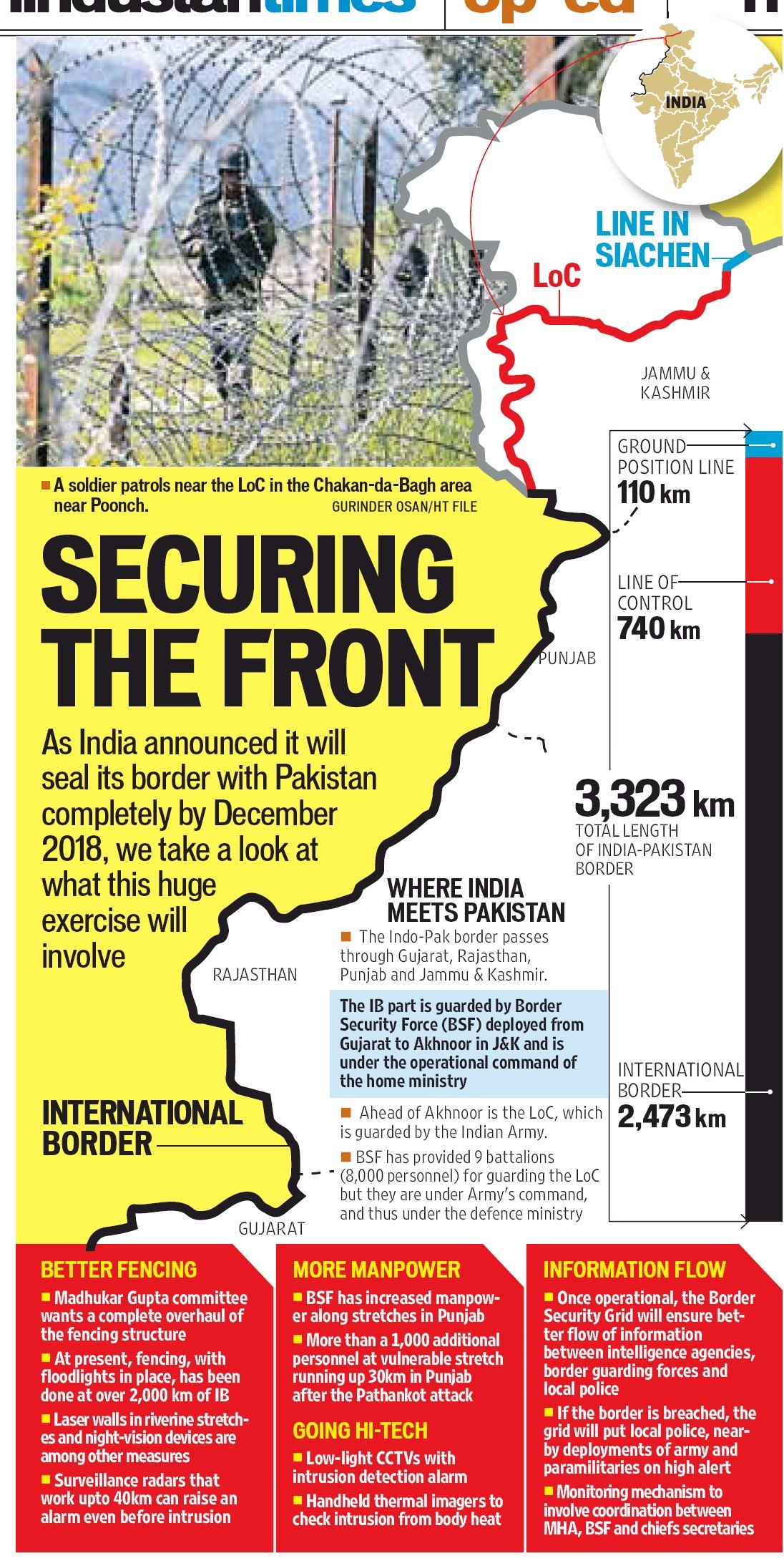
SECURING THE FRONT

As India announced it will seal its border with Pakistan completely by December 2018, we take a look at what this huge exercise will involve

getimage (4)

BETTER FENCING

Madhukar Gupta committee wants a complete overhaul of the fencing structure

At present, fencing, with floodlights in place, has been done at over 2,000 km of IB

Laser walls in riverine stretches and night-vision devices are among other measures

Surveillance radars that work upto 40km can raise an alarm even before intrusion

MORE MANPOWER

BSF has increased manpower along stretches in Punjab

More than a 1,000 additional personnel at vulnerable stretch running up 30km in Punjab after the Pathankot attack

GOING HI-TECH

Low-light CCTVs with intrusion detection alarm

Handheld thermal imagers to check intrusion from body heat

INFORMATION FLOW

Once operational, the Border Security Grid will ensure better flow of information between intelligence agencies, border guarding forces and local police

If the border is breached, the grid will put local police, nearby deployments of army and paramilitaries on high alert

Monitoring mechanism to involve coordination between MHA, BSF and chiefs secretaries


Demonetisation ke side effects

Demonetisation ke side effects
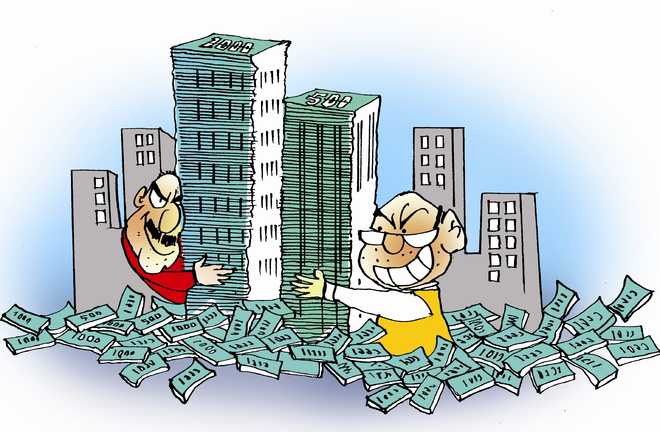
Illustration: Sandeep Joshi

Geetu Vaid

Real estate markets all over the country have been in a tizzy for the past ten days ever since the announcement of demonetisation of Rs 1000 and Rs 500 currency notes. This move  blocked the  flow of “black” channels of funding while clearing the way for a fair, transparent and customer friendly era. Here’s a recount of  issues that were hotly debated all through the week:What now?

For a common man and prospective homebuyer the most important question was that with  virtually no cash (read unaccounted for money) in the market what will be the effect on the ongoing projects as well as on transactions being carried out by builders?While elaborating on this Narasimha Jayakumar, Chief Business Officer, 99acres says, “The sale of residential properties as well as land is expected to be severely hit as majority of the investors won’t be able to park unaccounted cash in this asset class anymore and those with white money will adopt a wait-and-watch approach expecting the prices to drop significantly”. “As black money is completely being sucked off the system, developers need to pay in white for land purchase, construction labour and materials. This will increase the cost of construction for builders and hence they would need to pass this back to the new buyers. A few developers have already started increasing prices and we expect more to follow”, adds Ankur Dhawan, Chief Business Officer- Resale Business, PropTiger.com.New ways to deal

with funding needs

Experts have been hinting that developers across the board will have to tap new ways to fund their projects now in the absence of easy access to cash component received from buyers. Several developers may opt for short-term loans from buyers or investors at market price by committing to deliver the project and at an interest amount as per the sale agreement.“Developers might mortgage their unsold stock with institutional investors to raise funds. This will open gates for FDI, private equity and HFC players to enter the market”, says Narasimha Jayakumar. Agreeing that PE will become a major source of funding for developers Ankur Dhawan adds, “Recently we have seen new structures being evolved such as platform deals, apartments funds in addition to convertible debentures”. Platform deals are the ones in which the builder and PE firm forms a platform to invest in multiple projects of builder e.g. Godrej and APG platform deal. This helps PE firm in avoiding multiple due diligence. Apartment funds on the other hand refer to deals wherein PE firms buy an X number of apartments in a project of a builder and provide funds for the same e.g. Piramal Apartment fund. The PE firm in this case signs strict contract which ensures money is used construction of said project only. When the project is ready, PE firm can sell on its own or through builders its share of apartments.Circle rate rationalisation

The cash component was added to deals to fill in the gap between the Circle Rate and the market price in a particular region. Now this gap is going to disappear and it is on this premise that most of the industry insiders are predicting a fall in property prices in the near future. The circle rate will be on a higher side now, feels Suresh Aggrawal, President, Haryana Property Dealers Welfare Association. While in cities like Panchkula there has been demand for reducing the circle rates but now it will not make any difference said Aggrawal. But there is a need to rationalise it, he added. “In Panchkula the gap between circle rate and market price is less in sectors like 25,26, and 27, but it is much more in sectors like 6, 7, 8, 15 etc. So there is a need to rationalise the circle rates and these should be in accordance with the area”.   According to Jayakumar the gap between circle rates and market rates will reduce as the property prices are expected to come down by at least 10 per cent. “This will primarily be driven by the financial stress in the market resulting from meek sales volume in primary market and distress sales in the secondary market”. “As cleaner transaction data will now be available with government authorities, it can be used to arrive at circle rates closer to actual property prices”, adds Ankur Dhawan.Lower loan interest rates

The sector is also looking forward to the RBI cutting down home loan interest rates sometime soon. According to Kotak Institutional Equities, the RBI is all set to cut rates in December.“We retain our view of 25 bps rate cut in December but do not rule out frontloaded 50 bps cut to account for the expected demand hit due to demonetisation,” Kotak Institutional Equities said in a research note. Niranjan Hiranandani, CMD- Hiranandani Communities and Founder-President, NAREDCO Maharashtra, says, ““I expect a 25-basis-point rate cut by the RBI in Q1 of calendar year 2017,” he said.

Tax surveys

  • All this was despite the authorities remaining vigilant about such underhand transactions. In the NCR income tax officilas surveyed some realty players to check allegations in this regard. The department conducted the exercise on at least four such entities in the Delhi-NCR region and visited over half-a-dozen premises. The tax sleuths made an inventory of cash and sale documents at these locations and checked sale documents. Officials added the department also scanned records of some previous sales made and asked the officials of these firms to produce the records at a later stage. Builders, however, played down this by maintaining that these were routine checks. Real estate firm Amrapali Group called the operation a routine exercise. “A team of tax officials has visited our office premises and they are inspecting the company books and accounts. It is a routine exercise done by them,” Amrapali Executive Director Shivpriya was quoted as saying. Another group and real estate brokerage firm called it a ‘normal’ operation.
  • “They (tax officials) came to check if we are accepting cash or not. We are doing legal business. We deal in primary market where there is no cash,” Investors Clinic Infratech Private Limited Founder and CEO Honey Katiyal said, according to a PTI report.
  • Adjusting “black”
  • The past ten days saw real estate becoming the most obvious choice of those wanting to “adjust” their unaccounted for cash. What started off as a trickle last week transformed into a strong current this week as those with unaccounted for cash as well as the developers with unsold inventory fast-tracked shady deals. With 60:40 and 50:50 offers getting redefined in the market the developers as well as buyers had a hectic week. With Rs 10 lakh in old cash fetching value between Rs 5 to Rs 6 lakh for buying properties in different locations in cities like Zirakpur, Ludhiana, Karnal, Panipat, Faridabad, Noida, Lucknow, Allahabad, Bhopal, Pune, Nasik etc, the trend of parking black money in realty sector remained unabated all over the country

Stricter law against benami deals

A lot is being said about the government targetting benami properties as the next stage of the crackdown against illegal wealth. With the Benami Transactions (Prohibition) Amendment Act, 2016 coming into force from November 1, 2016 the authorities are on strong footing to root out this illegal practice from the country.   The notification in this regard issued by the Income Tax department stated that after coming into effect  the BTP Amendment Act, the existing Benami Transactions (Prohibition) Act, 1988, shall be renamed as Prohibition of Benami Property Transactions Act, 1988 (PBPT Act). The Act defines benami transactions and also has provison for imprisonment up to seven years and fine for violation of the Act.  The Bill, with just nine sections, had been passed by Parliament in 1988 but could never be enforced for lack of provisions in the Act for its implementation. The  government had brought an amendment Bill (with 71 sections) instead of a new Bill to block the escape route for all those who entered into benami transactions since 1988.The benami (without a name) property refers to property purchased by a person in the name of some other person. It is an open secret that the benami route is adopted by corrupt political leaders, government officials who often use the names of their trusted peons, drivers, household help to purchase agricultural land and urban properties.   The person on whose name the property is purchased is called the benamidar. The person who finances the deal is the real owner. In most such deals the property papers are kept by the person paying the money and he also keeps a power of attorney to  sell the property when the price appreciates.  While    properties in the name of genuine religious trusts will be kept out of the purview of the legislation, Section 58 under the law clearly states that in case of charitable or religious organisation properties, the government has the power to grant exemption. The PBPT Act prohibits recovery of the property held benami from benamidar by the real owner. Properties held benami are liable for confiscation by the government without payment of compensation. The new law also provides for an appellate mechanism in the form of an adjudicating authority and appellate tribunal. For the purpose, the adjudicating authority referred to in Section 6(1) and appellate tribunal referred to in Section 25 of the Prevention of Money Laundering Act, 2002 (PMLA), have been assigned the task under PBPT Act as well. Under the Act, in each of the principal  chief commissioner income tax regions, a joint/additional commissioner of income-tax, an assistant / deputy commissioner of income-tax and a tax recovery official have been notified to perform the functions and exercise the powers of the approving authority, initiating official and administrator, respectively.     — GV

GURGAON DEVELOPMENT AUTHORITY

Hope amidst despair

Hope amidst despair

Vinod Behl

After years of unplanned growth and deficient infrastructure, badly hitting the quality of life in Gurugram, finally there is a hope for a planned, integrated, sustained and speedy development  and growth of the millennium city, as the much awaited Gurgaon Development Authority (GDA) starts taking its shape, following the Draft GDA Bill put up by the Haryana Government.The government has appointed senior IAS officer, V. Umashankar, as the OSD to GDA, to carry forward the process of formation of development authority. Umashankar has initiated an elaborate process of seeking feedback from all sections of society for the purpose of incorporating some of the suggestions in the final legislation draft that will reportedly come out by December 10, setting the stage for the enactment of the GDA Act, leading to its formation in the new year.In a run up to the formation of GDA, it is important to mention that the flawed model of real estate development preceding infra development, has been the bane of Gurugram in terms of deficient infra as well as for denying the city the tag of ‘Smart City’. Even the residents of the newly inhabited sectors (Sector 58 onward), have been facing hardships due to infra bottlenecks. Navin Raheja, CMD, Raheja Developers, says, “The development of roads and infra should precede issuance of licenses. The first task GDA should take up, is to provide infra like drinking water, electricity, roads, social amenities to thousands of home owners, occupying completed projects without electricity and water”. V. Umashankar assures saying that the proposed authority will focus on  infra development, mobility, urban environment and sustainable development, with first priority to prepare a master plan with a view to improve the standard of living in the city.

Hope for cash-starved HUDA

Another major reason for development works taking a hit is the cash-strapped HUDA. A significant part of thousands of crores of EDC collected from developers in Gurugram, remains unspent amidst charges of diversion of funds.  Raheja says that the EDC collected under the respective master plan, should be spent on the same master plan and should not be diverted. V. Umashankar has gone on record assuring that EDC money for Gurugram will be spent there only. Even the draft Bill says that GDA will get monies received or due to be received by state government and unspent on account of EDC, along with share of money collected by MCG, prior to commencement of GDP Act. There are other provisions in the draft bill to provide financial strength/stability to GDA. 

Road to better coordination

Considering that Gurugram’s development has been bogged down by multiplicity of authorities, the GDA will ensure complete coordination with all other agencies. As V. Umashankar puts it, “As the infra planning and implementation body, GDA will see to it that other government agencies, work in tandem, in accordance with the plan, ensuring integrated development”. Adds MC Gupta, “GDA is a great necessity, considering population explosion and unprecedented expansion of Gurugram on both sides of NH8, amidst lack of coordination”.

The mechanics of development

GMC created constitutionally, will remain in force, while in case of HUDA and HSIIDC, within three months of commencement of GDA Act, a scheme will be outlined to transfer HUDA/HSIIDC property, interest, interest in property, right and liabilities to GDA. 

Mind the gaps

But, as absolute power of the development authority, has been curtailed by keeping licensing and CLU out  of its purview, doubts are being raised about its efficacy. S.P Gupta, DG, HIPA says that HIPA panel had clearly said that GDA will enjoy the powers of licensing and CLU which currently vests with the Department of Town & Country Planning, Haryana. EveryDevelopment authority enjoys the licensing and CLU power.    Raheja offers a solution, “As licensing process involves   high level administrative and policy decision and coordination at government level, the office of Town & Country Planning should operate out of Gurugram, especially as 80 per cent of licenses are from Gurugram”.There is another significant gap between the HIPA draft and the one put up by the government. While the former made a clear case for appointing an officer of the rank of additional chief secretary as CEO to make GDA a powerful body for effective coordination, the latter settled for a junior officer of the rank of Principal Secretary, to head the development authority. Says M.C Gupta, “GDA has to be an effective agency whose writ must run. I believe GDA should be headed by a very senior level officer as he has to coordinate with senior officers and will have to negotiate with multilateral agencies at international level. We wanted it to be like Noida Development Authority, with all the powers vesting with it and state government and its departments delegating their powers and responsibilities to GDA. I would say that whatever we put in the draft, we stand by it. Ultimately, it is for the government to decide what is in the best interest of GDA. Fortunately, we have a very capable officer, V. Umashankar as OSD, GDA, overseeing the process of formation of GDA, especially carrying out comprehensive consultation process with all the stakeholders”. Adds P. K Jain, Founder President, Gurugram Chamber of Commerce & Industry, “Whatever form or structure of GDA is finally there, it should be a single agency, collecting taxes , taking care of water supply, sewerage, solid waste disposal etc, besides looking after maintenance. The uniform and harmonious building construction should be ensured and GDA should have financial powers and financial stability”. Pankaj Kumra, Retd Chief Engineer, HUDA endorses GCCI view that GDA should have a powerful financial structure besides having strong land acquisition, town planning and architectural wings. Meanwhile, V Umashankar is treading cautiously towards flawless formation of GDA, with right structure, accountability and credibility, by adopting transparent and consultative approach. As GDA heads towards becoming a reality, general public, industry, businesses and other stake holders are pinning great hopes about the transformation of Gurugram. As Raheja sums up, “The real estate business has been suffering due to deficient infra. But GDA will ensure ease of doing business, ushering in transparency and making real estate in Gurugram as an attractive asset class and in turn pushing up its demand”.


Structure of GDA

Chairman — Chief Minister

Ex-officio members— Town & Country Planning Minister, ULBs Minister, MPs, MLAs, Mayor GMC, CEO, GDA, Chief Administrator, HUDA, Commissioner, MCG, Deputy Commissioner. Ex-officio members (nominated by government) — 6Ex-officio members (experts from urban infra, governance, public administration, urban forestry, engineering, town planning)— 6 


RecommendationsThe panel recommended absolute powers for GDA as an autonomous body with entire district and even KMP Expressway and proposed Global Corridor under its jurisdiction. It was recommended that a serving IAS officer of the rank of additional chief secretary should head the authority that will enjoy the powers of licensing and change of land use, which currently vests with the Department of  Town & Country Planning, in addition to powers of planning and development of infrastructure. The panel also noted that urban areas and controlled areas of Gurugram district will cease to vest in HUDA and it will cease to exercise jurisdiction in that area. Further it was mentioned that all land, buildings and immovable properties in Gurugram district and vested in HUDA for carrying out development work, shall pass on to GDA. Similarly, assets and liability of Haryana State Industrial & Infrastructure Corporation (HSIIDC) will be transferred to GDA.


What the draft Bill saysThe Draft Bill provides for integrated planning and coordinated development of urban infra  by coordinating with GMC, boards, companies or other agencies involved in the provision of infrastructure, urban amenities and management of urban environment in notified area. Within a period of 9 months from the GDA Act coming into force, infrastructure development plan will be prepared including (but not limited to) roads, water supply, sewerage disposal, storm water drainage, solid waste management, public transportation, urban forestry and other urban amenities required for reasonable standard of living. To facilitate the functioning of GDA, coordination committees (consisting of GDA/government officers) and standing committees ( including citizens) will be formed. There will be a Citizen Advisory Council  as well. 


Tibet gives upper hand to China over India:

Tibet gives upper hand to China over India: Chinese media
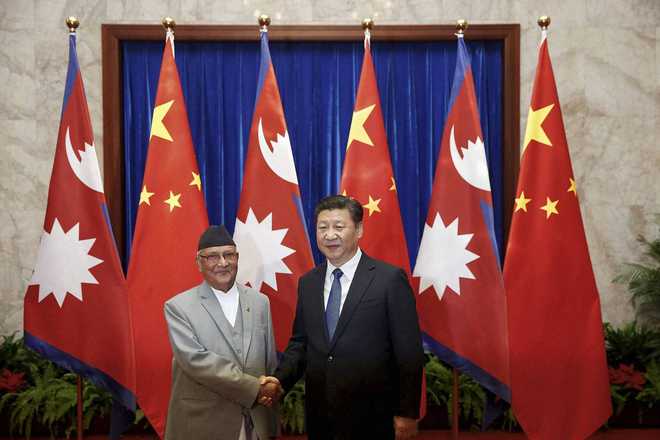
Chinese President Xi Jinping (right) shakes hands with Nepalese Prime Minister Khadga Prasad Oli inside the Great Hall of the People in Beijing, China. — AP/PTI photo

Beijing, October 13

Superior infrastructure in Tibet will provide China an “upper hand” over India by being a “gateway” to Nepal and Bangladesh for greater trade and investments, Chinese media said on Thursday.

“The competition of China and India over building railways in Nepal will influence the future development of Nepal and Bangladesh. It will also bring more challenges to Tibet,” an article in the state-run Global Times here said.

“In the next decade, if India continues on its high growth track and speeds up the development of infrastructure and manufacturing, this will impose multi-dimensional pressure on China, of which Tibet will bear the brunt,” it said.

(Follow The Tribune on Facebook; and Twitter @thetribunechd)

Fortunately, as the central government has attached great importance and offered considerable support to the region, “Tibet has gained the upper hand over India in terms of infrastructure development and has established sound economic cooperation relations with neighbouring provinces and cities”, it said.

How to further open up Tibet exploit its advantages over India to deal with challenges and exercise an influence over the region while maintaining Tibet’s stability needs policy support, it said.

“It also requires coordination among all western provinces, cities and autonomous regions,” it said.

India and Nepal are linked by comparatively good roads.

For years, India has occupied 60 to 70 per cent of Nepal’s total trade while China has only 10 per cent.

During his visit to India, Nepal’s new Prime Minister Prachanda revealed that the two countries would discuss the possibility of India helping build a railway connecting Mechi and Mahakali, it said.

“If this comes true, a network not only connecting India, but also Tibet and Bangladesh will be formed,” it said.

The article said Tibet is emerging as an important part of the China-initiated “One Belt and One Road” (Silk Road) initiative.

“Geographically, as a hub of critical value in connecting China and South Asia, the autonomous region is playing an increasingly important role in regional networks with the acceleration of India’s development and the boosting of Sino-Indian economic relations,” it said.

“Over 200 km northeast of Bhairawa, a Nepali city close to the border with India, is Nepal’s capital Kathmandu. 100 kilometers northward from Kathmandu is Kodari, a border crossing from Nepal into China. The three cities make up one of the most important passageways connecting China and the Indian Subcontinent,” it said.

The other side of the border from Kodari is Zhangmu, a Chinese customs town and port of entry in Tibet.

The town accounts for around 82 per cent of bilateral trade between China and Nepal and 90 per cent of that between Tibet and Nepal, it said.  — PTI
Read more at http://www.tribuneindia.com/news/nation/tibet-gives-upper-hand-to-china-over-india-chinese-media/309001.html#yMJKDyCbKWehvmjw.99

clip


clip


Yet another soldier dies on J&K border

Tribune News Service

Srinagar, November 12

A soldier was killed and another injured in ceasefire violation by Pakistan troops in north Kashmir’s Kupwara district  during the intervening night of Friday and Saturday. The latest ceasefire breach took place in Keran sector with Pakistani soldiers opening fire at three Indian posts and a civilian area.“Two soldiers were injured. One of them with a splinter injury succumbed to his injuries,” sources said. The slain soldier was identified as Sepoy Harsit Bhaadouria of Thikariya Banswara village in Rajasthan and the injured as Mankamla. “Two houses were partially damaged in the Pakistani shelling in Keran,” a police official told the media.    Defence sources said the Pakistani Army used 120 mm and 82 mm mortars, automatic weapons and small arms to target Indian posts. There have been more than 100 incidents of ceasefire violation by Pakistan along the LoC after the surgical strikes by the Indian Army across the LoC on September 29. At least 12 jawans of the Army and the BSF have been killed during these ceasefire violations.On November 9, a soldier was killed in sniper fire in the Machil sector of Kupwara district. In the same sector on October 28, a soldier was killed and his body mutilated. A militant too was shot. A BSF jawan was killed on the same night.

52 dead in Pak shrine blast, IS claims attack

Karachi, November 12

At least 52 persons, including women and children, were killed and more than 100 others injured today in a suicide bombing at a popular Sufi shrine in Pakistan’s restive Balochistan province, an attack claimed by the Islamic State terror group.The blast occurred in the remote Hub region in Khuzdar district of the province while devotees were participating in a Sufi dance called “dhamaal” at Dargah Shah Noorani.At least 52 persons were killed and more than 100 have been injured in the blast, rescue officials said.While confirming the death toll, Balochistan Home Minister Sarfaraz Bugti said ambulances and rescue teams had rushed to site.The target of the attack was the area where devotees perform ‘dhamaal’. The blast site is situated some 250 km away from Karachi.The blast happened when about 500 to 600 devotees were present at shrine.Islamic State group claimed responsibility for the attack via Amaq news agency. The Express Tribune quoted police sources as saying that the blast was a suicide attack carried out by a 14-year-old boy.Rescue teams reached the blast site and started shifting the deceased and injured to the hospital. However, rescuers were facing difficulty in accessing the site as the shrine is located in a remote area. The death toll is feared to rise and women and children were among those killed in the blast.“The shrine is located some 250 km from Karachi in the remote mountains of Uthal and our vehicles have been dispatched there to carry out rescue operations and shift the injured to the hospitals,” said Hakeen Lassi, an official of the Edhi Trust Foundation.Local tehsildar Javed Iqbal said security arrangements at the shrine were not proper.“It is sad that although thousands of devotees from Karachi and other parts of the country visit the shrine everyday but there are no medical emergency facilities or ambulances at the site,” he said. — PTI

Killer teenager

  • The attack was carried out by a 14-year-old boy while devotees were participating in a Sufi dance called ‘dhamaal’
  • This is the third major incident of a bomb going off in Balochistan province since August
  • In October, 64 cadets were killed when three terrorists raided a police training centre in Quetta
  • In August, nearly 70 persons died in a suicide bomb attack at a civil hospital in Quetta

Special Forces wait for new weapons, 15 months after green signal

itten by Sushant Singh | New Delhi | Published:October 11, 2016 4:41 am

surgical strike, Special Forces, Line of Control, LOC weapons, terrorist launch pads, Manohar Parrikar, news, latest news, India news, national newsArmy officials dealing with the SF said that even this proposal is a short-term measure to overcome urgent gaps and does not ameliorate the poor equipment state of the forces. (representative image; source: AP)
The Special Forces (SF) operatives, who took part in the surgical strikes across the Line of Control (LoC) to destroy seven terrorist launch pads 11 days ago, used weapons that should have been replaced with modern options following Defence Minister Manohar Parrikar’s instructions last June.

But the delay in implementing the procurement, estimated to be in the range of Rs 180 crore, meant that these para commandos had to make do with old-generation weapons during the strikes on September 29 — 15 months after Parrikar had ordered that the modernisation should proceed on a “fast-track basis”.

According to officials, the modernisation proposal was flagged by the Army during a presentation made to Parrikar following the cross-border operation in Myanmar by the 21 SF battalion last June, days after the attack in Manipur by suspected NSCN-K militants that killed 18 soldiers.

An Army officer told The Indian Express that the idea “was to procure certain weapons urgently for the SF if another Myanmar-like operation was to be carried out”.

For instance, if the modernisation plan had fructified, the para commandos of 4 SF and

9 SF battalions, who conducted the surgical strikes last month, would have used a more modern and lightweight rocket-launcher instead of the three-decade-old Carl Gustav 84-mm version.

The proposal for SF modernisation was prepared by the Military Operations directorate, after consultations with the Special Forces Training School, SF battalions and other stakeholders. It involves buying six types of weapons: 1,200 modern personal automatic rifles, 36 sniper rifles, 36 automatic GPMGs (General Purpose Machine Guns), 24 lightweight rocket-launchers, 24 shotguns and 500 pistols. All the weapons, to be equipped with day and night sights, would have to be imported.

“None of our SF battalions has a GPMG, which has been authorised for us. We are either using MMGs (Medium Machine Guns) like the infantry battalions or PIKA guns. The Tavor rifle that we use is 5.56mm, whereas we need a 7.62mm weapon for anti-terrorist operations. We also have a restriction on ammunition for training. There is a shortage of underwater diving equipment and free-fall parachutes,” said an official.

“For example, we need 12,000 free-fall parachutes but have only 400-odd whose shelf life is about to get over. The OFB (Ordnance Factory Board) has not been able to make them, and a dozen parachutes have been bought from the Army Commanders’ Special Powers Fund,” he said.

Army officials dealing with the SF said that even this proposal is a short-term measure to overcome urgent gaps and does not ameliorate the poor equipment state of the forces. Officials said that instead of identifying specific makes of these weapons, qualitative requirements had been finalised so that the identified weapons could be procured without going through the standard four-year procurement process.

According to officials, the defence ministry decided to process the proposal after the new Defence Procurement Procedure (DPP) was promulgated this June. But the process hasn’t been initiated by the Army so far.

Defence ministry sources said that they “wanted to use the SF equipment as a test-case for fast-track procurement under the new DPP. The new DPP has been notified in June, and this case will move on a fast-track basis. We are hoping to get a proposal from the Army soon.”

When contacted by The Indian Express, the Army headquarters and the Ministry of Defence declined to comment. Sources in the Army said that this case is one of the many modernisation plans and is in the final stages of preparation.


PM briefed on security

PM briefed on security
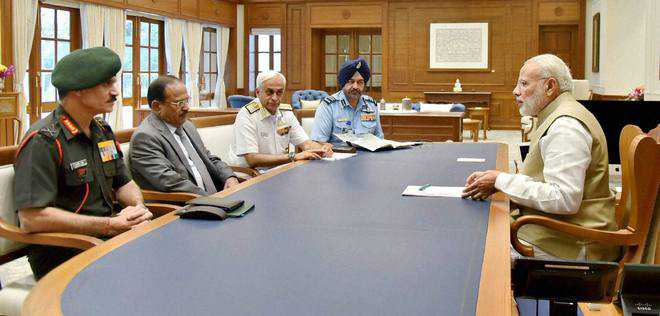
PM Narendra Modi in a meeting with NSA Ajit Doval, Army Chief General Dalbir Singh Suhag, Navy Chief Admiral Sunil Lanba and the Vice Chief of Air Staff, Air Marshal Birender Singh Dhanoa. PTI

Tribune News Service

New Delhi, November 8

Prime Minister Narendra Modi was today briefed on security issues by National Security Adviser Ajit Doval, Army Chief General Dalbir Singh Suhag, Chief of the Indian Navy Admiral Sunil Lanba and Vice Chief Air Marshal BS Dhanoa.The Service Chiefs briefed the PM on the situation along the western border. Since the surgical strikes on September 29, there have been more than 60 ceasefire violations by Pakistani troops along the Line of Control and the International Border. Some 15 persons have been killed and over 40 have been injured.Pakistan has been relentlessly trying to push heavily-armed terrorists into India. Indian forces have said they have responded to the firing with appropriate force.The government has ordered nearly 175 schools to shut down because of the attacks. Thousands of villages along the de-facto border have been evacuated in recent weeks with residents moved to government-run shelters.

clip


ਹਰਿਆਣੇ ਵਿੱਚ ਨਮੀ ਦੀ 21 ਫ਼ੀਸਦੀ ਤੱਕ ਛੋਟ ਅਤੇ ਪੰਜਾਬ ਵਿੱਚ ਸਿਰਫ਼ 17 ਫ਼ੀਸਦੀ ਤੱਕ ਛੋਟ ਦੇਣ ਦਾ ਦਾਅਵਾ

ਜਲੰਧਰ ਦੇ ਦੇਸ਼ ਭਗਤ ਯਾਦਗਾਰ ਹਾਲ ਵਿੱਚ ਸਾਬਕਾ ਫੌਜੀਆਂ ਨਾਲ ਮੀਟਿੰਗ ਦੌਰਾਨ ਪੰਜਾਬ ਪ੍ਰਦੇਸ਼ ਕਾਂਗਰਸ ਕਮੇਟੀ ਦੇ ਪ੍ਰਧਾਨ ਕੈਪਟਨ ਅਮਰਿੰਦਰ ਸਿੰਘ।-ਫੋਟੋ:ਮਲਕੀਅਤ ਸਿੰਘ

ਪਾਲ ਸਿੰਘ ਨੌਲੀ
ਜਲੰਧਰ, 8 ਅਕਤੂਬਰ
ਪੰਜਾਬ ਪ੍ਰਦੇਸ਼ ਕਾਂਗਰਸ ਕਮੇਟੀ ਦੇ ਪ੍ਰਧਾਨ ਕੈਪਟਨ ਅਮਰਿੰਦਰ ਸਿੰਘ ਨੇ ਝੋਨਾ ਖਰੀਦਣ ਦੇ ਮਾਮਲੇ ਵਿੱਚ ਕੇਂਦਰ ਵੱਲੋਂ ਪੰਜਾਬ ਨਾਲ ਪੱਖਪਾਤ ਕਰਨ ਦਾ ਦੋਸ਼ ਲਾਉਂਦਿਆਂ ਕਿਹਾ ਕਿ ਨਮੀ ਦੇ ਮਾਮਲੇ ਵਿੱਚ ਪੰਜਾਬ ਨਾਲੋਂ ਹਰਿਆਣਾ ਨੂੰ ਵੱਧ ਛੋਟ ਦਿੱਤੀ ਜਾ ਰਹੀ ਹੈ ਜਦਕਿ ਮੁੱਖ ਮੰਤਰੀ ਪ੍ਰਕਾਸ਼ ਸਿੰਘ ਬਾਦਲ ਇਸ ਸੰਵੇਦਨਸ਼ੀਲ ਮੁੱਦੇ ’ਤੇ ਚੁੱਪ ਧਾਰ ਕੇ ਬੈਠੇ ਹੋਏ ਹਨ। ਕੈਪਟਨ ਅੱਜ ਇੱਥੇ ਦੇਸ਼ ਭਗਤ ਯਾਦਗਾਰ ਹਾਲ ਵਿੱਚ ਐਕਸ-ਸਰਵਿਸਮੈਨ ਦੀ ਮੀਟਿੰਗ ਤੋਂ ਬਾਅਦ ਪੱਤਰਕਾਰਾਂ ਨਾਲ ਗੱਲਬਾਤ ਕਰ ਰਹੇ ਸਨ। ਉਨ੍ਹਾਂ ਕਿਹਾ ਕਿ ਕੇਂਦਰ ਦੀ ਮੋਦੀ ਸਰਕਾਰ ਪੰਜਾਬ ਨਾਲ ਹਰ ਥਾਂ ਵਿਤਕਰਾ ਕਰ ਰਹੀ ਹੈ ਤੇ ਝੋਨੇ ਦੀ ਖ਼ਰੀਦ ਵਿੱਚ ਐਫਸੀਆਈ ਨੇ ਹਰਿਆਣਾ ਨੂੰ ਤਾਂ 21 ਫ਼ੀਸਦ ਤੱਕ ਨਮੀ ਦੀ ਛੋਟ ਦਿੱਤੀ ਹੋਈ ਹੈ ਜਦਕਿ ਪੰਜਾਬ ਦੇ ਕਿਸਾਨਾਂ ਦਾ ਝੋਨਾ 17 ਫ਼ੀਸਦ ਨਮੀ ਵਾਲਾ ਖਰੀਦਿਆ ਜਾ ਰਿਹਾ ਹੈ। ਉਨ੍ਹਾਂ ਕਿਹਾ ਕਿ ਪੰਜਾਬ ਵਿੱਚ ਭਾਜਪਾ ਵੀ ਸੱਤਾ ਵਿੱਚ ਭਾਈਵਾਲ ਹੈ ਅਤੇ ਉਹ ਵੀ ਇਸ ਮਾਮਲੇ ’ਤੇ ਚੁੱਪ ਬੈਠੀ ਹੈ।  ਕੈਪਟਨ ਨੇ ਪੰਜਾਬ ਵਿੱਚ ਹੋਏ 32 ਹਜ਼ਾਰ ਕਰੋੜ ਰੁਪਏ ਦੇ ਘੁਟਾਲੇ ਲਈ ਮੁੱਖ ਮੰਤਰੀ ਪ੍ਰਕਾਸ਼ ਸਿੰਘ ਬਾਦਲ ’ਤੇ ਦੋਸ਼ ਲਾਇਆ ਕਿ ਇਸ ਦੀ ਸੀਬੀਆਈ ਤੋਂ ਜਾਂਚ ਕਰਵਾਈ ਜਾਵੇ। ਉਨ੍ਹਾਂ ਖ਼ੁਲਾਸਾ ਕੀਤਾ ਕਿ ਸੂਬਾ ਸਰਕਾਰ ਖ਼ੁਦ ਕਬੂਲ ਕਰ ਚੁੱਕੀ ਹੈ ਕਿ ਅਨਾਜ ਗਾਇਬ ਹੈ। ਅਜਿਹੇ ਵਿੱਚ ਮੁੱਖ ਮੰਤਰੀ ਨੂੰ ਜਵਾਬਦੇਹ ਬਣਾਇਆ ਜਾਣਾ ਚਾਹੀਦਾ ਹੈ।
ਕੈਪਟਨ ਨੇ ਸਰਹੱਦੀ ਪਿੰਡਾਂ ਦੇ 10 ਹਜ਼ਾਰ ਤੋਂ ਵੱਧ ਲੋਕਾਂ ਨੂੰ ਉਨ੍ਹਾਂ ਦੇ ਘਰ ਖਾਲੀ ਕਰਵਾ ਕੇ ਪ੍ਰੇਸ਼ਾਨ ਕਰਨ ਵਾਲੀ ਅਕਾਲੀ-ਭਾਜਪਾ ਸਰਕਾਰ ਦੀ ਨਿੰਦਾ ਕੀਤੀ। ਉਨ੍ਹਾਂ ਦੋਸ਼ ਲਾਇਆ ਕਿ ਸ੍ਰੀ ਬਾਦਲ ਨੇ ਸਰਹੱਦੀ ਪਿੰਡਾਂ ’ਚ ਜੰਗ ਹੋਣ ਦਾ ਡਰ ਦਿਖਾ ਕੇ ਆਪਣੇ ਭਾਈਵਾਲ ਭਾਜਪਾ ਨੂੰ  ਉਤਰ ਪ੍ਰਦੇਸ਼ ਵਿੱਚ ਸਿਆਸੀ ਲਾਭ ਪਹੁੰਚਾਉਣ ਦੀ ਕੋਝੀ ਸ਼ਰਾਰਤ ਕੀਤੀ ਹੈ। ਇਸ ਲਈ ਉਨ੍ਹਾਂ ਨੂੰ ਲੋਕਾਂ ਕੋਲੋਂ ਮੁਆਫੀ ਮੰਗਣੀ ਚਾਹੀਦੀ ਹੈ। ਕੈਪਟਨ ਅਮਰਿੰਦਰ ਸਿੰਘ ਨੇ ਕੈਲੇਫੋਰਨੀਆ ਵਿੱਚ ਸਿੱਖ ਉਪਰ ਨਸਲੀ ਹਮਲੇ ਦੀ ਨਿੰਦਾ ਕੀਤੀ ਹੈ ਅਤੇ ਵਿਦੇਸ਼ਾਂ ’ਚ ਵੱਸਣ ਵਾਲੇ ਪੰਜਾਬੀਆਂ ਨੂੰ ਪੂਰੀ ਸੁਰੱਖਿਆ ਮੁਹੱਈਆ ਕਰਵਾਏ ਜਾਣ ਦੀ ਮੰਗ ਕੀਤੀ ਹੈ।


MISSING AN-32 Air Force yet to give status info: Flt Lt’s kin

Pune, November 7

Alleging there was “negligence and lack of communication” on part of the Air Force, the parents of Flt Lt Kunal Barpatte, who was on board AN-32 aircraft which went missing along with 28 others on July 22 off Chennai coast, today said the IAF has not given the exact status information of the search operations.“The aircraft has gone missing along with six crew members and 23 defence personnel for over 100 days now. The Air Force is not providing exact status and details of the search operations,” Kunal’s father Rajendra told reporters here. Kunal was the navigator on the aircraft that went missing.“As parents of Kunal, we feel that it is a prime responsibility of the Air Force to provide factual information to the affected families,” he said in the presence of his wife Vidya.Defence Minister Manohar Parrikar had visited the Barpatte family here and assured them of all support.Rajendra said recently they received a letter from the Assistant Chief of Air Staff, Air Force headquarters in New Delhi, seeking consent for “presumption of demise”.“It is IAF which should declare about their demise. Why are they (IAF) seeking consent from us when they know everything about the operation,” he said. He alleged the Air Force was showing “negligence and lack of communication in the matter”.“All the families are in follow up with the IAF on search operation. However, sadly there are no updates and the authorities have almost concluded the search operations despite the fact that wreckage is still not salvaged.” — PTI


Back to bickering Knives are out over surgical strikes

It was expected that political peace reached at the national level over the September 29 anti-terror strikes would not last long but given the high-stakes elections in Uttar Pradesh and Punjab, it has ended disappointingly a bit too soon. All sides share the blame. The BJP is trying to market the army’s achievement as Narendra Modi’s in Uttar Pradesh. It has put up posters portraying Modi as Lord Rama and Nawaz Sharif as Ravana while Arvind Kejriwal has been shown as Meghanad. The Modi glorification and the public felicitation of Defence Minister Parrikar in UP have provoked an opposition backlash. Congress leaders assert that the UPA too had carried out similar strikes minus the bragging. On Thursday Rahul Gandhi reacted with his khoon ki dalali comment that invited retaliatory fire from Amit Shah, which, in turn, led Kapil Sibal to launch a counter-attack. There is a noticeable deterioration in political dialogue. Opposition leaders rallied behind Narendra Modi initially because he had kept politics aside. It was one of those rare moments in India’s political culture. Despite his habit of putting himself in centre stage the PM had commendably distanced himself from the army strikes. The political restraint on all sides, however, did not last. B-grade leaders’ display of triumphalism and attacks on anyone doubting the strikes created and widened the fissures. By the time Modi intervened to stop chest-thumping, the damage had been done. The posters in UP hail the BJP government’s befitting reply to Pakistan after Uri. Like Rahul Gandhi, Omar Abdullah too has objected to the use of the army in political posters. At their press briefing, the army and MEA spokespersons had emphasised that the surgical strikes were against terror, and not against Pakistan or its army. Yet this fine distinction between terror and Pakistan has got blurred. Hotheads on both sides of the divide, supported by TV channels, engage in hate talk. War rhetoric may not be always harmless or manageable. The political discourse, whether between the two nations or political parties, should not slip below a certain level of decency and civility.