





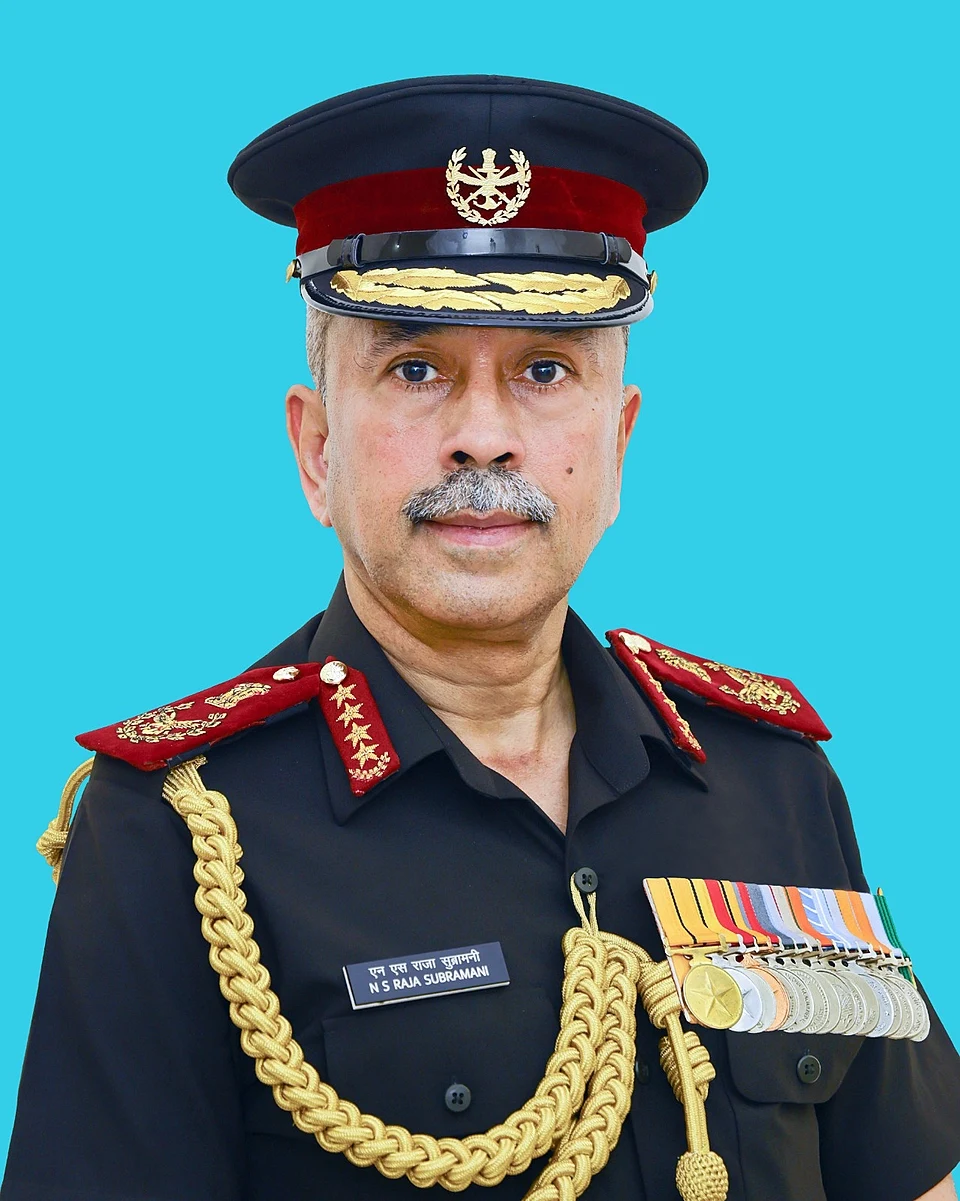
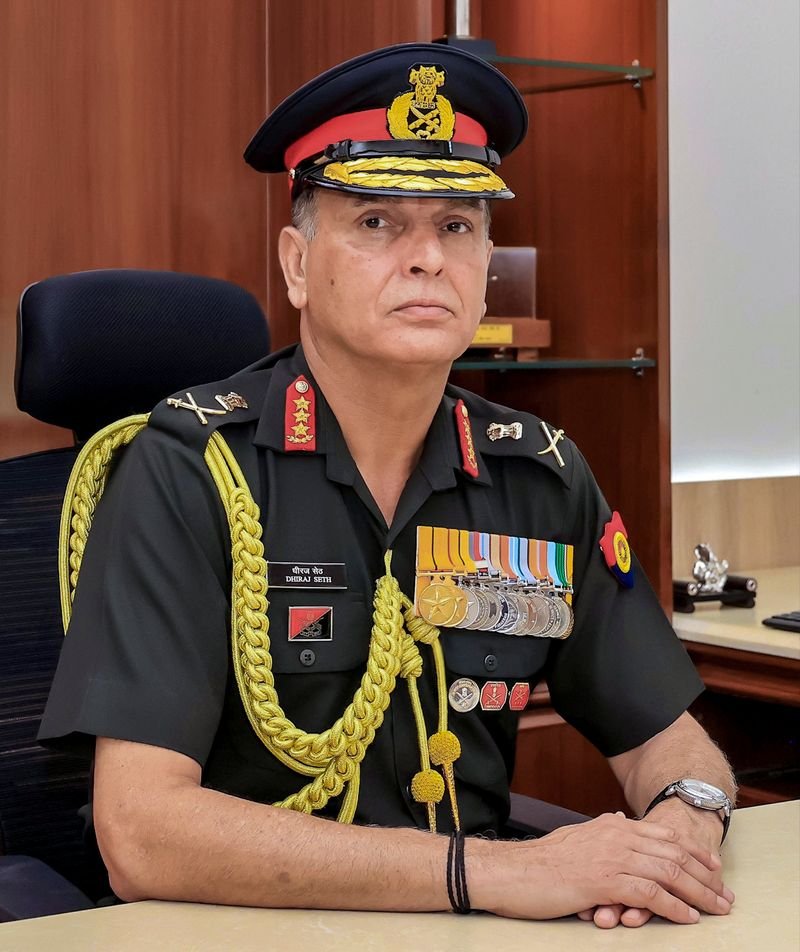
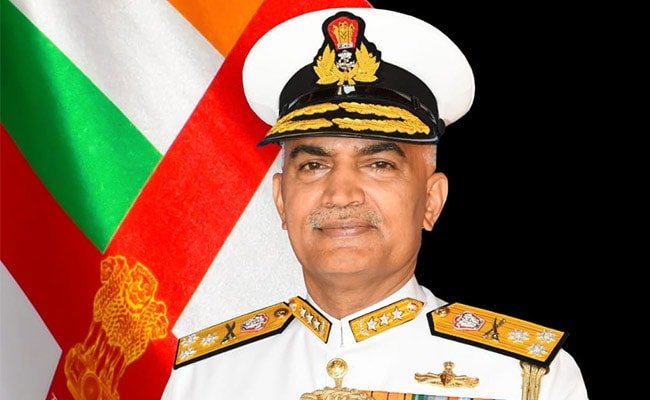





The visit comes amid intelligence inputs suggesting that terrorists from across the border may attempt to infiltrate through the International Border and the LoC
A day after four soldiers were injured in an accidental grenade blast near the Line of Control (LoC) in the Nowshera sector of Rajouri district, General Officer Commanding (GOC) of the Nagrota-based White Knight Corps, Lt Gen PK Mishra, visited the area to review the operational preparedness of troops.
In a statement, the White Knight Corps said the Corps Commander, accompanied by the GOC of the Ace of Spades Division, visited forward areas in the Nowshera sector to assess the prevailing security situation and evaluate the combat effectiveness of troops deployed along the LoC.
“During the visit, he was briefed on force posture, surveillance measures and ongoing initiatives aimed at strengthening operational capabilities in the sector. Interacting with troops at forward locations, the Corps Commander lauded their steadfast commitment, high morale and unwavering vigilance in safeguarding the nation’s frontiers,” the statement said.
The visit comes amid intelligence inputs suggesting that terrorists from across the border may attempt to infiltrate through the International Border and the LoC in various districts of Jammu and Kashmir. Rajouri and Poonch, owing to their challenging terrain, remain areas of heightened concern for security agencies.
According to intelligence reports, terror outfits have established multiple launch pads in Pakistan-occupied Jammu and Kashmir to facilitate infiltration through mountainous routes. While several terror camps and launch pads near the LoC were destroyed during Operation Sindoor last year, officials said many have since been re-established and are again being used to support infiltration attempts.
Meanwhile, search operations in the Gambhir Mughlan forest area of Manjakote in Rajouri entered their 26th day on Wednesday. Security forces continue extensive searches for a group of terrorists believed to be hiding in the forest. Senior Army commanders are closely monitoring the operation amid credible inputs indicating the militants remain in the area.
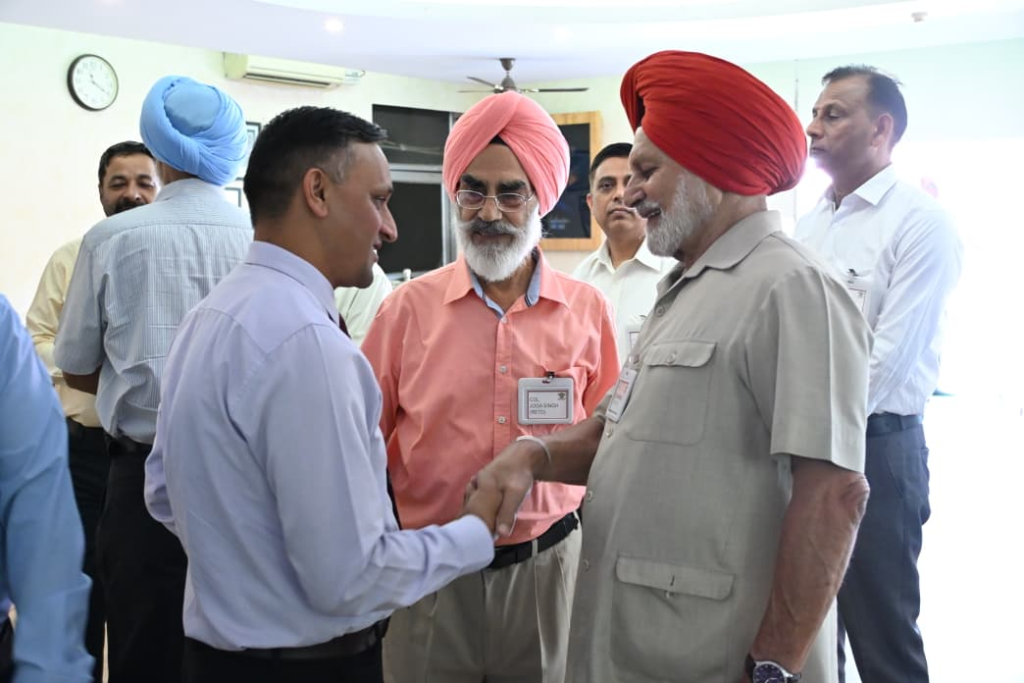
Sources said the J&K Police are also questioning over ground workers in the region to ascertain whether any hideouts exist inside the forest where the terrorists could be taking shelter.
Transcript of Iran-US deal: What the document says
The officials speak on condition of anonymity to read the deal before a formal signing ceremony set for Friday; Iranian state TV
Senior US officials on Wednesday read the memorandum of understanding with Iran to journalists after days of secrecy over what is in the document.
The officials spoke on condition of anonymity to read the deal before a formal signing ceremony set for Friday. Iranian state TV later released the text that largely tracked what the US put out.
Pakistani Prime Minister Shehbaz Sharif, whose country has been mediating between the sides, later said the leaders of the US and Iran had signed the deal and it “shall enter into force with immediate effect”.
Here is what is in the deal
The United States of America and the Islamic Republic of Iran and their allies in the current war by signing this MOU declare the immediate and permanent termination of military operations on all fronts, including in Lebanon, and undertake from now on not to initiate any war or any military operation against each other and to refrain from the threat or use of force against each other and ensuring the territorial integrity and sovereignty of Lebanon.
The final deal will confirm the permanent termination of the war on all fronts including in Lebanon and other provisions of this paragraph.
The United States of America and the Islamic Republic of Iran undertake to respect each other’s sovereignty and territorial integrity and to refrain from interfering in each other’s internal affairs.
The United States of America and the Islamic Republic of Iran commit to negotiating and achieving the final deal in maximum 60 days extendable with mutual consent.
Immediately upon the signing of this MOU, the United States of America will begin the removal of its naval blockade and any disturbances or impediments against the Islamic Republic of Iran and will fully end the naval blockade within 30 days. During this period, the traffic of vessels will be in proportion to the numbers of prewar traffic being restored by the Islamic Republic of Iran.
The United States of America further undertakes to remove its forces from the proximity of the Islamic Republic of Iran within 30 days after the final deal.
Upon the signing of this MOU, the Islamic Republic of Iran will make arrangements using its best efforts for the safe passage of commercial vessels with no charge for 60 days only from the Persian Gulf to the Sea of Oman and vice versa.
The traffic of commercial vessels will immediately start and, considering the needs for removing the technical and military obstacles and demining by the Islamic Republic of Iran, will be instated within 30 days.
The Islamic Republic of Iran will conduct dialogue with the Sultanate of Oman to define the future administration and maritime services in the Strait of Hormuz in discussion with other Persian Gulf littoral states in line with the applicable international law and the sovereign rights of coastal states of the Strait of Hormuz.
The United States of America undertakes with regional partners to develop a definitive mutually agreed plan with at least USD 300 billion for the reconstruction and economic development of the Islamic Republic of Iran.
The mechanism for the implementation of this plan will be finalised as part of a final deal within 60 days.
All required licences, waivers and permissions needed for the relevant financial transactions will be granted by the United States of America.
The United States of America undertakes to terminate all types of sanctions against the Islamic Republic of Iran, including the United Nations Security Council resolutions, IAEA Board of Governors resolutions and all unilateral US sanctions, primary and secondary, in an agreed upon schedule as part of the final deal.
The Islamic Republic of Iran and the United States of America acknowledge the critical importance of the sanctions termination issue above mentioned and express their intentions to immediately address these issues in the negotiations in order to achieve mutual agreement on them.
The Islamic Republic of Iran reaffirms that it shall not procure or develop nuclear weapons.
The United States of America and the Islamic Republic of Iran have agreed to resolve the disposition of stockpile enriched material pursuant to a mechanism that will be mutually agreed upon in accordance with the schedule mentioned in Paragraph 7 with the minimum methodology to be downblending on site under the supervision of the IAEA.
The two parties also agreed to discuss the issue of enrichment and other mutually agreed matters related to the Islamic Republic of Iran’s nuclear needs, based on a satisfactory framework being agreed upon in the final deal.
The final deal will confirm the provisions of this paragraph. The United States of America and the Islamic Republic of Iran acknowledge the critical importance of the nuclear issues above mentioned and express their intention to immediately address these issues in the negotiations in order to achieve mutual agreement on them.
Pending the final deal, the United States of America and the Islamic Republic of Iran agree to maintain the status quo. The Islamic Republic will maintain the current status quo of its nuclear programme and the United States of America will not impose any new sanctions and will not deploy additional forces in the region.
The United States of America undertakes that immediately upon the signing of this MOU and until the termination of sanctions the US Department of Treasury will issue waivers for the export of Iranian crude oil, petroleum products and derivatives and all associated services including banking transactions, insurances, transportation, etc.
The United States of America undertakes to make fully available for use the frozen or restricted funds and assets of the Islamic Republic of Iran upon the implementation of this MOU.
The United States of America and the Islamic Republic of Iran will mutually agree on the procedures related to the release of these funds during the negotiations.
Such funds, whether retained in the original account or transferred shall be made fully usable for payment to any ultimate beneficiary designated by the Central Bank of the Islamic Republic of Iran.
The United States of America undertakes to issue all necessary licences and authorisations accordingly.
The United States of America and the Islamic Republic of Iran agree that an executive mechanism will be established to monitor the successful implementation of this MOU and the future compliance of the final deal.
After signing this MOU and subject to the beginning of the implementation of paragraphs 1, 4, 5, 10 and 11 of this MOU, and the continuing implementation of these measures, the United States of America and the Islamic Republic of Iran will start negotiations regarding the final deal exclusively on the other paragraphs.
The final deal will be endorsed by binding UNSC resolution.
US, Iran sign initial deal to end war; ease sanctions, open strait as nuclear talks continue
President Donald Trump signed an agreement with Iran on Wednesday that calls for Tehran to dilute its stockpile of highly enriched uranium and waives US-backed sanctions on the country, immediately allowing Iran to sell its oil freely in a major concession from Washington, according to details released by both countries.
The initial deal to end the war takes “immediate effect” after leaders from both countries signed it, Pakistani Prime Minister Shehbaz Sharif, who helped mediate the agreement, said in a post on X.
The agreement calls for a permanent end to hostilities and starts a 60-day negotiating clock to reach a final deal on the future of Iran’s nuclear programme, though Trump left the door open to resume attacks.
It appears to offer Iran several benefits up front while extracting little in return.
The deal has been shrouded in secrecy and confusion for days.
US officials refused to disclose the terms even after saying Trump and Vice President JD Vance digitally signed it over the weekend.
Trump signed a physical copy on Wednesday while dining with French President Emmanuel Macron at Versailles, the palace where many historic agreements have been signed over the centuries, ending wars or territorial disputes.
The White House had planned a signing ceremony on Friday in Switzerland, but its fate is now uncertain, with conflicting information from the US, Iran and Pakistan.
“It’s signed,” Trump said as he left the dinner at Versailles, which followed his trip to the Group of Seven summit in France.
In a video posted online by a White House aide, Trump was seen seated at a table next to Macron signing a paper copy of the agreement. Trump then handed the document and pen to Secretary of State Marco Rubio as people in the room applauded.
“This was not easy,” Trump said right before he signed it, according to a video posted to social media by Macron.
In Tehran, a stone-faced President Masoud Pezeshkian signed the deal on behalf of Iran, according to the state-run IRNA news agency, which posted images of him holding up the deal with his signature and Trump’s.
Text of the agreement still has not been formally released. US officials dictated draft language to journalists after days of secrecy, speaking on condition of anonymity.
Iranian state TV later released text that largely tracked what the US put out.
Much of the agreement would restore the status quo before the war, including ending hostilities, restarting talks between the US and Iran over Tehran’s nuclear programme, and reopening the Strait of Hormuz, the crucial passage for the world’s oil and natural gas whose closure created a historic energy crisis.
The agreement opens the strait without tolls for two months, but does not preclude fees in the future, according to the drafts from both countries.
In return, the US will move to waive, but not eliminate, some wide-ranging sanctions against Iran.
The deal also affirms a commitment to Lebanon’s territorial integrity in the face of Israel’s invasion against the Hezbollah militant group.
That is one of the most delicate parts of the agreement because Israel has maintained it will continue to defend itself and to occupy vast swaths of Lebanon.
Iran has said Israel must withdraw under the deal, a condition Israel has already rejected.
The US and Israel went to war on February 28 in part to prevent Iran from ever getting a nuclear weapon.
India’s domestic defence manufacturing touches record Rs 1.78 lakh crore
The country still remains the world’s second-largest arms importer
India’s domestic defence production has surged to an all-time high of Rs 1.78 lakh crore in 2025-26, showing impressive increase in domestic manufacturing of military equipment. However, the country still remains the world’s second-largest arms importer.
This is a four-times jump from 2013-14 when the BJP-led NDA came to power in May 2014, led by Prime Minister Narendra Modi. Indigenous defence production was Rs 43,746 crore in 2013-14.
In April, the ministry had announced figures of export of defence equipment, items and systems saying it had touched an all-time high of Rs 38,424 crore in the Financial Year (FY) 2025-26.
On Wednesday, in a post on X, Defence Minister Rajnath Singh credited the leadership of Prime Minister Modi for taking India’s defence production to newer heights, and lauded the collective efforts of the Department of Defence Production and public and private sectors for achieving the landmark.
The Ministry of Defence said the growth reflects the growing momentum of the Government’s push for self-reliance in defence.
The Ministry of Defence said the figure of Rs 1.78 lakh crore of domestic manufacturing represents a 15.6% growth over the previous fiscal year’s output of Rs 1.54 lakh crore and a staggering 110% increase since FY 2020-21 when the figure was Rs 84,643 crore.
Defence Public Sector Undertakings and other PSUs accounted for approximately 76% of total production, while the private sector contributed 24%, which is a rise from 22% in FY 2024-25.
The share of the private sector is at its all-time high of around Rs 42,000 crore in FY 2025-26, reflecting its expanding role in the defence ecosystem.
Despite the massive growth India continues to import selected niche technologies like aero engines, long range missiles like the S400, specialised helicopters and marine engines. Sweden-based think-tank Stockholm International Peace Research Institute (SIPRI) which tracks arms sales globally, in its annual report in March this year said India was the world’s second biggest arms importer and accounted for 8.3% of global arms sales for a five-year block 2021-2025.
The SIPRI report titled ‘Trends in International Arms Transfers, 2025’ had a positive note that India’s dependence on imported arms had reduced. The report compared a previous five-year block of the years 2016-2020 with the latest assessment for the years 2021-2025 and said: “Indian arms imports fell by 4.0 per cent between 2016–20 and 2021–25.”
The decrease can be partly attributed to India’s growing ability to design and produce its own weapons. It also highlighted that India’s planned orders—including 140 combat aircraft from France and 6 submarines from Germany—indicate its continued and probably increasing reliance on foreign suppliers.
‘Make in India’ in defence equipment manufacturing is no more an elusive mirage, the fighter jet Tejas, nuclear submarine INS Arihant and missiles like Akash, BrahMos besides artillery guns and tanks are made here.
Sikh caretaker couple killed in firing at gurdwara in Pakistan
Assailants open fire in the gurdwara, resulting in the death of Jagannath and his wife Asma Wanti
A Sikh caretaker couple was shot dead in a gurdwara in Pakistan’s northwestern Khyber Pakhtunkhwa province on Wednesday, police said.
The incident occurred in Babu Mohallah locality of Mardan, about 60 km northwest of Peshawar.
According to Mardan District Police Officer Masood Ahmed, assailants opened fire in the gurdwara, resulting in the death of Jagannath and his wife Asma Wanti.
Police said efforts were under way to ascertain the motive behind the attack and nab those involved.
ON June 10, 2025, Prime Minister Narendra Modi hosted the delegations that had travelled around the world in the wake of the May 7-10 hostilities between India and Pakistan. Their brief was to expose Pakistan’s five-and-a-half-decade-old proxy war against India.
These multi-party and cross-disciplinary delegations that rose above the partisan political divide underscored a rare politico-strategic national consensus. It was a unique one-off moment in an otherwise bitterly contested political landscape. Their very composition underlined the spirit of the unanimous parliamentary resolutions of February 22, 1994, and March 15, 2013, that described Pakistan as a sponsor of terrorism.
These missions had carried a three-point message for their global interlocutors regarding Pakistan — terror and talks cannot go together; blood and water cannot flow together; and India will not make a distinction between terrorists and their state sponsors. This consensus echoed in the parliamentary debate during the Monsoon Session of 2025.
Eleven months later, a senior functionary of the Rashtriya Swayamsevak Sangh (RSS), the ideological mentor of the BJP, gave a rather perplexing statement in an interview to a wire service. Dattatreya Hosabale said, “If Pakistan is like a pinprick trying to create incidents like Pulwama, we have to answer appropriately according to the situation because the security and self-respect of a country have to be protected, and the government of the day should take note of it and take care of it… But at the same time, we should not close the doors. We should always be ready to engage in dialogue. That is why diplomatic relations are maintained, trade and commerce continue, and visas are being given. So we should not stop these, because there should always be a window for dialogue… This is the one hope I think, because I believe strongly that ultimately the civil society relations [will work]. Because we have a cultural relation and we have been one nation.”
On the face of it, Hosabale’s averment was a reasonable and fair articulation, but why it is unworkable in the case of Pakistan needs to be both understood and explained.
It’s the military, not any democratic dispensation and least of all civil society, that calls the shots in Pakistan. That nation does not have a military; conversely, it is a military that has a nation. This has been the case from Field Marshal Ayub Khan to Field Marshal Asim Munir over the past seven decades. The Pakistani military has an institutional obsession with retribution against India for having created Bangladesh.
In the aftermath of Pakistan’s dismemberment, Zulfikar Ali Bhutto convened a conference in Multan on January 24, 1972. Two seminal decisions were taken. The first was to acquire nuclear weapons to safeguard what remained of the rump of a moth-eaten Pakistan, and the second to bleed India with a thousand cuts.
It was the second conclusion that led to 15 years of terrorism in Punjab from 1980 to 1995. This campaign of terror was upscaled to Jammu & Kashmir and the rest of India from 1989 onwards.
The Mumbai bombings (1993), the Kargil War and IC-814 hijacking (1999), J&K Assembly attack and an assault on the Indian Parliament (2001), 26/11 Mumbai terror attacks (2008), the strikes on the Uri Army camp and the Pathankot airbase (2016), Pulwama suicide bombing (2019) and the Pahalgam massacre (2025) are just some of the milestones of this bloody journey that commenced five-and-a-half decades ago.
Concurrently, India tried its best to engage with Pakistan over the years. In the phase beginning with the Gujral Doctrine conceptualised in 1996 and underpinned by its five principles to the Composite Dialogue (1997 to 2008), the Resumed Dialogue (2011-14) and the Comprehensive Bilateral Dialogue (2015 onwards). However, each effort and every initiative was derailed by a major terror attack perpetrated by Pakistan-based/trained terrorists.
Then there were three backchannels established at the level of the Indian Prime Minister and Pakistan’s military dictator or Army Chief, who was represented by his civilian proxies for over a decade and a half.
It commenced with the RK Mishra-Niaz Naik conversations in 1998-99 that were interrupted by the Kargil War. The threads were picked up by then NSA Brajesh Mishra and his Pakistani counterpart after the winding down of Operation Parakram between November 2002 and May 2004.
This was followed by talks between former Ambassador Satinder Lambah and his Pakistani counterparts Tariq Aziz (2005-08), Riaz Mohammad Khan (2009-12) and Shahryar Khan (2013-14). Subsequently, there have been conversations between the respective NSAs that reportedly led to the ceasefire agreement of February 25, 2021. There is the DGMOs’ hotline that is supposed to be activated every Tuesday. Then there was Aman Ki Asha and Track 1.5, 2, 3 and 4 conferences on establishing civil society interfaces, music and culture exchanges, tourism and religious pilgrimage initiatives, parliamentary and media confabulations, to list a few.
Unfortunately, nothing worked. Despite all these efforts, the spectre of Pakistan-sponsored terror continues to haunt the Indo-Pak dynamic.
The question that India needs to answer is: what does it want from Pakistan? The answer is nothing except the cessation of state-sponsored terror.
An exceptional politico-strategic consensus today exists in India vis-a-vis Pakistan. It would be wise for New Delhi to stay the course rather than try to go down the same rabbit hole all over again, notwithstanding Western prodding and pressure.
These days, Pakistan’s duplicity is on full display on its western border. On the one hand, it is playing the role of a broker between the US-Israel and Iran, but on the other, it is relentlessly bombing civilian areas and hospitals in Afghanistan, a fact confirmed by UNAMA (UN Assistance Mission in Afghanistan). Paradoxically, the same Taliban who rule Afghanistan today were Pakistan’s spearhead as it sought strategic heft on its western front decades after the loss of Bangladesh. In January 2024, Pakistan had carried out retaliatory airstrikes against Iran.
Pakistan has been on a high since May 2025, thanks to its “rediscovery” by the Trump administration. However, the fact remains that Pakistan is structurally a failed state that can implode or go into a meltdown at any time.
The only area where a conversation is perhaps imperative is nuclear security and stability, given the inherently unstable nature of Pakistan’s nuclear command-and-control system and hierarchy. This is perhaps the only track worth exploring.
231 IAF cadets graduate from Air Force Academy, Dundigal
In this image posted on June 13, 2026, Defence Minister Rajnath Singh felicitates graduating cadets during the Combined Graduation Parade (CGP) at the Air Force Academy, in Dundigal, Medchal-Malkajgiri district, Telangana. Photo: @SpokespersonMoD/X via PTI
Indian Air Force both shield and sword of nation, says Defence Minister Rajnath Singh
A total of 231 cadets, including women who are from the first batch of women cadets of the National Defence Academy, were commissioned as officers in the Indian Air Force (IAF) following their graduation from the Air Force Academy (AFA) at Dundigal in Hyderabad on Saturday.
Cadets from the NDA, who opt for the IAF, complete their service specific training at the Air Force Academy. Nine officers from the Navy, three from the Indian Coast Guard and two from Vietnam were also awarded ‘Wings’ on the occasion.
Reviewing the Combined Graduation Parade, Defence Minister Rajnath Singh recalled the valour of the IAF in various conflicts, including during Operation Sindoor in May last year. “The IAF has consistently served as both a shield and a sword for the nation,” the minister noted.
The minister pointed out that the IAF altered the course of the 1947-48 war in Kashmir through the Srinagar airlift and scripted history in just 13 days with decisive air strikes during the 1971 war. The Air Force’s indomitable spirit and unmatched valour were also demonstrated during Operation Sindoor in 2025, when they destroyed terror hideouts with clarity and precision. “Operation Sindoor was successfully executed not only by our indigenous platforms, but also due to the IAF’s trained, courageous, and disciplined officers”, he added.
The minister further advised the newly commissioned officers to remain vigilant to emerging challenges. “Adapt, adopt and modify the futuristic technologies and strategies to gain a decisive edge,” said Singh.
Extending special congratulations to women officers, the minister said the growing presence of ‘women power’ would further strengthen the IAF, making it more robust and balanced.
The minister also gave away awards to the selected graduating officers for their exceptional performance in various disciplines.
Flying Officer Ashish Kumar Yadav was awarded the coveted ‘President’s Plaque’ and the ‘Nawanagar Sword of Honour’ for standing first in the overall order of merit in the pilot course. Flying Officer Ekta Gupta was awarded the ‘President’s Plaque’ for standing first in the overall order of merit in the navigation stream. Flying Officer Divyanshi Singh was awarded the ‘President’s Plaque’ for standing first in the overall order of merit in the ground duty branches.
Five Air Force men killed as AN-32 transport plane crashes in Assam
Co-pilot survives amid questions over safety of nearly 35-year-old aircraft
Five Indian Air Force (IAF) personnel were killed when their AN-32 transport aircraft crashed while landing at Assam’s Jorhat base around 10 am on Saturday.
Six personnel were on board and two among those killed were officers. The co-pilot survived and is undergoing treatment at a military hospital in Jorhat, said IAF officials.
The deceased have been identified as Squadron Leader Prashant Singh, Flight Lieutenant Shubham Kumar, Sergeant Jitendra Sharma, Agniveervayu Khemaram Kumawat and Agniveervayu Danish Alam.
Defence Minister Rajnath Singh and the IAF condoled the deaths in separate messages on X. “A court of inquiry is being constituted to ascertain the cause of the accident,” the IAF said.
Serious questions, meanwhile, have again risen over flying the AN-32 aircraft, which are over 35 years old even as their replacement is still a few years away. Sources said as soon as the aircraft took off from Jorhat on a routine sortie, its pilot reported a technical malfunction and decided to return to the base.
Past AN-32 crashes
June 3, 2019: Plane disappears shortly after take-off from Jorhat for Arunachal; all 13 aboard killed
July 2016: Plane with 29 disappears on way from Chennai to Port Blair; wreckage found in 2024; all dead
June 2009: An AN-32 crashes near Rinchi Hill in Arunachal; all 13 personnel on board killed
March 1999: Crash near Delhi’s Palam airport; all 21 on board killed, casualties on ground too
However, while attempting to land, the aircraft skidded off the runway and crashed, resulting in a fire and the five deaths, the sources said.
The AN-32 is the Air Force’s “workhorse” in the Himalayas and nearly 100 of these planes are still in use. It’s a twin-engine turboprop transport aircraft, which is widely used for tactical airlift, troop movement, cargo delivery and logistics support, particularly in remote and high-altitude areas. It possesses specialised high-thrust engines capable of operating in “hot and high” environment.
India had bought 125 AN-32 aircraft and the first lot had started arriving in 1984. In 2009, a deal was finalised with Ukraine for the entire fleet’s upgrade, which included “total technical life extension, repowering engines; certain structural modifications to reduce weight, noise and vibration; installation of a glass cockpit with a new avionics suite and flight management system, satellite navigation system and anti-collision systems”. While Ukraine modified a few aircraft, the remaining were to be done by No. 1 Base Repair Depot, Kanpur.
The IAF has also started executing its long-term strategy to replace the ageing AN-32 with Airbus C-295 aircraft and the deliveries have already commenced. Though the C-295 is to directly replace the legacy Avro HS-748 fleet, it is widely seen as the stepping stone for replacing the tactical transport roles traditionally fulfilled by the AN-32.
The Air Force also has a Medium Transport Aircraft programme for replacing the AN-32 and it seeks a plane with a carrying capacity between 18 and 30 tonnes. The foreign partner for this is yet to be
After gold medal at NDA, Kapurthala Sainik School alumnus bags silver at IMA
Lieutenant Prince Raj is from the Sainik School’s 2022 batch and had joined the NDA the same year as part of the 148th Course
After topping his course at the National Defence Academy, (NDA) Khadakvasla, a year ago, Lieutenant Prince Raj, an alumnus of Sainik School, Kapurthala, in Punjab continued his march of excellence, bagging the silver medal in the order of merit of the Spring Term-2026 at the Indian Military Academy (IMA), Dehradun.
He was presented the medal by President Droupadi Murmu, who is also the Supreme Commander of the Armed Forces, during the passing out parade held at the academy on June 13. The President had reviewed the parade comprising 515 cadets from the 158th Regular Course and 141st Technical Graduates Course, including nine women.
Prince is from the Sainik School’s 2022 batch and had joined the NDA the same year as part of the 148th Course. He was conferred the President’s Gold Medal for standing first at the NDA on culmination of the three-year course in May 2025, and had thereafter proceeded to the IMA for the one-year pre-commission training.
Hailing from Patna in Bihar, Prince had studied at Sainik School Kapurthala for seven years from Class VI onwards. Prince’s father is in the Indian Railways and his mother is a homemaker housewife.
A top performer at the NDA as well as the IMA, he held the appointment of Battalion Cadet Adjutant at the NDA and Academy Under Officer at the IMA. Besides academics, he also excelled in sports and games and had won several championships.
In an earlier interaction with The Tribune, he had said that the Sainik School had groomed him thoroughly in every respect including mannerism, sports, behaviour and daily routine. The environment the school provided was exactly the same as at NDA.
In another instance of continuing excellence, Lieutenant Tejas Bhat was awarded the bronze medal for standing third in the order of merit in the Spring Term – 2026 at the IMA. He had also received the bronze medal while passing out from the NDA in 2025.
State Stalwarts
DEFENCE MINISTER
Minister Rajnath Singh
ALL HUMANS ARE ONE CREATED BY GOD
HINDUS,MUSLIMS,SIKHS.ISAI SAB HAI BHAI BHAI
CHIEF PATRON ALL INDIA SANJHA MORCHA
LT GEN JASBIR SINGH DHALIWAL, DOGRA
SENIOR PATRON ALL INDIA SANJHA MORCHA
MAJOR GEN HARVIJAY SINGH, SENA MEDAL ,corps of signals
.
.
PATRON ALL INDIA SANJHA MORCHA
MAJ GEN RAMINDER GURAYA ,MADRAS REGIMENT
sanjhamorcha303@gmail.com
PRESIDENT SOUTH ALL INDIA SANJHA MORCHA
COL SS RAJAN BOMBAY SAPPERS,
PRESIDENT UTTARAKHAND ALL INDIA SANJHA MORCHA
COL B M THAPA ,BENGAL SAPPERSS
PRESIDENT HARAYANA STATE CUM COORDINATOR ESM
BRIG DALJIT THUKRAL ,BENGAL SAPPERS
PRESIDENT TRICITY
COL B S BRAR (BHUPI BRAR)
PRESIDENT CHANDIGARH ZONE
COL SHANJIT SINGH BHULLAR
.
.
PRESIDENT PANCHKULA ZONE AND ZIRAKPUR
COL SWARAN SINGH
INDIAN DEFENCE FORCES
DEFENCE FORCES INTEGRATED LOGO
INDIAN AIR FORCE
Air Officer C-in-C WESTERN AIR COMMAND
AIR MSHL S PRABHAKARAN AVSM VM
AOC-IN-C, EASTERN AIR COMMAND
Air Marshal Inderpal Singh Walia
AOC-in-C SOUTH WESTERN AIR COMMAND
Air Marshal Vikram Singh
AOC-IN-C, SOUTHERN AIR COMMAND
Air Marshal J.Chalapati
AOC-IN-C TRAINING COMMAND
AIR MARSHAL SK GHOTIA VSM
AOC-IN-C MAINTENANCE COMMAND
Air Marshal Jagdish Chandra
Flag Officer Commanding in Chief, Western Naval Command
ice Admiral R Hari Kumar, PVSM, AVSM, VSM
Flag Officer Commanding in Chief, Eastern Naval Command
Vice Admiral Sanjay Bhalla, AVSM, NM
Flag Officer Commanding in Chief, Southern Naval Command