Sanjha Morcha

What’s New

Click the heading to open detailed news

Current Events :

web counter

Print Media Reproduced Defence Related News

Admiral Verma files complaint with MoD

Admiral Verma files complaint with MoD

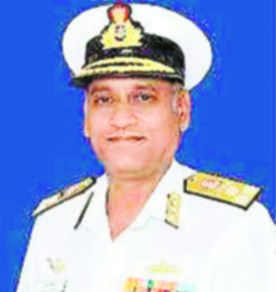
Vice Admiral Bimal Verma

Tribune News Service
New Delhi, April 11

Vice Admiral Bimal Verma today filed a ‘statutory complaint’ with the Ministry of Defence (MoD) contesting the appointment of Vice Admiral Karambir Singh as the next Chief of the Indian Navy.

The application has been filed, sources confirmed today. The application has to be responded to within a specified time period. This is an “internal remedy” to address any grievance.

This comes after the Armed Forces Tribunal (AFT), on Tuesday, asked Vice Admiral Verma to explore all remedies before filing a plea before the AFT. He had withdrawn his plea from the AFT and the ‘statutory complaint’ has been filed with MoD.

Admiral Verma is the commander-in-chief of the Andaman and Nicobar Command. He has asked why he was overlooked as the next Navy chief despite being the senior-most in the line of command. The government last month named Vice Admiral Karambir Singh as next chief of the naval staff, succeeding Admiral Sunil Lanba who retires on May 31.


Pak’s FIA seeks cancellation of 26/11 mastermind Lakhvi’s bail

Pak’s FIA seeks cancellation of 26/11 mastermind Lakhvi’s bail

he Federal Investigation Agency (FIA) has filed an appeal in the IHC seeking cancellation of the post-arrest bail of Lakhvi.

Islamabad, April 9

Pakistan’s top investigative agency has approached the Islamabad High Court (IHC) to seek the cancellation of the bail of LeT operations commander Zakiur Rehman Lakhvi, the mastermind of the 2008 Mumbai terror attack.

The Federal Investigation Agency (FIA) has filed an appeal in the IHC seeking cancellation of the post-arrest bail of Lakhvi.

Hearing the appeal, a division bench of the IHC on Tuesday asked authorities to provide the record of the Mumbai attack case in two weeks.

The record of the case is currently with an Islamabad-based Anti-Terrorism Court (ATC) which was holding trial of Lakhavi and other accused arrested in the case.

Seven LeT suspects–Lakhvi, Abdul Wajid, Mazhar Iqbal, Hamad Amin Sadiq, Shahid Jamil Riaz, Jamil Ahmed and Younis Anjum–are facing charges of abetment to murder, attempted murder, planning and executing the Mumbai attack since 2009.

The ATC on December 18, 2014, granted the post-arrest bail to Lakhvi and set him free. Lakhvi has been living in an undisclosed location since then.

The FIA, in its appeal, argued that it had enough evidence against Lakhavi and his post-arrest bail should be cancelled so that he could be re-arrested and probed.

“In the present case, the learned trial judge (of ATC) after the terrorist attack in Islamabad courts (of March 2013) refused to visit Adiala Jail for a long time due to security reasons,” the FIA said in its appeal against the ATC judge’s order, Dawn reported.

“Even the prosecutors of this case have been receiving threats through cell phones during the proceedings which were duly conveyed to the authorities concerned. The witnesses are also not secured, and reluctant to depose against the accused persons in the given situation,” it added.

The court after hearing the argument from the FIA and Lakhvi’s lawyer ordered to provide the record of the case in two weeks.

As many as 166 people were killed in the attack carried out by 10 LeT men. Nine of the attackers were killed by police while lone survivor Ajmal Kasab was caught and hanged after he was handed down death sentence by an Indian court.

The Mumbai attack case has entered into the 11th year but none of its suspects in Pakistan has been punished yet. PTI


Vice Admiral Bimal Verma moves Armed Forces Tribunal after being superseded for naval chief post

Karambir Singh,Bimal Verma,Vice Admiral

Singh will supersede Vice Admiral Bimal Verma, who is the senior most in terms of length of service.(PICTURE CREDIT ANI)

Commander-in-Chief of the Andaman and Nicobar Command Vice Admiral Vimal Verma has approached an armed forces tribunal seeking to know why he was overlooked as the next navy chief despite being the senior-most in the line of command, official sources said Monday.

The government last month named Vice Admiral Karambir Singh as next chief of the naval staff, succeeding Admiral Sunil Lanba who retires on May 30.

The government made the selection following a merit-based approach and did not go with the tradition of appointing the senior-most eligible officer to the post.

Vice Admiral Verma is senior to Singh and was among the contenders for the top post.

Sources said Vice Admiral Verma has approached an armed forces tribunal in the national capital to know why the government ignored his seniority.

His petition is likely to be taken up Tuesday, they saidBesides Verma, the other contenders for the Navy Chief post included Vice Chief of Naval Staff Vice Admiral G Ashok Kumar, FOC-in-C of Western Naval Command Vice Admiral Ajit Kumar and FOC-in-C of Southern Naval Command Vice Admiral Anil Kumar Chawla, the source said.

While appointing the Army Chief in 2016, the government did not follow the long-held tradition of going by the seniority.


Ex-servicemen form human chain, motivate people to vote

Ex-servicemen form human chain, motivate people to vote

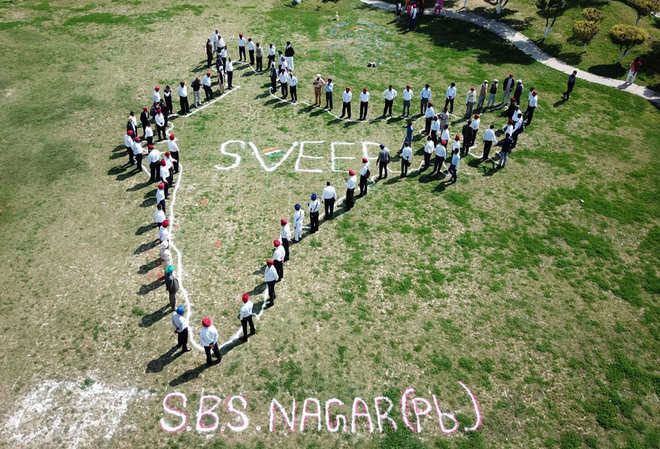
Ex-servicemen make a human chain in the shape of the Indian map to create awareness on voting in Nawanshahr. Tribune Photo

Tribune News Service

Nawanshahr, March 26

With a view to give fillip to Systematic Voter Education and Electoral Participation (SVEEP) programme, the district administration, today conducted an innovative activity, under the stewardship of ADC (G)- cum- District Nodal Office SVEEP, Anupam Kaler, here at Baradari Garden.

Under it, ex-servicemen formed a human chain in shape of India’s map, to spread the message among voters to exercise their franchise to strengthen democracy.

In her address, the ADC while lauding the gesture behind the activity exhorted the voters to ensure their active participation in the electoral process.

“The ex-servicemen have formed a human chain in the shape of the map of the country to signify our commitment to democratic traditions. We can safeguard and strengthen the democracy by exercising the franchise,” said the ADC.

“To exercise the right to vote, enrolment as a voter is must. Hence, those who have attained the age of 18 years on January 2019 should contact BLOs and SDM concerned to get him, “ added the ADC.

SDM-cum-Assistant Returning Officer, Dr Vineet Kumar, said under the SVEEP programme, different sections of the society were being sensitised for exercising their right to vote in the ensuing Lok Sabha polls.

Vipin Kumar, District Guidance Counsellor, said ex servicemen were apprised of the functioning of the EVM and VVPAT machine to make them aware about the transparency in polling through EVM.

They were also administered oath to participate in the voting. The map was drawn by school teachers — Madan Lal Mallupota and Gurdev Singh Ghumman and the eye-catching Rangoli was prepared by the team, led by District Programme Officer, Manjit Kaur.


IAF Pilot Abhinandan Returns to His Squadron in Srinagar Despite Being on Leave

He was captured by the Pakistani Army on February 27 after his MiG-21 Bison jet was shot down in a dogfight with Pakistani jets during an aerial combat.

New Delhi: Wing Commander Abhinandan Varthaman, who was captured by Pakistan last month and returned to India two days later, has gone back to his squadron in Srinagar though he is on a four-week sick leave, official sources said Tuesday.

They said Varthaman preferred to stay with his squadron in Srinagar than going to his family home in Chennai while on leave.The IAF pilot went on leave around 12 days ago after security agencies completed a nearly two-week debriefing after his return from Pakistan.
“Varthaman could have gone to his family home in Chennai to spend time with his parents. But he chose to go to Srinagar where his squadron is based,” the sources said.

After his four-week sick leave period, a medical board will review his fitness to help the IAF top brass decide whether he can return to fighter cockpit as desired by him.

He was captured by the Pakistani Army on February 27 after his MiG-21 Bison jet was shot down in a dogfight with Pakistani jets during an aerial combat. He downed an F-16 fighter of Pakistan before his plane was hit.

Varthaman was released on the night of March 1 by Pakistan.

After he was captured, Varthaman showed courage and grace in handling the most difficult circumstances for which he was praised by politicians, strategic affairs experts, ex-servicemen, celebrities and people in general.

Tensions between India and Pakistan escalated after Indian fighters bombed terror group Jaish-e-Mohammed’s biggest training camp near Balakot, deep inside Pakistan on February 26.

Pakistan retaliated by attempting to target Indian military installations the next day. However, the IAF thwarted their plans.

The Indian strike on the JeM camp came 12 days after the terror outfit claimed responsibility for a suicide attack on a CRPF convoy in Kashmir, killing 40 soldiers.


HAL Rolls Out 16th Light Combat Aircraft Tejas; Meets Target

“We have produced 16th LCA as per the target till March 31. The customer flights are expected to be completed by the end of March,” city-based HAL said in a statement.

HAL Rolls Out 16th Light Combat Aircraft Tejas; Meets Target

Production of the Tejas fighter began in 2014 with a capacity of eight aircraft per annum.

BENGALURU: 

State-run Hindustan Aeronautics Ltd (HAL) on Monday said it has rolled out its 16th Light Combat Aircraft (LCA) Tejas fighter in the initial operational clearance (IOC) configuration to be inducted into the fleet of Indian Air Force (IAF).

“We have produced 16th LCA as per the target till March 31. The customer flights are expected to be completed by the end of March,” city-based HAL said in a statement.

The defence behemoth has an order from IAF for 40 LCAs (16 each in IOC and final operational clearance (FOC) configuration and eight trainers).

The Tejas aircraft was inducted into the IAF squadron ‘Flying Daggers’ on July 1, 2016.

In February, HAL received drawings and documents related to FOC with limited clearance for Tejas from military aviation regulator Centre for Military Airworthiness and Certification (Cemilac) and Aeronautical Development Agency (ADA).

“The first aircraft in FOC configuration may roll out by the end of this calendar year (2019),” HAL said.

Two of the fighters will be flying at the Langkawi International Maritime Expo (Lima-2019) in Malaysia, starting Tuesday.

“An HAL team will be providing the technical support at the show,” the aerospace major said.

Production of the fighter began in 2014 with a capacity of eight aircraft per annum.

37 COMMENTS

A second production line has been set up at Aircraft Division in this aerospace hub, which carries out structural assembly, final assembly and equipping of the aircraft.


Country’s 1st artillery gun Dhanush to be inducted into Army on March 26

Dhanush gun

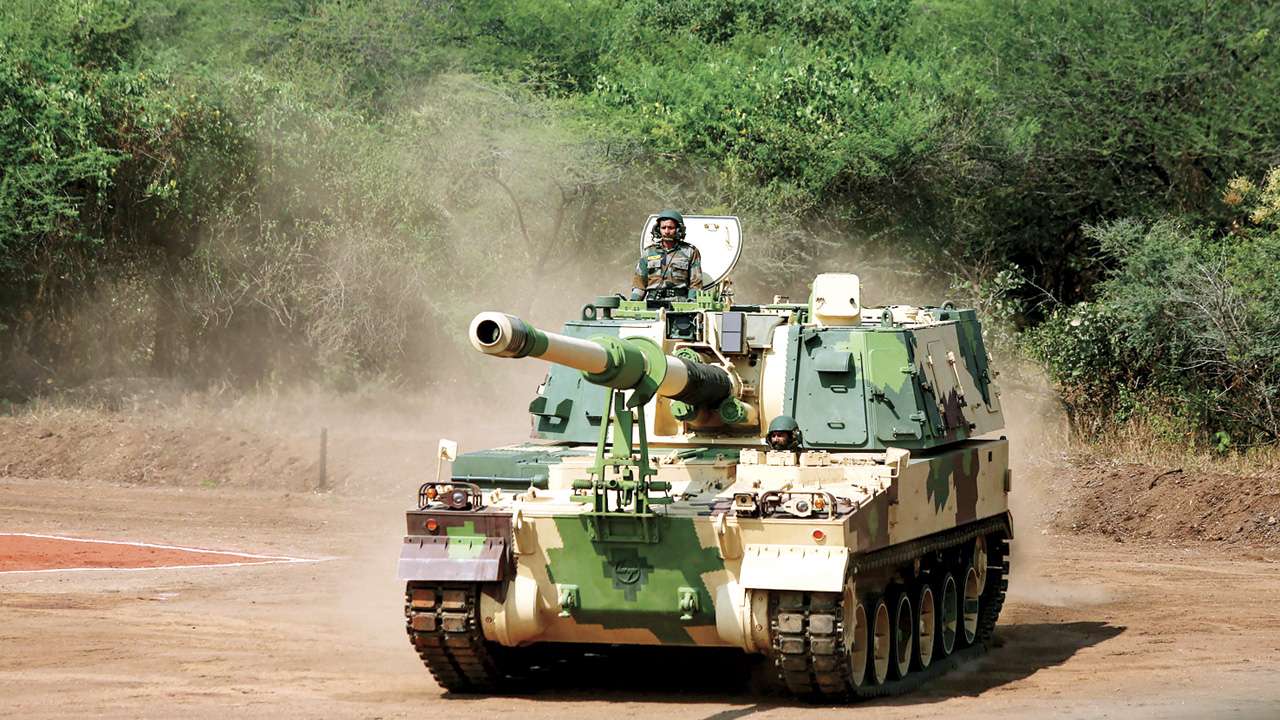
Dhanush, the first indigenous long-range artillery gun developed during the project to upgrade the scam-ridden but useful Bofors artillery gun, will be inducted into the Indian Army on March 26. The first batch of six guns will be deployed along the China and Pakistan frontiers, sources in the Indian Army said.

By the end of the year, a complete regiment — comprising of 18 guns — will be in action along the borders shared with China and Pakistan.

It is a 155mm x 45mm calibre artillery gun. In February end, the Ministry of Defence, along with the Indian Army approved the bulk production order of 118 of these guns for the Ordnance Factory Board (OFB).

The guns are manufactured by the Jabalpur-based Gun Carriage Factory (GCF), each of the artillery guns cost around Rs 14.50 crore and each shell costs Rs 1 lakh.

The Gun Carriage Factory received the Dhanush project in October 2011 and the first prototype was made in 2014. Later, 11 more prototypes were made from which 4,200 rounds were fired.

The guns have passed tests in extreme cold in Sikkim and Leh and also in hot and humid weather conditions in Balasore, Odisha, and Babina in Jhansi. It also worked perfectly in the deserts of Pokhran in Rajasthan. Dhanush has a strike range of 38 kilometre and 81 per cent of its components are indigenously sourced; this will go up to 90 per cent by the end of this year.

Apart from the Jabalpur-based Gun Carriage Factory (GCF), there is active cooperation from other ordinance factories and PSUs such as SAIL, BEL, and many private sector companies.

In a statement released in February, The Defence Ministry stated that Dhanush is equipped with inertial navigation-based sighting system, auto-laying facility, on-board ballistic computation and an advanced day and night direct firing system.

The ministry further pointed out that the self-propulsion unit allows the gun to negotiate and deploy itself in mountainous terrains with ease.


There’s always an alternative by Avijit Pathak

There’s always an alternative

More than one: In a democracy, the idea of experimentation, possibilities and changes must be celebrated.

Avijit Pathak 
Professor of Sociology, JNU

As the elections approach, the ruling regime wants to make us believe that there is no alternative, and hence it is wise to reject the Opposition that can only cause ‘anarchy’. Yes, the propaganda machinery that the establishment has succeeded in creating through noisy TV channels and the toxic social media manufactures this ‘truth’ — Modi with his macho-nationalism is the best choice, and the BJP with its Amit Shah and Arun Jaitley knows how to emancipate the country from all the ‘mistakes’ Nehru and his ‘dynasty’ committed.

As awakened voters and self-reflexive political subjects, we need to understand the implications of this discourse. Agreed, at a deeper level, the structure of ‘representative democracy’ and the electoral process associated with money/muscle power, as Gandhi’s vision of decentralised ‘oceanic circles’ and MN Roy’s ‘radical humanism’ with party-less participatory democracy would suggest, tend to impose some sort of passivity on us. We are compelled to believe that we can’t do much except ‘choosing’ the ‘lesser evil’; and we have no control over the quality of candidates the gigantic political parties impose on us. In a way, it generates some sort of cynicism and helplessness: everyone is corrupt, and hence it makes no sense to think of an alternative possibility! Is it that after every five years we only ‘select’ our masters?

Even though we have to acknowledge the inherent limitations of the form of democracy we have institutionalised, we should try to see some possibilities in it by exercising our agency, critical thinking and ethically nuanced political praxis. And it is in this context that we can see the dangers of the no-alternative discourse, which emanates from the cult of ‘absolute certainty’ through which all authoritarian regimes seek to define themselves. ‘We are infallible. We are true nationalists. And all those who oppose us are dangerous’ — Indira (recall the dark days of Emergency) thought like this; and today the assertive noise that the ruling regime makes manifests itself in Amit Shah’s body language filled with inflated confidence, Mr Modi’s melodramatic and aggressive speeches, Arun Jaitley’s one-dimensional blog,  Ravi Shankar Prasad’s ‘legalistic’ press conference and Sambit Patra’s toxic words on TV channels known for deciding the fate of the ‘republic’ in our ‘times’. To cherish democracy, however, is to celebrate the idea of experimentation, possibilities and changes. Hence, the popularisation of the no-alternative discourse is inherently anti-democratic.

Another danger of this discourse is that it seeks to transform us as mere consumers guided by ‘brand consciousness’. Hence, politics, too, is being projected as a ‘product’, and a political personality becomes a ‘brand’. Let us understand it through an analogy. Salman Khan as a ‘brand’ promotes, say, a specific soft drink product; and his ‘magical performance’ aims at seducing the consumers. Likewise, in our times — driven by the management discourse of selling politics as a product, we see Modi as a ‘brand’ (‘energetic’, ‘efficient’, ‘dashing’ and ‘brave’) selling the politics as a ‘product’ — the gospel of hyper-masculine nationalism that gives a tough lesson to the ‘enemy’ — internal as well as external; the project of techno-development that promises bullet trains and smart cities; and the psychology of ‘Hindu pride’ aiming at reclaiming the ‘heritage’ the ‘Muslim invaders’ destroyed. With the 24×7 ‘live coverage’ of the ‘presentation of self’, the hyper-real spectacles of the ‘surgical strike’ and ‘surveys’ indicating his ‘mass appeal’, Modi as a ‘brand’ looks gorgeous. And hence, as the argument goes, there is no alternative because an ‘immature’ Rahul, a ‘pro-Muslim’ Mamata and an ‘eccentric’ Mayawati look so ‘dull’. It is like saying that Pepsi is so gorgeous that a glass of lemon water can never be an alternative! The danger is that as passive consumers of politics with ‘brand consciousness’, we lose our democratic spirit — the ability to think clearly and critically, and the creativity to nurture our own politics.

Another point needs to be understood. ‘Alternatives’ are not like fancy products that one can buy as a consumer. Our alternative political culture or our alternative mode of governance ought to emerge out of a sustained search and practice. We will make mistakes, and even enter a domain of chaos or uncertainty. Yet, history teaches us that without creative practice, temporary upheaval, and experimentation nothing innovative takes place. Gandhi made experiments with satyagraha; Ambedkar interrogated patriarchal Brahminism; and Marx dared to see beyond the exploitative character of capitalism. They were working on alternatives. 

We need to see beyond what the ruling regime symbolises — the culture of narcissism leading to the mass psychology of authoritarianism, the aggression of militaristic nationalism, the reduction of religion into a mere identity-marker, the close affinity with the corporate elite causing further marginalisation of the downtrodden, and the normalisation of aggression and hatred. If we begin to think that there cannot be or should not be any alternative, we accept the rejection of our reflexivity and agency.

Well, it is possible to say that the ‘opposition’ parties — given the history of their opportunism and instrumental politics — are incapable of doing things differently. Yet, we should not stop our quest for an alternative political culture, even if we do not get a perfect result. Modi, too, emerged as an alternative to the corrupt UPA-II. So, this time why should we deprive ourselves of striving for an alternative to the present regime known for devastating consequences that measures like demonetisation, and the culture of mob lynching, cow vigilantism and war-mongering psychology have led to?


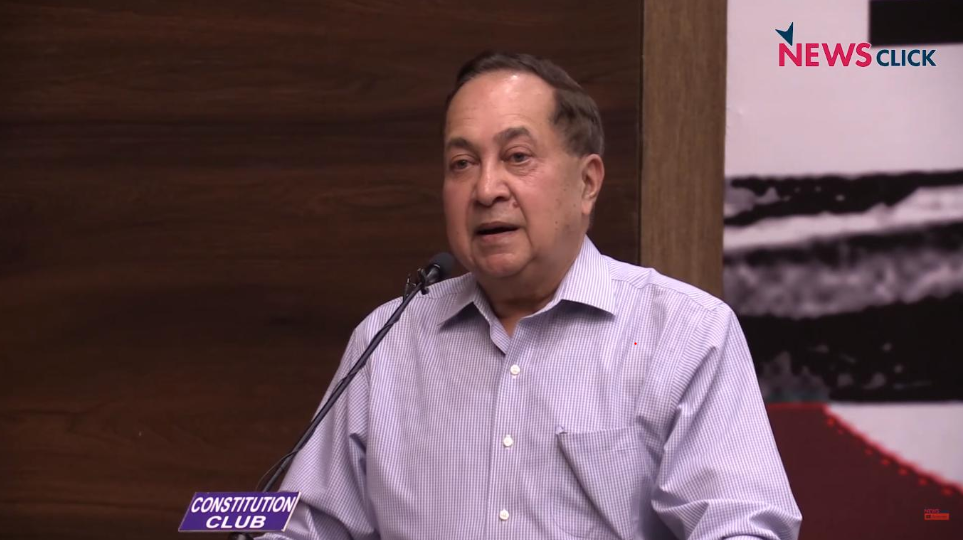
Rafale Deal: The Big Difference With Bofors is Nobody Has Found Money Trail Yet: N Ram

Senior journalist and Chairman of Kasturi & Sons, which publishes The Hindu, speaks about series of investigative articles recently published in the newspaper, suggesting the PMO’s involvement in parallel negotiations in the Rafale deal.
Rafale Deal: The Big Difference With Bofors is Nobody Has Found Money Trail Yet: N Ram

A series of investigative articles published recently in The Hindu has flared up the political storm over the controversial Rafale aircraft deal. The Hindu reports claim that the Prime Minister’s Office (PMO) was conducting ‘parallel negotiations’ in the deal, removing the anti-corruption clauses and the integrity pact, while France refused to offer any bank guarantee for the 36 Rafale jets India bought, which shot the price of each aircraft by 41% Edited excerpts of an interview with senior journalist N Ram, the author of the reports:

Do you think the Rafale scandal will be Narendra Modi’s nemesis?

N. Ram: It was something very mysterious to start with. It was announced suddenly and I think all procedures were violated or bypassed. It also came as a surprise to all his senior officials. The nature of decision-making was quite shocking. Nothing had prepared people for that, especially on a major defence deal because in the past, following the Bofors scandal, governments had been fairly careful in signing defence deals or military deals on this scale anyway. So, it came as a big shock when a completely new framework for a deal to buy state of the art fighter aircraft was announced.

And then there was a stench of corruption here because the price was too high, the air force didn’t get what it asked for, the usual procedures were not followed or violated and it looked like a big loss for the Indian national exchequer. It took some time for some of the details to emerge clearly since the contract was signed in September 2016. But it is about completely manipulating the decision-making process to do something that is seen to be against the public interest, and also in favour of certain business groups and so on. There was no transparency.

The present government removed Hindustan Aeronautics Limited (HAL) and bought a lot less aircraft. Why? What did your research show?

Research shows that it was arbitrary decision-making. It makes no commercial or financial sense, nor any sense for the air force. Because they wanted seven squadrons, now they are going to get two. And part of the plan was to develop indigenous capabilities using a well-known public sector company, HAL. However, that has been thrown out of the window now, saying that it was taking too long. Of course, it’s taken too long but you also contributed to that.

Also Read: MoD Had Protested Against PMO Undermining Rafale Negotiations, Says Report

They could have considered I think the Eurofighter offer, either go for it or use it as a leverage to beat the French down on these issues. But because of the arbitrary nature of the decision-making, parallel negotiation was conducted by the PMO and by the National Security Advisor behind the backs of the officially sanctioned negotiators. In case of the seven-member Indian negotiating team constituted by law in the Defence Ministry, their position is undercut on virtually every issue—from price, bank guarantees, sovereign guarantee to delivery schedules. This is because the parallel negotiators are with the French side rather than the Indian side.

HAL got kicked out. So, who was brought in?

Nobody was brought in, but the interest is in the offsets. Initially, it looked like some of the offset partners will do what HAL was going to do, but it’s not very clear. Some of them will be manufacturing executive business jets rather than anything in the military sphere. I don’t know what the connection is, because you were supposed to strengthen indigenous defence capability, not provide handouts to others who may be in trouble.

Businessman Anil Ambani became involved in the deal. How did that work?

He went to Paris and boasted about the deal being very big. It was even reported in the press. It is not yet clear what the size of investment with Anil Ambani’s joint venture will be. But I think they have said that he will put out an executive jet, whether it has anything to do with defence that we don’t know.

Could you please elaborate on the extent of corruption?

For example, the procedure laid down has to have anti-corruption clauses. There should not be any commission agents or undue influence- it’s called the integrity pact. And the buyer, the Government of India, will have access to the book of accounts of the commercial suppliers—Dassault and MBDA France in this case—their books of accounts would be open to scrutiny, to check in case they give a bribe or a commission. The French side, however, absolutely refused this under the pretext that it’s an inter-governmental agreement.

Also Read: Govt. Waived Anti-corruption Clauses in Rafale Deal, Says Report

Actually, it’s not an inter-governmental agreement if these supply protocols are to be executed by the commercial private companies. Have they paid commissions? Or are they going to pay commissions? Have they used undue influence? What are they hiding in the book of accounts? These questions arise, which lead to suspicion of corruption.

Why would the government want to waive anti-corruption clauses? To hide something?

That’s the question we have asked. This is a safeguard that is required in your procedure, then why would you waive it? The negotiators demanded it. The Ministry of Law and Justice had wanted the safety procedures in place, but the PMO’s parallel track shot it down. If you read the report, on every issue similar to this, the French side said it already agreed with them, so that matter is over. Even if only to use it as a bargain, you could have considered the Eurofighter deal, to make the French be more reasonable.

If we listen to Modi now after the Pulwama attack, he blames the Congress government for delaying the Rafale deal. He turned the whole story upside down. How do you see it?

It will be a major issue, and now, of course, they will try to control the narrative, on the platform of hyper-nationalism, jingoism, war mongering, not actually going to war, but talking in a war like manner. Because you can’t go to war with two nuclear states are involved, everybody knows that, but they are using this, but Rafale won’t go away. Modi is saying they delayed it… it’s true, it was delayed, but part of the delay is during his period, because they came into power in 2014, and they got have easily push forward on these issues, making Make in India an important part of it. If the French didn’t agree you could have gone to Eurofighter, which the Air Force says is equally good.

Also Read: Rafale Deal: Is the Inter-Governmental Agreement a Smokescreen?

They both meet Air Force qualifications, the only difference is price and delivery schedules and so on, how quickly you can get it. They hide behind these procedures to say that we can’t consider the Eurofighter option, saying these procedures are already there to prevent us. So, on the one hand you go via procedures to scuttle the Eurofighter offer or looking at the Eurofighter offer or even using it to compare prices and on the other hand, you completely do away with the procedure in striking the new Rafale deal with 36 aircraft. So, I think this is certainly misconduct on a massive scale. It will be a big issue, I think.

Will it be decisive for the elections?

No issue is decisive, I believe that the really decisive issues are livelihood issues. And if you see the public opinion polls, now and earlier, once usually the top will be unemployment, other livelihood issues are price rise, and the rural distress in a country like India, the agrarian distress, those are the top issues. Even now they will be the top issues followed by whether this hyper nationalism or Rafale, we can’t say it. But livelihood issues matter most in any election in India.

How is the Rafale deal different from Bofors?

The commonality is in decision-making. In the Bofors deal and also in Rafale deal, professional standards were not applied to make the decision. In Bofors, for example, the rival to Bofors, the French Howitzer, came first and all the military trials, but through political intervention, Bofors was preferred. And then you found that, it involved commission payments, bribes, disguised as commission, percentage payments, so everything… something was supplied as part of the contract, the money went to secret Swiss bank accounts to these people and they were of course initially hidden, we found out who they were.

In Rafale, the money trail has not been found yet. But decision-making is common, but as I said the anti-corruption clauses, the integrity pact all this were done away with, making it easier to cover up corruption if it’s happened and so on. That’s the huge difference. The big difference is nobody has found the money trail yet. Same thing about 2G spectrum by the way, they alleged it’s a huge scam. A. Raja, the then telecom minister said that there is no money trail, he said it in many interviews, including what The Hindu published, and that’s exactly what the trial court found. They found no evidence of any money being paid as a result. So, the decisions you can question, but there was no bribe that could be proved by the CBI at that stage, so very similar.

The government seems to be going against The Hindu for publishing the documents. Do you think investigative journalism is getting riskier in India?

Of course, that’s at stake. I think the Official Secrets Act is an obnoxious piece of legislation. It goes back to 1923, its part of the British Raj, used it to against the people of India, against the freedom struggle at that point. Unfortunately, it continues to be in the statured books. It has been rarely used against publications. Those who publish any number of secret documents have not been punished in the past. In 1981, I was Washington correspondent with The Hindu, and we published many secret papers, where India was involved in negotiations with International Monetary Fund for what was then the largest multi-lateral loan of credit in line of credit in history, 5 Billion SDR, about $ 6.3 billion at that time. And lots of secret papers were there. Nobody spoke about using the Official Secrets Act against it.

Also Read: ‘Stolen Documents’: Opposition Questions Government’s Ability to Defend Country

On Bofors, we published 250 documents, including many government documents, nobody spoke about using the Official Secrets Act of 1923 against the publications. The public-spirited lawyer Prashant Bhushan has produced the secret papers and documents and taken them to the court. For example, on the coal block allocations scandal, the courts have no hesitation in looking at it. Nobody thought of using the Official Secrets Act against Prashant Bhushan. So, the first time it happened was in the Supreme Court, but it remains to be seen. It has been clarified that it won’t, I think, according to the report in Times of India and also in Editor’s Guild statement, that it won’t be used against the journalists and lawyers. Let’s wait and see. But we are not concerned about it. Because we are well protected by Article 19(1)(a) of the Indian Constitution. The fundamental right to freedom of speech and expression and also by the RTI provisions specifically Section 8(1i) and 8(2) which overtake the Official Secrets Act, so we are not really concerned about it.

Aaquib Khan is a Mumbai-based multi-media journalist. He tweets at @kaqibb.


There’s a price to pay Balakot videotape validates India’s claims

There’s a price to pay

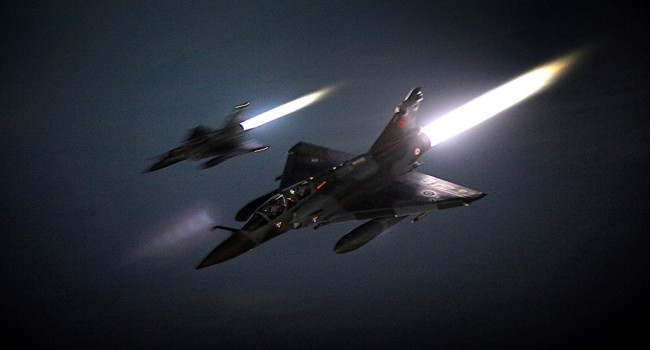
Eighteen terrorists, 14 from the Jaish-e-Mohammed (JeM), have been gunned down over three weeks in the Valley. These include the second-in-command and key commanders of the terror outfit that planned and executed the lethal February 14 Pulwama attack, killing over 40 CRPF personnel. Violence begets violence and there was a response which came fast, and expectedly, all guns blazing. Not losing any time, the Ministry of Home Affairs ordered the immediate movement of the armed forces and the deployment of an additional 100 companies of the paramilitary forces in the Valley. There was pressure to deliver: Jaish operatives had to be wiped out in the Valley. Simultaneously, they had to be eliminated across the border. What followed was the daring success of the February 26 airstrikes unleashed on JeM training camps at Balakot.

After the Pulwama attack, with an iron hand and a new resolve, the security forces have determinedly dealt a major blow to JeM, taking out key conspirators one by one. The Sunday encounter saw the killing of 25-year-old main Jaish coordinator of the Pulwama attack, besides a Pakistani national and the group’s operational chief. Operations will continue ‘till we eliminate all of them’, declared the Army during a joint briefing. In attendance were the IGP and the CRPF IG (Operations) in Kashmir. The coming together of the forces on intelligence sharing, seamless communication and rapid action is clearly a reason for the successful operations that have liquidated Jaish leadership in the Valley. Hizbul Mujahideen and Lashkar-e-Taiba are on the radar, too. The objective being that there is no recurrence of a Pulwama or Uri.

In what underpins India’s declaration on Balakot, a videotape quotes the PoK police and civilian population as claiming that four Pakistani soldiers were killed in the airstrikes and infrastructure had, indeed, been damaged. Foreign media had in a rush undermined India’s claim of having effected substantial damage, but did admit later to ‘limited’ assessment. The IAF’s claims of success stand vindicated. Balakot action has struck the message home: India will not think twice before penetrating the borders of its adversaries to avenge the killings of its soldiers.