Sanjha Morcha

What’s New

Click the heading to open detailed news

Current Events :

web counter

Print Media Reproduced Defence Related News

Panagarh airbase renamed after former IAF chief

he Indian Air Force has renamed West Bengal’s Panagarh airbase as ‘Air Force Station Arjan Singh’ after the former IAF chief. “It is… the first time that we have taken a conscious decision to rename an airbase after an individual,” an officer said. Notably, Singh, having the rank of ‘Marshal of the IAF’, is the IAF’s only ‘five-star’ rank officer.

Panagarh airbase renamed in honour of Arjan Singh

 Panagarh/New Delhi, Apr 15 (PTI) The key airbase at Panagarh in West Bengal has been renamed as Air Force Station Arjan Singh in honour of the Marshal of the Air Force, who turned 97 today.

The renaming of the Air Force Station was announced by Chief of Air Staff Arup Raha at a function in Delhi to mark Singhs birthday.

Addressing a simple renaming ceremony in Panagarh, Air Officer Commanding-in-Chief, Eastern Air Command Air Marshal C Hari Kumar said, “It is a proud moment for the Indian Air Force and the state of West Bengal.”

“He is an icon and a role model. We have to work hard to ensure that the name is suitably looked after in terms of capability and performance. It is for the first time that we have taken a conscious decision to rename an airbase after an individual,” Air Marshal Kumar said.

An icon of the Indian military history, Singh, the first Indian Air Force Chief to lead a young IAF into war in 1965, was hardly 44 years of age when entrusted with the responsibility.

Air Force Station Arjan Singh in Panagarh, approximately 150 kms from Kolkata, will house the C-130J military transport aircraft, capable of carrying out special operations. These planes will be flying with the Mountain Strike Corps along areas bordering China. PTI NIK SAP SMN SC SMN


OROP veteran held for ‘cheating’

OROP veteran held for ‘cheating’

Gurgaon, March 11

The Gurgaon police arrested 75-year-old Wing Commander CK Sharma (retd) late last night for alleged misappropriation of funds of the organisation formed to spearhead the protest for ‘one rank,one pension’.An FIR was registered against Sharma, Maj-Gen Satbir Singh (retd) and Capt VK Gandhi (retd) on a magistrate’s orders after Lt-Gen Raj Kadiyan (retd) , chairman of the Indian Ex-Servicemen Movement, accused them of siphoning off Rs 14 lakh from the organisation between January and July 2013. All three were office-bearers of the organisation that was founded in 2008. The society’s account was maintained in a private bank. The arrest was made after his anticipatory bail application was rejected by the ADJ, Gurgaon. Sharma was the organisation’s treasurer. —TNS


We don’t treat you as enemy, Parrikar to tell China today

Ajay Banerjee

Tribune News Service

New Delhi, April 15

Defence Minister Manohar Parrikar, when he leaves for China tomorrow, will carry an important message for Beijing’s top leadership: “We don’t treat you as an enemy and nor does India equate China and Pakistan.”Parrikar, who was scheduled to leave on April 17, has advanced his visit by a day so that he can fly Air India instead of flying out on a Chinese airline the next day. He also opted out of using a personal jet. He will be in Shanghai to meet the Indian business community before flying off to Beijing.In China, his meetings with the government start on April 18 where he would tell the leadership that India does not hyphenate Pakistan-China and both are separate countries for New Delhi, said sources while telling the key agenda points for Parrikar’s meetings.He will address issues of cooperation in the Indian Ocean. China and India already conduct coordinated anti-piracy patrols along the Yemen and North-East Africa coastline of the ocean. China is sensitive to maintain security of the sea lines of communications used by merchant ships as millions of tonnes of its crude oils pass very close to India’s west coast and also close to the Andaman and Nicobar islands on the east edge of Bay of Bengal.Parrikar and his high-level team will be discussing expansion of military exchanges at senior levels and allow each other’s officers into top military institutions like the National Defence College in Delhi.China is preparing to send its troops for UN peacekeeping mission and India has more than 50 years of experience in such missions.The Indian delegation will be meeting Chinese premier Li Keqiang followed by a meeting with General Fan and latter with Defence Minister Chang Wanquan. Parrikar will also visit the headquarters of the Chengdu Military area command which is tasked to face India.He shall be accompanied by Defence Secretary G Mohun Kumar, Director General of Military Operations (DGMO) Lt Gen Ranbir Singh, Vice Chief of the Indian Air Force Air Marshall BS Dhanoa and Chief of the Navy’s Western Command Vice Admiral Sunil Lanba.

The visit’s agenda

  • Defence Minister Manohar Parrikar will address issues of cooperation in the Indian Ocean. China and India already conduct joint anti-piracy patrols along the Yemen and North-East Africa coastline of the ocean
  • Parrikar and his high-level team will be discussing expansion of military exchanges at senior levels and allow each other’s officers into top military institutions like the National Defence College in Delhi
  • China is preparing to send its troops for UN peacekeeping mission and India has more than 50 years of experience in such missions

UERC urged not to approve power tariff hike for domestic consumers

UERC urged not to approve power tariff hike for domestic consumers
Brig KG Behl (retd)

Tribune News Service

Dehradun, March 10

The Uttarakhand Electricity Regulatory Commission (UERC) should not approve the proposed hike in power tariff for domestic and commercial consumers for 2016-17 in the state, stated Brig KG Behl (retd), president of the All India Consumers Council, Uttarakhand, in a press note issued here today. He said Uttarakhand Power Corporation Limited (UPCL) should chalk out effective plans to strengthen the electricity distribution system.Brig Behl said the present domestic tariff was already too high. Consumers were paying Rs 3.80 per unit after consuming 200 units in a billing cycle.“When the consumption of electricity goes beyond 400 units, the rate charged from domestic consumers is Rs 4 per unit, which is quite high considering that it is for domestic purposes,” he said.Brig Behl added domestic consumers were thus being charged high for their normal consumption which should not be more than Rs 3 per unit. He lamented that domestic consumers pay Rs 120 per month as a fixed charge.He said since electricity was generated in the state, domestic consumers should be charged at the rates at which it was produced and not at the rates at which electricity was being procured from other sources for industrial purposes.


Ready for talks, but India not forthcoming: Pak

Ready for talks, but India not forthcoming: Pak
—Tribune file photo

New York/Islamabad, April 15

NEW YORK/ISLAMABAD: India is “not forthcoming” in resuming comprehensive dialogue with Pakistan and such an attitude is “impeding” prospects of normalisation of bilateral relations, Pakistan’s envoy to the UN has said, while in Islamabad, the Pakistan foreign office rejected a notion that the peace process was suspended, saying it remained engaged with New Delhi.

Pakistan’s Permanent Representative to the UN Ambassador Maleeha Lodhi told a group of students and faculty members from the US Army War College last week that despite a positive start following the coming to power of the government of Prime Minister Narendra Modi, India suspended talks between the two countries on “flimsy grounds and set unacceptable pre-conditions” for their revival.

According to a press release by the Pakistan Mission at the UN, Lodhi said in spite of Pakistan’s call to resume broad-based, comprehensive dialogue, “India was still not forthcoming”.

In Islamabad, Foreign office spokesman Nafees Zakaria during a weekly media briefing, said: “We need to look ahead and not think in terms of foreclosing any options. Both sides are in contact with each other.”

The spokesman was referring to media reports quoting Pakistan’s High Commissioner in India Abdul Basit as having said that the peace process was “suspended”, Dawn online reported on Friday.

“Dialogue is the best option. Diplomacy is for interaction and engagement between countries,” Zakaria said.

Last December, the two countries had agreed to restart the peace dialogue, which was named Comprehensive Bilateral Dialogue.

It was agreed during Indian Prime Minister Narendra Modi’s surprise stopover in Lahore on Christmas Day that the foreign secretaries would meet to decide the schedule and other details of the first round of talks.

However, the plan for re-engagement after a hiatus of two years was affected by the Pathankot attack in January and the two countries have not been able to schedule the foreign secretaries’ meeting since. Zakaria said the meeting would take place once the “modalities” have been settled. —IANS/PTI


‘Can’t fight Pakistan, China at the same time’

NEW DELHI: Setting off alarm bells about the country’s ability to tackle a combined threat from China and Pakistan, Indian Air Force vice chief Air Marshal BS Dhanoa on Thursday admitted the IAF did not have sufficient number of warplanes to fight a two-front war.

“Our numbers are not adequate to fully execute an air campaign in a two-front scenario,” said Dhanoa, drawing attention to the sharp reduction in India’s fighter fleet. The count of IAF’s fighter squadrons has shrunk to 33 compared to a desirable strength of 42, a capability gap the air force is struggling to fill.

It is rare for top military commanders to make such a startling public admission although Parliamentary panels have raised questions about India’s ability to fight the two adversaries at the same time – a worrying scenario the IAF describes as ‘Contingency-III’. “Probability of a two-front scenario is an appreciation you need to do. But are the numbers adequate? No. The squadrons are winding down,” said Dhanoa, who is in line to become the IAF chief on December 31, 2016.

The admission comes days before the IAF will carry out a firepower demonstration in Pokhran — the site of India’s first underground nuclear detonation — on March 18, a spectacle that will involve 181 planes, including 103 fighter jets. President Pranab Mukherjee and Prime Minister Narendra Modi are expected to witness exercise Iron Fist-2016, held every three years.

The only defence attaches not invited to witness the exercise, the tagline of which is ‘Demonstrating the Capability to Punish’, are from China and Pakistan. The IAF said it was a collective decision of the ministries of external affairs and defence to leave them out.

The IAF’s plans to scale up its capabilities have hit several hurdles, including a delay in the light combat aircraft (LCA) project, scrapping of a deal to buy 126 modern fighter jets, and no breakthrough in the Rafale purchase.


Ceasefire breach by Pak; 1st time in 6 months

short by Anupama K / 09:50 am on 10 Apr 2016,Sunday
Pakistani troops opened a fire along the LoC in the Poonch Sector of Jammu and Kashmir on Saturday night, in the first breach of the bilateral ceasefire in six months. The firing continued until on Sunday early morning, said an Army spokesperson. The troops opened fire after Pakistan suspended talks with India last week on diffusing tension along the LoC.

Beyond blockades by Maj-Gen (retd)Ashok Kumar Mehta

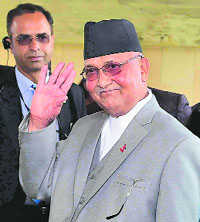
Nepal’s ruling K.P. Oli-led Left Alliance is intrinsically pro-China but geography, history and culture make it lean towards India. It’s high time that India leveraged its historic ties with Nepal to curb China’s growing clout in the region and erase the bitterness of last year’s ill-advised blockade
Beyond blockades
The Nepalese Prime Minister Khadga Prasad Sharma Oli, after paying tribute at Rajghat, during his recent visit to India. PTI

AFTER a week-long trek in the hills around Pokhara, I reached Kathmandu the very day last month Prime Minister KP Oli returned from his visit to China and his Chief of Army Staff, Gen Rajinder Chhetri flew there, the typical political pilgrimage they had done earlier to India that has become mandatory for Nepal to balance its relations with India and China. But it is still India first. Three centuries ago, Nepal’s founding father, king Prithvinarayan Shah had established the equidistance edict. In Hotel Malla, Gopal Thapa, a staff member, asked: “Mr Oli is back from China. Will India impose a blockade again?” This worry is prevalent among many sections of society. The China card has been used by the Royals to guard Nepal’s sovereign space, strategic autonomy and regime security. Its more visible use was noticed after the Maoists rose to power, openly advocating the need to balance India with China and looking beyond India to reduce the overwhelming dependence on its southern neighbour. The ruling Left Alliance government, consisting mainly of Communists and Maoists, is intrinsically pro-China but geography, history and culture make even it lean towards India. Stung by the blockade, the Nepalese hail the 15-point joint statement containing 10 agreements as a diplomatic victory especially the reference to the constitution as historic progress in the transition of Nepal whereas India merely noted its promulgation. The Chinese Ambassador Wu Chuntai  had to meet Madhesi leaders who had complained about the iniquities of the constitution lauded in the joint statement. The 10 agreements relate to transit and trade, infrastructure, connectivity including the celebrated ‘One Belt, One Road’ initiative, energy supplies and storage facilities, education, health, tourism — the whole gamut of interactions, exchanges and projects that fill up any joint statement. The transit agreement and feasibility of providing petroleum products are indeed a first but contingent upon connectivity and cost effectiveness. The Lhasa railway has reached Xigatse and is likely to be extended to Gyirong on the Nepal border by 2020. Its further penetration as envisaged in the joint statement to reach Lumbini in Terai is in the realm of the distant future. During a public engagement in Kathmandu on ‘One Belt, One Road’ last year, even as the blockade was in full fury, a young businessman told me that he and his friends were re-routing their business via the North through Hong Kong, instead of the customary southern route. Though long distance, time consuming and costly, the northern transit option is a strategic breakthrough, affording psychological comfort during any future  blockade.From an Indian point of view the outcome of the Oli visit is seen high on symbolism and intent: preparation of detailed project reports and feasibility studies but few firm commitments. China has spread its tentacles across the length and breadth of Nepal over the last two decades, utilising its economic wealth to secure political and strategic influence. In 2012, India slipped from the top position in FDI but regained primacy over China  in 2015. The competition is likely to continue. Chinese companies enjoy near monopoly in telecommunications and infrastructure sectors. That said, China recognises its lack of human and social capital for people-to-people engagement and its red lines in Nepal. Still it is a challenge India has to meet creatively, with its many leverages and strategic assets in Nepal.  The 135-day blockade, which caused unprecedented pain and hardship to ordinary Nepalis, has become  part of folklore featuring in songs and films. Hardly anybody in South Block anticipated the anger, alienation and anti-India sentiment it would generate. Many former diplomats would laugh it away saying a blockade has happened before. The 14-month blockade in 1989-90 is as different from the one last year as chalk from cheese. Only with nose and ear to the ground would the PMO have known the lifestyle changes in and outside the Kathmandu valley in the last two decades. In the past, flippant comments by the likes of Madhuri Dixit, Hrithik Roshan and Chief Minister Madan Lal Khurana would create a stir and temporary anti-India sloganeering. So also the Maoists whipping up anti-India hysteria over imagined border encroachments, allegations of India stealing Nepal’s water resources and other engineered indignities  inflicted by Big Brother India.  The Indian side of the border at most transit points, especially at Sunauli-Bhairahawa, is nothing short of  filth and squalor and the road network shoddy for a country with the fastest-growing economy in the world compared to the hugely smart conditions on the Nepali side. That the Birgunj blockade was very successful is partly reflected in the decline in customs revenue there, with corresponding increase in Bhairahawa. Traders fear that Madhesis will restart the protests. The blockade generated a black economy, especially in gas and petrol which has still not normalised completely. Overall, the coercive strategy to secure the constitutional amendments on behalf of the Madhesis and jana jatis was ill thought and has damaged India’s long-term interests in Nepal. Political instability continues to dog Nepal and no post-earthquake reconstruction has begun. New Delhi should help repair the damage done by the blockade by enhancing and fast-tracking its development-assistance programme and imaginatively winning back the hearts and minds of the people, especially the media. The open border and the 1950 Treaty of Peace and Friendship, confer upon the Nepalese unique privileges and facilities in India that no national enjoys in another country. Landlocked Nepal is actually India-opened and provided outlets to sea. Beijing knows it cannot replace India and Nepal and therefore, does not give false hopes to Kathmandu. What Nepal really needs now, as championed by the diminished Maoist leader Prachanda, is a National Unity government. While Oli has to keep his promise of addressing the Madhesis’s residual constitutional issues, Prime Minister Modi will need to revisit Pashupatinath. The writer, a retired Major-General from the Gorkha Regiment, has been visiting Nepal since 1959.


हिन्द महासागर में चीनी चुनौती

Posted On March – 9 – 2016

भारत जैसा देश जिसके पास समुद्री तटों पर रहने वाली आबादी हो तो यह लाजिमी हो जाता है कि वह उसकी समुद्रवर्ती सुरक्षा का ध्यान रखे। चीन और पाकिस्तान से लगने वाली अपनी समुद्री और जमीनी सीमाओं की सुरक्षा संबंधी दरकारों ने भारत के लिए इस जरूरत को ज्यादा उभार दिया है। आजादी के बाद कई दशकों तक आयात के विकल्प ढूंढने की नीति के चलते विश्व व्यापार में भारत का हिस्सा बहुत कम रह गया था। 1990 में आर्थिक चुनौती के बाद भारत को अपनी आर्थिक नीतियों में भारी फेरबदल करने पर मजबूर होना पड़ा था। इसके बाद हुआ यह कि भारत की अर्थव्यवस्था का एकीकरण न सिर्फ वैश्विक अर्थव्यवस्था के साथ हुआ बल्कि एक बढ़ते बाजार की बदौलत व्यापार और निवेश के लिए मुफीद माने जाने से हमारा देश वैश्विक अर्थव्यवस्था का एक रचनात्मक और सतत महत्वपूर्ण सदस्य बनकर भी उभरा। तब से लेकर हम उस जीर्ण अर्थव्यवस्था को पीछे छोड़कर एक गतिशील और उभरती हुई आर्थिक शक्ति में परिवर्तित हो चुके हैं।

विदेश व्यापार और निवेश भारत की तेजी से बढ़ती हुई आर्थिक वृद्धि के अनिवार्य केंद्र बिंदु बन गए हैं। हमने अपनी आर्थिकी को पूर्व और दक्षिण-पूर्व की सबसे तेजी से बढ़ती अर्थव्यवस्थाओं से जोड़कर समझदारी वाला काम किया है। आसियान’ संगठन के 10 देश जिनमें म्यांमार से लेकर फिलीपींस और जापान और दक्षिण कोरिया इत्यादि भी हैं, उनके साथ अब हमारी बृहद आर्थिक साझेदारी है। इसके अलावा हम आस्ट्रेलिया के साथ मुक्त व्यापार संधि’ करने के लिए बातचीत कर रहे हैं और अन्य दक्षेस देशों के साथ भी इसी तरह के समझौते करने का प्रयास कर रहे हैं। इससे भी ज्यादा यह कि आसियान’ के नेतृत्व वाले मंच जैसे कि पूर्वी एशिया शीर्ष वार्ता’ ने भारत को बंगाल की खाड़ी में बड़ी सामरिक भूमिका निभाने का मौका प्रदान किया है। हालांकि दक्षिण एशिया के देशों के बीच एकीकृत आर्थिक व्यवस्था बनाने की गति धीमी रही है, इसका मुख्य कारण पाकिस्तान का अडि़यल रवैया रहा है। महत्वपूर्ण यह है कि विश्व के सबसे ज्यादा जनसंख्या वाले दो देशों, चीन और भारत के बीच कुछ तनाव और विवाद वाले मुद्दे भी आपसी व्यापार और निवेश के माहौल को फलने-फूलने से नहीं रोक पाए।
भारत इस तथ्य को नजरअंदाज नहीं कर सकता कि जब भी हमारे देश ने अपनी पूर्वी सीमा के पार अपनी भूमिका को बढ़ाने का प्रयास किया है तब-तब चीन ने हर उस काम में रोड़ा अटकाने का काम किया है। मसलन बीजिंग की सरकार ने भारत द्वारा पूर्वी देशों की विभिन्न समितियां जैसे कि आसियान’ संगठन, आसियान क्षेत्रीय मंच’ और पूर्वी एशिया शीर्ष वार्ता’ के साथ अपने आर्थिक और सुरक्षा संबंधी रिश्ते बनाने के प्रयासों की कड़ी मुखालफत की है। वहीं दूसरी ओर चीन म्यांमार की सीमा के अंदर से भारत के खिलाफ मुहिम चलाने वाले उत्तर-पूर्वी पृथकतावादी संगठनों के साथ अपने संबंध बनाए हुए है। परंतु अब हम ऐसे चीनी प्रयासों का प्रत्युत्तर देने के लिए लगातार सार्थक सक्रियता बढ़ाने की ओर अग्रसर हैं। हमारा ध्येय अपनी पूर्वी सीमा से लगे देशों के साथ एक व्यावहारिक सुरक्षा तंत्र विकसित करने का है। बंगाल की खाड़ी के इलाके में अपने सैन्य अड्डे और पैठ बनाने के चीनी प्रयासों की वजह से हमारी चिंता बनी रहेगी। लेकिन अपने सहयोगी देशों जैसे कि अमेरिका और जापान के साथ बने सहमतिपूर्ण राजनयिक प्रयासों ने भारत को यह मौका प्रदान किया है कि वह अपनी पूर्वी सीमा के समुद्री क्षेत्र में सुरक्षा व्यवस्था को मजबूत कर सके। म्यांमार, बांग्लादेश, श्रीलंका और मालदीव में अपनी प्रधान भूमिका तय करवाने में चीन सफल नहीं हो सका है। जहां एक ओर भारत ने अपने पूर्वी तटों पर सुरक्षा को सुनिश्चित करने के लिए अपनी नीतियों में परिवर्तन किया है, वहीं दूसरी ओर पश्चिम में स्थित अरब सागर के इर्द-गिर्द वाले हमारे पड़ोसी देशों के बीच क्या पक रहा है, यह ठीक से कहा नहीं जा सकता। चीन न केवल हिंद महासागर में स्थायी सैन्य उपस्थिति बनाने की ओर अग्रसर है बल्कि ऐसा वह पाक के साथ मिलकर कर रहा है। भारत को चीन के इस किस्म के प्रयासों का संज्ञान लेते हुए उन परियोजनाओं पर पैनी नजर रखनी होगी, जिनके तहत वह हमारी पश्चिमी सीमा के पार वाले इलाके में सड़कों और बंदरगाहों का नेटवर्क बनाकर बढ़त बनाने की कोशिश में है। चीन अपने सामरिक उद्देश्य की पूर्ति की खातिर एक सिल्क रोड आर्थिक पट्टी’ बनाने जा रहा है जो उसे मध्य-एशिया, पाक-अधिकृत कश्मीर, फारस की खाड़ी, रूस और बाल्टिक देशों से जोड़ देगी। इसके अलावा चीन 21वीं सदी का एक ऐसा समुद्री-सिल्क-मार्ग भी बनाने जा रहा है जो उसके तटों से शुरू होकर हिंद महासागर से होता हुआ पश्चिमी देशों तक जाएगा। साथ ही चीन हिंद महासागर, एशिया और अफ्रीकी देशों में बंदरगाह बना रहा है। जिस बात से भारत के लिए आंखें मूंदना ठीक नहीं होगा, वह है कि सिल्क रोड’ हमारे पूर्वी और पश्चिमी, दोनों पड़ोसियों को अपने पाश में लेती हुई बनेगी और यही सड़क समुद्री-सिल्क-मार्ग’ की राह में पड़ने वाले हिंद महासागर के तटों और अरब सागर के मुहाने पर स्थित पाकिस्तान के गवादर बंदरगाह तक संपर्क बनाने का काम भी करेगी।
चिंता की बात यह है कि भारत के समुद्री-मार्ग गवादर के काफी पास से होकर गुजरते हैं और इनके जरिए फारस की खाड़ी में स्थित देशों से हमारा 70 फीसदी से ज्यादा कच्चा तेल आयात किया जाता है। अब चीन ने अपनी इन महत्वाकांक्षी जमीनी और समुद्री सिल्क रोड परियोजनाओं को बढ़ावा देने के एवज में पाकिस्तान को 46 बिलियन डॉलर देने का वादा किया है ताकि वह इसके गवादर बंदरगाह का लाभ उठाते हुए नियंत्रण एक तरह से अपने हाथों में कर सके। कोई एक दशक पहले तत्कालीन राष्ट्रपति परवेज मुशर्रफ ने इस्लामाबाद में कहा था कि भारत-पाक युद्ध होने की सूरत में भारत यह पाएगा कि चीनी नौसेना हमारी मदद को गवादर बंदरगाह में तैनात है। चीन को लगता है कि पाकिस्तान एक बहुत महत्वपूर्ण सहयोगी इसलिए भी है क्योंकि गवादर न सिर्फ होरमुज जलडमरू के पास स्थित है बल्कि इसके पास होकर भारत के समुद्री जहाज खाड़ी के उन देशों तक जाते हैं, जहां पर लगभग उसके 7 लाख प्रवासी कामगार हैं।
चीन की अत्यधिक रुचि का इस तथ्य से पता चलता है कि यह दो मील चौड़ा समुद्री-गलियारा वह है, जिसके माध्यम से 1.7 करोड़ बैरल कच्चा तेल रोजाना ढोया जाता है। जलमार्ग आगे चलकर मालाका जलडमरू से होकर गुजरता है। इस समुद्री रास्ते के जरिए 1.42 करोड़ बैरल कच्चा तेल जापान को जाता है। यह मात्रा उसके कुल तेल आयात की 80 फीसदी बनती है। समूचा हिंद महासागर क्षेत्र जो अदन की खाड़ी तक फैला है, पूरे संसार के कुल तेल उत्पादन का 40 फीसदी और विश्व तेल व्यापार में 57 फीसदी हिस्सा रखता है। इसीलिए अमेरिका ने इन अति-महत्वपूर्ण सामरिक नौवहनीय मार्गों की सुरक्षा की खातिर बहरीन स्थित नौसैनिक अड्डे में अपना पांचवां बेड़ा तैनात कर रखा है।
आदर्श स्थिति तब होगी जब एशिया के मुख्य तेल आयातक देश जैसे कि भारत, चीन, जापान और दक्षिण कोरिया उन परिस्थितियों पर आपसी सहयोग बनाएं जिनकी वजह से इन महत्वपूर्ण तेल और ऊर्जा सप्लाई समुद्री मार्गों की सुरक्षा को खतरा हो सकता है। लेकिन मौजूदा तनाव और आपसी शक के चलते ऐसा होने की उम्मीद करना ज्यादा ही अपेक्षा करने जैसा होगा, कम से कम निकट भविष्य में इसकी संभावना नहीं है।