NEW DELHI: The Indian Army is likely to cut over 150,000 troops over the next four to five years under an overarching cadre review that seeks to sharpen the force’s effectiveness and prepare it for future wars, two officers familiar with the move said on Sunday. The cadre review, ordered on June 21, covers wideranging issues including cutting the personnel strength of the 1.2-million strong force and merger of different verticals to optimise its functioning, as reported by HT on August 13.
An 11-member panel, headed by the military secretary Lt Gen JS Sandhu, is carrying out the review and is expected to make its preliminary presentation to army chief General Bipin Rawat by the month-end before submitting its final report in November.
“Merging of some verticals and rationalising roles are likely to result in cutting 50,000 troops over the next two years.
A reduction of 100,000 more personnel may be possible by 2022-23,” said one of the officials cited above.
The troop reduction is likely to be achieved through revamping different verticals.
Of missed orders and gained lessons BY Lt-Gen Raj Kadyan
The Army is a great institution for learning. Besides professional and academic training at the Academy, there’s the informal learning that one acquires through observation and interaction with seniors, peers and juniors during the service period.
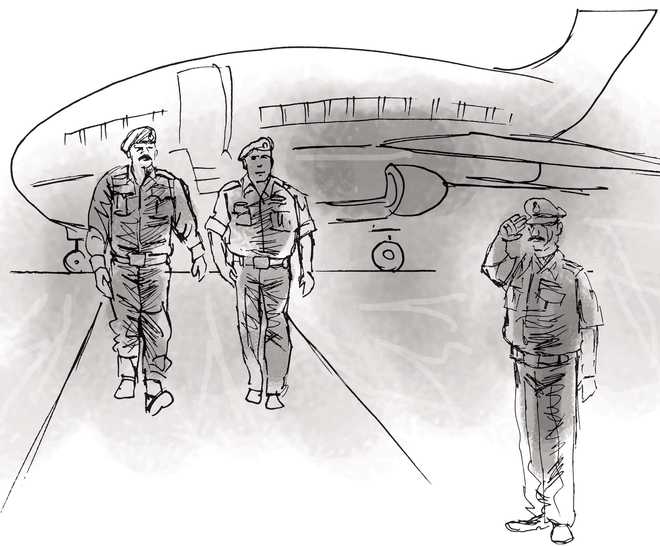
Soon after being commissioned in June 1962, I was part of a battalion that was being raised in Delhi Cantonment. One day, Lt Gen Henderson Brooks (HB) was flying back from the east and was to board the Frontier Mail for Jalandhar, where he was commanding the Corps. My battalion was tasked with detailing a liaison officer (LO). HB was accompanied by Brig PS Bhagat, Victoria Cross, who later rose to become an Army Commander.
Second-Lt (a rank now extinct) Kadyan was detailed as the LO. I would have committed a few faux pas, but thanks to the seniors, each turned out be a learning lesson.
Since the area HQ letter was also addressed to the transport company, directing it to send a car and a truck for the baggage, I took it for granted that the firm would do its part. Accordingly, I got dressed and waited for the car. Suddenly, I saw the adjutant, Major (later Maj General) WS Bakshi arrive on his scooter with a staff car in tow. He was my mentor in the battalion. “Oye kaka,” he said in his disarming style, “since we did not tell them where to send the car, he (the driver) landed up at my house.” Though he graciously used “we”, it was my fault for not coordinating. Lesson 1: An LO must button up the details and I had failed to do so. Lesson 2 : How to tick off without hurting someone’s self respect, a la WS Bakshi. We drove to the Palam airport. The sentry stopped me and said the car wasn’t allowed inside. “Orders are orders,” I thought. I got down and walked to the terminal where the aircraft would stop.
As they came out, Brigadier Bhagat asked me if I had brought a car. “Yes sir, it is just outside the gate as the sentry did not allow it.” “Ok, let us go and get it,” he said, without showing annoyance. On arriving at the gate, we found the sentry missing. He signalled the car parked nearby and we drove inside the airport. I felt stupid. The Brigadier made no mention of it and in fact engaged me in talk as we drove to the aircraft. Here too, I learnt two lessons. Lesson 1: Since I was receiving a VIP, I should have called for the guard commander and insisted on taking the car inside. Lesson 2: How to subtly treat a discomfited young officer. Brigadier’s silence had a much greater impact than any hollering I should have deservedly got.
As they were getting into the car, Brig Bhagat told me I could break off since the General’s ADC was handling the baggage. As I saluted, HB interjected, “Hold on, what are your orders?”
“I have been asked to see you off at the railway station, sir.” The General said, “Then do what you have been told.” Then turning to Brig Bhagat, he said, “Prem remember, order, counter order, disorder”. The lesson requires no explanation.
Separated by two ranks, HB was Bhagat’s boss’s boss. But I was amazed to see the degree of informality between the two. Driving past some barracks in the cantonment, HB remarked, “These came up in 1945.”
“No sir,” said Bhagat, “these were constructed in 1951.”
“I am very sure these came up in 1945,” the General said emphatically.
“Sir, I am also very sure, these were constructed in 1951.”
HB: “Ok Prem, who is the senior?”
Bhagat: “You are right sir, these actually came up in 1945.”
The lesson I learnt from their light-hearted banter was that a senior does not have to remain stiff and formal. At the same time, the junior must never forget his juniority. You get the best out of a subordinate by treating him as an equal.
Centre alerts state on efforts to revive Khalistan movement
The Union Government has asked the state to be wary of any effort for the resurgence of the pro-Khalistan movement. The Centre’s warning was reportedly conveyed to Chief Minister Capt Amarinder Singh during his meeting with Union Home Minister Rajnath Singh on Friday.
Intelligence agencies have been on high alert in Punjab after the London declaration by the Sikhs for Justice (SFJ) for Referendum 2020 was held last month. Over the past few months, the Punjab Police have busted terror modules in the state, linked with organisers of the referendum, under an ISI operation code, named “Express”.
Though officially the state government maintained that they discussed various security-related issues and asked the Home Minister to address the concerns regarding Punjab’s internal security issues, sources say that the Centre expressed “serious concerns” over the efforts by the Pakistan’s ISI to revive the secessionist movement in Punjab.
Capt Amarinder also had discussions with Prime Minister Narendra Modi on Saturday over national security concerns of Punjab and “hoped for a positive response from the Union Government”.
The Akali Dal, an alliance partner of the BJP, too, has been raising the issue of radical Sikh leaders staging a dharna at Behbal Kalan, who, it claimed, were receiving funds from abroad. Sources say there have been reports regarding call records of these leaders with radical Sikhs based in Germany, Canada, the US and the UK, which has also set the alarm bells ringing.
The issue of taking back sacrilege probe from the CBI was reportedly not discussed with Rajnath Singh. Officials present in the meeting confirmed that the CM was initiating “a legal procedural way” to get the cases back so that these could be investigated by the Punjab Police, as declared in the Vidhan Sabha, and as such the matter need not be discussed with the Home minister.
The decision of the army personnel to take their concerns to court on this issue is ill-judged.A petition has been filed by 356 army personnel, including 74 officers, in the Supreme Court against the alleged dilution of the Armed Forces (Special Powers) Act (AFSPA) without specific amendment to that effect. The petition comes in the wake of the Court asking for the constitution of a Special Investigation Team by the CBI to probe 1,582 alleged cases of extra-judicial killings between 2000 and 2012 in Manipur and more recently, the Jammu and Kashmir Police filing an FIR against an army officer for firing at alleged stone-pelters leading to the death of three persons. The petition claims that army personnel are demoralized over the move to prosecute them under the criminal justice system for alleged human rights violations. The decision of the army personnel to take their concerns to court on this issue is ill-judged.
Be it the implementation or withdrawal of AFSPA from a particular terrain, or the specific structure and form it should take in its operation, these are political calls taken by elected governments. It does not behoove members of an apolitical institution like the armed forces to be seen to jump into the fray, acting as a pressure group, to influence policy. The filing of the petition could even be deemed to be a violation of the Army Act, which restricts serving personnel from being a part of collectives such as trade/ labor unions and from attending or addressing meetings or taking part in demonstrations organized by “any body of persons for any political or other purposes”. The AFSPA has provisions that provide immunity for armed personnel involved in counter-insurgency operations, but transgressions while in the line of duty are open to legal scrutiny. There have been extended debates on the efficacy and desirability of the AFSPA in a constitutional democracy and several commissions and panels have suggested changes and amendments. The concerns flagged by the armed forces, too, have figured in these deliberations.
It is not just that the army personnel going to court on AFSPA signals an awkward attempt to cross the line disturb the civil-military division of labor. The increasing propensity of army personnel to approach the courts for redress, on issues ranging from promotions to policy matters like AFSPA, also points to the failure of internal resolution mechanisms within the institution. The leadership of the armed forces must heed the warning, and reflect on this disturbing trend of their personnel not abiding by the restraints and limits imposed on them by their institution.
Exemption on the cards for defence personnel in UT
AGENDA TO COME UP FOR APPROVAL IN MC HOUSE MEETING ON FRIDAY, TO COVER BOTH RETIRED, SERVING PERSONNEL
CHANDIGARH: All retired and serving defence personnel living in the city may soon be exempted from paying house tax. The municipal corporation will take up the matter for approval during the House meet on Friday.
The move will benefit 834 defence personnel in the city.
MC commissioner KK Yadav said the move is a token of respect for the defence personnel for their contribution towards the country. Mayor Davesh Moudgil said the city is proud to have so many veterans and serving officers whose contribution to the nation is remarkable.
A similar agenda was moved earlier too, but was rejected by the Chandigarh administration, as even family members of defence personnel had been added as beneficiaries.
Yadav said in the fresh agenda, the exemption is proposed only for the personnel. “Those having properties in their names will get the benefit,” he said.
Yadav said the MC will incur ₹35-lakh revenue loss because of the move, but it is nothing in comparison to the contribution of defence personnel. He clarified that there is no exemption on commercial properties owned by defence personnel.
PROPERTY TAX IN EXEMPTED VILLAGES The MC will also table the agenda on imposing property tax in five villages. Of 23 villages in Chandigarh, Burail, Kajheri, Attawa, Buterla, Badheri, Palsora, Maloya, Dadumajra, Hallomajra and Manimajra fall under the jurisdiction of the civic body while the rest are under the UT administration’s jurisdiction. However, commercial units in Hallomajra, Kajheri, Palsora, Maloya and Dadumajra are exempted from property tax so far.
In October 2015, the UT administration had asked the MC to consider implementing property tax in these villages, but whenever the agenda came up in the House meetings, councillors rejected it stating that the villages should be provided basic amenities first.
Yadav said the UT administration has clarified that there is no provision in property tax bylaws making it mandatory for the civic body to carry out development works before imposing tax.
“While the civic body has been making efforts to improve infrastructure in villages, people living in villages will need to pay property tax without any condition. We have placed the agenda for the House consideration,” he said. During a survey, the MC had found over 2,500 commercial units in the villages. It was recommended that the commercial properties of these villages be included under the self-assessment scheme.
Bring back Netaji’s mortal remains, appeals daughter
Netaji Subhas Chandra Bose’s daughter Anita Bose Pfaff has renewed her appeal to the governments of India and Japan for bringing her father’s mortal remains back home. According to her, Netaji died in an air crash in Taiwan on August 18, 1945, and his remains are preserved at Tokyo’s Renkoji temple since September 1945.“On the 73rd anniversary of my father’s passing away, I renew my appeal to the governments of India and Japan to facilitate transfer of his mortal remains from Japan to India for a final disposal,” she said. “It was my father’s ambition to return to a free India. This was unfortunately not fulfilled. Therefore, it would be appropriate if at least his remains touch the soil of Independent India,” she added. — PTI
James Mattis knows what conflict with Iran can cost US and the world; Donald Trump must pay heed to defence secretary
President Donald Trump’s decision to pull the US out of the Joint Comprehensive Plan of Action (JCPA) of July 2015, also known as the Iran nuclear deal, did send signals of concern around the world. With JCPA in place, in the last three years, a number of nations had begun to invest in Iran being aware of opportunities in a nation which had been virtually out of the international economic ambit for many years due to sanctions. Now with fresh US sanctions about to be implemented the international community is once again examining how to remain outside the complex politics of these sanctions and continue to follow individual national interests. However, an even more serious threat appears to be emerging over the last few weeks with Trump and his core advisors, Secretary of State Mike Pompeo and National Security Advisor John Bolton, issuing naked threats against Iran and expressing their willingness to go to war to effect a regime change and destroy Iran’s nuclear facilities which they suspect can put Iran on the path to attaining nuclear weapon status in an undetermined yet fairly early time frame.
US animosity towards Iran goes back to 1979-80, in fact to three specific events. First was Iran’s clergy led revolution which overthrew one of US’ closest allies of the Cold War era, Shah Reza Pahlavi, Iran’s dictatorial monarch. The second was the takeover by renegade Iranian youth of the US Embassy in Tehran in mid-1980 when president Jimmy Carter allowed the ailing Shah To visit the US for treatment of cancer. The third was the botched attempt to rescue the hostages at the embassy by the US Special Forces which led to fatalities of US servicemen when two aircraft collided during a dust storm in the desert. It effectively sealed the fate of Carter who was then seeking a second term as president. More importantly, it hit US ego in a way that the same has yet to recover. Iran’s belligerence, particularly the rhetoric during the era of former Iranian president Ahmadinejad some years ago, a clandestine nuclear programme and a clergy-led antipathy (not necessarily supported by the Iranian public) has kept the US-Iran relationship on tenterhooks.
No one can second guess just what the US president has in mind but when it comes to war, the US military knows that such a war can be conventional only up to a point and asymmetric thereafter. An initial occupation of territory in Afghanistan and Iraq did not guarantee any quick victory and those were multinational operations, initially conventional followed by asymmetric. Against Iran, the US is likely to find only Israel as a willing partner. There is no reason for Europe to join in and other Middle Eastern nations would be reluctant due to possible blowback. The Saudis are too deeply immersed in Yemen. The US lacks sufficient will to put boots on the ground except for a few Special Forces but objectives in such a war cannot be attained by Special Forces without ground holding capability. Thus the US will rely on three elements of warfighting — missile forces, air power and a possible naval blockade. The aim would be twofold. First, the destruction of the nuclear sites which are known to exist in deep-dug facilities and would require deep penetration bombing, that is something the US and Israel have been preparing for long. Second, would be regime change. That can happen only through an engineered revolt with psychological warfare and information operations supported by other intelligence operations. There can be no guarantee that such operations will succeed as Shia unity is likely to strengthen. A study of Shiaite history will reveal to what extent sacrifice is extolled as a basic value within that ideology. Destruction of Iranian nuclear sites and other infrastructure will only cause unity among the Iranian people rather than antipathy towards the clergy based leadership.
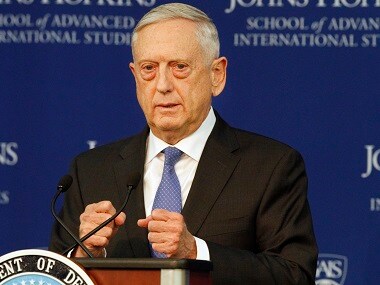
The man who is realistically aware of the dangers of asymmetric warfare is defence secretary James Mattis. The former national security advisor, HR McMaster was similarly oriented. However, the experienced military advice is likely to be eschewed when it comes to higher decision making in the US. Bolton and Pompeo the current Trump favourites have long favoured military action. A war will have serious implications for international security as well as the global economy. Iran has larger than appreciated presence all over the Gulf region, especially in the Levant and controls one of the most lethal organisations, Hezbollah which can adopt terrorist ways very quickly. As per an Israeli estimate, Hezbollah has as many as 130,000 missiles of all varieties in its arsenal in Lebanon. It cannot be a walk away victory which Trump’s advisers are imagining and Mattis, the pragmatic military brain knows it. The resultant chaos and turbulence will create the most ideal conditions for the return of an organisation such as the Islamic State which is yet kicking and alive in eastern Syria. Iran is unlikely to allow a blockade of the flow of its energy resources and trade without a matching blockade of the move of Arab oil. This will send the price of oil and gas skyrocketing bringing powers such as China, Japan and India into the issue thus further complicating it. The effect on the global economy will be catastrophic. High oil prices will benefit one country — Russia but probably this has not occurred to the establishment in the US which favours military intervention.
The maxim that war is too risky a business to be left to Generals proves exactly the opposite in most conflicts in the post-Cold War period. That is because these wars are not simple conventional ones but deeply complex due to their hybrid nature. Military leaders well understand the implications of hybrid conflicts which usually end in No Victor No Vanquished type of situations and fester for years with unrealised side effects giving rise to subsidiary wars. Hopefully, Mattis, considered a rational hawk, will strongly oppose the President and advise him against stoking the fire unnecessarily. A war between the US and Iran can still be avoided with his intervention and timely advice.
Soldier who went on to become Indian Army officer is now up against his own elite unit Sujan Dutta
Soldier become Indian Army officer is now up against his own elite unit
In Manipur, a Lt. Col has ‘highlighted’ fake encounters, pitting him against the force he loyally served for nearly 2 decades.
Imphal: In a nearly 20-year career, Lieutenant Colonel Dharamvir Singh had worked his way up from the lowest rungs of the Indian Army.
Along the way, the officer with the Corps Intelligence and Surveillance Unit (CISU) from 3 Corps, served in the Special Forces and even fought in the Kargil War of 1999.
Now in his 40s, Singh is at the centre of a bizarre crisis which could have far-reaching consequences not just for himself personally but possibly even the Indian Army.
In Manipur’s Imphal Valley where he is posted, Singh is being hailed as a soldier with a conscience for what locals say is speaking up and exposing the dark deeds of his own comrades.
But for his own unit, he has become a villain: He was taken into custody and accused of insubordination, among other things. His current whereabouts are not known and some of his colleagues think he is “finished”.
An explosive affidavit
The Lt. Col had first created a stir in September last year when he had written to his superiors alleging that his intelligence unit from 3 Corps, headquartered in Rangapahar, near Dimapur in Nagaland, had been systematically executing Manipuri militants in “fake encounters” since 2010.
Though nothing had come off it back then, on the morning of 1 July, he wasallegedly taken into custody by his own unit from his official quarters in ‘M’ Sector, Imphal.
He was accused of insubordination, not joining his post on time, and bringing his family into a field posting.
His wife, Ranju Singh, 35, who had just reached the Manipuri capital from Mumbai the previous day, raised an alarm, addressing a press conference on 3 July seeking to find her husband’s whereabouts.
On 11 July, Singh reappeared and stepped up his actions against his unit, this time filing an affidavit in the Manipur High Court, repeating the accusations of “fake encounters” that he had listed in his September letter.
After he went missing again, his wife filed a habeas corpus petition in the Manipur High Court on 20 July.
A week later, the Lt. Col was produced in court. “I could see the pain in his eyes,” says Ranju Singh. “I was worried he was being tortured”.
There is little else that can be published of her or his account as the Manipur High Court has prevented the media from doing so.
“Since the case is pending before the court, we call upon the Lt. Col Dharambir Singh not to issue any statement in respect of the matter before the court directly or indirectly to the media,” reads the order of the Manipur High Court issued on 1 August.
“The press and media are directed not to publish photographs of officers involved in the case,” the order concludes.
Army under scanner
The Army has so far remained tight-lipped on the entire controversy. But the Manipur High Court has directed it to file its official reply in the matter on 17 August.
There is also no clarity on Singh’s current whereabouts.
His affidavit, however, has rattled the force. In it, he has detailed how three suspected militants were allegedly killed and at least two others taken hostage and allegedly murdered by his unit, the 3 CISU.
Bipin Rawat, the current Army chief has also commanded 3 Corps | PTI
What is bound to worry New Delhi is that the cases he has highlighted are from the jurisdiction of the Army’s 3 Corps. The 3 Corps command the biggest terrain for an Indian Army formation — covering three international boundaries besides counter-insurgency work.
More significantly, it has thrown up successive army chiefs — General Bipin Rawat, the current chief, and his predecessor, General Dalbir Singh Suhag (retd), have commanded it.
‘The encounters that never were’
This is Renu Thakhelambam, president of a group called Extra Judicial Executions Victims’ Families (EEVFAM). Her husband, a suspected insurgent, was allegedly shot dead “within earshot” in 2007 by the Army. When Renu is not dealing with court cases, she practises privately as a “hair style and skin care” specialist. It was her organisation’s case that the SC took up this week and rapped the Centre and state over HR violations.
The 2010 citation in the Sena Medal for Captain Rubina Kaur Keer credits her for having penetrated a terrorist network and establishing a “dynamic intelligence network” to track insurgent movement and activities.
“Captain Rubina Kaur Keer through her perseverance, initiative, unrelenting efforts and in total disregard to personal safety, penetrated into the terrorist network in a highly insurgent-infested area thereby establishing a dynamic Intelligence network to track and monitor insurgent movement and activities,” reads the citation.
Capt Kaur had been recommended for the gallantry award by Colonel Srikumar, the then commanding officer, in June 2010.
According to Colonel Srikumar, Capt Kaur’s “sustained” efforts had resulted in the killing of three wanted cadre of the banned Meitei insurgent outfit in Manipur, the Peoples’ Liberation Army (PLA). He added that the operation that killed the three — “R. K. Roshan, Thounajam Prem and T.H. Naobi Singh” — also led to the recovery of “large quantity arms, ammunition and warlike stores from 7 mile, Dimapur.”
This is not how it played out, according to Lt Colonel Singh, who has disputed the official version in his affidavit before the high court.
For one, the affidavit states, the colonel had even got the names of one of the victims wrong. R.K. Roshan, according to Singh, was, in fact, R.K. Ranel, and he and the other two were picked up from their homes in Dimapur, a few kilometres from the 3 Corps headquarters in Rangapahar.
The 3 (Spear) Corps shoulder patch which all officers and soldiers of the corps wear it on their uniform | Bharat-Rakshak.com
They were allegedly brought to the corps headquarters and killed behind the unit officers’ mess. They were buried there before their bodies were taken to Karbi Anglong in Assam.
Two others, a student named Satish, and another as yet unidentified man, were picked up from Shillong and killed similarly, claims Dharamvir in his affidavit.
The same team also allegedly killed G. Jiteshwar, also known as “Gypsy”, who was assistant publicity secretary in the PLA in January 2011, asserts the Lt Colonel in the affidavit.
Gypsy’s elder brother, Setyeibrata, told ThePrint that with the affidavit, the courts should ensure justice. “Even if he was guerrilla, there is the Indian Constitution guarantees us human rights,” he said. “We did not know what had happened to him since he last sent an SMS (text message) saying he was arrested in Dimapur,” he recalls.
“We need closure,” he says.
Soldiers with a conscience
With his affidavit, Dharamvir Singh joins Thanajom Herojit and junior commissioned officer (JCO) Ramesh Chand Sharma in the ranks of security personnel who have turned against their own forces in the state.
In January 2016, Herojit, a head constable with the Manipur Police, confessed to having carried out extra-judicial killings, which he then went on to claim were rampant in the state.
Sharma, a naib subedar with the 30 Assam Rifles, walked into a newspaper office in Imphal in April this year and confessed that he was at Khukhrul Mills in West Imphal when five suspected militants were shot dead. “It was not an encounter. We took them there and shot them,” he alleged.
But Lt. Col Dharamvir Singh is the most high-profile among the three. It is rare for an Army officer, especially one from the Special Forces, to speak out against his own service.
And Dharamvir Singh is no ordinary officer. He was recruited as a jawan, made his way through the Army Cadet College (ACC) in Dehradun before being selected for the Indian Military Academy (IMA).
After his stint in the Special Forces, he was commissioned as an officer in the Intelligence Corps. He was posted to Nagaland two-and-a-half years ago.
‘Woh Khatam (he is finished)’
Inside Imphal’s “M Sector”, or military sector, where he was stationed, there are no easy answers as to why Lt Colonel Dharamvir Singh, “Veer” to friends, would seek to expose his men.
The “M Sector” has offices and living quarters for the Army. It is adjacent to the sprawling grounds of the Raj Bhavan, the governor’s house, in Imphal. It is also across the moat from the Kangla Fort, the erstwhile residence of Manipur royals.
In this highly militarised city, there are soldiers in various camouflage fatigues —khaki to olive green.
At M Sector that housed the Army, the security is the responsibility of the Assam Rifles, a paramilitary force, officered by the army. On the premises, a temple contains a plaque, which notes Dharamvir Singh’s presence at the inaugural in 2016.
“This is a tough place. Outwardly, it is peaceful. The Manipuris, especially the Meiteis, are a calm people,” says an officer who lives and works out of M Sector. “But there are many connections that we cannot figure out,” he adds.
“Dharamvir had spent enough time here and had even picked up a smattering of the local language. He gave real-time intelligence,” the officer acknowledges.
“Faltu mein hungama macha diya (He has raised futile claims),” said another officer who has worked alongside the Lt Colonel in M Sector, Imphal. “Woh khatam (he is finished)”.
According to this officer, Veer was angry that he was refused a posting of his choice — he allegedly wanted to go to Mumbai but his next posting was reportedly in Belgaum.
His wife too didn’t provide a reason for why he would take on his own unit. “For my husband, the Army is religion and we both respect our esteemed organisation and never dreamed we would go against the system,” she said at the press conference before the Manipur High Court bar on her speaking out.
The People’s Liberation Army (PLA) has allegedly intruded into the Demchok sector in Ladakh along the Line of Actual Control (LAC) and installed tents.The alleged intrusion occurred in the Cherdong-Nerlong Nallan area in the Demchok sector in July. The PLA installed five tents in the area but later removed three of them after the Indian Army and PLA held a Brigadier-level meeting a few days ago.According to sources, PLA men, in civvies, had intruded around 300-400 m inside the Indian territory in the Demchok region and put up five tents. They were posing as nomads and had also brought cattle with them. “Even after showing flags, which is the standard procedure on the LAC to express dissent, they continued to stay put in the region,” a source told The Tribune.“After repeated requests, the PLA agreed to the Brigadier-level talks. Thereafter, three tents were removed, but two tents are still there. PLA men in civvies continue to occupy the area,” the source added. Despite repeated calls, there was no response from the Army.However, the Indian Army has earlier maintained that there are different perceptions of the LAC as it is not clearly demarcated. In August last year, the incursion by the PLA in the Pangong lake area led to a scuffle between the two armies. A few soldiers received injuries in the incident. Later, the PLA was made to retreat from the area.
For Imran, India might not be biggest problem by Lt Gen Syed Ata Hasnain
The Army’s pre-eminence in that country’s pecking order is ensured only by its deep animosity with India, something Imran is unlikely to be able to change in any hurry, or even have any inclination to change. (Photo: AP)
There has been considerable speculation about what prospects the advent of Pakistan’s former cricket captain Imran Khan as his country’s Prime Minister holds for peace in the subcontinent. In India, most opinion veers on the cynical, judging by Imran’s known change of persona over the last few years in the quest of his ambition to lead his country. That this has brought him far more in convergence with the Pakistan Army’s thinking doesn’t really augur well for prospects of peace. The Army’s pre-eminence in that country’s pecking order is ensured only by its deep animosity with India, something Imran is unlikely to be able to change in any hurry, or even have any inclination to change. He has willingly partnered the Army to follow its diktats. Inexperienced in strategic affairs, he will be dependent hugely on the generals for guidance, although Pakistan’s diplomatic corps is still one of its best institutions. With India’s general election due in nine months or so, the subcontinent isn’t really ready for peace initiatives now, though a dose of peace always helps any incumbent political leadership. In India-Pakistan relations, however, the opposite is also true — where the deterioration of ties leads to nationalistic passions and may also help incumbent leaders. Realistically, it is only after June 2019 that there can be some forward movement; till then Imran Khan needs to get his act together to prevent the possibility of Pakistan finally transiting the status of failing state to failed state.
The new government in Islamabad will need an economic bailout package and work towards releasing Pakistan from the stranglehold of the terror and radical outfits that have been mainstreamed in this election. Imran may be in for a surprise if he does a reality check. The problems he can expect from India will be way down the ladder of serious threats. India is far too involved in its own internal challenges to desire any turbulence at the borders or in Jammu and Kashmir. If the Pakistani generals choose to keep the Line of Control quiet and calibrate the situation in the Kashmir Valley to just around the current levels or less, it is unlikely to draw too much response from India, which in a few months will be deeply involved in its own election process. However, the Pakistan Army always fears that inactivity in Kashmir gives India the opportunity to regain lost ground, both operationally and in the psychological space. Therefore, calibrated efforts to maintain violence and promote alienation will probably continue. Reports indicate that the Jaish-e-Mohammed (JeM) of Maulana Masood Azhar, which managed to stay under the radar through the Pakistan polls, is expanding its training and holding facility near Bahawalpur with the security forces turning a blind eye. A bigger terror strike targeting India any time in the near future will call for a stronger response by India, especially in an election year. That is what the JeM wants to upend other groups and establish its primacy. That is where Imran’s challenge lies, and where the Pakistani “Deep State” may not be willing to assist him, bailout package or not.
There are other internal problems linked with Pakistan’s main partners — China and the United States — although many may challenge the notion of the US being Pakistan’s partner. The US need for Pakistan and vice versa can hardly be denied, and that steers the relationship through hot and cold. There is the political Opposition, which may have been defeated electorally but may wish to resolve issues on the streets. The mainstream parties — the Pakistan People’s Party and Pakistan Muslim League-Nawaz — once earlier got together in 2007-08 to create conditions to oust Gen. Pervez Musharraf. Given that precedent, we may not yet have seen the end of turbulence. The mainstreaming of some radical parties which took part in this election may also add to the country’s internal threats. Both these issues will not help Islamabad to obtain a bailout package.
The China factor remains significant. First, China itself is in the throes of a reset of ties with India after last year’s Doklam crisis virtually brought the two nations to the doorstep of an armed standoff. Any deterioration in India-Pakistan ties will be counter-productive to China’s strategic needs. Second, with much at stake in one of China’s largest overseas investments, China Pakistan Economic Corridor (CPEC), Beijing doesn’t want to see any obstacles to its full actualisation. Those obstacles remain in Pakistan’s turbulent internal security, which threatens order that is so necessary for completion of the projects. The Pakistan Army’s inclination to use friendly terror groups as strategic assets against India is also something China may be actually uncomfortable about; despite its refusal to support the labelling of Masood Azhar as a global terrorist. Now, with a reset of India-China ties, this issue may become a sticking point. It recently didn’t hold back from supporting the majority at the Financial Action Task Force (FATF) decision to grey-list Pakistan. China’s relationship with Imran Khan and his PTI has not been too pleasant in recent years. The PTI has been extremely critical of the CPEC, and at one time even likened the project to a new British East India Company. The PTI’s five-month anti-government sit-in in Islamabad in 2014 had forced the postponement of Chinese President Xi Jinping’s visit at a time when he was keen to showcase some CPEC projects.
Yet China was the first country that Imran Khan chose to mention in his maiden speech after the election. Obviously, he is positing Pakistan closer to China, but the bailout package is not going to come from China, from where almost $5 billion has already been borrowed. He is obviously going along with popular sentiment in Pakistan, where anti-American feelings run high, but these will place him at odds with the first major issue that will confront him: the economy. Any bailout is likely to be contingent upon Western satisfaction about the measures undertaken against the extremist groups. Given this situation, Imran Khan will hardly be able to bowl at full pace; he may have to settle for a medium swing to test the waters, which are indeed going to be turbulent.
State Stalwarts
DEFENCE MINISTER
Minister Rajnath Singh
ALL HUMANS ARE ONE CREATED BY GOD
HINDUS,MUSLIMS,SIKHS.ISAI SAB HAI BHAI BHAI
CHIEF PATRON ALL INDIA SANJHA MORCHA
LT GEN JASBIR SINGH DHALIWAL, DOGRA
SENIOR PATRON ALL INDIA SANJHA MORCHA
MAJOR GEN HARVIJAY SINGH, SENA MEDAL ,corps of signals
.
.
PATRON ALL INDIA SANJHA MORCHA
MAJ GEN RAMINDER GURAYA ,MADRAS REGIMENT
sanjhamorcha303@gmail.com
PRESIDENT SOUTH ALL INDIA SANJHA MORCHA
COL SS RAJAN BOMBAY SAPPERS,
PRESIDENT UTTARAKHAND ALL INDIA SANJHA MORCHA
COL B M THAPA ,BENGAL SAPPERSS
PRESIDENT HARAYANA STATE CUM COORDINATOR ESM
BRIG DALJIT THUKRAL ,BENGAL SAPPERS
PRESIDENT TRICITY
COL B S BRAR (BHUPI BRAR)
PRESIDENT CHANDIGARH ZONE
COL SHANJIT SINGH BHULLAR
.
.
PRESIDENT PANCHKULA ZONE AND ZIRAKPUR
COL SWARAN SINGH
INDIAN DEFENCE FORCES
DEFENCE FORCES INTEGRATED LOGO
INDIAN AIR FORCE
Air Officer C-in-C WESTERN AIR COMMAND
AIR MSHL S PRABHAKARAN AVSM VM
AOC-IN-C, EASTERN AIR COMMAND
Air Marshal Inderpal Singh Walia
AOC-in-C SOUTH WESTERN AIR COMMAND
Air Marshal Vikram Singh
AOC-IN-C, SOUTHERN AIR COMMAND
Air Marshal J.Chalapati
AOC-IN-C TRAINING COMMAND
AIR MARSHAL SK GHOTIA VSM
AOC-IN-C MAINTENANCE COMMAND
Air Marshal Jagdish Chandra
Flag Officer Commanding in Chief, Western Naval Command
ice Admiral R Hari Kumar, PVSM, AVSM, VSM
Flag Officer Commanding in Chief, Eastern Naval Command
Vice Admiral Sanjay Bhalla, AVSM, NM
Flag Officer Commanding in Chief, Southern Naval Command