Sanjha Morcha

What’s New

Click the heading to open detailed news

Current Events :

web counter

Print Media Reproduced Defence Related News

Families bid farewell to bravehearts killed in Pak shelling

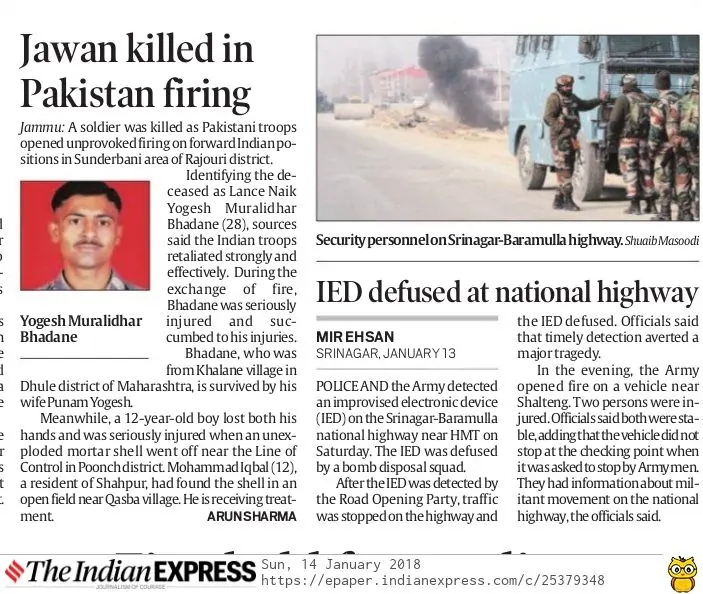
GURGAON: After spending a day waiting for the body of her son, martyred in Kashmir on Sunday evening, to return home, Sunita, the mother of Captain Kapil Kundu, was infuriated and she burst into tears when she was told that his remains may arrive only on Tuesday morning. Her anger and frustration was reflected in her response as she scoffed at the delay that has was made in returning a soldier to his family.

PTI & NITIN KANOTRA/HT“I have lost a child, he died yesterday, it has already been 24 hours, why should I have to wait for another 24?” she said, before becoming unconscious, even as a group of women attempted to calm her down.

Kundu was among the four army men who were martyred in Jammu and Kashmir’s Rajouri area on Sunday, following shelling by Pakistani forces.

It was a little after 9.15 pm that the 22-year-old finally returned to his village, for the first time since his trip during Diwali. In the time that has elapsed since, he had managed to secure a promotion, and would have, for the first time, met his family as “Captain Kapil Kundu”. He was, however, martyred only a week shy of the meeting.

“He had been promoted to the rank of captain only recently, on January 26, and had been transferred to Rajouri after that. He was earlier posted in Poonch.” Said Sachin Chillar, his cousin.

In his village, Kundu was revered since he was the first person to hold a rank of an army officer.

Even as the cries of ‘vande matram’ and ‘bharat mata ki jai’ filled the air, his body was carried outside his single storey home, located near the entrance to the village, where his family got their last few minutes with him, even as a crowd of hundreds watched on, screaming anti-Pakistani slogans from time to time.

Around 9.45 pm, Kundu left his village for the last time, as mourners accompanied his body to the cremation ground – located only metres away from the village, behind the campus of a Government School – leaving behind a heartbroken mother, two distraught sisters, and a village that promises to remember him as a “source of inspiration”.

SLAIN JAWAN’S LAST ADVICE FOR KIDS

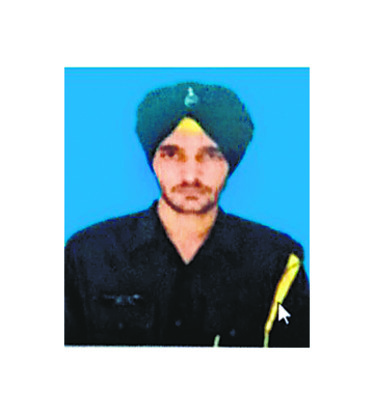
JAMMU: “Study seriously for exams”. Havildar Roshan Lal, one of the four Indian Army soldiers killed in Pakistan shelling in Rajouri district on Sunday night, had this advice for his children when he spoke to his son in the morning.

Lal, 42, hailed from Nichla village in Ghagwal tehsil of Samba district in Jammu. As his family mourns his death and people console them, there was anger and talk of settling scores.

“He died in a proxy war,” said Darshan Kumar about his older brother Lal as mourners gathered at the family home in Nichla.

“Let’s settle it once and for all,” said Kumar, who works with the paramilitary Central Industrial Security Force.

Lal, who joined the army in 1995, is survived by his father, Des Raj, wife Asha Devi and two children.

“My father talked to me [over the phone] on Sunday morning and asked both of us to study seriously for the final exams,” said Abhinandan, a Class 10 student at the Army School in Samba. His sister, Artika, is in Class 8.

The other two soldiers killed in Pakistan action were identified as riflemen Ram Avtar and Shubam Singh.


The very crude oil war by Sushma Ramachandran

The very crude oil war
Slippery road: A $10 price rise will affect GDP growth by nearly 0.3 percentage points.

Sushma Ramachandran

THE NDA government has been lucky for much of its term as far as global oil prices are concerned. These crashed from a peak of $140 a barrel to around $40 per barrel within six months of it coming to power. The luck seems to have run out. International prices are currently hovering at nearly $70 per barrel and agencies like Goldman Sachs are projecting it will reach $80 dollars within six months. Finance Minister Arun Jaitley has said in post-Budget interviews that oil prices crossing the $70 mark will be a worry for the next fiscal.The reason for rising world prices becoming a headache for policy makers is that India imports over 80 per cent of its crude oil requirements. The oil import bill for the current financial year, 2017-18, is expected to reach $81 billion, $10 billion higher than in 2016-17. This is despite the fact that the volume of crude oil imports will be roughly the same, at 213 million tonnes. The trade deficit is also widening as a result of higher oil imports. The net result is that the government is left helplessly monitoring the situation in the international oil markets.In this arena, the short-term outlook depends a great deal on the global economic and political scenario. The two most important issues will be whether the oil cartel, the Organisation of Petroleum Exporting Countries (OPEC) is able to maintain production cuts laid down a year ago and also whether US shale oil companies will be able to raise their output levels. On the first issue,  there has been surprising unanimity in maintaining these production quotas by OPEC members till now. Saudi Arabia, as the largest exporter, has been the main motivator in this regard. However, there may be some glitches in future as output from Venezuela has crashed owing to political developments there. The role of Russia will also be crucial as it has been cooperating with OPEC for production cuts since January 2017. It is this combination of OPEC and Russia that became the big driver for the hardening of world oil prices in 2017.As for US shale oil production, it is rising rapidly once again with the aid of improved technology. In addition, US crude inventories are being built up yet again. It must be recalled that it was primarily the entry of shale oil supplies produced through the technique of fracking that led to the softening of world oil prices in 2014. In case shale oil production is ramped up in coming months and inventory buildup continues, there is a distinct possibility that global prices can be contained around the $70 mark, despite pessismistic predictions by financial agencies.Geopolitical developments will also cast their shadow on world oil markets. The tensions between the US and North Korea will have an impact in case these continue to remain at the high level that has been witnessed over the past year. Similarly, the fate of the conflict in Syria and Iraq will play a role in maintaining the stability of the markets.As far as India is concerned, the issue of high fuel prices has several ramifications. Firstly, a large oil import bill will be a huge burden on the exchequer.  Raising resources just to meet the country’s essential and critical oil needs is unavoidable, but will make it difficult to meet the fiscal deficit target, even though it has been pegged at a more achievable 3.2 per cent for next year. Besides, it has been estimated that a $10 rise in oil prices will affect GDP growth by nearly 0.3 percentage points. Secondly, it will lead to a rise in the subsidy on petroleum products. The subsidy has been pegged at Rs 24,933 crore for 2018-19, marginally higher than the previous year. The bulk of the subsidy, as much as Rs 20,377 crores is on account of LPG and the balance for kerosene. This is mainly due to launch of the Ujjwala free LPG scheme for rural women. Higher world prices will lead to a substantial increase in subsidy.  Finally, it will hurt consumers as prices of most petroleum products  will rise steeply unless the burden is mitigated in some way. The simplest method is to cut Central and state excise levies on petroleum products. The Budget has marginally cut excise duties but, strangely enough, brought in a road cess so prices will not fall for the general public. In fact, the heavy taxation on products like petrol and diesel and the resulting revenue bonanza is the main reason these have been kept out of the purview of the GST. What really needs to be done is to bring petroleum into the GST net, so that the tax can be capped at 28 per cent. Keeping such a major commodity out of the GST ambit makes it a rather unrealistic system. But states are strenuously resisting this move, given their reliance on the big revenues garnered from these products.The issue of high oil prices is thus a complex one. On the plus side, imports may not be cheaper than expected owing to rupee appreciation that has been taking place for some time now. This may be bad news for exports, but it makes imports cheaper.On the minus side, Mr Jaitley has little leeway to act on world prices. But he can and should give relief to consumers by cutting the new road cess and pushing the GST Council to include petroleum under its regime. In the long run, the government thus needs to try and find more oil in onland and offshore areas by making a more attractive oil exploration policy. Even more important is the need to finalise a long-term energy policy by examining all the options available, including natural gas, nuclear power and renewable energy. This should ensure that the country is not largely dependent for essential energy needs on petroleum. If it does not evolve such a policy rapidly, the country will have no option but to rely on the vagaries of world markets for its critical fuel requirements.


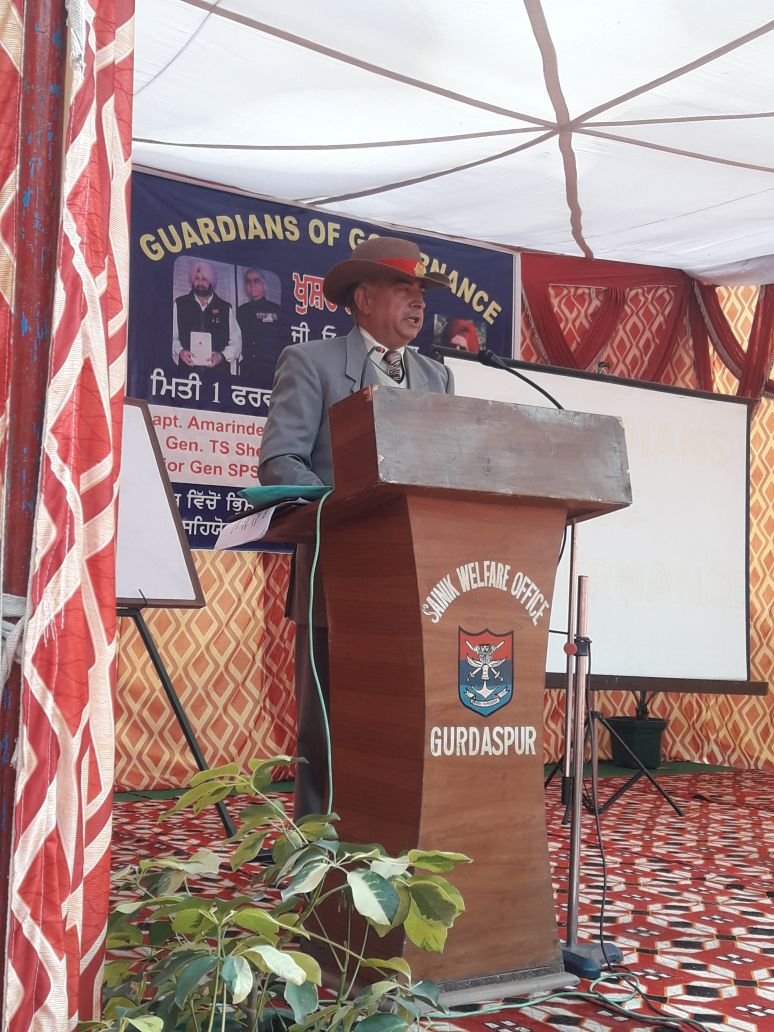
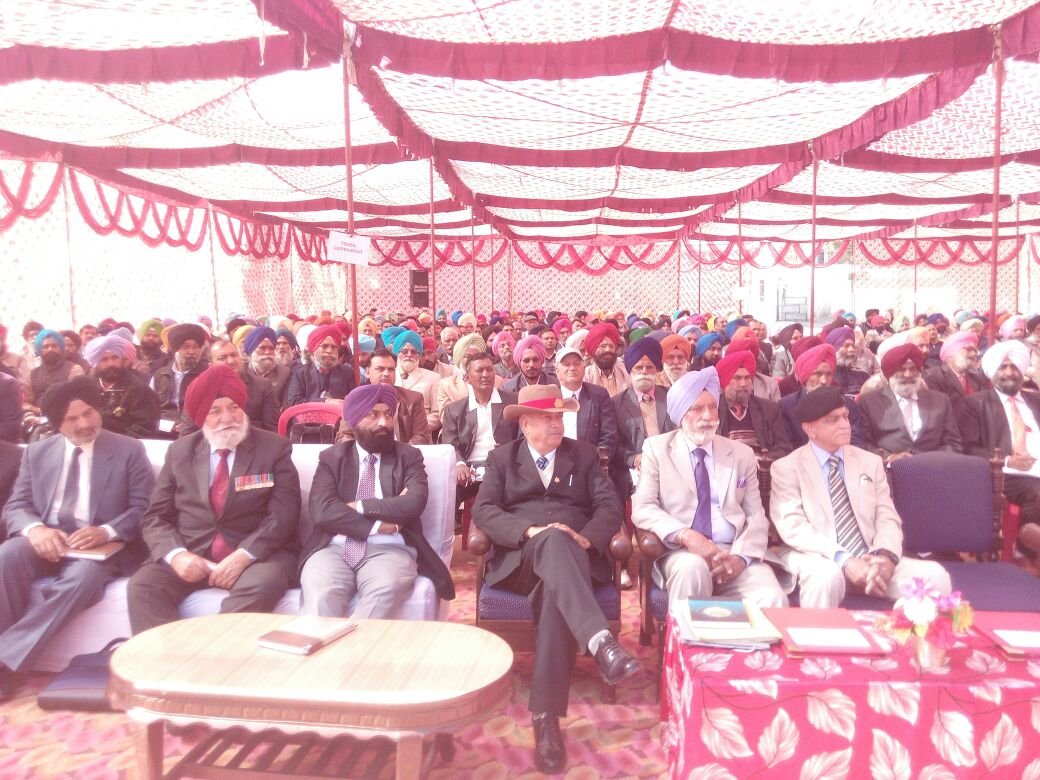
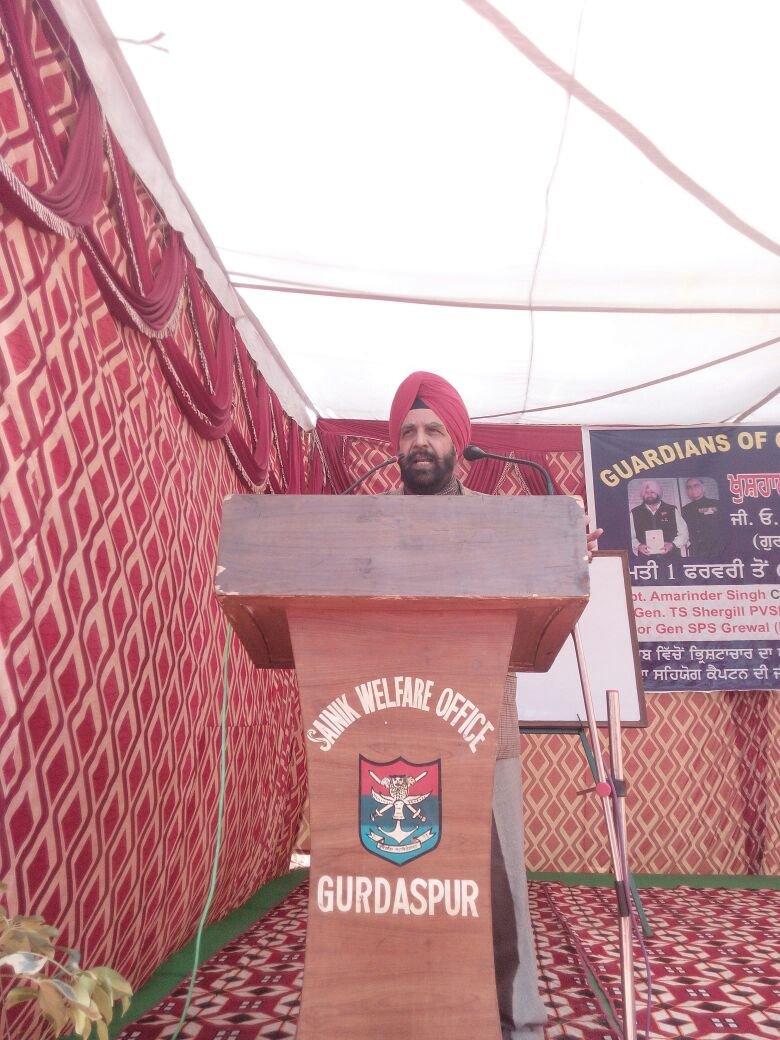
GOG TRAINING AT GURDASPUR:VISIT BY SR VICE CHAIRMAN AND VICE CHAIRMAN 03 FEBRUARY 18

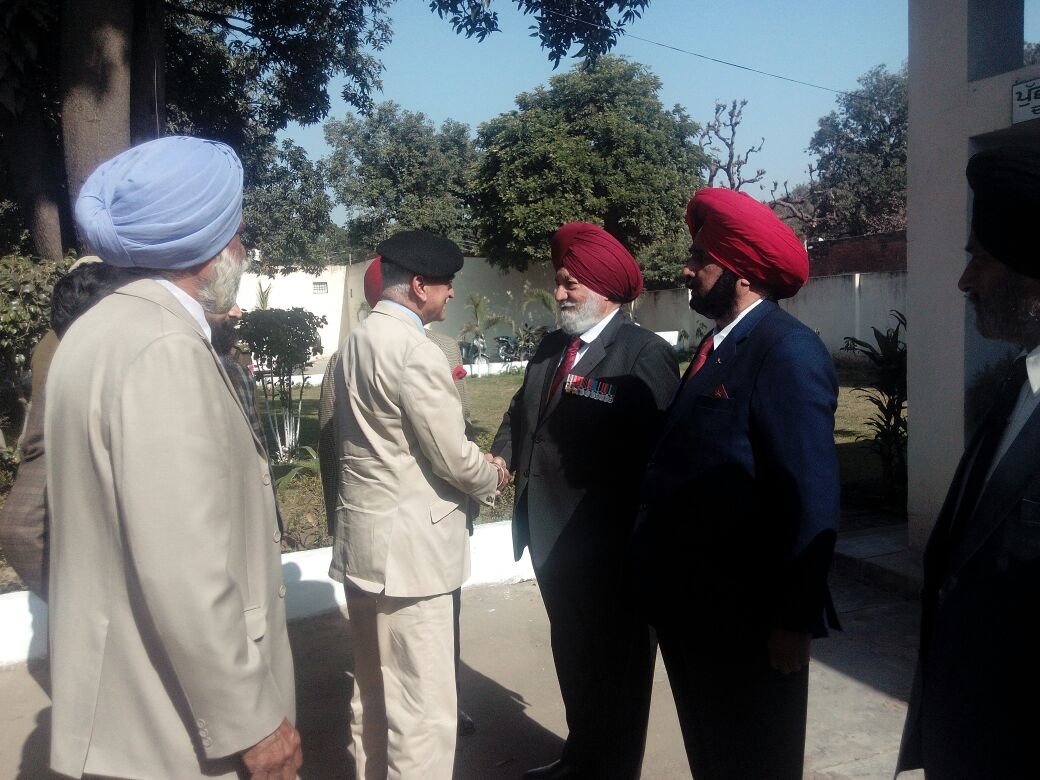
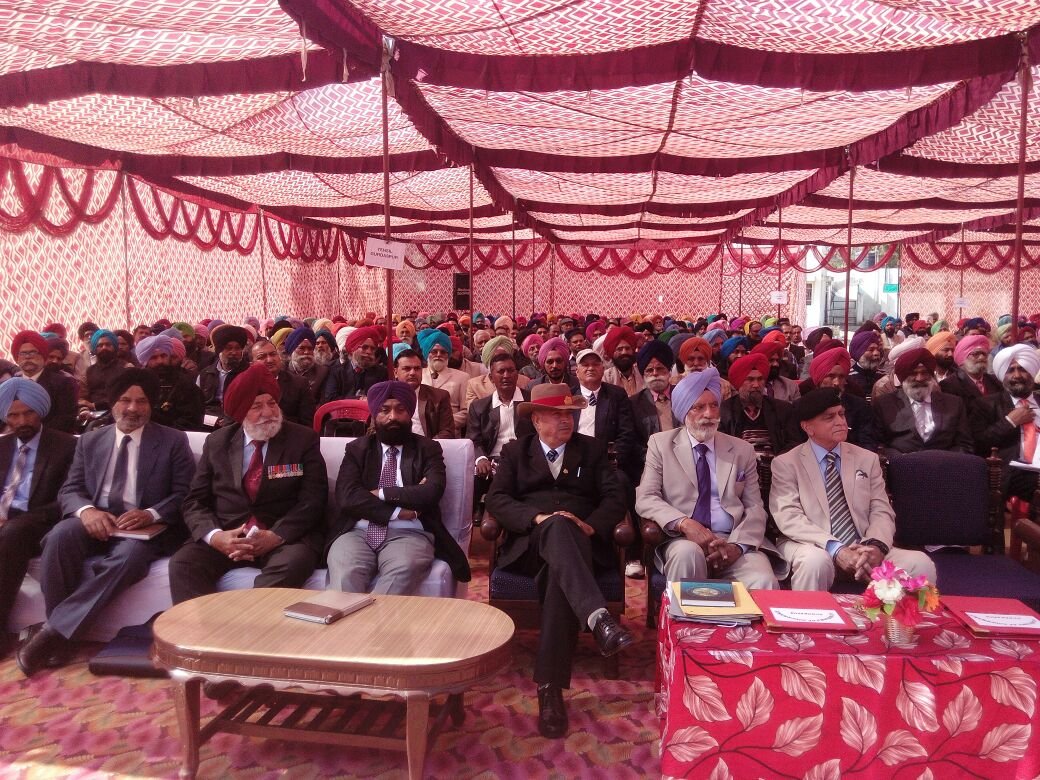
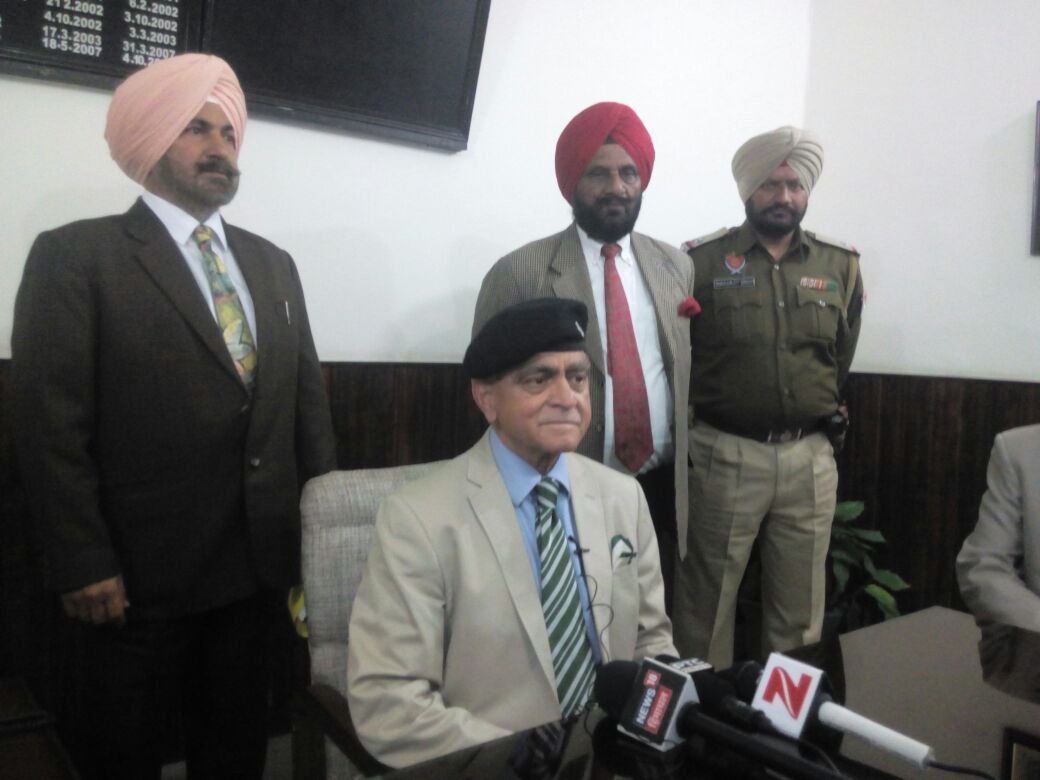
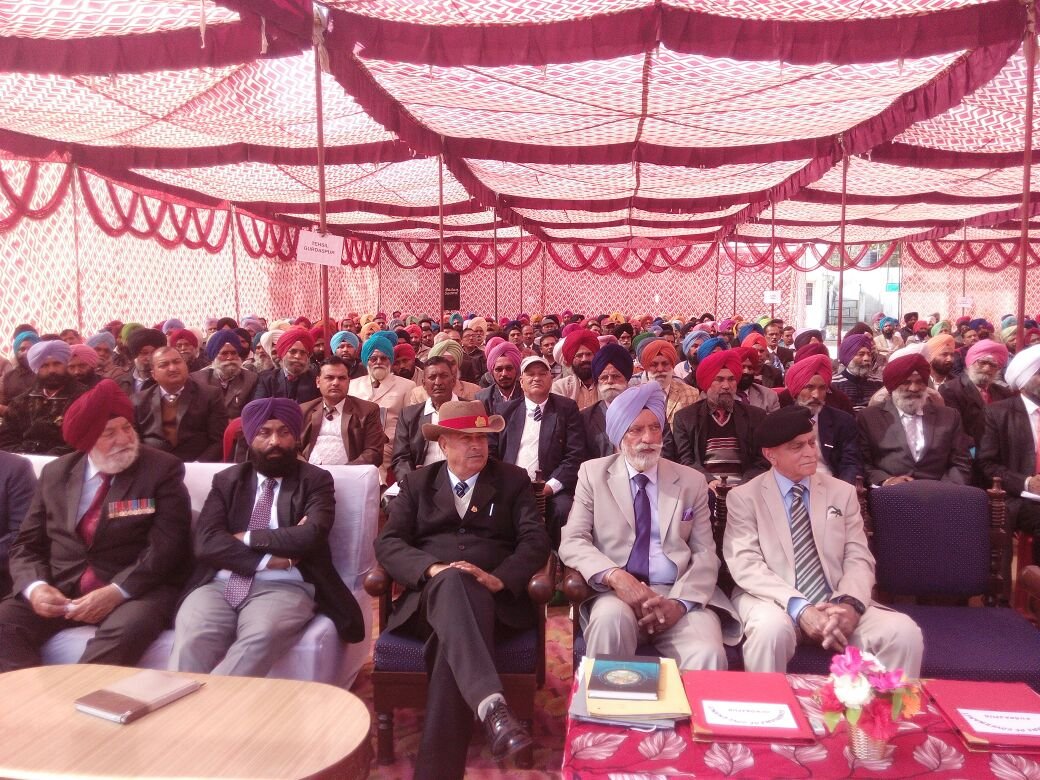
GOG( Gurdians of Goverance)  on colcluding Day TRAINING AT GURDASPUR was visited by Lt Gen TS Shergill,PVSM Sr advisor to the CM Punjab cum Sr Vice Chairman of GOG and Maj Gen SPS Grewal ,CMD PESCO cum Vice Chairman GOGIMG-20180201-WA0031

IMG-20180201-WA0034

IMG-20180203-WA0068 IMG-20180203-WA0069 IMG-20180203-WA0071 IMG-20180203-WA0072 IMG-20180203-WA0073 IMG-20180203-WA0074


Shopian firing: NC says arrest soldiers, BJP wants FIR withdrawn

Tribune News Service

Jammu, January 29

The National Conference (NC) on Monday demanded the arrest of soldiers named in an FIR in the killing of two civilians in Jammu and Kashmir’s Shopian district, while the ruling BJP demanded withdrawal of the FIR.

“Politics apart, this cycle of killings must end. We all have to end  this bloodshed,” former Jammu and Kashmir Chief Minister Omar Abdullah said in the state assembly.

“As per news reports soldiers, including a Major, have been named in the FIR.

“Bullets have been fired at chest height, which means the forces were not controlling the situation, but only firing,” he said, and added, “What was the purpose of ordering a magisterial probe if the police have already lodged an FIR into the incident.” Earlier, senior NC leader, Ali Muhammad Sagar demanded the arrest of the soldiers named in the FIR lodged in the killing of two civilians, Javaid Ahmad and Suhail Ahmad, in Ganowpora village on Saturday.

The incident had occurred when a stone pelting mob had attacked an administrative convoy of the army.

On the other hand, ruling BJP legislator, R.S. Pathania demanded withdrawal of the FIR lodged against the army personnel.

Pathania demanded that a fresh FIR be lodged in the incident without naming any army personnel.

The BJP legislator said “serious charges” had been levelled against the army in the FIR which appeared that it had been “done under pressure”.

IANS


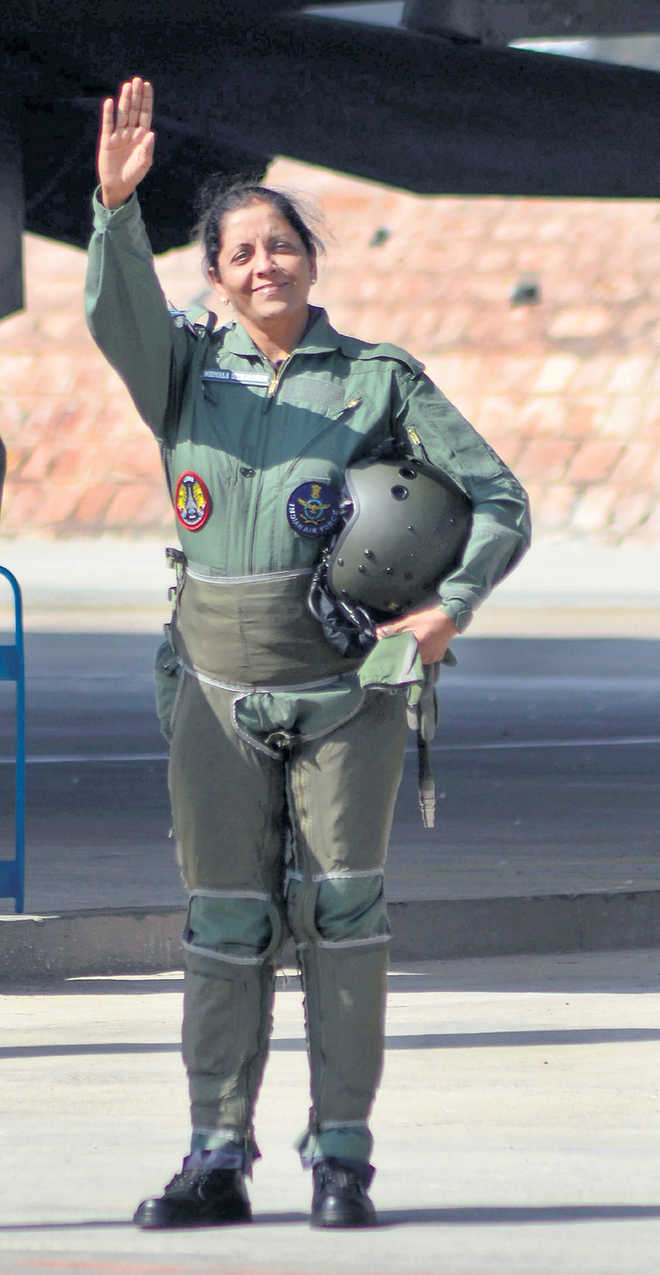
I’m very proud and thankful’

‘I’m very proud and thankful’
PTI

In an olive green pilot’s G-suit and a helmet, Nirmala Sitharaman on Wednesday soared high on a Sukhoi-30 MKI jet, the first Indian woman Defence Minister to go on a sortie on the all-weather, long-range fighter. The supersonic jet took off at 1 pm; after a 45-minute flight seated behind the pilot, Group Captain Sumit Garg, Sitharaman, 58, was back at Jodhpur Air Force station. Then President Pratibha Patil had also flown in the jet in 2009, as did APJ Abdul Kalam. In 2003, then Defence Minister George Fernandes had also taken a sortie aboard an SU-30 jet.


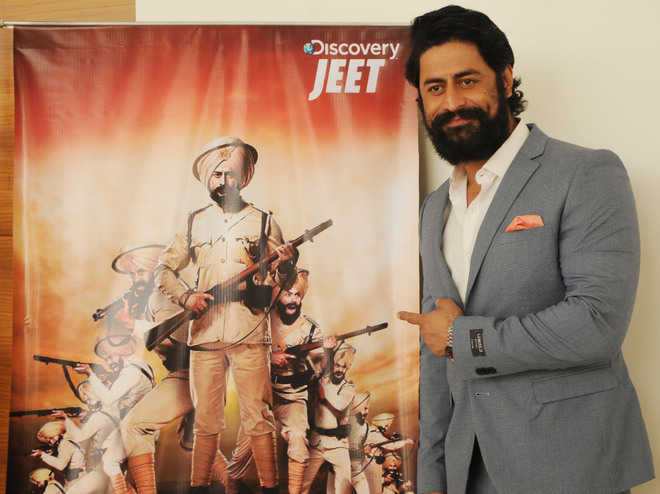
Actor Mohit Raina promotes TV show on Battle of Saragarhi

Actor Mohit Raina promotes TV show on Battle of Saragarhi
Actor Mohit Raina strikes a pose during a promotional event in Amritsar on Monday. Photo: Vishal kumar

Tribune News Service

Amritsar, January 22

Actor Mohit Raina today visited the city to promote his upcoming TV show ‘21 Sarfarosh: Saragarhi 1897’. The show is based on the Battle of Saragarhi.Mohit is playing the role of Havildar Ishar Singh who, along with other 21 Sikh soldiers of the 36th Sikh regiment of the British Indian Army, had successfully defended a remote outpost in the North-West Frontier Province from an attack by over 10,000 Afghan tribesmen.Produced by Contiloe Productions, ‘21 Sarfarosh: Saragarhi 1897’ will be aired on Discovery JEET from February 12.Talking about his role, Mohit, who was also one of the leads in Devon Ke Dev Mahadev, said, “The moment I heard about the role, I wanted to play the character and understand the situation. My fascination for uniform also motivated me to grab the role.”The show will be aired for a period of over two months, depicting the courage of Sikh soldiers who laid down their lives in the line of their duty.On preparations, the actor said, “I am so excited to be in Punjab. I have learnt a lot about Punjab and its culture while playing the role of Ishar Singh. I had listened to many Punjabi songs and watched movies. Ishar Singh was ready to sacrifice his life for his motherland. The intensity and passion of the character have to be lived from the core of the heart.”The show has been shot in the Leh-Ladakh region. Bollywood actor Mukul Dev is also playing the role of Afghan leader Gul Badshah.


Jawan killed in Pak firing on LoC in J&K’s Rajouri

UNPROVOKED Lance Naik Yogesh Bhadane hailed from M’rashtra; India retaliates strongly

From page 01 JAMMU: On the festival of Lohri, Pakistan killed an Indian soldier on the Line of Control (LoC) in Sunderbani sector of Rajouri district on Saturday.

WASEEM ANDRABI/HTA bomb disposal squad defusing an IED in Lasjan area of Srinagar on Friday.

“Pakistan Army initiated unprovoked firing on Indian Army posts in Sunderbani sector around 2 pm. Indian Army retaliated strongly and effectively,” said an army officer.

However, in the exchange of fire, Lance Naik Yogesh Muralidhar Bhadane, was grievously injured and succumbed to his injuries, he added.

The officer informed that both the sides used small arms and the exchanges lasted around 15 minutes.

Lance Naik Bhadane, aged 28 years, belonged to Village Khalane in Dhule district of Maharashtra. He is survived by his wife Punam Yogesh.

clip

clip


No let-up, soldier among 4 killed Jammu border villages a war zone in face of Pak shelling; schools shut for 3 days

Tribune News Service

Jammu/Rajouri, January 20

Four persons, including a soldier, were killed on Saturday as Pakistan continued shelling border posts and civilian areas along the International Border (IB) and Line of Control (LoC) in Jammu region. Eighteen persons were injured, an SSB and a BSF jawan in the Pargwal sector among them. With the authorities sounding a red alert, more than 10,000 residents of border villages have shifted to safer places. Over 300 educational institutions along the IB and the LoC in Jammu region have been shut for three days.(Follow The Tribune on Facebook; and Twitter @thetribunechd)“Pakistani troops initiated unprovoked and indiscriminate firing of small arms and automatics and mortar bombs in Krishna Ghati sector along the LoC in Poonch at 8.20 am. The Indian Army retaliated strongly and effectively. However, in the exchange of fire, Sepoy Mandeep Singh of Alampur village in Punjab’s Sangrur district was grievously injured and succumbed to his injuries. He is survived by his father Gurnam Singh,” a defence spokesperson said. He said as Pakistan resorted to unprovoked shelling in Gajansoo area of Kanachak sector in Jammu this afternoon, shells exploded at the Gajansoo bus stand, injuring two persons. One of them, Tarseem (25), died in hospital later. Pakistan Rangers also shelled forward hamlets in RS Pura. Gaura Ram (17) of Kapurpur and Gahar Singh (45) of Abdullian were killed and five others injured.Already this year, Pakistan has violated the ceasefire over 100 times, resulting in the death of three Army soldiers, three BSF men and six civilians. The Indian Army has lost two soldiers and the BSF two jawans since Thursday. The shelling has caused extensive damage to property and livestock. “The border hamlets have virtually turned into war zones,” the Sub-Divisional Police Officer (SDPO) of RS Pura, Surinder Choudhary, who led a police team to rescue and shift the injured, said. “Border residents would not have died or been injured had the government constructed bunkers or given us land in a safe area, as promised several years ago,” said Sudershan Singh of Arnia.While firing and shelling ended in Hiranagar, Samba and Arnia at 1.30 am today, it continued in Ramgarh sector till 5.30 am. (With PTI inputs)


FIELD IN FOCUS: ARMED FORCES Women in combat mode

Women in combat mode

Gauri Chhabra

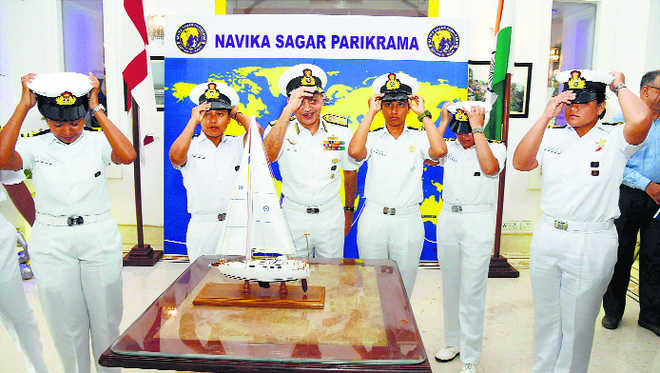
In a path-breaking move, the Indian Army opened combat positions for women, a gender barrier broken by only a few countries globally. The role of women in the armed forces for a long time was limited to the medical profession, that is doctors and nurses. In 1992, the doors were thrown open for women’s entry as regular officers in aviation, logistics, law, engineering and executive cadres. Thousands of spirited young women applied against advertisements and it was a turning point in the history of the Indian Army. In the recent years, steps have been taken to make armed forces more women inclusive by enabling them to serve on submarines, in ground combat positions and tank units. In February 2016, President Pranab Mukherjee announced that women will be allowed to take up combat roles in all sections of the Indian Armed Forces, signalling a radical move towards gender parity in one of the world’s most male-dominated professions. A few months ago, the Integrated Headquarters of the Ministry of Defence has asked all wings of the Army to come up with suggestions for roles for women. In October, the government took the first steps towards bringing women into combat roles and approved air force plans for female pilots to fly warplanes from June 2017, on a three-year experimental basis.

Getting in

The Indian Armed Forces are the federal military forces of the Union of Republic of India. It consists of four professional uniformed services: The Indian Army, Indian Navy, Indian Air Force and Indian Coast Guard. Recruitment is voluntary, which implies that every citizen of India is eligible to be a part of it, provided he/she fulfils the specified criteria for selection. Manpower in each of the services is broadly divided into commissioned officers, JCO’s (Junior Commissioned Officers) and other ranks, based on their qualifications and seniority.

Selection process

The procedure for becoming a lady officer in the army is the same as the one followed for men. The candidates have to clear a written exam — CDSE in this case — or there is direct shortlisting on the basis of cutoff percentage, like in the SSC-Tech and NCC entries. After getting selected in the initial process that is written or getting shortlisted, Service Selection Board(SSB) calls are made. The women candidates are called at various selection centres of the Indian Army. Post getting recommended in the SSB, which is a two-stage process, — after clearing stage I you advance to stage II — medical examination of successful candidates is conducted. The All India Merit List decides the final entries, based on the vacancies.Currently, women in the non-medical cadre, serve as Short Service Commissioned (SSC) officers. Under this commission, they can serve in the armed forces for a period ranging from 5-14 years. On release, they can pursue a career in the civil sector. SSC officers are released with gratuity and can avail some benefits as ex-service person, but they do not get pension.  Women in the medical branch that is doctors and nurses can serve as Permanent Commissioned (PC) officers and are eligible for pension after retirement. They also have the option to serve as SSC officers.Here is the list of branches, in which eligible women candidates serve as Short Service Commissioned officers…ArmyThe Combined Defence Services (CDS) examination is conducted twice a year by the Union Public Service Commission for recruitment into the Indian Military Academy (IMA), Officers Training Academy (OTA), Indian Naval Academy (INA) and Indian Air Force Academy (AFA).Girls are only eligible for Officers Training Academy (OTA). The other three —  IMA, AFA and  INA — are only for men candidates. NCC special entry: You can take the NCC Special entry exam if you are an NCC women cadet. The qualification needed is: The candidate should be between 19-25 years of age. The candidate must have completed a degree with 50 per cent aggregate.JAG entry: This entry is for the law graduates. Age limit is between 21-27 years. Education qualification should be LLB degree.Air ForceAir Force Common Admission Test (AFCAT) is a written exam conducted by Indian Air Force twice a year to induct officers in the IAF. The written exam is followed by Air Force Selection Board Interview for shortlisted candidates.  The air force entry is possible for women through the AFCAT. The candidates should be a graduate from any stream with physics and Maths in Class XII.NavyPresently, the women are recruited for ATC, observer, law, logistics, education, naval architecture streams.Short Service Commissioned Officer Under University Entry Scheme (UES): Women candidates who fall between19-25 years of age. Educational qualification: Should have completed B.E/B.Tech degree in Naval Architecture / Mechanical / Civil / Aeronautical/ Metallurgical/ Aerospace engineering with an aggregate of 60 per cent are eligible. SSC Naval Architecture: The candidate appearing for this exam should be between 21-25 years of age and should have completed B.E/B.Tech in Computer Science, IT, Electrical, Electronics, Mechanical or M.Sc in physics/ maths/ computer application, with at least 50 per cent marks.SC ATC: The candidate should be 19-25 years of age. The candidate should have completed B.E/ B.Tech (any discipline) with 60 per cent marks from a recognised university/ institution with maths and physics in Class XII.SSC Observer: The candidate should be between 19-24 years of age and should have completed B.E/ B.Tech in any discipline with minimum 55 per cent marks from a recognised university/ institution with maths and physics in Class XII.SSC Logistics: The candidate should be within 19-25 years of age. Educational qualification: B.Tech/ B.E (any discipline), MBA with First Class, B.Sc/ B.Com/ B.Sc(IT) with first division and a Post Graduate Diploma in Material Management/ Finance/ Logistics/ Supply Chain Management.Catering billetsM.Sc (Hotel Management)/ MBA (Hotel Management)/ BSc or BA with First Class and a Post Graduate Diploma in Hotel Management.SSC education: The candidate should be between 21- 25 years of age. 

  • B.E/ B.Tech/ M.Tech in IT/ Computer Science Engg / Electrical & Electronics/ Electronics & Telecommunication/ Electronics & Instrumentation / Mechanical/ Electronics and Communication/ Instrumentation/ Telecommunication.
  • M.Sc (maths) with physics in B.Sc /M.Sc (physics) with maths in B.Sc / M.Sc (Operational Research)/ M.Sc (Analysis).
  • MCA (physics or maths at graduation level).
  • M.A (english) / M.A (history).

Indian Coast GuardWomen are recruited in Coast Guard only as officers in General Duty (Pilot / Navigation) and General Duty (CPL Holders, Short Service entry) branches. The selection process for women is similar to that of male candidates. Assistant Commandant (GD)-SSA: General Duty (Short Service Appointment for a period of eight years, which may be extended to ten years and can be further extended upto 14 years). Age limit: 21-25 years (Five years relaxation for SC/ST and three years for OBC) Bachelor’s Degree in any discipline from any recognised university by central/ state government/ UGC with mathematics and physics as subjects upto Class XII.

Assistant Commandant (Law)

Age limit: 21-30 years (Five years relaxation for government employees)(i) A degree in law (ii) Knowledge/ Experience connected with International Law/ Maritime LawTAKE THE CHALLENGE HEAD ON As commissioned officers are between the age of 22-23 years, they may often have subordinates older than their parents. Hence, from day one, it is a challenge and leadership qualities are under test. An officer may have to work in tough terrains or difficult circumstances. Most women, however, who undergo training as cadets in various military academies, cope up with various difficult situations easily. Being a transferable job, transfers and movements are seen as unique travel opportunities to remote locations in the country. 


Flag war to continue at Attari-Wagah border

Flag war to continue at Attari-Wagah border
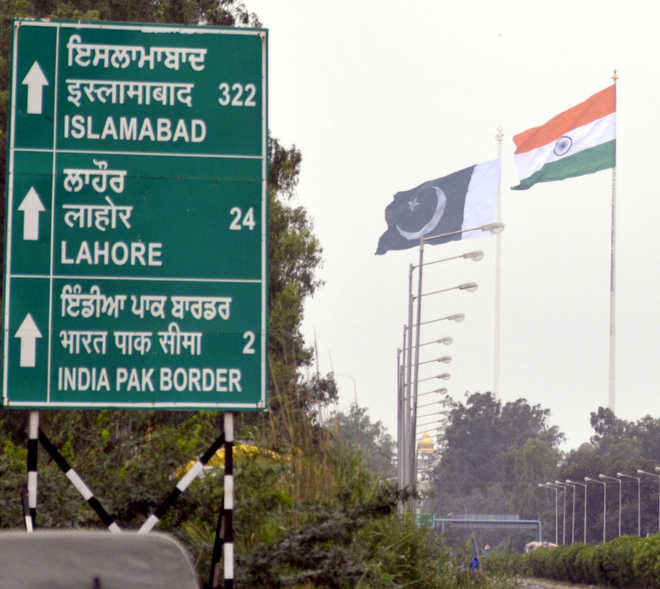
Indian and Pakistani flags flutter at the Attari-Wagah border in August 2017. Tribune file photo

Attari, January 18

The war of flags between India and Pakistan at the Attari-Wagah joint check post (JCP) is set for a renewal with the authorities on the Indian side readying to make the Tricolour flutter once again on top of a 360-foot-tall flagpole at Attari.While the Pakistani national flag has been fluttering since last August, the Indian flag had to be taken off on a few occasions last year as strong winds along the border belt have repeatedly damaged the Tricolour.The Amritsar Improvement Trust (AIT), which manages the Indian flag at Attari, has handed over the task of hoisting and maintenance of the flag to Delhi-based company Fast Track. The company manages the giant national flag fluttering at Central Park in New Delhi’s busy Rajiv Chowk.The AIT has given the contract for maintaining the flag to the company for over Rs 46 lakh annually. The pole and flag were installed last year at a cost of Rs 3.5 crore. The flag, which got damaged four times, has been replaced five times at a cost of Rs 6 lakh each time. Even though the Pakistani flag is fluttering on a higher 400-foot pole, the Indian authorities have decided to keep the Tricolour at a height of 360 feet only.India had pipped Pakistan in this war of flags by hoisting the flag in March last year, much ahead of Pakistan’s move to hoist a flag near the JCP. However, the Indian flag had to be taken off from the pole as the strong winds repeatedly damaged it. The main reason for this was that the Tricolour is made, as per specifications, from khadi material which could not sustain itself at the height of 360 feet. The Pakistani flag is reported to be made from a finer and stronger material. — IANS