Garhshankar youth Vishal Rana, son of retired Subedar Sardari Lal Rana, has become an example for those youths who want to go abroad with dreams of a bright future but earn their living by doing small jobs there. He has…
Garhshankar youth Vishal Rana, son of retired Subedar Sardari Lal Rana, has become an example for those youths who want to go abroad with dreams of a bright future but earn their living by doing small jobs there.
He has made his family proud by getting commissioned in the Canadian Army. By becoming lieutenant, he has set an example for the youth.
BSF destroyed 118 Pak forward posts, dismantled surveillance system: Shah
Reiterating the Indian armed forces’ decisive response to Pakistan’s shelling of civilian areas in Jammu and Kashmir, Union Home Minister Amit Shah on Friday stated that the Border Security Force (BSF) destroyed 118 Pakistan posts and dismantled the neighbouring country’s…
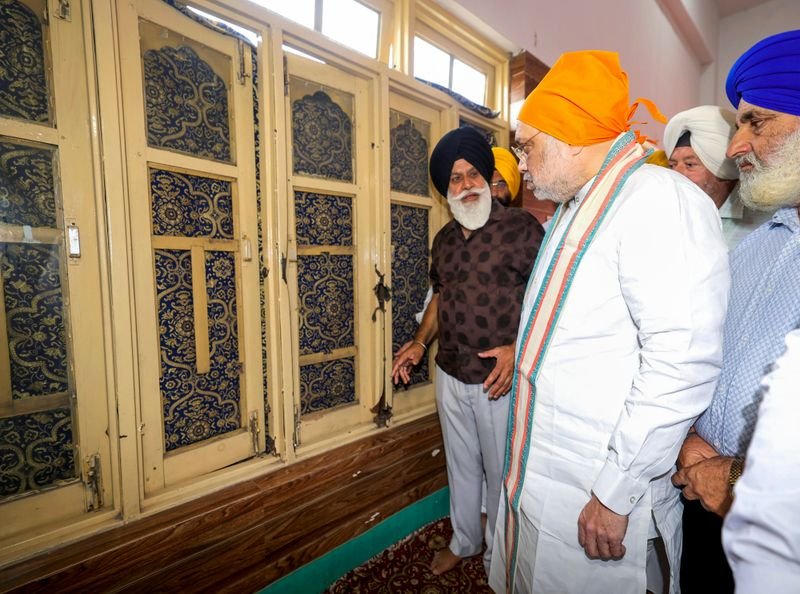
Home Minister Amit Shah inspects the damage to a Poonch gurdwara in shelling by Pakistan. PTI
Reiterating the Indian armed forces’ decisive response to Pakistan’s shelling of civilian areas in Jammu and Kashmir, Union Home Minister Amit Shah on Friday stated that the Border Security Force (BSF) destroyed 118 Pakistan posts and dismantled the neighbouring country’s surveillance system.
Shah, who is on a two-day visit to Jammu and Kashmir, visited Poonch on Friday, where he distributed appointment letters to the kin of civilians killed in Pakistani shelling between May 7 and May 10.
Addressing BSF personnel in Poonch, Shah said that every child in the country recognises the BSF as the first line of defence for national security.
“During Operation Sindoor, BSF personnel deployed along the Jammu and Rajasthan frontiers and the remote Kutch border protected the nation’s boundaries with utmost vigilance. When Pakistan shelled residential areas in retaliation for Indian Army strikes on terrorist camps across the border, BSF responded by destroying or damaging over 118 Pakistani posts and dismantling their entire surveillance system,” he said.
During the appointment letter distribution event, Shah noted that one of Prime Minister Narendra Modi’s first decisions after taking office was to construct over 9,500 bunkers along the border, a move that has significantly contributed to saving civilian lives during attacks.
“The Government of India will build more bunkers to ensure citizen safety during disasters,” he added. Shah emphasised that the Centre “stands like a rock with the people of Jammu and Kashmir.”
Expressing condolences to families affected by the recent shelling targeting residential areas, temples, gurdwaras, and madrasas in Poonch, Shah remarked that financial aid and government jobs can never truly compensate for the loss of life, “but they are a symbol of the sentiments of the Government of Jammu and Kashmir, the Government of India, and the entire nation.”
He also said that the spirit of patriotism witnessed across J&K—from the Valley to Poonch and Kathua—following the Pahalgam terrorist attack had bolstered the resolve of the people.
Referring to the recent attack on pilgrims in Pahalgam, Shah said: “Under Prime Minister Narendra Modi’s policy of responding to terrorist attacks with promptness and severity, Indian forces destroyed terrorist bases in Pakistan-Occupied Kashmir (PoK) and Pakistan. For the first time, Indian forces demolished the headquarters of terrorist organisations located within Pakistan’s borders.”
He clarified that Indian forces, while exercising restraint and precision, did not target any military or civilian institution in Pakistan. “We specifically destroyed Pakistan-sponsored terrorist bases,” he added.
Shah said that a rattled Pakistan, following India’s counter-strikes, resorted to shelling residential areas in J&K, with Poonch suffering the most.
“When Pakistan attacked our unarmed civilians, the Indian armed forces responded robustly, damaging nine of their airbases and degrading their military capabilities, ultimately forcing Pakistan to agree to a ceasefire,” he said.
Relief package soon
Home Minister Amit Shah said a package would soon be announced by the Centre for damaged homes, businesses, and religious sites.
Soon after his arrival in Poonch, Shah visited Gurudwara Singh Sabha, which was damaged in the Pakistani shelling. He also visited other such places in the shelling-hit areas and interacted with the people.
During his visit, Shah met residents and families who lost loved ones and suffered extensive damage to their properties in the shelling. Shah also met the affected shopkeepers.
Chief of Army Staff (COAS) General Upendra Dwivedi today visited forward areas and posts along the Line of Control (LoC) in Sunderbani sector to assess the operational readiness of the units and formations in the region. “During the visit, the…
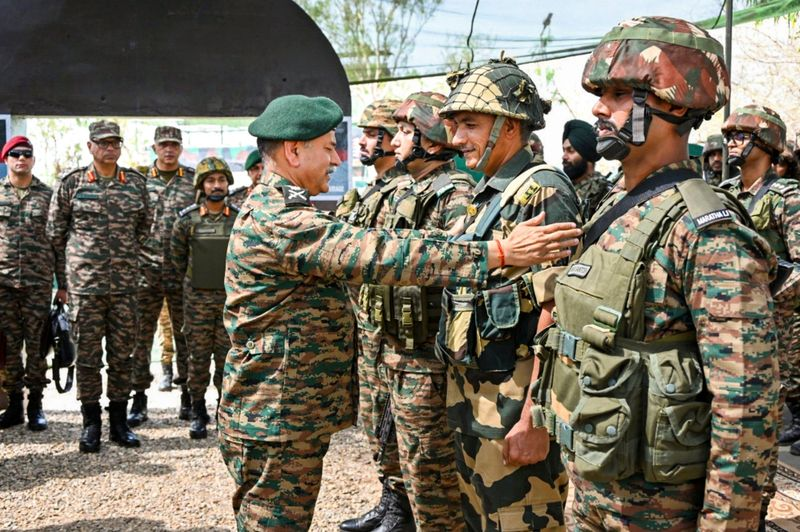
Chief of Army Staff (COAS) General Upendra Dwivedi today visited forward areas and posts along the Line of Control (LoC) in Sunderbani sector to assess the operational readiness of the units and formations in the region.
“During the visit, the COAS was briefed by formation commanders on the prevailing security scenario and the operational dynamics along the Line of Control, providing a comprehensive overview of the current strategic environment,” an Army spokesperson said.
While interacting with the troops, the COAS applauded their exemplary performance in ‘Operation Sindoor’, and commended all ranks for their professionalism, dedication, and steadfastness, the spokesperson added.
The Army Chief emphasised the critical importance of remaining agile and responsive to the constantly evolving security landscape, reiterating the need for continuous vigilance, operational preparedness and institutional resilience.
‘Shooting Straight’ maps the life and career of a General without being a hagiography
Book Title: Shooting Straight: A Military Biography of Lt Gen Rostum K Nanavatty
Author: Arjun Subramaniam
First, the news in refracted light. This is the book to read today because of the report and account of India’s last almost-war with Pakistan.
Advertisement
We are going through an ‘almost-war’ now, 24 years later, or not?
Lt Gen Rostum Kaikhushru Nanavatty was the General Officer Commanding the Northern Command (NC) during Operation Parakram, the full-scale mobilisation by the Indian (and Pakistani) military after the attack on Parliament in New Delhi on December 13, 2001. Atal Bihari Vajpayee was Prime Minister of the BJP-led NDA government, Brajesh Mishra was the National Security Adviser and General Sundararajan Padmanabhan was the Chief of Army Staff.
Advertisement
The offensive plan involved moving the 3 Corps deployed in India’s North-East to Jammu and Kashmir. Padmanabhan wanted the deployment in place by the end of December.
No can do, was what Nanavatty told him in so many words, according to the dramatic account of the events by the author, Air Vice Marshal Arjun Subramaniam, one the foremost military historians today.
In a delightful little story, while Padmanabhan (‘Paddy’) was being driven from the NC headquarters in Udhampur to the helipad after a briefing, he exclaimed to a subordinate: “Who does he think he is? Monty?” He was using the nickname for the British Field Marshal Montgomery, known for being meticulous and deliberate with planning for offensive action in World War-II.
There is more nuance than that of course in the re-telling of the developments, nuance that Subramaniam has brought out largely because Nanavatty kept meticulous notes of what he thought and felt almost throughout his career, that included postings to Sri Lanka, to the North-East, to the Siachen Glacier, to the Army Headquarters and to the US and British military education institutions.
In a nutshell, Nanavatty explained to his superior, Gen Padmanabhan, that while the 3 Corps was indeed the reserve strike force in his area of responsibility, the doctrine written for it could not be followed instantly because commanders and units had changed and would need to be oriented for the task.
That would take more than a fortnight.
He does indeed come up with a plan that would be adopted.
Reporters on the defence ‘beat’ at that time (including this reviewer) remember a cold and unquiet evening in South Block when there was a backgrounder on “punitive fire assaults” on the Line of Control that would continue till Operation (Op) Parakram was called off in November 2003.
Going beyond the leadership and strategy lessons of a studious “soldier’s General”, is also the selection of quotes by Subramaniam, headlining each chapter, that are resonant.
One from Lt Gen ML Chibber, a predecessor of Nanavatty (Rusty to his friends), shortly after he had taken over: “This old soldier sends his good wishes to you all to fight without hate or anger, with extraordinary courage and tenacious determination to win.”
Another by Nanavatty himself when he as a Major General commanded the Baramulla division: “Offensive Counter Anti National (CANE) Operations will be pursued against all militant groups without prejudice or discrimination, and the focus must be on pro-Pakistan militant groups.”
‘Shooting Straight’ maps the life and career of a General without being a hagiography, because it explores the contexts within which decisions were made and how they were reached. Rusty’s straight-talking may have cost him a post-retirement sinecure because he did not sugarcoat his opinion while dealing with politicians.
Subramaniam’s recounting of the family and the Parsi community’s standing is oriented to give an understanding of what went into the shaping of the soldier.
What usually passes for military biographies, of which there are few in India that are not sponsored by former chiefs or royals, are collections of anecdotes of the ‘humour in uniform’ kind that puts the protagonist on a pedestal. In this instance, it is through the protagonist that the author has brought out the churn that produces the ideas for the battlefield, whether they are executed or shot down.
This is a book for the times we survive in.
— The reviewer is a senior journalist
Decoding the Army ethos”Lt Gen KJS ‘Tiny’ Dhillon (retd) launches his second book, Wafadari Imaandari Zimmedari: War Room to Boardroom
In a hall full of people, WIZ met rizz as our not so ‘Tiny’ Lt Gen KJS Dhillon (retd) launched his second book, Wafadari Imaandari Zimmedari: War Room to Boardroom, on Thursday evening at SD College-32.
Tall and commanding, the Lt Gen, Tiny Dhillon to his family, friends and colleagues, regaled his audience with interesting anecdotes. Wafadari Imaandari Zimmedari highlights the step-by-step process of making of a leader in the Army by imbibing the military ethos of following traditions, adhering to regimentation, holding fast to honour codes, balancing emotions, respecting family values, making hard choices, and above all, withstanding unbearable pressure in any given situation.
The evening was enriched by Lt Gen Dhillon’s storytelling, which ranged from inspiring to humorous, often interspersed with thoughtful shayari that resonated with the audience. A particularly touching The chief guest on the occasion was General VP Malik (retd). He complimented Lt Gen Dhillon for educating the masses on leadership in simple, soldiers’ language.
The Army veterans on stage were joined by the book’s editor, Premanka Goswami, who said his perspection of the Indian Army changed after meeting the decorated soldier.
In a jovial mood, Lt Gen Tiny shared how the publishing house said a firm no to the Hindi title for his first book. Also, they had rejected his picture as he looked too fierce for their liking. They, in fact, made a portrait of him in which he looked like yesteryear Bollywood actor Jeetendra. But Tiny would have none of it and told them that he would rather withdraw his manuscript. Lo and behold! The next morning all his demands were met and Kitne Ghazi Aaye, Kitne Ghazi Gaye became a hit!
The same publisher soon requested him to write another book — one with a Hindi title, a fiercer-looking picture and the same simple language which he used in the previous one. This one too has a promising start, as even at the pre-order stage, reportedly Wafadari Imaandari Zimmedari: War Room to Boardroom has already gone into reprint. It’s published by Penguin Veer.
“A good commander never loses sight of humanity. Leading with heart is what sets the greatest leaders apart,” he emphasises.
Evolutionary or revolutionary — Visualising the digital battlefield
Cyberattacks are increasingly targeting e-vehicle charging stations, and there is credible concern that these stations could be used as a vector to spread malware to hundreds of cars.
NOW that Operation Sindoor has been paused, there will be debates on the lessons learned from the short yet sharp encounter and how a future conflict involving the two neighbours could play out. In this context, I came across a paper by Pavithran Rajan titled ‘Visualising the AI Battlefield — A Realist Perspective’. Rajan is a former intelligence officer of the Indian Army who writes and lectures extensively on information warfare and technology.
Rajan outlines a futuristic scenario in which the Pakistan Army responds to an Indian airstrike on terrorist camps with a ground offensive towards Amritsar. The physical assault is accompanied by a coordinated cyberattack that targets India’s digital infrastructure. With full backing from China, the operation leverages pre-planted vulnerabilities in Chinese-manufactured devices across India.
Thousands of smartphones explode in the hands of civilians and military personnel. Electric vehicles, remotely controlled through previously installed backdoors, crash into military targets. Accompanying the Pakistani soldiers are swarms of drones with facial recognition software to hunt down high-value individuals.
Simultaneously, India’s Information and Communication Technology backbone, seeded with Chinese hardware and software, begins to destabilise. Backdoors embedded in routers, switches and servers allow Chinese cyber warriors to selectively shut down communication networks, power stations, water treatment plants and transportation systems.
Not all Chinese devices in India are weaponised; only 5 per cent are carefully selected to maximise the impact, with some Western devices also becoming victims of supply chain poisoning. This is a two-front war for India involving Pakistan and China but unfolding in ways that Indian planners did not visualise.
Is such a war realistic or in the realm of science fiction? To answer that, we must examine two critical questions: Do such technologies already exist, and can they be weaponised at the scale envisioned in the scenario?
Looking first at the current state of technology. Can smartphones be made to explode? There are known examples of malware, such as BadPower, that work by tricking the adapter into sending more electricity to the phone than it can handle, which, over time, will melt the internal components and start a fire.
Modern lithium-ion batteries of phones have built-in protection circuits that monitor temperature, voltage and current. If dangerous conditions are detected, these circuits disconnect the battery to prevent catastrophic failure. However, the equipment manufacturer can modify the battery management system to deactivate some of its safety features if pressured by the country of its origin.
E-vehicles are essentially “computers on wheels” and vulnerable to hacking. Of late, cybersecurity researchers have repeatedly demonstrated their ability to remotely compromise e-cars, including critical functions like steering and braking, through software vulnerabilities.
A famous example is the 2015 Jeep Cherokee hack, where researchers Charlie Miller and Chris Valasek remotely disabled the Jeep’s transmission and brakes while a Wired reporter was driving on the highway. In another case, a Tencent Keen Security Lab team took remote control of a Tesla Model S from 12 miles away, manipulating its door locks, dashboard and brakes.
Cyberattacks are also increasingly targeting e-vehicle charging stations, and there is credible concern that these stations could be used as a vector to spread malware to hundreds of cars.
Drones with facial recognition software are already a reality. In 2023, the US Department of Defense awarded a contract to develop drones that use machine learning and facial recognition to identify human targets for special operations forces. China is the leader in facial recognition technology and a dominant force in drone technology. There is no doubt that the two technologies have been combined for military purposes.
Experts have long warned that when a foreign adversary’s equipment is embedded within national infrastructure, it may carry hidden “kill switches” capable of disabling critical systems. Like other countries, India has heavily relied on cost-effective Chinese-made routers, switches and industrial control systems to build its cellular networks and power grid, thereby creating a potential vulnerability.
In April 2022, US cybersecurity firm Recorded Future revealed that Chinese state-sponsored hackers had targeted India’s power grids in Ladakh. In October 2020, malware deployed by Chinese group RedEcho caused a power outage in Mumbai, which halted trains, shut down stock markets and hit hospitals for 10 to 12 hours.
So, can these technologies be weaponised at scale to unleash mass destruction and disruption? Orchestrating a multi-pronged cyberassault synchronised with a conventional military offensive would demand an extraordinary level of operational sophistication. It implies that well before the conflict turned kinetic, the adversary would have infiltrated supply chains, weaponised key systems, mapped targets and deployed AI to minimise the need for human control.
This degree of sophistication is far beyond the reach of private hacking groups but well within the grasp of state actors like China, whose cyber capabilities are both advanced and expansive. It is not a question of if such planning is underway but how far along it already is.
In February 2024, then FBI Director Christopher Wray confirmed that China has “offensive weapons within our critical infrastructure poised to attack whenever Beijing decides the time is right.” Then, US federal agencies warned that Chinese hackers have, at times, “secretly” hidden in US infrastructure for up to five years, ready to conduct a disruptive or destructive cyberattack. It would be naïve to assume that India’s critical infrastructure is not already the target of silent infiltration and strategic compromise.
The conflict scenario described in ‘The AI Battlefield’ could appear exaggerated, but it lies uncomfortably close to reality. It also challenges Clausewitz’s classical ontology of war — where combat once played out on defined battlefields, it now unfolds through invisible networks of code and compromised infrastructure. Preparing for such a war will require not only military readiness but also a national response, which includes rigorous supply chain vetting, the phased removal of foreign hardware from critical systems and investment in indigenous technologies.
Lt Gen DS Hooda (retd) is former Northern Army Commander.
Glory of Sher-e-Punjab’s Panorama fades amid neglect
Located near the Summer Palace in the historic Rambagh Garden of Amritsar, the Maharaja Ranjit Singh Panorama stands as a magnificent tribute to Sher-e-Punjab, Maharaja Ranjit Singh, the first native ruler of the land of five rivers. Established in 2006, the Panorama was constructed at a cost of Rs 5 crore by the National Council of Science Museums, an organisation under the Union Ministry of Culture.
Despite its historical and cultural significance, the site is currently facing neglect. Poor maintenance, lack of promotion and dwindling visitor numbers threaten to obscure its original purpose — to celebrate the legacy of one of Punjab’s greatest leaders.
Housed in a two-storey circular building, the Panorama offers a visual and multimedia depiction of the significant stages in Maharaja Ranjit Singh’s life and rule. The central attraction is a colossal 12-m-tall and 100-m-long painting, dramatically illustrating six of the Maharaja’s major battles. This immersive experience is enhanced with sound and light effects, recreating the sights and sounds of historic wars.
The battles include the victory at Lahore (1798), where a young Ranjit Singh defeated Shah Zaman’s forces; the capture of the Zamzama cannon (1802); the Battle of Kangra (1809) against the Gurkhas; the victory at Hazro (1813), which marked the liberation of the northern region from Afghan control; and the acquisition of the Koh-i-Noor (1814) from Shah Shuja, fulfilling a childhood ambition of the Maharaja.
Maharaja Ranjit Singh (1780–1839), often remembered as “Sarkar” or “Sher-e-Punjab,” had a profound connection with Amritsar. Though he ruled an empire stretching from the Sutlej to Kabul, Kashmir, and Ladakh, his ties to the Golden Temple and the city remain a legacy. Rambagh Garden, once spread across 84 acres and now reduced to 35 due to encroachments, still preserves some monuments that echo his glory.
The Maharaja Ranjit Singh Panorama is not just an exhibition; it stands as a powerful testament to the legacy of a visionary leader. Yet, without adequate upkeep and focused attention, the site is in danger of slipping into neglect, much like the rich history it aims to preserve. Though the Municipal Corporation of Amritsar is responsible for its maintenance, the Panorama continues to suffer from poor upkeep and limited footfall, overshadowing its cultural and historical significance.
Sky shield for Taj: Anti-drone to takes guard over country’s iconic monument
Surveillance will be maintained over a 500-metre radius around the monument, and any drone detected within this range will be immediately neutralised
An anti-drone system has been deployed at the Taj Mahal to enhance security around the wondrous monument, police said on Friday.
Assistant Commissioner of Police (Taj Security) Syed Arib Ahmed said the system has been installed within the Taj Mahal premises and is capable of disabling any drone entering the restricted airspace.
Surveillance will be maintained over a 500-metre radius around the monument, and any drone detected within this range will be immediately neutralised, he said.
“The system is capable of disabling drones within an 8-km radius, but considering the security sensitivity of the Taj Mahal, monitoring has initially been limited to a 500-metre perimeter,” Ahmed said.
He added that the system uses radio frequency and GPS signal jamming technology to disable drones. Once a drone is brought down, a rapid response team will reach the location to secure the device. The team will also track down the individual operating the drone.
Uttar Pradesh Police are among the few in the country that uses anti-drone systems for securing VIPs and vital installations.
Recently, the high technology security system was put to use during the Maha Kumbh in Prayagraj and prior to that during the consecration ceremony of the Ram Lalla idol at the Ram temple in Ayodhya in January 2024.
Haryana’s Shreeti tops arts stream as first women NDA cadets pass out
As the first batch of 17 women cadets marched out of the National Defence Academy (NDA) at Khadakvasla today, Division Cadet Captain Shreeti Daksh from Haryana stood out as she topped the arts stream. This apart, Haryana has the highest…
The first batch of women cadets at the NDA passing-out parade at Khadakvasla in Pune on Friday. PTI
As the first batch of 17 women cadets marched out of the National Defence Academy (NDA) at Khadakvasla today, Division Cadet Captain Shreeti Daksh from Haryana stood out as she topped the arts stream.
This apart, Haryana has the highest number of female cadets who trained at the academy since their induction three years ago.
Speaking to the media after the passing-out parade, Shreeti, who was awarded a trophy, said she belonged to Haryana but studied in Noida before joining the NDA. Her father, Wing Commander Yogesh Kumar Daksh (retd), was a helicopter pilot in the Indian Air Force and is now working with a private aviation firm. Her elder sister is a flying officer in the Air Force. She herself has opted for the Army and will be proceeding to the Indian Military Academy in Dehradun for pre-commission training.
During her training at the NDA, Shreeti was assigned to the Hunter Squadron, the same unit of which her father was a part when he was a cadet. She had also excelled in academics during school, scoring 97 per cent in Class X and 99 per cent in Class XII.
The first batch of women cadets joined the NDA in August 2022 as part of the 148th course. This was the outcome of directives issued by the Supreme Court. The batch had an initial strength of 19, with 10 for the Army, six Air Force and three for the Navy.
A total of 336 cadets of the 148th course stepped out of the NDA during the Spring Term–2025 parade and will be joining the academies of their respective service for the final leg of training before becoming officers.
The parade was commanded by Academy Cadet Captain Udayveer Singh Negi, who topped the BTech stream and was awarded the President’s Silver Medal for standing overall second in the merit list. Having opted to join the Navy, he would be the fourth-generation soldier in his family. His grandfather and father have commanded the Third Battalion of the Third Gorkha Rifles. His father has been decorated with the Shaurya Chakra and the Sena Medal.
The President’s Gold Medal for standing first in the overall order of merit was awarded to Battalion Cadet Adjutant Prince Raj, while the President’s Bronze Medal for standing third went to Battalion Cadet Captain Tejas Bhatt.
Reviewing the parade, Gen VK Singh (retd), Mizoram Governor who had served as the Army Chief from March 2010 to May 2012, termed the event as a symbol of women empowerment, embodying not just women’s development but women-led development.
From the entry of the first batch in 2022 till its passing out today, Haryana had the highest number of 35 women cadets (28 per cent) in the tri-service academy, according to information shared by the Ministry of Defence with Parliament earlier this year.
A total of 126 women from 17 states and UTs across the country have joined the NDA so far. Uttar Pradesh is second on the list with 28, followed by Rajasthan (13) and Maharashtra (11). Punjab sent five women cadets and Himachal Pradesh four. Several states have no representation.
In next fight, Navy to fire first salvo, Rajnath warns Pakistan
In dig at US, minister says no power in world can stop India’s actions against terrorism
Defence Minister Rajnath Singh on Friday lauded the role played by the Navy during Operation Sindoor saying its warships and fighter jets kept the Pakistan forces “bottled up”. He warned the western neighbour that the next clash could see the Navy fire the opening salvo.
The minister said this during his visit to aircraft carrier INS Vikrant, which had been deployed with its fighter jets during Operation Sindoor from May 7 to 10. “The Navy succeeded in keeping the Pakistani armed forces tied down…. This time, however, Pakistan did not have to face the firepower of the Indian Navy. But the world now knows if the neighbour again commits any nefarious act, it is possible that the Navy will be the first to launch the counter-response,” he said while addressing the naval personnel.
INS Vikrant, a 45,000-tonne carrier with its battle group comprising submarines and other warships, maintained a secure “air-defence bubble” for some 300 km, preventing any attack Pakistan could have launched from its coast off Karachi. Rajnath advised Pakistan to understand that its dangerous game of terrorism had ended. “Now whenever Pakistan instigates any terrorist act against India, it will not only have to bear the consequences but, like always, have to face defeat,” he said.
The minister said India would not hesitate to use methods Pakistan had never thought of. “As anti-India activities are being carried out from Pakistani soil, India is free to carry out every kind of operation against terrorists,” he said.On the US claims of having stopped the two sides from heading to a full-fledged war, Rajnath said, “No power in the world can stop India’s actions against terrorism.” He advised Pakistan to demolish its terror infrastructure and hand over to India terrorists such as Hafiz Saeed and Masood Azhar. He said Pakistan Prime Minister Shehbaz Sharif was repeatedly proposing talks, but India had made it clear that terror and dialogue couldn’t go together.
State Stalwarts
DEFENCES FORCES RANKS
ARMY, NAVY, AIRFORCE RANKS
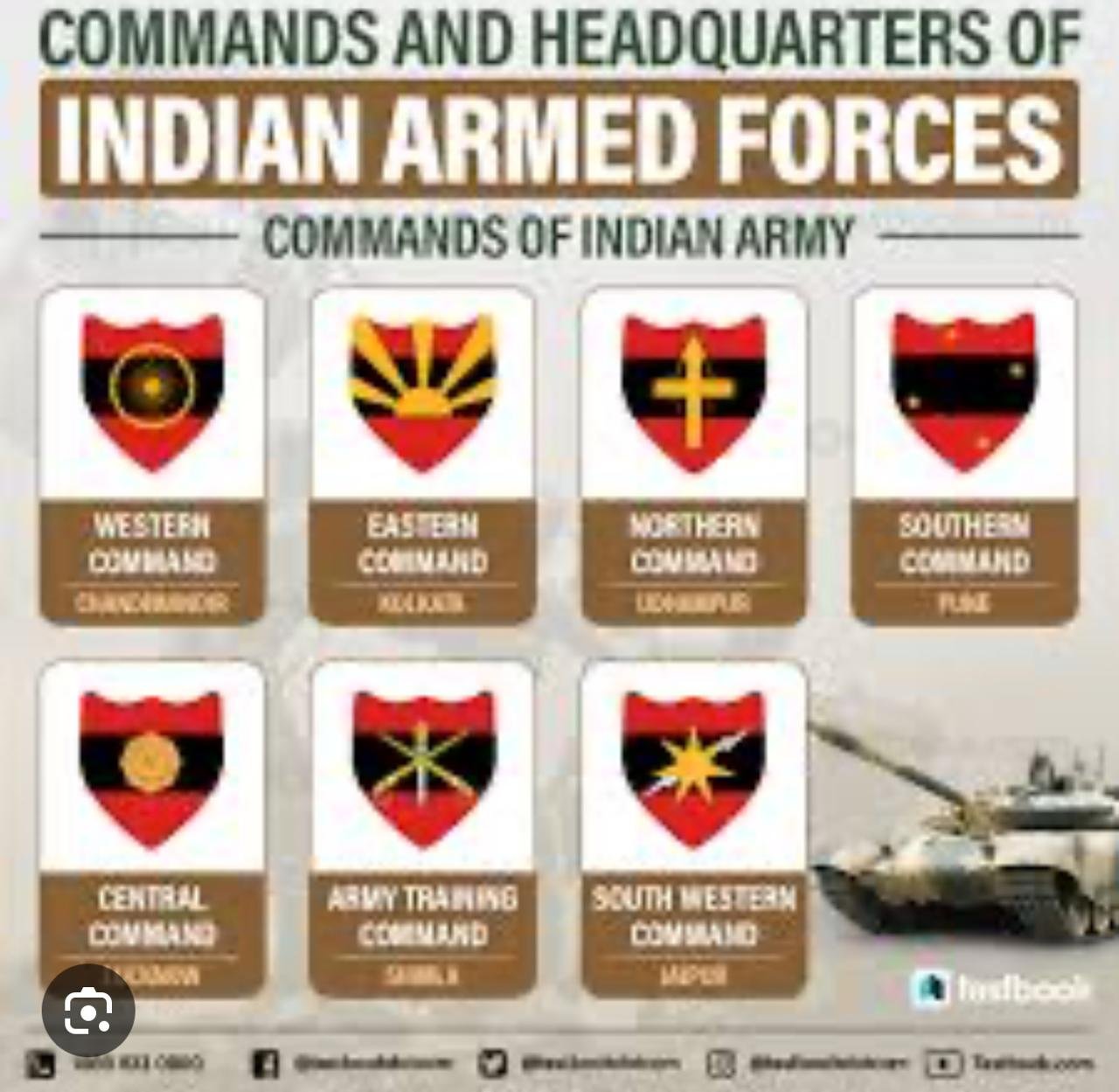
FORMATION SIGNS
FORMATION SIGNS
ALL HUMANS ARE ONE CREATED BY GOD
HINDUS,MUSLIMS,SIKHS.ISAI SAB HAI BHAI BHAI
CHIEF PATRON ALL INDIA SANJHA MORCHA
LT GEN JASBIR SINGH DHALIWAL, DOGRA
SENIOR PATRON ALL INDIA SANJHA MORCHA
MAJOR GEN HARVIJAY SINGH, SENA MEDAL ,corps of signals
.
.
PATRON ALL INDIA SANJHA MORCHA
MAJ GEN RAMINDER GORAYA , CORPS OF
sanjhamorcha303@gmail.com
PRESIDENT HARAYANA STATE CUM COORDINATOR ESM
BRIG DALJIT THUKRAL ,BENGAL SAPPERS
PRESIDENT TRICITY
COL B S BRAR (BHUPI BRAR)
PRESIDENT CHANDIGARH ZONE
COL SHANJIT SINGH BHULLAR
.
.
PRESIDENT PANCHKULA ZONE AND ZIRAKPUR
COL SWARAN SINGH
PRESIDENT SAS NAGAR (MOHALI)
COL BALBIR SINGH , ARTY
INDIAN DEFENCE FORCES
DEFENCE FORCES INTEGRATED LOGO
FORCES FLAGS
15 Th PRESIDENT OF INDIA SUPREME COMMANDER ARMED FORCES
Droupadi Murmu
DEFENCE MINISTER
Minister Rajnath Singh
CHIEF OF DEFENCE STAFF (2nd)
General Anil Chauhan PVSM UYSM AVSM SM VSM
INDIAN FORCES CHIEFS
CHIEF OF ARMY STAFF(29th)
General Upendra Dwivedi, PVSM, AVSM (30 Jun 2024 to Till Date)