








































What a beautiful video. Why don’t our TV channels produce such historical programs for our youngsters to learn. 🙏


Current Events :















What a beautiful video. Why don’t our TV channels produce such historical programs for our youngsters to learn. 🙏

The fourth edition of the joint Indo–Australian Army exercise, AUSTRAHIND 2025, concluded in Perth, Australia, on 26 October 2025.
Conducted from 13 to 26 October, the bilateral exercise aimed to deepen military cooperation, enhance interoperability, and bolster the capability of both armies to conduct combined operations in complex environments.
The Indian Army contingent comprised 120 personnel led by a Battalion of the Gorkha Rifles, supported by elements from various arms and services. The Australian Army fielded a similar strength, reflecting the evolving depth of the defence partnership between the two nations.
Centred on counter-terrorism operations in urban and semi-urban terrains, the exercise focused on realistic combat scenarios, simulated hostage rescue missions, and coordinated assaults on insurgent hideouts. It also incorporated advanced tactical drills and technology-based training modules aligned with UN peacekeeping objectives.
The joint forces practised integrated planning, surveillance, and execution under simulated stress conditions to refine command coordination and tactical communication. The emphasis was placed on intelligence sharing, room clearing, and counter-improvised explosive device (IED) operations.
The two-week engagement concluded with a validation exercise witnessed by senior military commanders from both sides. The closing ceremony underscored the shared commitment to regional security and stability through effective joint training and cooperation.
Strategic Implications For The Indo-Pacific
AUSTRAHIND 2025 holds considerable strategic importance within the evolving Indo-Pacific security architecture. The exercise not only symbolises growing operational coordination between India and Australia but also complements the broader defence cooperation under frameworks such as the Quad. By jointly addressing challenges like terrorism, urban warfare, and peacekeeping, both armies demonstrated their readiness to support regional stability and humanitarian operations under multilateral mandates.
The training outcomes of AUSTRAHIND 2025 underscore India’s expanding role as a security provider in the Indo-Pacific and Australia’s commitment to strengthening strategic ties with key partners. The exercise reinforces a shared vision of a free, open, and rules-based regional order, while enhancing practical capabilities in communication, logistics interoperability, and rapid joint deployment readiness.
AUSTRAHIND 2025 significantly enhanced the mutual understanding and operational synergy between the Indian and Australian Armies, reinforcing their partnership under the broader Indo-Pacific security framework.
Agencies

India’s defence exports would reach Rs 30,000 crore by March 2026, claimed Defence Minister Rajnath Singh while addressing Society of Indian Defence Manufacturers (SIDM) here today.
Defence exports stood at Rs 23,622 crore in the previous fiscal ending March 2025. India is exporting guns, missiles, ammunition and sub-parts of equipment to several countries.
The minister assured the industry that work is underway to revise the Defence Acquisition Procedure 2020. He asked private entrepreneurs to increase contribution to the domestic defence manufacturing. At present, the private industry, in the last fiscal made about Rs 33,000 crore worth of equipment out of the total defence production of ₹1.50 lakh crore. The minister said the private industry contribution should be at least 50 per cent in the next three years.
Lauding the effective use of Made-in-India equipment by the armed forces during Operation Sindoor, the Minister said it bolstered India’s reputation both regionally and internationally. The world saw the prowess of the Akash missile system, BrahMos, AkashTeer Air Defence Control System and other indigenous equipment during Operation Sindoor.
Indigenisation was the only way to deal with the challenges emanating from the constantly-evolving defence sector and the nature of warfare. India, Rajnath said, was striving to ensure that the defence equipment was not just assembled in the country, but a real manufacturing base was established to create the equipment embodying the spirit of ‘Made in India, Made for the World’.
“Numerous initiatives such as the Quantum Mission, Atal Innovation Mission, and the National Research Foundation have been taken to develop a culture of innovation and R&D. Our industry must accomplish what has not yet been achieved in the country,” he added.
To further increase indigenisation, Rajnath urged the industry to strive towards dominating supply chains and maintenance chains while focusing on indigenous manufacturing of individual subsystems and components, and not just complete platforms.

A 10-day annual training camp of No.1 Chandigarh Girls NCC Battalion concluded at Jawahar Navodaya Vidyalya in Sector 25 here today.
As many as 332 senior wing and junior wing cadets participated in the camp that saw a wide range of activities such as basic military training, drill, rifle firing, various competitions, sports, cultural programmes and other socially relevant subjects.
Lectures and demonstrations on topics like psychology and life skills, oral hygiene fire fighting, stress management and memory enhancement, cyber security and peer pressure were also conducted.
Visit War Memorial at Chandimandir, CSIO
The cadets were also exposed to military valour and scientific prowess through the visits to the Western Command War Memorial and Museum, Chandimandir and the Central Scientific Instruments Organisation in Chandigarh.
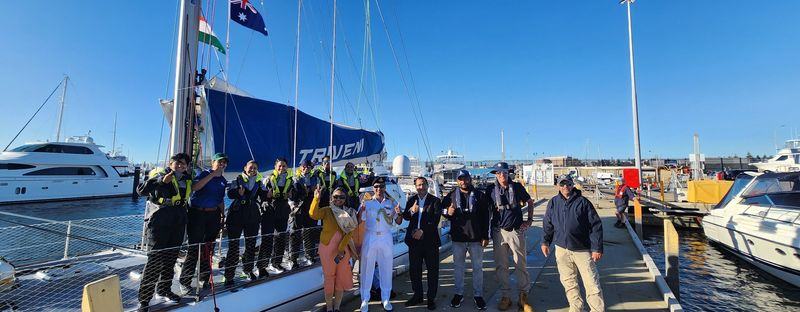
The Indian Army Sailing Vessel Triveni (IASV Triveni), crewed by women officers from the Indian Armed Forces, has reached Perth, Australia, completing the first leg of its globe-circling expedition, Mission ‘Samudra Pradakshina’ — the first-ever tri-service all-women circumnavigation of the world.
The arrival marks a key milestone in a nine-month voyage that began at the Gateway of India, Mumbai, on September 11. Women officers from the Army, Navy and Air Force are sailing aboard the indigenously built IASV Triveni on an easterly route covering roughly 26,000 nautical miles.
The yacht is scheduled to depart for Lyttelton, New Zealand, on November 8, before proceeding to Port Stanley in the South Atlantic.
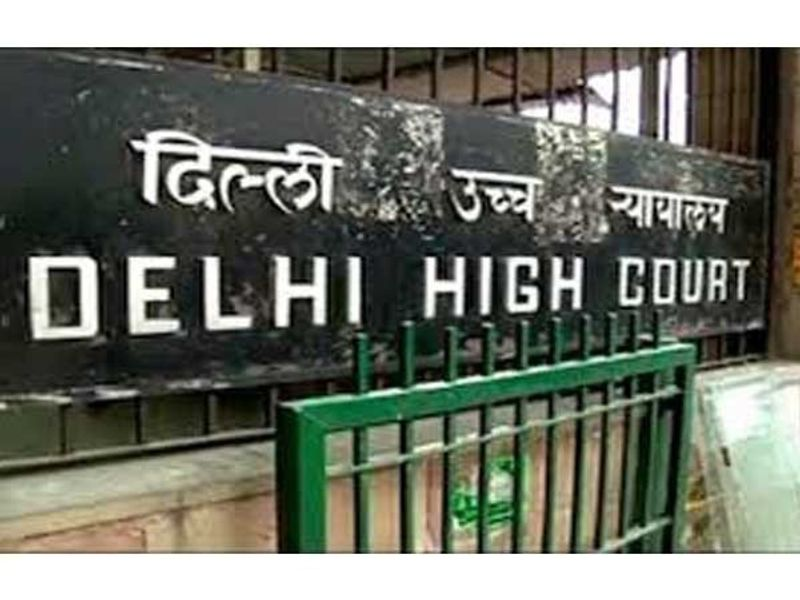
The Delhi High Court has sought the Defence Ministry’s stand on whether the Armed Forces Tribunal (AFT) can examine the constitutional validity of laws beyond the Armed Forces Tribunal Act, 2007, while hearing the plea of a transgender Navy officer who challenged her discharge from service after undergoing sex reassignment surgery.
A Full Bench comprising Chief Justice Devendra Kumar Upadhyaya and Justices C Hari Shankar and Om Prakash Shukla said the issue carried wide implications for personnel across the Army, Navy and Air Force, and directed that the ministry’s position be placed before the court by its top officer.
“We clarify that since this matter may have an impact over the personnel of all the Armed Forces, we provide that the instructions in the matter shall be provided to learned counsel for the respondents by none other than the Secretary, Ministry of Defence, Government of India or any other high-ranked officer nominated by him for the said purpose,” the Bench said.
The matter will next be heard on November 28.
The case was referred to the Full Bench by a Division Bench to decide three key questions — whether the AFT can adjudicate on the vires of statutory provisions other than its parent Act, such as Section 9 of the Navy Act; whether the decision in Neelam Chahar empowers the Tribunal to rule on the validity of other legislations; and if such an interpretation extends to all tribunals not created under Articles 323A and 323B of the Constitution.
The reference arose from a petition filed by a former Indian Navy officer who began identifying as female during service and underwent sex reassignment surgery. She alleged that once the Navy learnt of her surgery, she was unlawfully confined to a psychiatric ward for five months and subjected to repeated medical examinations.
The Centre, however, maintained that she was removed on grounds of misconduct, alleging that she was found with “long hair, nail polish and trimmed eyebrows” and had undergone gender reassignment surgery without
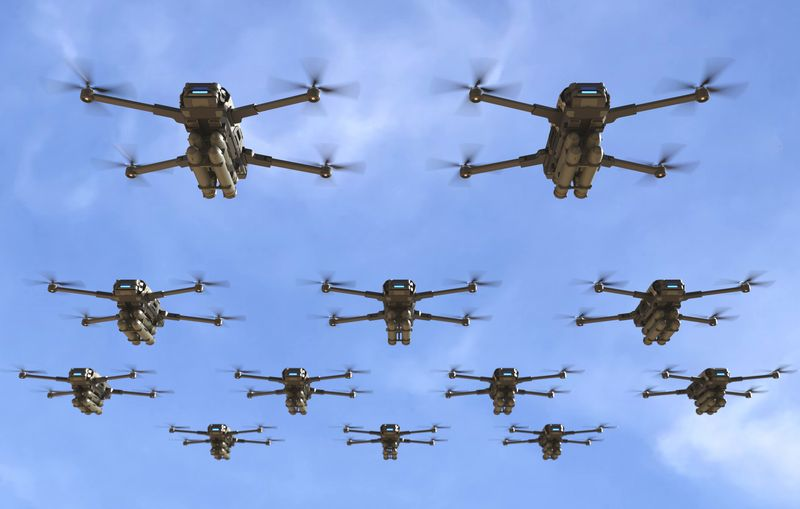
The Indian Air Force (IAF) has projected a requirement for 800 medium-range Swarm Unmanned Munition Systems (SUMS) to meet its operational need for remotely engaging hostile targets at ranges over 350 km.
Each system will comprise a swarm of at least 20 drones, capable of being launched in quick succession to loiter for a minimum of 30 minutes beyond 350 km and autonomously search, detect and identify both static and moving targets.
“Swarm drones are effective as they saturate enemy air defence systems, confuse enemy radars and provide IAF decision-makers the option to deploy in a couple of hours against hostile command and control targets,” states a request for proposal (RFP) issued by the Ministry of Defence on October 25.
The IAF has specified that the drones should be fixed-wing and powered by a hybrid jet-engine and battery pack, with the ability to carry at least 30 kg of ordnance, in addition to sensors, electronic countermeasures, communication gear and navigation aids.
They must be operable from sea level up to 16,000 feet, capable of launch and recovery from unprepared surfaces and ship decks, and functional in temperatures ranging from –20°C to 50°C.
Drones of varied types and capabilities have become central to modern warfare. Their use in both offensive and defensive roles was particularly underscored during Operation Sindoor in May this year.
AFTER 1947, among India’s first six Army chiefs, two were, in the literal sense, sons of the soil: schooling and college in India, one, KM Cariappa, commissioned from the temporary Cadets Facility in Daly College, Indore, and the other, SFJ Manekshaw, from the inaugural session of IMA, Dehradun; both graduated from the Defence Services Staff College, Quetta; both were blooded and distinguished over battlefields during WW II, the first was thrice decorated for distinguished service — in Iraq, Persia and Burma — with a Mention-in-Despatches and an OBE, the second with MC for Valour in Burma and Padma Vibhushan and Padma Bhushan for Services in India.
https://www.tribuneindia.com/news/premium/cariappa-manekshaw-field-marshals-who-defined-courage
Kargil, Sam Manekshaw, KM Cariappa and Corporate lessons from the Indian Army with Maj Gen Neeraj

A wreath-laying ceremony to pay tributes to martyrs and a “Bravehearts” motorcycle rally were held here today as a precursor to the 9th edition of the Military Literature Festival (MLF) scheduled to be held from November 7 to 9 at Sukhna Lake here.
Floral tributes were paid at the Chandigarh War Memorial by Governor of Punjab Gulab Chand Kataria, followed by former Chief of the Army Staff Gen VP Malik, former Chief of the Air Staff, Air Chief Marshal BS Dhanoa; Lt Gen TS Shergill, chairman of the MLF Association, and other veterans.
A ceremonial guard from the Punjab Police reversed arms as a mark of respect to the fallen soldiers while buglers sounded the Last Post. A large number of NCC cadets were also present.
The Governor flagged-off the motorcycle rally that passed through Chandigarh, Mohali and Panchkula to commemorate the services, sacrifices and achievements of the heroes of the 1965 Indo-Pak War, before culminating at Chandimandir.
Over 650 riders, including members of various bike clubs from the region and 16 veterans, participated in the rally. Amongst them were around 100 riders from three all-women groups, Mitran Di Motorcycle Mandali led by Shalini, One Biker Divas led by Harneet Kaur and The Motorcyclists (Women) led by Hardeep Singh.
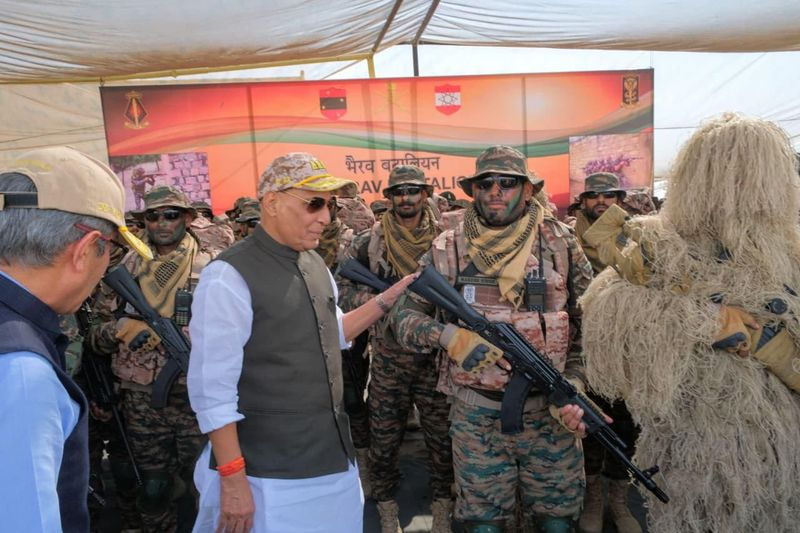
The newly raised ‘Bhairav’ specialised commando battalion will be deployed along the border by the end of October.
Sources said five of these battalions would be deployed in critical areas in the Northern Command, including Ladakh, and Srinagar. The western sector and the eastern hilly regions facing China would also get a battalion each.
The army has set a target to raise an additional 20 such battalions in the next six months.
On October 24, the army released first pictures of the troops of the Bhairav battalion during their interaction with Defence Minister Rajnath Singh along the forward area in Rajasthan.
The Defence Minister had witnessed a dynamic “capability demonstration exercise”, showcasing integrated employment of the new organisation.
Each battalion would comprise 250 specialised commandos equipped with weapons and technology to bring down anything and strike deep inside the enemy territory.
These battalions would integrate fighting components and have weapons, equipment and vehicles used by infantry, artillery, Special Forces, Signals and Unmanned Aerial Systems (UAS).
The tasking of each such unit would be done at the level of Corps Commander. Each Bhairav battalion would be standalone and not part of any infantry unit.
These units would be “lean, lethal and highly mobile” and would operate as a force between conventional infantry and the elite Para (Special Forces).
These batallions would be tasked to conduct rapid, high-impact tactical operations, especially along the border with China and Pakistan. Thus, freeing up the Special Forces for more strategic and high-risk missions.
Unlike traditional infantry battalions, troops have been drawn from several arms of the army, including infantry, artillery, air defence and Signals.
Creation of Bhairav battalions is part of a wider modernisation drive in the army, which also includes the formation of “Rudra” all-arms brigades and “Ashni” drone platoons for enhanced technological warfare capabilities.






























