









Sanjha Morcha

What’s New

Click the heading to open detailed news

Current Events :

web counter

Print Media Reproduced Defence Related News

Wreath Laying Ceremony during Vijay Diwas Celebrations today at Pathankot Military Station

bb6c0286-cbae-412c-8cb2-944cb66f68b2

b8efe1fa8-448c-4994-8562-48aeeb709b02

5a340f5b-f4b2-4c66-8c8d-d36a097c9fe0

Veterans, martrys’ kin take part in ‘Victory Parade’

Veterans, martrys’ kin take part in ‘Victory Parade’

Locals greet the kin of martyrs standing in a jeep during the ‘Victory Parade’ in Fazilka on Monday. Tribune photo

Our Correspondent

Fazilka, December 16

Braving the cold weather, hundreds of locals gathered today on the streets to hail war veterans and kin of martyrs who took out a ‘Victory Parade’ here. The parade was taken out to honour 206 soldiers who were martyred while defending Fazilka during the 1971 Indo-Pak war. The martyrs are known as ‘Saviours of Fazilka’.

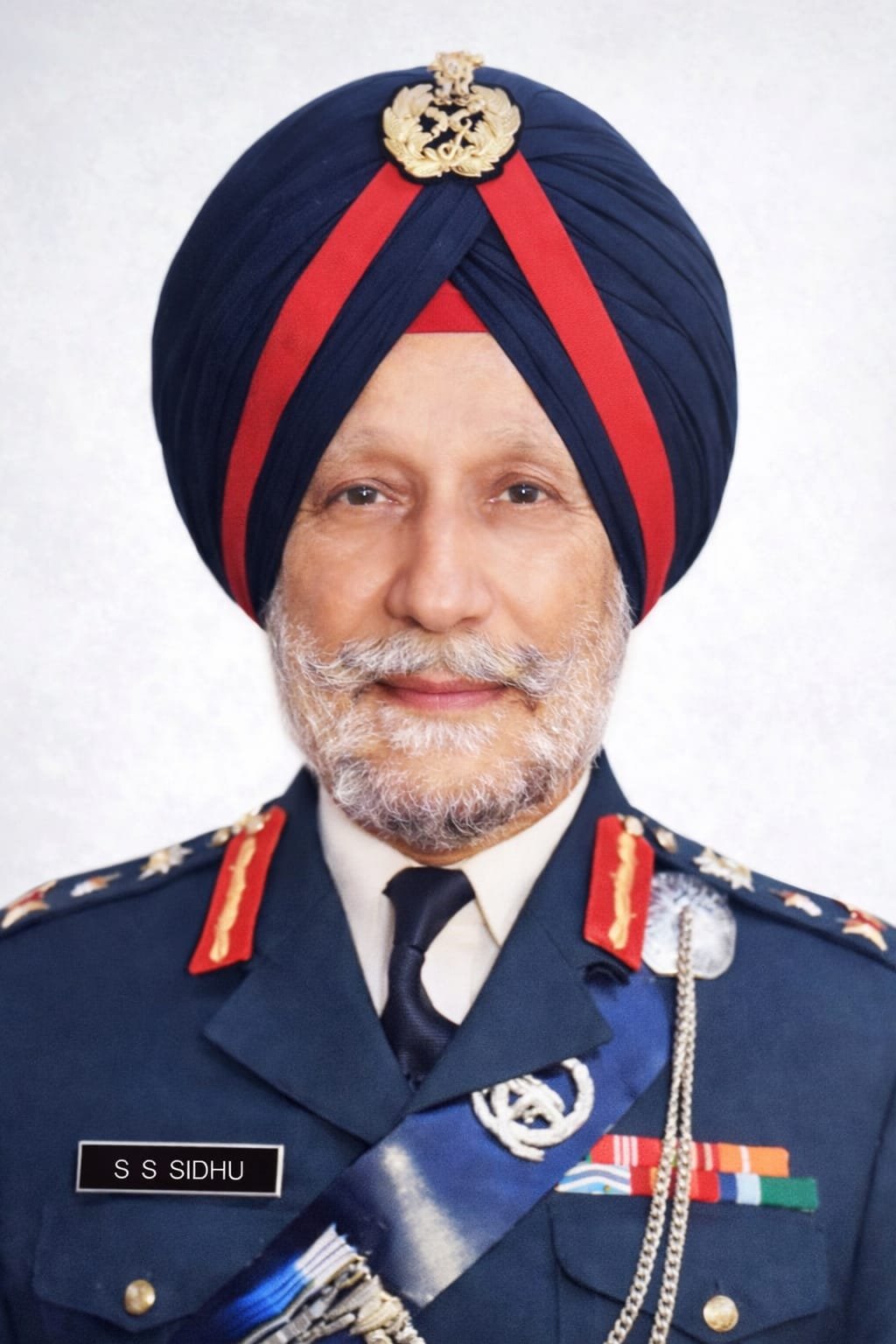
Major General SPS Sidhu, Deputy Commissioner Manpreet Singh, Brigadier Rupinder Singh, SSP Bhupinder Singh, Fazilka MLA Davinder Singh Ghubaya, former minister Surjit Kumar Jyani and a galaxy of Army and civil officers took part in the rally that went from the District Administrative Complex to the Clock Tower.

The town was decorated with flowers and lights. Shopkeepers and locals showered petals on the martyrs’ family members who were sitting in decorated jeeps. They also distributed sweets at nearly 40 different points en route the procession.

Two Army paragliders were the main attraction as they took a round of the town and showered flowers on participants from the sky. An Army pipe and brass band led the victory procession, followed by a large number of students.

“I have never seen such a warm welcome being given to war veterans in my life. Fazilka residents have set an example,” said octogenarian Colonel MS Gill (retd) who commanded the 4 Jat Regiment of the Army.

Addressing a large gathering at the Clock Tower, Major General Sidhu congratulated people on Vijay Diwas. In a social message, he exhorted all to shun drugs, corruption and use of polythene bags for the better future of the country.


CAA is a political issue. Use the Army with care

The CAA must be negotiated with the citizen, and it is desirable that the soldier remains outside this mediation
Excessive tasking of the Army will blunt its salutary effect in domestic exigencies AFP

The nationwide student protests against the Citizenship Amendment Act (CAA) have acquired a scale and intensity that is reflective of India’s deep democratic resilience. Some complex questions about the constitutional validity of the Act have been raised by citizens, particularly the young. A placard summarised the core of the student protests in a pithy manner: “We support Gandhi’s India and reject Savarkar’s India.’ One hopes that there would be an empathetic dialogue with the students in keeping with Prime Minister Narendra Modi’s exhortation that debate and peaceful dissent are the way ahead, even as the Supreme Court deliberates over whether the CAA is ultra vires of the Constitution or not. Embedded in the CAA-related developments of the last week are two elements specific to the Army that merit objective scrutiny for their long-term national security implications and the integrity of Indian democracy.

On December 11, when the first protests broke out in the Northeast, the Army was called in. This may have been done as a precautionary measure in the event the police were unable to deal with the unrest. Consequently, two columns of the Army were deployed in Assam and Tripura, while another was kept on stand-by. However, the situation appears to have stabilised and no further Army deployments have been requisitioned as “aid to civil power”. This is to be welcomed.

Concurrently, Lieutenant General Anil Chauhan, the Army commander of the Eastern Command, made a statement about the CAA that raised eyebrows for its political overtones. Speaking in Kolkata on December 14, he observed: “The current government is keen on taking hard decisions that have been pending for a long time.” He further added that the CAA was passed “despite reservations from a couple of Northeastern states”.

Both elements merit a recall and contextualisation apropos the Indian experience of the last 72 years. “Aid to civil power” is a duty that the military has to carry out, as and when called upon to do so by the civilian authorities. The more common of these is humanitarian assistance and disaster relief tasks.

In recent decades, the primary duty of the military — defending the nation from external threats, and managing low-intensity insurgencies — has been rendered more complex by the transmutation of the internal security (IS) challenge with the arrival of religious radicalism and jihadi terrorism. Pakistan’s support to such terrorism and the penchant of its deep-State to fish in troubled waters was noted in Kashmir in early 1990 and continues.

Hence, the conclusion, that, for India, the external and internal strands of security are now braided in an inextricable manner and the security establishment has been dealing with an opaque proxy war for decades. Kashmir and Khalistan have become symbols of such manifestation and the Army has set up special Rashtriya Rifle (RR) units to deal with this complex challenge.

Given India’s geography, regional politics, and the distinctive South Asian demographic density, borders have become porous and dealing with the steady influx of illegal immigrants or refugees has been an abiding socio-political and security challenge for Delhi. This peaked in 1970, when almost 10 million refugees from East Pakistan sought shelter from the persecution and genocide that ensued at the time. The Northeast was flooded in a visible manner and the “outsider” problem has continued to fester. The illegal immigrant morphing into an armed infiltrator or emerging as a militant, jihadi terrorist is a concern for security, and the post-9/11 global anxiety is common to many nations. Hence, the genesis of the CAA is not devoid of latent security concerns. Lieutenant General SK Sinha, a former army vice chief and later governor of Assam, was among the first to articulate these concerns in relation to the Northeast.

How this matter will be resolved in an equitable and sustainable manner is an issue that calls for astute political initiatives, imbued with integrity and commitment to the national interest, that are framed within the spirit of the Constitution. This has remained both elusive and contested as the current student protests demonstrate. In the interim, it may be useful to recall the muddy politics-security linkage. Former Prime Minister Indira Gandhi and the Congress nurtured the rise of Jarnail Singh Bhindranwale. While this initiative may have given them short-term electoral advantage in Punjab, the nation paid a heavy price by way of the negative impact this opportunistic policy had on the internal security fabric and the collateral damage to the fauj.

Yes, the military must stand by to provide “aid to civil power”, when called upon but excessive tasking of the Army will blunt its salutary effect in domestic exigencies. An apolitical and professional military is vital for democratic integrity and it would be prudent if top military commanders refrain from making public statements that stray into the political domain. The CAA must be negotiated with the citizen, and it is desirable that the soldier remains outside this mediation.

C Uday Bhaskar is director, Society for Policy Studies, New Delhi

The views expressed are personal


Military Literature Festival: ‘Appointment of CDS will lead to integration of defence services’, say panelists

During the discussion, all panelists welcomed this decision of the government and said that ever since the Kargil War got over in 1999, the Group of Ministers, in the year 2001, recommended the creation of the post of Chief of Defence Staff (CDS).

Military Literature Festival, appointment of Chief of Defence Staff, integration of defence services, kargil war, indian express news


Punjab CM Capt Amarinder Singh during a discussion at the Military Literature Festival in Chandigarh Sunday. (Express photo: Jasbir Malhi)

On the third and concluding day of Military Literature Festival in Chandigarh Sunday, defence experts opined that appointment of the Chief of Defence Staff would be a welcome step towards achieving integration of the defence services. The issue was examined during a panel discussion on the topic “Creation of the post of Chief of Defence Staff”.

The discussion was moderated by Lt Gen Aditya Singh (retd) and the panelists included Air Vice Marshal Manmohan Bahadur (retd), former Defence Secretary Shekhar Dutt, advisor to British High Commission, New Delhi, Brig Gavin Thompson and Lt Gen Sanjeev Langer (retd).

During the discussion, all panelists welcomed this decision of the government and said that ever since the Kargil War got over in 1999, the Group of Ministers, in the year 2001, recommended the creation of the post of Chief of Defence Staff (CDS).

Lt Gen Aditya Singh said that the post of CDS is aimed at ensuring better coordination between the three services, the Army, the Navy and the Air Force. He further said the CDS will act as the single-point advisor to the Government of India.

“The officer concerned will be in a position to advise on matters related to all the three services, Army, Navy and Air Force, thus making India’s armed forces integrated. The Chief of Defence Staff will be a ‘first among equals’, a fourth four-star officer who will be senior to the three other service chiefs,” he said.

Read | Military Literature Festival: Badnore says Punjab is Bharat, Bharat is Punjab; pushes for defence expo

Former Defence Secretary Shekhar Dutt stressed the post of CDS has been created as it is necessary to have a professional body of the highest standing to facilitate ‘jointmanship’ and render single-point military advice to the government on matters of national security. He said that this post has been created by keeping in mind the present day needs and the first CDS would be appointed in few days from now.

Advisor to British High Commission New Delhi Brig Gavin Thompson said that a centrally decision making body, such as the CDS is need of the hour and it has been followed in the UK for several years. He also shared the working of the CDS in UK.

Lt Gen Sanjeev Langer gave a presentation and compared the system of command of armed forces in USA, China, France etc with that of the CDS in India. He said that uniformed men from the armed forces should be deputed permanently in the Ministry of Defence, and the CDS would play in fostering inter-services jointness in terms of budgeting, equipment purchases, training, joint doctrines and planning of military operations, an imperative of modern warfare.T

Air Vice Marshal Manmohan Bahadur stressed on the formation of a separate defence cadre in the country, whose officers should be deputed only in organisations related to national security. He also said that the CDS should be made a permanent members of all committees related to strategic policy group, nuclear command authority etc and should be made a part of all the inter-ministerial discussions that are related to matters of national security. “At present, a bureaucrat heading the Defence Ministry formulates the operational plans for war fighting and Chiefs of Staff execute it. With the creation of post of CDS, it could be rectified now,” he said.


Military Literature Festival in Chandigarh: Badnore says Punjab is Bharat, Bharat is Punjab; pushes for defence expo

Badnore hoped that the next edition of the festival would see the showcasing of defence technology. He appreciated that one of the panel discussions during this festival focuses upon ‘Make in India’.

Military Literature Festival 2019, Chandigarh lit fest, Punjab news, Chandigarh news, Punjab Governor V P Singh Badnore

UT Administrator V P Singh Badnore while inaugurating the Military Literature Festival 2019 at Lake Club, Chandigarh, on Friday. Kamleshwar Singh

Punjab is Bharat and Bharat is Punjab, for no other region has defended the country like Punjab and faced internal as well as external aggressions.

Punjab Governor V P Singh Badnore made this statement while inaugurating the third edition of Military Literature Festival on Friday.

Referring to ‘Bharta’ clan of ancient times residing on the banks of Parushni or Ravi river, who had given the name Bharat to the nation, the Governor said despite several odds, the brave people of this land rose out of their misfortunes and created the bread basket of India and also became its sword arm. He termed it appropriate that the festival was founded in Punjab in the city of Chandigarh.

Kickstarting the three-day festival from December 13 to 15 with a galaxy of military historians, serving and retired military officers, researchers, academicians, hundreds of schoolchildren, authors and delegates from across the country and foreign shores, the Governor paid tributes to the martyrs of Parliament attack in 2001.

Badnore hoped that the next edition of the festival would see the showcasing of defence technology. He appreciated that one of the panel discussions during this festival focuses upon ‘Make in India’. He urged the defence manufacturers to utilise the platform provided by this event to make people aware of this reality. “Perhaps a defence and security exposition showcasing domestic and international weapons systems and equipment should become part of this festival next year,” he said.

He said that the nation had come a long way since Independence in 1947. The work of making own weapon systems with cutting-edge technology was in progress and already the defence equipment worth Rs 3,000 crore was being made in India. “Make in India for defence systems is no longer a mere slogan but a reality. Very soon we shall be securing our nation with a totally indigenously designed and manufactured weapons and equipment inventory,” he added.

Expressing gratitude to Punjab Chief Minister Amarinder Singh and others for making two consecutive editions of this event a success in 2017 and 2018, the Governor said that the event would provide a healthy platform for children to acquaint themselves with the war stories besides an opportunity to interact with the veterans and serving officers.

Referring to the 150th birth anniversary of Mahatma Gandhi and 550th Prakash Purb of Sri Guru Nanak Dev, Badnore said that these occasions reminded us that the way of nations must be that of ‘ahimsa’ and universal brotherhood where war is never an option. But at the same time, India was capable enough of dealing with any kind of insurgence from within or across borders. “Our Armed Forces have demonstrated this with a surgical strike in the mountains across the Line of Control and an air strike deep in Pakistan’s Khyber-Pakhtunkhwa province,” he said.

He also reminded everyone that this year marks the 20th anniversary of the Kargil war which the organising committee has commemorated with a review on the lessons learned during the conflict.

The Governor said the Tricity of Chandigarh, Mohali and Panchkula is home to an extensive military community, where four former chiefs of the three Defence Services were residing along with several senior officers of armed forces. He said that on Defence Services Flag Day, i.e. December 7, former Chiefs of the Army, Navy and Air Force joined us in laying wreaths at the Chandigarh War Memorial.

Earlier, in his welcome address, Tourism and Cultural Affairs Minister Charanjit Singh Channi expressed his gratitude to both Governor Badnore and CM Amarinder for conceptualising and organising this event with a view to apprising the younger generations of the glorious military legacy and its valour. He said that the state government had already released an amount of Rs 1.5 crore for organising this event.

In his address, GOC-in-C Western Command Lt General R P Singh said that it was a matter of great pride and honour for all that we were fully involved and associated in the MLF right from its inception in 2017. He hoped this festival would provide an opportunity to add new thoughts and ideas for strategy, security and diplomacy.

The senior advisor to Chief Minister Captain Amarinder Singh, Lt General Tejinder Singh Shergill, asserted that this MLF would go a long way in imbibing a spirit of patriotism and nationalism amongst youngsters besides motivating them to opt for armed forces as a career.

Prominent amongst those present on the occasion were former Chief of Army Staff General V P Malik (retd), former Chief of Air Staff, Air Chief Marshal B S Dhanoa (retd), former Chief of Naval Staff Admiral Sunil Lanba (retd), British Deputy High Commissioner in Chandigarh, Andrew Ayre, and Canadian Consulate General Mia Yen.


Military Literature Festival: When Army Commander’s security person took a stand

The Special Forces jawan of the Army, dressed in combat fatigues and carrying a sophisticated semi-automatic weapon, was standing outside Venue A of the Military Literature Festival where the Chief Minister was taking part in a panel discussion.

Military Literature Festival: When Army Commander’s security person took a stand

STRANGE SCENES were witnessed at the Military Literature Festival on Sunday when police personnel in Punjab Chief Minister Amarinder Singh’s security detail were seen arguing with a Special Forces jawan of the Army, who was there to protect the GOC-in-C Western Command, asking him to move away and stand some distance away.

The Special Forces jawan of the Army, dressed in combat fatigues and carrying a sophisticated semi-automatic weapon, was standing outside Venue A of the Military Literature Festival where the Chief Minister was taking part in a panel discussion. The GOC-in-C, Lt Gen RP Singh, too, was present at the venue and sitting as part of the audience.

Security personnel of the Punjab Police were posted outside the venue for the protection of the CM. Several officials were seen telling the Special Forces jawan that since the CM was the higher-ranking official at the venue, the security of the venue was their responsibility. “Jab PM aata hai to hum bhi wahan se hat jaate hain (When the PM comes, even we step aside),” one official was heard telling the jawan while asking him to go and stand some distance away.

The Army jawan, however, politely refused to budge saying he has to protect the Army Commander, although he moved away for a short while to make a phone call. However, he came back and again stood near the entrance of the venue and remained there till the event ended. Later, the cops gave up, even though they would time and again come and ask him to stand aside.


Lt Gen Manoj Mukund Naravane set to be next Army Chief

India army chief, Manoj Mukund Naravane, Who is Manoj Mukund Naravane, Manoj Naravane Indian Army Chief, Bipin Rawat, Bipin Rawat Army chief last day, indian express news

Lieutenant General Manoj Mukund Naravane will serve as Army Chief till April 2022, when he turns 62

Vice Chief of the Army, Lieutenant General Manoj Mukund Naravane, is set to be the next Army Chief, official sources confirmed to The Indian Express on Monday.

He will succeed General Bipin Rawat, who will retire on December 31.

The government has stuck to the seniority principle in appointing Lt Gen Naravane as the next chief as he is the senior-most officer in the Army after Gen Rawat. He will serve till April 2022, when he turns 62.

Lt Gen Naravane had taken charge as the Vice Chief on September 1; before that, he headed the Eastern Command of the Indian Army.

In his nearly four decades in the Army, Lt Gen Naravane has worked in key appointments in active counterinsurgency environments, both in the Northeast and in Jammu and Kashmir, according to the Army. He was also part of the Indian Peace Keeping Force in Sri Lanka during Operation PAWAN in 1987.

India army chief, Manoj Mukund Naravane, Who is Manoj Mukund Naravane, Manoj Naravane Indian Army Chief, Bipin Rawat, Bipin Rawat Army chief last day, indian express news Lieutenant General Manoj Mukund Naravane

He has been decorated with the Param Vishisht Seva Medal and the Ati Vishisht Seva Medal during his career. He was also the Inspector General of Assam Rifles (North) in Nagaland.

An alumnus of the National Defence Academy, Lt Gen Naravane was commissioned into the 7th Battalion of The Sikh Light Infantry Regiment in June 1980.

Hailing from Pune, his father, Mukund Naravane, had retired from the Indian Air Force, and his mother, Sudha Naravane, was a writer and news broadcaster with All Indian Radio in Pune. She died last year.

Lt Gen Naravane is alumnus of the Jnana Prabodhini Prashala in Pune and has had a keen interest in painting and sports since school days. His friend from Jnana Prabodhini, Dr Milind Modak, an orthopaedic surgeon, said, “I remember from the schooldays that he has been a very composed and balanced person. (He) took keen interest in painting and sports. I don’t remember him impulsively reacting to anything. After he joined the National Defence Academy, we always used to believe that he would do some magnificent in life. All of us from his friend circle and Jnana Prabodhini family are very proud and happy after hearing the news.”

The Army Chief retires either at the age of 62 or after serving for three years at the post. The outgoing Army Chief, Gen Rawat, is considered one of the frontrunners to become the first Chief of Defence Staff, a post announced by Prime Minister Narendra Modi during his Independence Day address this year.

TRIBUNE

Lt Gen Manoj Mukund Naravane will be the next Chief of Army Staff helming the 1.3 million-strong force, official sources said on Monday.

Lt Gen Naravane is currently serving as Vice-Chief of the Army.

Sources said Naravane’s appointment has been cleared at the highest level, adding the government has followed the principle of seniority in the appointment.

Army Chief Gen Bipin Rawat is due to retire on December 31 after a three-year stint.  He is expected to be appointed as the country’s first Chief of Defence Staff.

Before taking charge as vice chief of the Army Staff in September, Lt Gen Naravane was heading the Eastern Command of the Army which takes care of India’s nearly 4,000-km border with China.


Gen VP Malik: Vendors supplied substandard ammunition, outdated sat photos during Kargil conflict

General Malik said the Army placed orders for the 124 indigenous Arjun tanks at a much higher cost despite the fact that Russian T-90 tanks were much cheaper in comparison.

Former Army Chief VP Malik on kargil war, kargil war, weapons used during kargil war, punjab news

(from left) Gen VP Malik (retd), Admiral Sunil Lanba (retd), and Air Chief Marshal B S Dhanoa (retd) at MLF. Kamleshwar Singh

Former Army Chief VP Malik Friday lamented the lackadaisical attitude of political class towards the defence needs of the country, saying that due lessons had not been learnt from Kargil conflict.

Pointing out inadequacies in indigenous defence production and delays in acquisitions, General Malik, who was at the helm during the Kargil conflict, said that suppliers had provided substandard ammunition and outdated satellite photographs to the Army then.

“We purchased large quantities of artillery ammunition during the war and we found that it was of the 1970 vintage. Half of it turned out to be duds. We also purchased satellite photographs at Rs 35,000 apiece and it was found that these were two years old. The vendors exploit such situations when we purchase in an emergency,” he said.

General Malik made the remarks during a panel discussion – ‘Make in India and the Nation’s Security’ – on the first day of the Military Literature Festival (MLF) here.

The former Army chief also said that when the Army wanted to purchase weapon locating radars some years prior to the Kargil conflict, the Defence Research and Development Organisation (DRDO) did not let the deal go through because they promised indigenous equipment in a short short of time. “However, we did not get it in the time frame and when we did eventually purchase it in 2003, it was at a much higher cost,” he said adding that the lack of the radar cost lives of soldiers during the conflict.

“We should have by now built enough indigenous defence capacity platforms,” said General Malik adding that Parliament should debate the reasons leading to this failure more than it was doing at the moment.

General Malik led the chorus on urgently streamlining the defence procurement processes making them facilitators and not hurdles in “our endeavour to endow our forces with the cutting edge weaponry”.

Dispelling the notion that Army preferred importing weapons, General Malik categorically said abject failure of the public sector to fully deliver the required weaponry was the only reason for this. He said the Army placed orders for the 124 indigenous Arjun tanks at a much higher cost despite the fact that Russian T-90 tanks were much cheaper in comparison.

Echoing the views, former Financial Advisor (Acquisition) with Ministry of Defence, Amit Cowshish questioned the ambiguity and mistrust around objectives laid down under Make in India as far as defence acquisitions were concerned. There is no clear cut policy and framework to achieve avowed goals under the new slogan, he said, adding that indeginisation cannot be the sole criterion to reduce costs. He advocated a dedicated overarching organisation to process and deliver the defence needs in a time bound manner.

Cautioning against the temptation to tag defence matters with mere sloganeering, Lt General Arun Sahni (retd) urged for allocating more funds for upgradation of warfare. “We need a more serious approach where accountability is fixed for producing unusable products at the public sector institutions working in the sphere,” he said. The panelists also concurred that India should leverage its advantage of being the largest importer of weapons while dealing with foreign exporters.

  Earlier, moderating the session, senior journalist Rahul Bedi highlighted the gross mismatch between India’s capabilities and achievements till now. “On one side, we have launched ballistic missiles and still we can’t make INSAS Rifles,” he said alluding to the Make in India campaign.

LEST WE FORGET::Army celebrates 48th anniversary of 1971 Indo-Pak war

Army celebrates 48th anniversary of 1971 Indo-Pak war

Minister of State for Defence Shripad Naik, Army Chief General Bipin Rawat, Navy Chief Admiral Karambir Singh and Air Chief Marshal Rakesh Kumar Singh Bhadauria pay homage at the National War Memorial on the occasion of Vijay Diwas, in New Delhi. PTI

Srinagar, December 16

The Army on Monday here celebrated the 48th anniversary of the 1971 India-Pakistan war that culminated in the creation of Bangladesh.

Corps Commander Lt General KJS Dhillon led officers and other ranks of the Srinagar-based Chinar Corps in paying tribute to the martyrs by laying a wreath at the war memorial, a defence spokesman said.

“The 48th anniversary of the Indian victory in the 1971 Indo-Pakistan war was celebrated with great zeal and enthusiasm. Several functions were held to mark the occasion,” he said.

The spokesman said a felicitation function was held to acknowledge and honour the sacrifices of the veterans and martyrs of the 1971 war.

“The war veterans and families of the martyrs of the 1971 war were felicitated at a function. Camaraderie that characterises the Army was on display as the veterans and families of martyrs interacted with the present generation of the soldiers,” he said.

Addressing the function, Lt Gen Dhillon said the Army is grateful to the veterans for their services to the nation in their younger years and expressed the resolve that Army will look after their welfare.

“The Army immensely values the sacrifices of the veer naaris and their family members. The victory of such a magnitude would not have been possible without the tremendous sacrifice by the soldiers,” the corps commander said, referring to the 1971 war victory.

He urged the soldiers to continue to positively contribute towards building a vibrant and peaceful Kashmir. — PTI


Divided, we fell: What led to British empire’s relentless rise

Had the population of India not been divided and had it come together, they could have stopped the rise of the East India Company,” said Oliver Everett.

William Dalrymple, The Anarchy- The relentless rise of the East India Company and Empire, Mughal Empire, East India Company, indian express news

(From left) Oliver Everett, Sir Mark Tully and Walter Reid at the Military Literature Festival in Chandigarh on Saturday. (Express photo: Jaipal Singh)

Written by Chanda Malviya

The East India Company came to India on 26 August, 1608, as a trading company but ultimately became the rulers of India for almost two decades, exploiting both its the population and resources. They left India a backward and poverty-stricken country, with its economy in a shambles and the citizens divided on the basis of religion, class and caste.

This was the sum of a panel discussion on William Dalrymple’s book “The Anarchy- The relentless rise of the East India Company and Empire”. Panelists Oliver Everett, Walter Reid and Sir Mark Tully, elucidated the factors that led to the metamorphosis of a simple trading company into a ruler of an entire nation.

Fall of Mughal Empire

The Mughal Empire started losing its glory after the death of Mughal emperor Aurangzeb whose intolerant policies created a wedge among the population so much so that no emperor could handle such a vast empire. This downfall of the Mughals left the Indian state in anarchy, with no powerful authority to control such a vast area of diverse segments. “After the collapse of the Mughal Empire, a vacuum was created due to the anarchy, the British intervened and ultimately filled this gap and consequently, became the rulers of India,” said Reid, a reputed historian.


India was divided

During the mid-1600s, India was divided into various regional powers, including the Sikhs, Marathas, Rajputs and Afghans. This division gave rise to differences among the rulers of these regions due to their different beliefs and religions. The British followed the policy of divide and rule in India, and eventually, became the sole ruler. “Had the population of India not been divided and had it come together, they could have stopped the rise of the East India Company,” said Oliver Everett.

Also Read | William Dalrymple’s book, The Anarchy, has different cover, title for the UK edition

Economic factors

Walter Reid discussed the economic factors which led to the rise of the British in India. He explained the theory of how the East India Company exploited the Indian industries. “They used their military superiority to exploit the Indian industrialists. The East India Company banned the production of textile and steel, and crushed the native industries,” said Reid.

The company levied heavy taxes on farmers and industrialists and exploited them so much so that they had to take heavy loans to carry on production. Slowly, they fell into debt traps, said Reid, explaining how the sophisticated tax system imposed by the British, and the policy of capitalism fuelled their rise in India.

Military Power

The East India Company had enormous military power. They had skilled and powerful forces that were quite advanced in comparison to military forces of the Indian rulers. The British used their extensive forces to suppress all the rebellions against them and controlled the Indian population with force. “The British army was well financed by the British Government,” said Everett.

 In the end, the historians concluded that the company would not have been able to take over India had the Indians been united. Divided into squabbling regional powers, they were an easy prey.