Sanjha Morcha

What’s New

Click the heading to open detailed news

Current Events :

web counter

Print Media Reproduced Defence Related News

Army Chief Naravane visits forward posts in Siachen

Army Chief Naravane visits forward posts in Siachen

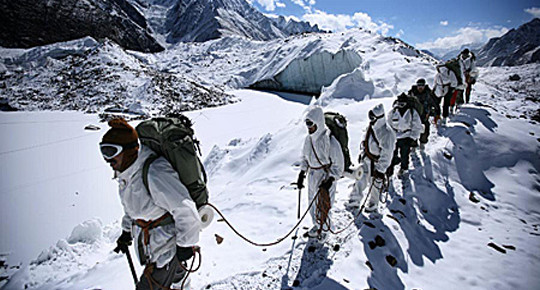
General MM Naravane met and interacted with troops deployed at the forward posts in the Siachen Sector. Tribune photo

Srinagar, January 9

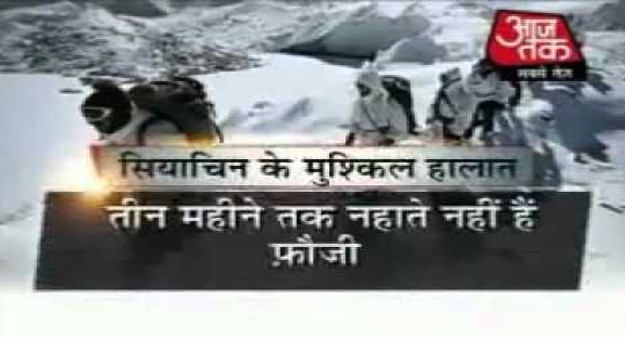
On his maiden visit after assuming office, Army Chief Gen MM Naravane on Thursday visited forward posts in Siachen Sector under the crucial Northern Command.

He was accompanied by Lieutenant General YK Joshi, Chief of Staff, Headquarters Northern Command, and Lieutenant General Harinder Singh, General Officer Commanding, ‘Fire & Fury’ Corps, an official spokesperson said.

Gen Naravane was briefed on the operational readiness being maintained in the sector by Commander, Siachen Brigade, he said.

The army chief also met and interacted with troops deployed at the forward posts in the Siachen Sector, complimenting them for their tenacity and high morale despite the extreme challenges posed by inclement weather, difficult terrain and super high altitude conditions, the spokesperson said.

Gen Naravane said the entire nation is proud of the soldiers deployed in Siachen, defending the territorial integrity of India.

He exhorted them to continue to discharge their duties with the same enthusiasm and zeal, and also assured them the full support of the country as well as the Army in carrying out their duties, the spokesperson said.

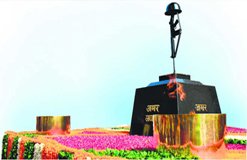
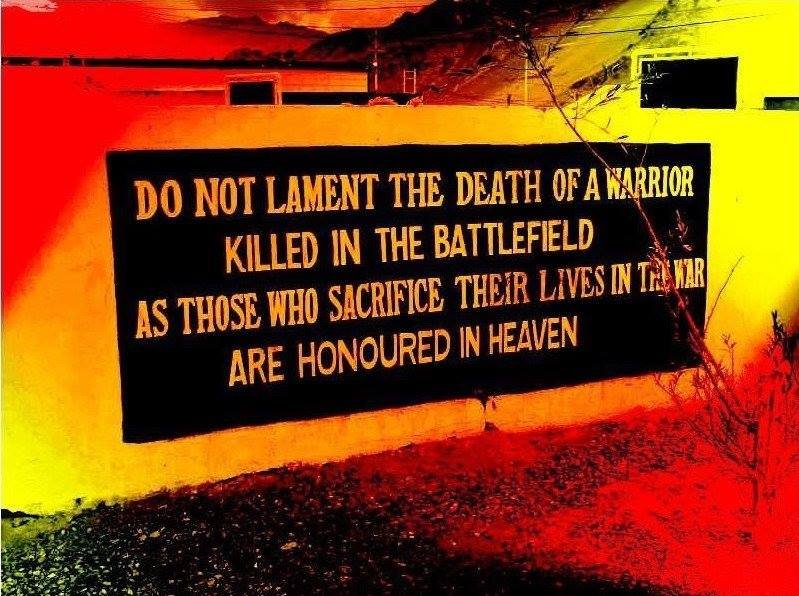
At the Siachen Base Camp, Gen Naravane laid a wreath at the iconic Siachen War Memorial in honour of all the brave Siachen warriors who have made the supreme sacrifice in the country’s defence, the official added.

The Northern Command of the Indian Army is entrusted with manning the country’s borders with Pakistan and China.

Gen Naravane took charge as the army chief from Gen Bipin Rawat on December 31. — PTI


Light combat aircraft makes maiden landing on sea-borne aircraft carrier INS Vikramaditya

http://

Tribune News Service

New Delhi, January 11

The naval variant of the Light Combat Aircraft, the Tejas, made a maiden successful landing on the deck of sea-borne aircraft carrier INS Vikramaditya on Saturday morning.

The landing on the deck paves the way for further development of the twin-engine deck-based fighter jet.

The Navy tweeted about the successful landing saying it occurred around 10 am on Saturday as the carrier was sailing in the Arabian Sea as part of the exercise.

Landing on the deck of a fighter jet is a complex procedure; the landing space is some 200 metres and the jet coming in to land has to be restrained using a set of three ‘arrestor wires’. In navy parlance it is called ‘arrested landing’.

The landing gear of a naval jet is different from the jets used by the IAF. The under-carriage has to be strong enough to be held back by the arrestor wires.

The plane being developed by Hindustan Aeronautics Limited (HAL) was tested for arrested landing at the navy shore-based test facility which is built to mimic the deck of an aircraft carrier.


Now, Army app to control mobile use

Now, Army app to control mobile use

Vijay Mohan

Tribune News Service

Chandigarh, January 8

With information security becoming a cause for concern due to the proliferation of smart phones, the Army is developing a proactive security application for installation on mobiles that will be able to monitor and control voice and data communication as well as track the location and movement of the device.

How it will work

  • Handset will be configured with app and linked to a central server over Internet for providing a public key infra cover
  • A GPS-based virtual boundary or a ‘geo fence’ will be identified for each device on a real-time location

At present there is no effective system of securing the use of smart phones other than rudimentary measures such as restricting their presence in sensitive military establishments or carrying out passive surveillance by monitoring agencies. Mobile phone communication not only remains highly susceptible to interception, but is also prone to installation of malwares and other snooping applications.

Under the plan, each mobile handset will be configured with the application through which voice and data exchange will be requested and linked to a central server over the Internet for providing a Public Key Infrastructure (PKI) cover and initiate a secure communication.

A GPS-based virtual boundary or a ‘geo fence’ will also be identified for each device on a real-time location so that the movement of the device can be tracked and its entry or exit to and from specified zones is recorded. The project is expected to take 12-15 months for development and carrying out user trials. The Directorate General of Information Technology at Army Headquarters and the Army Software Development Centre are the agencies responsible for executing the project, which may also see the involvement of domain experts from the public or private sector.


IAF wing commander arrested for impersonating Amit Shah

IAF wing commander arrested for impersonating Amit Shah

Bhopal, January 11

The Special Task Force (STF) of Madhya Pradesh Police has arrested a serving Air Force Wing Commander for impersonating  as Union Home Minister Amit Shah over the phone and asking Madhya Pradesh Governor Lalji Tandon to appoint a friend as vice-chancellor of a university, Additional Director General of Police Ashok Awasthi said.

Wing Commander Kuldeep Vaghela who is reported to have worked in the Raj Bhawan earlier got his friend Chandresh Kumar Shukla, a known Dental Surgeon, to pose as Amit Shah’s personal assistant and called the governor over phone.

He asked the staff to connect the call to the Governor. Once the governor came on line Waghela took over the conversation as Amit Shah and asked him to consider Dr Shukla to be appointed as Vice-Chancellor of a medical sciences university.

Shukla, who runs a dental clinic in Bhopal and has ambitions of making it big in Bollywood, has also been arrested.

Both have been charged with cheating and impersonation under section 419 and 420 and have been remanded to police custody and will be produced before the court again on Monday.

According to sources in Madhya Pradesh police a notification for selection of vice-chancellor of Madhya Pradesh Medical Sciences University Jabalpur was issued by Raj Bhavan on July 29, 2019.

Chandresh Kumar Shukla had also staked claim for the post and was interviewed on January 3. Shukla had managed to have his name recommended through politicians. He then approached his old friend Wing Commander Kuldeep Vaghela, posted at New Delhi Air Force Headquarters, for recommendation. The police sought due permission for Waghela’s arrest.

The two then conspired to make the hoax call on behalf of Home Minister Amit Shah to the Governor. Shukla made a call to Raj Bhavan from his mobile phone number and he took Wing Commander Kuldeep Vaghela on conference.

Wing Commander Kuldeep posed as Amit Shah and recommended Chandresh Shukla to be made the Chancellor of Madhya Pradesh Medical University.

The Raj Bhawan staff,however, decided to cross-check the caller’s credentials and contacted the home minister’s staff through other phone.

Police released excerpts from the conversation over phone.

“Chandresh Shukla – I am speaking PA of Home Minister Amit ShahÂ… Is the Governor Lalji Tandon available?

“Raj Bhawan Staff – He is in the Raj Bhavan itself.

“Shukla – Home Minister wants to speak with the Governor.

“Raj Bhawan Staff – I am transferring the phone to the Governor, please…

“Vaghela – How are you? … Chandresh Kumar Shukla ji has applied for the vice-chancellor … he is a good person … qualified for the job…

“Governor -……..

After this conversation, the Governor got suspicious and contacted the Home Minister’s office through the staff and inquired about the phone. On learning that the call was not made from the Home Minister’s office, they asked the STF to act.

The STF investigated the case and nabbed Vaghela from Delhi and Shukla from Bhopal. ADG Awasthi said that the accused Wing Commander Kuldeep Vaghela was an ADC to former Governor Ram Naresh Yadav in Madhya Pradesh Raj Bhavan in 2014. He was fully familiar with the functioning of Raj Bhavan. — IANS


On 5-day China visit, Gen Ranbir holds talks with PLA general

On 5-day China visit, Gen Ranbir holds talks with PLA general

Ranjit Thakur

Jammu, January 8

Close on the heels of joint military exercise between Indian and Chinese troops in Meghalaya, Northern Army Commander Lieutenant General Ranbir Singh today began his five-day China visit to exchange views with his counterpart on furthering peace and cooperation in the region.

The Army Commander is leading a high-level military delegation that would hold talks with top generals of the People’s Liberation Army as well as visit vital military and civil establishments in Beijing, Chengdu, Urumqi and Shanghai to exchange views on measures for furthering peace and tranquillity.

Lt Gen Singh met Chinese counterpart Gen Hanwei Gou, Commander (Ground Forces), PLA, in a free, congenial and cordial environment and discussed areas of mutual interest. The two discussed issues having strategic ramifications, including measures to enhance peace along the border.


CDS and the path to jointmanship

His role is not just about tri-service cooperation, but also to ensure that acquisitions do not exceed capital allocations

The announcement on a Chief of Defence Staff (CDS) last year and the appointment of Gen. Bipin Rawat as the first CDS has been one of the key policy decisions made by the Narendra Modi government in its second term. In the aftermath of an emphatic election victory in May 2019, Mr. Modi pushed the needle on a long-pending reform for the establishment of a CDS, which was recommended by the Kargil Review Committee in 2001. The CDS will be “first among equals” in that he will consult and solicit the views of the services, but the final judgment will be the CDS’s alone and he will be the principal military adviser to the Defence Minister.

The role here will be confined to the acquisition matters exclusive to each service and won’t extend to the procurement of big-ticket items such as warships or fighter aircraft, which will remain under firm control of the Department of Defence (DoD). The CDS will be the single-point military adviser to the Defence Minister on matters involving all three services and the service chiefs will be obliged to confine their counsel to issues pertaining to their respective services. The CDS is also vested with the authority to provide directives to the three chiefs.

A chief as well as an adviser

Additionally, the CDS will lead the Department of Military Affairs (DoMA) dealing with the three services. Gen. Rawat will enjoy the rank of Secretary within the DoD and his powers will be confined to only the revenue budget. However, he is vested with the authority in prioritising inter-service procurement decisions as Permanent Chairman-Chiefs of Staff Committee. While the CDS does not enjoy any command authority, in his capacity as DoMA, he will wield control over issues governing promotions, travel, appointment to key posts, and overseas assignments. Consequently, the CDS will enjoy a substantial amount of influence. He will also perform an advisory role in the Nuclear Command Authority (NCA). Above all, his core function will be to foster greater operational synergy between the three service branches of the Indian military and keep inter-service frictions to a minimum. Fundamentally, the CDS will perform two roles, as the single point military advisor to the Defence Minister and as head of the DoMA.

With his inauguration as India’s first CDS last year, Gen. Rawat has hit the ground running with some important announcements. He has sought the establishment of an Air Defence Command (ADC) by directing the Integrated Defence Staff (IDS) to develop a proposal by June 30. An integrated ADC will enable nationwide coverage, prevent fratricide in the event of war and sustain jointmanship in air defence operations. In addition, Gen. Rawat has declared his intention to synergise logistics support, particularly in areas where two or more services are co-located.

Three main challenges

Gen. Rawat faces three main challenges. First, there are concerns over matters relating to service parochialism, though there have been no initial indications in this regard. If he privileges support for the Army, his parent service, he is likely to put himself on a collision course with the Naval and Air Force chiefs. A corollary is that as an infantry officer, he may become susceptible to bias in matters concerning procurement decisions or personnel issues focused on the infantry. The latter outcome could vitiate his capacity to address the needs of the armour and artillery corps. Any parochialism could potentially derail the primary objective of creating the CDS — promoting synergy and shaping acquisition priorities both within and between the services. Indeed, one of the tasks the CDS is to avoid wasteful expenditure and duplication of equipment in the inventories of the services.

But, the CDS’s role is not simply about tri-service cooperation, it is equally about fostering better cooperation between the MoD bureaucracy and the services and ensuring that projected and planned acquisitions of the services do not exceed capital allocations. A secondary challenge stems from the sheer levels of manpower in the Indian Army, which is the service that consumes the lion’s share of the defence budget. As it is a manpower-intensive fighting force, pruning the number of personnel in the Army will remain perhaps the most vexed challenge for possibly the entirety of Gen. Rawat’s tenure. This will demand innovation, given the fact that infantry-based operations geared for counterinsurgency warfare, which a large part of the Army is dedicated to undertaking, are manpower intensive.

There are no instant remedies, but one pointer is towards greater investment in Artificial Intelligence (AI) over the long term, a process that has already begun, but will require a dedicated push from the CDS over the course of his tenure. The application of AI technology is likely to lend itself to tanks and artillery systems, as is visibly evident from the vigorous pursuit of AI by China’s People’s Liberation Army.

The final challenge facing the CDS will be the extent to which he can encourage the services to support indigenisation. Cost saving is not simply about reducing manpower in the Army, it is equally about getting all the services, particularly the capital-intensive services, to rally behind a committed enterprise to support the native Research and Development for production and eventual deployment of weapons systems, which when procured from abroad drive a massive hole in the budget.

Harsh V. Pant is Director of Research at Observer Research Foundation, Delhi where Kartik Bommakanti is an Associate Fellow


The saga of K Menon and the ArmyIf Nehru and Krishna Menon had listened to Thimayya, India would not have lost the 1962 war

Menon became Nehru’s kindred soul from the 1930s ht Archive

Shekhar Gupta

Much folklore has grown around VK Krishna Menon, India’s second most powerful politician in the 1950-60 decade. He is a reviled and demonised figure, especially in the Bharatiya Janata Party-Rashtriya Swayamsevak Sangh worldview as the “villain of 1962”. It’s wonderful, therefore, that we now have a brilliantly-researched biography of Menon by Congress leader Jairam Ramesh.

Was he an angel or a demon? Neither, as Ramesh’s research in his aptly named 725-page tome A Chequered Brilliance shows. Menon could be brilliant, as in the United Nations over Kashmir, eminently skilful, as in persuading Chou En Lai in 1955 to return American Air Force prisoners of the Korean War, and also display the “pettiest and meanest” mind in his dealings with the generals as India’s most controversial defence minister ever yet.

That Krishna Menon, a mix of extreme vanity and arrogance, and insecurity laced with self-pity at the same time, became Jawaharlal Nehru’s kindred soul from the 1930s on is well known. It is also amazing how much they confided in each other. In 1939, for example, Nehru wrote a long, distraught letter to Menon complaining about his failing physical health. He added however that his constitution was strong and he may ride it out. But what worried him much more was the state of his mental health. Ramesh guesses that this must have been around time Indira would have told him she wanted to marry Feroze Gandhi.

For us children of the 1960s, the most fascinating, and for today’s generation the newsiest section, however is the five years Menon served as defence minister, and, second most powerful man in Nehru’s Cabinet (1957-62).

Ramesh’s use of the description “meanest and pettiest” specifically refers to how Menon put up the second senior-most Army officer, Lieutenant-General PN Thapar into making allegations against his own chief KM Thimayya (13 charges including leaking classified information, loose talk about the prime minister, and hobnobbing with arms dealers) to another five-point “charge-sheet” on Lt-Gen SPP Thorat, widely seen as Thimayya’s preferred choice as his successor.

In his letters to them, one his boss and the other his equal, Thapar mentioned that he was doing this with the PM’s knowledge and he would greatly appreciate to hear their side of the story too. Ramesh concludes, and I think quite rightly, that Menon, who detested Thimayya, had put Thapar up to it, and also taken Nehru into confidence. Wheels of fratricidal conspiracies were moving fast. Knowing Menon would veto his choice, Thorat, Thimayya wrote his recommendation directly to President Rajendra Prasad as Supreme Commander. The president promptly approved it too. The Republic was still settling down and nobody quite understood the Rashtrapati’s powers. Not even Prasad himself. Nehru and Menon closed ranks to reject it.

If you think this wasn’t already a divided Army in the run-up to a war, more conspiracies emerged. First, Thimayya wrote a letter complaining he had information of some “smell” about another Lt-Gen, SD Verma. And after the latter had been moved out punitively, came to Menon to say that he had erred. The only “smell” about Verma was that he wasn’t too popular. Menon recorded this in his notes to Nehru. Next was against another top officer, Sam Manekshaw, then commanding the Defence Services Staff College in Wellington. It was again the charge of “loose talk”, and of being Anglophile to the extent that he had “hanged portraits of Warren Hastings and Robert Clive” in his office. His career was nearly ruined too, as Menon sidelined him and ordered an inquiry. It cleared him subsequently. Or the history of 1971 may have been different.

Ramesh’s documents throw up three surprises on one of the biggest stories of that period, which has morphed into much folklore as a Thimayya versus Nehru, Army versus politician saga over the decades, and which Narendra Modi referred to in his last Karnataka campaign as Nehru’s humiliation of local hero Thimayya. One, that The Statesman scooped the story of his resignation in 1959. It was under another byline. Ramesh, however, establishes that Gen JN Chaudhri (who later became Chief of Army Staff), had moonlighted anonymously as The Statesman (then British-owned) military correspondent for more than a decade. He was on the inside track of this resignation but could not have written the story himself and passed it on. Think of a serving top general working as a leading paper’s military correspondent incognito.

Second, there are stunning notes from the personal archives of the then British High Commissioner Malcolm Macdonald detailing how Thimayya was sharing all his problems with Menon, Nehru, the resignation plans and much classified information with him — like how Thimayya thought Menon deliberately painted Pakistan as India’s main enemy and threat, and played down China. All of which Macdonald was dutifully reporting back to London.

And third, that true to what’s come to be believed later, India would not have lost that war in 1962 if Nehru and Menon had listened to Thimayya. But not because he was so brilliant he would have won. But because he was prescient and insisted — even writing five months after his retirement — that there was no way the Army could protect India from the Chinese. And that this had to be done by politicians and diplomats.

All the stories of a bumbling Nehru led by a paranoid and compulsive conspiracy-theorist Menon are true. The notion that, left to the generals, India would have done much better in that war is shown up as an awful myth. The generals of that period were too busy and too good at fighting each other, to have no time left for the Chinese. And we haven’t even mentioned a Lt-Gen BM Kaul yet.

By special arrangement with ThePrint


Dept of Military Affairs works to deliver in 100 days

The instructions to the DMA, which is headed by Chief of Defence Staff (CDS) General Bipin Rawat, were passed on by Prime Minister Narendra Modi during sectoral briefings by selected secretaries earlier this week.

 <div class="o-story-paper-quite"> <span class="o-story-paper-quite__label">"Explained"</span><h2 class="o-story-paper-quite__headline">"What</h2><p>"The</p></div>

Newly appointed Chief of Defense Staff (CDS) General Bipin Rawat at a joint military guard of honor (File/AP)

The newly-created Department of Military Affairs (DMA) in the Defence Ministry has got cracking on delivering “tangible outcomes” within 100 days as per Prime Minister Narendra Modi’s directions, even before it has had time to be established and settled.

The instructions to the DMA, which is headed by Chief of Defence Staff (CDS) General Bipin Rawat, were passed on by Modi during sectoral briefings by selected secretaries earlier this week. The briefing for all ministries dealing with national and internal security was done by Defence Secretary Ajay Kumar.

“The DMA has got to hit the ground running after the PM expressed his desire to show tangible outcomes from this major reform he has undertaken, and he has given a deadline of 100 days. It has meant that they have had little time to settle down and establish themselves,” a senior government official told The Indian Express.

As per a government order, the CDS has been given a time-bound task to be done within three years — to bring about jointness in operations, logistics, transport, training, support services, communications, and repairs and maintenance of the three services. The head of DMA has to also facilitate the restructuring of military commands for optimal utilisation of resources by bringing about jointness in operations, including through establishment of joint/ theatre commands.

EXPLAINED

What falls under the DMA’s purview?

The charter of duties of the DMA was so far looked after by the Department of Defence, which is headed by the Defence Secretary, who is also the secretary in-charge of the Defence Ministry. Work exclusively pertaining to military matters will fall within the purview of the DMA, while the Department of Defence will deal with larger issues pertaining to defence of the country.

Meanwhile, the Department of Defence has decided to transfer its civilian officials to the DMA based on the quantum of work, sources said. As nearly 35 per cent of the work from the Department of Defence has been allocated to the DMA, it has decided to allocate two Joint Secretaries, 13 Deputy Secretaries and 25 Under Secretaries to the new department.

Sources said that the two joint secretaries who are likely to join DMA are both IAS officers. Their names have been identified and the officers have agreed to the move, but their role and appointment in DMA is still not clear.

In fact, in the interim, the DMA has already posted military officers of Major General and equivalent ranks as Joint Secretaries in-charge of the Army, Navy and Air Force. These posts in the erstwhile department of defence were tenanted by civilian officers from central services.

As per sources, there is still no clarity on the organisation structure, charter, role and staffing norms of DMA, which will need to be processed through the ministry. It will thereafter need the sanction of the Department of Personnel and Training (DoPT), before the new department is formalised.


Over 500 Sikhs face eviction from scheduled tribal block in MP

Ranjan

ranjan.srivastava@hindustantimes.com

Sheopur : When Prime Minister Indira Gandhi’s assassination in New Delhi by her Sikh bodyguards in 1984 triggered anti-Sikh violence, the impact was felt as far away as Karahal in Madhya Pradesh’s Sheopur district. Around a dozen Sikh families were uprooted from Karahal in 1984 in the face of the violence. They returned a decade later to pick up the pieces and rebuild their lives. Many of them bought land.

Now, two-and-half decades later, 11 Sikh families in Karahal are back where they started, after authorities demolished their farmhouses and levelled their crops to the ground from December 21 to December 31, 2019) as part of an anti-encroachment drive. The families are accused of buying tribal land on the basis of forged papers and also encroaching upon forest and government land.

Government officials said tribal land in Karahal cannot be transferred to non-tribals according to the Madhya Pradesh Land Revenue Code. Even transfer of land between non-tribals in such areas is disallowed without permission. Officials said no outsider is allowed to buy land there to protect the tribal ecosystem.

The officials said the issue became a bone of contention only in the recent past when the tribals started demanding return of their land taken by Sikhs. During the Congress government came to power in December 2018, it started the process to check validity of the land documents, after which the demolition process started, said district collector Pratibha Pal.

Authorities accused of bias

The Sikh residents of Karahal have accused the authorities of bias. “The SDM [sub-divisional magistrate Rupesh Upadhya] and tehsildar [PN Parmar] called us rioters and militants and said ‘You [Sikhs] were driven out in 1984 but you returned’,” said Gurmeet Singh, a local resident.

He said eight to 10 Sikh families left Karahal and returned to their villages in Punjab and Haryana in 1984. They returned a decade later with more Sikh families, who also bought land.

Kehar Singh, 73, another resident, said they were served no notices. “They did not give us any time to even remove our belongings.”

He said he came to Karahal from Sirsa in Haryana in 1996 and built a farmhouse.

His neighbour, Surendra Singh, said that he, along with his wife and three daughters, were forced to spend a cold night under the open sky when their house was demolished. “The administration did not show any mercy to even my little daughters, who pleaded with them to stop the demolition.”

Pal said Karahal is a notified scheduled tribe area, where non-tribals are not allowed to own land. “They do not have any legal document to prove their rights over the land in their possession. We adopted a legal procedure to take action against encroachment…”

Pal denied allegations that the Sikhs were singled out. “Action was taken against 23 persons belonging to several castes. Over 326 acres of government land was freed from encroachers. The possession of the land was returned to 34 people belonging to the Scheduled Caste and Scheduled Tribe communities. In 12 villages, over 657 acres of land was identified to have been occupied with the help of fake papers.”

Harendra Singh Rajawat, a local businessman, said some Sikh families also had revenue, forest and tribal land under their possession. “In this, both [Sikhs and tribals] benefited,” he said. He added that the Sikhs gave tribals annual rent of up to Rs 6,000 per acre and also employed them in their farms for wages of about Rs 150 daily.

‘Sikhs made barren land cultivable’

Rajawat said the problem started about a decade ago when the Sikhs made barren land cultivable. “On the land on which only maize and barley would grow, they started producing wheat, paddy and mustard. It is then that some local elements provoked tribals to try getting back their land which is as good as gold now.”

Karahal sarpanch Nandkishore, a tribal, said the Sikhs say they taught the tribals farming and raised their living standard. “But they made fortunes while cultivating our land and we continue to be poor.”

Tribal leader Mukesh Malhotra, who was arrested for raising slogans like “Sardar bhagao Karahal bachao [throw out Sikhs, save Karahal)”, accused the Sikhs of occupying tribal land. Delegations of Sikh organisations including the Shiromani Gurdwara Prabandhak Committee, Delhi Sikh Gurdwara Management Committee (DSGMC) and SAD have visited the area.

DSGMC head Manjinder Singh Sirsa, who is a member of the Delhi assembly, accused the state Congress government of trying to throw Sikhs out of Madhya Pradesh. Akal Takht acting head, Giani Harpreet Singh, on Monday referred to Sikh eviction from Madhya Pradesh and said the community was unsafe in Pakistan as well as India.

Army Air Defence Corps celebrates 27th raising day

Chandigarh : The Army Air Defence Corps celebrated its 27th raising day at Chandimandir on Friday.
The occasion was marked by wreath-laying ceremony at Veer Smriti, where Major General RS Thakur of the Army Air Defence Corps,Western Command, along with serving officers, JCOs and jawans paid tributes.
Although it was first raised in 1939, the Army Air Defence became an autonomous corps only on January 10, 1994.

Lieutenant General RP Singh, general commanding officer -in-chief, Western Command, extended his greetings to all ranks, their families and veterans of the Corps. He commended the professionalism displayed by the Army Air Defence personnel in discharge of their duties and always living up to their motto of ‘Akashe Shatrun Jahi’ (Kill the enemy in sky). htc