

Current Events :



















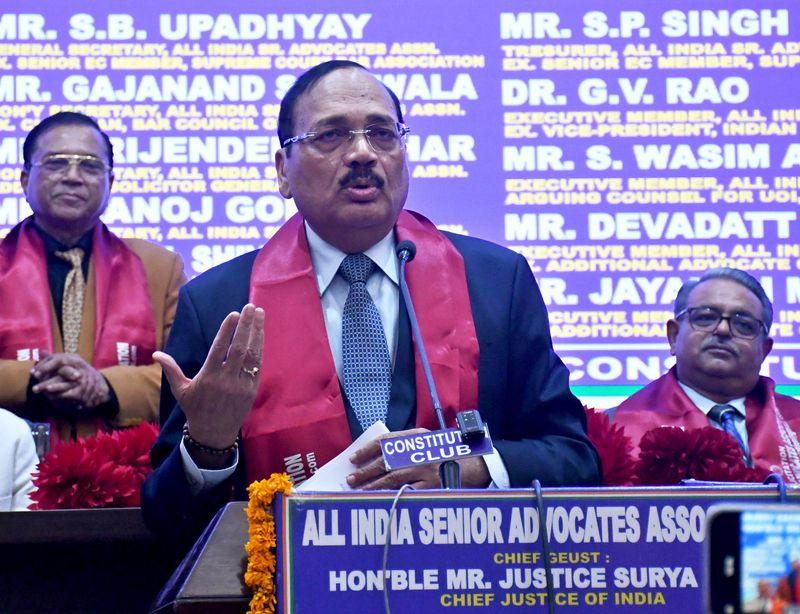
It is a dialogue between students and me,” Chief Justice of India (CJI) Surya Kant said on Friday as he sharply pulled up the Bar Council of India (BCI) for its order that the 2026 graduates of Hyderabad’s NALSAR University of Law not be enrolled as advocates following their objections to his proposed campus visit.“Students have a right to protest,” the CJI-led Bench said a day after the BCI directed all state Bar councils not to enrol any 2026 graduate of the university until further orders. The order was reversed within hours after an uproar on social media.
“It is a dialogue between students and me. Who are they (the BCI) to interfere? This is totally uncalled for,” the Chief Justice said after a plea challenging the BCI’s circular was mentioned before it for urgent hearing.
“When I was a student, I was also actively involved in student activities,” he added.
The Bench — which also included Justices Joymalya Bagchi and V Mohana — asked NALSAR to tell its students to get enrolled as advocates at the earliest. “We will empanel them for legal aid cases,” said the Bench.
A section of students of the premier law institute had written to the vice-chancellor, registrar and professors of the institution, opposing any proposal to invite the CJI as chief guest to the varsity’s convocation, the date of which is yet to be announced.
“Assuming even if they (students) are wrong, they have a right to protest. The BCI does not have any business in this,” the Bench said, terming the BCI’s action “absolutely unnecessary”.
Observing that students have the right to protest peacefully and nobody can stop them from doing so, the apex court asked the BCI’s counsel whether a meeting of the council was convened to take a resolution like that. The matter was posted for hearing after two weeks.
The court has also issued a notice to the BCI, seeking its response within two weeks on the plea challenging the circular issued by the apex Bar body.
“Issue notice. In the meantime, no punitive action shall be taken against the students or faculty of the NALSAR University of Law at the instance of the BCI or any state Bar council,” the Bench said.
The counsel appearing for the BCI told the Bench that the circular had been withdrawn. Senior advocate K Parameshwar, who mentioned the matter, told the Bench that the BCI had issued orders taking action against the students of NALSAR.
A BCI member from Kerala had opposed such a circular being issued.
The apex statutory body for lawyers said a final decision in the matter would be taken on August 19 after considering the material placed before it. The BCI then modified its decision after the uproar on social media and allowed state bar councils to enrol 2026 graduates of NALSAR University of Law as advocates.
Meanwhile, the Opposition on Friday slammed the Bar Council of India over its handling of the NALSAR dissent row, accusing the regulatory body of threatening students for exercising their right to disagree.
Opposition leaders alleged that the episode, along with action and threats against students involved in protests over the NEET-UG paper leak, reflected a wider trend of institutional overreach and attempts to discourage criticism.
Congress leader Gaurav Gogoi said, “The cost of dissent –NALSAR students exercise their constitutional right to dissent, the BCI Chairperson threatens to deny them enrolment as advocates.”
Gogoi also referred to students from Delhi University, Jawaharlal Nehru University and Jamia Millia Islamia who participated in protests at Jantar Mantar over the NEET-UG paper leak. He alleged that students were threatened with legal consequences and disciplinary action.
Describing the developments as part of a “disturbing trend”, Gogoi alleged that regulatory bodies and administrations were increasingly willing to overstep their mandates and penalise criticism. “It is an attempt to suppress critical thinking and create a culture of silence in public institutions,” he added.
“The freedom to disagree with the government is not a privilege bestowed by people in positions of authority. It is a fundamental right protected by the Constitution,” Gogoi said.
He further said that disagreement with those in positions of authority could not become grounds for professional retaliation and stressed that due process, academic freedom and institutional autonomy must be protected.
RJD leader Manoj Jha also criticised the BCI’s decision, accusing the council of making a swift reversal in an apparent bid to appease those in power. “The U-turn happened in the time it takes just to write the letter U,” Jha said, alleging that the episode had, in the process, “torn our democratic system to shreds”.
TMC leader Sagarika Ghosh also condemned the alleged targeting of students who voiced dissent. Describing such conduct as unbecoming of those entrusted with safeguarding institutional integrity and the dignity of office, she said, “Targeting students who voice their dissent is vicious and cruel
The Syrian Wars of the third and second centuries BCE, between the Ptolemaic and Seleucid empires, were at their core a struggle for control of mercantile revenues and the fertile plains that fed imperial ambitions. So too were the Roman-Persian Wars that raged across centuries for dominion over the Fertile Crescent
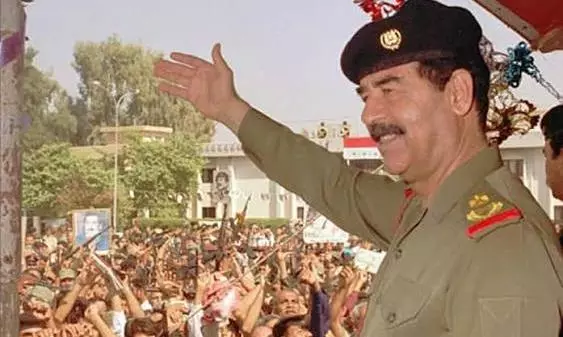
The collapse of the Islamabad Memorandum was a predictable reckoning. The US-Iran deal promised a cessation of hostilities, an end to Iranian restrictions on the Strait of Hormuz, a phased reduction of American military assets in the region, sanctions relief for Tehran, and a substantial economic commitment to Iran’s reconstruction. A 60-day deadline was set to resolve the outstanding nuclear-programme issue. By early July, that architecture lay in rubble.
The Houthis in Yemen, acting at Iran’s behest, have announced a blockade of the Bab al-Mandab strait. Saudi Arabia and 13 other nations have formed the Multinational Maritime Defence Alliance in Riyadh to counter Houthi threats in the Red Sea and Bab al-Mandab. In less than three weeks, a diplomatic thaw had given way to maritime warfare, proxy escalation and the crystallisation of opposing military blocs.
To understand why durable stability remains elusive across the Middle East, one must first recognise that this land has been the central corridor of the Old World. Long before oil, it was the overland and maritime crossroads connecting the Indian, Chinese and Persian civilisations with Egypt, Greece and Rome.
The Syrian Wars of the third and second centuries BCE, between the Ptolemaic and Seleucid empires, were at their core a struggle for control of mercantile revenues and the fertile plains that fed imperial ambitions. So too were the Roman-Persian Wars that raged across centuries for dominion over the Fertile
The Safavid conversion of Iran in the 16th century sharpened the divide irreversibly. The Ottoman-Safavid rivalry transformed this theological schism into an imperial struggle for legitimacy and territory. For the Sunni Ottomans, control over Iraq and especially Baghdad, with its shrine to Abu Hanifa, conferred religious authority. For the Twelver Shia Safavids, sovereignty was inseparable from guardianship of the shrine cities of Najaf, Karbala, Kadhimiya and Samarra.
The consequence was a centuries-long war that turned Iraq into a sectarian battleground. Ottomans categorised native Arab and Kurdish Shias as potential Persian subjects, issuing fatwas that condemned them as heretics and enacting laws that prohibited marriage between Ottoman women and Shia men. This state-administered framework of suspicion passed into the genetic code of the modern Iraqi state.
The two Persian Gulf Wars, the American-led dismantling of Saddam Hussein’s Sunni-dominated regime in Iraq and the mass uprisings of the Arab Spring after 2011 tore away the thin membranes of authoritarian stability, releasing the sectarian demons into civil wars in Syria, Yemen and beyond.
Yet the most enduring source of instability are the political boundaries, which were imposed on the region with almost artistic indifference to its human geography. The collapse of the Ottoman Empire after the First World War presented a vacuum into which European colonial powers and local nationalisms rushed, but the outcomes were shaped far more by the former than the latter. As early as 1916, Mark Sykes and François Georges-Picot were drawing lines across the Levant, partitioning it into British and French spheres of control in five distinct entities.
The Sykes-Picot Agreement remains the original sin from which a century of conflict has flowed. Before the ink was dry, Britain compounded the betrayal. The Balfour Declaration of November 1917 pledged a Jewish national home in Palestine, directly contradicting the terms of the Sykes-Picot agreement and the earlier McMahon-Hussein Correspondence, in which the British had promised the Arab Peninsula, including Palestine, to Sharif Hussein bin Ali of Mecca in return for his revolt against the Ottomans. Britain, triple-dealing, promised the same land to the Arabs, the Zionists, and its own colonial administration.
The consequences were immediate and lasting. The 1920 Treaty of Sèvres attempted to formalise the dismemberment, but its boundaries collapsed under the weight of Turkish resistance, leading to the Treaty of Lausanne, 1923, and the emergence of a Turkish republic that repudiated the colonial carve-up, an exception that proved the rule.
In Damascus that same year, a constitutional convention of delegates from Syria, Jordan, Lebanon and Palestine declared an independent Arab Kingdom under Faisal, a pluralistic constitutional monarchy forged through compromise among diverse communities. However, the French army crushed it, and Faisal fled. The suppression of that indigenous, negotiated vision of the post-Ottoman political community would haunt the region for decades.
Lebanon is another case study in the violence of well-intentioned sectarian engineering. The French created the state of Greater Lebanon as a haven for Maronite Christians but enclosed within its borders a large Muslim population, setting the stage for a confessional system that, at independence in 1943, apportioned the presidency to a Maronite, the premiership to a Sunni, and the parliamentary speakership to a Shia. Unresolved demographic and political tensions fermented until they exploded in the civil war of 1975-1990. The Syrian occupation, the rise of Hezbollah and the spillover from the Syrian civil war further hardened sectarian identities.
Likewise, the Kurds sit astride the fault lines left by Sykes-Picot and Lausanne, their aspirations repeatedly instrumentalised and betrayed.
If this sweep of history teaches anything, it is that peace in the Middle East must be foundational. What is required is nothing less than a Westphalian moment for the Middle East. A durable peace demands a comprehensive set of political and social rearrangements that the international community has historically lacked the patience and the regional powers the trust to pursue.
The fires engulfing the Strait of Hormuz and Bab al-Mandab today are not anomalies; they are the latest chapter in a story that will not end until the region’s peoples and the powers that meddle in their affairs muster the wisdom to address the fundamental, unresolved issues that have kept the Middle East suspended between war and a mirage of peace for the entirety of its recorded history.
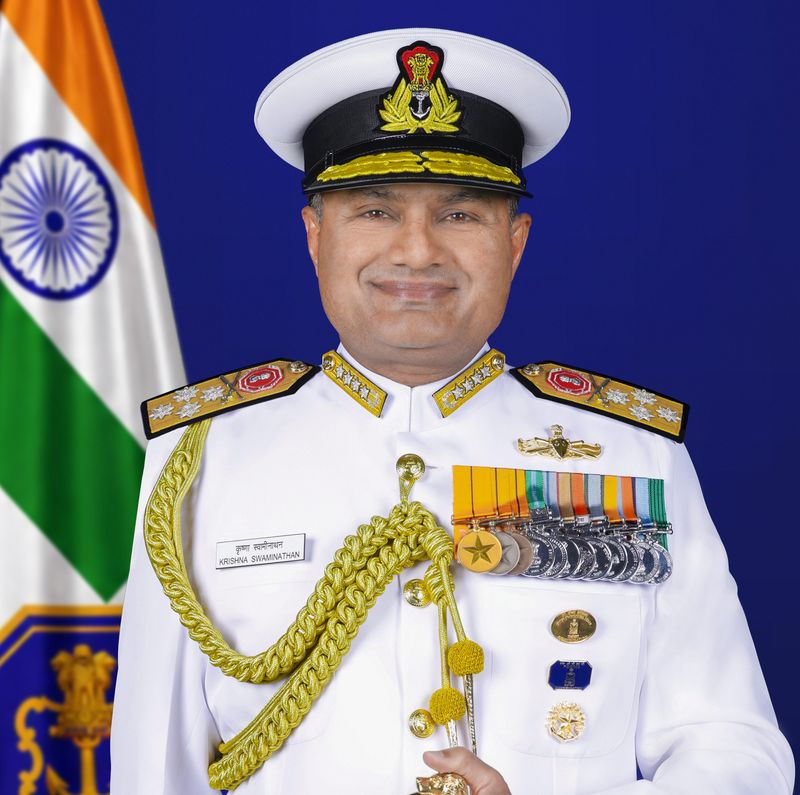
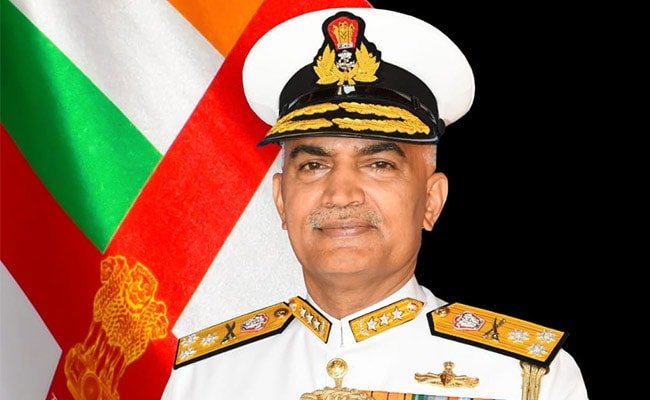
ndian Navy Chief Admiral Krishna Swaminathan started a four-day official visit to Mauritius on Monday as part of India’s continued efforts to strengthen bilateral maritime cooperation and deepen defence ties with the island nation.
During his visit, Admiral Swaminathan will interact with senior leadership of the Government of Mauritius and hold discussions on matters of mutual interest, such as maritime security, defence cooperation, capacity building and military collaboration.
India and Mauritius share a close and enduring maritime partnership . The Indian Navy engages regularly with the Mauritius National Coast Guard through training exchanges and operational interactions, including joint Exclusive Economic Zone (EEZ) surveillance, port visits and hydrographic surveys.
Both countries also participate and engage with each other in multilateral forums and cooperative initiatives. Mauritius has been a regular participant in key Indian Navy initiatives such as the Indian Ocean Naval Symposium, MILAN, International Fleet Review, Goa Maritime Conclave, IOS SAGAR and Exercise Mauritius occupies an important position in the south-western Indian Ocean, close to major sea lanes linking Africa, the Middle East and Asia.
India has supported Mauritius in strengthening maritime capabilities through the supply of patrol vessels, helicopters, aircraft, fast interceptor boats and other maritime equipment. Lines of credit and defence cooperation have also enabled Mauritius to procure Indian-built platforms on favourable terms.
The relationship also includes assistance with maintenance, repair and the supply of aviation spares, thereby improving the operational availability of Mauritian maritime assets.
A major achievement of India’s maritime assistance has been the establishment of a Coastal Surveillance Radar System in Mauritius. Built with Indian assistance, the network contributes to maritime domain awareness by enabling the detection and monitoring of vessels operating around the island nation.
India and Mauritius have also moved towards greater information-sharing, including cooperation on white-shipping information, and the proposed establishment of a National Maritime Information Sharing Center.
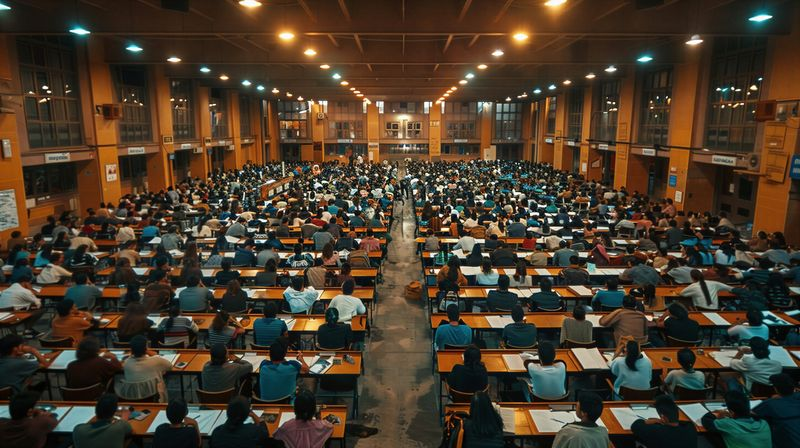
FOR a fortnight, Parliament debated education with unusual seriousness. The trigger was a young generation’s anguish over the integrity of its examinations, and that anguish was just. An examination is the Republic’s promise that talent will be weighed and birth will not. When a paper leaks or a seat is sold, the promise breaks, and faith in the Republic breaks with it.
The anger was earned. But anger is diagnosis, not design. Parliament supplied the feeling. The Republic now owes the architecture.
Say the position plainly. An honest examination is necessary, but it is not enough. It guards one door where a nation needs a house. The task before the Republic is not a fairer door. It is a second way in.
Begin with the harder question. Suppose every examination became honest tomorrow. Every leak stopped, every corrupt official gone, every result pure merit. Would opportunity then be equal?
It would not. For even a perfectly honest examination guards a single narrow door. Consider the one that provoked this debate. In 2024, more than 23 lakh young Indians appeared for the medical entrance examination. Over 13 lakh crossed the qualifying threshold. Against them stood roughly 1,15,000 MBBS seats. An honest examination would still have denied an MBBS seat to more than nine out of every ten candidates it had declared qualified. Nor is medicine an exception.
In two recent Railway recruitment examinations alone, some 2.37 crore candidates competed for approximately 1.31 lakh eventual recruitments. The same young person may, of course, appear in several examinations; that duplication is itself evidence of repeated attempts to enter the same narrow passage.
Parliament debated the young who were cheated, and rightly. But it never counted the far larger number who were not cheated at all, who sat a fair examination and found that fairness had no seat to give them. The arithmetic is not corrupt. It is merely cruel. We have mistaken uniformity for fairness, and scarcity for merit.
This is not an administrative fault. It is a philosophical inheritance, and it has two fathers and a date apiece. In 1835, Thomas Macaulay wrote his Minute on Indian education and sought to create a class of persons, Indian in blood and colour but English in taste, who would serve as interpreters between the colonial administration and the millions it governed. The individual mattered because the system needed him. In 1893, from a platform in Chicago, Vivekananda presented a different conception of man to the world. He would define education as “the manifestation of the perfection already in man.” One design begins with the requirements of the system. The other begins with the person. India kept Macaulay and quoted Vivekananda, which is the most Indian compromise of all.
We built Macaulay into the machinery, the schools, the services, the whole apparatus that turns a person into a qualification, and we kept Vivekananda for the convocation address. One we obey every working day. The other we quote on ceremonial occasions and forget by the afternoon. The credential runs the country. The perfection within is left on the platform in Chicago.
A philosophy of education never stays in the classroom. It becomes a mindset, and the mindset becomes the social order, deciding what a people honours and whom it rewards. Macaulay’s order made the credential the measure of a man, and the effect reaches all the way into the home.
Consider a boy born into a welder’s family. His father knows the trade to its depth, and knows too what it has earned him, which is skill without standing, which is another way of saying skill without a decent wage. So the father spends every rupee he has to lift the boy off the welding floor and set him at the foot of the only staircase that carries respect. He is not choosing medicine. He is fleeing welding. Now change one thing. Let the trade have a summit. Let a certified welder be able to end his working life as a professor of practice, teaching the craft and then certifying it. Two things shift at that kitchen table. The boy who would make a fine welder may never be pushed toward a doctor’s gown at all, and the boy who would make a poor one now has a second staircase to climb rather than a single desperate bet. Ascent does not merely reward the craftsman. It rescues the household’s judgment.
This is why an argument about examinations is really an argument about survival. While we guard the one door, the crafts behind the others are dying, one anxious father at a time. The official censuses differ in definition, but their direction is unmistakable: India’s handloom workforce has contracted, aged and become increasingly precarious. In Varanasi, hand weaving has steadily surrendered ground to the power loom. Across craft clusters, children are turning away because inherited mastery offers neither predictable income nor social ascent. This is not modernisation. It is amputation. Skill that took three generations of hands to build, and that no syllabus can hold, is being lost not for want of demand but for want of standing.
And the craft dies for a reason more curable than fashion. The weaver’s poverty is not written into his loom. It is taken from him on the way to the market. Between the hands that make and the buyer who pays stands a line of intermediaries, each taking his cut of a margin the maker never sees, so that the man of skill ends poor while the man of access grows rich.
Standing, then, is not honour alone. It is the wage the work would earn if it reached the market whole. This is where the new instruments earn their keep. The platform and the phone have begun to do to the middleman what no policy ever could, letting the weaver in Varanasi and the potter in Khurja sell to the world directly and keep what the sale is worth. That disintermediation is not a convenience to be admired. It is a lever to be seized, by deliberate policy and steady advocacy, until it is the maker the market pays, and not the man in between.
A developed India cannot keep losing its capability to a mindset, and the loss cannot be repaired by improving the ladder alone. Better schools, fairer papers, cleaner admissions — each have value, and none of them builds a second way up. The remedy is not a kinder examination. It is a second instrument.
We have given the fortnight to the lock. The room is the harder question, and the more important one. What that second instrument is, and how a country already owns the tools to build it, is where this essay turns next.
To commemorate Independence Day, the Indian Air Force Band will perform at the Public Plaza, Param Yodha Sthal, National War Memorial in Delhi on Sunday evening, an official said. The one-hour performance from 5 p.m. to 6 p.m. promises a spectacular display of musical patriotism aimed at fostering national pride through public engagement while celebrating 150 years of the National Song ‘Vande Mataram’, the official said. A team of musicians comprising 32 Airmen and 8 Agniveervayu (including three women) shall be performing at the venue, he said. The musicians are set to take the stage with a performance that promises to be an unforgettable experience for the audience.
With a repertoire of patriotic and soulful numbers, the IAF Band is set to raise the patriotic spirit with an energetic performance, said an official statement. The principal conductor of the event will be Master Warrant Officer A Srihari. He will be assisted by Junior Warrant Officer Moon Deka, Junior Warrant Officer Abhishek Paul, and Sergeant NT Singh, it said.
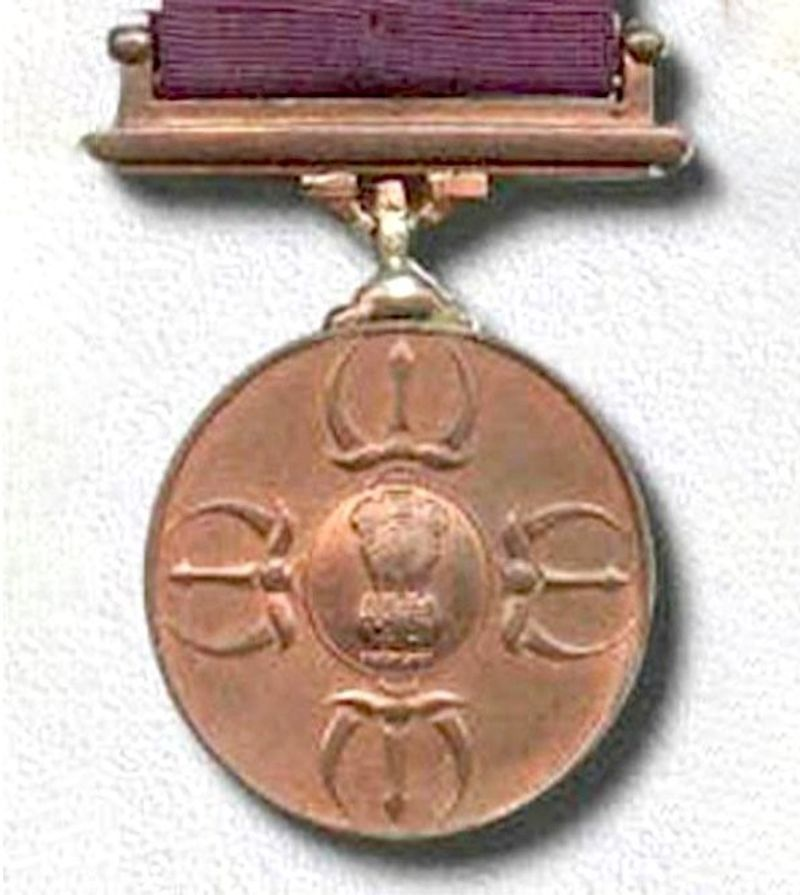
A 50 per cent increase in the monthly allowance paid by the UT Administration to Armed Forces gallantry and distinguished service award winners from Chandigarh has been recommended by the Zila Sainik Board (ZRB).
The allowance is applicable to those personnel who were conferred gallantry awards before 2009. Subsequently, gallantry awards recipients are entitled to a one-time lump sum payment.
At present, a Param Vir Chakra recipient is entitled Rs 41,580 per month, while Maha Vir Chakra and Vir Chakra recipients are entitled Rs 31,600 per month and Rs 18,295 per month, respectively. The monthly allowances were last revised in 2013, sources said.
Recipients of the Ashok Chakra, Kitri Chakra and Shaurya Chakra, the peacetime equivalents of the aforementioned awards, are also entitled monthly payments which are a little lower. Similarly, other awards for distinguished service are also granted monthly payments. These are also being increased.
For post-2009 recipients, a Param Vir Chakra is entitled a lump sum payment of Rs 2 crore, Maha Vir Chakra Rs 1 crore and Vir Chakra Rs 50 lakh. These rates were last revised in 2022 and brought at par with the policies of Punjab and Haryana.
At present, there are about a 100 pre-2009 beneficiaries in Chandigarh, amongst whom the Kirti Chakra is the highest. Though recipients of higher awards like the Maha Vir Chakra have resided in Chandigarh, some of them were granted benefits by the Punjab government owing to their domicile. State governments have their own policies on giving benefits to gallantry awardees from their respective state as a mark of respect.
At a meeting of the, held under the chairmanship of Nishant Kumar Yadav, Deputy Commissioner-cum-President ZRB, it was also proposed to hike the one-time payment from the Sena Medal from Rs 14 lakh to Rs 21 lakh, bringing it at par with Haryana.
Further, grant of one-time financial assistance of Rs 1 lakh out of the Armed Forces Flag Day Fund to next of kin of defence personnel who die in harness and are declared as “Physical Casualty (Fatal)”, and increasing the Rashtriya Indian Military College Scholarship from Rs 33.000 to Rs 50,000 per cadet per annum has also been mooted.
Briefing the meeting, Col HS Ghuman (retd), Secretary ZRB, said that the UT Administration has approved 20 percent horizontal reservation for ex-Agniveers of Chandigarh domicile in direct recruitment posts of posts of constable in the Chandigarh Police, jail warden in the Prison Department and forest guard in the Forest and Wildlife Department.
He added that a sum of Rs 2.07 crore has been sanctioned for the repair and renovation of the Sainik Rest House, Chandigarh and the improved facilities, work on which has started, will benefit veterans and their families visiting Chandigarh from across the country.
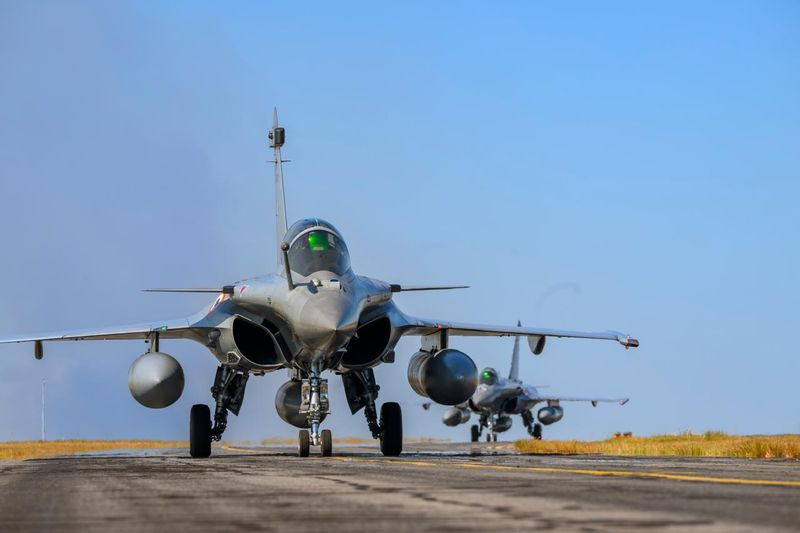
The Indian Air Force (IAF) on Saturday said its contingent at the multi-nation exercise ‘Pitch Black’ in Australia had “accomplished the mission” and “mastered” the skies, while several partnerships were “strengthened”.
The IAF, in a post on social media platform X, said the exercise had concluded, adding: “Mission accomplished. Skies mastered. Partnerships strengthened.”
During the intense multinational air operations, the IAF operated alongside partner air forces, the post on X said, adding that the exercise elevated interoperability, exchanging hard-earned expertise and refining combat readiness under realistic conditions.
“Every mission and interaction delivered mutual gains in tactics, procedures, and professional excellence,” it said.
The IAF contingent comprised four Rafale jets, two C-17 transport planes and 120 personnel. The IAF’s Rafales made their debut at the exercise, which featured 20 countries, including the Quad partners — the US, Japan, India and Australia.
More than 100 jets were part of the exercise, named ‘Pitch Black’, which was held from July 20 to August 7 along the northern coast of Australia.
At the start of the exercise, the IAF had set its goals and described it as a unique platform to enhance interoperability and strengthen operational cooperation.
The Australian Defence Ministry had said the exercise would “strengthen regional and global interoperability”. This was the Royal Australian Air Force’s largest international exercise, featuring complex, combat-like scenarios across one of the largest military training areas in the world over a three-week period, it said.
Up to 100 jet aircraft joined the exercise, along with 2,500 personnel from 20 nations across air bases at Darwin, Tindal and Amberley, the Royal Australian Air Force said.
‘Pitch Black 2026’ included aircraft from Australia, the US, Japan, Papua New Guinea, Indonesia, the Philippines, Thailand, South Korea, India, Singapore, Germany, France and Spain. Military personnel from New Zealand, Fiji, Canada, Brunei, Malaysia, Finland and Sweden were part of the drills.







































































