Sanjha Morcha

What’s New

Click the heading to open detailed news

Current Events :

web counter

Print Media Reproduced Defence Related News

We will fight and win next war with indigenous weapon systems: Rawat

We will fight and win next war with indigenous weapon systems: Rawat

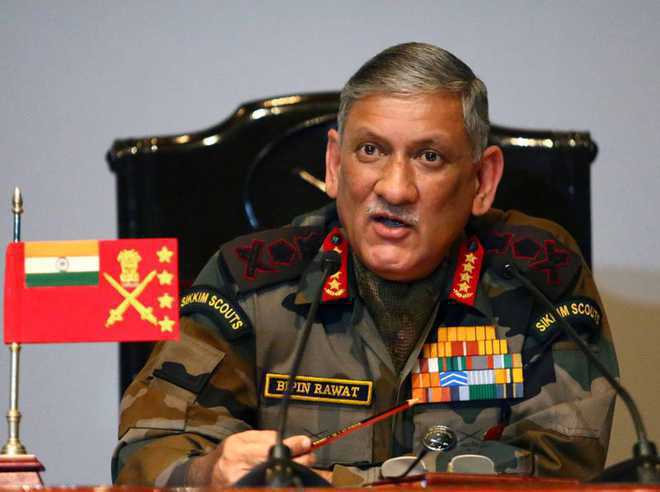
Army Chief Gen Bipin Rawat. File photo

New Delhi, October 15

Army Chief Gen Bipin Rawat on Tuesday pitched for greater inclusion of indigenous technology in the armed forces and asserted that India will fight and win the next war with home-grown solutions.

In his address at the 41st DRDO Directors Conference, he also said the development of weaponry and other systems should be done keeping “future warfare” in mind.

“And, if we are looking at the contours of future warfare, it may not necessarily be contact warfare. So, there is realm of non-contact warfare. We need to start looking at development of cyberspace, space, laser, electronic warfare and robotics… and, along with that Artificial Intelligence (AI),” Rawat said.

“And, if we do not start thinking on it now, it will be too late,” he said.

He praised the Defence Research and Development Organisation (DRDO) for its achievements in the last few decades and said India is making great strides in research and development. “We are confident the services will greatly benefit from it,” he said.

“India is one of the largest importers of weapons and ammunition, and after 70 years of Independence, it is not a very proud statement to make. But in the past few years, it is changing. DRDO is striving to ensure our requirements of services are met with home-grown solutions,” Rawat said.

“We are confident that we will fight and win the next war with indigenous weapon system,” the Army chief said.

Defence Minister Rajnath Singh was the guest of honour at the inaugural session of the two-day event held at the DRDO Bhawan here.

National Security Advisor Ajit Doval, Air Chief Marshal RKS Bhadauria, Navy Chief Admiral Karambir Singh and DRDO chief G Satheesh Reddy were also present on the dais on the occasion.

The defence minister earlier paid tribute to former president APJ Kalam by garlanding his bust at the DRDO premises as the event coincided with the 88th birth anniversary of the distinguished scientist.

“Let us get inspired by his life and work towards realising his dream of making India a developed country through scientific advancement,” Singh said.

He also emphasised on the aspects of disruptive technologies that is changing the world and asserted that “India will have to emerge as a leader in this”.

Singh also pitched for working on indigenous system towards making the country “fully self-reliant”.

“All stakeholders must come together and hold interactions and come up with action plans as far as research is concerned, so as to increase our defence capabilities to take India to a new height,” the minister said.

Doval said, to make a strong and secure India, the role of DRDO would be very important. — PTI


8 yrs on, woman IAF officer may be reinstated

IAF’s policy of 2011 under which Sqn Leader Sangeetha Damodar was denied permanent commission not applicable in her case, says AFT

Tribune News Service
Chandigarh, October 28

Eight years after a woman IAF officer was released from service after her claim for permanent commission was declined, she may be reinstated in service as the Armed Forces Tribunal has held that the policy under which her claim was rejected was not applicable in her case.

In her petition, Sqn Ldr Sangeetha Damodar had averred that she was not granted permanent commission by applying the eligibility criteria under the IAF’s policy of August 2011 whereas she ought to have been considered under the policy issued in November 2010.

Setting aside the IAF order that rejected her claim for permanent commission, the AFT, in its order earlier this month, directed the IAF to consider her case on the basis of the IAF’s policy of November 2010, read with the policy of September 2004, within four months and if found eligible, reinstate her in service.

Sqn Ldr Damodar joined the IAF as a short service commission officer in July 2000 and was released from service in August 2011.

She contended that she was commissioned on the basis of a letter issued in June 2003, which was reiterated in the policy of September 2004 that listed the criteria for grant of extension to women short service commission officers. The policy did not provide for permanent commission to women officers.

Some women officers had approached the Delhi High Court for grant of permanent commission, which allowed their petitions in March 2010, making all women officers eligible for grant of permanent commission on the same parameters as applicable to male short service officers.


India, Bangladesh Navies to participate in bilateral drill I


New Delhi: The Navies of India and Bangladesh will conduct their first -ever bilateral exercise at Visakhapatnam on the east coast from Saturday. The five-day exercise (October 12 to 16) was preceded by a two-day (October 10-11) coordinated patrol in northern part of the Bay of Bengal. This was the second edition of Indian Navy-Bangladesh patrol in Bay of Bengal. INS Ranvijay, a guided-missile destroyer, and INS Kuthar, an ingeniously built missile Corvette, participated in the patrol along with BNS Ali Haider and BNS Shadinota of Bangladesh. TNS


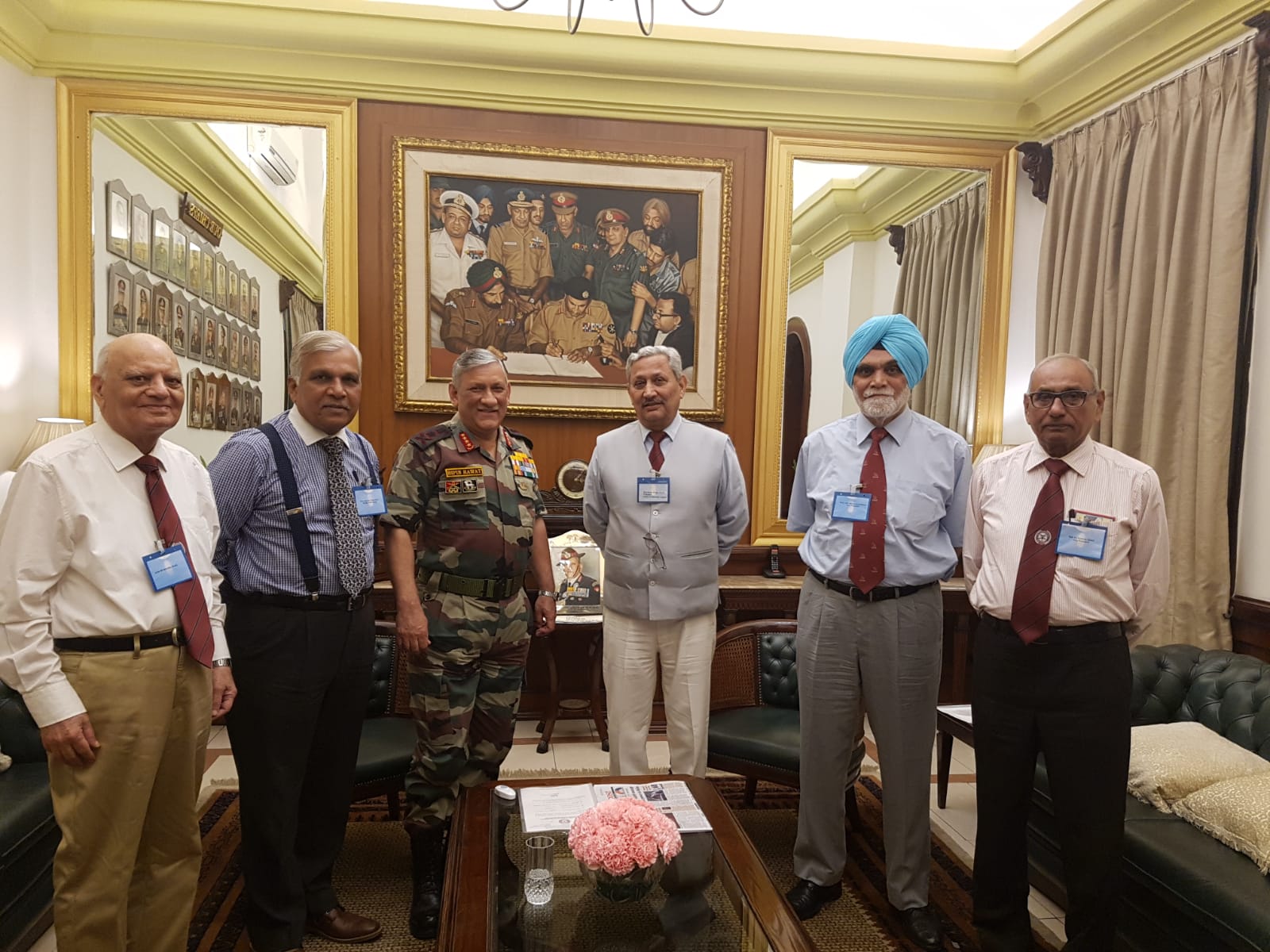
MEETING WITH CHIEF OF ARMY STAFF AND CHAIRMAN CHIEF OF STAFF COMMITTEE – 25 Oct2019

 IMG-20191026-WA0040
A delegation of Indian Ex-Services League led by Brig Kartar Singh,
President Indian Ex-Services League comprising of following (all retd) met Chief of Army Staff and Chairman Chief of Staff Committee
on 25 Oct 2019:-
          (a)     Brig Kartar Singh  – President Indian Ex-Services League.
          (b)     Brig Inder Mohan –   Vice President.
          (c)     Sub SD Sharma   –   Vice President.
          (d)     Vice Admiral Paras Nath, AVSM, VSM,
          nominated member, Navy.
          (e)     AVM RP Mishra, nominated member, AF.
2.       The following points were discussed/handed over to the Chief:-
          (a)  OROP, as due from 01 Jul 2019 should be given with arrears to      all ESM as applicable, as per OROP Notification No 12(1)/2014/D      (Pen/Pol)-Part-II dated 07 Nov 2015 and implementation instructions        issued vide 12(1)/2014/D(Pen/Policy)-Part-II dated 03 Feb 2016.
                (b)     Central Pension Disbursement System (CPDS) should first be         run as a pilot project. Pension payment Banks must be established     employing CGDA pers and ESM to ensure proper grievance  resolution mechanism.  A detailed discussion is needed with     the Stake holders to finalise this issue on priority.
               (c)   ECHS is being flogged time and again for shortage of funds,     shortage of medicines and lack of empaneled hospitals.
              (d)    The issue of 1400 CC Car in Rs 5 lakhs is still being highlighted    by the environment as amounting to denial of facility indirectly.
         No Car of 1400 CC is available in the market for Rs 5 lakh and below.
             (e)   Denial of Pension of full service to Majors due to defective table      of OROP. This is being denied with an excuse that data was not      available. The ESM have decided to go to Court if this anomaly    is not rectified. It may be known that before 5th CPC 70% of the     population of Offrs used to retire as Majors.
3.          The Chief of Army Staff and Chairman Chief of Staff Committee gave patient hearing and assured
taking up the case with the Govt.
Col Desh Raj (Retd)
General Secretary
Brig Indermohan Ldh:
I will very briefly give the details of the meeting with the COAS. The agenda points are given above.
1. OROP. It will come. The delay is CGDA trying to reinvent the wheel. Our stand is go by the govt decision. Plus point raised that CGDA should incorporate some experts from the ESM community. We will have to wait. Good to  get arrears I feel.
2. CSD. COAS apprised of the car issue. But not very positive. Tried to convince that look at the glass half full. Even at 50 percent GST govt getting revenue and the manufacturing sector gaining.
 Constraints of budget is the normal reply. My remedy. Change the system. We need no money from the govt. Car is on demand. Let the manufacturer supply the car. The payment will reach him from CSD depot direct. Govt gets the GST portion. So many economic and financial reforms have taken place since 1991, none in CSD which has a budget of 17000 crore. Even consumer goods supplied through CSD. We need no budgeting from the govt. The FMCG industry gives goods on credit to whole salers/retailers on credit normally upto 30 days. They should follow the same for CSD. So govt money in circulation would stop. Maybe we will have to take it up separately through QMG.
Another point which had positive response was to allow two months liquor quota be restored. It will reduce additional visit of most ESM. Since no one can draw in excess of entitlement this is adding to additional visit.  We will progress this with QMG.


3. ECHS. Won’t go into the problems as we are aware of the financial constraints. COAS has assured no shortage of medicines for High BP, Diabetes, Cancer and Arthritis. This is good news for the environment.

We discussed a proposal to reduce load of patents of ESM on ECHS. Will not put it here because it needs acceptance. I can assure that the proposed system will be welcomed by JCOs and NCOs if put appropriately. Can share individually on phone those desirous. Will be meeting MD ECHS early November as discussed in the meeting and data and other technical inputs shared we will open the subject to the environment for feed back. I can assure you it will succeed.

4. Issue of Maj Gen equiv not getting MSP leading to getting less pension than Brigs was also raised by the Air Force rep.
Other issues in agenda also shared.
Must apprise the environment of a very important point raised by the COAS and I fully support his view. Air Force and Navy veterans raise professional issues of importance to the their services and the country when they meet the RM and Army veterans do not go beyond OROP and ECHS. This is true I feel.  I conveyed we are concerned but never realised our obligation to this side of our past. I shared how an economist and a journalist of repute, Swaminathan Ankaleshwar Iyer wrote an article in The Economic times of the potential of armed or weaponized UAVs after the attack on Saudi refineries (posting the article separately). So many issues are raised in the media by civilian experts. Why not by us through the organization we have served. I thought CLAWS must be doing the needful as also other defense think tanks. But I feel the mass Army ESM body which doesn’t have a recognized face can also do their bit on national security issues.
That’s it. Let’s not keep blaming the organization. Have faith.
Brig Inder Mohan Singh (Retd)
Vice President IESL.

Lt Gen Harinder Singh assumes command of Fire & Fury Corps

Lt Gen Harinder Singh assumes command of Fire & Fury Corps

Lt Gen Harinder Singh

Our Correspondent

Jammu, October 10

Lt Gen Harinder Singh on Thursday assumed the command of ‘Fire & Fury Corps’ from Lt General YK Joshi.

Lt Gen Harinder Singh has had a distinguished career in the Army, tenanting a number of important command and staff appointments after being commissioned into the Maratha Light Infantry. He has served extensively along the Western and Northern borders, including command of the Rashtriya Rifles Battalion in North Kashmir, an Infantry Brigade Group in the United Nations Peace Keeping Mission in Congo and the Infantry Division in North Kashmir.

Lt Gen Harinder Singh has also served in several important staff and instructional appointments, including tenures in the Directorate General of Military Operations (DGMO) and the Directorate General of Operational Logistics and Strategic Movement (DGOL&SM) at the Integrated HQ of MoD (Army). Prior to assuming the command of ‘Fire & Fury Corps’, he was appointed as the Director General Military Intelligence at the Integrated HQ of MoD (Army).

Lt Gen YK Joshi conveyed his gratitude and deep appreciation to all ranks of the ‘Fire & Fury Corps’, for their professionalism and steadfast dedication in the service of the nation, even in the most hostile terrain, weather and altitude challenges faced by any Army in the world.

On taking over, Lt Gen Harinder Singh exhorted all ranks of ‘Fire & Fury Corps’ to continue to discharge their duties with the same commitment and zeal, and always be prepared to deal with any threat to national security. He urged them to continue to keep ‘Nation First’ in all their endeavours.


GURU’S 550TH BIRTH ANNIVERSARY Corridor opening preparations in full swing

Corridor opening preparations in full swing

Ravi Dhaliwal

Tribune News Service

Dera Baba Nanak, October 25

The Punjab Government, apparently to prevent a repeat of last November’s function when Vice-President Venkaihah Naidu laid the inauguration stone of the Kartapur corridor amid controversy and chaos, has formed various committees and sub-committees to ensure all impediments pertaining to the corridor’s opening are removed well in time.

Last year’s November 26 fiasco is playing heavily on the minds of ministers and officials alike forcing them to make preparations in advance. At that time two venues were prepared, one by the National Highway Authority of India (NHAI) and the other by the Punjab Government under the supervision of Cabinet minister and local MLA Sukhjinder Singh Randhawa. Chaos ruled supreme and there was even talk of calling of the festivities at the eleventh hour because of the confusion. Finally things were sorted out after Randhawa prevailed upon the NHAI to hold a joint function.

This time, apparently to remove any confusion occurring due to possible over-lapping of responsibilities, all committees and sub-committees have been asked to report to Randhawa.

The Cooperation Department has been given charge of the main ‘pandal’ following which five senior IAS officers have been deputed to supervise.

The ‘pandal’ is being established just adjacent to the Tent City on the T-point which is an area on the Kalanaur-Dera Baba Nanak road from where a road branches off to the International Border, the site of the corridor.

Sources said the selection of leaders who will deliver speeches is yet to be sorted out. “The speakers should be chosen in advance to avoid a fracas like it happened during the vice-president’s visit. Union Minister Harsimrat Kaur Badal, much against the wishes of many Punjab ministers, was allowed to deliver an extempore but once on the stage she went off in a tangent extolling the achievements of the Modi government before a minister complained to Naidu about her alleged misdemeanour. I have been made to understand that this time the list will be prepared jointly by the state and Union governments and will have the final approval of the Prime Minister’s Office,” said a senior officer.

The PWD has been made the nodal agency to supervise the facilities at the Tent City which will house nearly 3,500 pilgrims. The tents have been divided into three categories. Langar (community kitchen) will be served by the management of Ghalari Sahib Gurdwara.

Three parking lots are being established, two within the city and one on the outskirts. Buses will be plied from these lots till the ‘Darshan Sthal’ where the BSF is in the process of installing 11 high resolution telescopes.

Dera Baba Nanak SDM Gursimran Singh said several religious organisations had been asked to hold community kitchens till the rush of devotees subsides.

Batala SSP Opinderjit Singh Ghuman has been made head of the committee which would supervise the security arrangements. A special police cell is being set up to oversee the movement of VVIPs which is likely to include PM Modi, his predecessor Dr Manmohan Singh, CM Capt Amarinder Singh, MPs, Ministers and MLAs.

PWD nodal agency for Tent City

  • The PWD has been made the nodal agency to supervise the facilities at the Tent City which will house nearly 3,500 pilgrims
  • Batala SSP Opinderjit Singh Ghuman has been made head of the committee which will supervise the security arrangements.
  • A special police cell is being set up to oversee the movement of VVIPs which is likely to include PM Modi, his predecessor Dr Manmohan Singh, CM Capt Amarinder Singh, MPs, Ministers and MLAs.

PM Narendra Modi to inaugurate Kartarpur corridor on November 8

PM Narendra Modi to inaugurate Kartarpur corridor on November 8

PM Narendra Modi to inaugurate Kartarpur corridor on November 8

Prime Minister Narendra Modi will inaugurate the much-awaited Kartarpur corridor to Sri Kartarpur Sahib in Pakistan on November 8,  Modi will inaugurate the integrated check post on the Indian side, she said.“With the blessings of Guru Nanak Dev ji, Sikh Panth’s ardaas for ‘khule darshan deedar’ of Sri Kartarpur Sahib to finally become reality! On November 8th, history will be created with PM Narendra Modi ji inaugurating the Kartarpur corridor (ICP),

Last week, Punjab Chief Minister Amarinder Singh had invited President Ram Nath Kovind and PM Modi to attend the 550th Prakash Purb celebrations of Guru Nanak Dev, including the historic opening of the Kartarpur corridor.

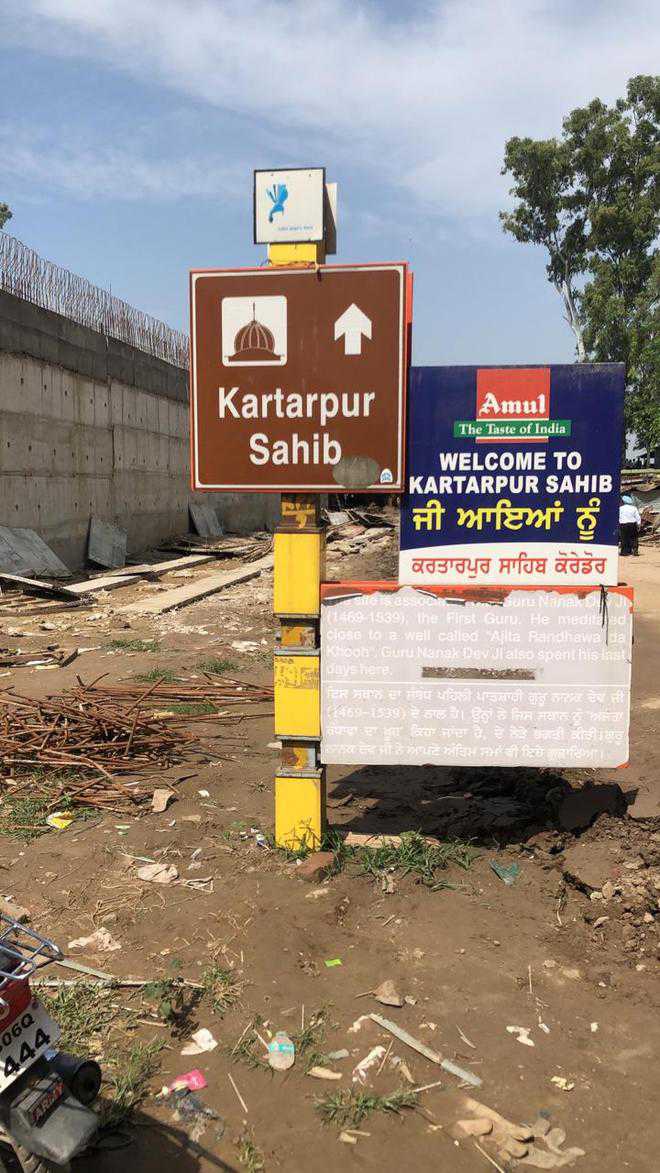
Kartarpur Sahib is located in Pakistan’s Narowal district across the Ravi River, about four kilometres from the Dera Baba Nanak shrine. In a major initiative last November, both India and Pakistan had agreed to set up the Kartarpur corridor. The corridor will connect Darbar Sahib in Kartarpur with Dera Baba Nanak shrine in Gurdaspur district of Punjab and facilitate visa-free movement of Indian pilgrims, who will have to just obtain a permit to visit Kartarpur Sahib, established in 1522 by Sikh faith founder Guru Nanak Dev.


Afghan Taliban ‘releases’ 3 Indian engineers held hostage for a year

Afghan Taliban 'releases' 3 Indian engineers held hostage for a year

The prisoner swap happened on Sunday. File photo

Islamabad, October 7

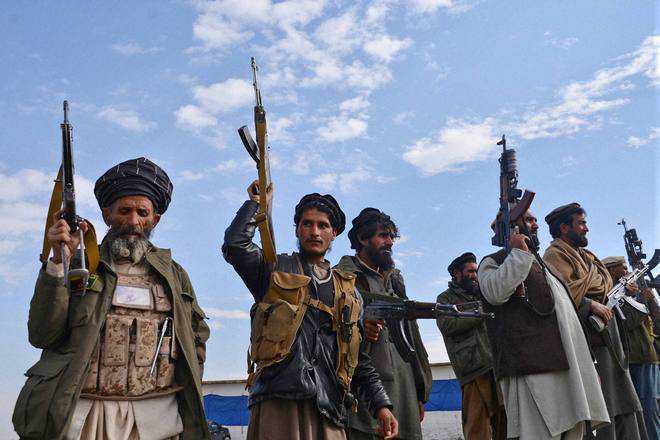
The Afghan Taliban said it had freed three Indian engineers held hostage for over a year in an exchange for securing the release of 11 of its members, including some high-ranking officials of the militant group, according to media reports on Monday.

Speaking on condition of anonymity, two Taliban officials refused to say who the militant group exchanged the prisoners with and whether the freed Taliban members were being held by Afghan authorities or US forces in Afghanistan, The Express Tribune reported.

However, the Associated Press reported that the 11 militants were released from Afghan jails.

The prisoner swap happened on Sunday, the paper quoted the Taliban officials as saying, but it did not disclose the location.

Seven Indian engineers working for a power plant in Afghanistan’s northern Baghlan province were kidnapped in May 2018.

One of the hostages was released in March, but the fate of the others remained unknown.

The identities of the released hostages were not disclosed by the militant group, the paper cited an RFE/RL report.

The officials said the freed Taliban leaders included Sheikh Abdur Rahim and Mawlawi Abdur Rashid, who had served as the insurgent group’s governors of Kunar and Nimroz provinces respectively, during the Taliban administration before it was deposed by the US-led forces in 2001.

The Taliban officials provided a photo and footage of what they said was the freed militants being greeted after their release.

There was no immediate comment from Afghan or Indian authorities, the report said.

The release follows meetings between US special envoy to Afghanistan Zalmay Khalilzad and Taliban representatives led by Mullah Abdul Ghani Baradar.

Baradar, along with a 12-member delegation, had been in Islamabad since Wednesday on the invitation of the Pakistan government.

The Taliban delegation also called on Foreign Minister Shah Mahmood Qureshi and exchanged views on peace and stability in the South Asian region and bilateral relations in their meeting.

Since his appointment in September last year, Afghanistan-born Khalilzad has met all sides in an attempt to end America’s longest war in which the US has lost over 2,400 soldiers in more than 17 years.

The US and the Taliban had agreed on draft peace plan, but the process was suspended by US President Donald Trump following killing of an American soldier in Kabul last month in a suicide attack claimed by the Taliban.

Trump stunned the world when he suddenly declared that the Afghan peace talks with the Taliban were “dead”.

He cancelled a secret meeting with the Taliban and Afghan President Ashraf Ghani at Camp David near Washington after the Taliban claimed responsibility for the attack in Kabul, in which an American soldier was among the dead.

The US has continued to push for a ceasefire in the war-torn country and the opening of negotiations between the Taliban and the Kabul government.

The Taliban, however, have repeatedly refused to meet officials of the Afghan government, whom they dismiss as “puppets”. PTI


India’s One-China policy is flawed

It can’t validate its claim over Arunachal without recognising the historical independence of Tibet
China modelled itself on the Soviet idea of a republic where nationalities are bundled together by coercion or occupation 

Whenever the president of China visits India, the Indian police locates me, no matter where I am and throws me into the nearest central jail.

This time, when the Narendra Modi-Xi Jinping Chennai Connect was happening, I went to gatecrash the party. Imagine a scene. As the two Asian leaders meet for that iconic photograph, greet each other and raise their clutched fists together in front of the legendary Krishna Butterball, all of a sudden, they hear a noise from behind the boulder. As the cameras hurriedly pan left, they see a man on the nearby cellphone tower unfurling a long red banner reading “Free Tibet” down the length of the tower and screaming the Free Tibet slogan at the top of his voice.

As with most things in life, this dream protest didn’t materialise — I was arrested days before the summit.

I had done such protest stunts earlier, successfully, twice — by climbing the Oberoi hotel in 2002 in Bombay, and the Indian Institute of Science building tower in 2005 in Bangalore. This lone act helps in raising the real issue between the “new neighbours”, India and China; the issue of 70 years of Chinese occupation of Tibet and its dangers to India. Indian security establishment officials tell me that is also why the Indian government gets the usual request from the Chinese embassy in Delhi to put me away every time there is such a visit.

The post-arrest interaction with the police is most rewarding for me. I sit with police officers, and start my chai pe charcha on Tibet. The current narrative in India is only concerned with the “China border”, which started from the 1962 Chinese aggression in the Tawang region, and it got reinforced after the Doklam stand-off. India never had any borders with China; it was only after the Chinese occupation of Tibet that China appeared over the Himalayas. Neither the media-crafted narrative nor the organised education system gives any clear picture about Tibet — what lies behind the Himalayas, the real civilisational neighbour with whom India shares a 4,085km border.

As India was emerging as an independent country, it organised the first Asian Relations Conference in the presence of Mahatma Gandhi, and Tibet was present there as an independent country. Between 1947 and until the Chinese invasion, Tibet and India shared equal status as independent countries for three years. There was even an Indian high commissioner in Lhasa.

With the founding of Mao Zedong’s People’s Republic of China in 1949, Jawaharlal Nehru’s India calculated its interest was best served by convergence with China. India became one of the first countries to recognise Tibet as a part of China, straining our previous cordial relations. Not keeping all the eggs in one basket, India continues to host the Dalai Lama and 100,000 Tibetan refugees here.

As a newly founded communist country, the rise of China was supported by India in its early stage, and later, its growth was facilitated by the United States. India’s blunt stand “Tibet is a part of China” from the 1954 Panchsheel agreement was later reiterated by Rajiv Gandhi during his 1988 Beijing visit. But Atal Bihari Vajpayee’s government brought in a nuanced articulation in its 2003 statement saying “Tibetan Autonomous Region is a territorial part of People’s Republic of China”.

Indian nationalism is often stumped when China claims Arunachal Pradesh as part of “South Tibet”. But this requires context. The Tawang region, the birthplace of the sixth Dalai Lama, was part of Tibet until the agreement in 1914 resulted in the McMahon Line. This bifurcated the entire region of Tawang and made it a part of British India, with maps drawn and documents signed. The Dalai Lama stands by this and has repeatedly reiterated it during his subsequent Tawang trips. India, therefore, has historical, legal and documentary evidence of this political move.

Where was China when this decision was made? China had recently won its independence in 1911 after being occupied by the Manchu empire for over 250 years. And under the leadership of Sun Yat-sen, the Republic of China was being established. The fact that China did not sign the Simla Agreement has no bearing on the McMahon Line — the latter was a bilateral treaty (between British India and Tibet), and the Simla Agreement was trilateral (between British India, Tibet and China). The McMahon line keeps the peace between the Chinese and Indian military even today.

In this backdrop, how does India hope to validate its claim over Arunachal without recognising Tibet, which gave away Tawang to India? Whether India supports the ongoing Tibetan freedom movement or not may be a strategic call, but without recognising the historical independence of Tibet, wouldn’t India’s control over Arunachal Pradesh look like the Chinese occupation of Aksai Chin? Perhaps, if the Chinese push comes to shove, India may be forced to recognise the Tibetan government-in-exile and the Dalai Lama as the leader of Tibet.

India and China emerged as Asian giants in the chaotic period of establishing their respective republics; India as a federal State, and China, modelled on the Soviet idea of the republic where nationalities are bundled together by coercion or by military occupation.

India and China formulated the One-China, One-India policy. Today, India is a democracy and only has to deal with the Kashmir issue. But China is facing resistance movements in Tibet, East Turkestan (Xinjiang) and Southern Mongolia. The five-month revolt in Hong Kong is also hugely significant for it shows the limits of Chinese power, and may be inspiring citizens inside China. Taiwan too remains a concern for Beijing. This makes Delhi’s One-China policy absolutely lopsided in terms of diplomacy. India has to remain silent on 60% of contested area under China’s territorial control, and also its rule over Hong Kong and claims over Taiwan, while China has to stand with India only on Kashmir. And it does this too unfaithfully, as we have seen recently at the United Nations.

The Bharatiya Janata Party government has a unique opportunity to finally carry out Sarder Vallabhbhai Patel’s policy statement that he wrote as a letter to Nehru, advising him to support Tibet, and take every precaution against “expansionist China”. Will the Modi government act on Sardar Patel’s words or remain satisfied with just his statue?

The 12-day stay in central jail in Chennai was my 16th jail term. It was a great retreat and better than the one I had in Sewagram. As a Tibetan born in India, India is as much my country as Tibet. The Dalai Lama doesn’t look at China as an enemy, but as nation afflicted with anger and greed.

Whether China quits Tibet or not, the Buddha will not abandon the suffering. China is now stuck with us, our journey together is our path to freedom.

Tenzin Tsundue is a Tibetan writer and activist

The views expressed are personal