Late Sajjan Kumar was never alone nor was his destiny his own.
While Kumar, 80, has passed, many survivors of the communal carnage continue to relive the horrors of those dark days till the last breath of their lives.
One such survivor is the Amritsar based Jagdish Kaur who spoke to The Tribune about her pain and despair.
It was her chilling testimony in the murder case against Sajjan Kumar that led to his first ever conviction in the riots.
It was on December 17, 2018, that the Delhi High Court overturned a trial court acquittal of the former Congress MP who was charged with the murder of Jagdish Kaur’s husband, her 18-year-old son and her three cousins.
The case famously came to be called the Delhi Palam Colony Raj Nagar murder case.
Kaur recalls the court testimony she gave — the statement that led the High Court to order the first conviction of a high profile Congress politician in a matter in which ex-minister Kamal Nath and ex-MP Jagdish Tytler were also embroiled though nothing was ever proven against them.
“The fight has been very excruciating. The system tried to break me several times. I was offered Rs eight crore, a plot and a resettlement abroad in lieu of withdrawing the case against Sajjan Kumar. But I told them all that I am a Sardarni and I fear no one,” Jagdish Kaur says a day after Sajjan Kumar died a broken and lonely man serving his life sentence at Delhi’s Tihar Jail.
The testimony of Jagdish Kaur also proved the complicity of Delhi police in the murders.
The Delhi HC judgment records this fact in the case of murders of five members of Jagdish Kaur’s family in Raj Nagar on November 1, 2, 1984.
The judgment records: “At around 9 am on November 2, 1984, when Jagdish Kaur went to lodge a report at the police post, she saw that a public meeting was taking place which was attended by Sajjan Kumar who was the local MP. She heard him declare Sikh sala ek nahin bachna chahiye, jo Hindu bhai unko sharan deta hai, uska ghar bhi jala do aur unko bhi maro. She stated that she also heard the officer-in-charge of the police post ask mobsters “kitne murge bhun diye”.
The judgment adds: “At this point Jagdish Kaur said that she had lost faith in humanity”.
Speaking to The Tribune on Friday, Kaur said she persisted with her struggle for justice and did all it took.
“I did odd jobs to raise my children and continued to fight for justice with dignity,” says the woman, her eyes still weary from years of anguish and struggle even as the perpetrator has now gone.
Rs 72,000 crore drone pipeline: 3 Indian defence stocks riding the fast-track surge
With drone swarms potentially involving 1,000 units, India is stepping up procurement, including a ₹20,000 crore drone plan and ₹52,000 crore defence approvals, opening new opportunities in drone warfare.
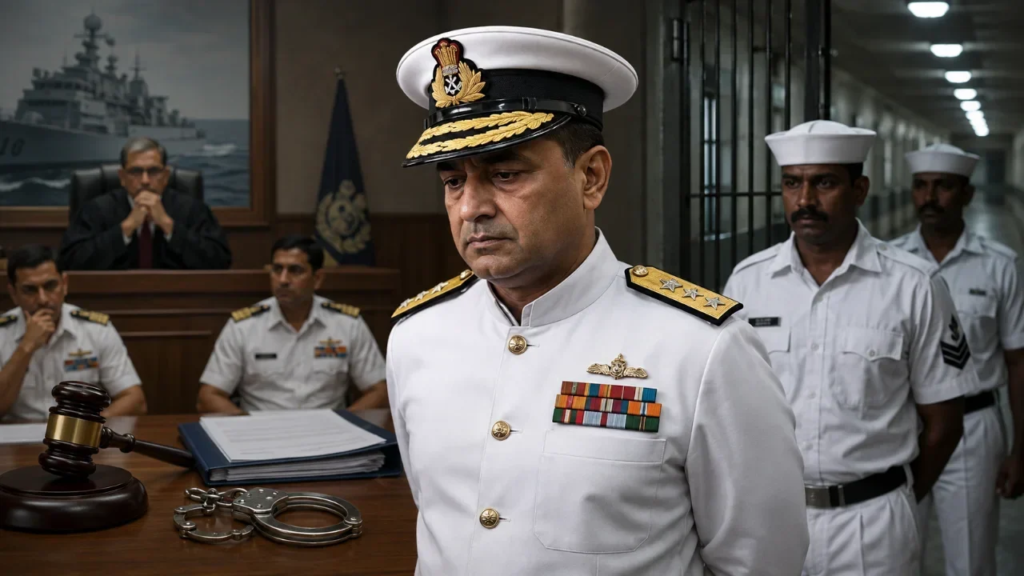
Kochi/Ezhimala: A military court at the Indian Naval Academy (INA), Ezhimala, has sentenced a Commodore-rank Indian Navy officer to seven years of rigorous imprisonment, imposed a fine of ₹75 lakh, and ordered his dismissal from service with disgrace after finding him guilty on multiple corruption-related charges.
The officer, who previously served as the Commanding Officer of INS Zamorin and Station Commander of Naval Station Ezhimala, will have to undergo an additional two years of imprisonment if he fails to pay the ₹75-lakh fine.
The verdict was delivered following court-martial proceedings at the Indian Naval Academy and has been forwarded to the Chief of the Naval Staff for confirmation, as required under the military justice process. The officer is currently being held in an Indian Navy detention cell at Ezhimala and is expected to be transferred to the Central Prison in Kannur after the sentence receives formal confirmation.
Arrested While Allegedly Accepting Bribe
The case dates back to November 3, 2025, when Naval Intelligence personnel arrested the officer while he was allegedly accepting a bribe from a contractor in connection with the approval of construction-related works at the Indian Naval Academy.
The arrest reportedly followed a prolonged period of surveillance by Naval Intelligence. It took place around the time then Chief of the Naval Staff Admiral Dinesh K. Tripathi was visiting Ezhimala in connection with the Indian Navy Quiz, Think-25, finals.
The officer had assumed command of INS Zamorin on November 10, 2023. INS Zamorin functions as the base depot ship supporting the Indian Naval Academy, while the Commanding Officer also holds important responsibilities associated with Naval Station Ezhimala.
Given the officer’s senior rank and his position at one of India’s premier military training institutions, the allegations triggered an extensive internal investigation.
Discover more
Consulting Qualified Estate Planning Lawyers
Applying For Government Grants
Accessing Online Public Court Records
Investigators Probe Financial Transactions
During the investigation, authorities examined a wide range of financial transactions allegedly linked to the officer, including real estate dealings, purchases of gold and associated banking transactions.
The military court ultimately found that the officer had accumulated around ₹2 crore through illegal means. He reportedly faced approximately 75 charges covering allegations including acceptance of bribes and illegal accumulation of wealth.
The investigation sought to establish the movement of funds and the connection between the alleged payments, contractors and financial assets acquired during the relevant period.
The scale of the allegations made the case particularly significant because they involved a senior officer occupying a command appointment at an establishment responsible for training future officers of the Indian Navy.
Serious Allegations of Witness Intimidation
The case also took a more serious turn following allegations that attempts were made to intimidate a key witness connected with the investigation.
According to reports, a separate complaint alleged that hired men were sent to the residence of a key witness in an attempt to force him to change his statement. The witness has been described in some accounts as a hotel owner associated with financial dealings being investigated in the Ezhimala area.
In one alleged incident, intruders reportedly entered the witness’s residence, held a child hostage and placed a knife against the child’s neck while issuing death threats. The alleged objective was to pressure the witness into withdrawing or altering testimony connected with the case.
A separate criminal case was subsequently registered at Payyannur police station under relevant provisions of the Bharatiya Nyaya Sanhita. There were also allegations that associates attempted to exert pressure on the witness over statements given during the investigation.
These allegations formed a separate criminal dimension surrounding the broader corruption case and added to concerns over alleged attempts to interfere with the investigative process.
Around 100 Witnesses Examined During Court-Martial
Court-martial proceedings against the officer began at the Indian Naval Academy during the last week of April 2026.
The proceedings were extensive, with the military court reportedly examining around 100 witnesses before reaching its findings. Evidence relating to financial transactions, alleged bribe payments, assets and other material gathered during the investigation was considered during the trial.
Following the proceedings, the court sentenced the officer to seven years of rigorous imprisonment and imposed a ₹75-lakh fine. Failure to pay the fine will result in an additional two years of imprisonment.
The court also ordered his dismissal from naval service with disgrace, one of the most serious career penalties that can be imposed following conviction by a military court.
The combination of imprisonment, a substantial financial penalty and dismissal from service represents a severe disciplinary outcome for an officer of Commodore rank.
Verdict Awaits Confirmation by Navy Chief
The findings and sentence have now been submitted to the Chief of the Naval Staff for confirmation in accordance with the applicable military legal procedure.
Until the confirmation process is completed, the officer remains in naval custody at Ezhimala. Following approval of the sentence, he is expected to be transferred from the Navy’s detention facility to the Central Prison in Kannur to serve the imprisonment term.
The confirmation process forms an important part of the military justice system and provides for scrutiny of court-martial findings and sentences before they become final.
Navy’s Stand on Accountability
The Indian Navy has consistently maintained that deviations from established procedures and standards of conduct are not condoned and that allegations of serious misconduct are dealt with through appropriate investigative and disciplinary mechanisms.
Following the officer’s arrest and the emergence of the allegations, the Southern Naval Command initiated internal processes, with the matter proceeding through the military justice system.
The case is particularly significant because the officer held command responsibilities at Ezhimala, home to the Indian Naval Academy, where cadets are trained and commissioned as officers of the Indian Navy.
Construction and contracting activities at major military establishments involve substantial public expenditure and are governed by procurement, financial and administrative procedures intended to ensure accountability.
The conviction of a Commodore-rank officer following a months-long investigation and court-martial therefore carries wider institutional significance beyond the individual case.
The officer will remain in naval custody pending confirmation of the military court’s sentence. Once confirmed, the seven-year rigorous imprisonment term, ₹75-lakh fine and dismissal from service will take effect in accordance with the applicable legal procedure.
The case underlines the military justice system’s role in investigating and adjudicating allegations of corruption and serious misconduct within the armed forces, including cases involving senior officers holding sensitive command appointments.
So many corrupts officers in defence, they threatening to soldiers for the name of security of country but actually they are looting the country name of securityXyzAugust 21, 2026
So many corrupts officers in defence, they threatening to soldiers for the name of security of country but actually they are looting the country name of securityXyzAugust 21, 2026
Parasites they are, So many are others who are roaming free, catch them too, looted navy and nation. Do check their properties, where they got from. Each and every officers properties to be authenticated where they got from. You will find many corrupt officers.Inderjeet SinghAugust 21, 2026
Why did you not published his name. Why only 7 years, put him lifetime to crush such corruption.AppaAugust 21, 2026
It appears a nexus of corrupt naval staff to teach a lesson to their own boss instead of giving good suggestions and helping hands they were doing spy jobs.Due to established financial rules a bill moves 9 times before various subordinates and it may be stopped at any point on corruption charges,means single person can not take all booty alone ,thus other persons involvements may also be checked. It appears to make some body बलि का बकरा to shine image in public.An officer of Commodore Rank may not be of such small greeds.Chief of Naval Staff should order for reinvestigation of case or through scrutiny of records keeping Human Rights intact of accused officer.The all case is a research work of non technical baboos as is often happens in govt.departments,they get salaries for spreading lies.
Apex Court says extraordinary pension benefits should have been extended from the date of his death, stressing that bereaved families should not have to approach courts for rightful dues
The Supreme Court has directed the Union Government to pay an additional compensation of Rs 10 lakh to the widow of a General Reserve Engineering Force (GREF) personnel who was posthumously awarded the Shaurya Chakra for sacrificing his life while saving fellow workers during the construction of a strategically important road along the India-China border 26 years ago.
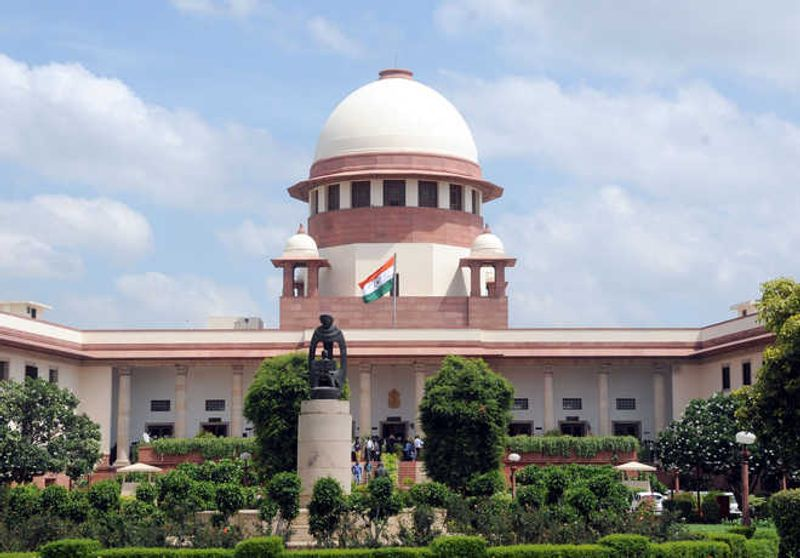
Upholding an earlier order of the Punjab and Haryana High Court regarding her entitlement to extraordinary family pension following her husband’s death, the Bench comprising Justice KV Viswanathan and Justice Arun Palli ruled that the arrears of benefits should not be restricted to three years preceding the filing of the petition, as is the general rule. Instead, exercising its powers under Article 142 of the Constitution, the court directed that the benefit be applicable from the date of death of the GREF worker, Mohan Singh.
The court noted that Mohan Singh was posted as In-charge Works for formation cutting of the Hayliang-Metangliang-Chaglohagom road in Arunachal Pradesh. The 57-km road was considered strategically important for the efficient management of the Sino-Indian border.
On July 10, 2000, he was supervising dozer operations at a location with a treacherous and rocky mass when a large boulder from the hilltop began rolling down with huge debris towards a dozer and compressor.
Singh immediately spotted the boulder, raised an alarm and instructed the dozer and compressor operators to move to a safer location.
He then helped move the compressor and dozer equipment away from the site to prevent damage and, more importantly, save the lives of workers operating the equipment. While doing so, he was unable to get out of the path of the boulder and was swept away by the impact, falling 70 metres into the valley.
In recognition of his extraordinary bravery, Singh was posthumously conferred the Shaurya Chakra in October 2001.
His widow’s claim for extraordinary family pension was initially rejected and she was paid ordinary family pension. In December 2005, she sought special family pension under the Central Civil Services (Extraordinary Pension) Rules, but her claim was rejected on the ground that she had already received Rs 1,84,170 under the Workmen’s Compensation Act and was therefore not entitled to the liberalised pensionary benefits.
She subsequently approached the Punjab and Haryana High Court, which granted her extraordinary pension but directed her to return the compensation amount with six per cent interest. A Division Bench of the High Court later upheld the Single Bench’s orders but restricted the arrears of pension to three years preceding the filing of the writ petition.
The High Court had held that GREF personnel performing duties of strategic and national importance in active border areas are to be treated as members of the “Armed Forces of the Union” and not as ordinary workmen for the purpose of pensionary benefits. The government challenged the High Court orders before the Supreme Court.
Gurpreet Singh, senior advocate representing the widow, submitted before the Apex Court that she had already returned the workmen’s compensation of Rs 1,84,170. Attorney General R Venkataramani said that, pursuant to the High Court’s directions, Rs 14,28,200 had been released to the widow. He further submitted that the pension had been processed in accordance with the High Court judgment and arrears of extraordinary pension amounting to Rs 4,12,064 had also been released.
The Apex Court ruled that, keeping in view the payments already made to the widow, the amount refunded by her and the applicable rates of interest, a consolidated amount of Rs 10 lakh for the period from July 2000 to July 2015 — from Singh’s death until the pension was granted — would serve the ends of justice.
In its August 5 order, the court observed that the government should have categorised Singh under the correct Category-C of the pension rules and extended the benefit soon after his “unforgotten demise”.
“These are not matters where the family or the widow should be expected to go to Court to obtain relief. The fact that they could go only after a long period of time should in any event not come in the way of rendering justice to them,” the Bench remarked.
4 dead, 5 Army personnel missing after landslide, flash flood in Arunachal Pradesh
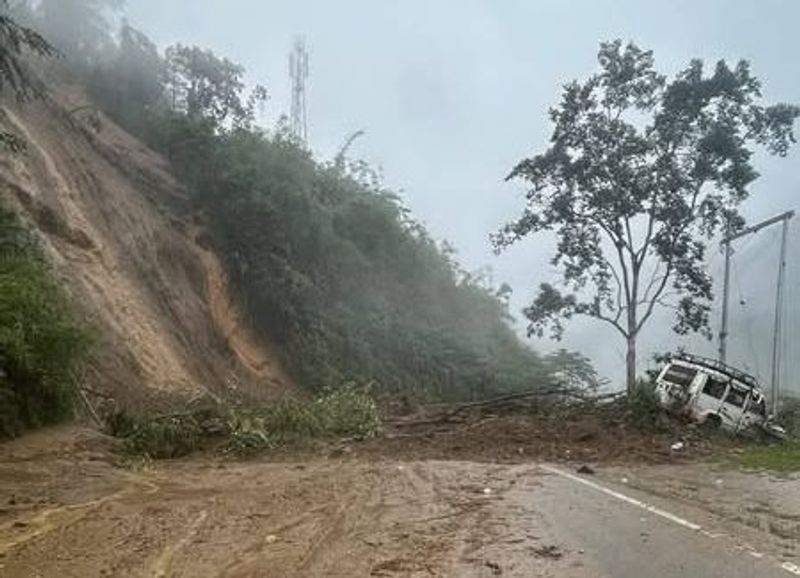
Five Army personnel went missing after a flash flood triggered by heavy rainfall washed away two shelters in Arunachal Pradesh’s Dibang Valley district, while four people died in a major landslide on a road construction site in Upper Subansiri district, officials said on Saturday.
According to the State Emergency Operations Centre here, both incidents occurred on Friday evening. The landslide occurred at the Keojaring-Byaching road cutting site in Upper Subansiri district.
While several people were buried under the debris, four people — Tadu Baki, Taji Rai, Markosh Basumatari and Babul Ali — were reported dead in the incident.
The body of Babul Ali has been recovered, said the district disaster management officer of Upper Subansiri.
Personnel from Nacho Police Station have been deployed for the search and recovery operation. Fire and Emergency Services personnel are also being mobilised from Daporijo, while a team of the State Disaster Response Force will assist in the operation.
In Dibang Valley district, two shelters of the 5th Grenadier at the Pasu Pani Army Camp were washed away by a flash flood triggered by heavy rainfall on Friday evening.
Officials said that the flash flood swept away seven Army personnel and two of them were rescued, while five remain missing.
The missing personnel have been identified as Havaldar Upendar and Army personnel Kundan, Vinod, Aditya and Samunda.
Two search and rescue teams from the 5th Grenadier have already been deployed.
Teams comprising personnel of the 58th Battalion of the ITBP, 62 RCC of the General Reserve Engineer Force, local volunteers and the Arunachal Pradesh Police have been rushed to the site for the search operation. An SDRF team from Pasighat is also proceeding to Anini to assist in the rescue operation.
Indian I-Day celebrations in New York tri-state area culminate in Guinness World Record
A Guinness World Record for the ‘Largest Flagpole Number’ is set at Veterans Memorial Park in Parsippany, New Jersey, in a joint celebration of India’s 80th Independence Day and the 250th anniversary of the United States
Celebrations marking India’s 80th Independence Day in the New York tri-state area culminated in a world record, with more than 1,300 US flags surrounded by Indian Tricolours arranged to form the number “250”, in a tribute to America’s semiquincentennial anniversary.
A Guinness World Record for the “Largest Flagpole Number” was set at Veterans Memorial Park in Parsippany, New Jersey, on Saturday, in a joint celebration of India’s 80th Independence Day and the 250th anniversary of the United States.
The event was led by the Consulate General of India in New York in partnership with the diaspora organisation Federation of Indian Associations NY-NJ-NE (FIA), with support from Indian technology company Zoho.
“Held at the intersection of India@80 and America@250, the event was a memorable expression of India-US friendship and of the Indian-American community’s enduring contribution to bringing the two nations and their peoples closer together,” a media statement by the organisers said.
The record-setting event was among several programmes held across the New York tri-state area and other parts of the US to mark India’s Independence Day.
The New York tri-state area refers to the greater metropolitan region of New York City that extends across three states: New York, New Jersey, and Connecticut.
Saturday’s event was attended by members of the Indian-American community, elected representatives and business and community leaders.
New Jersey Lieutenant Governor Dale Caldwell, US Congresswoman Analilia Mejia, Consul General of India in New York Binaya Srikanta Pradhan and Parsippany Mayor Pulkit Desai addressed the event.
The speakers highlighted the strong bonds between India and the US. The Indian Consul General underscored the growing bilateral partnership and the role of the Indian diaspora in strengthening economic, cultural and people-to-people ties, the statement said.
The Guinness World Record also highlighted the diaspora’s role as a bridge between the two countries, it said.
“Through its contributions across business, technology, health care, education, science, public service, arts and culture, the Indian-American community continues to enrich American society while strengthening ties with India,” it said.
The Indian Consulate in New York and the Permanent Mission of India to the United Nations also hosted flag-hoisting ceremonies attended by large numbers of members of the Indian diaspora.
At Times Square, the Indian Tricolour was unfurled during an annual celebration hosted by FIA, featuring cultural performances showcasing India’s heritage and the enduring India-US partnership.
Ahead of Independence Day, governors of several US states issued proclamations declaring August 15 as “India Day” in their respective jurisdictions.
US senators, governors, lawmakers, cities and towns also hailed the contributions of the Indian-American community to the country’s economic, cultural and educational life and highlighted the strong bilateral relationship.
Prominent landmarks, including the Empire State Building in New York and Prudential Centre in Boston, were illuminated in the colours of the Indian Tricolour.
FIA will host its 44th India Day Parade on Madison Avenue in Manhattan on Sunday. The annual event features floats, tableaux and cultural performances and draws thousands of members of the Indian diaspora.
This year’s parade will feature the cast of the popular Indian television show ‘Taarak Mehta Ka Ooltah Chashmah’ as chief guests and grand marshals.
Rolls-Royce, Reliance join hands to develop indigenous engine for India’s AMCA fighter
Partnership to explore dedicated aerospace gas turbine complex; companies aim to build sovereign capability in design, development and manufacturing of combat engines in India
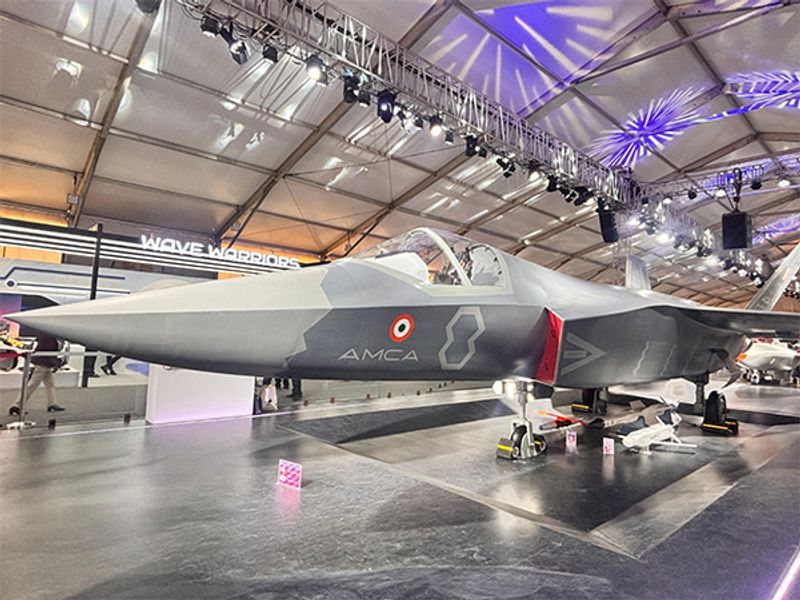
Global engine maker Rolls-Royce and Reliance Industries Limited on Friday announced a partnership to develop an indigenous combat engine for the under-development fifth-generation Advanced Medium Combat Aircraft (AMCA).
The ambitious AMCA is the first fighter jet programme for which the Ministry of Defence has opened manufacturing to the private sector. The ministry has invited three shortlisted consortiums to submit formal commercial and technical bids for the manufacture of five prototypes of the fifth-generation fighter aircraft.
The three bidders invited to submit their Request for Proposal (RFP) are Tata Advanced Systems Ltd (TASL), which is competing independently; a consortium led by Larsen & Toubro (L&T), Bharat Electronics Ltd (BEL) and Dynamatic Technologies Ltd; and another consortium comprising Bharat Forge, PSU BEML and Data Patterns.
The winning partner will work with the Aeronautical Development Agency (ADA) under the Defence Research and Development Organisation (DRDO) to build five flying prototypes and one structural test aircraft. The shortlisted firms, selected on the basis of their technical capabilities, will compete to build the prototypes.
None of the three firms invited to bid is an engine manufacturer. The Ministry of Defence is seeking a 120-kilonewton engine for the AMCA.
In a statement on Friday, Reliance Industries said it had announced a “strategic intent to partner and offer capabilities for the design, development, manufacturing and delivery of a sovereign indigenous combat engine of AMCA”.
As part of the partnership, Reliance and Rolls-Royce will explore the establishment of a dedicated aerospace gas turbine complex that would serve as a centre of excellence for power and propulsion technology in India, the statement said.
“The partnership will offer a compelling proposition for joint development of the AMCA engine in India, bringing together world-leading technology and industrial execution capabilities,” the statement added.
Anant Ambani, Executive Director, Reliance Industries Limited, said, “India’s strategic autonomy requires sovereign capability in critical technologies. Our intent with Rolls-Royce is to combine their world-leading expertise in advanced propulsion with Reliance’s technology, manufacturing, scale and execution capabilities to build an indigenous aero-engine ecosystem in India.”
He said the partnership was a contribution to Prime Minister Narendra Modi’s vision of an “Atmanirbhar Viksit Bharat”.
Tufan Erginbilgiç, CEO, Rolls-Royce, said, “We are bringing together our century-long heritage in advanced engineering and proven engine expertise with their homegrown leadership in Indian industry.”
The two companies will seek to build sovereign, end-to-end Indian capability across design, development, manufacturing, testing, production and through-life support. The partnership will also explore wider collaborations across defence, civil aerospace, and new power and propulsion systems.
Rolls-Royce has a presence in 47 countries and customers in more than 100 countries, including airlines and aircraft leasing companies, armed forces and navies, and marine and industrial customers.
State Stalwarts
DEFENCE MINISTER
Minister Rajnath Singh
ALL HUMANS ARE ONE CREATED BY GOD
HINDUS,MUSLIMS,SIKHS.ISAI SAB HAI BHAI BHAI
CHIEF PATRON ALL INDIA SANJHA MORCHA
LT GEN JASBIR SINGH DHALIWAL, DOGRA
SENIOR PATRON ALL INDIA SANJHA MORCHA
MAJOR GEN HARVIJAY SINGH, SENA MEDAL ,corps of signals
.
.
PATRON ALL INDIA SANJHA MORCHA
MAJ GEN RAMINDER GURAYA ,MADRAS REGIMENT
sanjhamorcha303@gmail.com
PRESIDENT SOUTH ALL INDIA SANJHA MORCHA
COL SS RAJAN BOMBAY SAPPERS,
PRESIDENT UTTARAKHAND ALL INDIA SANJHA MORCHA
COL B M THAPA ,BENGAL SAPPERSS
PRESIDENT HARAYANA STATE CUM COORDINATOR ESM
BRIG DALJIT THUKRAL ,BENGAL SAPPERS
PRESIDENT TRICITY
COL B S BRAR (BHUPI BRAR)
PRESIDENT CHANDIGARH ZONE
COL SHANJIT SINGH BHULLAR
.
.
PRESIDENT PANCHKULA ZONE AND ZIRAKPUR
COL SWARAN SINGH
INDIAN DEFENCE FORCES
DEFENCE FORCES INTEGRATED LOGO
INDIAN AIR FORCE
Air Officer C-in-C WESTERN AIR COMMAND
AIR MSHL S PRABHAKARAN AVSM VM
AOC-IN-C, EASTERN AIR COMMAND
Air Marshal Inderpal Singh Walia
AOC-in-C SOUTH WESTERN AIR COMMAND
Air Marshal Vikram Singh
AOC-IN-C, SOUTHERN AIR COMMAND
Air Marshal J.Chalapati
AOC-IN-C TRAINING COMMAND
AIR MARSHAL SK GHOTIA VSM
AOC-IN-C MAINTENANCE COMMAND
Air Marshal Jagdish Chandra
Flag Officer Commanding in Chief, Western Naval Command
ice Admiral R Hari Kumar, PVSM, AVSM, VSM
Flag Officer Commanding in Chief, Eastern Naval Command
Vice Admiral Sanjay Bhalla, AVSM, NM
Flag Officer Commanding in Chief, Southern Naval Command