
There are indications of US preparations for a final, debilitating strike on Iran.
A de facto ceasefire has been in effect in West Asia in the preceding three weeks. Outwardly, neither the United States nor Iran appears to be interested in the resumption of hostilities which were suspended by President Trump on April 7 and unilaterally extended on April 22. There is, however, no sign as yet of a permanent end to Trump’s war of choice. He has since threatened that if the Iranians do not agree to renewed talks, there would be no further extensions. He has set a deadline of April 26.
The reality is that Trump has another more serious deadline to contend with. The onset of summer triggers the campaign for this year’s upcoming US mid-term Congressional elections. Trump desperately needs a way out from his self-made military disaster, one whose outcome will determine the remainder of his term. This is evident from his outrageous social media rants, simultaneously threatening and pleading for talks. The Iranians can sense this desperation. But then, both sides are highly attuned to managing domestic optics. This is particularly so for Trump, given his abysmal approval ratings and a Republican base apprehensive of a trouncing this November.
Iran’s current hardline rulers see themselves as being in a stronger strategic position. Historically keen masters of carefully assessing an adversary, the Iranians are relishing Trump’s dilemmas and so, have decided to run the clock. This week marks the 60-day period of Trump’s illegal war, waged with neither Congressional nor United Nations approval. Under the US War Powers Act of 1973, a President has to seek Congressional approval for continuation of a war he initiated. Alternately, Trump can seek a 30-day extension by providing adequate justification, a challenging task but doable.
Iran’s ruling security establishment has thus settled into a wait-and-watch mode. It is comforted by reports in the Persian media of a strong “rally around the flag” domestic sentiment. On the other hand, it realises the monumental challenges of Iran’s post-war reconstruction, concealed within which are portents of future social instability. This is, therefore, a critical determinant in its need to levy a revenue collection toll on the Strait of Hormuz.
Meanwhile, there is no reliable information regarding Supreme Leader Ayatollah Mojtaba Khamenei’s whereabouts and health condition. He has not been seen in public and is said to be seriously injured, perhaps with debilitating life-threatening injuries he suffered on the first day of the war. Mojtaba’s injuries have strengthened the dominance of the Islamic Revolutionary Guards Corps, which today lays down Iran’s tough negotiating conditions.
Against the above background, a flurry of activity is taking place. First is the renewed military build-up in the region. The US has deployed a third carrier strike group (CSG) to the region, but it is not clear if one of the CSGs is in rotation. However, under the cover of the ceasefire, the US is steadily pre-positioning a range of military, naval and air assets, replenishing its ballistic and air defence systems and air-refuelling tankers. While this is seriously weakening the US force posture in other theatres, especially the critical Indo-Pacific, the indications are of US preparations for a final, debilitating strike on Iran. The calculation is that if successful, a big if, this could give Trump a legacy-defining victory and possibly reverse his political difficulties. On the other hand, Iran too is readying itself for just such a probability and replenishing its military stores, including by unblocking tunnels behind which are hidden more ballistic missile batteries.
Then, there is a ‘blockade-on-blockade’ situation, with Iran and the US competing to control shipping in the Strait of Hormuz. Both sides have engaged in tit-for-tat seizures of ships, but there are also reports of calibrated transit passages, with over 30 vessels permitted to breach the twin blockades. US forces disabled and seized the ‘Touska’, an Iran-flagged vessel. The ‘Touska’ had sailed from China, apparently with a cargo of dual-use items, including sodium perchlorate, a solid fuel precursor used in ballistic missiles.
Iran’s Foreign Minister Abbas Araghchi termed the US counter-blockade as “an act of war and thus a violation of the ceasefire.” Iran’s reciprocal seizure of two container vessels has ensured that shipping in the Hormuz remains unpredictable and dangerous. Iran, however, holds a wild card, ie, Yemen’s Houthis, who can impose a third blockade in the Red Sea, disrupting oil supplies from Saudi Arabia’s western Yanbu port. Cognisant of these geo-economic stresses, France, Germany, Italy and the UK convened a 40-nation “Hormuz Summit” to discuss the way forward on the Strait. India was a participant in the Summit, a largely pedantic and meaningless affair, reflective of Europe’s current irrelevance.
Second, the diplomatic track for a negotiated settlement remains deadlocked. After the collapse of the first round of talks, mediated by Pakistan in Islamabad (April 10-11), there has been no further progress. The readout from the first round was that neither side was willing to compromise on the core nuclear issue.
On balance, Iran remained consistent and stuck to its redlines as outlined in its 10-point proposal, which formed the basis for the Islamabad talks. These include a binding US-Israeli commitment to permanently stop further attacks, unfreeze frozen Iranian financial assets and provide sanctions relief. In turn, Iran would provide commitments on the nuclear file along lines mediated by Oman in Geneva towards February-end. Iran’s redline, however, is that there would be no transfer out of the country of its highly enriched uranium because “Enriched uranium is as sacred to us as Iranian soil and will not be transferred anywhere under any circumstances.” Iran also fended off a maximalist US demand that it suspend uranium enrichment in perpetuity, and if not, for a period of 20 years. The absence of any mention of Iran’s missiles or its proxies is a sign of the Americans desperation for an exit out of Trump’s quagmire.
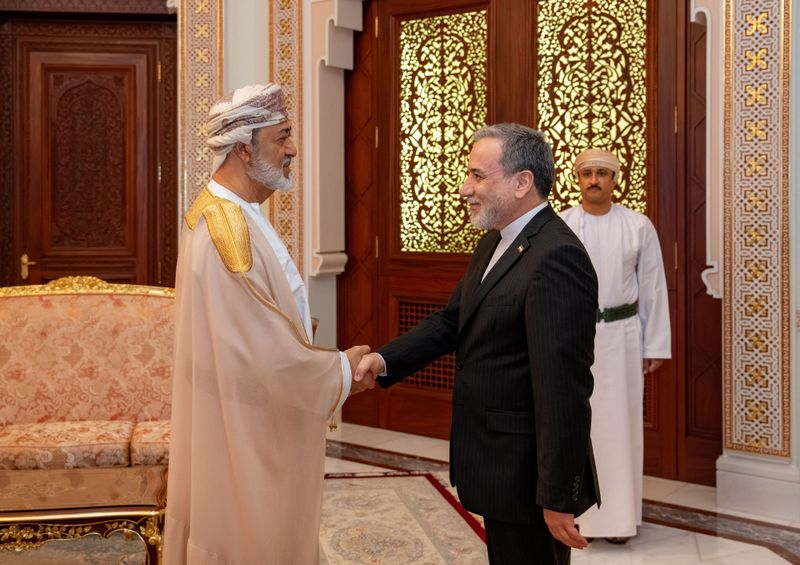
In an effort to restart the diplomatic route, Pakistan’s Asim Munir was in Tehran mid-April, but was unable to get the Iranians to budge. Within Iran, however, questions have arisen over Munir’s neutrality and his motivations in pressing Iran towards renewed talks. Over this past weekend, however, Aragchi went on a three-nation lobbying effort, traveling to Islamabad with Iran’s counter-proposals. Aragchi thereafter went to Muscat, notably on a Pakistan-registered business jet so as to avoid possible US strikes. Discussions in Oman reportedly pertained to the management of the Strait of Hormuz and convey Iran’s messages to its Gulf neighbours. Aragchi is next slated to visit Moscow.
Taken together — the military build-up and diplomatic logjam — worrying signs point to the possibility of a third round of hostilities. In this context, it should be noted that both India and China have issued fresh travel advisories, via their embassies in Tehran, cautioning their citizens against travel to/or leave Iran immediately.
Finally, hidden behind the multiple diplomatic tracks, searching for a resolution to this imbroglio, a complex geo-strategic and geo-economic landscape is slowly taking shape. There are growing divisions within the Gulf Cooperation Council members. On the one side is a nascent “Gulf Quad”, comprising Saudi Arabia, Pakistan, Turkey and Egypt. Theirs is an unpleasant bargain, but all views coopting a non-nuclear Iran as essential for regional stability. Arrayed against them are the Emiratis who are pressing ahead with an anti-Iran and pro-Israel approach. The Omanis and Qataris have made their peace with the Iranians, while Bahrain and Jordan are hitching themselves to the Emiratis and the Kuwaitis are caught somewhere in between.
Against this background, India’s External Affairs Minister Jaishankar was in Abu Dhabi and NSA Ajit Doval in Riyadh. Abu Dhabi’s Crown Prince Khalid bin Mohammed bin Zayed paid a call on President Xi in Beijing (April 14). The Saudis also infused a cash bailout for Pakistan after the Emiratis called back an old outstanding loan extended to Pakistan, and a small Pakistani force has since deployed to eastern Saudi Arabia on the borders with Bahrain.
Meanwhile, the economic dimensions of Trump’s war continue to ripple across the global economy. Shortages of jet fuel, fertilisers, helium and other petroleum byproducts are stressing economies across Europe and Asia. Trump again de-sanctioned Russian oil, but let expire a waiver on Iranian oil exports.