All posts by webadmin

BRO facing officer shortage of over 32 per cent: Parliamentary panel


BRO facing officer shortage of over 32 per cent: Parliamentary panel

Established in 1960, BRO comprises 18 projects across 11 states and three union territories

article_Author
Vijay Mohan
Tribune News Service

Chandigarh, Updated At : 08:41 PM Mar 18, 2026 IST

Follow usConnect with us

https://cdn.vuukle.com/widgets/audio.html?version=1.2.6
featured-img
featured-img

Minister of Defence, India, Rajnath Singh. PTI Photo.

The Border Roads Organisation (BRO), tasked with the construction and maintenance of critical infrastructure along the country’s frontiers, is grappling with a shortage of officers by over 32 per cent


The Steel of the 14th Army: Honoring the Indian Heroes of the Burma Campaign By Maj Gen Harvijay Singh, SM

In the sweltering heat of March 1945, the fate of Southeast Asia hung in the balance. The British Fourteenth Army, often called the ‘Forgotten Army’, was locked in the longest and bloodiest campaign of World War II. At the heart of this struggle were the Indian Infantry Divisions, whose ethos and traditions were forged in the crucible of places like Kohima, Imphal, and the Irrawaddy crossing.

While the world’s eyes were often fixed on the Western Front, a specialized and brutal brand of warfare was unfolding in the jungles of Burma. It was here that the 17th Infantry Division spearheaded the capture of Meiktila, a decisive operational center. Among their ranks, the 4th Battalion of the 15th Punjab Regiment stood as a titan of combat, suffering 921 casualties and earning two Victoria Crosses in a single month.

The Lone Charge of Naik Gian Singh

On March 2, 1945, the 17th Division’s assault on Meiktila was stalled. Hidden Japanese foxholes, concealed behind dense cactus hedges, had pinned down the advancing platoon.

Naik Gian Singh, seeing his comrades trapped, did not wait for orders. Armed with a Thompson sub-machine gun, he charged the enemy positions alone. Despite being wounded in the arm, he continued his momentum, lobbing grenades into weapon pits and clearing trenches with lethal efficiency.

When a Japanese anti-tank gun opened fire on the supporting tanks, Singh charged again. He neutralized the entire crew and captured the gun single-handedly. By the time his section cleared the cactus-lined lanes, twenty Japanese bodies lay in their wake. For this ‘outstanding display of courage,’ Gian Singh was awarded the Victoria Cross. He survived the war, later fighting in both 1962 and 1965 for independent India, retiring as an Honorary Captain.

The Final Sacrifice of Lieutenant Karamjeet Singh Judge

Two weeks later, on March 18, the struggle for Meiktila continued near a vital cotton mill. Lieutenant Karamjeet Singh Judge, a 21-year-old platoon commander from Kapurthala, was leading the charge.

The assault was halted by heavy machine-gun fire from bunkers invisible to the supporting tanks. In an act of cold, calculated bravery, Judge repeatedly walked through heavy fire to direct the tanks toward their targets. He personally led the infantry charges that eliminated ten bunkers. At one point, he was charged by two Japanese soldiers with fixed bayonets; he killed both at a distance of a mere ten yards.

As he was mopping up the final nest of bunkers, a light machine gun opened fire, mortally wounding him in the chest. Lieutenant Judge was posthumously awarded the Victoria Cross.

A Legacy in Peril

The history of these two men represents the pinnacle of Indian military valor, yet their legacies are drifting into the shadows of time.

SoldierAwardCurrent Location of Medal
Naik Gian SinghVictoria CrossKelvingrove Art Gallery, Scotland
Lt. Karamjeet Singh JudgeVictoria CrossUnknown

Today, Naik Gian Singh’s medal is preserved in Glasgow, while the whereabouts of Lieutenant Judge’s Victoria Cross remain a mystery. More poignant is the silence in their homelands. In Kapurthala and Nawanshahr, there are no busts, no memorials, and no squares named after these men who stood at the center of the 20th century’s greatest conflict.

To value our future, we must first value our past. The courage of the 15th Punjab Regiment in March 1945 is not just a chapter in a history book; it is the very foundation of the modern soldier’s spirit.


Israel Hammers Tehran Command Hubs In Retaliatory Blitz After IRGC’s Tel Aviv Missile Barrage

The Israeli Air Force has conducted a significant airstrike operation in Tehran, targeting key command centres and infrastructure linked to Iran’s military apparatus.

This wide-scale attack, announced on 18 March 2026, marks a bold escalation in the ongoing shadow war between Israel and Iran.

The operation took place on Tuesday and was directed by Military Intelligence, according to an official statement from the Israeli Air Force posted on X. Pilots struck command centres operated by what Israel terms the “Iranian terror regime,” alongside sites integral to its ballistic missile array and supporting infrastructure.

Aerial reconnaissance imagery released by the Israeli military depicts a sprawling industrial complex in Tehran, featuring warehouses and administrative structures. A highlighted section in the photograph pinpoints the precise target zone, underscoring the precision of the strikes.

Among the confirmed hits was the headquarters of the Revolutionary Guards’ security unit, which handles protests and public order in Iran. This facility plays a central role in suppressing domestic dissent, making it a high-value target in Israel’s strategic calculus.

The Israeli Air Force also neutralised a maintenance centre belonging to the Logistics and General Support Division of Iran’s Internal Security Forces. Another key strike targeted the headquarters of Iran’s ballistic missile array, aiming to disrupt production and deployment capabilities.

Several Iranian air defence systems were attacked during the mission, with the goal of bolstering Israeli air superiority over Iranian airspace. This move expands operational freedom for future incursions and signals a degradation of Tehran’s defensive posture.

Israel framed the strikes as part of a broader phase to inflict “deepening damage” on the core elements of Iran’s military regime. The operation represents a calculated response to mounting threats from Tehran, amid heightened regional tensions.

This Israeli action follows a major offensive by Iran’s Islamic Revolutionary Guard Corps (IRGC), which launched over 100 missiles at targets in Tel Aviv. Iranian state media, Press TV, described the assault as the “61st wave” of “Operation True Promise 4,” executed in retaliation for the killing of Ali Larijani, a former secretary of Iran’s Supreme National Security Council.

Tehran portrayed the IRGC strikes as vengeance for “unprovoked American-Israeli aggression.” The barrage employed advanced weaponry, including multi-warhead Khorramshahr-4 and Qadr missiles, as well as Emad and Kheibar Shekan projectiles, according to Press TV reports.

The IRGC claimed its missiles penetrated Israeli defences without hindrance, striking more than 100 military and security sites in the “occupied territories.” This assertion highlights Iran’s narrative of overwhelming superiority, contrasting sharply with Israel’s account of resilient air defences.

Field reports cited by Press TV indicated a partial blackout in Tel Aviv, complicating ground operations and rescue efforts. The IRGC boasted of over 230 casualties inflicted across the campaign, including deaths and injuries, though independent verification remains elusive.

Beyond Tel Aviv, Iranian strikes reportedly reached al-Quds (Jerusalem), the port of Haifa, Be’er Sheva, and sites in the Negev Desert. American outposts in Qatar, Bahrain, the United Arab Emirates, Kuwait, and Saudi Arabia also faced reprisals, broadening the conflict’s scope.

The tit-for-tat exchanges underscore a dangerous spiral of escalation between Israel and Iran, with both sides leveraging advanced missile technologies. Israel’s precision strikes on Tehran aim to erode Iran’s offensive infrastructure, while the IRGC’s massed salvos test multilayered defences.

As the dust settles, the strikes reveal vulnerabilities on both fronts: Iran’s air defences appear compromised, yet its missile arsenal remains potent. Regional allies, including US bases, are now drawn into the fray, raising fears of wider involvement.

The death of Ali Larijani catalysed Iran’s response, framing it as a defence of national honour. His role in Iran’s security apparatus made him a symbolic target, intensifying Tehran’s resolve.

Israel’s operation, meanwhile, demonstrates evolving tactics, blending intelligence-driven targeting with air dominance. The release of visual evidence serves both operational debrief and psychological warfare purposes.

Looking ahead, these events could precipitate further reprisals or diplomatic manoeuvres. With Iran’s “True Promise 4” ongoing, Israel may prepare additional waves to maintain pressure on Tehran’s military foundations.

The conflict’s expansion to Gulf states complicates alliances, as US facilities bear the brunt of Iranian fury. This dynamic tests longstanding partnerships and could reshape Middle Eastern security alignments.

The Israeli airstrikes in Tehran and Iran’s missile barrage on Israel epitomise a high-stakes proxy war turning direct. Both nations claim tactical victories, but the human and strategic costs mount rapidly.


China Ramps Up Stealth Fighter Production With J-20, J-35 Jets

Commercial satellite imagery reveals that China’s Aviation Industry Corporation of China (AVIC) has significantly expanded its manufacturing facilities for advanced military aircraft, particularly the fifth-generation J-20 and J-35 stealth fighters, reported Flight Global.

Analyst J Michael Dahm from the Mitchell Institute for Aerospace Studies presented these findings at the 2026 Air & Space Forces Association Warfare Symposium, highlighting a surge in production capacity.

Since 2021, AVIC has added 278,700 square metres of manufacturing space at the Chengdu plant, where five J-20 production lines are now operational. This expansion supports an estimated output of 100 J-20s annually, with some assessments, including from the Royal United Services Institute, placing 2025 production at 120 aircraft.

The J-20, a twin-engined canard-delta fighter, serves as China’s counterpart to the Lockheed Martin F-22, emphasising air superiority roles. Imagery from Planet Labs underpins Dahm’s analysis, demonstrating how commercial satellites are revolutionising unclassified military intelligence.

This Chengdu J-20 exemplifies the stealth design driving China’s expanded production efforts.

Parallel developments at Shenyang include a new factory spanning over 370,000 square metres, complete with a 3,660-metre runway, poised for J-35 and J-35A assembly. The J-35 targets naval and air force needs, mirroring the F-35’s multirole capabilities, with low-rate production already underway.

Changhe Aircraft Industries is expanding by 93,000 square metres, a 30% capacity increase for helicopters including attack and heavy-lift types. Across Chengdu, Shenyang, and Changhe, AVIC is adding over 743,000 square metres—exceeding the F-35’s Fort Worth complex in scale.

Shenyang’s existing lines continue producing fourth-generation J-15 and J-16 fighters, which are essential copies of Soviet era Sukhoi fighters. Dahm forecasts AVIC reaching 300-400 fourth- and fifth-generation fighters per year starting next year, with a minimum of 250 annually.

By comparison, Lockheed Martin assembles 156 F-35s yearly, F-16s at up to 48 (though only 16 delivered in 2024-2025), Boeing aims for 24 F-15EXs, and Dassault delivered 26 Rafales in 2025, targeting 44. Lockheed’s CEO James Taiclet maintains Western quality edges, noting F-35 superiority over the J-20 despite volume disparities.

China’s output surge could yield the world’s largest fighter fleet by 2029, alongside carrier expansions and carrier-based air operations maturity. Emerging designs like the tailless, three-engined J-36 spotted in Chengdu and the thrust-vectoring J-50/J-XDS over Shenyang signal sixth-generation pursuits.

A Xinjiang test base, dubbed “China’s Area 51,” has doubled with 5,570 square metres of hangars and 27,800 square metres of facilities added recently. Satellite images captured the J-50 there in September 2025, possibly a deliberate reveal to divert attention from broader expansions.

Further, 20 hectares north of Chengdu’s plant have been cleared, potentially for sixth-generation production or more J-20 lines. This aligns with preparations for Taiwan contingencies within the 2027 “Davidson Window,” as INDOPACOM notes PLA rehearsals.

Based on assessments from U.S. Indo-Pacific Command (INDOPACOM), the People’s Liberation Army (PLA) is actively increasing its operational tempo, with military activity around Taiwan interpreted as “rehearsals” rather than mere exercises. These activities align with a widely cited strategic timeframe known as the “Davidson Window,” which refers to the period leading up to 2027, by which Chinese leader Xi Jinping has reportedly instructed the PLA to be capable of seizing Taiwan by force, if ordered.

Beyond Taiwan, Dahm anticipates global power projection, with Chinese air forces challenging beyond the Strait. These developments unfold amid US focus on the Strait of Hormuz, where air campaigns against Iran underscore air power’s roles and limits.

Flight Global


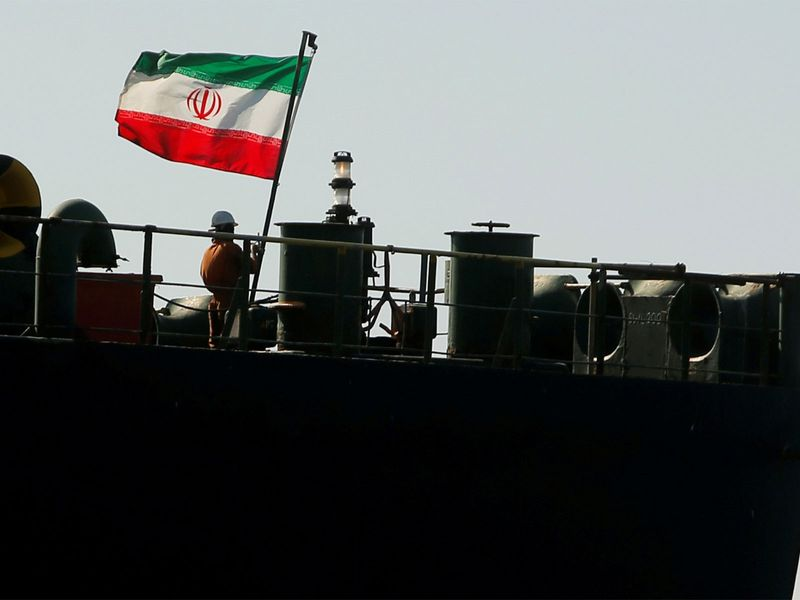
Jag Laadki Docks At Mundra with UAE Crude As Operation Sankalp Shields Indian Ships From West Asia Turmoil

The Indian-flagged crude oil tanker Jag Laadki has docked safely at Adani Ports in Mundra, Gujarat, delivering a crucial cargo of approximately 80,886 metric tonnes of crude oil sourced from the United Arab Emirates. Loaded at Fujairah Port, this shipment arrives at a pivotal moment for India’s energy security, as the nation grapples with volatile regional dynamics.

With an overall length of 274.19 metres and a beam of 50.04 metres, the vessel boasts a deadweight tonnage of around 164,716 tonnes and a gross tonnage of 84,735 tonnes. These specifications highlight its capacity to transport substantial volumes of crude, supporting the operational needs of India’s major refineries.

Mundra Port, operated by Adani Ports, plays an indispensable role in handling such large-scale imports. The facility’s strategic location and advanced infrastructure ensure efficient berthing and discharge, minimising delays in the supply chain that feeds refineries across the country.

This delivery unfolds against escalating tensions in West Asia, where disruptions to key maritime routes threaten global energy flows. Recent conflicts have raised concerns over the safety of shipping lanes, prompting heightened vigilance from Indian authorities.

In a related success, two Indian-flagged LPG carriers—MT Shivalik and MT Nanda Devi—safely traversed the Strait of Hormuz earlier this month. Carrying a combined 92,712 metric tonnes of LPG, they crossed on 13 March 2026 and reached India on 16 and 17 March, demonstrating resilience in the face of regional instability.

India’s response includes the ongoing Operation Sankalp, a naval deployment dedicated to safeguarding commercial vessels in these waters. The Indian Navy maintains a robust presence to protect vital shipping lanes, ensuring the safe passage and berthing of tankers like Jag Laadki.

The Directorate General of Shipping (DG Shipping) is actively monitoring the situation, coordinating with ship owners, Recruitment and Placement Service License (RPSL) agencies, and Indian diplomatic missions abroad. This collaborative effort aims to mitigate risks to crew and cargo.

Union Shipping Minister Sarbananda Sonowal is personally overseeing developments, as confirmed in an official release. Close coordination with ports, shipping lines, and logistics stakeholders seeks to prevent disruptions to maritime trade.

To support operations, ports have received directives to offer relief measures, including concessions on anchorage, berth hire, and storage charges. These steps help absorb potential cost escalations from rerouting or delays.

India’s reliance on imported crude and LPG underscores the importance of such secure transits. Over 80 per cent of the country’s oil needs come via sea routes through the Strait of Hormuz, making stability in West Asia critical for economic continuity.

The safe arrival of Jag Laadki not only replenishes refinery stocks but also signals the effectiveness of India’s maritime security apparatus. It reassures energy markets and stakeholders of the nation’s proactive stance.

As tensions persist, experts anticipate continued naval patrols and diplomatic engagements to shield commercial interests. Mundra’s role as a gateway for energy imports will remain central, bolstering India’s strategic resilience.

Indian Air Force

ANI


Indian Navy’s IOS SAGAR 2.0 Bolsters Regional Maritime Ties With 16 IONS Nations

The Indian Navy has launched the second edition of its Indian Ocean Ship (IOS) SAGAR initiative, underscoring India’s steadfast commitment to fostering maritime partnerships across the Indian Ocean Region (IOR).

This program brings together naval personnel from 16 friendly foreign nations, promoting collaborative maritime security in a strategically vital area.

India assumed the chairmanship of the Indian Ocean Naval Symposium (IONS) in February 2026, a pivotal development that has shaped this edition of IOS SAGAR. The participating countries hail from the IONS membership within the IOR, reflecting a targeted effort to strengthen ties with regional partners.

At its core, IOS SAGAR embodies the Government of India’s SAGAR vision—Security and Growth for All in the Region. It extends this ethos through the broader MAHASAGAR framework, which emphasises Mutual and Holistic Advancement for Security Across the Regions, aiming for inclusive maritime stability.

This unique operational engagement programme allows naval personnel from friendly foreign countries to train alongside Indian Navy crews aboard an Indian Naval Ship. Participants immerse themselves in shipboard activities, gaining hands-on experience that enhances practical cooperation and operational interoperability.

The current edition commences with intensive professional training at Indian Naval establishments in Kochi. Here, international participants engage with essential naval operations, seamanship techniques, and maritime security doctrines, building a foundational understanding of joint practices.

Following the shore-based phase, the programme transitions to sea deployment on an Indian Naval Ship. Sailors from the 16 nations will operate together, executing real-world maritime activities that simulate high-stakes scenarios and deepen mutual trust.

India’s maritime diplomacy has long prioritised such initiatives, evolving from bilateral exercises to multinational forums like IONS. IOS SAGAR represents a natural progression, addressing contemporary challenges such as piracy, illegal fishing, and humanitarian assistance in the IOR.

The IOR remains a nexus of global trade routes, with over 80 per cent of India’s energy imports traversing these waters. Strengthening naval interoperability through IOS SAGAR directly safeguards these lifelines, aligning with India’s Act East and Neighbourhood First policies.

By chairing IONS, India positions itself as a proactive leader in regional security architecture. This edition of IOS SAGAR amplifies that role, fostering goodwill and shared capabilities among diverse navies.

Participants benefit from exposure to India’s indigenous naval technologies, including advanced sensors and communication systems integrated into its warships. Such exchanges subtly promote India’s defence manufacturing prowess under the Atmanirbhar Bharat initiative.

The program also emphasises soft skills like leadership in multinational crews and crisis response coordination. These elements ensure that tactical training translates into strategic partnerships.

Kochi, as a hub of southern naval commands, offers world-class facilities for this training. Its proximity to key sea lanes enhances the realism of exercises conducted there.

At sea, the deployment phase tests endurance and adaptability, with participants manning watch stations, conducting drills, and navigating complex maritime environments. This culminates in a richer appreciation of collective defence postures.

IOS SAGAR builds on the success of its inaugural edition, which set benchmarks for people-to-people naval interactions. Feedback from prior participants has refined this iteration for greater impact.

Amid rising geopolitical tensions in the IOR—such as China’s expanding footprint—the initiative signals India’s resolve to maintain a free and open Indo-Pacific. It countersbalance through cooperation rather than confrontation.

Economically, enhanced maritime security via IOS SAGAR supports trade growth, vital for India’s blue economy ambitions. Fisheries protection and disaster response modules address dual-use capabilities.

The 16 participating nations span the IOR’s diversity, from island states to continental powers, ensuring broad representation. This inclusivity strengthens the programme’s legitimacy and reach.

Indian Navy personnel serve as mentors, sharing expertise honed through missions like anti-piracy patrols off Somalia. Their guidance elevates the training’s quality.

Upon completion, participants return home with actionable insights, potentially influencing their navies’ doctrines and procurement choices. This ripple effect amplifies IOS SAGAR’s long-term value.

India envisions scaling IOS SAGAR under its IONS chairmanship, perhaps incorporating emerging technologies like unmanned systems. Such evolutions will keep the initiative at the forefront of maritime innovation.

IOS SAGAR exemplifies proactive diplomacy, weaving security with growth to secure a stable IOR for all stakeholders.

ANI


he U.S. just deployed a weapon that was supposed to stay classified for another decade. And it changes EVERYTHING about this war.

🚨 THE U.S. NAVY JUST USED A LASER WEAPON IN COMBAT FOR THE FIRST TIME IN HISTORY. 🚨

CENTCOM released footage of the HELIOS system mounted on a destroyer off Iran’s coast. It’s shooting down drones with LIGHT.

Here’s why this is the most important military development since the atomic bomb:

THE PROBLEM:
→ Iran’s $20,000 Shahed drones were bankrupting the U.S. defense budget
→ Every Patriot interceptor costs $3-4 MILLION
→ Every THAAD interceptor costs $10 MILLION
→ The UAE alone intercepted 755 drones + 172 ballistic missiles — BILLIONS spent in ONE WEEK
→ Iran was WINNING the math. Spend $30K, force the enemy to spend $4M. Repeat.
→ That cost ratio was Iran’s most powerful weapon

THE SOLUTION:
→ HELIOS runs on ELECTRICITY
→ The cost of firing it: less than your monthly electric bill
→ No missiles to reload. No magazine to deplete. No resupply ship needed.
→ Unlimited shots. As fast as light. Against a $20,000 drone.
→ Iran spends $30,000 per drone. HELIOS spends PENNIES to destroy it.

THE MATH JUST FLIPPED:

⚠️ Before HELIOS: Iran spends $30K → U.S. spends $4M to stop it. Iran wins.
⚠️ After HELIOS: Iran spends $30K → U.S. spends $0.50 to stop it. Iran LOSES.

→ Iran spent YEARS developing Shahed drone doctrine
→ The entire strategy was: “flood cheap drones, bankrupt the defense”
→ HELIOS makes that strategy OBSOLETE overnight
→ A weapon designed to bleed the U.S. dry just became target practice for a laser that costs nothing to fire

This is the first real combat test of directed energy weapons in history.

If it works at scale — and early reports say it DOES — then:

💀 Iran’s drone advantage = GONE
💀 The 200-to-1 cost ratio = REVERSED
💀 Every drone Iran launches = destroyed for pennies
💀 Drone warfare as a strategy = DEAD before it even peaked
💀 Every military on Earth that invested in drones = back to the drawing board

Iran just found out that the weapon it spent a decade perfecting can be defeated by a LASER running on a ship’s generator.

The future of warfare isn’t drones. It isn’t missiles. It’s directed energy.

And the U.S. just tested it in a live war zone.

Prepare accordingly. 🚨🚨🚨
Being fwd as received, lot of sense.

MUST READ

ISRAELI JOURNALIST GIVES FULL ACCOUNT ON WAR ON THE FIFTH DAY

“THIS IS WHY OUR GOVT IS CENSORING US”
(Alon Mizrahi)

“We are witnessing history. Iran is, to the surprise of everyone, fucking up US bases so thoroughly and extensively and so decisively that the world isn’t ready to see it.”

“In 4 days, Iran has managed to expand its scope of military domination in the region. Iran has destroyed the most precious, most expensive military bases, assets and equipment in the whole world. American bases in Bahrain and Kuwait and Qatar and Saudi Arabia are some of the biggest military installations in the entire world. These are assets that took trillions to build over the course of several decades. We’re talking a major chunk of military expenditure for over 30 years, going up in smoke.

We are seeing radars costing hundreds of millions of dollars a piece being destroyed in an instant. We are seeing entire military bases being abandoned and burned, decimated and destroyed. And I’m telling you from my knowledge, the US has never suffered such devastation in its entire history, except maybe Pearl Harbor but that was one attack.

No enemy in a normal war has done to the US military what the Iranians are doing to the US military right now. This defies belief. The military situation is so bad that censorship blocks practically every piece of new information about this war. If you’ve noticed we’re being exposed to less and less every day.

Thirty-five years ago during the first Iraq war, we were being shown endless footage from Iraq. The smart bombs and the cameras were a novelty back then, but every night we were being shown night footage. Now we are seeing almost no video.

Understand this! This is supposedly the worlds biggest military power having the worlds biggest air capabilities and for 4 days when the US is on the offensive, supposedly and is supposed to be breaking through Iranian defenses we are seeing NO signs of American domination over Iranian skies. Where is all the footage of our planes flying over Tehran or any part of Iran for that matter?

American soldiers can not even dream of setting foot in Iran. And to understand how desperate this war is, that on the 4th day you’re already hearing the craziest suggestions and ideas from the Trump administration. They are suggesting to send military escorts for oil carrying vessels coming out of the Persian gulf. What are you even talking about?! You want to send American ships into the range of thousands of Iranian missiles? NO ONE can pass through the strait of Hormuz right now.

The Iranians have been preparing for this for decades. They’re flaunting this idea of arming Kurdish militias to invade Iran. What the FUCK are you talking about? Have you seen a map of Iran?! It seems like the Trump administration has never seen a map of Iran! Do you know how massive it is? What do you mean invade Iran?! You think a 10,000 man militia can invade Iran?! Or even 50,000?! Or 100,000?! Iran will swallow them.

The US and Israel have already lost this war. The US and Israel can kill millions of civilians in their homes. They have huge bombs and can explode buildings, but they will not win this war. Iranians military infrastructure and weaponry is so far underground ALL OVER IRAN. There is no way for the Americans and definitely not the Israelis to reach any of it. They are FUCKED.

They have started something they have no chance of bringing to an end. When this is over the US will never come back to West Asia. There will be no American presence in the Middle East. I’m telling you this now with certainty.”

Alon Mizrahi, Israeli journalist and peace activist on Substack


India balances US, Russia ties with parallel naval engagements

Despite global tensions across multiple flashpoints, India continues to balance its military ties with diverse partners. It is currently engaging simultaneously with the militaries of the US and Russia at Guam and Visakhapatnam, respectively.

Two warships — Sovershenny and Rezky — from the Vladivostok-based Russian Pacific Fleet arrived at the eastern port of Visakhapatnam on March 14. The ships’ crews will participate in cultural and sports events with Indian naval personnel, while also restocking supplies. The vessels, which departed Vladivostok on February 12, are on a long-distance Asia-Pacific deployment.

Meanwhile, at Guam — a US base in the western Pacific Ocean — the Indian Navy has joined an anti-submarine warfare exercise hosted by the US, along with fellow Quad partners Japan and Australia. New Zealand is also participating in the multinational exercise, ‘Sea Dragon 2026’, at Andersen Air Force Base in Guam. The drills began on March 9 and will continue for nearly three weeks.

These engagements come against the backdrop of tensions in West Asia. While the US and Israel are aligned against Iran, India has, for the past two weeks, hosted the Iranian warship IRIS Lavan at Kochi; the vessel and some of its crew remain in India. Meanwhile, the US and its NATO allies remain at odds with Russia over the ongoing war in Ukraine.

At Guam, all five participating navies are deploying long-range maritime reconnaissance aircraft such as the Boeing P-8 and its variants, which are capable of tracking submarines. These aircraft can generate a shared operational picture of the maritime domain and enable seamless communication between forces.

According to a US Navy statement, Sea Dragon 2026 is aimed at enhancing aircrew proficiency in anti-submarine warfare (ASW), progressing from simulated targets to detecting and tracking a live submarine.

India has been steadily refining its military ties with both the US and Russia. In November last year, India and the US discussed ways to enhance bilateral and multilateral exercises, including adding complexity such as simulated submarine hunts and tracking “enemy vessels”, to strengthen maritime cooperation and advance shared strategic interests in the Indo-Pacific. India and the US are also part of multilateral frameworks such as the Combined Maritime Forces (CMF), which operates in the Red Sea and the Persian Gulf.

Meanwhile, a joint statement issued after Prime Minister Narendra Modi’s meeting with Russian President Vladimir Putin in New Delhi in December said the six-decade-old India-Russia defence partnership would be “re-oriented” towards co-development and co-production of advanced technologies, setting a new benchmark in support of the ‘Make in India’ initiative.


Search operations intensified across Jammu region after suspicious movements

GOC, Rising Star Corps, Lt Gen Rajan Sharawat, along with other officers, reviews operational preparedness of the troops in Machhedi sector of Kathua district on Wednesday.

Security forces on Wednesday launched multiple search operations across the Jammu region following reports of suspicious movements in several areas.

Joint teams of the Army, police, and CRPF conducted operations in Doda, Rajouri, and Poonch districts.

In Doda, searches were carried out in the Marmat area after locals reported suspected terrorist movement. The area is known as a transit route for militants moving between Doda and Basantgarh in Udhampur. Additional operations were conducted in the Sarlea area.

In Poonch district, search operations were underway in Dandi Dhara and Ari Sarooti, located along the Line of Control (LoC).

Meanwhile, in Rajouri, a combing operation was launched in Khandli and adjoining areas near Palma after a local reported sighting two suspicious individuals moving towards a nearby forest.As of Wednesday evening, no recoveries or encounters had been reported.

Senior Army officials also reviewed security arrangements in the region. The General Officer Commanding (GOC) of White Knight Corps, Lt Gen PK Mishra, visited forward areas in Akhnoor along the LoC and interacted with troops.

White Knight Corps in a statement said, “He interacted with troops deployed on the LoC and was briefed on measures undertaken to strengthen defences and enhance operational effectiveness. The GOC commended all ranks for their high morale, professionalism and steadfast commitment to duty.”

Similarly, GOC Rising Star Corps, Lt Gen Rajan Sharawat, reviewed operational preparedness in the Bani–Machhedi sector of Kathua. A statement said the GOC lauded their “battle readiness, high morale and steadfast commitment to mission success under all conditions”.

Kathua has witnessed multiple encounters during the past few years as it is located on the traditional infiltration route of Pakistani terrorists who enter into this side of the International Border and reach Doda, Udhampur and other districts through hills of Kathua.