
All posts by webadmin
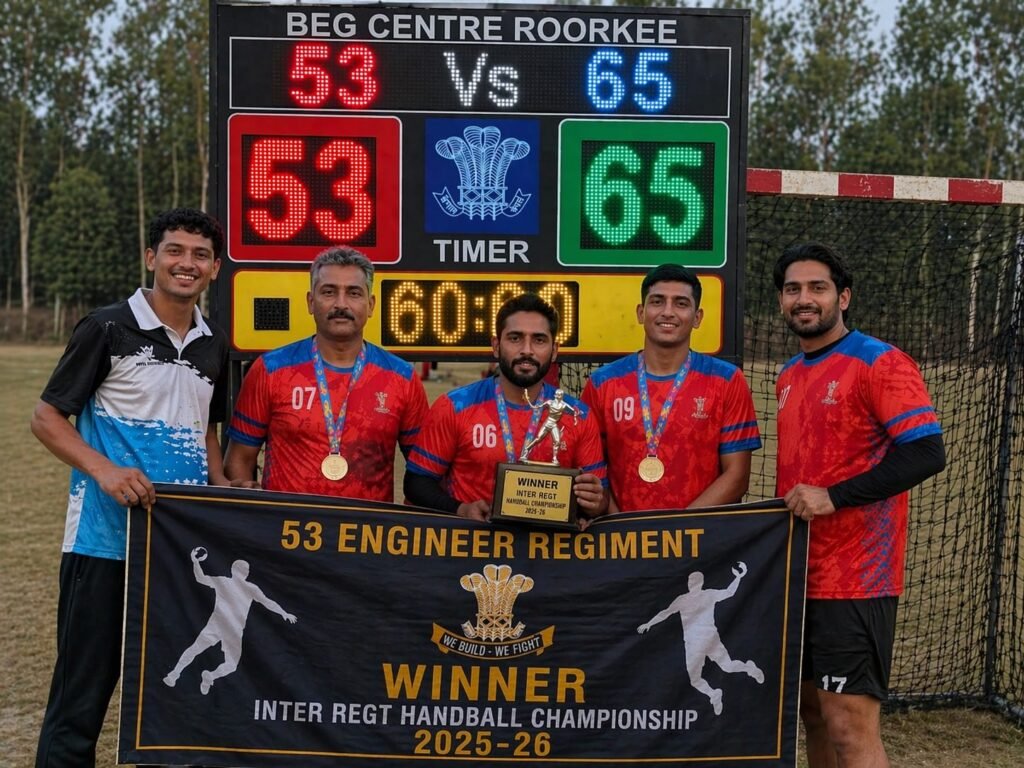
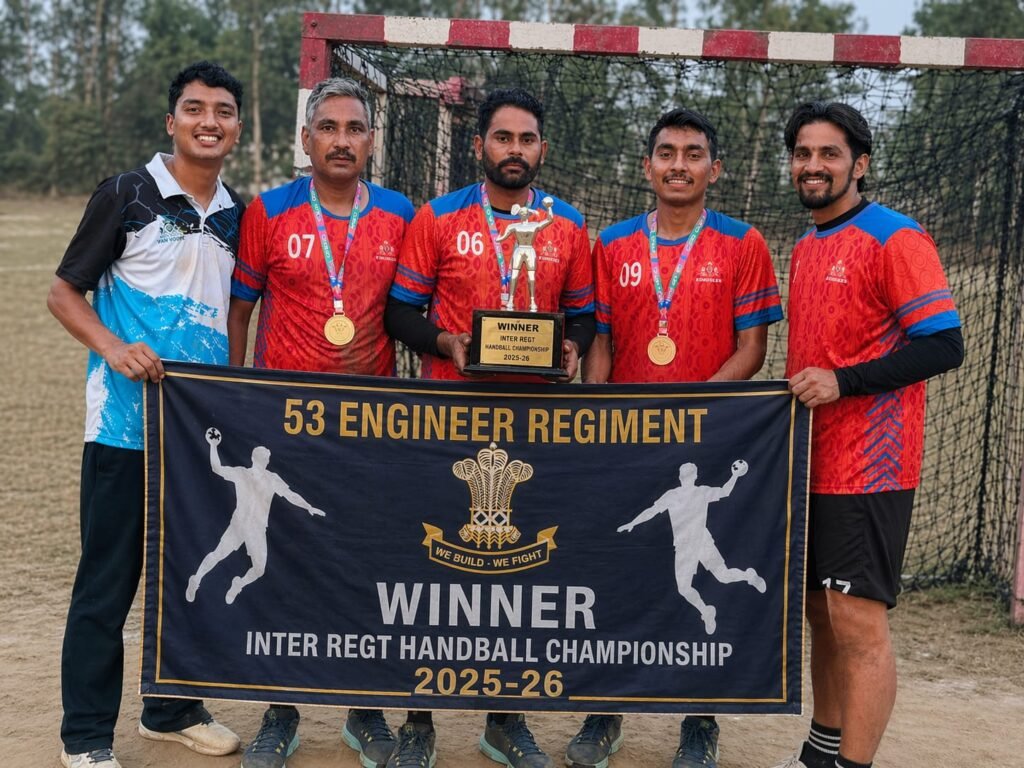
53 ENGR REGT WINS HANDBALL CHAMPIONSHIP AT BEG &CENTRE ROORKEE
Hearty congratulations to 53 ER (1st) and 65 EBR (2nd). It is proud privilege to inform that with the teams effort, God’s grace and prayers of all ranks of the units they have won handball championship at BEG&Centre today
BRIG KULDEEP SINGH KHALON ON Pahalgam: anniversary
| One year anniversary of Tech, Agniveer, World WaR. | Brigadier Kuldeep Singh speaks openly about the shortage of soldiers in R3 and Indian…
Suicide by two Agniveers in a month raise concern

High levels of occupational stress, extended deployments and long separation from family are among factors cited for suicides in the Armed Forces
The death by suicide of a 19-year-old trainee Agniveer at a Naval establishment in Odisha on April 18 has raised concern as it is the second such reported incident from the same station this month, focusing attention of service conditions and psychological health of troops.
According to reports, the trainee, Vikas Kumar, hailing from Bhojpur district of Bihar, had joined the Navy as an Agniveer in February and was undergoing training at INS Chilka in Odisha. His body was discovered on April 18 in a gym at the station.
This incident comes on the heels of another case reported from INS Chilka on April 8, when a trainee, Katik Yadav, belonging to Meerut in Uttar Pradesh had been found dead.
Agniveers in the Three Services are recruited for a four-year term, including the training period, after which 25 per cent are absorbed into the permanent cadre while the remaining are discharged from service. The first batch of Agniveers, which was enrolled in the end of 2022, will complete their term later this year.
When it was launched, apparently to keep the age profile of the armed forces low and reduce the pension bill, the Agniveer scheme had raised considerable debate in the security establishment over its efficacy and post discharge rehabilitation.
There have been earlier reports of suicides by Agniveers. Sources estimate the number of such cases in all three services to be about 25, including those in operational areas like Jammu and Kashmir.
High levels of occupational stress, extended deployments and long separation from family are among factors cited for suicides in the Armed Forces. Personal issues like marital discord, financial problems and family issues are also among reasons for suicides.
The Armed Forces have a structured programme to deal with stress among soldiers and several policies relating to service conditions and welfare measures have been implemented to address the issue.
As impasse over Indian Army recruitment from Nepal continues, Britain raises new Gurkha regiment
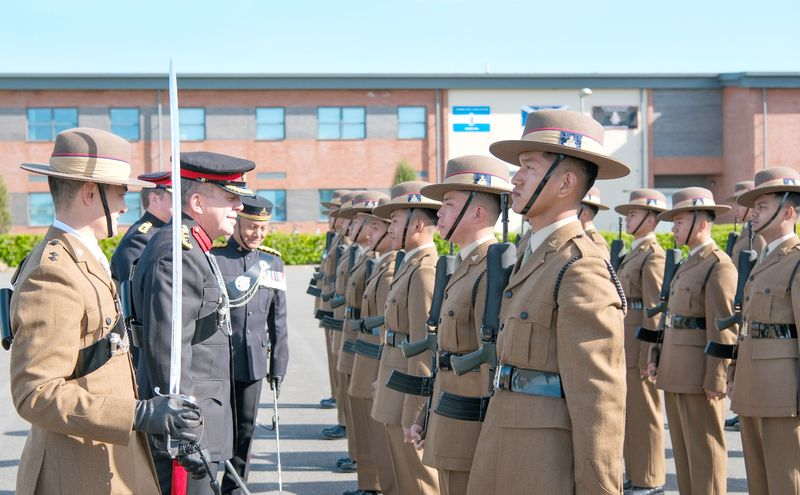
As the impasse over the recruitment of Gorkha soldiers from Nepal into the Indian Army continues, their brethren have opened a new chapter in the United Kingdom, with the British Army raising an Artillery regiment exclusively comprising these hardy mountain warriors.
Christened the King’s Gurkha Artillery (KGA) by King Charles III, the current British monarch, the unit’s ‘Kasam Khane Parade’ for its first batch of 20 directly selected recruits from Nepal was held at Larkhill Camp in south-west England on April 20.
Once fully trained, the Gurkha Gunners will play an integral role in exercises and operations both in the United Kingdom and abroad. Gorkha is spelt as Gurkha in the British Army.
The formation of the 400-strong KGA was announced in 2025 and will be completed over the next four years, with the first transfers of existing Gurkhas taking place this spring, according to the website of The Gurkha Brigade Association. The new unit has initially formed up in Larkhill, at the home of the Royal Artillery. The KGA will grow to form further batteries over the next three-four years.
Terming the new regiment to be a fitting blend of two historic, proud organisations that will offer the British Army ever-greater fighting power and combat effectiveness, the website states that the KGA will deliver close artillery support as part of the Royal Artillery and offer fresh opportunities to the soldiers of the Brigade of Gurkhas, adding even greater depth and diversity to the Royal Artillery.
At present, the British Brigade of Gurkhas comprises 4,000 troops forming the Royal Gurkha Rifles, which is traditional infantry with three battalions, Queen’s Gurkha Engineers, Queen’s Gurkha Signals, Band of the Brigade of Gurkhas, Queen’s Own Gurkha Logistic Regiment and Gurkha Staff and Personnel Support. These troops are recruited from Nepal and all officers assigned to Gurkha units, like their counterparts in the Indian Army’s Gorkha Rifles, are required to learn Nepali language.
The Gorkha Rifles legacy
During the Anglo-Nepalese war of 1814-1816, Gurkhas were first recruited into the British East India Company and for the past over two centuries, have served with distinction in campaigns and operations around the world. Over 2,00,000 Gurkhas served with the British Indian Army in the two World Wars.
The Indian Army’s First Battalion of the First Gorkha Rifles (1/1GR), earlier known as the 1st King George V’s Own Gurkha Rifles, is the oldest Gorkha battalion, raised in April 1815 as part of the East India Company’s Bengal Army.
After India’s Independence in 1947, four of the 10 Gurkha regiments — 2nd King Edward VIIʼs Own Gurkha Rifles, 6th Queen Elizabethʼs Own Gurkha Rifles, 7th Duke of Edinburghʼs Own Gurkha Rifles and 10th Princess Maryʼs Own Gurkha Rifles — were transfered to the British Army. In 1994, the four regiments were amalgamated to form a single regiment, the Royal Gurkha Rifles.
The remaining six regiments allotted to the Indian Army were reorganised as the 1 Gorkha Rifles (GR), 3GR, 4GR, 5GR, 8GR and 9GR. A seventh regiment, 11 GR was subsequently raised in 1948 to incorporate troops from the four British units who opted to remain in India. Each regiment, which is highly decorated, has 5-6 battalions consisting of mostly Nepal-domiciled troops.
India’s recruitment at standstill
A Tripartite Agreement had been signed between India, Nepal and the United Kingdom in 1947, which laid down the terms and guidelines for Gorkhas to serve in the Indian and British Armed Forces. The points contained in the agreement included that Gorkha soldiers would be recruited as Nepali citizens and broadly enjoy the same conditions of service and emoluments as other soldiers in the Indian and British armies.
However, there has been no recruitment of Gorkha troops from Nepal since 2020. After an overall hiatus on intake in the aftermath of the Covid-19 pandemic came the Agnipath scheme that entailed short-term recruitment into the rank and file of the Armed Forces for a period of four years instead to the earlier term of 15 years or more.
Nepal did not agree to the terms of the Agnipath scheme for its citizens, saying that it violated the terms of the tripartite agreement. Nepal has also voiced concern over the re-employability of Gorkha soldiers after their term of four years is over.
The pause in recruitment has strategic implications for India as well as socio-economic concerns for Nepal. The matter has been a point of high-level discussions between the two countries since then.
Prior to this, around 32,000 Gorkha troops served in the Indian Army at any given time. The annual intake from Nepal, according to sources, varied between 1,500 to 1,800 recruits and roughly the same number retired every year.
At the time of Independence, 90 per cent of the troops in Gorkha battalions were Nepal-domiciled with the remaining being Indian-domiciled. This ratio at present is now 60:40, with the intake of India-domicile Gorkhas increasing.
In fact, even before the recruitment crisis had cropped up in 2020, the Army had begun raising units comprising exclusively of India-domiciled Gorkhas, starting with the Sixth Battalion of the First Gorkha Rifles in 2016 at Subathu in Himachal Pradesh. It was after 50 years that a new GR battalion was raised.
Nobody asked the fisherman
Global flow and the cascading cost of disruption across systems and lives
Lt Gen SS Mehta Retd
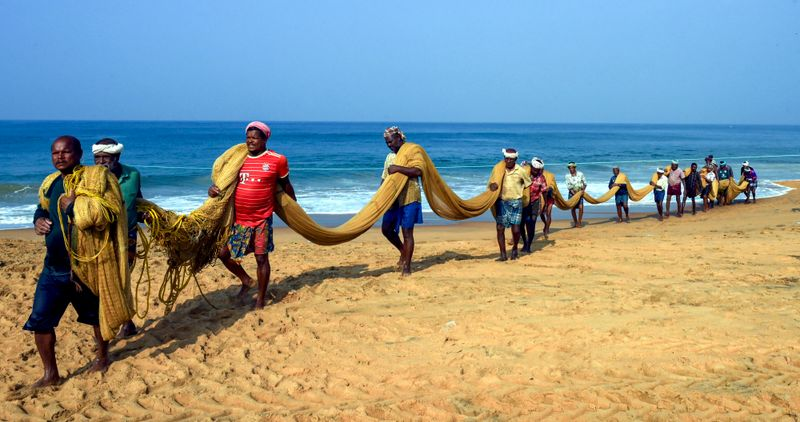
WHEN global flow breaks, disruption does not remain where it begins. It travels. From oil to food to livelihoods, the cost is borne far from the point of decision. What must move cannot be negotiated each time. It must be secured by design, not restored by exception.
When the Law of Flow was first articulated in The Tribune, it did not arrive as doctrine. It arrived as recognition, unorthodox yet intuitive, because the fisherman exists everywhere, across every geography that depends on flow. Stability followed continuity where it was preserved. Where it was choked, systems strained.
When flow fails, the powerful debate. The vulnerable absorb. The fisherman pays.
Then, in the Strait of Hormuz, the world did what it had refused to design. Disruption returned, and with it the immediate language of consequence. Markets tightened. Insurers hesitated. Supply chains faltered. Within days, nations gathered, not by treaty, not by alliance, but by dependence. A UK-France-led effort began to take shape, not as a war coalition, but as a defensive arrangement to keep shipping moving. Escorts were discussed. Assets were offered. The objective was simple: ensure that what must move, continues to move. No doctrine was invoked. No law was written. Yet the response was unmistakable. Flow, when disrupted, compels its own restoration.
The Hormuz coalition is not an alliance. It is an admission. The Law of Flow is not a replacement for SLOCs (Sea Lines of Communication). It is their necessary completion. In a fractured world, what must move cannot be negotiated each time it is threatened. It must be secured as default.
But something else happened that day. A meeting had already taken place in Islamabad. Two sides came to the table. Positions were stated. Lines were drawn. But no pathway emerged. The world saw engagement. It did not see architecture. The opportunity to convert presence into precedent passed unnoticed.
This is not about being right. It is about what being right reveals, and what it obligates. When the apple fell, Isaac Newton did not declare victory. He described a law. That is the obligation of this moment.
What followed was not design. It was improvisation under pressure. France and Britain convened fifty-one nations not because a doctrine summoned them, but because the cost of inaction became immediate and impossible to ignore. They became custodians not by appointment, but by necessity. The distinction matters.
The Law of Flow was vindicated in direction. But the gap between doctrine and architecture remains dangerously open.
The man who pays the price
Before we return to straits and summits, consider who bears the cost when flow breaks.
Not the strategist. Not the minister. Not the trader hedging oil futures from a climate-controlled room. It is the fisherman in Kerala whose diesel has doubled. The farmer in the Sahel whose fertiliser did not arrive. The factory worker in Vietnam whose export order vanished when shipping routes shifted. The family in Cairo paying more for bread because wheat did not move.
This is not abstraction. It is recurring reality in a world built on flow, without the architecture to protect it.
Covid-19 did not ask for a passport. It moved through the same arteries that carry goods, capital and people. When flow stopped, those with the least buffer paid first and most. The daily-wage earner. The migrant worker. They did not create the disruption. They absorbed it.
Climate does not negotiate. It disrupts harvests where resilience is weakest, floods coastlines that did not emit, dries rivers entire communities depend upon. The carbon was produced elsewhere. The cost is paid locally.
Conflict no longer stays where it starts. It pulses through supply chains. A war in one region empties granaries in another. A strike in one port raises costs across oceans. Conflict today is disruption by design.
Chokepoints do not announce themselves with equity. Strait of Hormuz closed, and within weeks, a hundred-dollar barrel reached every pump, every transport line, every price of every good that moves, which is nearly everything. The fisherman in Kerala did not vote for this. He is paying for it nonetheless.
Covid. Climate. Conflict. Chokepoints. Different in origin, identical in effect. They begin in decisions made by a few and distribute consequences across the many. Each begins as a headline and ends as a household cost. Each starts in strategy rooms and arrives in kitchens, fields and workshops.
The common man does not live in the Strait of Hormuz. He lives downstream of it, downstream of decisions taken in rooms he was never invited into, about systems he depends upon but cannot control.
This is why the Law of Flow cannot remain a strategic insight. It must become a social compact. When flow breaks, the first to suffer are always those least equipped to absorb the shock.
Hormuz is visible. Oil has a price. Tankers can be tracked. Disruption announces itself.
The next crisis may not. A severed data cable carries no ticker. A semiconductor shortage builds silently. A food corridor closes gradually until it does not reopen at all.
Fifty-one nations gathered in time for Hormuz. Next time, the chokepoint may not wait.
When flow fails again
Beneath doctrine and disruption lies a simpler truth. Every system we have built, the United Nations, the Law of the Sea, climate accords, trade frameworks, rests on a shared premise: that humanity has a common stake in continuity.
We have given this premise many names. Multilateralism. Rules-based order. International cooperation. Its oldest and most honest name is simply this: the global common.
Yet we behave as if these systems can be secured in fragments. We negotiate in compartments while disruption moves across them seamlessly. The language of sovereignty remains bounded. The reality of survival no longer is.
Covid showed us that a pathogen recognises no passport. Climate reminds us that an atmosphere has no walls. Conflict demonstrates that instability travels. Hormuz reminds us that a strait we may never see determines the price of bread we must still buy.
The Law of Flow is not a doctrine of power. It is a recognition of interdependence.
Custodians of continuity are not guardians of power. They are servants of the common.
As Britain and France convene the world to secure Hormuz, the shift is unmistakable. The language of deterrence is giving way to the necessity of continuity. What was once managed through power is now being compelled by dependence. Yet even as others assemble coalitions in crisis, our geography and civilisational instinct point to a larger role, not merely as a participant in episodic responses, but as a potential author of a more enduring principle. One where the uninterrupted flow of trade is treated not as a privilege of stability, but as its foundation. We sit between straits, not as geography alone, but as responsibility. In a world that still reacts to disruption, we are uniquely placed to shape the idea that flow itself must be secured by design, not restored by exception.
What must flow must not fail. For a time, it did not. Now it has.
And next time, it will not be the strait that warns us first. It will be the silence where the fisherman once cast his net.
Because when flow must be negotiated each time, it is already failing.
Dramatic video shows Iran’s masked commandos seize India-bound ship in Strait of Hormuz
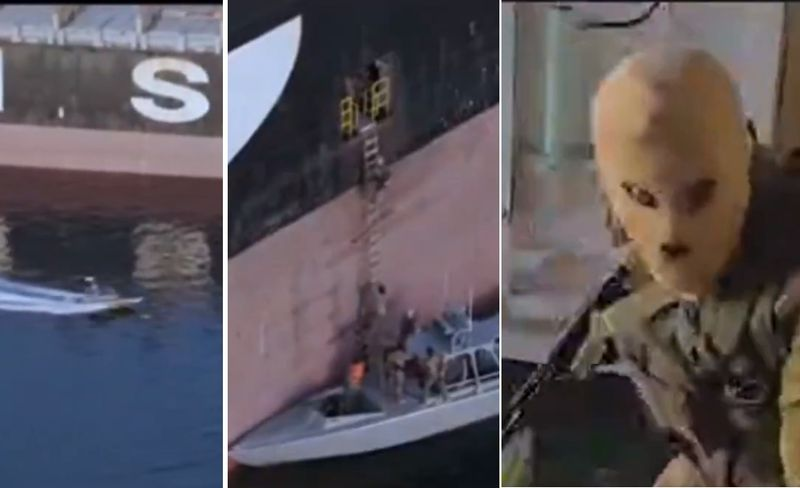
A dramatic footage released by Iran’s Islamic Revolutionary Guard Corps shows how armed naval commandos intercepted and seized multiple vessels, including the India-bound Epaminondas and MSC Francesca, in the Strait of Hormuz.
The visuals show Iranian speedboats approaching the ships before armed personnel board them. According to Iranian media outlet Nour News, forces opened fire on Epaminondas after it allegedly ignored warnings. Another vessel, Euphoria, was also fired upon before stopping, while MSC Francesca was similarly targeted.
The India-bound Epaminondas vessel suffered damage to its bridge (the central command centre) after Iranian soldiers opened fire and hurled grenades from their speedboat. The crew, however, did not suffer any injuries.
The IRGC said the cargo ships did not have “required authorisation” and “manipulated navigation systems”, endangering maritime safety. It also warned that actions disrupting the strait’s “order” would be considered a red line
.
In a statement, the IRGC claimed the ships were involved in “maritime violations.” It alleged that MSC Francesca had links to Israel, while Epaminondas was accused of tampering with navigation systems and endangering maritime safety.
The IRGC warned that disrupting security in the Strait of Hormuz crosses a “red line,” stressing that all vessels must comply with Iranian regulations governing safe passage.
Tensions rise despite ceasefire extension
The incident comes shortly after Donald Trump announced an indefinite extension of a temporary ceasefire with Iran. Speaking in an interview, Trump urged Tehran to pursue a diplomatic agreement, saying it could help the country achieve economic and strategic stability.
“Iran can put itself in a very good position if it makes a deal,” Trump said, while also calling for “reason and common sense” in negotiations.
Iran accuses US of ‘bad faith’
However, Iran’s leadership remains sceptical. President Masoud Pezeshkian criticised Washington’s approach, accusing it of hypocrisy and undermining trust.
“The Islamic Republic of Iran has always welcomed dialogue and agreement. Bad faith, siege, and threats are the main obstacles,” he said in a post on X.
While reports suggest a possible new round of talks could take place soon, Iran has not yet confirmed its participation, leaving the diplomatic outlook uncertain
France scraps transit visa for Indian nationals
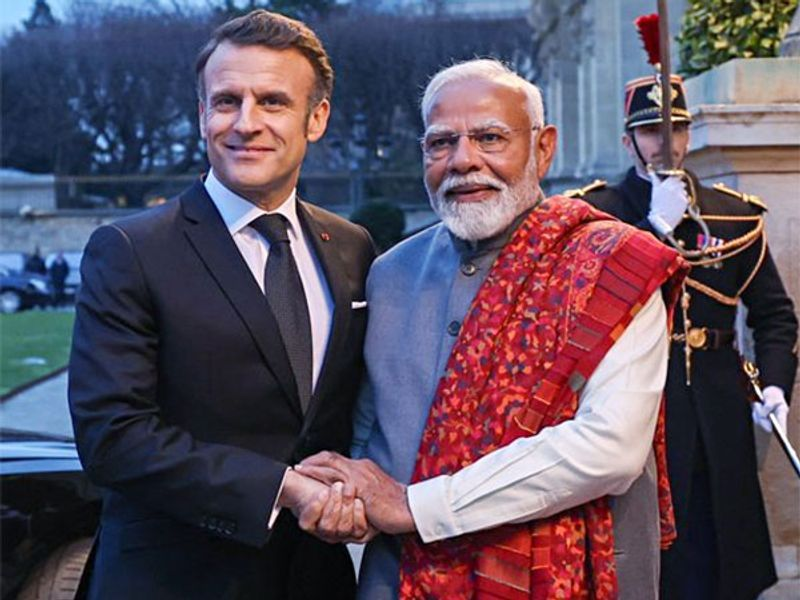
Under the revised rules, Indian nationals holding ordinary passports and transiting exclusively by air through French airports will no longer require an airport transit visa, with effect from April 10
Under the revised rules, Indian nationals holding ordinary passports and transiting exclusively by air through French airports will no longer require an airport transit visa, with effect from April 10
Prime Minister Narendra Modi with French President Emmanuel Macron. File Photo
In a significant boost to travel convenience, France has lifted airport transit visa requirements for Indians, with the decision coming into effect earlier this month as part of deepening bilateral ties.
he Ministry of External Affairs (MEA) on Thursday said the visa-free transit regime for Indians passing through French airports in European territory has now been operationalised by the French government.
The move follows an announcement made during the visit of French President Emmanuel Macron to India in February, when he and Prime Minister Narendra Modi agreed on measures to ease travel between the two countries.
Under the revised rules, Indian nationals holding ordinary passports and transiting exclusively by air through French airports will no longer require an airport transit visa, with effect from April 10. The exemption applies to passengers who remain within the international transit zone during layovers en route to a third country.
The French Embassy in New Delhi said the change was enabled through a decree amending earlier visa regulations, which was published in France’s Official Gazette (Journal Officiel) on April 9.
Describing the step as a reflection of the “enduring partnership” between the two countries, the MEA said the decision underscores a shared commitment to strengthening people-to-people ties by facilitating smoother movement.
The easing of transit norms is expected to benefit a large number of Indian travellers using French hubs such as Paris for onward international connections, reducing both procedural hurdles and travel time.
Officials said the updated provisions have already been incorporated into France’s visa processing systems, signalling swift implementation of a key mobility initiative agreed at the highest political level.
NO LAXITY WILL BE TOLERATED IN WELFARE OF ESM
Patiala farmer ends 1.5 years protest atop 400-ft tower after Punjab government assurances
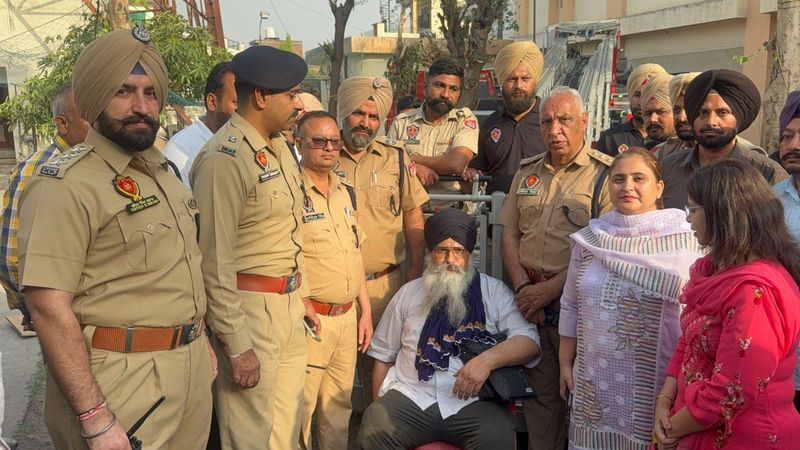
The Patiala administration, along with army officials, successfully brought down Punjab farmer Gurjeet Singh Khalsa, 43, who ended his 560-day protest atop a 400-ft BSNL tower Friday morning .
The joint operation took around 30 minutes, with additional teams deployed by the army and district police for Khalsa’s safe evacuation.
“I am in Chardi Kala (high spirits),” said Khalsa, who thanked the gathering for their support to the noble cause.
“It’s not been easy, but my faith in my guru made it possible,” he said.
A senior official in the rescue operation confirmed that since the wind speed was ideal and the sunlight was good, the operation was conducted smoothly using a crane and human assistance.
On Thursday, a nine-member team comprising army, police, fire department and administrative officers visited the spot and then used a high-tech crane to reach a height of around 275-feet where Khalsa was perched.
On Wednesday, the Punjab government had requested assistance from the Army to evacuate Khalsa.
Khalsa on Sunday had agreed to climb down the tower he had mounted, seeking an anti-sacrilege law in October 2024. The development came hours after Punjab Governor Gulab Chand Kataria gave his nod to the Jaagat Jot Sri Guru Granth Sahib Satkar (Amendment) Bill, 2026, paving the way for the enactment of the law.
Meanwhile, Samana tower morcha members are holding an akhand path near the protest site at Baba Banda Singh Bahadur Chowk, with the dharna ending on the day of the bhog on Friday.
A resident of Kheri Nagaiyan village in Patiala, Khalsa told The Tribune that he would wait for the bhog of the akhand path to conclude and come down in the presence of people who had been protesting in his support.
Atop the tower, he was living in a tarpaulin shelter, with two caretakers bringing food and water once a day. He used a polythene bag to relieve himself. In the absence of any physical activity, his blood pressure and sugar levels fluctuated at times. A dairy owner and farmer by profession, he said his religious sentiments were hurt reading about sacrilege incidents in the state.
In 2024, he decided that his brother would take care of the business and the family when he chose the path of struggle. His son Ashmeet Singh passed his matriculation examination last year.






























