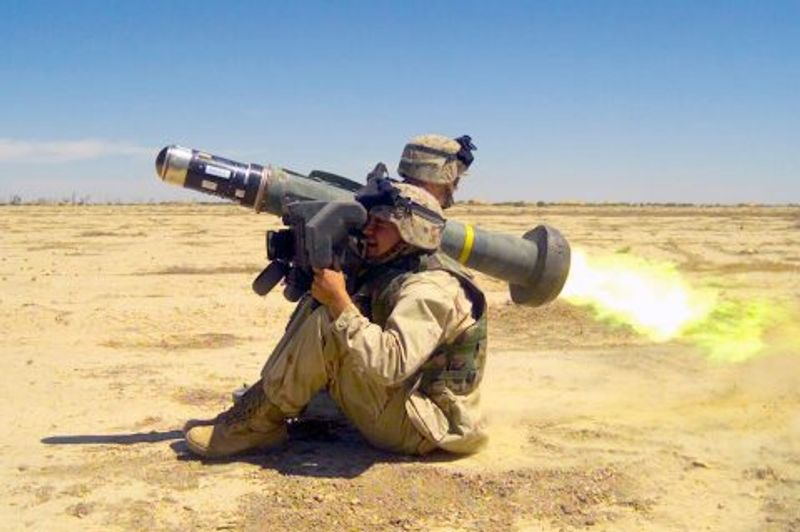
India will purchase the Javelin, an anti-tank missile, from the US. The missile is fired by troops on the ground and can target tanks, armoured vehicles, and fortified positions of the adversary at distances up to 5 kms. The Javelin system is an advanced, medium-range, fire-and-forget anti-tank guided missile.
The United States Embassy in India on Friday welcomed the Indian Army’s signing of a Letter of Offer and Acceptance (LOA) for the purchase of the Javelin anti-tank guided missile system through the US.
In November last year, the US Defence Security Cooperation Agency (DSCA) announced the sale of the Javelin to India via a notification, stating that the US State Department had approved the sale of 100 Javelin missiles, one fly-to-buy round, 25 command-launch units, training aids, simulation rounds, spare parts, and full lifecycle support.
US Ambassador to India Sergio Gor posted on X saying, “This agreement reflects a defense partnership that is growing deeper, more capable, and more consequential.”
The Javelin agreement demonstrates the depth of U.S. support for the Indian Army and creates new opportunities for defense industries of both countries to work together, Gor said.
The Javelin is used by the U.S. Army, U.S. Marine Corps, and numerous international customers and is designed for use against a wide array of targets, including armored vehicles and fortified positions. The Javelin system is produced in partnership between two US companies – RTX and Lockheed Martin.
The landmark signature also opens discussions on mutually beneficial co-production and additional opportunities to strengthen the defense industrial bases of both countries, the US Embassy statement said.
Threat of divorce by wife employed overseas forms grounds for seeking pre-mature retirement: AFT
The Armed Forces Tribunal (AFT) has held that the spouse being employed in a foreign country is reasonable grounds for a soldier to seek premature retirement on compassionate grounds.
A nursing assistant in the Army Medical Corps (AMC) had applied for premature retirement from the Army on compassionate grounds in September 2024 after rendering 14 years of service. His request was turned down by the Army in view of deficiency of manpower, organisational constraints and service exigencies.
He contended before the AFT that due to service restrictions and existing domestic problems and difficulties he was not able to look after his family, comprising old and ailing parents, his wife who is working as a nurse in Qatar and three children, nor able to enjoy his married life.
He averred that his wife does not have a good relationship with his parents due to inter-caste marriage and she visits once in a year to meet him and their elder child. He added that his wife is threatening to divorce him if he does not leave the service due to the problems faced by her after the birth of twin girls.
He pointed out that his six-year old son currently resides with his parents at his native place and it is difficult for his elderly mother to look after him as she also has to take care of his bed-ridden father. His education was also getting affected.
The soldier claimed that faced with difficulties of his wife being in service overseas and threatening divorce, the ill health of his parents and upbringing of his children, he was unable to perform his military duties effectively.
The Army had contended that in his present rank, the soldier was liable to serve till March 2034 and given his trade of nursing assistant, any deficiency in this cadere would result in compromising the life and limb of patients and it may affect optimal functioning of a military hospital.
Further, to address the adverse impact of the Covid-19 pandemic on recruitment in the Indian Army, restrictions were imposed by the competent authority on grant of pre-mature retirement.
The Tribunal’s Bench comprising Justice Suresh Kumar Gupta and Maj Gen Sanjay Singh ruled on August 19 that considering all aspects of the matter, that is improved post-Covid pandemic situation and the soldier’s apprehension that his marriage may not survive if he does not leave the Army, his request for premature retirement should be reviewed and reconsidered by the competent authority.
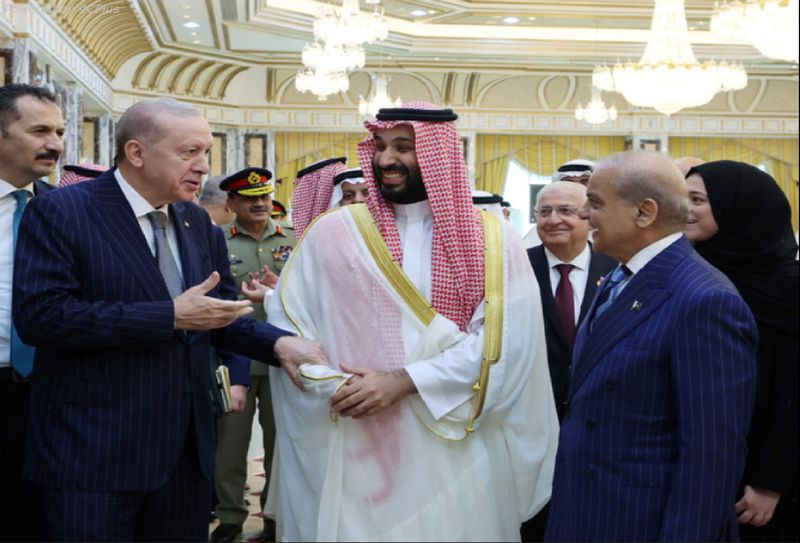
The Mecca Joint Defence Agreement signed by Türkiye, Saudi Arabia and Pakistan on August 7 continues to be in the spotlight. Against the backdrop of the ongoing US/Israel-Iran conflict, its geopolitical and military ramifications are being closely examined in the context of West Asia. For India, however, strategic prudence demands that this pact be viewed through the lens of Operation Sindoor.
Following India’s May 2025 missile strikes against Pakistan’s terror infrastructure, the latter avoided a prolonged, conventional escalation by engaging in high-intensity drone and electronic warfare before seeking an early ceasefire. During this conflict, while the bulk of Pakistan’s hardware and technical support came from China, Türkiye’s supply of unmanned aerial vehicles and electronic warfare devices underscored Ankara’s willingness to back Islamabad against New Delhi. Four months after Op Sindoor, Pakistan formalised a mutual defence pact with Saudi Arabia, guaranteeing that aggression against either country would be considered aggression against both.
On the diplomatic front, Pakistan, notwithstanding its severe domestic political fragmentation and fragile economy, has adroitly leveraged recent security crises into political capital. Its alignment with Washington and its high-risk role as a key mediator between the US and Iran have demonstrated Islamabad’s knack for exploiting its geopolitical weight.
India’s post-Uri surgical strikes (2016) and post-Pulwama airstrikes (2019) showed that while New Delhi could call Pakistan’s nuclear bluff, it had yet to re-establish effective conventional military deterrence. The destruction inflicted on Pakistan’s military by Op Sindoor was intended to project “deterrence by punishment”, but before its efficacy could be confirmed, the Mecca Agreement may have disturbed the balance of power in the subcontinent and given encouragement to hotheads in Islamabad.
India’s strategic planners must now formulate doctrines and acquire capabilities tailored to this emerging reality. Deterrence relies on certitude: India’s response must guarantee punishment so swift and so severe that neither of its two adversaries (China and Pakistan) ever doubts the cost of provocation and the accompanying loss of face in the international arena.
Rebuilding credible conventional deterrence will require heavy investment in creating war reserves for extended conflicts by quickly absorbing technological, logistic and operational lessons from the Ukrainian and Iranian battlefields. Awaiting urgent redressal is our government’s flawed and lethargic decision-making mechanism that has resulted in severe capability gaps in recent decades. Examples: the progressive erosion in the IAF’s combat aircraft strength; the inordinately delayed development of an indigenous jet engine that will impact its 5th- and 6th-generation aircraft projects; imposition of the ill-conceived and debilitating Agniveer recruitment/training scheme on the military; slippages in the Navy’s diesel submarine and aircraft carrier projects, and many others.
India’s uniquely hazardous security predicament is embodied in having two nuclear-armed adversaries as well as strained relations with others in the neighbourhood. Moreover, while its own defence-industrial base may take a decade or more to reach maturity, it remains substantially import-dependent. The ongoing geopolitical turmoil should leave us under no illusion that dependence on external sources for military hardware can be perilous for national security.
Thus, the urgent question that needs New Delhi’s focus is not whether India can prevail in a two-front confrontation, but how it can find a “breathing spell” of stability/tranquillity to allow uninterrupted progress towards technological self-reliance. The threats posed by China and Pakistan are qualitatively different, and each deserves the closest attention of our highly regarded diplomatic corps.
For Islamabad, Kashmir is not merely a territorial dispute; it serves as a pivot on which the military establishment’s domestic credibility rests. A settlement of Indo-Pak disputes by eliminating the so-called “existential threat” posed by India would demolish the military’s raison d’être. As for Beijing, it views the unresolved Line of Actual Control as a strategic lever to keep India geopolitically boxed into South Asia. The settlement of territorial issues would permit India to bring strategic focus on maritime capabilities and the Indo-Pacific, where China is most vulnerable.
India cannot match China’s defence spending or technological prowess overnight, but it can manage the border to avoid unintended escalation. Achieving this demands three priorities: active diplomatic and military contact, relentless infrastructure building, and a forward-leaning military posture that will ensure that — unlike the past — any future Chinese incursions incur painful costs. On this front, the goal is steady stabilisation for the long haul.
With regard to Pakistan, India should maintain a firm military posture and a zero-tolerance policy on terrorism, while quietly exploring back-channel diplomacy to test whether the Generals can be incentivised to shun cross-border terrorism. With senior RSS leaders such as Mohan Bhagwat and Dattatreya Hosabale signalling support for people-to-people dialogue, such outreach is unlikely to trigger domestic backlash and could pave the way for a viable modus vivendi on the western front.
This dual-track approach rests on a clear strategic calculus: while Pakistan remains bogged down by economic distress, tensions on the Durand Line and ethnic unrest, its enhanced international standing and newly minted security alliances could embolden renewed adventurism. India must strategise to enforce stability in its neighbourhood.
The Indian Air Force Chief, Air Chief Marshal AP Singh, on Saturday said the IAF was “not against” carving out geographically defined operational joint commands for the armed forces. He, however, cautioned against implementing a “pre-baked” model “picked up” from another country.
The IAF Chief’s remarks are the first official statement since former Chief of Defence Staff Gen Anil Chauhan, before demitting office in May this year, submitted a collective proposal on behalf of the three services to carve out such “joint commands”, referred to by the military as “theatre commands”.
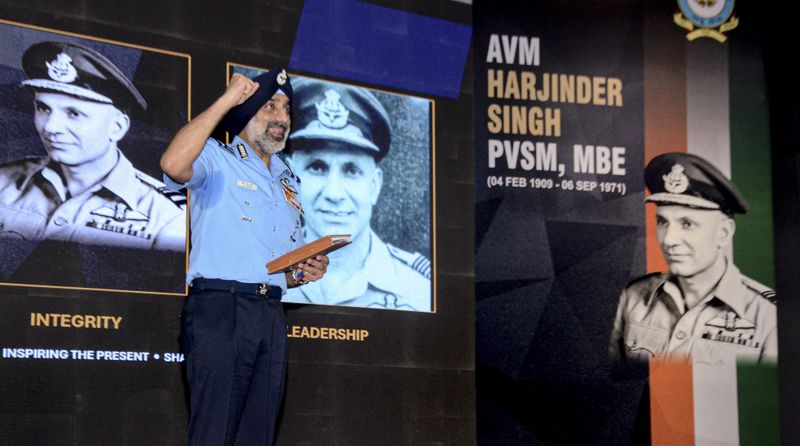
“The idea should be to have a graded, step-wise approach to avoid disruption of operations,” the IAF Chief said while speaking at the Air Vice Marshal Harjinder Singh (retd) Memorial Lecture, hosted by the Air Force Association in Kanpur. The association is a body of retired IAF officers.
The IAF Chief said a step-wise transition would ensure minimal disruption, adding that the military could not afford to shake up the system at a time when the operational tempo remained high.
Though the IAF Chief did not mention it, a key issue will be the division of IAF assets. Some strategic assets could be controlled from Delhi to ensure seamless operations across theatres.
He stressed the importance of identifying actual shortcomings before building a structure tailored to India’s specific security needs.
Cautioning against adopting imported military models, he said: “The Air Force has been insisting to let us look at it objectively. Look at what is ailing us; we need to fix what is not right with us, and not have something that is pre-baked, picked up from somewhere and used.”
On the way forward, the IAF Chief said there was a need to create a structure suited to India’s requirements. “We need to form an organisation chart in a manner that we need. Some other country may have some different requirements,” he said.
At the IAF headquarters, a “composite team” is examining the issue. The setting up of theatre commands is under discussion at the highest level.
“I am sure the government, whenever a decision is taken, will take the right decision based on all inputs that are given to the government,” he added.
Theatre commands are military formations with geographically defined areas of operation, headed by a military commander who exercises control over war-fighting assets, including aircraft, helicopters, guns, tanks, equipment and manpower.
The proposed theatre commands comprise three distinct entities: the western theatre, focused on Pakistan, which is expected to be headed by an IAF officer; the northern theatre, focused on China, which is expected to be headed by an Army officer; and the maritime theatre command, which is expected to be headed by a Navy officer
AFT upholds ‘severe displeasure’ against Brigadier in Poonch civilian deaths case
The Armed Forces Tribunal (AFT) has upheld the ‘severe displeasure’ awarded to a Brigadier commanding a Rashtriya Rifles (RR) Sector in the Poonch region of Jammu and Kashmir over a 2023 incident in which three civilians died during interrogation following the ambush of an Army column. Four soldiers were killed in the attack, two of whom were beheaded.
In an order pronounced on August 20, the AFT’s Chandigarh Bench, comprising Justice Sudhir Mittal and Lt Gen Ranbir Singh, observed that the officiating commanding officer (CO) of the RR battalion had directed a company commander to use “slightly harsh” methods on suspects to extract information.
The Bench further observed that the RR Sector Commander, Brigadier P Acharya, had himself displayed anger, assaulted a suspect and failed to influence officers directly under his command to exercise restraint.
A Court of Inquiry (COI) was convened by Headquarters 16 Corps in December 2023 to investigate the circumstances surrounding the deaths of the three civilians in the area of responsibility of 48 RR, which functioned under 13 Sector RR commanded by Brig Acharya.
Upon completion of the inquiry, a show-cause notice was issued to Brig Acharya in April 2024 asking why administrative action should not be taken against him for: (a) failing to exercise proper command and control during the interrogation of civilians in December 2023, (b) using physical force against civilians, (c) failing to stop the use of excessive and unlawful force that resulted in the deaths of three civilians and (d) failing to issue clear directions to officers under his command regarding the handling of civilians.
After considering his reply, the General Officer Commanding (GOC), 16 Corps, Nagrota, awarded the officer a ‘severe displeasure’ in July 2024, effective for two years. Brig Acharya subsequently challenged the order before the AFT.
Among the Company Operating Bases (COBs) of 48 RR were Dera Ki Gali (DKG), Mastan Dhara and Bafliaz. According to court records, one of the company commanders, Maj Pankaj Singh, sought permission from the officiating CO, Maj Raj Kumar, to conduct night firing on December 21, 2023. The request was approved.
Vehicles for the movement were provided by COB Bafliaz, and the firing team reached DKG at around 1.30 pm. At 3.37 pm, a call was received from COB Bafliaz reporting that the vehicles returning to Bafliaz had been ambushed. The CO informed the Sector Commander, following which troops and an ambulance were dispatched. Among the casualties recovered from the site were the bodies of two beheaded soldiers.
A search-and-cordon operation was subsequently launched. At about 10.30 pm, the Sector Commander sent a list of suspects to the CO. The CO was directed to de-induct from the cordon on the morning of December 22, after which several suspects were rounded up and taken to COB Mastan Dhara. Interrogation of the suspects commenced, and three of them subsequently died, according to court documents.
Death& Tragedy
In his petition before the AFT, Brig Acharya stated that he was informed on the night of December 21 that he had been removed from command. A signal dated December 22 from Army Headquarters attached him to Headquarters 25 Infantry Division, and the COI was convened the following day.
“In a situation as exists in the instant case, troops involved in follow-up operations faced a dilemma. Having lost their brothers-in-arms, and that too in a brutal manner, made their blood boil and development of emotions of revenge is quite natural. On the other hand is discipline, instilled by rigorous training, commanding them to exercise restraint and scrupulously follow plans to trace the culprits. Even in war, the Indian soldier is known for his discipline and adherence to the Geneva Conventions,” the Bench observed.
“In the conflict between human emotions and requirements of discipline, which is in large measure based on the law declared by the Supreme Court, human emotions must yield,” it added.
The Bench held that there was no illegality in the action taken by the Army authorities and no violation of due process, as alleged by the petitioner. It, therefore, ruled that no judicial interference was warranted.
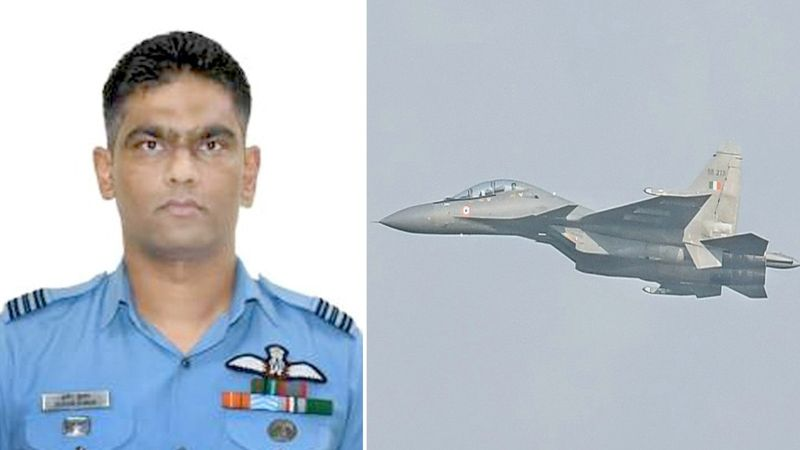
Su-30 pilot battled catastrophic failure, extreme g-forces to land safely, gets Shaurya Chakra
With a trainee onboard, a Su-30 MKI fighter aircraft suffered a catastrophic systems failure resulting in the aircraft and its crew experiencing aerodynamic forces and physical stress well beyond normal limits, but the pilot-in-command demonstrated exceptional situational awareness and airmanship in a critical situation and managed to bring the aircraft back to base.
ProcuringTactical Defense Systems
For his actions, the pilot, Squadron Leader Sudhir Kumar, was decorated with the Shaurya Chakra on Independence Day.
On September 9, 2025, Squadron Leader Sudhir Kumar, posted as a supervisor with a frontline fighter squadron, was authorised to fly as captain of a Su-30 for a low-flying and low-level navigation sortie by night from the rear cockpit of the aircraft, accompanied by an under-training pilot in the front cockpit.
The Su-30 is a heavy twin-engine two-seater multi-role fighter that forms the backbone of the IAF’s fighter element. The IAF has about 260 SU-30s in its inventory, equipping 12 squadrons based across the country.
During landing, at an altitude of 2.2 km and a speed of 740 kmph, the aircraft experienced a catastrophic failure that manifested as violent oscillations in the longitudinal plane accompanied by multiple indicators of the fly-by-wire (FBW) system failure. The FBW is a computer-based electronic interface between the pilot and the aircraft, transmitting command inputs to the aircraft’s control systems.
This critical situation resulted in drastic pitch variations, that is the upward and downward movement of the aircraft’s nose, ranging from 45 degrees to minus 15 degrees, extreme g-loads spanning from minus 1.5-g to 12-g along with ‘angle of attack’ (AOA) indications exceeding 24 units, according to information shared by the IAF.
Fighter pilots say that 5-g is experienced in standard maneuvers and 9-g is regarded as the outer envelope for aerial dogfights, a level where a pilot’s body feels nine times its normal weight. Extreme g-levels can lead to the pilot losing consciousness.
“As the supervisor in the cockpit, he demonstrated exceptional situational awareness and airmanship despite experiencing physical forces that exceeded normative limits for human tolerance,” the citation for his award states.
Under extreme conditions of rapidly varying g-loads and pitch, he maintained a composed and calm demeanour, swiftly taking control of the situation and instructing the front pilot to reset the failed FBW channels.
He exercised exemplary judgment by first corroborating that the critical FBW red light was not illuminated before guiding the front pilot to operate the correct switches. The ensuing task was extremely demanding given the violent onset of intense g-forces and the rapidity of the manoeuvre that manifested under conditions of total darkness by night.
Without any external frame of reference and unable to discern the aircraft instruments due to blurring of vision, he demonstrated extraordinary airmanship and intuition by promptly re-opening power on the aircraft. This prevented a potentially cataclysmic accident that could have occurred due to rapid loss of airspeed.
“Throughout the emergency he displayed absolute professionalism and composure, and maintained apt responsiveness despite being in extreme physical agony while struggling to stay conscious and remain oriented,” the citation states.
Furthermore, he demonstrated outstanding leadership and supervisory acumen by guiding and reassuring the trainee pilot in the front cockpit.
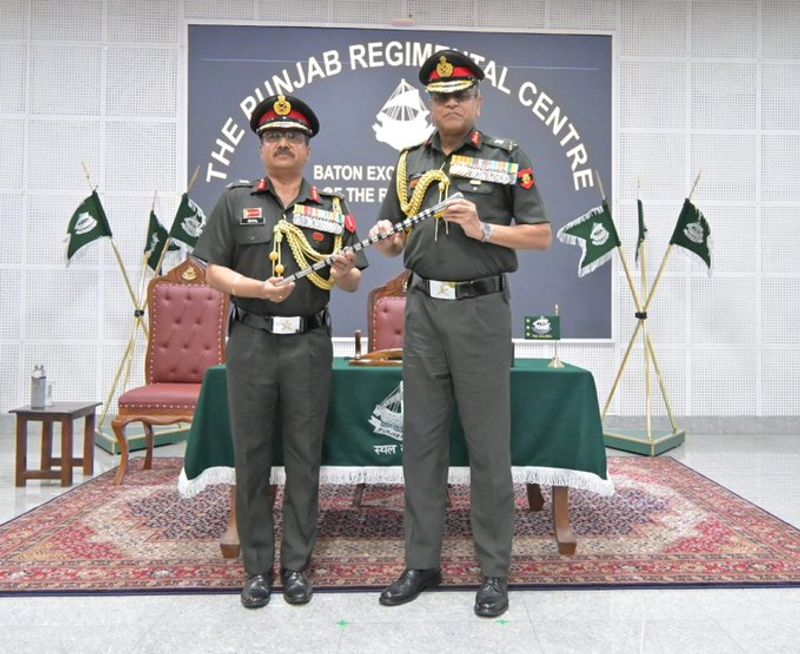
Lt Gen Nair takes over as Colonel of Punjab Regiment
The history of the Punjab Regiment dates back to 1705, when the first battalion was raised by the then Maharaja of Patiala
Lieutenant General Vijay B Nair, presently posted as Commandant of the Infantry School, Mhow, has taken over as Colonel of the Punjab Regiment from Lt Gen Anindya Sengupta, General Officer Commanding-in-Chief, Central Command, Lucknow.
The baton of the Colonel of the Regiment (COR) was ceremonially handed during a solemn ceremony held at the Punjab Regimental Centre located in Ramgarh Cantonment in Jharkhand.
“The Baton, embodying honour, responsibility and regimental pride, signifies the seamless continuity of leadership and tradition, carrying forward the Punjab Regiment’s illustrious heritage, proud military ethos and enduring legacy,” the Central Command said.
The COR is a title held generally by the senior-most officer belonging to a particular regiment, though technically the appointee is elected by regimental officers and can be of any rank from Brigadier to General.
As the regiment’s mentor and guardian, he oversees the welfare and morale of troops, recruitment, regimental traditions and customs, representation within the Army and renders provides advice to Army Headquarters on postings of regimental officers and other institutional matters.
Lt Gen Sengupta had taken over as the COR in May 2025 and had steered the raising of the regiment’s Bhairav Battalion and spearheaded enhancement of key training infrastructure at the Regimental Centre.
His successor, Lt Gen Nair, is an alumnus of the Sainik School Kazhakootam and the National Defence Academy, Kharakvasla and was commissioned into the 21st Battalion of the Punjab Regiment in June 1988, which he later commanded. He was also deployed with the Indian Peace Keeping Force in Sri Lanka and has been a part of the Indian Military Training Team Bhutan and a multinational brigade in a United Nations mission.
Prior to taking over as the Commandant of the Infantry School in April 2026, he commanded the Leh Sub Area, Tiger Division in Jammu and Kashmir and the Vajra Corps in Punjab. He has also served as Chief of Staff of the Western Command, Chandimandir, and the Northern Command, Udhampur.
Among the oldest and most highly decorated Infantry regiments of the Indian Army, the history of the Punjab Regiment dates back to 1705, when the first battalion was raised by the then Maharaja of Patiala. Since then it has taken part in numerous campaigns round the world and has fought in all post-Independence wars and major operations.
At present, the regiment comprises 21 regular battalions, four Rashtriya Rifles Battalions and three Territorial Army battalions. It recruits Dogra and Sikh troops primarily drawn Punjab and adjoining areas of Himachal Pradesh and Jammu.
Iran’s president says the world has accepted that it’s won the war with the United States, while France and Saudi Arabia are expected to discuss plans to bypass the Strait of Hormuz, which has been effectively closed since the US and Israel launched a war with Iran nearly six months ago. Meanwhile remarks by the US Ambassador to Turkiye and special envoy for Syria appear to contradict official US position over the Golan Heights. Here’s a look at the latest developments in the Iran war and the wider Middle East on Saturday. Full coverage can be found here. Iranian state media reported Friday that President Masoud Pezeshkian said the war with the US should end since the world has already accepted that Iran has won. Iran sees its control over the Strait and not giving into US demands as a win. “The entire world approved our victory and the US is hated,” he said according to IRNA news agency. Iran sees its control over the Strait and not giving into US demands as a win. The remarks came as the Trump administration is touting a crushing financial campaign against Iran, promising an “economic D-Day” against the country. President Donald Trump announced that the US would be imposing an “unprecedented” level of economic warfare and isolation on Iran, aiming to force its leadership to cave to demands to end its nuclear programme and fully reopen the crucial Strait of Hormuz to oil and natural gas tankers. In an interview Friday, Tom Barrack said that Israel “still” occupies the territory in violation of UN resolutions. In his comments made to Mario Nawfal, a LebaneseAustralian entrepreneur, Barrack said that “in the Golan, with Syria, they (Israel) still occupy the Golan, against the UN resolutions.” Israel captured the Golan Heights from Syria in the 1967 war and annexed it in 1981. The UN considers the territory occupied Syrian land and the annexation null and void, with UN resolutions calling for Israel’s withdrawal to the June 4, 1967, line. In March 2019, Trump signed a proclamation recognising Israeli sovereignty over the Golan Heights, reversing decades of US policy. The move did not change the territory’s status under international law or win broader international recognition. Colombia became the second country to recognise Israeli sovereignty over the Golan this month, joining the United States. Barrack’s remarks sparked a backlash Saturday from conservative activist and US presidential ally Laura Loomer, who posted on X that he “should resign for his lack of understanding of US foreign policy.”
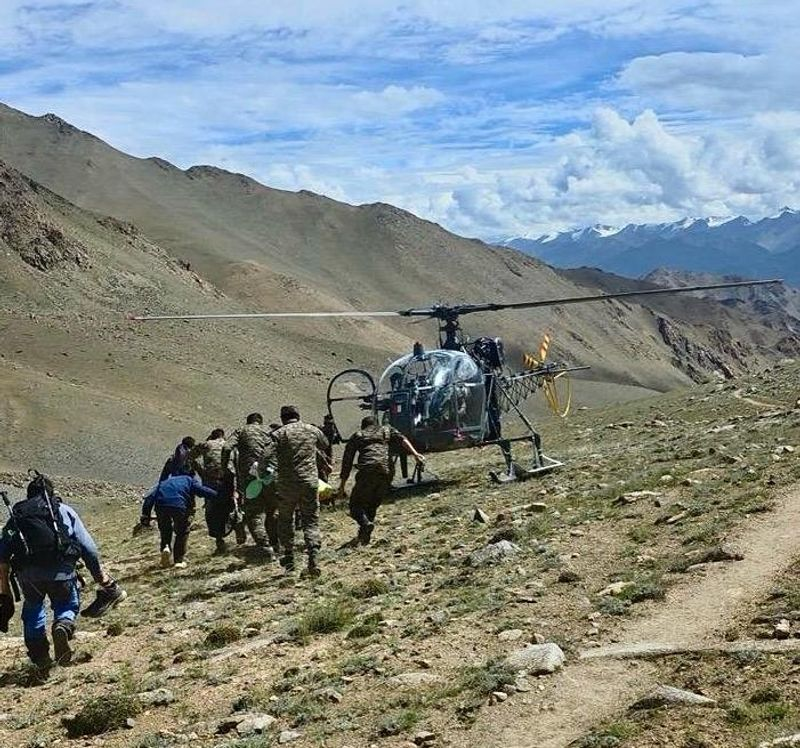
IAF Cheetah helicopter evacuates Indian-origin US citizen from 15,000-foot glacier in Ladakh
An Indian Air Force (IAF) Cheetah helicopter undertook a casualty evacuation mission to rescue a 56-year-old overseas citizen of India, settled in the USA, from Sumzon Glacier in Pheyang Valley of Ladakh, at an altitude of 15,000 feet.
“Despite the challenging terrain and restricted landing area, the crew executed a safe landing and evacuated the survivor to Leh for further medical care,” the IAF said late on Wednesday evening.
The IAF frequently undertakes rescue missions for civilians travelling in the remote areas of Ladakh. Many civilians get stranded due to natural calamities such as landslides and avalanches, or require evacuation because of medical emergencies arising from low oxygen levels and inclement weather conditions characteristic of the region.
Several such missions are undertaken by the Siachen Pioneers helicopter unit based in Leh. Its Cheetah helicopters operate at the outer limits of their flight parameters while dealing with extreme altitude, rugged terrain, adverse weather and rarefied air.
Army Aviation units are also called upon to undertake casualty evacuation missions in the region.
In serious cases, patients are airlifted from Leh by fixed-wing aircraft to larger cities like Chandigarh, Srinagar or Jammu, where advanced medical facilities are available.
State Stalwarts
DEFENCE MINISTER
Minister Rajnath Singh
ALL HUMANS ARE ONE CREATED BY GOD
HINDUS,MUSLIMS,SIKHS.ISAI SAB HAI BHAI BHAI
CHIEF PATRON ALL INDIA SANJHA MORCHA
LT GEN JASBIR SINGH DHALIWAL, DOGRA
SENIOR PATRON ALL INDIA SANJHA MORCHA
MAJOR GEN HARVIJAY SINGH, SENA MEDAL ,corps of signals
.
.
PATRON ALL INDIA SANJHA MORCHA
MAJ GEN RAMINDER GURAYA ,MADRAS REGIMENT
sanjhamorcha303@gmail.com
PRESIDENT SOUTH ALL INDIA SANJHA MORCHA
COL SS RAJAN BOMBAY SAPPERS,
PRESIDENT UTTARAKHAND ALL INDIA SANJHA MORCHA
COL B M THAPA ,BENGAL SAPPERSS
PRESIDENT HARAYANA STATE CUM COORDINATOR ESM
BRIG DALJIT THUKRAL ,BENGAL SAPPERS
PRESIDENT TRICITY
COL B S BRAR (BHUPI BRAR)
PRESIDENT CHANDIGARH ZONE
COL SHANJIT SINGH BHULLAR
.
.
PRESIDENT PANCHKULA ZONE AND ZIRAKPUR
COL SWARAN SINGH
INDIAN DEFENCE FORCES
DEFENCE FORCES INTEGRATED LOGO
INDIAN AIR FORCE
Air Officer C-in-C WESTERN AIR COMMAND
AIR MSHL S PRABHAKARAN AVSM VM
AOC-IN-C, EASTERN AIR COMMAND
Air Marshal Inderpal Singh Walia
AOC-in-C SOUTH WESTERN AIR COMMAND
Air Marshal Vikram Singh
AOC-IN-C, SOUTHERN AIR COMMAND
Air Marshal J.Chalapati
AOC-IN-C TRAINING COMMAND
AIR MARSHAL SK GHOTIA VSM
AOC-IN-C MAINTENANCE COMMAND
Air Marshal Jagdish Chandra
Flag Officer Commanding in Chief, Western Naval Command
ice Admiral R Hari Kumar, PVSM, AVSM, VSM
Flag Officer Commanding in Chief, Eastern Naval Command
Vice Admiral Sanjay Bhalla, AVSM, NM
Flag Officer Commanding in Chief, Southern Naval Command