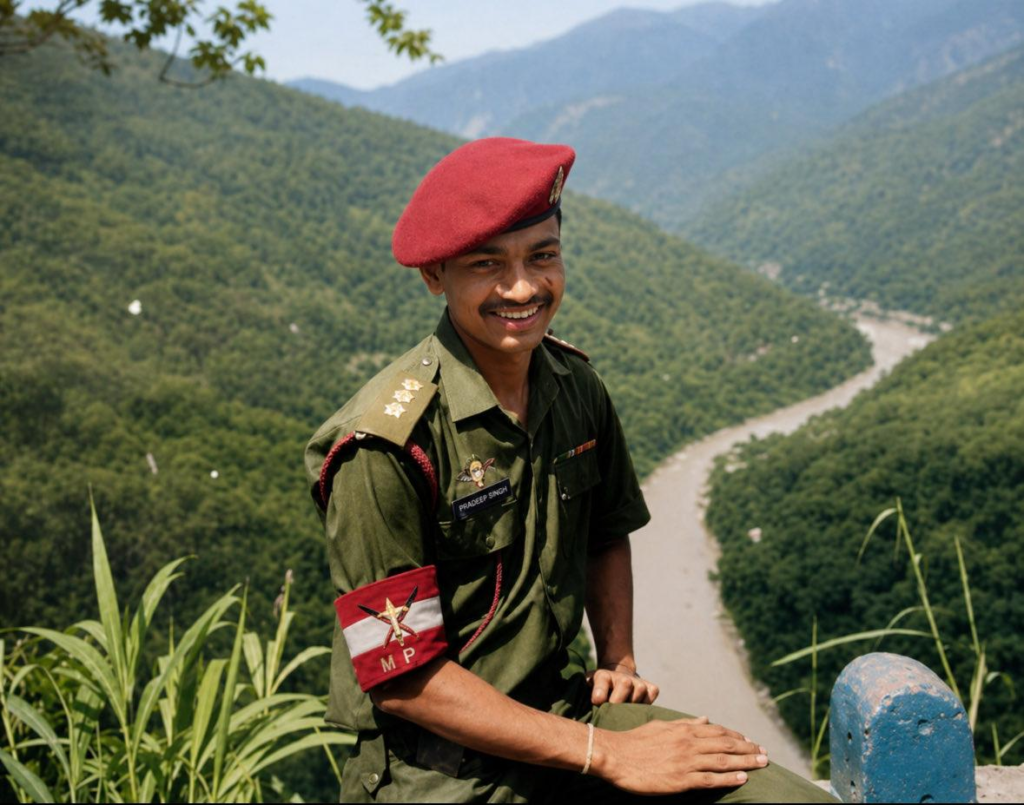
He grew up in Jalaun district, Uttar Pradesh. Studied at Sainik School Rewa. Commissioned into the Indian Army’s Parachute Regiment Special Forces in 1991. His fellow soldiers called him Rocket.
In 1998, during an anti insurgency operation in Guwahati, he eliminated two militants and was hit by two bullets that tore through his abdomen. Doctors said recovery would take 18 to 24 months. He was back in action in one year.
During recovery, he sneaked out of hospital wearing a colostomy bag, hired a car, and travelled five hours to attend a colleague’s wedding.
When the Kargil War began, he went back into combat. He led his team to capture Neelam Post, the highest post captured by the Indian Army in the entire Kargil engagement.
In September 1999, an AK 47 burst shattered his hip bone. He barely survived. The doctors told him he would never walk again.
He lay on a hospital bed on traction and studied mathematics eight hours a day. A nursing assistant sent his twelve year old son to help him with calculations. Six months later, Sengar hobbled on crutches to a CAT examination centre.
He cleared CAT. Received admission offers from 15 of India’s top 16 business schools. He chose IIM Ahmedabad. Attended every class on crutches. Interned at Lehman Brothers in Tokyo. Graduated with distinction.
He went on to work at Dr Reddy’s Laboratories, Genpact and Microsoft. He walked without crutches a decade after doctors said he never would.
He received 12 military medals including a gallantry award. In 2021, ZEE5 made a web series on his life called Jeet Ki Zidd.
Two bullets could not stop him. A shattered hip could not stop him. The doctors could not stop him.
He just kept going.
Follow for real stories India never makes headlines about.
The IAF hit camps at Muridke and Bahawalpur, while the Army struck the remaining locations
A week ahead of the anniversary of the strikes on Pakistan under Operation Sindoor, the Army has released a list of terror camps it targeted on May 7 last year.
The Army has identified seven locations and has begun sequentially posting satellite images showing damage at each site. The locations listed are Kotli Gulpur, Mehmoona Joya, Syedna Bilal, Bhimber, Swani Nala and Sarjal.
These were among the targets assigned to the Army by military headquarters, while the Indian Air Force (IAF) was tasked with two additional locations. The strikes were carried out around 1 am on May 7. Following the initial strikes, India and Pakistan were engaged in a military skirmish from May 7 to May 10.
The Army’s targets were located 40-60 km inside Pakistan, while the IAF struck deeper targets. The May 7 strikes involved some of the latest precision weapons in India’s arsenal, with specific buildings or clusters identified as targets.
The IAF hit camps at Muridke and Bahawalpur, while the Army struck the remaining locations. The Army used the US-made M777 howitzer to fire Excalibur artillery shell rounds — precision-guided munitions capable of hitting targets up to 40 km away with high accuracy.
The Army also deployed loitering munitions, commonly referred to as “kamikaze drones”, which can hover over an area before striking designated targets. Both imported and indigenous systems were used, sources said.
Following the skirmish with Pakistan, India has replenished its stock of Excalibur rounds. New Delhi procured 216 Excalibur projectiles under a $47.1 million deal approved by the US.
Does Trump’s war with Iran mark the start of de-dollarisation?
The immediate effects are visible: a sharp rise in gas prices, inflation climbing to a two-year high, and growing concerns that, as consumers cut back on spending to offset higher costs, unemployment will rise
As the economic consequences of US President Donald Trump’s war against Iran become evident, policymakers around the world are running out of patience. The recent Spring Meetings of the International Monetary Fund (IMF) and World Bank in Washington made this abundantly clear, with UK Chancellor of the Exchequer Rachel Reeves lamenting the “folly” of a war that is “not ours”.
But much of the cost will be borne by the US itself. The immediate effects are visible: a sharp rise in gas prices, inflation climbing to a two-year high, and growing concerns that, as consumers cut back on spending to offset higher costs, unemployment will rise. While these short-term shocks are serious, a major risk that has received less attention is that the dollar could lose its status as the world’s primary trade and reserve currency.
The decline of a reserve currency is a slow process. The British pound ceded its dominance to the US dollar over roughly two decades, beginning in the 1920s. As Barry Eichengreen has noted, the Roman denarius — arguably the world’s first international currency — also unravelled over a long period, starting when Emperor Nero debased it in the first century CE.
Any international currency ultimately depends on trust. I witnessed this during my time as chief economic adviser to the Indian government under Prime Minister Manmohan Singh. On August 5, 2011, S&P downgraded the US long-term credit rating from AAA to AA+, fuelling fears of immediate capital flight. Instead, the opposite happened: money flowed into the US economy. In the face of global turbulence, investors trusted that the US would honour its obligations, no matter the cost.
That trust, a cornerstone of soft power, is rapidly eroding. Samantha Power, the former administrator of US Agency for International Development (USAID), highlighted this in a recent lecture at Cornell University, where she criticised the Trump administration’s decision to dismantle the agency. The abrupt and “heartless” manner in which it was shut down, she said, halted humanitarian aid without warning, leading to immense suffering among populations around the world that had depended on its continuity.
The closure of USAID, alongside Trump’s military adventures in Iran and Venezuela and relentless attacks on long-standing allies like Canada and Denmark, has cast a shadow over America’s global standing and trustworthiness. This, in turn, puts the dollar’s hegemonic status at risk.
To understand the potential cost, consider seigniorage: because the dollar is globally trusted, the Federal Reserve can print a USD 10 bill for less than seven cents, and it will be accepted at full value around the world. As empires from Rome to Britain have shown, issuing the world’s leading currency allows a country to create value almost out of thin air. Losing that capacity would slow economic growth.
Unless US policy reverses course, this year may go down in history as the moment the US dollar began to lose its status as the world’s currency.
This raises the question: Which currency will replace the dollar? The renminbi appears to be the strongest candidate. A decade ago, the Chinese currency gained credibility when the IMF included it in the basket of global currencies underpinning Special Drawing Rights (the Fund’s reserve asset), but it was still widely dismissed as “no match” for the greenback. Today, the prospect of renminbi primacy no longer seems unthinkable.
Yet China’s ability to assume that global role is far from assured. As economist Qiao Liu observed in his 2016 book ‘Corporate China 2.0’, the country combines an “authoritative political regime” with more flexible institutional arrangements in which “relationships still matter”, a hybrid that does not readily inspire the kind of global confidence a reserve currency requires.
Chinese President Xi Jinping appears to understand this dynamic. In a 2024 speech, Xi emphasised the need to internationalise the renminbi to bolster China’s soft power, calling for a “powerful currency that can be widely used in international trade, investment, and foreign-exchange markets and attain reserve currency status”. But the main obstacle to reserve-currency status for the renminbi — the maintenance of capital controls — remains firmly in place.
The strongest rebuke of Trump’s policies over the past year came from an unexpected source: King Charles III. His address to Congress on April 28, delivered with characteristic British wit and restraint, sent a clear message that the US is on the wrong path, one that could destroy its global standing.
There was, however, cause for optimism. The repeated bursts of bipartisan applause Charles received from members of Congress suggested they were already aware of America’s predicament.
(Project Syndicate)
Kaushik Basu, a former chief economist of the World Bank and chief economic adviser to the Government of India, is Professor of Economics at Cornell University and a non-resident senior fellow at the Brookings Institution.
Bangladesh summons Indian envoy over Assam CM’s remarks
During a media interaction, Himanta Biswa Sarma spoke about the challenges of deporting alleged illegal Bangladeshi migrants through formal diplomatic channels; and said individuals were often “pushed back” across the border under the cover of darkness at locations where Bangladeshi border forces are not present
Bangladesh has summoned India’s acting High Commissioner in Dhaka, Pawan Badhe, to lodge a protest over remarks made by Assam Chief Minister Himanta Biswa Sarma on the alleged “pushback” of Bangladeshi nationals across the border.
According to a report in Dhaka Tribune, the Bangladeshi Ministry of Foreign Affairs called in the Indian envoy on April 30 and conveyed Dhaka’s “deep displeasure” over the comments, describing them as “disparaging” and potentially harmful to the spirit of friendly relations between the two countries.
The protest follows Sarma’s recent remarks during a media interaction, where he spoke about the challenges of deporting alleged illegal Bangladeshi migrants through formal diplomatic channels. He suggested that instead of formal processes involving the Ministry of External Affairs, individuals were often “pushed back” across the border under the cover of darkness at locations where Bangladeshi border forces are not present.
Dhaka conveyed that such statements undermine mutual trust and emphasised the need for restraint while addressing sensitive bilateral issues, particularly those relating to border management and migration.
Officials familiar with the meeting said Bangladesh also stressed the importance of maintaining constructive engagement and avoiding rhetoric that could inflame public sentiment or complicate diplomatic relations.
The controversy comes at a time when India and Bangladesh have been attempting to stabilise ties following a period of political churn in Dhaka, making the episode diplomatically significant despite being triggered by remarks at the state level.
India, Italy exchange Bilateral Military Cooperation Plan
India and Italy on Thursday took a step forward in strengthening their defence partnership and exchanged a bilateral military cooperation plan (MCP) for 2026-27.
This happened at a meeting that Defence Minister Rajnath Singh had with his Italian counterpart Guido Crosetto in New Delhi.
According to the Ministry of Defence (MoD), the newly exchanged MCP outlines a roadmap for structured military interactions between the armed forces of both nations over the next year.
The meeting focused on enhancing military engagements and expanding defence industrial cooperation between the two countries. Both ministers reaffirmed that the India-Italy Strategic Partnership is rooted in shared values of peace, stability, freedom and mutual respect.
In a post on X, Singh said, “Happy to have welcomed my Italian counterpart Guido Crosetto and held extensive talks with him in Delhi today. We discussed a wide range of regional and global issues, including the current situation in West Asia.
“We also discussed the avenues to further develop mutually beneficial defence industrial cooperation under India’s Atmanirbhar Bharat programme and Italy’s defence cooperation initiative. A bilateral military cooperation plan (MCP) 2026-27 was also exchanged regarding military engagements between the armed forces of both countries,” he added.
Earlier in the day, Crosetto paid tributes to fallen soldiers by laying a wreath at the National War Memorial. He was also accorded a ceremonial tri-service guard of honour at the Manekshaw Centre in Delhi Cantt.
Meanwhile, the Indian Coast Guard –- a force under the MoD — hosted an Italian delegation, including senior representatives from Italian shipbuilder Fincantieri, at Coast Guard Headquarters.
Discussions focused on collaboration with Indian shipyards for future projects, highlighting advanced design features such as resilient hulls and hybrid/electric propulsion. The dialogue also explored modular ship design to enable versatile, multi-role platforms with rapid operational adaptability.
Both sides deliberated on indigenous development and co-development of niche technologies, including dynamic positioning systems, AI-enabled decision support, counter-unmanned aerial systems (C-UAS)/anti-drone defence and next-generation green propulsion, in alignment with the vision of Atmanirbhar Bharat.
Govt to invite bids for 5th-generation fighter aircraft
Defence Secretary Rajesh Kumar Singh on Thursday said the procurement process for India’s advanced medium combat aircraft (AMCA) was progressing and a request for proposal (RFP) likely to be issued soon to shortlisted private sector players.
Speaking at a security summit here, Singh said “the procurement process is on (for the fifth-generation AMCA programme), the RFP hopefully would be released soon to the shortlisted bidders who happen to be from the private sector and hopefully that will then pick up pace”.
In June last year, the Aeronautical Development Agency, under the Defence Research and Development Organisation, invited expressions of interest from Indian companies to develop and then produce the AMCA. The shortlisted entity needs to possess the capability of setting up manufacturing facility for series production. Singh said India was also exploring partnerships for developing sixth-generation aircraft.
Overseas Citizen of India registration system revamped, fully digitised
The Ministry of Home Affairs on Thursday notified the Citizenship (Amendment) Rules, 2026, bringing changes to the Overseas Citizen of India (OCI) framework and broader citizenship procedures. Amendments take force immediately.
A major overhaul involves complete digitisation of the OCI registration and cancellation system.
From now on, all applications for OCI card-holdership under Section 7A of the Citizenship Act, 1955 must now be filed exclusively through the designated online portal ociservices.gov.in. The earlier requirement of submitting applications in duplicate has been done away with.
In a significant modernisation of the system under amended Rule 33, registered OCI cardholders will now be issued either a physical OCI card or an electronic OCI (e-OCI) registration.
The issuing authority will henceforth maintain all records electronically.
A major new provision inserted into Rule 3 of the Citizenship Rules makes it clear that a minor child holding an Indian passport cannot simultaneously hold the passport of any other country “at any time”. The proviso “at any time” has been added afresh.
Applicants are required to formally acknowledge this condition and a corresponding declaration has been added to the related form.
In another change, the amendments add a new consent clause to the application and allows OCI applicants to share their biometric data for automatic or application-based registration under the Fast-Track Immigration Programme. The aim, officials said, is streamlining future immigration processing.
Amendments also make OCI renunciation process online and says declaration of renunciation of OCI card-holdership under Section 7C must now be filed electronically via the online portal. Where a physical card was issued, the original must still be physically surrendered to the Indian Mission, Post or Foreigners Regional Registration Officer concerned.
The new norms strengthen OCI card cancellation provisions. The revised Rule 35 empowers the Centre to treat an e-OCI registration as cancelled by direction, even without physical card surrender. “If a physical card is not delivered upon notice, the government may similarly direct it to be treated as cancelled,” the rules state.
The amended Rule 42 restructures the appellate process. Citizenship applicants aggrieved by an order may now approach an authority one rank higher than the original deciding authority. For OCI-related grievances, the Centre will designate the revision authority. A new Rule 42A separately provides for review of orders under the newly inserted Section 15A of the Act.
The notification signed by Nitesh Kumar Vyas, Additional Secretary, Ministry of Home Affairs, has been made under the principal Citizenship Rules originally notified in February 2009 and last amended in March 2024.
Commercial LPG cylinder price hiked by Rs 993, now at record Rs 3,071.50
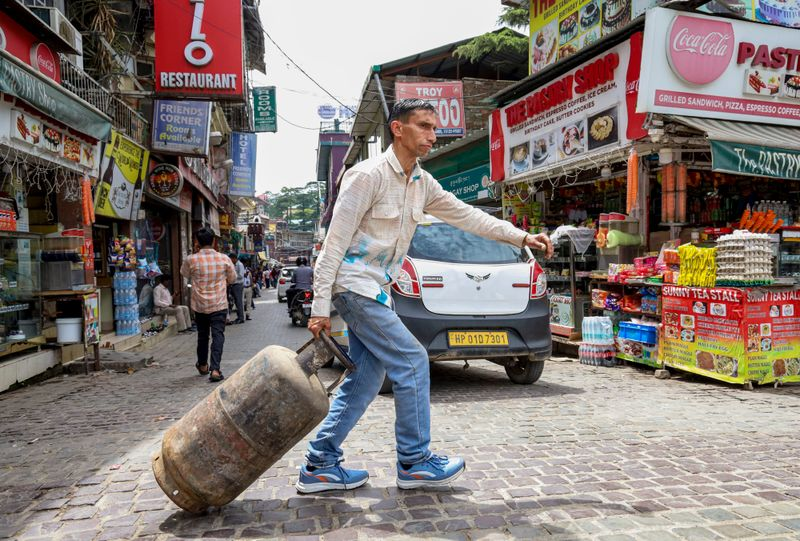
The price of commercial LPG was hiked by the steepest ever Rs 993 per 19-kg cylinder on Friday, marking the third straight monthly increase due to rising global energy prices linked to the West Asia conflict.
A 19-kg commercial LPG – used by establishments such as hotels and restaurtants – now costs a record Rs 3,071.5 in Delhi as against Rs 2,078.50 previously.
Rates were last increased by 195.50 per cylinder on April 1. Prior to that, prices had gone up by Rs 114.5 per 19-kg cylinder on March 1.
In three increases, commercial LPG rates have gone up by Rs 1,303.
Prices of domestic cooking gas LPG – the one used in household kitchens – remained unchanged. Domestic LPG rates were last hiked by Rs 60 per 14.2-kg cylinder on March 7. It costs Rs 913 per 14.2-kg cylinder in Delhi.State-owned Indian Oil Corporation, Bharat Petroleum, and Hindustan Petroleum revise ATF and LPG prices on the first day of every month based on international benchmarks and the exchange rate.
Global oil prices have shot up almost 50 per cent after the war in West Asia disrupted energy supply chains.
Petrol and diesel prices continue to remain frozen after a Rs 2 per-litre reduction in March last year; petrol currently costs Rs 94.72 per litre in Delhi and diesel Rs 87.62.
Rupee hits all-time intraday low of 95.34 against $ as crude spirals past 122 per barrel
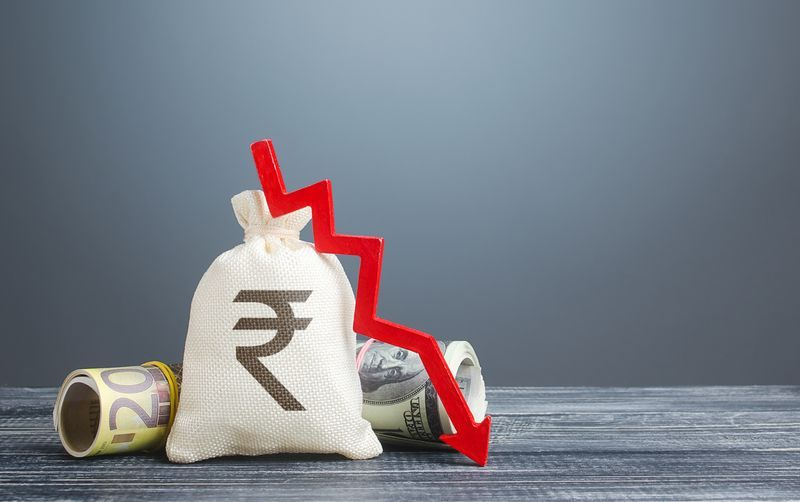
The rupee on Thursday gained four paise to settle at 94.84 against the US dollar after touching a record intraday low of 95.34, tracking a correction in global crude prices which hit $122.11 per barrel amid volatility in West Asia that kept the currency under pressure.
However, the local currency was negatively impacted by the uncertainty surrounding the US-Iran negotiations, which restricted gains.
The rupee opened the day at 95.01 in comparison to the US dollar on the interbank foreign exchange market, but it lost further ground to hit an all-time intraday low of 95.34 before ending at 94.84, up four paise from the previous day. The local currency fell 20 paise against the US dollar on Wednesday, closing at its previous all-time low of 94.88.
Meanwhile, the US Fed maintained interest rates despite significant inflation pressure driven by rising oil prices. Anil Kumar Bhansali, head of treasury and executive director, Finrex Treasury Advisors LLP, said the main effect on the rupee was of the rising oil prices, which touched $122 per barrel and looked headed for further upside as the US continued with its blockade of Iranian ports, while Iran did not allow any ship/tanker to pass through the Strait of Hormuz.
Meanwhile, the exchange data stated that foreign institutional investors sold stocks valued at about Rs 2,460 crore on Wednesday.
About half of India’s natural gas demands and 88 per cent of its crude oil needs are fulfilled by imports, with the Strait of Hormuz being the main route. The rupee has dropped by almost 5 per cent so far in 2026, following a similar decline last year.
State Stalwarts
DEFENCE MINISTER
Minister Rajnath Singh
ALL HUMANS ARE ONE CREATED BY GOD
HINDUS,MUSLIMS,SIKHS.ISAI SAB HAI BHAI BHAI
CHIEF PATRON ALL INDIA SANJHA MORCHA
LT GEN JASBIR SINGH DHALIWAL, DOGRA
SENIOR PATRON ALL INDIA SANJHA MORCHA
MAJOR GEN HARVIJAY SINGH, SENA MEDAL ,corps of signals
.
.
PATRON ALL INDIA SANJHA MORCHA
MAJ GEN RAMINDER GURAYA ,MADRAS REGIMENT
sanjhamorcha303@gmail.com
PRESIDENT SOUTH ALL INDIA SANJHA MORCHA
COL SS RAJAN BOMBAY SAPPERS,
PRESIDENT UTTARAKHAND ALL INDIA SANJHA MORCHA
COL B M THAPA ,BENGAL SAPPERSS
PRESIDENT HARAYANA STATE CUM COORDINATOR ESM
BRIG DALJIT THUKRAL ,BENGAL SAPPERS
PRESIDENT TRICITY
COL B S BRAR (BHUPI BRAR)
PRESIDENT CHANDIGARH ZONE
COL SHANJIT SINGH BHULLAR
.
.
PRESIDENT PANCHKULA ZONE AND ZIRAKPUR
COL SWARAN SINGH
INDIAN DEFENCE FORCES
DEFENCE FORCES INTEGRATED LOGO
INDIAN AIR FORCE
Air Officer C-in-C WESTERN AIR COMMAND
AIR MSHL S PRABHAKARAN AVSM VM
AOC-IN-C, EASTERN AIR COMMAND
Air Marshal Inderpal Singh Walia
AOC-in-C SOUTH WESTERN AIR COMMAND
Air Marshal Vikram Singh
AOC-IN-C, SOUTHERN AIR COMMAND
Air Marshal J.Chalapati
AOC-IN-C TRAINING COMMAND
AIR MARSHAL SK GHOTIA VSM
AOC-IN-C MAINTENANCE COMMAND
Air Marshal Jagdish Chandra
Flag Officer Commanding in Chief, Western Naval Command
ice Admiral R Hari Kumar, PVSM, AVSM, VSM
Flag Officer Commanding in Chief, Eastern Naval Command
Vice Admiral Sanjay Bhalla, AVSM, NM
Flag Officer Commanding in Chief, Southern Naval Command