All posts by webadmin

Maj Bob Khating who brought Tawang under India’s Control? Without blood shed

(Maj Gen Harvijay Singh, SM)
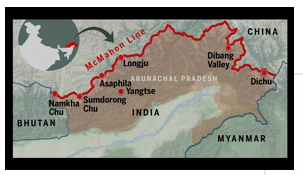
17 Jan 1951 – Maj Bob Khating on orders of the Assam Governor Jairam Daulatram marched with 200 troops of Assam Rifles (AR) and 600 porters to Tawang to bring it under Indian Control. Just in time before the Chinese annexation of Tibet. Entire Tawang Tract was Indian territory by virtue of Simla Convention of 1914. It was however not published. To retrieve the mistake, a new Vol. XIV to Aitchison’s Treaties (A collection of treaties and engagements relating to India and neighbouring countries Compiled by C.U. Aitchison, B.C.S., Under-Secretary to GOI in the Foreign dept) was published in 1937. New maps showing the revised frontier were printed, partly in response to Chinese maps showing the foothills as border of Sikang Province. Tibet accepted McMohan line but continued to control and collect taxes from the Tawang tract. Tibetan tax collectors at Dirang were firmly told to leave, Tawang Tract lying South of Se La came under nominal British control. The British did not take over Northern portion of Tawang Tract to avoid hurting Tibetan feelings. Once India became independent, Tibet refused to acknowledge India as successor state till June 1948, even after doing so they did not withdraw territorial claims on Tawang. On 5 Oct 1950 Tibet was forced to capitulate to the Chinese and signing of 17-pt Agreement on 23 May 1951.
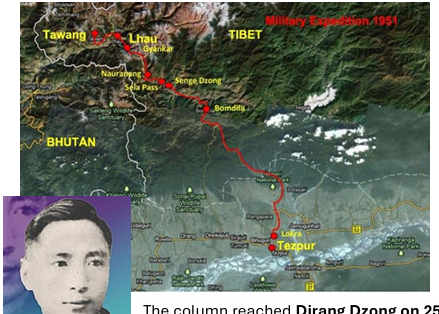
Once Tibet fell Tawang would be under risk of occupation by the Chinese. In late 1950, as Chinese advanced in Tibet, Governor Jairamdas summoned an Assistant Political Officer Maj Bob Khathing and explained possession of Tawang was vital for safety of the Northeast. He asked him to read a secret file and go take Tawang for India. Ralengnao Khathing was a Tangkhul Naga, commissioned in May 1941 in 19th Hyderabad Regt (later the Kumaon Regt). Jairamdas gave him 45 days, and Rs. 25000/- as expenses. Bob put together a column of about 200 men from 2 AR and 5 AR, Capt Hem Bahadur Limbu of 5 AR and Capt Modiero of AMC. Troops would operate at high altitude in deep winter he needed winter clothing and camping gear; he found it in the boxes of stores of US Air Force at the air bases of Chabua and Dinjan (they had operated here in World War II). At Tezpur he hired 200 mules, 600 porters, and took his men to Lokra, 26 kms North of Tezpur for intensive training for three weeks. Scouts were sent out to recce trails and gather intelligence, and porter teams despatched to make forward dumps. The column left Lokra on 17 Jan 1951. His activity attracted attention of Maj T.C. Allen, the last British political and intelligence officer in Assam. When Allen caught up with the column on 19 Jan and confronted Bob, the latter told Allen he had two choices: either join the expedition or be kept under arrest till the objective was attained. Allen gladly joined the column as Khathing’s 2IC.
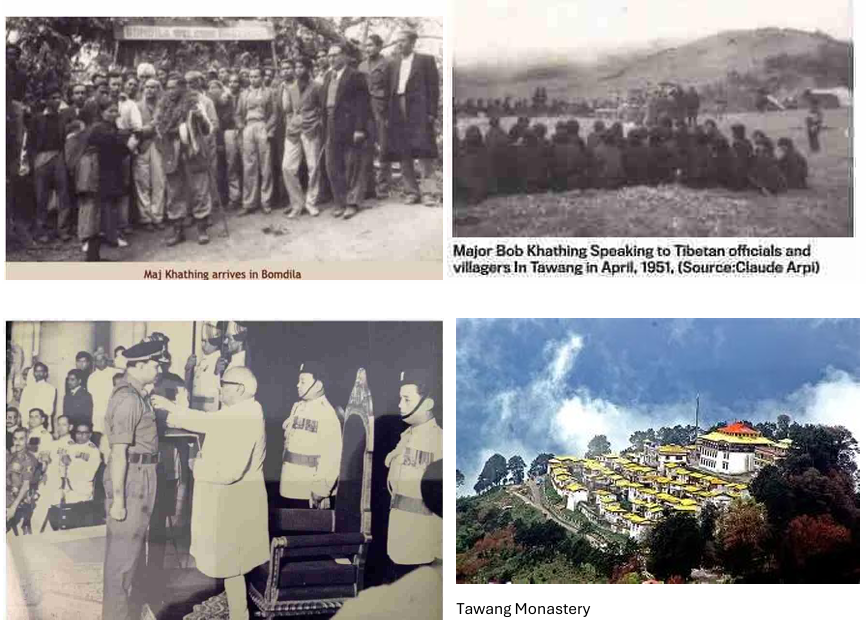
The column reached Dirang Dzong on 25 Jan. The AR post set up at Dirang Dzong in 1944 had been withdrawn, and the area allowed to fall back under Tibetan control. On 26 Jan Khating raised the Indian flag and invited locals to a barakhana, his men fired volleys into the air and the Governor’s Dakota, sent to monitor the column’s progress, circled above. Katuk Lama, the ruler of Dirang gave in and sent runners out towards Tawang with warning messages. The column moved out on 1 Feb, crossed Se La on 3rd and reached Jang on the 4th. Khating sent invitations for a feast and welcomed the headmen and elders of surrounding villages. Bob explained that they were now free citizens of India and should stop paying taxes to Lhasa. The column reached Tawang on 7 Feb. The Dzongpen, a man called Nyertsang, did not respond to Khathing’s invitation for a meeting. On the night of 10 Feb Bob fired off 20 rounds of 2 inch mortar and 1000 rounds of .303 – the thunderous reverberations from surrounding hills struck terror. Next morning the Indian tricolour was hoisted in front of the monastery and troops marched through the town for four hours with fixed bayonets. The nervous Dzongpen sent emissaries and Bob set Major Allen the job of drafting a formal instrument of accession to India. The talks made little headway, so on 13 Feb the Dzong officials were rounded up and wined and dined for a week. Bob then ordered them not to obey the Dzongpen. By now it was 20 Feb and Governor’s time limit was nearly up. Bob and Allen marched into the Dzong with a hundred soldiers to make the Dzongpen understand that Tibet had ceded Tawang to India by 1914 treaty. Nyertsang wanted Dalai Lama’s approval: “What approval?” asked Bob. “The Chinese have taken over Tibet”. Nyertsang signed the instrument of accession drafted by Allen transferring Tawang to India. Bob Khathing signed for GOI, appointed Allen the Lt. Governor of Tawang, answerable only to Governor of Assam. Tawang was finally under complete control of India. Maj Bob Khathing, the saviour of Tawang was awarded the Padma Shri in 1957 for his service to the nation.
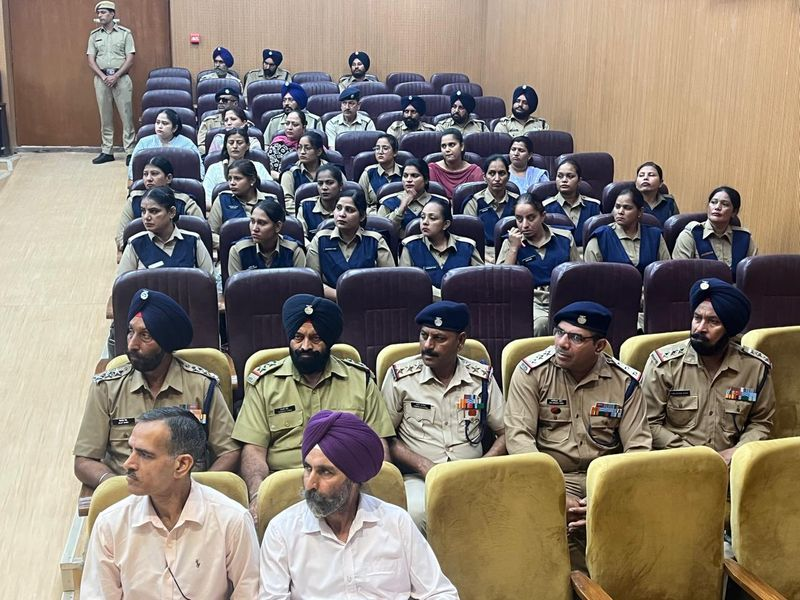

PGIMER inducts 287 Army veterans to boost security, order on campus

In a move to bolster safety and streamline operations, the Postgraduate Institute of Medical Education and Research (PGIMER), Chandigarh, has inducted 287 Army ex-servicemen into its security force. The new recruits were formally welcomed at a ceremony held at the NINE Auditorium on Saturday.

PGIMER Director Prof Vivek Lal said the addition of trained veterans would enhance institutional vigilance and help create a more patient-centric environment. “With the induction of Army ex-servicemen as the new batch of security personnel, PGIMER is moving closer to realising its vision of a safer, more responsive and patient-friendly environment. The commitment and discipline that these ex-servicemen bring will immensely strengthen our institutional fabric,” he said.

He added that the total strength of the institute’s security staff now stands at 1,000, ensuring full deployment across the expanding campus. The induction, through Peninsula Ex-Servicemen Corporation (PESCo), reflects PGIMER’s recognition of veterans’ expertise in vigilance and crisis management.

Deputy Director (Administration) Pankaj Rai remarked, “Security plays a vital role in maintaining the integrity and smooth functioning of a complex environment like PGIMER. The induction of these trained personnel marks an important milestone in ensuring that our patients, caregivers and staff continue to experience a safe and orderly environment.”

PGIMER officials said the initiative aligns with expansion plans for the upcoming Neurosciences Centre and Mother & Child Centre, expected to be operational by January 2026.


The story of Birba who was awarded twice on Republic day, including the highest galantry award but is still unknown.

Lt Gen A K Singh

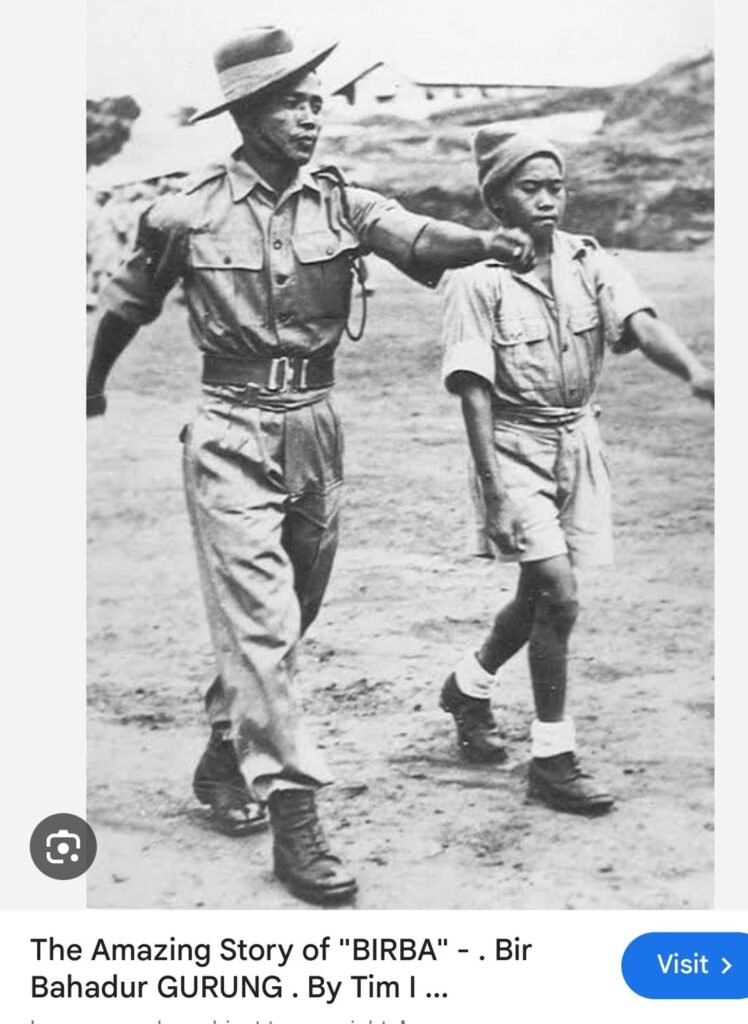
The story of Birba. The man who was awarded twice on Republic day, including the highest galantry award but is still unknown.

Bir Bahadur Gurung was a young well built lad not yet into his teens. He lived with his family on the banks of the Brahmaputra in Upper Assam, in a thatched roof hut.

Bir Bahadur Gurung was fondly called Birba by his family and friends. Needless to say, Birba was a strong swimmer. He also climbed nearby hills with the agility and sure footedness of a mountain goat.

One day, Birba and his friends were lounging on the banks of the river. Birba saw a passenger ferry sail down stream, & which in Birba’s own words seemed to be “walking like a drunken man”.

Birba barked a few instructions to his friends to get ropes and jumped into the water. For the next hour or so Birba was in water, saving as many lives as he could from the ferry , that had by now capsized. He came out of the water only after Army rescue teams arrived.

For his act of exceptional bravery, Birba recieved the “President’s Bravery Award”, given to children on Republic Day. On R- Day, Birba rode the back of an elephant down Rajpath, waving excitedly to the cheering crowds.

Fourteen years later, Lance Naik Bir Bahadur Gurung and his team of crack Commandos scaled a vertical cliff all through the night to catch the enemy by surprise at dawn. During the firefight, Birba was mortally injured, but he continued to fight on and breathed his last only after all the enemy had been eliminated and the Tricolour fluttered atop the peak. The detailed planning and flawless execution of the capture of “Peak Tololing” during the Kargil war is the stuff that legends are made of. Cadets in military academies around the world study this military operation in great detail. Many cadets have submitted dissertations on Birba as a part of their study program. “The Life And Times Of Birba” is a lesson that eighth grade children learn in schools across Canada – as a part of their English Language curriculum.

Once again Birba’s name was called out on a Republic Day. His widowed wife walked up to the President to recieve the Param Vir Chakra.

Back home in Upper Assam, an approximately forty year old woman today blows through a pipe to revive the dying embers of the fire in the “chullah”. She lives in a thatched roof hut along with her aged in laws and an old aunt. The arresting feature of the hut is a framed colour photograph of Birba with two medals garlanding it. The woman keeps her body and soul together by working as a domestic help in a few houses in the nearby Oil town. All this whilst pot bellied men with oily smiles zoom around town in their latest SUVs.

Fortunately, Birba’s only son — now a teenager has been picked up by Birba’s old Regiment, the Assam Regiment–where he is now a recruit.

My friends , this is the story of a genuinely great Indian. Unfortunately, he will never be even a footnote in our history books though many other “genuinely great Indians” like numerous scam tainted will be talked of for years to come. There will never be a Birba Road anywhere or a Birba Statue in the middle of a “Chow rasta”. Such privileges are only for people who sell their souls –and our motherland to the highest bidder.

Sharing this story is the least you can do for Birba. Thanks.🙏


Dishonest behaviour undermines public confidence in integrity of Armed Forces: High Court

Upholding the dismissal of a Border Security Force (BSF) officer by a court martial for allegedly having illicit relations with the wife of a constable, the Delhi High Court has held that it is the duty of force personnel to uphold institutional and moral principles and dishonest behaviour undermines public confidence in the integrity of the Armed Forces.

“An officer belonging to a disciplined force bears the duty to maintain the highest standards of honesty and morality and abstain from any conduct that is inconsistent and unbecoming of the rank held by such officer,” a Division Bench comprising Justice C Hari Shankar and Justice Om Prakash Shukla remarked in their order of October 30.

The Bench noted that the officer had established an illicit relationship with the wife of his colleague by offering presents and making frequent visits, which is morally distressing and went against the very ethos of the uniform the petitioner wears.

“We cannot be oblivious to the petitioner’s conduct, which is not only dishonourable but also unfit for an official tasked with the onerous responsibility of protecting the country,” the Bench said.

“This Court cannot turn a blind eye to such a violation of institutional and moral principles since such dishonest behaviour undermines public confidence in the integrity of the Armed Forces and is repugnant to the conscience of every citizen,” the Bench further said.

A General Security Force Court convened by the BSF had held a sub-inspector guilty of three charges under Section 40 of the BSF Act for acts prejudicial to good order and discipline of the force.

These included improperly having physical relationship with the wife of a personnel of the same Battalion residing in the same block, holding unwarranted conversation on mobile phone with her and presenting her gifts on several occasions with the intent to seek sexual favours, and keeping her personal photographs and screenshots of video calls in compromising poses without her knowledge.

A written complaint had been submitted against the sub-inspector to higher authorities by the constable, following which a court of inquiry (COI) was convened by the BSF and a chargesheet was framed containing seven charges. Four charges were subsequently dropped.

The Bench observed that the findings of COI recorded that the petitioner was involved in adultery and found the allegations of illicit relationship to be proved beyond reasonable doubt. The petitioner’s statement was found unreliable and inconsistent and as such strict action was recommended against him.


How Navy will boost maritime surveillance with new GSAT 7R communication satellite

Building on decade-long service of GSAT 7, the new GSAT 7R — named CMS-03 by ISRO — will provide a much-needed technological upgrade for the Navy

he Indian Navy is set for a major upgrade in maritime operations with the launch of GSAT 7R, an advanced communication satellite by ISRO on Sunday evening.

The satellite will strengthen the Navy’s ability to track hostile warships and pirates, and enable secure, real-time communication between warships, submarines, aircraft, UAVs, and helicopters, providing commanders with enhanced situational awareness and faster decision-making at sea.

Named by ISRO as CMS-03, GSAT 7R is the most advanced communication satellite developed for the Navy to date. It will significantly bolster space-based communications and maritime domain awareness while improving real-time data exchange between naval ships and shore-based stations.

With faster, secure communication links and higher-resolution imagery and video, commanders will gain improved situational awareness to make critical operational decisions.

Since 2013, the Navy has relied on its dedicated GSAT 7 satellite, also known as ‘Rukmini’. Over the past decade, technological advancements necessitated an upgrade, which GSAT 7R is designed to provide.

Navy officials explained that GSAT 7R will offer high-capacity bandwidth, ensuring seamless, secure communication links between ships, submarines, aircraft, and Maritime Operations Centres.

Weighing approximately 4,400 kg, it is India’s heaviest communication satellite to date and incorporates multiple indigenous, state-of-the-art components tailored to the Navy’s operational requirements.

The satellite’s payload includes transponders capable of supporting voice, data, and video links across multiple communication bands, providing robust telecommunication coverage throughout the Indian Ocean Region.

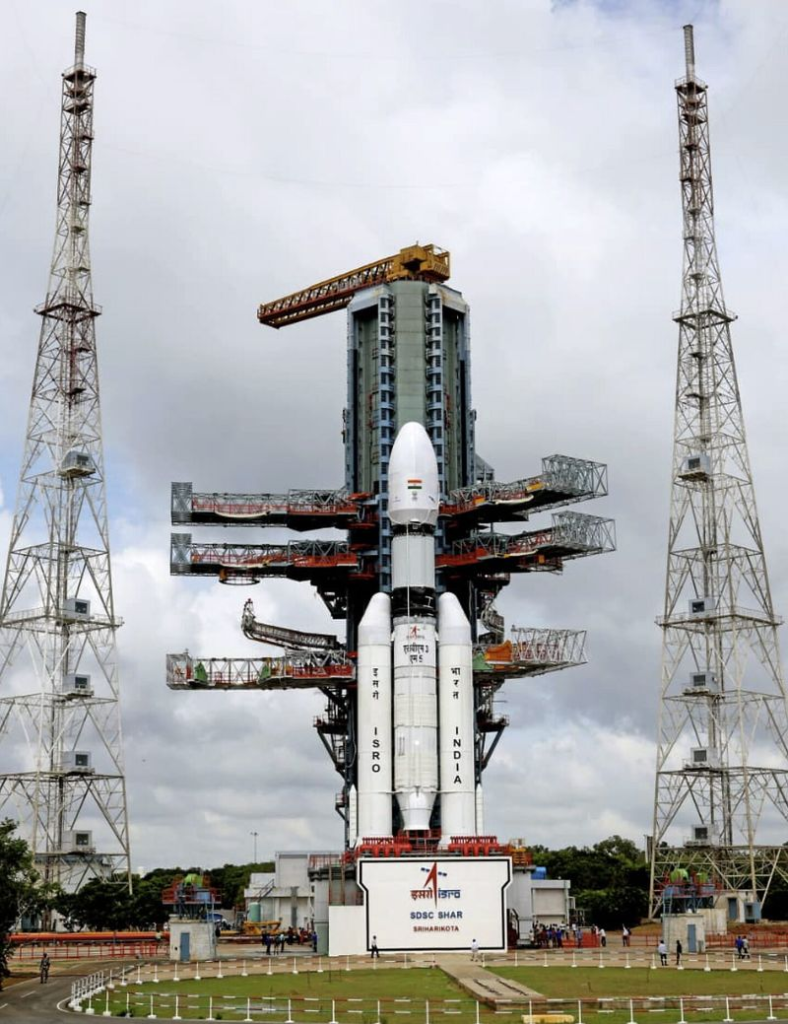
GSAT 7R will be launched from ISRO’s Satish Dhawan Space Centre in Sriharikota, further cementing India’s capabilities in naval communication and maritime surveillance.

Its predecessor, GSAT-7, was launched on August 30, 2013, from the Kourou Space Centre in French Guiana via an Ariane-5 E rocket, marking India’s first dedicated military communication satellite mission.

With GSAT 7R, the Indian Navy aims to bridge technological gaps and achieve real-time operational superiority across its fleet in the Indian Ocean and beyond.


IAF holds marathon in honour of 1971 War hero

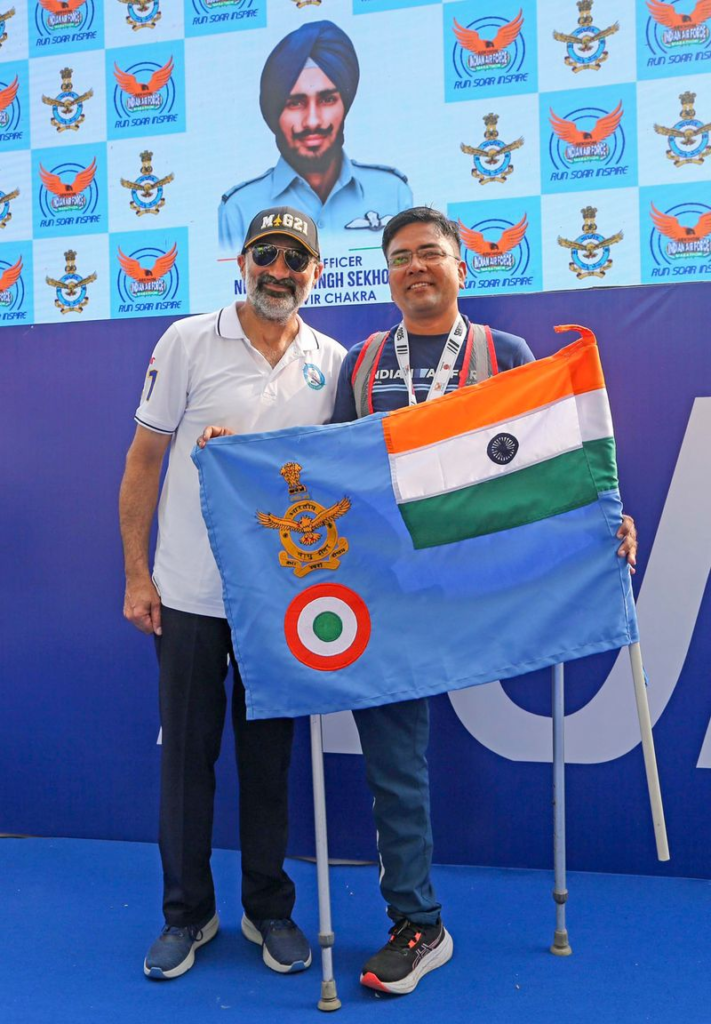
The Indian Air Force (IAF) on Sunday held a marathon across 46 air bases nationwide to commemorate the late Flight Lt Nirmal Jit Singh Sekhon, who was awarded the Param Vir Chakra, India’s highest wartime gallantry award.

Flight Lt Sekhon, a fighter pilot posted in Srinagar during the 1971 war with Pakistan, was martyred in a dogfight with enemy aircraft.

According to the Ministry of Defence, this was the first-ever ‘Sekhon Indian Air Force Marathon 2025’, organised simultaneously across air bases, with nearly 45,000 participants. The marathon featured three categories — 21 km, 10 km and 5 km.

In New Delhi, around 12,000 runners took part, including men, women and children of all ages. IAF Chief Air Chief Marshal AP Singh participated in the 21-km run, inspiring air warriors and civilians alike. The event was also attended by Chief of Defence Staff Gen Anil Chauhan, the IAF Chief and other senior officers.

The marathon began on a high-energy note with a Zumba warm-up session, followed by spirited performances by the IAF band, a synchronised display by the air warrior drill team and a skydiving demonstration.

Actors Huma Qureshi, Shefali Shah, Archana Puran Singh and Sunil Grover joined the event. The occasion also saw the unveiling of the teaser for ‘Operation Safed Sagar’ — an upcoming Netflix series depicting the courage, resilience and bravery of the Indian Air Force during the Kargil War.


Tri-services exercise to begin along Pak border today

A major tri-services military exercise, ‘Trishul’, will begin on Monday featuring large-scale operations along the India-Pakistan border in Rajasthan and Gujarat, as well as maritime and amphibious operations in the North Arabian Sea near the disputed Sir Creek area.

The Ministry of Defence (MoD) said the exercise would involve the Army, Navy and Air Force, and aims to validate and synchronise operational procedures across the three services to enable joint, effect-based operations.

Key objectives include enhancing interoperability of platforms and infrastructure, strengthening network integration and advancing jointness in operations, the ministry said.

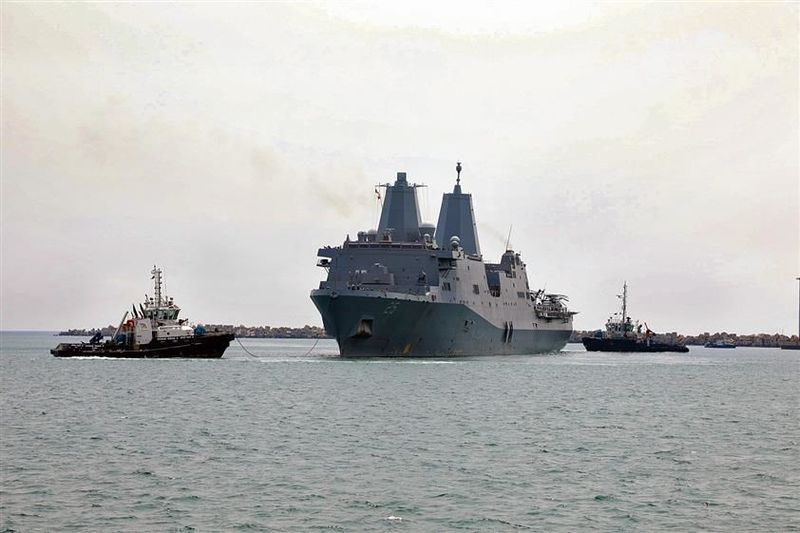
The exercise will witness large-scale deployment of Indian Navy warships, Indian Air Force fighter and support aircraft, and amphibious operations involving the amphibious components of the Army and Navy, including the Landing Platform Dock INS Jalashwa and Landing Craft Utility (LCU) vessels.

It will also validate joint Intelligence, Surveillance and Reconnaissance (ISR), Electronic Warfare (EW) and Cyber Warfare capabilities. The Navy’s aircraft carrier will operate jointly with shore-based IAF assets during the drills.

The office of the Chief of Defence Staff (CDS) posted on X, stating: “Indian armed forces are conducting ‘Ex-Trishul’, a major tri-services operational validation in the Western sector. The exercise hones joint operations and interoperability among the Army, Navy and the Indian Air Force.”

The coordinated drills will include troops from the Army’s Pune-headquartered Southern Command, the Navy’s Western Command (Mumbai) and the IAF’s South Western Air Command (Gandhinagar). The Indian Coast Guard, Border Security Force (BSF) and other central agencies are also participating in significant numbers.


ISRO launches heaviest comsat to boost Navy grid

The indigenously designed satellite weighs 4,400 kg

The Indian Space Research Organisation (ISRO) on Sunday successfully launched the Navy’s GSAT 7R (CMS-03) communication satellite from the Satish Dhawan Space Centre in Sriharikota. The indigenously designed satellite is India’s heaviest communication satellite to date, weighing approximately 4,400 kg.

India’s LVM3 launch vehicle was used to carry the communication satellite to its orbit. It was LVM3’s fifth operational flight (LVM3-M5), with the previous mission being the launch of the Chandrayaan-3 mission, when India became the first country to land successfully near the lunar south pole.

This would be the most advanced communication satellite so far for the Navy. The satellite would strengthen the Navy’s space-based communications and maritime domain awareness capabilities.

The mission lifespan of the satellite, which was placed in geosynchronous transfer orbit, will be 15 years.

The satellite includes many indigenous state-of-the-art components developed specifically to meet the Navy’s operational requirements.

The GSAT 7R will provide robust telecommunication coverage across the Indian Ocean region. Its payload includes transponders capable of supporting voice, data and video links over multiple communication bands. This satellite will significantly enhance connectivity with high-capacity bandwidth, enabling seamless and secure communication links between ships, aircraft, submarines and maritime operations centres of the Navy.

The launch vehicle was fully assembled and integrated with the spacecraft and moved to the launchpad on October 26 for pre-launch operations.

The LVM3 is a three-stage launch vehicle consisting of two solid propellant S200 strap-ons and core stages comprising L110 liquid stage, the C25 cryogenic stage, the equipment bay and the encapsulated assembly. A cryogenic ignition stage is the final stage of the rocket that uses super-cold liquid propellants, like liquid oxygen and liquid hydrogen, which are kept at extremely low temperatures.

ISRO chairman Dr V Narayanan said, “The LVM3-M5 has successfully placed the satellite in the geosynchronous orbit. Today’s mission has brought glory to India. All vehicles and systems performed satisfactorily. All launches by LVM3-M5 have been successful.”

Narayanan said the satellite was a multi-band communication satellite and designed to perform communication services for 15 years.

“We had a challenging time, as the weather was not cooperative. Even in this difficult weather condition, we successfully achieved the mission in a grand manner,” the chairman added.

Mission director T Victor Joseph said for the first time, ISRO carried out the reignition of the cryogenic engine.


BCCI announces huge cash reward for World Cup-winning Indian women’s team:’cash prize of Rs 51 crore

Team India finally put the heartbreaks of the 2005 and 2017 World Cup finals behind them as they beat South Africa to secure their maiden world title

The Board of Control for Cricket in India (BCCI) secretary Devajit Saikia announced a cash prize of Rs 51 crore for the ICC Women’s World Cup-winning Team India.

Team India finally put the heartbreaks of the 2005 and 2017 World Cup finals behind them as they beat South Africa to secure their maiden world title across ODI and T20I formats.

Speaking to ANI, Saikia said, “In 1983, Kapil Dev brought about a new era and encouragement in cricket by making India win the World Cup. The same excitement and encouragement has been introduced by the women today. Harmanpreet Kaur and her team have not just won the trophy today, they have won the hearts of all Indians. They have paved the way for the next generation of women cricketers… Women’s cricket already reached its next level when our team defeated Australia in the semifinals…”

“Since Jay Shah took charge of the BCCI (serving as secretary of BCCI from 2019 to 2024), he has brought about many transformations in women’s cricket. Pay parity was also addressed. Last month, ICC Chairman Jay Shah increased women’s prize money by 300 per cent. Earlier, the prize money was $2.88 million, and now it has been increased to $14 million. All these steps have greatly promoted women’s cricket. BCCI has also announced a reward prize of Rs 51 crore for the entire team- players, coaches, and support staff,” he added.

Coming to the match, South Africa won the toss and opted to bowl first. A century partnership between Smriti Mandhana (45 in 58 balls, with eight fours) and Shafali Verma kick-started things for India, followed by another 62-run stand between Shafali (87 in 78 balls, with seven fours and two sixes) and Jemimah Rodrigues (24 in 37 balls, with a four). India was at a fine platform of 166/2.

A 52-run stand between skipper Harmanpreet Kaur (20 in 29 balls, with two fours) and Deepti Sharma took India beyond the 200-run mark. A final flourish by Deepti (58 in 58 balls, with three fours and a six) and Richa Ghosh (34 in 24 balls, with three fours and two sixes) helped India reach 298/7 in their 50 overs.

Ayabonga Khaka (3/58) was the leading wicket-taker for SA.

During the run-chase, a fifty-run stand started things for SA, with Tazmin Brits (23 in 35 balls, with two fours and a six) being the first victim. Eventually, despite skipper Laura Wolvaardt’s dominance, the golden arms of Shafali Verma (2/36) and Shree Charani reduced SA to 148/5.

Wolvaardt had a 61-run stand for the sixth-wicket with Annerie Dercksen (37 in 35 balls, with a four and two sixes), which slowly started to rebuild pressure on India. Wolvaardt (101 in 98 balls, with 11 fours and a six) continued her red-hot form, bringing up her century after having registered 169 against England in the semifinal just a few days back. However, a game-changing spell from Deepti removed both set batters and had Proteas struggling at 221/8. She became the first Indian woman with a WC final four-fer. Deepti (5/39) eventually managed to convert it into a fiver, as India made history to win their maiden WC title by bundling out SA for 246 runs.


India script her-story

Secure 52-run win against South Africa to bag maiden women’s cricket WC title

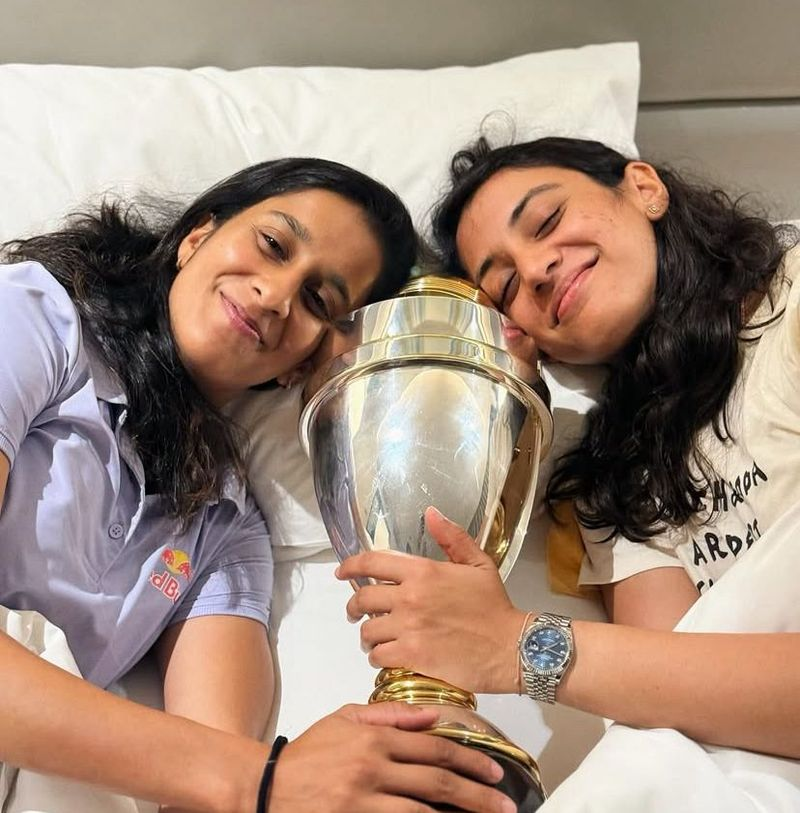
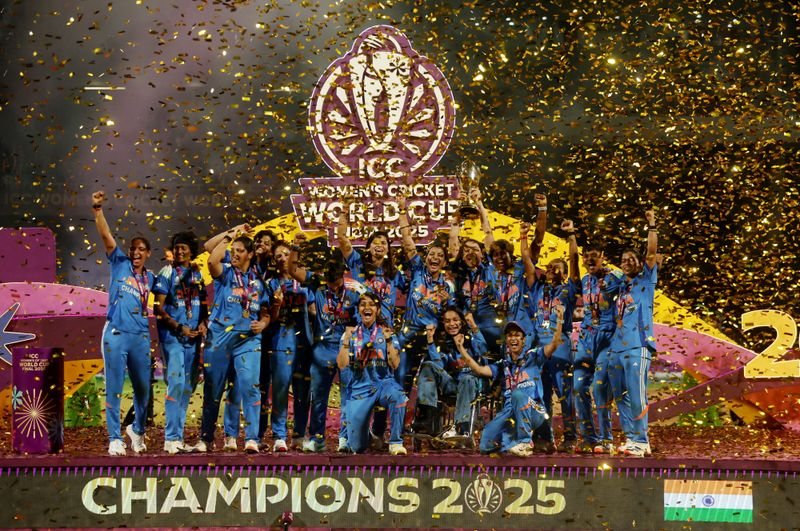
Finally, Indian skipper Harmanpreet Kaur can bid adieu to international cricket with an ICC World Cup Trophy, as India defeated South Africa by 52 runs to win their maiden title at DY Patil Stadium here.

The Proteas fought hard, but not hard enough to alter the course of India’s historic win. With 298 runs on the board, the trophy seemed to be slipping away from India at one stage. The 11-member South African team tried to silence the crowd of 45,000 during their chase, but the roar only grew louder as India sealed the victory.


Despite early setbacks, South African skipper Laura Wolvaardt carried her team’s hopes with a brilliant 101 off 98 balls, but found no support as their innings folded at 246.

India’s triumph, their first-ever World Cup title, felt nothing short of divine. To make it happen, destiny chose 21-year-old Shafali Verma from Haryana as she herself had said before joining the squad for the tournament’s final leg. Replacing injured Partika Rawal and returning to the ODI side after a year, Shafali made her World Cup debut against Australia and turned out to be India’s saviour in the final.

Spectacular win

A spectacular win by the Indian team. Showed exceptional teamwork and tenacity throughout the tournament. This historic win will motivate future champions to take up sports. Narendra Modi, PM

She emerged as the star of the evening, blasting 87 off 78 balls for a blazing start and later picking up two crucial wickets that rattled South Africa’s middle order. Her knock made her India’s highest-ever scorer in a World Cup final. The youngest player to represent India in all three formats, Shafali truly lived up to her promise.

straight out of Haryana’s domestic circuit, she had said before the tournament, “God has sent me for something good.” That “good” arrived tonight. Dropped on 76 by Anneke Bosch at deep midwicket, she punished the Proteas bowlers mercilessly thereafter. The lifeline given to her proved costly for the opponents as Shafali went after every bowler. A cramp in her left calf, however, broke her rhythm, and she was eventually caught by Sune Luus off Ayabonga Khaka. With her departure, the team’s run-rate also dropped, though Deepti Sharma (58) ensured a total of 298.

Chasing what seemed a manageable target considering the score posted in the last three matches, South Africa stayed in contention early on. But a fine Indian fielding changed the course. Tazmin Brits (23) was run out by Amanjot Kaur, opening the floodgates. While Laura played her best part, none of her teammates was able to support her in the chase. After Shafali’s twin strikes, Indian spinners tightened their grip, choking the South African innings. When skipper Harmanpreet Kaur caught Nadine de Klerk, it was all over. A new era began, with India crowned the new world champions of women’s cricket.