All posts by webadmin
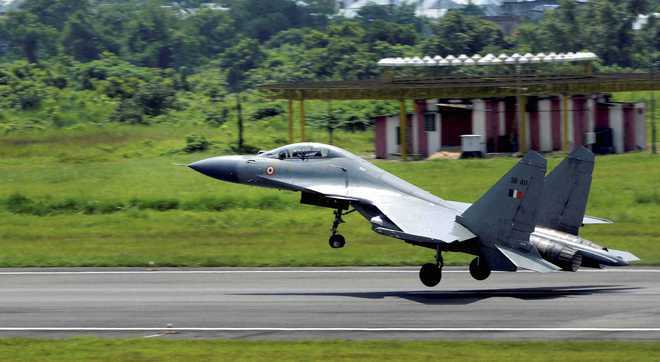
IAF seeks nod for firing range near Munshiyari
Tribune News Service
Dehradun, June 12
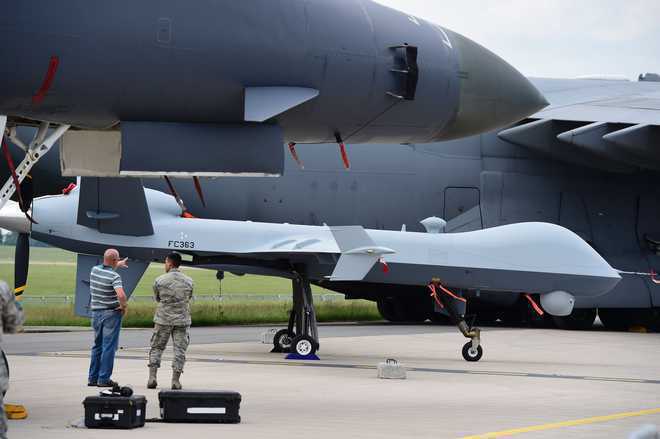
Indian Air Force has sought permission from Uttarakhand for setting up of a firing range near Munshiyari in the border Pithoragarh district of Uttarakhand.A delegation of senior Air Force officials from Central Command on Tuesday met Uttarkhand Chief minister Trivendra Singh Rawat and requested the state government to grant permission for setting up of a firing range near Munisiyari. The range will be used for target practice from air to land.During the IAF delegation’s meeting with the Chief Minister, Wing Commander Ashutosh Mishra giving details of the project disclosed that a joint survey with local administration had already been done. He apprised that the site selected for firing practice is away from the populated area and also asserted that only low intensity bombs are to be used for target practice which only shed light and smoke.He pointed out that the firing practice would cause no harm to the environment. Wing Commander Ashutosh Mishra also disclosed that it would be only three weeks in a year that the area will be used for firing practice. He also held that Indian Air Force will be responsible for removing the used bombs during the exercises.
Half of Punjab GCs at IMA pass-out from Mohali AFPI 17 OF 27 + 2 NAVY+1 AF= 20 OF SAME BATCH

Vijay Mohan
Tribune News Service
Chandigarh, June 9
More than half of the gentleman cadets (GCs) from Punjab, who were commissioned as lieutenants in the Army at the Indian Military Academy (IMA) on Saturday, are from Maharaja Ranjit Singh Armed Forces Preparatory Institute (AFPI) in Mohali.As many as 17 cadets from the AFPI were among the 29 from the state who passed out of the IMA on completion of their training. They are from the IMA’s 142 Regular CourseThis is the second batch of the AFPI cadets to become officers. The first batch had seen eight cadets being commissioned into the Indian Army. Among the AFPI cadets who passed out on Saturday are two brothers, Sehaj Jap Singh and Harsimrat Singh, who belong to Patiala. Sons of a lawyer, one went for the Armoured Corps and the other Signals. Two other cadets have a defence background. Their fathers served with the Infantry and the Army Education Corps.AFPI Director Maj Gen BS Grewal (retd) said their alumni were doing extremely well at the Indian Naval Academy and Air Force Academy as well. These include three midshipmen having completed their training at the naval academy and being commissioned in the rank of sub-lieutenant on May 26. Another cadet, who is undergoing training at the air force academy, is expected to be commissioned as a flying officer on June 16.The cadets had done two years of training in personality development and leadership qualities at the AFPI along with completing their Class XII before being selected for the National Defence Academy (NDA), Khadakvasla. The three-year training period at the NDA was followed by a year’s training at the IMA.Before the AFPI was set up in April 2011, Punjab was sending only six to eight boys to the NDA per batch. So far, six batches of approximately 40 cadets each have completed their training at the institute. Oover 110 cadets have been successful in joining various service academies for further training to become officers in the armed forces.
THE TRAINERS OF MAHARAJA RANJIT SINGH AFPI
DIRECTOR: MAJ GEN BS GREWAL,VSM

Maj Gen Baljit Singh Grewal, VSM is an alumnus of Yadavindra Public School, Patiala, National Defence Academy, Khadakwasla and Indian Military Academy, Dehra Dun. He was commissioned into Hodson’s Horse (4 Horse) in Nov 1971. He has held various prestigious command, staff and instructional appointments in his illustrious career spanning four decades. For his devotion to duty and exemplary performance as Deputy Commandant NDA he was awarded the Vishisht Sewa medal by the President of India in Jan 2010. He is serving as Director General Maharaja Ranjit Singh Armed Forces Preparatory Institute at Mohali since Oct 2010.
PSYCH OFFICER: BRIG KD SINGH

A 1974 Commissioned officer, Brig (Retd) KD Singh, BE (Telecom), MBA served the Army for 37 years, in the Corps of Signals.
His service highlights include the unique exposure and experience gained as a Psychologist for a duration of 31/2years at 34 SSB, SCE, Allahabad as also a second tenure at Selection Centre Central, Bhopal as Senior Psychologist and Call Up Officer. He is well versed with the nuances of selection process for induction of candidates in the Armed Forces, and has assessed over 3000 candidates.
Other Important career milestones are Command of a vital Communication Unit in Cl (Ops) in J&K during ‘OP Vijay’ (Kargil War), Chief Signal Officer (CSO), of a Corps in Nagaland, Commander and Instructor Class ‘A’, Faculty of Combat Communications (FCC) at Mil College of Telecommunications Engg (MCTE) Mhow (MP).
GTO: BRIG RS GREWAL

Brig RS Grewal is an alumni of PPS, Nabha and OTA Chennai. Commissioned into 8th Light Cavalry in Sep 1979 and served the Army for over 37 years. He commanded his Regiment during ‘OP PRAKARAM’ and commanded an Independent Armoured Brigade. Served in the North East Insurgency Area for two tenures.
He has the unique exposure and experience as GTO for over 4 years having served at 11 SSB, SCE, Allahabad and as an Instructor at the Defence Institute of Psychological Research, New Delhi where in he imparted training to potential assessors to be posted at the SSBs.


Lt Gen Ranbir visits north Kashmir
Tribune News Service
Srinagar, June 8
Continuing with his tour in the Valley, Lt Gen Ranbir Singh, GOC-in-C of Northern Command, on Friday visited the Army formations and units deployed in north Kashmir, where he was briefed on the prevailing security situation.During the visit, he was accompanied by the GOC of Srinagar-based Chinar Corps Lt Gen AK Bhat.
Briefs Guv on security
Northern Command chief Lt Gen Ranbir Singh called on Governor NN Vohra at Raj Bhawan here on Friday.He briefed the Governor about the prevailing situation along the frontiers of J&K and the issues relating to security management in the hinterland in the Kashmir and Jammu regions. The Governor discussed with him certain concerns relating to the forthcoming Amarnath yatra.He also wished the Northern Command chief a successful tenure ahead.
Pilot dies as IAF Jaguar fighter jet crashes in Gujarat Air Cmdr Chauhan was AOC, Jamnagar

New Delhi, June 5
A senior Indian Air Force officer was killed in an air crash near Jamnagar in Gujarat on Tuesday morning.A Jaguar fighter jet crashed, killing the pilot, Air Commodore Sanjai Chauhan. The crash took place at 9.45 am, IAF officials said.The officer was the Air Officer Commanding (AOC) of the IAF’s Jamnagar base. The base has a role in maritime security. The AOC was on low-level flying mission over the Kutch. The rank of Air Commodore is equal to Brigadier in the Army. A junior pilot of his base was flying right behind Air Commodore Chauhan in formation flying. A Court of Inquiry has been ordered to investigate the cause of the accident. The IAF said the Jaguar fighter aircraft was on a routine training mission. Commissioned in the fighter stream of the IAF on December 16, 1989, Air Commodore Chauhan was a Qualified Flying Instructor (QFI) and Experimental Test Pilot with over 3,800 hours of service flying, officials said.He had flown 17 types of aircraft of the IAF and had the unique experience of flying modern foreign fighter jets such as Rafale, Gripen and Euro Fighter, officials said. He was awarded the Vayu Sena Medal in 2010.“During his service, Chauhan held several important posts such as the Commanding Officer of the Test Pilots’ School. He also commanded a fighter squadron of the IAF,” said one of the officials. — TNS/PTI
The safe haven of a cantonment by Vartika Sharma Lehak


The families of serving military personnel need to be given special provision
Last year, during a train journey, I happened to share an air-conditioned cabin with a Professor at the Indian Institute of Technology and his family. I was travelling with my four-year-old daughter, and he with his toddler, wife and mother. I was visiting my in-laws in Dehradun. Since there is no direct train from Bhuj, where my husband, an officer with the Indian Army, is posted, I had to take a train from Bhuj to Ahmadabad, then to Delhi and from there to Dehradun.
Travelling is a way of life for those in the forces, and their families. It is almost like a natural instinct. And thus, when the professor shared his travails relating his recent move from IIT Chennai to IIT Delhi, I couldn’t help bursting out in a giggle. To prove his point further, he listed out the grey areas – finding a good school, maids, meeting the travel expenses, and so on. And then I shared my fauji way of life with him.
“Really? How do you manage to move once every two years?” he stared at me in disbelief.
Then with a little hesitation, he asked me, “Is the government taking care of you well? I mean, why Army? You guys are well-qualified. Why not join a corporate job, they pay you good and the perks are awesome.”
My smile broadened, I knew what Army gives. No one can understand that, it’s a feeling deep in your gut.
There was a long silence after that. Was he thanking god for his comfortable life, or something deep was stirred in my heart?
Today, the words of that professor mock me in the face: is the government taking care of us enough?
The Indian Army is an organisation that functions as an organism. Every part, every organ, has a vital and indispensable role to play. Not only our men and women wear the uniform, but the complete family – children, wife/husband and even parents— wear a tint of the olive green. When the officers are deployed in far-flung areas, it is the faith in safety and security of a cantonment that makes them serve the nation without any worry back home. And this is the reason there are no cases of rape or armed robbery in Army cantonments. There might be cases of theft, but no violent crime.
In 2016, when the Pathankot attack happened, we were posted in the vicinity. That was when I realised first-hand how vulnerable the families of the faujisare. There was a random ‘intel’ alert in the middle of the night, and the men changed into combat uniforms in a few seconds. We, families, knew our drill. Lock the doors, switch off the lights. We ate bread with cold milk. As news came about the ongoing encounter, we counted the number of latches that were missing in the doors, the thin plywood doors that needed just a casual kick to be opened. Mothers taught kids to crawl under the bed or climb in the under-roof, some packed chilli-powder in tiny packets.
Unlike ‘normal’ mothers we have an additional fear for the safety of our children when they board Army school buses. Experience has taught us that the cowards will not spare even our children.
The narration will not be complete without a mention of Army accommodations. As is common knowledge, Army wives are very creative and artistic. Most of the accommodation we get are in a bad shape. Sometimes the wall is rotting from seepage, or the doors are damaged, or the ceiling is dangerously cracking up. We all know that in the two-year tenure, more than four to six months will be spent waiting for the accommodation and furthermore for the repair work. So the enterprising ladies paint the panels in beautiful colours or take away attention from the seepage by creating an indoor garden. Often I am asked if I don’t get fed up with the life of a nomad or with the rural postings. No, we are happy as long as we get to stay together.
But, is the government taking care of us well?
Recently, a Minister, commenting on theNavy’s demand for housing in a posh locality, remarked, ‘Why stay in South Mumbai, go patrol Pakistan (sic).’
Two points here. First, most of the so-called posh localities are ‘created’ by Army cantonments, and many businesses have thrived on that. Secondly, our men are already patrolling Pakistan, and the remaining ones are either rescuing flood victims or training for the big day. But what about their women, children? Do they also join them at the border? Where is their right to a good living, opportunities to good education, when their men are away? Today we talk about the human rights of everyone but a fauji. Even a stone-thrower has more rights than a brave officer who decides to give him the taste of his own medicine.
And that’s why the question pops up again: Is the government taking care of us well?
Yes, we get a subsidy in train and air travel, but it comes to nothing if you count the number of trains one has to change to reach a remote destination. It comes to nothing when we have to pack in the middle of the academic session. The places that are considered peace stations for us are ‘field’ for a civil bureaucrat. Even in a peace station, the workload for uniforms is the same, even more. Then why withdraw the rations of officers? It was the privilege, the ‘perk,’ they have earned for their service to the nation.
So, is the government actually taking care of us at all by opening the gates of the cantonment? Are we trying to say that in a peace station, a fauji and his family become vestigial to the system? Opening a road that connects two major civil areas is understandable, but what is the need to open roads that are internal. Have we forgotten the bitter memories of the past, or are we waiting for another Pathankot? In stations like Delhi there are so many women whose husbands are posted in the field areas. And while their men fight the enemies outside, who will guard them from the ‘risks’ inside. Like the VIP roads in Lutyens’ Delhi, the internal roads of a cantonment are also as important for security reasons. From the routine training and drills of our men, they have an integral part to play in our way of life, and in the nation’s as well.
As I said, the Indian Army works like an organism. And what it needs today is a strong and healthy heart. After all, the same Army has given the country legends such as K.S. Thimayya, K.M. Cariappa and Sam Manekshaw. And in those days nobody even cared whether the government was caring or not.
IMA Ball at Indian Military Academy

Tribune News Service
Dehradun, May 27
In the run up to the June 9 slated Spring term passing out parade, IMA Ball took place at Indian Military Academy, Dehradun.The IMA Ball is a precursor to the final event – The Passing Out Parade of the IMA, which is slated on June 9. The evening of joy, merriment and nostalgia commenced with the Commandant IMA, Lt Gen SK Jha, who set the ball rolling. The Gentleman Cadets in evening military attire and the ladies in their dazzling best graced the gala event.The IMA Ball is held towards the end of each term to mark the culmination of the rigorous training schedule of the passing out course. The event is associated with fun and frolic is also termed as the ‘Break Up Party’ for the Third Termers.
LATEST WARRANT OF PRECEDENCE (Who Stands Where) Issued by the office of the President of India.
Naik Kuldeep Nainwal attains martyrdom
Tribune News Service
Dehradun, May 20
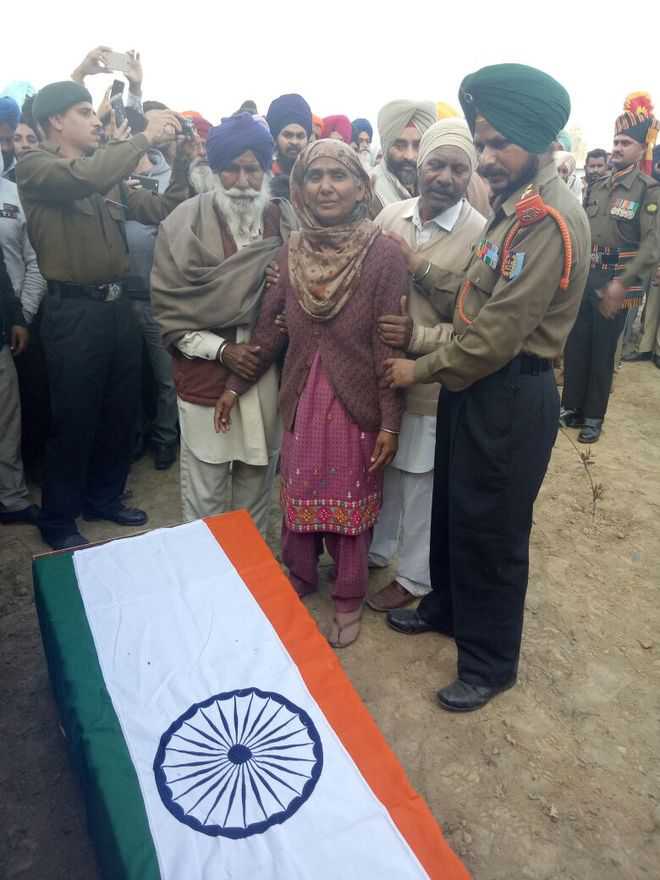
Naik Kuldeep Nainwal of Dehradun, who was grievously injured while fighting terrorists in the Kulgam district of Jammu and Kashmir during the month of April and was undergoing treatment at Pune military hospital, succumbed to his injuries on Sunday.A pall of gloom descended on the Harrawala locality of Dehradun, where martyr’s family is residing. The mortal remains of the martyr are expected to arrive in Dehradun on Monday.The Martyr’s father Chakradhar Prasad Nainwal had retired from the post of hony captain from the Army.Martyr Naik Kuldeep Nainwal had joined the Mahar Regiment in the year 2001 and was posted in Kashmir for the past two-and-a-half years. Chief Minister Trivendra Singh Rawat had enquired about the well-being of Kuldeep some time back.After suffering bullet injuries in Kulgam the encounter, a grievously injured Naik Nainwal was rushed to Army’s RR Hospital where after undergoing treatment for a while he was referred to Army hospital Pune, where he finally succumbed to his injuries.
General VK Singh strikes back, files RTI seeking top secret report in 48 hours

Former Chief of the Army Staff General VK Singh has filed an RTI application seeking the Board of Officers Report on the activities of the ‘shadowy’ Technical Support Divison (TSD) of the Military Intelligence.
In the application, addressed to KL Nandwani, Deputy Secretary, MoD, filed under section 7 of the RTI Act, General (retd) Singh has sought all file notings of Army Headquarters and the Ministry of Defence on the report.
He has sought to personally inspect the files both at Army Headquarters and the MoD. The General has said since the matter affects his life and liberty, the files should be made available to him in the next 48 hours on receipt of application.
“The applicant may kindly be provided a copy of the report submitted to the MoD by the Indian Army prepared by the three members Board of Officers appointed to inquire into the functioning of the TSD, presided over by Lt Gen Vinod Bhatia, DGMO. The inspection of relevant files/records both at MoD and Army Headquarters may also be allowed,” writes Gen VK Singh in the RTI application.
General Singh has also sought relevant files in Army Headquarters and MoD on reports of a ‘coup’ in 2012, saying file notings on the subject both at the Army headquarters and MoD may be provided to him for inspection. The General and his legal team are working on a multi pronged strategy to take on the government on the issue of the leak of the TSD report and a number of other documents – some marked ‘Top Secret’ from the MoD, as it affects “India’s strategic assets,” the General and his legal team insist.
General Singh recently cleared the air on TSD insisting it is wrong to claim it was his ‘personal army’. “The need for TSD was felt during the 26/11 Mumbai terror attacks in 2008. It was created on the operational directive of the Raksha Mantri (Defence Minister AK Antony). It was given tasks which its officers diligently carried out to keep India’s borders safe and to maintain internal security along with other agencies. It was not my private army and its activities were budgeted by the Directorate General of Military Intelligence,” Gen VK Singh said in a recent interview.
The General is of the opinion there is nothing that implicates the TSD in the Lt Gen Vinod Bhatia report that was submitted to MoD in March and in turn sent to the National Security Advisor (NSA) Shiv Shankar Menon in July for closure.
Sources in MoD refused to comment on Gen VK Singh’s RTI application. “Appropriate action would be taken at the appropriate time,” sources said.