All posts by webadmin

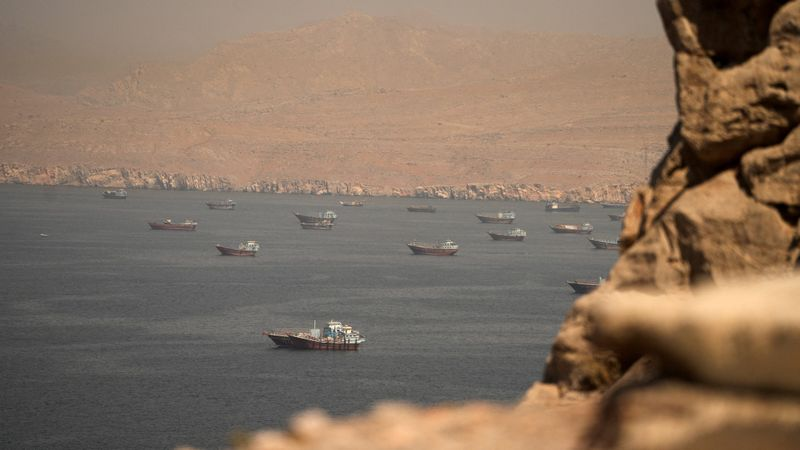
Post US-Iran MoU, 11 India-bound ships cross Strait of Hormuz: MEA

MEA spokesperson Randhir Jaiswal says maritime traffic has resumed in both directions

article_Author
Ujwal Jalali Tribune News Service

Signs of normalcy are beginning to return to one of the world’s most critical maritime chokepoints, with 11 India-bound vessels successfully transiting the Strait of Hormuz since the signing of the Iran-US memorandum of understanding earlier this month, the Ministry of External Affairs said on Tuesday.

The development comes amid efforts to stabilise shipping traffic in the Gulf region following weeks of uncertainty triggered by the Iran conflict.

MEA spokesperson Randhir Jaiswal said maritime traffic had resumed in both directions and expressed hope that the remaining Indian vessels stranded in the region would soon be able to proceed.

“As of today, we have 10 Indian-flagged vessels still in the Persian Gulf region — these are the ones that were stranded when the conflict began — but in addition, we have two Indian ships that have crossed from this side into the Persian Gulf, which means that traffic is moving back and forth,” he said.

Jaiswal disclosed that since the signing of the MoU on June 17, 11 India-bound vessels had successfully navigated through the Strait of Hormuz.

The vessels comprised three Indian-flagged crude oil tankers, each carrying around 2,85,000 metric tonnes of crude oil, one foreign-flagged LPG carrier, one foreign-flagged crude oil tanker and six foreign-flagged bulk carriers transporting fertiliser cargo destined for India.

“It is our expectation and hope that the remaining Indian-flagged vessels will also be able to cross Hormuz soon,” he added.

The latest figures released by the MEA indicate that India’s energy supplies and fertiliser imports have begun moving through the corridor, offering relief to policymakers and markets alike. With shipping activity gradually picking up, New Delhi is closely monitoring the situation and remains hopeful that the remaining Indian vessels stranded in the Gulf region will soon be able to resume their journeys.


India asks Bangladesh to rein in extremists after desecration row sparks protests by Hindus

The controversy erupted after an image of the Hindu deity was allegedly desecrated during demonstrations by Islamist grou

India on Tuesday urged Bangladesh to act against extremist elements and ensure the safety of minorities after reports of the desecration of an image of Lord Ram triggered protests by the Hindu community across the neighbouring country.

The controversy erupted after an image of the Hindu deity was allegedly desecrated during demonstrations by Islamist groups opposing the construction of a proposed 81-foot statue of Lord Ram in Gaibandha district in northern Bangladesh.

The incident has sparked widespread protests, including torchlight marches and demonstrations in Dhaka, with Hindu organisations demanding action against those responsible and stronger protection for religious minorities.

Responding to questions on the issue, Ministry of External Affairs spokesperson Randhir Jaiswal said New Delhi expected the Bangladeshi authorities to prevent extremist forces from targeting minorities.

“Regarding the reports from Bangladesh about acts of desecration involving images of Hindu deities — which have sparked protests — we expect the Bangladeshi government to curb extremist elements and guarantee the safety of the minority community residing there,” he said.

The protests in Bangladesh have gathered momentum over the past several days, with student groups and members of the Hindu community taking to the streets to condemn what they described as an attack on religious sentiments. Demonstrators have also called for the resumption of work on the proposed Ram statue project, which has reportedly been halted amid security concerns and pressure from radical groups.

The issue has once again brought the spotlight on the condition of religious minorities in Bangladesh, which has witnessed periodic incidents of communal violence and attacks on places of worship over the years.

India has repeatedly raised concerns over the safety of Hindus and other minority communities in Bangladesh, particularly following episodes of unrest and political instability.

The latest remarks from New Delhi come amid otherwise close ties between the two countries, with both sides maintaining extensive cooperation in areas ranging from trade and connectivity to security and energy.

However, incidents involving attacks on minorities have often cast a shadow over bilateral relations and prompted calls in India for stronger safeguards for vulnerable communities in Bangladesh


HEADLINES : 21JUN 2026

Income tax exemption for disabled soldiers continuing, clarifies Defence Minister Rajnath Singh

In a first, retired women officers to take up post of defence welfare officers in Punjab

Col Shanjit Singh Bhullar shares his journey pictures of LADAKH ,ZOZILA,SONAMARG ETC IN J&K

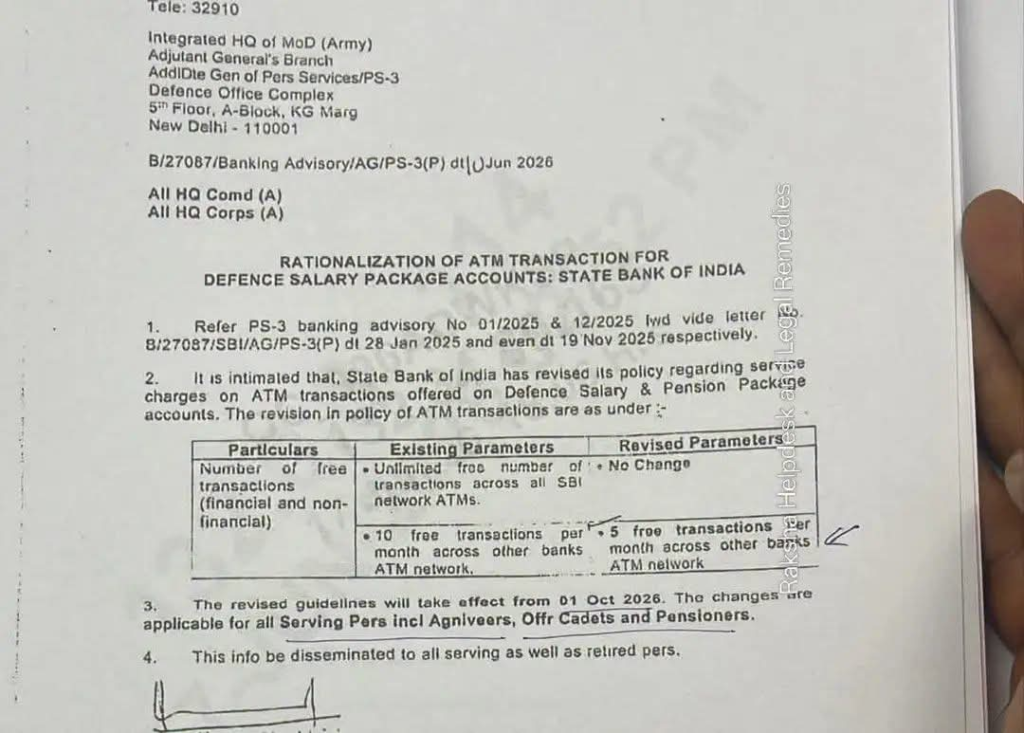
ATM TRANSACTIONS FOR DEFENCE SALARY PACKAGE ACCOUNTS :SBI

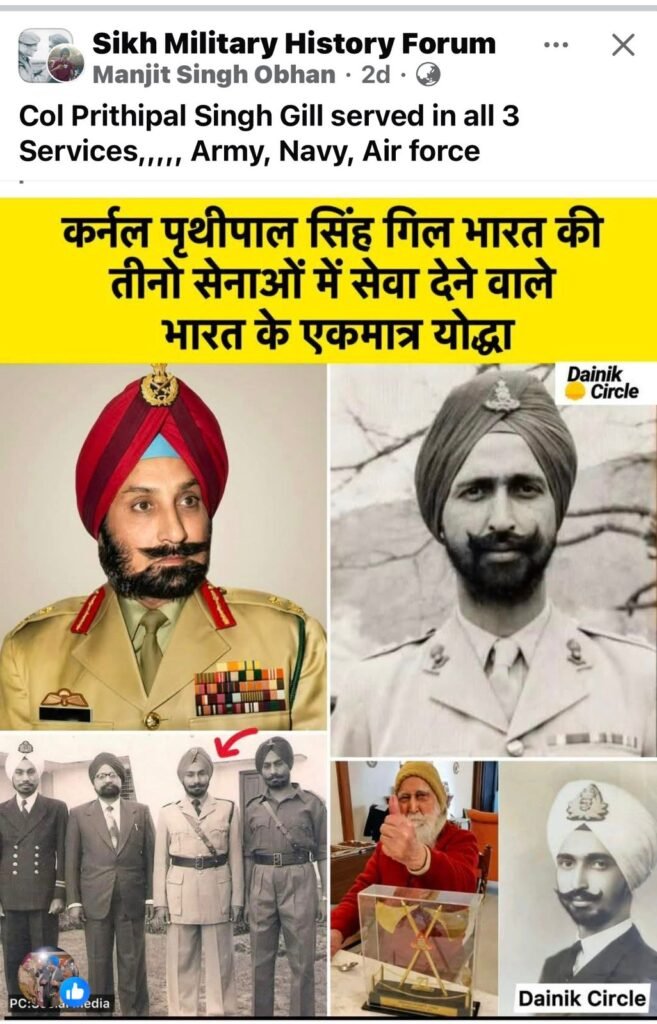
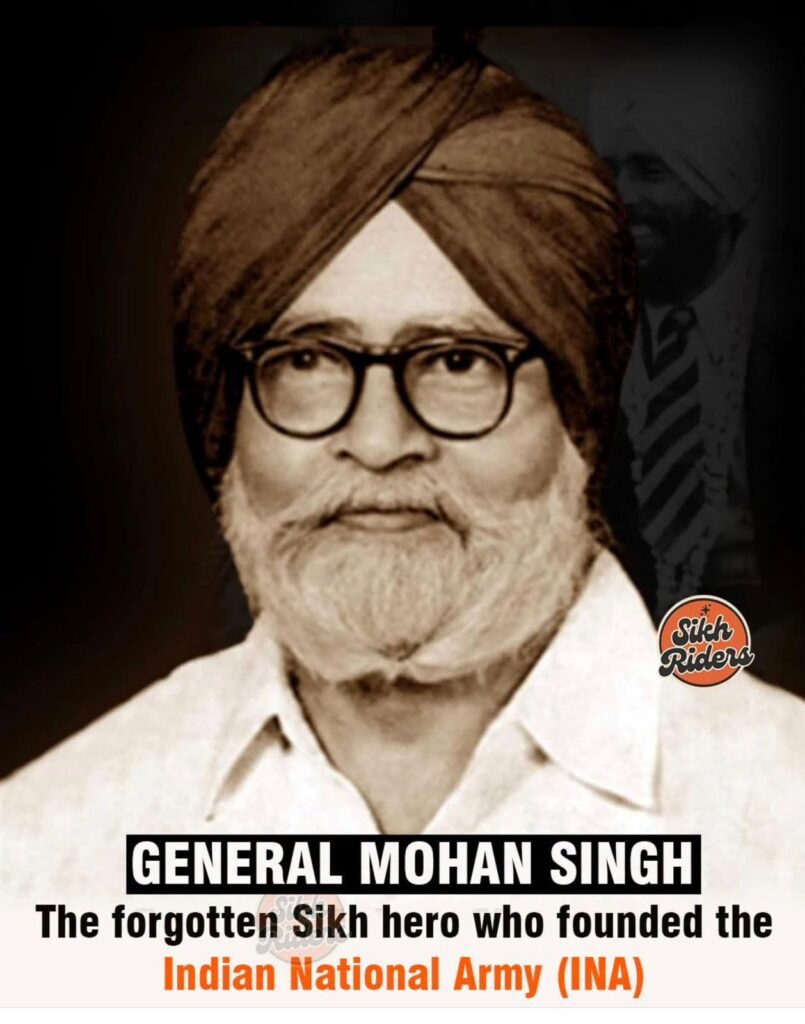
LEST WE FORGET GREAT PERSONALIES

Sikh Regiment inks pact with Guru Nanak Dev University to empower Agniveers through higher education

India takes 1st step in aluminium alloy manufacturing needed for military equipment

Dunagiri, Sanshodhak and Agray: Navy to commission 3 indigenously built frontline warships on June 21

IAF to procure 9 Jaguar jets from UK to be cannibalised as spares

Uttarakhand govt orders probe into Karnaprayag incident involving Nihang Sikh pilgrims: who hit the sikh first


Income tax exemption for disabled soldiers continuing, clarifies Defence Minister Rajnath Singh

Defence Minister Rajnath Singh has clarified that “disability pension” given to a section of retired military personnel shall continue to be exempt from income tax, unless the exemption is removed through a specific notification.

The minister in a letter to Trinamool Congress MP Mahua Moitra referred to the issue raised by her in Parliament under Rule 377 seeking a review of the decision to “remove income tax exemptions on disability pension” for those service personnel who despite being injured continue duties until retirement.

Moitra posted the letter on X in which the Defence Minister says “taking note of the concern raised regarding the issue…the amendments notified shall take effect on or after such date as may be notified by the Central Government”.

“Pending such notification, the entire disability pension, that is disability element and service element, of disabled officer of the Indian armed forces shall be exempt from income tax,” the letter said.

Moitra welcomed Rajnath’s clarification and thanked him for what she described as his “empathy” towards disabled defence personnel. She expressed hope that officials in the Finance Ministry would show similar sensitivity and refrain from implementing the proposed changes.In March, a Parliamentary Standing on Defence recommended that a proposal to impose income tax on pensions for disabled soldiers need to be “examined” and reconsidered.


In a first, retired women officers to take up post of defence welfare officers in Punjab

Four women officers of the rank of Lieutenant Colonel have been short-listed by the Punjab Public Service Commission

For the first time in its 52-year existence, Punjab’s Defence Service Welfare Department will appoint retired women officers from the Armed Forces as defence services welfare officers. This would make Punjab among the first sates to take such a step.

Four women officers of the rank of Lieutenant Colonel have been short-listed by the Punjab Public Service Commission after the written examination and interview, and appointment letters would be issued shortly, sources said.

The rules for appointment of officers in the department were changed recently, allowing former short service commission officers also to apply, providing they are of the rank of Lieutenant Colonel and equivalent or above. This, sources said, would enable officers to join at a younger age than permanent commission officers and serve longer.

Short service commission officers can serve for up to 14 years and can attain the rank of Lieutenant Colonel after about 11 years of service. By the time they are discharged on completion of their term, they would be about 40 years old. Permanent commission officers, depending upon their rank and army, start retiring at the age of 54 years.

The Armed Forces had opened their doors to women officers in 1992 for the short service commission. Prior to that, service in the Armed Forces for women was open only in the medical stream, including the nursing service. Women in all three services are now eligible for grant of permanent commission.

The department is authorised one Director of the rank of Brigadier and equivalent and 25 officers of the rank of Colonel / Lieutenant Colonel. One officer is posted in each district while three are based at the department’s headquarters in Chandigarh.

At present, the department is functioning with just four officers besides the Director, who are handling work at the headquarters as well as overseeing the district offices. The process for filling up the vacant posts, of which the four women officers are a part, is underway and about 12 other officers are expected to join, sources said.

One issue in the appointment is that there is reservation in the posts as per rules applicable to all state government departments. The posts earmarked for scheduled castes, scheduled tribes, etc cannot be filled up by general pool candidates in Punjab, which sources point out is unlike some other states where left over reserved vacancies are filled by general candidates.


Col Shanjit Singh Bhullar shares his journey pictures of LADAKH ,ZOZILA,SONAMARG ETC IN J&K

COL SHANJIT S BHULLAR ,PRESIDENT CHD ZONE SANJHA MORCHA

The start point of the mighty Sind river , in the Background are the peaks of Amarnath , the Yatra stars on 03 Jul 202

TIGER HILL


Sikh Regiment inks pact with Guru Nanak Dev University to empower Agniveers through higher education

he Sikh Regiment has signed a Memorandum of Understanding (MoU) with Guru Nanak Dev University (GNDU), Amritsar, to empower Agniveers through education and skill development,

The collaboration will enable Agniveers serving in the Sikh Regiment to pursue higher education alongside their military duties. Under the initiative, Agniveers will have access to diploma programmes that can be completed within six months, as well as undergraduate degree programmes such as Bachelor of Arts, Bachelor of Computer Applications and Bachelor of Commerce, which can be completed within three years.

The initiative aims to enhance the academic qualifications, professional competencies and long-term career prospects of Agniveers, equipping them with valuable skills for both military and civilian careers, a defence spokesperson said on Thursday.

This collaboration reflects the Sikh Regiment’s enduring commitment to the holistic development and welfare of its soldiers. It also aligns with the Government of India’s vision of creating a skilled, educated and future-ready youth force capable of contributing effectively to nation-building, he added.

The Sikh Regiment is among the Indian Army’s oldest and most highly decorated Infantry regiments, tracing its origins to 1846 as part of the Bengal Army of the erstwhile British East India Company.

At present, comprising 20 regular infantry battalions and three Territorial Army battalions, the regiment draws its manpower exclusively from the Jat Sikh community.

Guided by its ethos of “Service Before Self,” the Sikh Regiment continues to invest in the growth and empowerment of its Agniveers, ensuring their personal and professional development during and beyond their service to the nation, an official statement said.

The Army had introduced the Agnipath scheme in 2022 under which soldiers, termed as Agniveers, are required to serve for a period of four years after which 25 per cent would be absorbed into the regular cadre and the remaining would be discharged from service with a tax-free compensation package. The period of service is currently under review with proposals to extend the service period and increase intake into the permanent cadre being examined.


India takes 1st step in aluminium alloy manufacturing needed for military equipment

India on Friday laid the foundation stone for a specialised advanced metal-processing unit that will produce aluminium alloys required for defence systems, aviation, missiles and even the railways.

Aluminium alloy is a critical component for the defence and aerospace sectors.

Defence Minister Rajnath Singh laid the foundation stone for a state-of-the-art 10,000-tonne aluminium extrusion press at Yantra India Limited’s Ordnance Factory, Ambajhari, in Nagpur, Maharashtra, on Friday.

Extrusion is a manufacturing process used to produce objects with a fixed cross-sectional profile by forcing material through a die.

The 10,000-tonne capacity refers to the pressing force the machine can exert to shape large, ultra-high-strength and heavy-gauge aluminium alloys.

Yantra India Limited (YIL) is a public sector undertaking under the Ministry of Defence.

The new facility in Nagpur will enable India to manufacture large, single-piece structural components for fighter aircraft, transport aircraft and space launch vehicles.

The Ministry of Defence said the proposed press would be one of the most advanced facilities of its kind in the country. It will support the manufacture of large and complex aluminium alloy profiles required for defence systems, platforms, aerospace and aviation structures, missile programmes, railways, transportation sectors and other strategic industrial applications.

The project will help reduce dependence on imports of critical aluminium extrusions and strengthen the domestic supply chain, while supporting future requirements in strategic sectors through indigenous production.

Rajnath Singh said, “This extrusion press addresses a crucial need. Modern fighter jets, missiles and advanced space programmes require metals that are lightweight and strong, capable of withstanding even the most extreme conditions. Such metals are produced through specialised processes. If the quality of the metal is superior, it will perform well in every situation.”

Highlighting the significant role played by Made-in-India equipment in the success of Operation Sindoor, Rajnath Singh stressed the need to increase the indigenous manufacturing of robust hardware to complement the bravery of defence forces personnel.

The minister said the extrusion press is a step towards fulfilling a major national need, while keeping future requirements in mind.

Aluminium alloys form the backbone of aircraft structures, missiles, rockets and military vehicles because they provide an optimal combination of light weight, high strength and corrosion resistance.

Historically, India has relied on imports for many high-precision aluminium extruded components because domestic facilities lacked the capability to produce them at this scale.

With India’s growing emphasis on self-reliance in defence manufacturing, the country is expected to produce around 500 fighter aircraft over the next 15 years, in addition to thousands of armed unmanned aerial vehicles (UAVs). Such programmes are expected to benefit significantly from this advanced metal-processing capability