Among those facing deportation are many people from Punjab, who entered the US through “donkey routes” or other illegal means by spending lakhs of rupees
A US deportation flight carrying Indian immigrants who had sought the American dream is scheduled to arrive in India on Wednesday afternoon.
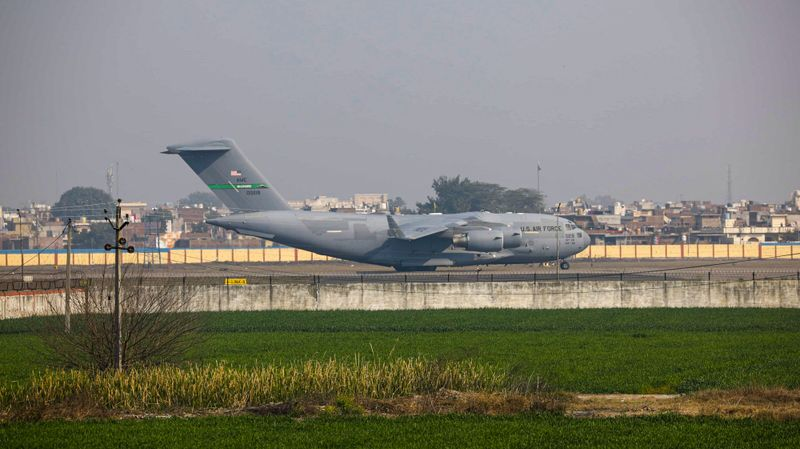
The US military aircraft, carrying around 205 illegal immigrants, mostly from Punjab, who entered the US illegally, departed from San Antonio, Texas, on a C-17 plane and is expected to land in Punjab’s Amritsar.
This is the first round of deportations of illegal immigrants that coincides with Prime Minister Narendra Modi’s visit to Washington next week. Among those facing deportation are individuals who entered the US through “donkey routes” or other illegal means, spending lakhs of rupees.
Punjab NRI Affairs Minister Kuldeep Singh Dhaliwal expressed disappointment over the US government’s decision to deport Indians, stating that these individuals, who contributed to the country’s economy, should have been granted permanent residency instead of being deported. Dhaliwal clarified that these are Indians who had entered the US on work permits that later expired, making them illegal immigrants. Over 200 illegal Indian immigrants are expected to land at the Shri Guru Ramdas Ji International Airport in Amritsar on Wednesday afternoon.
According to PTI, the US military plane C-17 is carrying 205 illegal immigrants hailing from Punjab and neighboring states. Punjab Director General of Police (DGP) Gaurav Yadav stated on Tuesday that the state government would receive the immigrants and set up counters at the airport. Dhaliwal said he plans to meet External Affairs Minister S Jaishankar next week to discuss the concerns and interests of Punjabis living in the US and appealed to Punjabis not to travel abroad through illegal means.
Donald Trump launched a crackdown against illegal immigrants after assuming office as the US President in January.
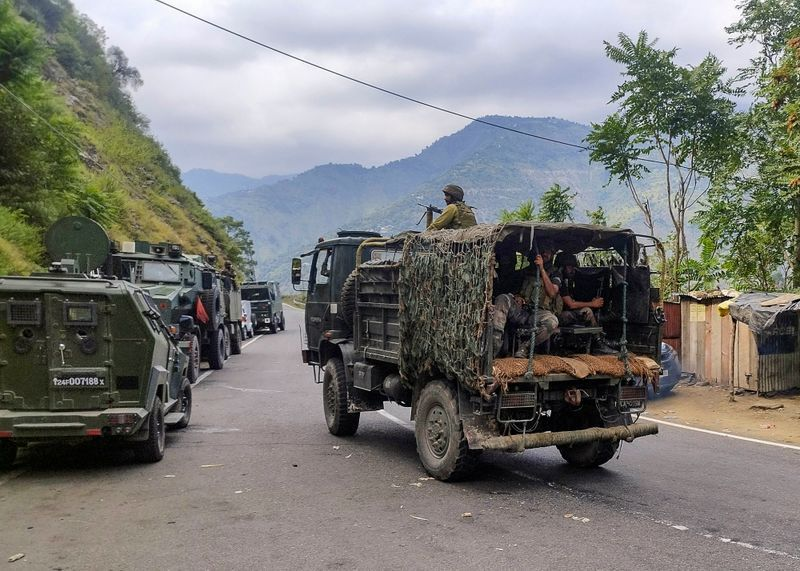
Truck driver killed in Army firing after jumping check post in J-K
The check post was set up at Sangrama Chowk on Wednesday following inputs about the movement of terrorists in the area
A truck driver was killed in Army firing when he allegedly refused to stop his vehicle at a check post in Baramulla district of Jammu and Kashmir despite repeated warnings, officials said on Thursday.
The check post was set up at Sangrama Chowk on Wednesday following inputs about the movement of terrorists in the area, they said.
“On 05 Feb 2025, based on a specific intelligence input about move of terrorists, a Mobile Vehicle Check Post (MVCP) was established by Security Forces. One speeding suspicious civil truck was spotted. When challenged, the truck didn’t stop despite repeated warnings instead accelerated further while crossing the check post,” the Army’s Chinar Corps said in a post on X.
“Alert troops pursued the vehicle for over 23 km. Shots were fired aiming on tyres to deflate which forced vehicle to halt at Sangrama Chowk,” it said.
“Consequent to detailed search, the injured driver was immediately evacuated to GMC Baramulla by Security Forces where he was declared dead,” it added.
The Army said the loaded truck was sent to the nearest police station.
“Detailed search of the truck in police custody is underway and investigation on antecedents of the suspect is in progress,” it said.
33 Gujarati immigrants, deported from US, land in Ahmedabad
Soon after their arrival, they are transported to their native places in police vehicles
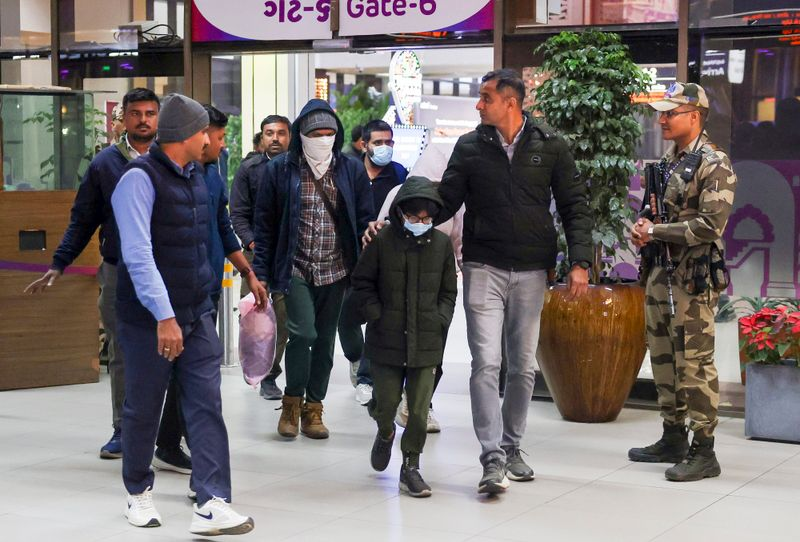
A plane carrying 33 people from Gujarat, who were among the 104 Indians deported from the US for illegal immigration, landed at Ahmedabad airport from Amritsar on Thursday morning, officials said.
Soon after their arrival, the 33 immigrants, including some children and women, were transported to their native places in Gujarat in police vehicles, Assistant Commissioner of Police, ‘G’ division, RD Oza said.
“A plane carrying 33 Gujarati immigrants landed at the airport in the morning. They were among those who were deported from the US. We deployed police vehicles at the airport to transport them to their respective places,” Oza told reporters at the airport.
While mediapersons tried to talk to the deported immigrants, they refused to say anything and left for their native places in the police vehicles.
Majority of them are from Mehsana, Gandhinagar, Patan, Vadodara and Kheda districts, sources said.
A US military aircraft carrying 104 illegal Indian immigrants landed at Amritsar in Punjab on Wednesday.
Family members of these illegal immigrants from Gujarat have claimed they do not know how their kin reached the foreign soil.
Former deputy chief minister Nitin Patel had expressed sympathy for the deported Gujaratis, underlining the fact that they had gone to the foreign country looking for a job or career, and they should not be portrayed as criminals.
Deputy Inspector General of Police, CID-Crime, Parikshita Rathod, said the police would not question the deportees at this stage.
Deportees say they were kept chained on US military flight to India
Jaspal Singh, who was among 104 deportees brought in a US aircraft on Wednesday, claimed that their hands and legs were cuffed throughout the journey and they were unshackled only after landing at the Amritsar airport.
Singh, 36, who hails from Hardorwal village in Gurdaspur district, said he was captured by the US Border Patrol on January 24.
A US military aircraft carrying 104 illegal immigrants from various states landed in Amritsar on Wednesday, the first such batch of Indians deported by the Donald Trump government as part of a crackdown against illegal immigrants.
Of them, 33 each were from Haryana and Gujarat, 30 from Punjab, three each from Maharashtra and Uttar Pradesh, and two from Chandigarh, sources said.
Nineteen women and 13 minors, including a four-year-old boy and two girls, aged five and seven, were among the deportees, they said.
Deportees from Punjab were taken to their native places in police vehicles from the Amritsar airport.
After reaching his home town on Wednesday night, Jaspal said he was defrauded by a travel agent as he was promised that he would be sent to the US in a legal way.
“I had asked the agent to send me through a proper visa. But he deceived me,” said Jaspal. He said that the deal was done at Rs 30 lakh.
Jaspal claimed that he reached Brazil by air in July last year. He said he was promised that the next leg of journey, to the US, would be by air too. However, he was “cheated” by his agent, who forced him to cross the border illegally.
After staying for six months in Brazil, he crossed the border to the US, but was arrested by the US Border Patrol.
He was kept there in custody for 11 days and then sent back home.
Jaspal said he didn’t know he was being deported to India.
“We thought we were being taken to another camp. Then a police officer told us that we were being taken to India.
“We were handcuffed and our legs were chained. These were opened at the Amritsar airport,” he claimed.
Jaspal said he was shattered with deportation. “A huge sum was spent. The money was borrowed.”
Earlier, Jaspal’s cousin Jasbir Singh said, “We came to know about his deportation through the media on Wednesday morning.”
About the deportations, he said, “These are issues of governments. When we go abroad for work, we have big dreams for a better future for our families. Those have now been shattered.”
Two more deportees, who reached their home towns in Hoshiarpur on Wednesday night, also shared the ordeal they went through to reach the US.
Harwinder Singh, who hails from Tahli village in Hoshiarpur, said he left for the US in August last year.
He was taken to Qatar, Brazil, Peru, Colombia, Panama, Nicaragua and then Mexico.
From Mexico, he, along with others, was taken to the US, he said.
“We crossed hills. A boat, which was taking me along with other persons, was about to capsize in the sea but we survived,” he told reporters.
He said he saw one person die in the Panama jungle and one drown in the sea.
Singh said his travel agent had promised him that he would first be taken to Europe and then to Mexico. He said that he spent Rs 42 lakh for his trip to the US.
“Sometimes we got rice. Sometimes, we did not get anything to eat. We used to get biscuits,” he said.
Another deportee from Punjab spoke about the ‘donkey route’ used to take them to the US.
“Our clothes worth Rs 30,000-35,000 were stolen on the way,” he said.
The deportee said they were first taken to Italy and then to Latin America.
He said they took a 15-hour-long boat ride and were made to walk 40-45 km.
“We crossed 17-18 hills. If one slipped, then there would be no chance that he would survive… We have seen a lot. If anybody got injured, he was left to die. We saw dead bodies,” he said.
Earlier in the day, the C-17 Globemaster aircraft of the US Air Force landed at the Amritsar airport.
The US action came just days before Prime Minister Narendra Modi’s visit to Washington for wide-ranging talks with President Donald Trump.
The deportees were questioned inside the airport terminal building by different government agencies, including the Punjab Police, and various state and central intelligence agencies to check if they have any criminal record.
Uproar over deportation: Lok Sabha, Rajya Sabha adjourned following return of Indians from US
A plane carrying 33 people from Gujarat, who were among 104 Indians deported from the US for illegal immigration, landed at Ahmedabad airport on Thursday morning
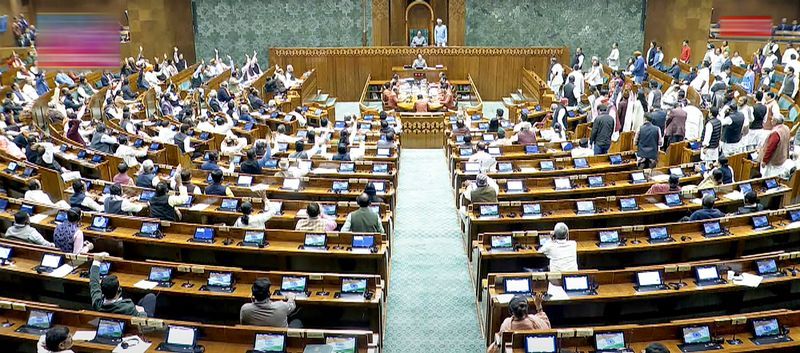
Lok Sabha and Rajya Sabha proceedings were adjourned till noon on Thursday following uproar over the issue of deportation of illegal Indian immigrants from the United States.
As soon as both the Houses assembled, the opposition members, mostly Congress MPs, were on their feet trying to raise the issue.
Rajya Sabha
MPs from the Congress, CPI, TMC, AAP and CPM gave notices under Rule 267, that sought to set aside listed business of the day to take up discussion on the issue being raised through them, but the chair rejected all of them.
MPs then stood in their places and raised the issue. The MPs said the US had deported the Indian immigrants in a military plane in the most inhuman manner and they are not being allowed to raise the issue in the House.
Deputy Chairman Harivansh, who was in the chair, first ordered that the utterances of the opposition MPs will not go on record and then adjourned the proceedings till noon when they persisted with their demand.
Those who gave notices under Rule 267 included CPI’s Santosh Kumar P, TMC’s Sanket Gokhale, CPM’s V Sivadasan and Congress leaders Anil Kumar Yadav, Shaktisingh Gohil, Pramod Tiwari, Renuka Chaudhary and Ashok Singh.
Lok Sabha
Speaker Om Birla tried to pacify the agitating members by saying the government has taken note of their concerns seriously.
“It is a matter of foreign policy. The foreign country also has its own rules and regulations. You can raise your issues at noon and allow the Question Hour to run smoothly,” he said.
However, the protesting members ignored the Speaker’s pleas and continued the protests following which Birla adjourned the House till noon.
A US military aircraft carrying 104 illegal Indian immigrants landed in Amritsar on Wednesday, the first such batch of Indians deported by the Donald Trump government as part of a crackdown against illegal immigrants.
Of them, 33 each are from Haryana and Gujarat, 30 from Punjab, three each from Maharashtra and Uttar Pradesh, and two from Chandigarh.
Defence Budget 2025-26: The Need To Enhance Allocation To 3 Per Cent of GDP For Modernisation
Finance Minister Nirmala Sitharaman while presenting the Union Budget on 1st February 2025 has set aside over ₹6.81 lakh crore for the defence sector for FY2025-26, an increase of 9.53 per cent from the ₹6.2 lakh crore allocated last year. This includes upgrading of fighter jets, naval vessels, improving missile defence systems; strengthening cyber capabilities; focus on “Atmanirbhar Bharat” (Self-reliant India) and welfare of both active and retired armed forces personnel.
Previously, the capital budget clearly outlined allocations for each of the three services, with separate sub-heads for the army, navy, and air force. However, since the last Budget, these allocations have been consolidated into a single grouping, making it difficult to distinguish the funding designated for each service. The capital outlay for 2025–26 has been set at ₹1.8 lakh crore, compared to ₹1.72 lakh crore in the previous fiscal year. This funding is crucial for the modernisation of the armed forces and the procurement of advanced systems, equipment, and weaponry.
The capital expenditure, ₹48,614 crore has been set aside for aircraft and aero engines, while ₹24,391 crore has been allocated for the naval fleet and an amount of ₹63,099 crore has been set aside for other equipment.
A substantial chunk of the budget—₹3.11 lakh crore—has been allocated for revenue expenditure, up from ₹2.83 lakh crore in 2024–25. The increase highlights the government’s focus on maintaining operational readiness and sustaining ongoing activities. The rise in allocation reinforces India’s commitment to keeping its armed forces battle-worthy and capable of responding to emerging security threats.
Another key aspect of the budget is the larger contribution to defence pensions, which have risen from ₹1.41 lakh crore in 2024–25 to ₹1.6 lakh crore in 2025–26, marking a 13.5 per cent increase. The allocation would ensure financial security for retired defence personnel and their families, reinforcing the government’s commitment to their welfare. The increase in pension funding would account for the growing number of retirees.
In order to further improve the border Infrastructure and facilitate the movement of Armed Forces personnel through tough terrains, ₹7,146.50 crore has been allocated to Border Roads Organisation (BRO) under capital head which is 9.74 per cent higher than the BE of 2024-25.
The Ministry of Defence (Civil) has been allocated ₹28,682 crore for 2025–26, up from ₹25,963 crore in the previous year to shore up administrative and auxiliary functions essential for effective defence management. The funds are expected to be used for policy planning, research, and support systems that enhance the overall efficiency of the defence forces.
The government’s focus on capital expenditure aligns with its broader strategy to build indigenous defence capabilities under the Atmanirbhar Bharat initiative. The allocation is expected to support the acquisition of next-generation platforms such as fighter jets, submarines, and drones, as well as infrastructure development for the armed forces. It also shows that India is keeping an eagle’s eye on evolving geopolitical challenges and aims to maintain a strong strategic posture along its borders, including the Line of Control (LoC) and Line of Actual Control (LAC).
The MoD has designated 2025 as the “Year of Reforms”, announcing in December that the Defence Acquisition Procedure (DAP) 2020 is “expected to undergo a complete revamp” this year.
Coming in the backdrop of a volatile regional and global security environment, defence allocations and its distribution among various heads, evokes several pertinent questions, including its adequacy to meet the needs of the defence forces and its impact on ‘Atmanirbharta’. Neighbouring countries, particularly China, continue to advance their military capabilities, including enhancements in air power and naval fleets. The budget is a testament to the government’s strategic intent to strengthen military preparedness as India navigates an ongoing standoff with China while also addressing security concerns along its western border with Pakistan.
The government has set an ambitious target to more than treble the defence production to ₹3 lakh crore by FY29 and raise exports to ₹50,000 crore. India has been ramping up exports as well. Indian arms have found markets in east and southeast Asia over the last five years. Myanmar and Vietnam were the two major recipients of arms transfers from India. India is close to signing a ₹3,800 crore deal with Indonesia for indigenously developed supersonic BrahMos missiles. The country’s defence exports have grown over 10 fold in the last decade from ₹1,900 crore in 2014-15 to ₹21,000 crore in 2023-24.
The IAF needs much more funds in capital allocation as its present combat effectiveness is poor because it has a shortage of more than 114 combat aircrafts for its battle worthiness. Parliamentary standing committee on Defence informed that the IAF has only 31 fighter squadrons, against the sanctioned strength of 42 which is serious. The IAF is unhappy with the current pace of the Tejas light combat aircraft (TEJAS MK-1A) program because of the possible risks a delay in the induction of new fighter planes could pose to the air force’s combat effectiveness, and has flagged the hot-button issue to plane maker Hindustan Aeronautics Limited (HAL), calling for timely execution of the ₹48,000-crore contract for 83 jets.
The infantry also needs enhanced allocation of funds because there is a shortage of night vision and nights firing weapons resulting in heavy casualties in Jammu and Kashmir when the troops go on patrolling in the hazardous and rugged terrain to carry out anti-terror operations.
The defence spending as a share of GDP pertaining to United States is 3.2 per cent; India 1.9-2 per cent (following the increase) and China 1.5 per cent (real figures are much higher higher). There is a need for India to enhance its defence allocation to 2.5 – 3 per cent of the GDP for modernisation keeping in view the threat perception from China and Pakistan.
Col Dr P K Vasudeva is a Defence Analyst
Defence budget grows, but combat deficiencies persist
What is even more glaring is that in the revised estimates for FY 2024-25, Rs 12,500 cr from the capital outlay is to be returned as unspent. This is a poor reflection on defence mgmt.
The defence allocation for FY (financial year) 2025-26 has been pegged at Rs 6,81,210 crore, which is about $78.7 billion. This not-so-insignificant amount is 13.45 per cent of the total Central government expenditure (CGE) and has been estimated to be 1.91 per cent of the national GDP. However, there was no mention of the defence allocation in the Budget speech and this opacity is intriguing.
Notwithstanding the ‘invisibility’, this amount needs to be contextualised against various other parameters and the net distillate is that this allocation falls below the optimum fiscal allocation needed to ensure that the combat capability of the Indian armed forces is at an appropriate level.
At the global level, in 2024, the military spending of the USA was $916 billion and China ranked second at $296 billion.
It merits recall that in 2018, the Standing Committee on Defence (SCOD) had recommended 3 per cent of the GDP as the benchmark for the Ministry of Defence to enable the steady irrigation and nurturing of the national ecosystem required to ensure the desired level of preparedness of the armed forces.
However, this remains an elusive figure and over the last four years — from 2020-21 to the current FY — the trend has been a declining curve. The defence allocation to GDP percentage has dropped from 2.4 in 2020-21 to 1.91 in 2025-26.
This gap has been highlighted over the years, but it is evident that a political decision has been taken by Team Modi that defence allocation will remain depressed even though the regional geopolitical environment and the internal security challenges remain complex and demanding.
The SCOD, in 2018, had also recommended that in the case of the Army — the lead service, which is manpower-intensive — the equipment/inventory mix should ideally be 30 per cent new equipment, 40 per cent current equipment and 30 per cent older-generation equipment.
But the reality is grim. In March 2023, the Army, in a candid disclosure, apprised the standing committee “that only 15 per cent of the Army’s equipment can be categorised as new equipment, while nearly 45 per cent continued to be older equipment.” The Army representative also informed the parliamentary committee that “there is some time to go before we reach the ideal state of 30:40:30.”
The composite combat capability of the Indian military has been denuded over the last decade due to inadequate fiscal allocation and indifferent strategic planning. This has been further compounded by the unrelenting, high-decibel focus on ‘atmanirbharta‘ (self-reliance). While the latter objective is indeed desirable when India is seeking a place at the global high table, the reality is not encouraging in terms of combat capability versus indigenisation and self-reliance.
PM Modi assumed office in 2014 with a commendable resolve to reform India’s defence and military sector and identified ‘atmanirbharta‘ as a core mission. A decade later, the overall picture is mixed and opaque.
A broad review reveals that while the objective has had a few success stories and some major projects are in the pipeline, the Indian military is dotted with significant inventory deficiencies. These include an army that is short of artillery guns, tanks and personal weapons; a navy waiting for carrier-compatible fighter aircraft and modern underwater platforms; an air force that is woefully short of combat aircraft and a DRDO (Defence Research and Development Organisation) that is unable to deliver as promised.
For realising the twin objectives of combat capability and indigenisation, the capital outlay of the defence budget is a critical indicator. An optimum figure is upwards of 35 per cent and here, the picture is bleak. In the current allocation of Rs 6,81,210 crore, the capital outlay is Rs 1,80,000 crore, which is under 27 per cent.
An excellent PRS (Parliamentary Research Service) report of July 2024 has highlighted the fact that this capital outlay share “has declined between 2014-15 and 2023-24 to less than 30 per cent of the defence budget.” The allocation for this FY is in keeping with this trend line and is unlikely to change in the near future.
What is even more glaring is that in the revised estimates for FY 2024-25, an amount of Rs 12,500 crore from the capital outlay is to be returned as unspent. This is a poor reflection on higher defence management and strategic planning for a military that is plagued by obsolescence and inventory shortage and must be redressed.
R&D is at the heart of acquiring the much-desired level of technological competence in strategic sectors of national endeavour and here, the Indian space and nuclear domain are islands of proven success. However, the DRDO trajectory in relation to enabling the military to move up the ‘atmanirbharta‘ ladder has been poor. The PRS 2024 report notes that several projects undertaken by the DRDO have been marred by delays and adds: “In an analysis of 178 DRDO projects, CAG observed that 119 projects did not adhere to the original timeline. In 49 projects, the additional time taken was more than the original schedule which was envisaged. Projects have been declared as successful despite them not meeting one or more key objectives and parameters.”
This is a case of both institutional ineptitude and turpitude and yet another indictment of higher defence management at the apex.
Year after year, the defence budget goes through this phase of transient scrutiny in the public domain and even while deficiencies are highlighted, the standard refrain is that if there is a need, the purse strings will be opened. This is reactive posturing and when the chips were down, as in Kargil 1999, national sovereignty was retrieved by the loss of life and limb.
Credible military preparedness to deter the adversary from adventurism of any kind cannot be realised by prioritising visibility, spectacle and opacity.
Indian Army Strengthens Strategic Preparedness With Multi-Domain Operations Session At Brahmastra Yudhyasva
The Indian Army recently conducted a significant session focused on Multi-Domain Operations (MDO) at the Brahmastra Yudhyasva event, held from January 31 to February 1, 2025, at the Panagarh Military Station. This initiative is part of the Army’s broader strategy to enhance its strategic preparedness and operational capabilities in a rapidly evolving security environment.
The session featured insights from military experts, including Nitin Gokhale and Anshuman Narang, who discussed various aspects of MDO, particularly the integration of space operations into military strategies.
The focus on MDO reflects the Indian Army’s commitment to developing capabilities that span land, air, cyber, and space domains. This holistic approach is essential for maintaining operational readiness against diverse threats.
The Brahmastra Corps has been actively engaged in rigorous training exercises aimed at enhancing individual and collective skills among troops. These exercises are designed to simulate real-world scenarios and improve tactical responses in multi-domain environments.
This session aligns with the Indian Army’s Vision 2047, which aims to transform the force into a modern, agile, and technology-enabled entity capable of deterring and winning conflicts across various operational spectrums. The emphasis is on joint operations and integration among different branches of the armed forces to ensure effective responses to emerging challenges.
The Brahmastra Yudhyasva event underscores the Indian Army’s proactive approach in adapting to modern warfare dynamics and enhancing its strategic capabilities through comprehensive training and expert deliberations.
Agencies
‘Indian Army Disagrees With PM Modi’: Rahul Gandhi On Border Dispute With China; Causes Uproar In ParliamentMonday,
On February 3, 2025, during a session of the Lok Sabha, Rahul Gandhi, the Leader of the Opposition, made significant allegations regarding India’s territorial disputes with China. He asserted that “the Prime Minister has denied it, but the Army has contradicted him,” claiming that China is occupying 4,000 square kilometers of Indian territory.
This statement was made in the context of a broader critique of the government’s handling of national security and economic policies, particularly the ‘Make in India’ initiative, which he argued has failed to bolster domestic production capabilities.
Gandhi emphasized that the presence of Chinese troops within Indian territory is a direct consequence of this failure. He stated, “The reason China is sitting inside this country is because ‘Make in India’ has failed,” linking India’s reliance on Chinese imports to national security risks. He warned that in the event of a conflict with China, India would be dependent on Chinese-made components for its military operations, including electric motors and batteries.
His remarks prompted a sharp response from the ruling party, with Parliamentary Affairs Minister Kiren Rijiju accusing Gandhi of spreading false narratives. The Lok Sabha Speaker, Om Birla, also intervened, requesting evidence to support Gandhi’s claims.
In addition to his comments on territorial issues, Gandhi criticized India’s economic policies, stating that while mobile phones may be assembled in India, most components are sourced from China. He argued that this dependency effectively means India is “paying a tax to China” each time these products are purchased.
ET
Gripen-E Will Be The Fastest Delivery To The IAF Says SAAB
As the IAF looks closely at the full package of choices available for its MRFA acquisition program, SAAB’s Gripen offer is a complete package of capabilities to defeat the most advanced threats in a modern battlespace while ensuring future operational relevance.
According to Kent-Åke Molin, Head of the Gripen India campaign, “Gripen’s exceptional capabilities align seamlessly with India’s defence needs, offering advanced weapons, cutting-edge sensors, countermeasures systems and pilot-friendly Human-Machine Collaboration (HMC).”
What is critically important from an IAF point of view is the speed of delivery and the transfer of capabilities to the Indian industry to enable them not just to build the aircraft but also to take them to the next level.
Leveraging decades of experience in fighter jet production, SAAB combines state-of-the-art manufacturing technologies with highly efficient processes to ensure swift delivery of Gripen. Factors such as AI, Model-based development, additive manufacturing (AM), and 5-axis high-speed machining significantly reduce lead time.
“We offer an industrial programme that builds self-reliance and offers sustainable high-tech jobs while creating extensive business opportunities across India. Our proposal includes the transfer of Maintenance, Repair, and Overhaul (MRO) capabilities, the local production of aircraft components and engine assembly, and the establishment of a state-of-the-art Gripen Design Centre in Bangalore. The centre will harness local engineering talent for advanced avionics and software development. It will not just allow India to develop systems tailored to its specifications, but also ensure full control over its fighter systems, including the ability to execute upgrades and modifications,” Kent-Åke says.
SAAB’s technology transfer offer goes far beyond Gripen; it includes potentially supporting indigenous programmes like the Light Combat Aircraft (LCA) and Advanced Medium Combat Aircraft (AMCA).
Gripen’s technology transfer offer also presents India with opportunities to build a global export centre. “We would like to position India as a potential export hub for Gripen E aircraft and related systems. Our proposal promises a self-reliant defence industry that supports itself and serves international markets as well,” Kent-Åke concludes.
SAAB
State Stalwarts
DEFENCE MINISTER
Minister Rajnath Singh
ALL HUMANS ARE ONE CREATED BY GOD
HINDUS,MUSLIMS,SIKHS.ISAI SAB HAI BHAI BHAI
CHIEF PATRON ALL INDIA SANJHA MORCHA
LT GEN JASBIR SINGH DHALIWAL, DOGRA
SENIOR PATRON ALL INDIA SANJHA MORCHA
MAJOR GEN HARVIJAY SINGH, SENA MEDAL ,corps of signals
.
.
PATRON ALL INDIA SANJHA MORCHA
MAJ GEN RAMINDER GURAYA ,MADRAS REGIMENT
sanjhamorcha303@gmail.com
PRESIDENT SOUTH ALL INDIA SANJHA MORCHA
COL SS RAJAN BOMBAY SAPPERS,
PRESIDENT UTTARAKHAND ALL INDIA SANJHA MORCHA
COL B M THAPA ,BENGAL SAPPERSS
PRESIDENT HARAYANA STATE CUM COORDINATOR ESM
BRIG DALJIT THUKRAL ,BENGAL SAPPERS
PRESIDENT TRICITY
COL B S BRAR (BHUPI BRAR)
PRESIDENT CHANDIGARH ZONE
COL SHANJIT SINGH BHULLAR
.
.
PRESIDENT PANCHKULA ZONE AND ZIRAKPUR
COL SWARAN SINGH
INDIAN DEFENCE FORCES
DEFENCE FORCES INTEGRATED LOGO
INDIAN AIR FORCE
Air Officer C-in-C WESTERN AIR COMMAND
AIR MSHL S PRABHAKARAN AVSM VM
AOC-IN-C, EASTERN AIR COMMAND
Air Marshal Inderpal Singh Walia
AOC-in-C SOUTH WESTERN AIR COMMAND
Air Marshal Vikram Singh
AOC-IN-C, SOUTHERN AIR COMMAND
Air Marshal J.Chalapati
AOC-IN-C TRAINING COMMAND
AIR MARSHAL SK GHOTIA VSM
AOC-IN-C MAINTENANCE COMMAND
Air Marshal Jagdish Chandra
Flag Officer Commanding in Chief, Western Naval Command
ice Admiral R Hari Kumar, PVSM, AVSM, VSM
Flag Officer Commanding in Chief, Eastern Naval Command
Vice Admiral Sanjay Bhalla, AVSM, NM
Flag Officer Commanding in Chief, Southern Naval Command