Sanjha Morcha

All posts by webadmin

SELECTION PROCESS OF FIRST BATCH TO JOIN ARMED FORCES AT THE NEWLY RAISED SELECTION CENTRE NORTH (SCN), KAPURTHALA, PUNJAB‬

THE SELECTION PROCESS OF FIRST BATCH OF 80 ASPIRANTS TO JOIN ARMED FORCES HAS COMMENCED ON 01 APR 16, AT THE NEWLY RAISED SELECTION CENTRE NORTH (SCN), KAPURTHALA, PUNJAB‬

The selection process of first batch of 80 aspirants to join Armed Forces has commenced on 01 Apr 16, at the newly raised Selection Centre North (SCN), Kapurthala, Punjab . It was inaugurated by Lt Gen KJ Singh, Army Commander ‪#‎WesternComd‬ in presence of military and civil dignitaries. The team of officers worked relentlessly and put the centre into operation four months before the target date of 01 Sep 2016. The selection centre consists of two Services Selection Boards which will cater to the candidates from Punjab, Haryana, Himachal Pradesh, Chandigarh and even Jammu and Kashmir.


 ADGPI - Indian Army's photo.
ADGPI - Indian Army's photo.

WHO IS THE REAL VEER NAR::: WIDOW OR THE MOTHER::VIEWS

Veer. Nari. In my view widow of martyr, so called better half is the real and legal claimant of all the benefits accrue on the death of a martyr. All other claimants come after her. If martyr was unmarried, mother becomes the first claimant to draw all benefits

Not looking after and cooperating with in laws. Moreover, if widow

of martyr marries outside the family, she looses certain benefits, even the status of veer nari. Hence, the widow of the martyr is the real veer nari.

FROM

Major Naranjan Singh Multani

OI/C Pension and grievance cell

Sanjha Morcha

########################################################


Dear veterans
Sanjha Morcha has decided to upload views of veterans on the controversial issues of
” WHO IS THE REAL VEER NARI”
The wife of the Martyr or the mother.

Number of cases the mother did not even know that his daughter- in law  is receiving gallantry award and called VEER NARI
A mother who has given birth to the son and may BE the only one but deprived of any praise OR RIGHTS to be called VEER NARI.
On one side we call Bharat Mata Ke jai and say Jannai( WHO GIVES BIRTH) is supreme but in army we call the better half( WIFE)  as veer nARI .she may be newly married or old and gets remarried but still she gets the name and fame.
CAN WE CALL THEM AS VEER NARI AND VEER MAA
Post you views and send them at
sanjhamorha303@gmail.com.
To be uploaded on the website of Sanjha Morcha
www.sanjhamorcha.com

Col Charanjit Singh Khera(Retd)

Gen Secy

Sanjha Morcha


Pakistan opens fire with small arms in Samba

Tribune News Service

Jammu, April 15

After the Pakistani army shelled Poonch villages on the Line of Control (LoC) on the intervening night of April 9 and 10, Pakistan Rangers today fired four rounds of small arms on an Indian forward post along the 198-km-long international border in Samba district.“Last night around 2.15 am Pakistan fired four rounds of small arms on the Regal forward post in the Samba sector of the Jammu region,” said an Intelligence official.Senior Superintendent of Police, Samba, Joginder Singh informed that around 2.15 am, the Pakistan Rangers fired three or four rounds of small arms from their Chak Pura post.The BSF didn’t retaliate and there were no reports of any loss, he added.The Pakistan army had on April 9 and 10 had resorted to mortar shelling and firing in the Poonch sector after a lull of nearly seven months, following which the two sides held a battalion commander-level flag meeting at Chakanda Bagh to discuss the situation on April 12.However, the BSF that guards the international border stated that Rangers fired four rounds of small arms in the air to scare away a leopard, who had been roaming in the area for the past few days.“They didn’t target our post and it (firing) was not intentional,” said a senior BSF officer.With the onset of summer and suspension of Indo-Pak dialogue, intelligence agencies anticipate a spurt in truce violations and intrusion bids on the frontiers of Jammu and Kashmir.India and Pakistan had a inked truce deal on November 26, 2003.


70 border roads in J&K lie incomplete

Ravi Krishnan Khajuria

Tribune News Service

Jammu, March 21

Pakistan and China have been working expeditiously to complete the $ 46-billion China-Pakistan Economic Corridor (CPEC), but at least 70 border roads in Jammu and Kashmir remain incomplete. A majority of these roads are in the strategic Ladakh region. In April 2015, China and Pakistan signed an agreement to build the CPEC through Gilgit-Baltistan. It will extend to Gwadar Port in Pakistan and give China access to the Indian Ocean and beyond.An official document on the incomplete Border Roads Organisation (BRO) projects says that 198 roads, which were sanctioned in the last five years, are yet to be completed. Of them, 70 roads await completion in Jammu and Kashmir.“There are certain delays in the execution of road projects mainly due to problems over forest and wildlife clearance, limited working season, difficulties in the availability of construction material and delay in land acquisition,” said the document.However, the Centre in a bid to expedite the pace of road projects had taken up the issue with Chief Secretary BR Sharma requesting him to constitute an empowered panel. Consequently, J&K constituted the panel to resolve the issue.The Union Ministry of Environment and Forests has given an approval under Section 2 of the Forest (Conservation) Act, 1980, for diversion of forest land required for the construction of roads entrusted with the BRO in area falling within the 100-km aerial distance from the Line of Actual Control (LAC) and for link roads between border roads in the area within the 100-km aerial distance from the LAC, national highways, state highways and other roads.The 3,488-km-long LAC between India and China runs through the Himalayan states of J&K, Himachal Pradesh, Uttarakhand, Sikkim and Arunachal Pradesh. Ladakh shares with China 955-km-long LAC that includes some portion of the international border and 122-km-long AGPL (Actual Ground Position Line).“In the strategically significant Ladakh where Chinese incursions and India-China stand-offs frequently take place, impediments being faced by the BRO could affect the operational preparedness of the Indo-Tibetan Border Police (ITBP) and the Army,” said an Army source.The Army headquarters in New Delhi have been voicing concern over the matter and the Centre has been urged to remove bottlenecks to pave the way for the BRO to speed up its work and complete some important road projects, Army sources said.While 12 Indo-China Border Roads (ICBRs) in Ladakh need immediate completion, at least 10 of the ITBP posts get cut off every winter for over six months for lack of road connectivity.

Bumpy ride for BRO

  • An official document on the incomplete Border Roads Organisation (BRO) projects says that 198 roads, which were sanctioned in the last five years, are yet to be completed. Of them, 70 roads await completion in J&K
  • The delays in the execution of road projects are due to problems over forest and wildlife clearance, limited working season, difficulties in the availability of construction material and hurdles in land acquisition

HARVEST FESTIVAL Indian, Chinese armies hold 2 border meetings in Ladakh

Indian, Chinese armies hold 2 border meetings in Ladakh
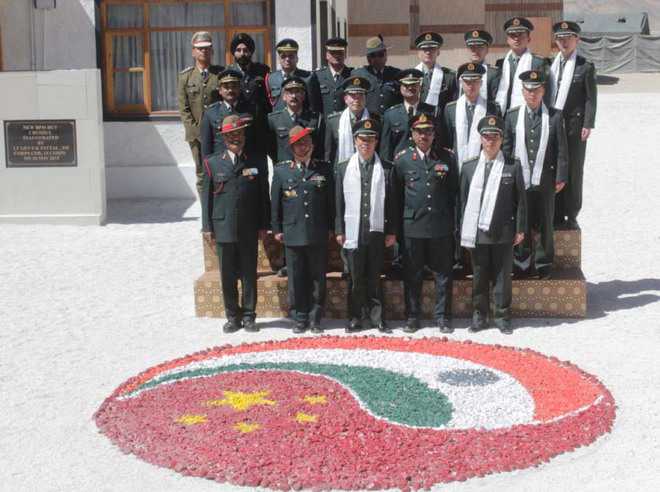
A ceremonial border personnel meet on the occasion of harvest festival in eastern Ladakh. a tribune photo

Tribune News Service

Jammu, April 14

Ahead of Defence Minister Manohar Parrikar’s four-day visit to China to discuss a host of issues, including maintaining peace on the Line of Actual Control (LAC), the armies of the two countries today held ceremonial border personnel meetings (BPMs) in the Chushul and Daulat Beg Oldi (DBO) sectors in the Ladakh region to mark harvest festival.Parrikar is scheduled to visit China from April 17 and it will be followed by National Security Adviser (NSA) Ajit Doval’s visit, probably on April 20.“Ceremonial border personal meetings (BPMs) on the occasion of harvest festival were conducted today at Indian BPM Hut in Chushul and Indian Meeting Point Hut at Daulat Beg Oldi (DBO) in eastern Ladakh,” said Northern Command’s Defence spokesperson Col SD Goswami.“The delegations were led by Brig Rajender Rai in Chushul and by Col BS Uppal in DBO. The Chinese delegations were led by Senior Col Wang Jun Xian in Chushul and by Lt Col Duan Yu Gangin,” added Col Goswami.The ceremonial border personal meetings were marked by saluting the national flags by both the delegations members.This was followed by the ceremonial address by both delegation leaders, which was composed of exchange of greetings and wishes and reflected the mutual desire of maintaining and improving relations at the functional level at the border.Thereafter a culture programme showcasing Indian culture and traditional grandeur was organised.Both the delegations interacted in a free, congenial and cordial environment. The delegation parted amidst feeling of friendship and commitment towards enhancing the existing cordial relations and maintaining peace along the LAC. Both sides also sought to uphold the treaties and agreement signed between the governments of the two sides to maintain peace and tranquility along the LAC.


From The Tribune archives: ‘Bhagat Singh, Rajguru and Sukhdev executed’

Tribune News Service

Chandigarh, March 23

Indian freedom struggle heroes Bhagat Singh, Rajguru and Sukhdev were executed in Central Jail, Lahore, on this day, March 23, in 1931.An image of Page 1 of The Tribune dated March 25, 1931, carrying the news of the hanging and related issues can be seen below. For a larger image of the page, click here


Pak claims RAW running ‘special cell’ to sabotage CPEC project

Islamabad, April 14

Upping the ante against India, Pakistan has claimed that spy agency RAW is running a “special cell” to sabotage the multi-billion-dollar China-backed CPEC project.

Defence Secretary Lt Gen (retd) Alam Khattak told the Senate Standing Committee on Defence yesterday that the Research and Analysis Wing (RAW) had set up a ‘special cell’ to sabotage the ambitious China-Pakistan Economic Corridor (CPEC).

Khattak said this during an in-camera briefing to the committee on RAW’s alleged involvement in subversive activities in Pakistan.

His statement came a day after Army Chief Gen Raheel Sharif accused India of openly challenging the CPEC and blamed the country for “destabilising” Pakistan.

A member of the committee said the Defence Secretary told the meeting that Indian consulates in Afghanistan were providing money, weapons, training and other logistic support to RAW agents for carrying out subversive activities in Pakistan, particularly in Balochistan and the tribal areas.

The senate panel was also informed that RAW was closely coordinating with Afghan intelligence agency National Directorate of Security (NDS) for “anti-Pakistan activities”.

Sharif had said RAW was “blatantly” involved in destabilising the country, adding that Pakistan will not allow “hostile intelligence agencies” to create unrest.

Pakistan recently claimed to have arrested an Indian spy, Kulbhushan Yadav, in Balochistan near the border with Iran.

Yadav, who is an Indian naval officer, “confessed” to have been working for the RAW to create instability in Balochistan as well as in Karachi.

New Delhi has said that Yadav was a former navy officer but insisted that he had no connection with the Indian government or RAW. — PTI


405 cross-border firings in J&K in 2015: Govt

short by Anupama K / 04:06 pm on 16 Mar 2016,Wednesday
A total of 405 incidents of cross-border firing have taken place in the Indo-Pak border area in Jammu and Kashmir in 2015, said MoS for Home Haribhai Chaudhary. Of the incidents, 253 took place on the International Border and 152 others along the Line of Control. During these incidents, 16 civilians were killed and 72 houses were damaged, added Chaudhary.

At commanders’ meet, IAF looks to enhance ops

Tribune News Service

New Delhi, April 11

The Indian Air Force (IAF), which is currently battling its lowest strength of fighter jets in a decade, today started its bi-annual “commanders conference” to enhance its operational capability.The five-day conference will be discussing various means and methods to improve operational capability, including the induction of new fighter jets. Minister of State for Defence Rao Inderjit Singh inaugurated the conference this morning.IAF Chief Marshal Arup Raha updated the minister on operational status of the IAF, security measures in vogue and the progress on infrastructure development, including upgrade of airfields.The IAF showed how it has increased the aircraft serviceability and the corresponding increase in flying tasks of the IAF.The IAF chief explained the focus areas and the future roadmap. Defence Secretary Mohan Kumar and Secretary (Defence Production) AK Gupta were also present at the meeting.During this conference, senior leadership of the IAF would deliberate on issues pertaining to air operations, maintenance, human resources and administration. Aspects of support provided by the Defence public sector undertakings through indigenised production of prime equipment would also be discussed in a daylong session on April 13.The IAF will be discussing the light combat aircraft, the Tejas, with high-level delegation from Hindustan Aeronautics Limited

5-day bi-annual event

  • The Indian Air Force started its bi-annual ‘commanders conference’ on Monday
  • The five-day conference will be discussing various means and methods to improve operational capability, including the induction of new fighter jets
  • Senior officials will deliberate on issues pertaining to air operations, maintenance, human resources and administration

PAK SCAN: INDIA’S VORACIOUS ARMS APPETITE

INDIANDEFENSE NEWS

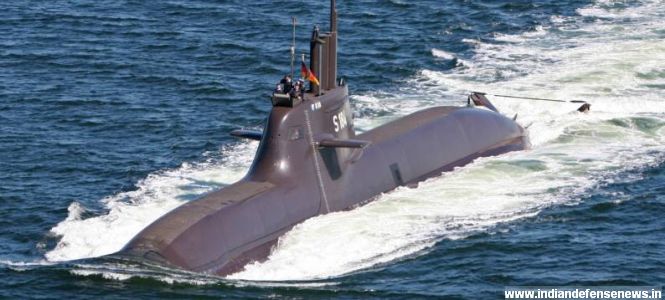
A German Type 214 Advanced Diesel Electric Submarine

by Sultan M Hali

And its need to blame others

India raised a hullabaloo over the $700 million sale of eight US F-16 fighter jets to Pakistan. The move was scuttled in the US Senate on March 10, 2016, when the 30 days hold on US financing for the deal expired. Indian lobbyists in the US had raised a hue and cry, citing disparity in the balance of arms in the region if the sale of 8 F-16s went through. US Senate Foreign Relations Chairman Senator Bob Corker, whose committee has jurisdiction over foreign arms sales, Rand Paul, a Kentucky Republican and one-time presidential candidate as well as Senator John McCain, prodded by India tried to create hurdles for the arms sale to Pakistan but their efforts came to naught. Lawmakers voted 71 to 24 against an attempt introduced by Republican Senator Rand Paul to prevent the sale under legislation known as the Arms Control Act with the understanding that the South Asian state needs to modernise its air force and counter-terrorism activities.
Contrast this with the insatiable Indian appetite for acquiring sophisticated arms. Franz-Stefan Gady, Associate Editor of “The Diplomat”, in his March 1 op-ed titled ‘Russia Remains India’s Largest Arms Supplier (For Now)’, states that over the past three years, Russian defence deals with India exceeded 340 billion rupees (over $5 billion), with the United States coming in at a close second with 300 billion rupees (around $4.4 billion) in deals. He goes on to add that over the last three fiscal years, Russia was also able to claim the majority of signed defence contracts. Quoting India’s defence ministry, Gady reveals that from 2012-2013 to 2014-2015 fiscal years, 162 arms purchase contracts were signed, among them 67 with other countries, including Russia (18 agreements), the United States (13) and France (six).
Russian equipment made up around 75 percent of all of New Delhi’s weapons imports from 2004 to 2014. From 2009 to 2013, India and Russia signed defense deals worth an estimated $30 billion. In comparison, France signed contracts worth $30 billion and the United States contracts worth $11 billion during the same time period.
S-400 is the world’s most advanced Air Defense System
In 2014 the United States supplanted Russia as India’s top weapons supplier, with the total value of US imports increasing from $200 million in 2009 to $2 billion in 2014.
US defence contractor Boeing alone has won bids to supply the Indian military with ten C-17 Globemaster-III strategic airlift aircraft (worth $4.1 billion), eight P-8I maritime patrol aircraft (worth $2.1. billion), 22 AH-64E Apache, and 15 CH-47F Chinook helicopters (both helicopter deals have a combined worth of $2.5 billion).
The French aircraft maker Dassault Aviation is in the final steps of concluding a contract for the sale of 36 Rafale fourth-generation multirole fighter jets to the Indian Air Force at an estimated cost of $9 billion. In addition, European defence contractor EADS has been selected to supply six Airbus A330 Multirole Tanker Transport aircraft for the Indian Air Force in a $1 billion tender.
According to the Russian Military Complex chief, Moscow and New Delhi have also agreed to perform design work in India on what Russia claims would be a “fifth generation” version of the Su-35, an agreement that may lead to an Indian variant of the fighter jet. Russia claims the Su-35S would be a fifth generation fighter, as opposed to the legacy fourth generation Su-35. That implies stealth, but it’s unclear whether the jet would be on par with an F-35 Joint Strike Fighter. Russian industry sources said the fighter will be priced at $85 million. That could make it competitive with Dassault Aviation’s Rafale, and could have implications for India’s proposed purchase of 126 Rafales.
German daily “Der Spiegel” reports that Germany and India are already in discreet talks over the possible acquisition of six small German Thyssen Krupp Marine Systems (TKMS) diesel-electric submarines, equipped with air-independent propulsion (AIP) systems, for a total cost of $ 11 billion. The subs would be built by Howaldtswerke-Deutsche Werft (HDW) in Kiel.
While the “Der Spiegel” article does not offer any details over the precise TKMS submarine type offered, some reports surfaced earlier that Germany was going to offer the HDW Type 214, an export variant of the stealthy HDW Type 212. The Type 214 lacks some of the Type 212′s classified technologies such as its non-magnetic steel hull, which makes the sub particularly difficult to detect.
India currently operates four older HDW Type 209 submarines with the first commissioned back in 1986. Two of the four vessels, the INS Shalki and INS Shankul, were produced in India under a technology transfer agreement. “The very fact that INS Shalki and Shankul were made in India by an Indian shipyard under a technology transfer agreement is proof that TKMS has been supporting India’s indigenous defence industry for over a quarter of a century,” according to Gurnad Sodhi, Managing Director of TKMS India.
The Indian government has been deliberating over the purchase of six additional stealth submarines, capable of attacking land targets and equipped with AIP, since 2008 and is expected to make a decision by the year’s end (in a previous deal, India already opted for the purchase of six French Scorpene-class diesel-electric attack submarines the first of which was floated out in April, 2015). According to the original Project 75-I proposal, two submarines would have been directly bought from one selected foreign shipyard with the remaining four built in India. Now, with the Modi government’s ‘Make in India’ program all six vessels are to be built in India.
India is also going to acquire the world’s most advanced anti-ballistic missile system — the S-400. Previously known as S-300PMU-3, S-400 is a new generation anti-aircraft weapon system developed by Russia’s Almaz Central Design Bureau as an upgrade of the S-300 family. It is currently in service with the Russian Armed Forces.
The S-400 is designed to protect nuclear reactors, population centres and government installations. The system can also deflect enemy missile more than 400 km away. India’s voracious lust for arms is ceaseless.