Pathankot attack staged by India: Pakistan JIT


Vishav Bharti
‘Whose obituary do you want to write?’ he would have laughed at me. ‘G Fellow’, who was admired by the radical Left cadre as a commentator on international politics? Gurmeet Singh — the name that he shed decades ago in Amritsar when he joined the Naxalite movement in the 1970s? Or Satnam, whose classic travelogue Jangalnama was hailed by mainstream English critics as India’s answer to ‘Red Star Over China,’ a 1937 book by Edgar Snow? The account of the Communist Party of China was written when they were a guerrilla army still obscure to Westerners.Satnam, who died in Patiala on Wednesday night at the age of 64, lived many lives. Sometimes as an underground Maoist guerrilla, sometimes as a democratic rights activist on fact-finding missions on human rights violations in Kashmir and Gujarat genocide, or as a creative writer, who would write with equal felicity in Punjabi, Hindi and English.Like many youngsters in 1970s, he also left home with a dream that the world can be made a better place to live. “But he was one of the few who remained steadfast in his belief till their last,” says Prof Bawa Singh, his close friend and former vice-chairman, National Commission for Minorities.All these decades, besides political activism, Satnam kept on writing short stories and political commentary under different pen names. “He had written around 15 short stories but nobody bothered to preserve them and he himself was busy in activism, so most of these are lost,” reveals Singh. Among those writings only one story, World’s Oldest Profession, on prostitution that appeared in a Hindi magazine has survived.“While travelling in Bastar in 2001, it never crossed my mind that I will write something,” he would often say about Jangalnama.Two years later, while reading something, the idea occurred, thus Punjabi literature’s ground-breaking travelogue was written in just 12 days. “Then I didn’t think of publishing it but some friends took the initiative in 2004,” he would tell.People were for the first time reading accounts from the jungles of Bastar that the Maoist movement was not only about Improvised Explosive Devices (IEDs) or killing security personnel, but it was also about how people were struggling to change their fate when the state is absent. Even Arundhati Roy, who admired the work as “the best work on India’s Maoist movement”, later acknowledged that his book inspired her to visit Bastar. But he refused to sell his soul to the logic of manufactured fame.Around five years ago, when Operation Green Hunt was at its peak, he surfaced again after traversing the virtual war zone of Bastar for several weeks. How was it, I asked? “I do not know why I no more fear death,” he quipped.Now I remember his lines in Jangalnama about tribal fighters, “The purity and conviction of their aim gives them the courage to look death in the eye. They love life but they don’t care about death.” He was no different in his life. Nor will he be in his death.(The writer translated Jangalnama into English)
NEW DELHI: The Make in India plan to build local capacity in defence has fuelled a trend of private companies hiring retired top military brass and tap their expertise to get a toehold in the arms bazaar.
LOCKHEED MARTINUS aerospace giant Lockheed Martin has offered to manufacture its F-16 fighter jet in the country under Make in India which has generated more jobs for former military personnel.While the development has opened new and greener pastures for defence personnel it has also raised questions over conflict of interest and propriety.
Recently, Rolta India Limited hired Lieutenant General KT Parnaik, a retired Northern Army commander, to head its defence business. To kick-start its new businesses, Reliance Defence and Aerospace (RDA) inducted a battery of retired three-star officers — Air Marshal M Matheswaran, president of aerospace business; Vice Admiral HS Malhi, group president of Reliance Defence and Engineering Ltd; Lieutenant General MS Buttar, president of land systems and Vice Admiral KN Sushil, president of submarine business.
A senior RDA executive said the officers were hired for their operational expertise and not for liaisoning.
Industry sources said the salaries range from `36 lakh per annum to `One crore, depending on the profile of retired officers and the companies that hire them.
Retired officers are free to join defence companies after a year-long cooling-off period. The opinion is divided on whether this ‘break’ is sufficient to avoid a conflict-of-interest situation.
In 2012, a Parliamentary panel suggested the coolingoff period be extended to five years to address concerns about top officials being hired by firms to influence decisions.
Air Vice Marshal AJS Walia (retd), now the regional executive (India and South Asia) of Sikorsky Aircraft Corporation, argues that top officers have manned sensitive positions in service and are aware of their responsibility to avoid conflict of interest.
“They come with decades of experience. They understand technology and how requirements change. Why should this talent be wasted on the golf course?” he said.
But some serving officers have called for stricter checks and balances to ensure the ‘Lakshman Rekha’ of propriety was not crossed. “There are pros and cons…Old contacts definitely should not be used to push business interests,” said a senior officer on the condition of anonymity.
Industry leaders contend that preference for retired officers rests solely on their understanding of customers’ requirement. “Firms hire them to communicate to the armed forces what they are all about and what they bring to the table,” said Ashok Atluri, managing director of Zen Technologies, an indigenous firm that manufactures simulators.
“There are many experts in the market to interpret the DPP. Retired brass only provides insights into what solutions may be liked by the customers,” said the CEO of a top defence firm, adding that the defence procurement procedure (DPP) was transparent and left no room for outsiders to influence decisions.
Lieutenant General JS Bajwa (retd), editor of Indian Defence Review, concurs. “Gone are the days when people could influence decisions,” Bajwa added.
Prime Minister Narendra Modi shakes hands with British Prime Minister David Cameron before a meeting at the Nuclear Security Summit at the Walter E. Washington Convention Center in Washington on April 1, 2016.— AP/PTI
Washington, April 2
Prime Minister Narendra Modi met his British counterpart David Cameron here on the sidelines of Nuclear Security Summit (NSS), during which the two leaders discussed defence co-operation and Make in India issues.
“My meeting with PM David Cameron focused on defence cooperation, make in India and other key issues,” Modi said in a tweet before he left for Saudi Arabia after two days of engagement with world leaders during the NSS here.
Briefing reporters, the Ministry of External Affairs spokesman Vikas Swarup said during the meeting yesterday both leaders recalled Modi’s visit to London last year, during which India and the UK had signed deals worth 9-billion pounds and inked a civil nuclear pact.
Modi said that ties between the two countries had become “richer and deeper”.
Defence cooperation came up for discussion and Prime Minister Modi mentioned that Britain could be a partner in the ‘Make in India’ initiative, especially in the defence sector.
Visa issues also came up for discussion, Swarup said.
Both the leaders also reviewed the decisions that had been taken during Modi’s visit to Britain last year in particular the decision to launch rupee bonds at the London Stock Exchange.
Cameron expressed happiness that it was proceeding very well.
“He also said that we need to increase our partnership in defence. Prime Minister said that high-tech defence production has now been opened up to 100 per cent FDI, India had skilled manpower, cheap labour was also available and as such UK can become very important partner in the Make in India initiative particularly in the defence sector,” Swarup said.
The two leaders discussed some of the other pending issues between them including terrorism.
“Prime Minister also raised the issue of Tier II visas for IT companies. He said skilled professionals should not find it difficult to come to work in the UK. And, in this context the recommendations made by the migration advisory committee could caste a negative light,” Swarup said.
“Cameron promised to take a look at it. He said we do not want to disadvantage bonafide IT companies, but at the same time we would also want to ensure that the UK system is not misused,” the spokesman said. — PTI

Washington, April 26
The US military conducted “freedom of navigation” operations against 13 countries last year, including several to challenge China’s claims in the South and East China seas, according to an annual Pentagon report released on Monday.The operations were against China, India, Indonesia, Iran, Libya, Malaysia, the Maldives, Oman, the Philippines and Vietnam, the report said.It did not specify how many such operations were conducted against each of those countries. The US military carried out single operations against Taiwan, Nicaragua and Argentina, for a total of 13 countries, the department said in the two-page report.The freedom of navigation operations involves sending US Navy ships and military aircraft into areas where other countries have tried to limit access. The aim is to demonstrate that the international community does not accept such restrictions.The US military has repeatedly conducted operations disputing China’s maritime claims in recent years and did so again in 2015, a year in which Beijing’s island-building activity in the resource-rich areas of the South China Sea led to rising tensions in the region.A US guided-missile destroyer conducted a freedom of navigation patrol near one of China’s man-made islands in the Spratly archipelago in October. US military flights near the islands have been warned off.US Defense Secretary Ash Carter said the Navy would continue to operate in the region despite China’s condemnation of the patrols.China’s Defense Ministry said in a statement on its website late on Monday that it was deeply concerned by such operations.”The United States carries out militarisation in the South China Sea in the name of freedom of navigation and overflight, threatens coastal nations’ sovereignty and security and destroys regional peace and stability,” the ministry said.It made the comment in response to what it said were reports of recent US military flights near Scarborough Shoal – known by Beijing as Huangyan Island – an area China seized control of after a stand-off with the Philippine coast guard in 2012.Admiral Harry Harris, the head of US Pacific Command, said this year the Navy would step up the freedom of navigation operations in the South China Sea because of concerns China is attempting to assert its dominance by building military facilities there.US freedom of navigation operations last year also challenged China’s claims of jurisdiction in the airspace above its maritime Exclusive Economic Zone as well as restrictions it has tried to impose on aircraft flying through an Air Defense Identification Zone over the East China Sea.The number of countries the United States challenged last year was down from 2014, when it targeted 19 countries. That was the largest number in more than a decade.Iran and the Philippines have been the most frequently challenged countries over the years, mainly because they sit astride busy sea lanes whose use they have tried to limit or govern. —Reuters

Mumbai, March 21
The world’s highest rail bridge being constructed over the Chenab river in Reasi district of Jammu and Kashmir will be “terror attack-proof” and is expected to be completed by early 2019, the Konkan Railway has said.“Apart from being safe from all possible disasters, including earthquakes, this bridge will be absolutely safe to sustain terror strike and every precautionary step is being considered to make it foolproof,” Konkan Railway Chairman and Managing Director Sanjay Gupta told reporters, who visited the bridge site.“I want to assure you all that this bridge will be most safe and the perfect way to travel,” said Gupta.He said almost 60 per cent of the work was done, and after completion, the maximum permissible limit for a train over the bridge would be 90 kmph. An 18-coach train can tolerate wind speed of 80 kmph while passing through it.“We are making the bridge terror-proof. We have taken logistical support of DRDO officials and when completed, the bridge’s pillars and other parts can withstand a jolt created by 40 kg of RDX with no immediate adverse effect on the operation of the trains,” said another senior official.The construction of the 359-m high and 1,315-m long rail bridge started in 2005 and it was initially slated to be completed in December 2009.However, in 2008 the work was stopped amid fears over its stability and safety. Its construction restarted in 2010 and officials hope to complete it by early 2019.The bridge is part of the much-awaited 326-km-long Udhampur-Srinagar-Baramulla rail link that will connect the Kashmir valley with the rest of the country. — PTI

New Delhi, April 8
Two former top officials of Italian aerospace and defence group Finmeccanica have been convicted by a court in Italy for corruption in the sale of 12 VVIP choppers to India for Rs 3,727 crore.Giuseppe Orsi, former CEO of Finmeccanica, and Bruno Spagnolini, former head of AgustaWestland (a Finmeccanica subsidiary) were yesterday sentenced to over four years in prison, PTI reported.All eyes are now on the CBI, which had registered a case against 13 persons and six firms. Former Air Force Chief SP Tyagi and two Chandigarh-based firms are among those booked by for alleged bribery. — TNS

The six districts that have been reeling under floods included Sivasagar, Charaideo, Jorhat, Tinsukia, Dibrugarh and Cachar, officials in the Assam State Disaster Management Authority (ASDMA) said. In Dima Hasao district on the other hand several labourers engaged in stone quarrying were feared washed away due to flash floods in the Jatinga river. Landslides have cut off both road as well as railway links in the district.Sivasagar and Charaideo districts in Assam remained the worst affected with about 74,000 people affected by the floods caused by Burhidihing and Disang rivers. Sivasagar deputy commissioner Virendra Mittal said about 200 villages in the two districts were reeling under floods, while about 3,500 people have been shifted to 31 relief camps. Landslides in Dima Hasao district have also cut off road and railway communication to the Barak Valley in southern Assam. An official in the Northeast Frontier Railway headquarters here said train services that had resumed on Sunday after clearing the debris at several places had to be cancelled once again on Monday due to fresh landslides between Lumding and Badarpur. In Arunachal Pradesh, the death toll caused by landslides has reached 19 after one more person was killed in Hayuliang in Anjaw district on Sunday evening. An official in Itanagar said that while road communication to Hawai, the Anjaw district headquarters, remained cut off for the fourth consecutive day on Monday, fresh landslides have completely cut off the district from the rest of the world. Chief minister Kalikho Pul on Monday directed the officials to release Rs 2 crore for for relief and restoration works the landslide-devastated Tawang district, including ex-gratia relief to the next of kin of 18 persons killed in the past four days. The The state government also released relief fund of Rs 1 Crore each to the badly affected districts of Namsai, Lower Subansiri, Changlang and Anjaw. In Nagaland on the other hand Mon district has been the worst affected due to landslides caused by incessant rains in the past four days. Over 200 houses including a government primary school have been damaged, while Mon town remained cut off from the rest of the state. The Border Roads Organisation (BRO) has been pressed into service to restore the road links, official sources said in Kohima. –
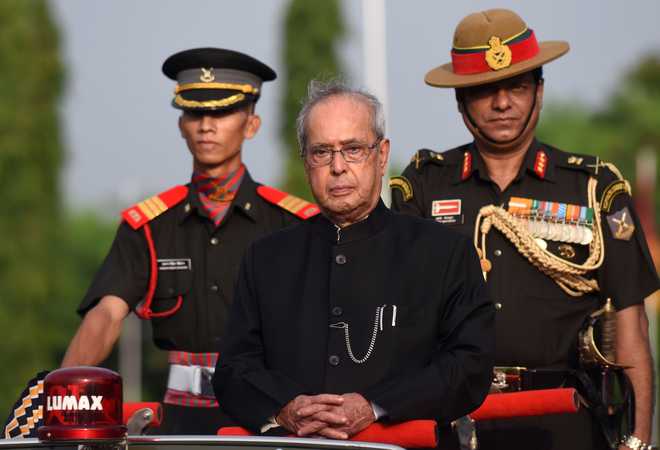
President Pranab Mukherjee, the supreme commander of India’s armed forces, and Prime Minister Narendra Modi will witness the firepower of the Indian Air Force on Friday as 181 aircraft showcase their capability to fight a war at the Pokharan firing range in Rajasthan, a state bordering Pakistan.
The exercise will show India’s capacity to “deter aggression”, the IAF said.
A major highlight of the exercise will be the display of the IAF’s capability to operate day and night as a significant achievement for the force which did not have this ability last time India got into an armed conflict with Pakistan at Kargil.
The exercise will include combat manoeuvres and live firing of air-to-ground and air-to-air precision weapons by fighters, transport aircraft and helicopters.
Tejas, the indigenous fighter jet that won global appreciation at the recent Bahrain air show, will for the first time display its firing capabilities.
Also on public display for the first time will be the Astra air-to-air missile, being developed by DRDO, and the Akash missile.
The event titled “Iron Fist 2016” will see the participation of 181 aircraft, 103 of which are fighter planes.
The demonstrations include firing of lethal ordnance, combat and combat support demonstrations.
The last Iron Fist held in 2013 was the IAF’s first day-night exercise, and more than 100 aircraft and 30 different weapon platforms were showcased.
The exercise is aimed at displaying network-centric operations capabilities of the IAF.