All posts by webadmin

Army: Absence of firing range in Kashmir impacting security

Army: Absence of firing range in Kashmir impacting security
The state has offered land to the Army at Bajpathri in Budgam.

Majid Jahangir

Tribune News Service

Srinagar, May 13

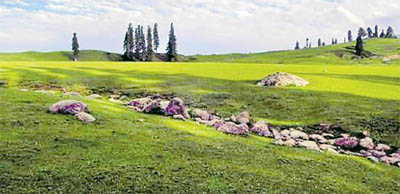
The non-availability of suitable firing ranges has compelled the Army to train its men outside the state, “adversely” impacting the working of the force in Kashmir. This has been disclosed by the Army in an affidavit to the National Green Tribunal (NGT), New Delhi, in response to the notices issued by the tribunal over the proposal for allowing the Army to set up an artillery firing range in a forest area of Bajpathri in central Kashmir’s Budgam district. The NGT had also issued a notice to the J&K Government.“The Government of Jammu and Kashmir offered the area of Bajpathri for notifying as an alternative field range. The detailed study and reconnaissance was carried out by the Army along with the Air Force followed by a joint study with the state government authorities to study the requirement of land, impact on the environment and the 

effect on tourism.

“The final decision to notify the ranges will be that of the Government of Jammu and Kashmir,” read the affidavit filed by the Ministry of Defence through its respondent Col Vinod S, officiating Brigadier, General Staff (Training) Headquarters, Northern Command, last week.The petition against the proposal for the firing range in Bajpathri was moved in the tribunal by social activist Raja Muzaffar Bhat in February. The petitioner stated that “if field firing and artillery practice is allowed in Bajpathri, it will  endanger the lives of people living in scores of villages adjoining the area with a disastrous impact on the environment and the wildlife habitat.” The proposal for setting up the firing range in Bajpathri in the meadows of the picturesque Yousmarg tourist destination had evoked strong resentment.In 2014, the Army had vacated the Tosa Maidan firing range spread over 11,200.477 hectares in Budgam district and since then it has been asking the J&K Government to allot an alternative place for the field firing range.The Army said there was a requirement of a field firing range in the Kashmir region. “As on date, a large number of restrictions have been imposed on the Indian Army with respect to the availability of ranges in J&K. Whereas our adversary on the western border is not constrained by any such restrictions and has a number of ranges available to it. Similarly, our adversary on the eastern front has unfettered access to firing ranges. This is likely to have an adverse impact on the preparedness of our armed forces vis-a-vis our adversaries,” its affidavit read.The Army said the non-availability of a range in the Kashmir region has now compelled it to move the heavy equipment to far-off ranges at Babina in Madhya Pradesh and Mahajan in Rajasthan.“The non-availability of suitable ranges in the Kashmir theatre of operations had an adverse impact and serious implications on the internal and external security,” the Army stated, adding that  it was facing major problems in the absence of the firing ranges.“Apart from the expenditure on fuel, oil and lubricants, the movement to alternative ranges results in depletion in manning levels of the counter-infiltration, counter-terrorism grid deployment affecting the internal security.”The Army said the levels of retaliation to ceasefire violations had reduced due to the non-availability of essential weapons and war-like stores for a prolonged duration. It would also affect the military response to the threat posed by our adversaries due to the time required for transporting the equipment. The affidavit stated that Rs 43 crore had to be expended on the movement of the troops for training outside J&K.

What Army told the Central tribunal

  • Our adversary on the western border has a number of ranges available to it. Similarly, our adversary on the eastern front has unfettered access to firing ranges. This (lack of firing ranges) is likely to have an adverse impact on the preparedness of our armed forces vis-a-vis our adversaries
  • The non-availability of a range in the Kashmir region has compelled the Army to move the heavy equipment tofar-off ranges in Madhya Pradesh and Rajasthan.
  • Rs 43 crore has to be expended on the movement of the troops for training outside J&K. The final decision tonotify the ranges will be made by the J&K Government

Army chooses 40 Rajouri girls for martial arts training

Jammu, May 10

After training the fair gender in arms to take on militants, the Army has another task at hand to make them physically robust and psychologically empowered.The Army has initiated a four-week martial arts cadre for girl students in remote areas of Rajouri district.“A total of 40 girl students from six schools of Nowshera tehsil in Rajouri district are participating in the cadre, aimed at developing self-confidence and making them physically robust and psychologically empowered,” said defence spokesperson Col SD Goswami.The four-week cadre under Operation Sadbhavana is being conducted at Government High School, Seri. It focuses on physical training and mechanics of self-defence.“The training is being conducted by an Army soldier, a black belt in judo. During the cadre, the students will master the art of hand-to-hand combat, besides various martial arts techniques,” said Colonel Goswami. — TNS

Army holds vocational training

Rajouri, May 10

The Army conducted a vocational training course in “Electrician and welding” works in conjunction with the civil administration at Kalal. At least 17 youths from Kalal, Deeing and Bareri villages attended the camp which was conducted with an aim to providing avenues for setting up small scale projects.


Sunil Lanba to be new Navy Chief

Sunil Lanba to be new Navy Chief
Sunil Lanba

New Delhi: Vice Admiral Sunil Lanba, who heads the Western Naval Command, has been appointed the next Navy Chief. He will replace Admiral RK Dhowan, who superannuates on May 31. Vice Admiral Lanba was commissioned in 1978 into the Executive Branch of the Navy. He served as Vice Chief, headed the Southern Naval command and the National Defence College. He has commanded minesweeper INS Kakinada, frigate INS Himgiri and has been the Executive Officer of INS Viraat. TNS

Vice-admiral Sunil Lanba to be next Indian Navy chief

NEW DELHI: Vice-admiral Sunil Lanba, Flag Officer Command in g-in-Chief(FOCin-C) of Western Naval Command, has been appointed as the new Chief of Naval Staff and will assume charge on May 31.

INDIAN NAVY WEBSITESunil Lanba is also an alumnus of the College of Defence Management in Secunderabad, where he has served as a faculty.Lanba, 58, a specialist in Navigation and Direction, will have the full three-year tenure as the Navy Chief. He will succeed Admiral RK Dhowan who is retiring. An alumnus of Defence Services Staff College, he will be the 21st Indian to be the Navy Chief. The first two were British.

He will take over from Admiral Dhowan on the afternoon of May 31 and will be in office till May 31, 2019.

“The government has appointed Vice Admiral Sunil Lanba, at present FOC-in-C Western Naval Command, as the next Chief of Naval Staff with effect from the afternoon of May 31,” a defence ministry spokesperson said on Thursday.

Coming in with rich operational and staff experience over a career spanning more than three decades, Lanba has served as Navigating Officer of corvette INS Sindhudurg and frigate INS Dunagiri.

He has commanded four frontline warships — INS Kakinada (minesweeper), INS Himgiri (frigate) and INS Ranvijay and INS Mumbai, both destroyers.

He is also an alumnus of the College of Defence Management in Secunderabad, where he has served as a faculty.

Lanba has also held key staf f assignments such as Fleet Operations Officer of the Western Fleet and the Chief of Staff, Southern and Eastern Naval Commands. He was also the Flag Officer Sea Training, Flag Officer Commanding Maharashtra and Gujarat Naval Area and Commandant, National Defence College.

He was the Commander-in-Chief of the Southern Naval Command at Kochi, prior to being appointed to head the Western Naval Command. He took over as the Vice Chief on June 2, 2014.

Vice Admiral Lanb a is a recipient of the Par am Vishist Seva Medal and the Athi Vishist Seva Medal for distinguished service of an exceptionally high order.


China and Russia to hold anti-missile drill after US, S Korea talk defence

BEIJING, May 5

China and Russia will hold their first joint computer-assisted anti-missile drill, state media said on Thursday, after the United States and South Korea discussed an anti-missile defence system for the South to counter threats from North Korea.

North and South Korea remain technically at war after their 1950-53 conflict ended in a truce, rather than a treaty. The North routinely threatens to destroy South Korea and the United States.

The Chinese and Russian foreign ministers last week urged Washington and Seoul to drop the proposed deployment of the Terminal High Altitude Area Defense (THAAD) system, following North Korea’s fourth nuclear bomb on January 6 and subsequent missile tests.

The tests violate UN resolutions against North Korea backed by Russia and China. US and South Korean officials have expressed concern that the North could attempt a fifth nuclear test in a show of strength ahead of its Workers’ Party congress, which begins on Friday.

The China-Russia drill will be held this month at a Russian military research centre, the official English-language China Daily newspaper said, citing China’s defence ministry.

The paper gave few details, but cited experts saying the drill would help the two countries’ militaries familiarise themselves with their respective command structures and data transmission processes.

The White House has said it is still in talks with its close ally, South Korea, on the THAAD system and that it would not threaten other countries if installed.

Chinese Foreign Minister Wang Yi has said the system threatens equilibrium on the Korean peninsula and damages China’s and Russia’s strategic security.

North Korea’s drive to develop a nuclear weapons capability has angered China, Pyongyang’s sole major diplomatic and economic supporter. But Beijing fears THAAD and its radar have a range that would extend into China.

President Xi Jinping has said Beijing would not allow war and chaos to break out on the Korean peninsula. — Reuter


NIA collects DNA samples of slain Pathankot terrorists

Tribune News Service

Pathankot, April 28

An NIA team, led by an officer of Additional SP rank, visited the Civil Hospital and asked the authorities to provide them additional DNA profile samples of all four terrorists killed in the Pathankot Air Force station gunbattle.DNA profiling, also known as DNA fingerprinting or testing, is a forensic technique used to identify individuals by the characteristics of their DNA.The bodies of four militants have been lying in the hospital mortuary since January 3.Civil Surgeon Dr Ajay Bagga received a formal request from the Home Ministry a few days ago. He was asked to provide the samples of molars (teeth), femur bones, fingers and muscle masks to the NIA team.“Four NIA officers arrived at the hospital today. We provided them the samples as per their requirement,” said Dr Bagga.A three-tier security, led by SSP Rakesh Kaushal, was deployed to avoid any untoward incident. Dr Bagga has already written to his seniors asking them to shift the bodies to any of the three government medical colleges in the state. “We have been facing a shortage of space. There is a place for just five bodies in the mortuary,” said the Civil Surgeon.


Order, order…speed up justice Vishavjeet Chaudhry

The courts are overworked and undermanned. Infrastructure is being stretched to breaking point. Attaining justice, undoubtedly, unequivocally is a slow process —collecting evidence, presenting it and analysing it takes time. Now is the time to streamline the justice system to meet the challenges of a new world order

Order, order...speed up justice
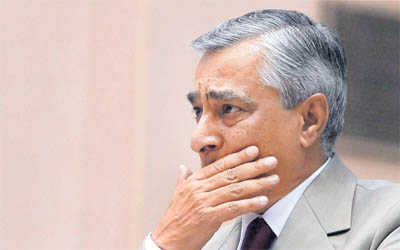
Chief Justice of India TS Thakur during his speech at the inauguration of Joint Conference of Chief Ministers and Chief Justices, at Vigyan Bhavan, New Delh. PTI

The functioning of the justice system of a country is an authoritative indicator of true socio-economic progress and equality. This reflects how well the values of the rule of law, equality and social progress are implemented. It also speaks, in somewhat quantifiable terms, of the situation in which a nation’s democratic values are upheld. India as a comparatively young nation has much to rejoice about. The judiciary has seen the nation through some very tumultuous times and has, for most part, come out victorious. The likes of the late Justice Hans Raj Khanna, and Justice V.R Krishna Iyer ensured that the judiciary commanded respect, not just within the country but through the world. There is, however, a big problem that we need to deal with if we are indeed to prepare ourselves as a global power. According to the National Crimes Record Bureau (NCRB), the total population in the country’s jails in 2014 was more than 4,18,000. The total capacity is however is a little more than 3,56,000. Out of these, more than 67 per cent of the population is undertrial. This is certainly an alarming number, especially as most of this population is under incarceration simply because they could not get bail. Presumption of innocence until proven guilty is the cornerstone of any civilised democracy. There are multiple reasons for this — among them the idea that an individual’s liberty is fundamental and to take that away, the state must go through the rigours of a fair trial. The most important impact of this is that individual liberty is guaranteed, except in limited circumstances. To ensure a fair trial and to guarantee this liberty, the Supreme Court has made its stance clear on numerous occasions. Before conviction an alleged criminal is exactly that — an alleged criminal. He has not been convicted yet and except in limited circumstances should not be deprived of liberty. It has been said that jail is an exception and bail is the rule. The ground reality is somewhat different. There have been numerous circumstances where undertrials have spent more time in jail awaiting trial than they would have had they actually been convicted. The reasons for this are many. One is the lack of easy access to justice. Uneducated and indigent undertrials do not always understand the rules. Ironically, people from such deprived backgrounds also happen to be the largest group of charged individuals. There is also the well-known problem of delays. The courts are overworked and undermanned. Infrastructure is being stretched to its breaking point. Attaining justice, undoubtedly, unequivocally is a slow process — collecting evidence, presenting it and analysing it takes time. However, the problem of delays in the justice system remain even if this margin of appreciation is granted. In a rather embarrassing situation, a court in London for instance agreed to hear a case against Taj Hotels in London (rather than in India) on the grounds that it would take far too long here. In order for the rule of law to be respected and for the legal system to have efficacy, appeal and authority, these problems need urgent solutions. The system needs to guarantee fairness, sensitivity and efficiency for the population to have faith in it. The Hon’ble Chief Justice has certainly raised this concern on numerous occasions. And this is certainly a time for the country to introspect and find solutions. With more than 3 crore cases pending, there is no easy way out. However, we urgently need to come up with and implement solutions if the faith in the system is to be restored. Vacant positions in high courts (more than 400 as of early this year) need to be filled. Technology needs to be exploited. Perhaps, most importantly, access to law needs to be widened and the population needs to be made aware of their rights as well as obligations. As a profession, lawyers too should consider removing rigmarole from court proceedings and simplifying terms. All stakeholders (investigating agencies, correctional services, prison authorities, etc) need to be considered part of a chain and meaningful interaction between them should be encouraged.We have come a long way and have developed a jurisprudence that is certainly world class. To meet mushrooming modern challenges and to ensure necessary confidence in the justice system it is essential that we act now.B.R. Ambedkar profoundly commented: “For a successful revolution it is not enough that there is discontent. What is required is a profound and thorough conviction of the justice, necessity and importance of political and social rights.” Now is the time to strengthen the foundations of the system to meet demands of a changing world and a changing order. The writer is Assistant Professor & Assistant Director, Centre for Penology, Criminal Justice and Police Studies, O.P. Jindal Global Law School.




Army chief visits clash-hit Kupwara

SRINAGAR: Army Chief General Dalbir Singh visited Kupwara district in north Kashmir on Tuesday and assessed the situation following widespread protests after five civilians were killed in the clashes with security forces.

“Gen Dalbir Singh was (also) briefed about the situation along the Line of Control and hinterland. In his interaction with the officers and troops, the Army Chief expressed his satisfaction at the operational preparedness of the units,” an army spokesperson said.