All posts by webadmin

Those who sit in judgement of the Commanding Officer who stood up for his men, think again

A peaceful mahatma may prevent a war, but he is certainly not going to win one. This is why it is all the more reason for other members of society to be sensitive in their official and unofficial dealings with the armed forces.

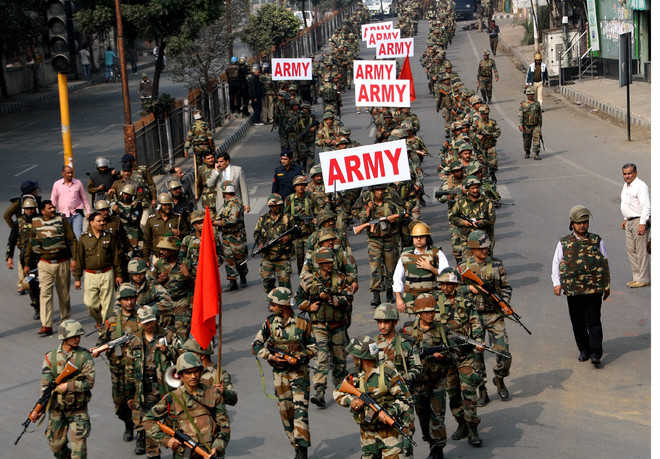
The Bomdila incident has cast an unpleasant shadow over this year’s Deepavali celebrations in military circles. What is known is that two soldiers of the Arunachal Scouts were picked up by the Police because they were allegedly misbehaving at a public event. They were then taken to the Police station. When they were handed over to their unit, they were found to have been severely beaten.Subsequently, the Police Station was allegedly vandalised by the Scouts and police personnel were beaten up. A video later emerged of the Commanding Officer (CO) of the Arunachal Scouts apparently warning a Police Officer to stay away from his men or face dire consequences.

View image on Twitter

On social media, most of the outrage was targeted at the CO. Many members of the public and those from the Police and civil services fraternity expressed indignance at the tone and tenor of the CO’s words. How, they asked, could an Army officer so brazenly threaten a Police officer and be allowed to get away with it? Especially after his men had apparently vandalised the police station too.

First of all, it is important to address the fact that if the two soldiers whose detention by the Police had started the whole fiasco were guilty of any offence (except certain specified offences under the Indian Penal Code), the Police should have immediately handed them over to the military authorities instead of taking them to the Police station. Be that as it may, even if they are still found guilty of any wrongful or criminal act, the military authorities would no doubt punish them. This will happen no matter how badly the Police beat them up. This is because no CO or military unit wants to have dishonest and morally questionable individuals in their ranks. Nobody wants to go into battle alongside a rogue who has no respect for the law of the land.

Unfortunately, due process was not followed. In fact, the soldiers were manhandled and roughed up, eventually leading to their hospitalisation. This brings us to the second aspect, that is, the subsequent alleged conduct of the Scouts Battalion and its Commanding Officer. Why they acted the way they did, needs to be understood.

An infantry battalion has been famously stated to be the last hundred metres of foreign policy. The battalion is the largest composite unit to go into active battle, led by its commanding officer. The soldiers know that when they run into a hail of bullets, the only ones beside them will be their fellow soldiers. There is nobody else anywhere to back them up when the proverbial metal meets the meat. The man leading the charge will be the CO. His every action and command would be higher than the word of god for the soldiers of the battalion. Therefore, there is a bond of trust between the soldiers amongst themselves and between the soldiers and the CO. This bond takes years to develop. A commanding officer is usually groomed in the battalion and the regiment for more than fifteen years before he takes charge.

http://

What this means is that the Commanding Officer knows that he must stand behind his men in peace, so that they might stand behind him in war. This necessarily means that if a man under his command is in anyway ill-treated, it becomes the sacred duty of the CO as embodied in the Chetwode Code to set right that wrong. If this involves actions which skirt the thin line between legality and illegality, then the CO will not hesitate to do it even if it costs him his job. For if he is seen to take a wishy-washy approach when his soldier is beaten up, the faith of his soldiers in his command and leadership would be extinguished that instant. He would know that nobody would follow him anywhere, least of all into battle. Thus, in the present instant, the die was cast when the two soldiers, however guilty they have been of any offence, were roughed up by the Police. This is why the Commanding Officer of 2 Arunachal Scouts allowed things to play out the way they did. If he did not stand up for his men, his moral right to command them would have been over and any future CO would have had to live with the fact that the men of the battalion could never have full faith in their leader.

https://twitter.com/twitter/statuses/1060015304124841985

This ethos may be unfamiliar to many. Many might wonder if these aren’t the ethos of the Police. These aren’t. And for good reason. Uniformed forces differ in their mandate. Militarising the Police is not desirable. The Police perform the daunting task of maintaining law and order and individual Police officers often have to stand alone in facing not only lumpen elements but also inconvenient politicians. The contribution of Policemen to our nation and each of our lives deserves the highest respect. Their lives are not any less important than a soldier’s life.

However, soldiers must necessarily be rough men. A policeman need not be. In a democratic society, the Police is a service and not a force.

A peaceful mahatma may prevent a war, but he is certainly not going to win one. This is why it is all the more reason for other members of society to be sensitive in their official and unofficial dealings with the armed forces.

All this must weigh on the minds of those who are going to sit in judgement over the conduct of the CO of the Scouts Battalion. It is hoped that wisdom will prevail.

(This article was originally published here)

The author studies law at the Faculty of Law, University of Delhi. He has previously worked with Capital IQ as a Mergers & Acquisitions analyst specialising in the European markets. He actively blogs about law, geopolitics, strategy and current affairs with a focus on security and military matters. He is Anti pro and Pro anti on most matters under the sun.


Take up Kartarpur corridor issue with Pak: Capt to Sushma

Take up Kartarpur corridor issue with Pak: Capt to Sushma

Ruchika M Khanna
Tribune News Service
Chandigarh, November 9

Chief Minister Captain Amarinder Singh has urged Minister of External Affairs Sushma Swaraj to take up with the government of Pakistan the issue of opening of the corridor from Dera Baba Nanak to Sri Kartarpur Sahib.

In a letter to Sushma Swaraj, the Chief Minister said Kartarpur Sahib was one of the most revered religious places for Sikhs as Sri Guru Nanak Dev spent a large part of his life there.

Pointing out that the gurdwara lies around 4 km westwards from Dera Baba Nanak, Gurdaspur, on the Pakistan side, he said the Punjab government had, time and again, requested the Union government to take up with issue with Pakistan.

Referring to the 550th birth anniversary of Sri Guru Nanak Dev, the Chief Minister apprised the External Affairs Minister that the Punjab Vidhan Sabha had passed a unanimous resolution on August 27, seeking uninterrupted opening of corridor from Dera Baba Nanak to Sri Kartarpur Sahib in Pakistan.

The Chief Minister had earlier also requested Sushma Swaraj, through a letter on August 20 to take up the matter with the government of the neighbouring country.

Meanwhile, MEA spokesperson Raveesh Kumar, said, “I have to check the contents of the letter. We have taken up the matter of opening up of the border with Pakistan for Sikh pilgrims to go and visit the gurdwara on the other side. We have heard from Pakistan this is something they want to do. But we have not received any official communication from Pakistan that they are keen to work with us on this matter”.


Pakistan’s Economy to grow at a shameful 2.9 percent and they still want Kashmir

The Economist Intelligence Unit (EIU) has projected Pakistan’s economy to expand by an annual average of 2.9% in 2018/19 till 2022/23, compared with 5.4% growth in the previous years.

The advisory issued by the EIU comes amidst Pakistan’s ongoing negotiations with the International Monetary Fund (IMF) which commenced on November 7th and are expected to conclude by November 20th. Its not going to be an easy task for Pakistan to get an IMF bailout package as the United States holds the largest voting share in the Fund’s decision-making process.

Pakistan has had a history of economic failures due to inefficient govt policies that have always been directed towards targeting India in the form of either terrorism or a covert economic war by injecting fake currencies in the financial system. Instead of focusing on education, infrastructure and human development it drew closer to religious Islamic fanaticism and became a hot bed for Islamic Terror.

Pakistan is currently in a financial mess where it cannot stay afloat without bailout packages from China and the UAE and it still dreams of snatching Kashmir away from a country like India which is the world’s fastest growing economy with a defence budget of $52.5-bn, more than what the United Kingdom spends annually.

India’s military capabilities under PM Modi’s leadership are advancing rapidly towards challenging China in the 21st century leaving Pakistan so far behind that it has virtually become insignificant in the Asian power balance.

Pakistan’s current account deficit widened by 43 percent to $18 billion in the last fiscal year and its budget deficit has ballooned to 6.6 percent of economic output, creating a financial crunch that economists say will lead to a collapse if it doesn’t get Financial AID.

India should target Pakistan’s export markets and completely annihilate the remaining little industry that it has. This will lead to a faster guaranteed economic collapse and force Pakistan to further drop its defence budget.

Pakistan has not imported any major weapons system that can threaten India since the last batch of F-16s given in AID by the United States. All it relies on currently is cheap sub-standard Chinese Fighter Jets and a few Drones. At this rate, Pakistan should become a Banana Republic in less than a decade.

– – – – – – – – – – – – – – –
Article written by Darshil R Patel exclusively for www.DefenceNews.in
Bsc. in CASFX (U.K.)
Location : Mumbai
– – – – – – – – – – – – – – –


HAL not contending to be offset partner of any OEM: MD

HAL not contending to be offset partner of any OEM: MD

The Congress recently accused the government of forcing Dassault Aviation to make Reliance Defence its offset partner for the Rs 58,000 crore deal to purchase 36 Rafale jets.

Bengaluru, November 7

Amid a political slugfest over the Rafale fighter jet deal, state-run HAL’s Chairman and Managing Director R Madhavan on Wednesday said the aircraft manufacturing company is contending not to be an offset partner of any original equipment manufacturer (OEM).

But it would like to be a “total technology transfer partner” for production of aircraft, he said.

Madhavan’s reply came when he was asked to clarify on one among many charges that defence PSU Hindustan Aeronautics Limited (HAL) had been deprived of an offset contract from the Rafale deal.

“We are not contending to be an offset partner to any OEM, rather HAL would like to be a total technology transfer partner for production of aircraft,” he told PTI here.

He also said HAL’s basic focus was on manufacturing of aircraft, helicopters, associated accessories and their repair and overhaul, and not in garnering offset business.

Production of aircraft from transfer of technology is totally different from offsets, according to him.

Some portion of the offset business from various other programmes were being administered at the HAL, but it does not form a major business, Madhavan said.

“HAL will continue to get these offset business,” he added.

The Congress recently accused the government of forcing Dassault Aviation to make Reliance Defence its offset partner for the Rs 58,000 crore deal to purchase 36 Rafale jets.

It alleged that the government was helping the Anil Ambani group get a contract worth Rs 30,000 crore from the deal.

However, the Reliance Group, in a statement, has said Dassault Aviation’s investment in Reliance Airport Developers Limited has no link with the Rafale fighter jet deal, and has accused the Congress of resorting to “blatant lies” for political gains.

Reliance has also said the Indian government, the French government, Dassault and Reliance have clarified on multiple occasions that there was no offset contract for Rs 30,000 crore to Reliance as alleged by the Congress.

Earlier, in an interaction with the media on November 2, Madhavan had said that the HAL was completely out of the Rafale deal, but at one point of time, it was part of it, which did not kick-off.

“We are not in that (Rafale) business now. We were in it at one point of time. It is a direct purchase by the government and (I) cannot make any comments on pricing and policy changes,” he had said.

Escalating his campaign against the Modi government over the Rafale deal, Congress president Rahul Gandhi last month accused it of destroying the “strategic asset”, state-run aerospace company HAL, and told its employees that “Rafale is your right”.

In an interaction, Gandhi had sought to reach out to present and former HAL employees, alleging that “temples of modern India are being attacked and destroyed; we cannot allow it to be done.” The Congress has also been demanding answers on why the HAL was not involved in the deal as finalised during the UPA regime.

However, the BJP and Reliance Defence have dismissed all the allegations as false. – PTI


The big Russia picture by MK Bhadrakumar

The big Russia picture

t’s mutual: Both India and Russia need each other. Reviving the old rupee-rouble clearing system in economic transactions is perhaps necessary.

MK Bhadrakumar
Former ambassador

Albert Einstein once said, ‘In the middle of difficulty lies opportunity.’ The difficulties that have been piled on India in the recent past, for no real fault of its own, by the US are turning out to be a wake-up call — especially the arrogant, intolerable American demands that Delhi must curb its friendly ties with Russia and Iran.

The grit to push ahead with the S-400 ABM deal with Russia became a celebrated case. India made its payments in roubles and sidestepped the dollar system, calling the American bluff. Meanwhile, new thinking appeared to revive the old rupee-rouble clearing system in economic transactions, characteristic of the Soviet era. Exploratory talks have begun. The two countries are rich with experience as regards the charms and inadequacies of barter trade. Accumulation of currencies was an embarrassing feature.

But then, conditions are vastly different today. Russia’s ‘Czarist instincts’ have reappeared with a vengeance and the great Russian barons of the 19th century are once again on the move, wading into the world market, scouting for business in far-flung regions — Germany, the Netherlands, Italy, China, Turkey, South Korea, Poland, Japan, Kazakhstan, Belarus, South Korea, US, etc. Washington felt the pressure to sanction Russia’s United Company RUSAL, the world’s largest aluminium company by primary production output. With foreign currency reserves of $460 billion, Russian business also has investible surplus in expanding operations in the world market. (Russia manages a budget surplus if oil price is in $50-$55 bpd range, whereas, the current price is around $75 a barrel Brent.)      

India, on the other hand, is in a period of high growth. The economy is luring foreign investment and is slated to be a big guzzler of energy. A case in point is the acquisition of Essar Oil by the Russian consortium led by oil major Rosneft in a deal worth $12.9 billion last year. According to reports, Essar is now considering approaching the Russian state-controlled Inter RAO, a diversified energy major with operations in generation, transmission and power trade, to become an investor in its 2×600 MW Mahan thermal power project in Madhya Pradesh. Similarly, the Russian financial group VTB is intent on investing in Essar Steel, the fourth largest steel producer in India and undergoing bankruptcy proceedings.

These are only tell-tale signs of a long-awaited breakthrough in India-Russia economic relations sailing into view, finally. Suffice to say, with the backlog of the experience and lessons out of the Soviet era, India and Russia will be wise to highlight investments in any rupee-rouble framework they may negotiate to counter the ‘weaponisation’ of dollar by Washington as a geopolitical tool. Arguably, the future of Indian-Russian economic relations lies in investments where there is tremendous complementarity. Such a panorama never really existed in the Soviet era. 

Take, for example, the energy sector. Apart from the upstream investments India is making in the Russian oilfields, there is vast scope for Russian investments in the downstream sector in India. Thus, Essar Oil owned a retail network of Essar-branded fuel stations, which were steadily increasing their share on the growing Indian market. Now, in the 12 months since Rosneft’s takeover in March last year, the number of Essar fuel stations expanded by 20 per cent to reach 4,200. Rosneft’s short-term plan is to expand Essar’s fuel-station network to 6,000.

Again, the Nayara Energy Refinery in Vadinar, Gujarat (Essar’s oil company which is now owned and operated by Rosneft), has docking facilities, including an SBM capable of handling vessels up to 3,50,000 DWT with a capacity of 25mtpa (million tons per annum), tankages with interconnecting pipelines of 20mtpa capacity, marine product dispatch capacity of 12mtpa and rail-car and truck-loading facilities. Trust Rosneft to multiply its investments in Essar. Rosneft’s plans stem from the ‘big picture’ — far-sighted visions of the immense potentials of the Indian energy market. Rosneft and the National Iranian Oil Company have signed a road map on the implementation of ‘strategic’ projects in Iran with total investments worth $30 billion.

In the Soviet era, we had a USSR-Iraq-India triangle operating in the ambit of the rupee-rouble trading system, which proved beneficial. Can we now create a Russia-Iran-India triangle with a similar ‘win-win’ potential? To be sure, the government has thoughtfully timed the trilateral meeting on the India-Iran-Russia International North South Transport Corridor (INSTC) on November 23 in Delhi. Commerce and Industry Minister Suresh Prabhu has been quoted as saying to a visiting Russian delegation for stepping up investments and business between the two countries that ‘all issues (relating to INSTC) may be resolved in order to operationalise the route as early as possible’. Prabhu pointedly stressed that the corridor is an important Indian-Russian-Iranian initiative. INSTC is the shortest multimodal transportation route linking the Indian Ocean and Persian Gulf via Iran to Russia and North Europe. The estimated capacity of the corridor is 20 to 30 million ton goods per year and will reduce time and cost by 30 to 40 per cent. Analysts are calling it the Suez Canal of the 21st century.

Free market theories disfavour the barter system, but these are extraordinary times, when a new payment system is necessary, not only to boost mutual trade and investments, but also to avoid being entrapped by self-serving US policies. Russia matters because it is a sheet anchor for India’s foreign policy. Equally, it is a balancer augmenting India’s strategic autonomy. Above all, it is intrinsically an economic partner with seamless potential. Smart geopolitics devolves upon geo-economics — or else, it becomes an esoteric affair bypassing India’s present stage of development. Giving primacy to job creation in the millions, in particular, ought to be the focus of our foreign policy.


Terror charges against Purohit, Pragya

Terror charges against Purohit, Pragya

Sadhvi Pragya

Shiv Kumar

Tribune News Service

Mumbai, October 30

A special court on Tuesday framed charges in the 2008 Malegaon blast case against former Military Intelligence officer Lt Col Shrikant Prasad Purohit, Sadhvi Pragya Singh Thakur and five others for terror activities, criminal conspiracy and murder, among others.Judge Vinod Padalkar, presiding over the special National Investigation Agency (NIA) court, said the Abhinav Bharat organisation with which the accused were associated was formed with the objective of carrying out terror attacks. He said a bomb containing RDX was planted on a motorcycle that left six dead and 101 injured.

All the accused have been charged under various sections of the IPC, Unlawful Activities Prevention Act and the Indian Explosives Substance Act. Appearing before the court, the accused said they did not plead guilty.Sadhvi Pragya said the NIA had first given her a clean chit but later framed charges against her. “I am not a member of Abhinav Bharat. I have said in the past also that I am in no way connected with this organisation. This is a kanoon ka khel happening here,” she said, adding that the terror allegations were being levelled against her at the behest of the Congress.

Lt Col Purohit’s lawyers pleaded for deferment of framing of charges as they were set to appeal in the apex court against Bombay High Court’s order refusing to stay the framing of charges.


Appoint senior-most officer as Army medical chief: SC Sets aside lateral posting of Air Force officer

Appoint senior-most officer as Army medical chief: SC

Tribune News Service
Chandigarh, October 29

Setting aside the lateral shifting of an Air Marshal to the post of Director General Medical Services (Army), the Supreme Court on Monday directed that the senior-most officer in line, Lt Gen Manomoy Ganguly, be appointed to the said post.

On August 10, the government posted Air Marshal Rajvir Singh then DGMS (Air Force) as the DGMS (Army) in the rank of Lieutenant General. Medical officers are rotated amongst the three services and don the uniform and ranks of the service they are posted to.

This was challenged by Lt Gen Ganguly, recently promoted from the rank of Major General after a court battle, on grounds of seniority and merit. The issue of the appointment of DGMS (Army) has seen several rounds of litigation in the Armed Forces Tribunal and the apex court that had also resulted in the appointment of another Lieutenant General being quashed earlier.

“We are of the opinion that the process undertaken by the respondents in taking decision to appoint Air Marshal Rajvir Singh as DGMS (Army) does not stand judicial scrutiny. We are constrained to set aside the appointment,” a Bench comprising Justice AK Sikri and Justice Ashok Bhushan ruled.

Pointing out that the first fundamental error occurred in lateral shifting of Air Marshal Rajvir and considering his candidature along with others, the Bench said it was contrary to guidelines that permitted lateral shifting only in exceptional circumstances, which did not exist in the instant case.

Remarking that it failed to understand why the methodology of Overall Average Performance (OAP) was thought of by the Army Chief to adjudge comparative merit of officers in the fray when, concededly ACR grading has never been used as a criteria for posting of a Lieutenant General officer earlier, the Bench said the OAP mechanism was foreign to the Army’s selection guidelines.

The case

  • On August 10, the government had posted Air Marshal Rajvir Singh, then DGMS (Air Force), as the DGMS (Army) in the rank of Lieutenant General
  • This was challenged by Lt Gen Manomoy Ganguly, recently promoted from the rank of Major General after a court battle, on grounds of seniority and merit.

Money gifted to Ambani, none for OROP: Rahul

New Delhi, October 27

Congress president Rahul Gandhi today met a delegation of ex-servicemen and promised them to implement One Rank, One Pension (OROP) if his party was elected to power. He attacked the PM for “giving a gift of Rs 30,000 crore to inexperienced Anil Ambani in the Rafale deal, but not giving Rs 8,300 crore that would be enough to implement the OROP”.

“All ex-servicemen said the BJP government has not implemented the OROP. They also spoke about the situation in J&K, the non-strategic approach of the government, the divisions created there and the cost being paid by our soldiers. They also discussed Rafale. And these are connected,” Rahul said. — TNS


810 GCs of IMA attend cross country run

Dehradun, October 19

As part of the training schedule of the Gentlemen Cadets of Autumn term-2018, a cross country run was held at the prestigious Indian Military Academy (IMA) here Friday.

The event, which tests the limits of physical endurance, determination and willpower of the Gentleman Cadets, was flagged off by Commandant, IMA, Lt Gen S K Jha. The most colourful and awaited event of the academy saw the participation of 810 Gentlemen Cadets of the second and third terms running a course of approximately 12 km, a statement issued by the IMA here said. Keren Company of the Bhagat Batallion attained the first position with 742 points, while Basantar Company of the same Batallion got the second position with 706 points, it said. Jessore Company of the Manekshaw Battalion came third on difference of average score with 706 points, the statement said.

Gentleman Cadet (GC) Shivkant Yadav of the Alamein Company with a timing of 38.16 minutes got the first position, while GC Himanshu Kashyap of the Dograi Company and GC Abhishek Rai of the Alamein Company came second and third. — PTI


4 Army men booked for raping colleague Divyang violated at military hospital

Pune (Maha), October 17

Four Army personnel have been booked for allegedly raping and molesting a 34-year-old speech and hearing-impaired woman employee of a military hospital here in Maharashtra in 2015, the police said Wednesday.

Besides the police, the Army too is conducting a court of inquiry against the four personnel, who also worked in the same military hospital at the time.

The alleged offence took place between January and June 2015 at the Military Hospital, Kirkee, in Pune’s Khadki suburb. The woman has been working at the facility since 2014.

“According to the woman’s complaint, she was on night duty (at the hospital) when she was allegedly raped by one of the accused, who at the time was posted at the hospital,” a senior police official said. When the survivor told another Army man about the incident, he initially told her that he would reprimand the “accused”. “But he too sought sexual favours from her by threatening her to make the message viral and allegedly raped her. After some days, two more personnel approached the woman and allegedly took advantage of her,” the police official said.

The woman, a Class IV employee at the hospital, had approached an NGO in Indore, Madhya Pradesh, earlier this year. The NGO subsequently approached the Indore police. On Tuesday night, the Indore police informed about the matter to their Pune counterparts, who have registered a case against the four personnel under IPC sections 376 (rape) and 354 (molestation), he said. — PTI