The army chief’s decision to deploy soldiers to build railway over-bridges and clean up garbage reflects a desire to please his political masters, even if at the cost of the men he commands.

The Indian armed forces have a rich history going back more than a century, at least in the case of army. They are also a very closed society. Within the organisation, there is little opportunity, incentive or encouragement to question or oppose things. From outside, the holy cow status of the armed forces makes it difficult to question what is happening inside. This situation is a ready recipe for disaster. Moreover, this institution is so critical to India that even a minor improvement in it will pay back manifold to the society and country. After 70 years of Indianisation, it is time to examine some aspects with candor.
Public image of senior officers of the armed forces
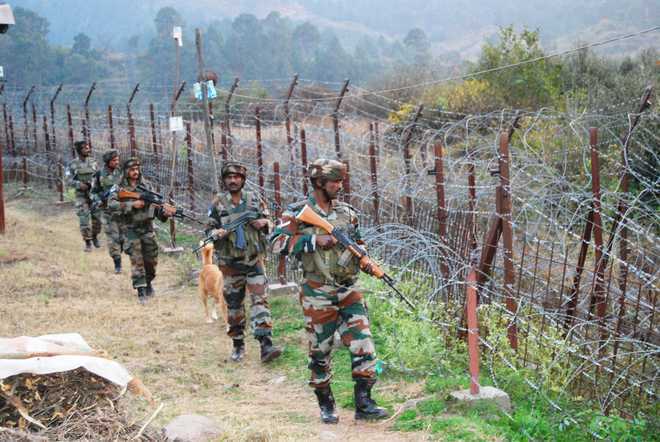
While the image of the armed forces remains high, that of its senior officers has hit rock bottom in the eyes of the public as well as its own veterans. Ironically, the veterans have turned out to be the biggest critics. This is most pronounced in the case of the army. Never before has a Chief of Army Staff (COAS) been a butt of so many jokes as now. For the previous chief, derogatory remarks were often passed on him being the only non-PSC (not Passed Staff College) in the line of chiefs. This was seen as a case of intellectual deficiency. If an officer repeatedly did not pass a professional examination on a level field with his contemporaries, he was surely not fit for holding the top job, the veterans claimed. For the present COAS, General Bipin Rawat, however, the comments are different. They are mostly about his unusual desire to please the political masters, even if at the cost of the men he commands. Several recent decisions by him have riled up veterans like never before. Some of them are the honouring of Major Leetul Gogoi, who tied a Kashmiri man to his jeep as a human shield, ordering troops to clean up the garbage of others, ordering the army engineers to make foot over-bridges (FOBs) for the railways in Mumbai and not objecting to the Delhi police manhandling elderly veterans and veer naris while evicting them from Jantar Mantar recently. WhatsApp groups of batchmates of veterans are using colourful adjectives for Gen Rawat that cannot be published. This castigation is not restricted to the COAS. Very strong comments have also been passed for the three chiefs collectively. Sample one here – ‘The Service Chiefs are dancing girls pirouetting to the tune of the babus’. This is not restricted only to the private WhatsApp groups of veterans but can also be seen in comments of veteran readers in the open media.
This is unprecedented. Never before in India and probably nowhere in the world have such comments been passed about the service chiefs. There is an unusual bitterness all over and veterans seem willing to air it rather openly. This does not augur well for the forces. Initially, the image of COAS just dipped a little. In the incident of Maj Gogoi using a human shield, only a handful of veterans wrote against it. When Gen Rawat ordered his army to clean up garbage, the level of criticism rose but still there were some who were ready to accept it for the larger good of cleanliness. However, ordering the army to construct FOBs for the railways has broken the dam.
The facts of the case are that several lives were lost due to a stampede on a narrow railways FOB due to heavy rains and mismanagement of traffic. There was no failure of the bridge or other infrastructure. All this happened in the megacity of Mumbai, not in some remote area. In response to this, the COAS has ordered three bridges to be made for the railways in Mumbai, not just one. This can not be explained except as an attempt to please the political masters. Even the railway unions and retired officers are against it. A.P. Mishra, former member of the Railway Board (Engineering) has said, ‘Railway workshops are much better equipped than army workshops. And, the railways engineering cadre is known to act fast in emergencies’. This observation is entirely true. The expertise of army combat engineers is to make a temporary bridge rapidly so that the advancing columns retain the required mobility even in enemy terrain, not to make permanent bridges for pedestrian traffic. Many in the railways have called it a ‘demoralising decision’ and a ‘knee-jerk reaction by the political leadership under popular pressure’, to which the army has unnecessarily become a part.
The veterans have trained their guns not only on the chief but on all generals and equivalent rank officers in the other two services. They are all portrayed and caricatured as working for their own career advancement at the expense of those they command. Just as IAS officers of state cadres are now known to be arrayed into sub cadres for different political groups for favours, general officers too are seen to be grouping themselves around politicians and IAS officers for improving their chances of becoming army commanders and/or COAS. The allegation of a Faustian bargain is also on the general officers of the army.

Veterans, particularly those of ranks lower than colonel, jeer at general officers fighting so hard for issues of ‘equivalence’, i.e., equivalence between army ranks and civilian posts. They claim that this is purely for benefit of the general officers who regularly rub shoulders with the IAS babus in South Block, Delhi. To an officer in the unit (colonel rank and below), how does it matter who is equivalent to whom? For the PBORs (persons below officer rank), it simply does not matter. For issues relating to pay grade fixation, it does matter. However, in those cases, the top brass muddles up things by repeatedly claiming that it is not about money, but izzat (honour). The One Rank One Pension (OROP) proposal is definitely about money, not izzat. There is nothing wrong in asking for more money. By always ending the discussion of OROP with ‘izzat of the soldier’ and such other terms, rather than money in the hand, they always weaken the case. In case of NFU (non functional upgradation), it is entirely about more money and nothing about izzat. Izzat is something to be looked into while ordering troops to clean up garbage thrown around by others, not in discussions of OROP and NFU.
On the importance of the relationship between the active army and the veterans, I quote George Washington: ‘The willingness with which our young people are likely to serve in any war, no matter how justified, shall be directly proportional to how they perceive the veterans of earlier wars were treated and appreciated by their nation’. India will disregard the opinion of its veterans at its grave peril.
Does it harm the armed forces to discuss these things in public? Is it even fair? Well, if we can openly discuss the prime minister of the country, why not the service chiefs? One has to see what does more good to the army – brushing all concerns and grievances under the carpet or airing them so as to limit the damage.
Privatisation of forces
The other big anomaly worthy of discussion is that, on the one hand, the Indian army is going in for privatisation of certain services, and at the same time is using its combatant troops for jobs that are best done by private companies. Services presently being provided by AEC (Army Education Corps), APS (Army postal services) and some of EME (Electrical Mechanical Engineers – some station workshops in country), some animal transport units, some units of Ordnance and Military Farms are sought to be shut down. This is seen as the ‘creeping in’ of private sector in purely military domains because obviously, the load will be taken up by private firms. Alongside, we see the strange phenomenon of using highly specialised combat troops to make bridges and clean up garbage.
While the present plans of correcting the teeth to tail ratio will not degrade the army’s capability noticeably, this trend must be challenged. This is particularly so in view of India’s growing proximity to the US. The US army relies heavily on military contractors. So much so that it is openly said that wars initiated by America are fought largely for the benefit of private companies in USA. In his book, The Lexus and the Olive Tree: Understanding Globalization, Thomas Friedman reminds us that “the hidden hand of the market will never work without a hidden fist – and the hidden fist that keeps the world safe for Silicon Valley’s technologies to flourish is called the US Army, Air force, Navy and the Marine corps.” Now that the hidden could also include Indian forces too, let us at least debate the trend. This becomes even more alarming in view of India signing the Logistics Exchange Memorandum of Agreement (LEMOA) with the US, which could bring US civilian contractors to the shores of India’s naval bases. No doubt they will be fully supported in this by Indian companies like the Adanis and Ambanis, who are widely rumored to be having the support of the government irrespective of which political party is in power.
Has the Indian public given its consent for such a change in the use of its armed forces? Will a combat army so remodeled and trained be able to take up the strain of a prolonged war on two and a half fronts? Will the civilian contractors that will so happily take up the work of the forces being downsized now, provide the same services in heavy combat conditions too?

It is true that many of these changes are as per recommendations of the Shekatkar Committee, but that is only half the truth. The committee made 188 recommendations, of which the Ministry of Defence (MoD) has sent only 99 to the armed forces for implementation. Are the others being shelved? It’ll be interesting to note what some of the others are – performance audit of non combat organisations directly under MoD viz defence estates, defence accounts, Directorate General of Quality Assurance (DGQA), Ordnance Factory Board and Defence Research and Development Organisation (DRDO)? The MoD will never touch the modernisation or even accountability of these. On hearing of the selective implementation, Lt Gen Shekatkar, retired, commented: ‘It is a welcome step but the government must implement all 188 recommendations, otherwise the purpose of this exercise will be lost’. Alas, it seems the good general did not understand the real purpose of the government in ordering this committee.
The promotion system of the armed forces
The third point for debate is the promotion system of the armed forces. Presently, all inputs for promotion are provided only by the superiors of the officer. This is indeed strange for a force that lays so much emphasis on leadership, i.e., the art of leading well. That being so, who knows the worth of the leader better than those led? They alone know the real leadership quotient of their officers. However, those who are led i.e. the troops under command, have absolutely no say in the promotion of their leaders. The senior officers know only that part of the officer what is shown to them. A correct understanding of leadership calls for taking a promotion input from subordinates, as well as peers and superiors. In the corporate world, this has long been the case under the name of 360 degree appraisals. Activate this in the armed forces and in one stroke you’ll wipe out the chances of apple polishers making it to the top. Let us not worry about how practical it will be to take inputs from so many soldiers. In today’s world of Iiformation technology, this is easily achievable.
In his book Bleeding Talent – How the US military mismanages great leaders and why it is time for a revolution, Tim Kane notes that ‘The more closely we scrutinise either the theory or practice, the more inadequate the exclusively top down assessment of performance and potential appear’. It seems that armies the world over mismanage their leaders. However, some armies have become wise to this while the Indian army has yet not.
This one change, if done, will solve all ills of the army in one stroke. Bad officers will never be able to rise to higher levels, much less the level of COAS. Those who reach higher ranks will genuinely care for the izzat of the men they command, as well as the size of their pay packet. They will not say yes to the unfair and sometimes illegal demands of the government. Troops will be employed only on tasks which is their mandate. When they are not actively engaged in combat or countering insurgency, they’ll actually train for war. If time is available even after that, they’ll rest and enjoy life with their families. Is there anything objectionable in that? This million-strong force, according to the analysts, is under tremendous stress. In fact, it is true that the army is losing more soldiers in suicides and fratricides than in action against the enemy. Most experts attribute the growing stress to deteriorating morale, poor service conditions, denial of leave at the required time, unattractive pay and promotions, early retirement ages, communication gap with superiors etc.
Different readers will have different viewpoints on these topics. However, what is unmistakable is that these issues must be discussed openly. For the holy cow to remain holy, an occasional scrubbing is necessary. The time is now.
Alok Asthana is a retired colonel of the Indian Army.



 HT PHOTO