

All posts by webadmin
Harish Khare Of terror, media…and, jobs


Because the NDA government is remarkably media-savvy and because the National Security Adviser, Ajit Doval, is an old hand at manipulating mediapersons, the terror attack at Pathankot Air Force Base on Saturday was reported and portrayed in an unusually un-hawkish tone. Some of the television channels, which are otherwise notorious for venomously ratcheting up anti-Pakistan rhetoric, allowed themselves to pander to the official line. The line was that the security forces were doing a clinical, professional job and the government was in control of the situation. The Modi government obviously wanted to protect itself from any perception of being ‘soft on terror.’Given the fact that the attack had taken place at an Air Force base and given the fact that the security forces had already anticipated the murderous move because the terrorists had shown their hand when they earlier waylaid an SP-rank officer of the Punjab Police, no one was in any doubt as to how the drama would unfold.Yet, it was good to see the television channels playing it responsibly. Most of our channels are deeply embedded in the defence establishment, which has consistently fed them an anti-Pakistan diet. But now that Mr Narendra Modi himself had been constrained to seek rapprochement with Pakistan, our hawkish media is a confused lot. The Pathankot attack has taken place within eight days of Prime Minister Modi’s much talked about stopover in Lahore. While it will be interesting to see how in the days to come the Modi establishment – and its big brother, the Nagpur-based parivar – would try to rationalise the Lahore peace process, the fact of the matter is that people in India as also in Pakistan want peace. Neither the politicians nor the media can ignore this reality. Last Sunday at a lunch, I happened to overhear a conversation between a former civil servant and a businessman on how in the mid-1970s, they had worked together to set up an industrial project. There was a tinge of regret that that creative juggalbundi between the bureaucracy and business enterprise was no longer working. I joined the conversation in an attempt to understand why industrialisation was no longer a subject of political discourse.Instead, there seems to be a pointless competition among the political parties as to who can stage a bigger rally than the other. Political parties are threatening to convert the coming January 14 traditional Maghi Mela in Muktsar into a political mela. No one in Punjab seems to be worried about this simple fact of life: who will create new jobs? Not all youth can migrate to Canada. Opportunities for gainful employment have to be created here on the ground. I am told that the Deputy Chief Minister has been very industriously choreographing events where industrialists of all hues and reputations come and with much fanfare sign “MoUs” and then everyone goes back to whatever they do — other than setting up job-creating units. It has been nearly two decades that the back of militancy was broken and yet Punjab has not been able to re-discover that old work culture that once characterised the “industrious Punjabi”.The Khalistan movement and its sub-culture of violence and gun had sapped the administrative and political vitality. The bureaucracy remained preoccupied with the “law and order” idiom and never really recovered its earlier enthusiasm for industrialisation. The political leadership has been only too happy to cite “militancy” as the excuse for the state’s backwardness. The Centre has been the favourite fall guy for refusing to write off the state’s ‘debts.’ In the past 10 years, the state has been flirting with bankruptcy. Yet, the political priorities remain focused on winning the next election. That is the politician’s karma. But, then, his dharma is also to help create prosperity in the state. The bitterness among the two principal political formations – the Congress and the Akali Dal – has spawned suspicion and distrust. Whatever projects and policies a government puts in place are most likely to be jettisoned by the successive government – because of a self-serving assumption that the previous government/chief minister must have taken a hefty “cut”. Now the AAP people have been flexing their muscle and they too can be expected to encourage further this culture of suspicion. Even if there is a “non-corrupt” government and the most “honest”chief minister, jobs, productivity, employment would not get automatically generated. Without vision, good intentions would not suffice to generate and re-invigorate the gasping small and medium industries, leave alone setting up of large-scale industry. The state needs a new political idiom with job-creating industrialisation at its centre. All Punjab leaders, headed by Chief Minister Parkash Singh Badal, seem to be smarting under the notion that private enterprise was a nuisance, and that the state government was doing the businessmen a favour by letting them do their business. The political leadership in the state seems to be oblivious of the 1991 paradigm shift.In 2016, Punjab would be fully obsessed with electoral calculations and manoeuverings. No political leader has the stature and the self-assurance to talk of a long-term vision for the state. Five months ago, I was told by my doctors that my blood sugar level was rather alarming and something needed to be done about it. A few days back, I fortuitously met “Dr” Harmohan Dhawan, who told me that he ran a “nature cure” clinic and claimed that it was possible to get the better of this diabetic business without taking recourse to any of those fancy “insulins.” On an impulse, I decided to seek “Dr” Dhawan’s advice. He immediately and willingly took me under his care and put me on an almost pain-free regimen. In essence, he put me on a diet that simply involved eating lots and lots of vegetables and fruits. In addition, he insisted on a daily 45-minute brisk physical activity, including walking/yoga. And, I have no hesitation in acknowledging that within a month, there was a dramatic improvement in my blood sugar count. Now my count is better than it has been in years. So much so, that over this preceding festive season, I could indulge myself in cakes and halwa (of course, within limits.) “Dr” Dhawan insists that he is not a “proper doctor”, but I always tell him that anyone who can help me bring my sugar level down – that too without putting chemicals in my body—qualifies for the salutation. He misses no opportunity to talk in public about disproportionately huge benefits derived from making minor adjustments in lifestyle. His hope is that one day his treatments and teachings would become a mass movement, and would help India become a healthy society.A few days ago, I received a communication from a reader, Satwant Singh, who described himself as a “sixty-six-year-old Chandigarh-based artist, designer, cartoonist and poet and above all, a hardcore Tribune admirer.” By way of greetings for the new year, he was kind enough to send a poem and a cartoon, with a request that it be shared with fellow-readers. Who can ignore a hardcore Tribune reader!
The Selfie Sarkar
Ajj kal apne desh ke mahaul kiTabiyat kuchh nasaaz chal rahi hai. Kya bolein, kya na bolein, Is par bhi taqraar chal rahi hai.
Kya khayein, kya pahne,
Is par bhi hahakaar chal rahi hai.Kaun desh bhakt, kaun desh drohi,Iski bhi parhtal chal rahi hai.Kaun yahan rahein, kaun yahan se jayein,Is par bhi takraav chal rahi hai.Danishwaron ke dimaag ki battian bhujhane par
Cheekho pukar chalrahi hai.
Har taraf urh rahe hain zehreeley dank,Nafraton ki car beraftaar chal rahi hai.Taanashahi ki band bajaa baraat chal rahi hai.Jumlon ki bahaar chal rahi hai.Kyunki Selfie ki Sarkaar chal rahi hai!Thank you, Satwant Singh ji. Coffee?
kaffeeklatsch@tribuneindia.com
Former Army Chief Gen Rao passes away

Major General KV Krishna Rao
Tribune News Service,New Delhi, January 30
Former Army Chief Major General KV Krishna Rao, who played a key role in the 1971 Bangladesh Liberation War, died today in New Delhi. He was 92. During the 1971 war, General Rao, who was heading the 8 mountain division then, and Lt Gen Sagat Singh, who was leading the 4 Corps, launched the first-ever helicopter-borne launch of troops in East Pakistan, now Bangladesh. *Obituary: He put down insurgency in Northeast, J-KFor the job, General Rao had handpicked troops of the 4/5 Gorkha Rifles (the battalion of the current Army Chief General Dalbir Singh Suhag). On December 6, General Rao’s division was tasked to capture Sylhet in the north-eastern part of that country. Six brigades of the Pakistan Army had fortified the town. The plan to send its own troops onboard helicopters was audacious. However, in a 12-hour operation using Mi-4 helicopters of the Indian Air Force, a full brigade of the Army had been moved across the Surma river. The troops had held back Pakistanis who were forced to surrender and that move allowed the other Indian troops to capture Dacca, the then name of Dhaka, from the eastern flank.During his tenure as the Army Chief from June 1, 1981, to July 1983, General Rao conceptualised to fortify defences in Arunachal Pradesh fearing Chinese incursions, a plan that was finally put in place under “Operation Falcon” in 1986 by General K Sundarji.General Rao was commissioned into the Army in August 1942. He had served in Burma, North West Frontier and Baluchistan during the Second World War. He was Chairman of the expert committee constituted by the government on Re-organisation and Modernisation for Defence of the country. He was the Western Army Commander during 1979-81.He was appointed the Governor of Jammu and Kashmir in 1989, when a proxy war developed in the state and reached its peak. Barring a three-year break, he was the Jammu and Kashmir Governor till May 1998. In this capacity, he was instrumental in restoring peace and democracy in the insurgency-riven state. In a condolence message, Defence Minister Manohar Parrikar said: “The country has lost one of its best known military leaders.” Army Chief General Suhag also expressed deep condolences on General Rao’s demise.


Former Army chief Krishna Rao dead
CHANDIGARH/ DELHI: Gen KV Krishna Rao, 92, former chief of Army Staff and a former governor of J&K, Nagaland, Manipur and Tripura, passed away at the Army’s Base Hospital, Delhi Cantonment, on Saturday.
Lt Gen KJ Singh, Army Commander, Western Command, expressed condolences on behalf of all ranks on the demise of the former commander of Western Command. He described him as a general with extraordinary leadership qualities and finest military mind. Kotikalapudi Venkata Krishna Rao was born on July 16, 1923 and remained the governor of Jammu and Kashmir from 1989-90 and from 1993-1998.
Gen Rao was commissioned in Mahar Regiment in 1942. As a young officer, he served in Burma, North West Frontier and Baluchistan during Second World War. He participated in the first war against Pakistan in 194748. He commanded a Mountain Division during the 1971 war, wherein his division captured the Sylhet area and liberated northeast Bangladesh. He displayed outstanding leadership, courage, determination and drive during this war and was awarded the Param Vishisht Sewa Medal.
When a proxy war in Jammu and Kashmir had reached its peak, he was reappointed the governor. In this capacity, he was instrumental in restoring peace and democracy in the state.
Defence minister Manohar Parrikar remembered the veteran’s contribution in the 1971 war. “The country has lost one of its best military leaders. He was a visionary who led ably, inspired a generation of soldiers and initiated modernisation of the Army in early 1980s. His contribution in the 1971 war and in maintaining unity and integrity of the country will be remembered,” Parrikar said. J&K governor NN Vohra expressed grief over the demise and conveyed sympathies with the family. PDP president Mehbooba Mufti also expressed grief.
Gen VP Malik (retd) Does peace now have a chance?
Lahore initiative raises hope, but Delhi can”t lower guard
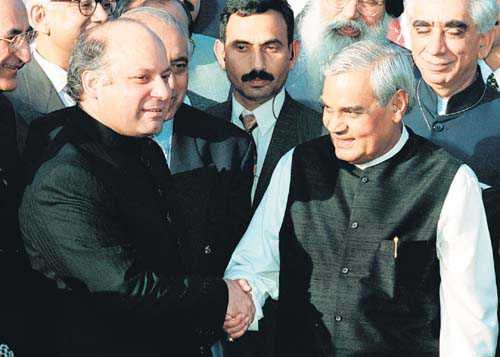
It was Christmas day, a ‘bara din’ as most people call it in India and Pakistan. The date coincided with some other birth anniversary celebrations; that of Atal Bihari Vajpayee in India, Pakistan’s Quaid-e-Azam, Muhammad Ali Jinnah, and Prime Minister Nawaz Sharif. In Kabul, after inaugurating the new Parliament House, and pillorying Pakistan-supported terrorism for fuelling unrest in Afghanistan in his address, Prime Minister Narendra Modi spoke to Nawaz Sharif and conveyed his greetings and good wishes on his birthday. The latter responded in a typical friendly neighbour fashion and said ‘since you would be flying over my country, why don’t you drop by and also bless my granddaughter Mehrunissa at her wedding’. Modi accepted that spontaneously. That spontaneity may or may not have been scripted or choreographed, but it caused a diplomatic coup in the Indo-Pakistan relations.Modi was able to achieve what his predecessor Dr Manmohan Singh had dreamt of: having breakfast in Delhi, lunch in Lahore and dinner in Kabul, albeit in the reverse order.While analysing the implication of this historical and surprise stopover, the strategic ‘chatterati’ has got divided into two groups: the conventionalists and the unconventionalists. The conventionalists, somewhat miffed with Modi’s increasingly diplomatic secrecy and surprises, consider it as a diplomatically ‘not done’ gesture and a hasty decision. Having grown up in a risk-averse culture, they feel that such impromptu, unplanned VIP visits are not serious diplomacy, but meaningless optics. It can dilute India’s uncompromising stand on Pakistan- sponsored terrorism and other substantive Indo-Pakistan disputes. Modi could soon be walking through a hazardous minefield, just as Vajpayee did in Lahore. The unconventionalists are also surprised. But they laud the event and consider it a bold step by Modi. They feel that such an unconventional step was required to defreeze the ice (partly caused by the RSS-BJP-Shiv Sena combine itself) before the hard part of the substantive menu arrives in the Indo-Pakistan dialogue. The impromptu visit has made clear the Modi style of diplomacy. He likes to involve in one-to-one personal chemistry with political leaders of the world, away from the media glare and the highly polarised domestic politics. It is more like what is practiced amongst presidential type of governments. Such informal, short notice meetings, quite common in the West, enable personal bonding and trust building, and provide a clearer political agenda and umbrella to the subordinates in resolving sensitive diplomatic issues. On the Indian subcontinent, such practices, if not handled deftly, can put own political capital and national diplomacy at risk. So far, Modi’s decision to visit Nawaz Sharif’s house has been viewed favourably by most citizens and even the media both in India and Pakistan. So, how should we look at this stopover meeting?As per academic jargon, national security interests (the ‘ends’) of a country are achieved through strategic choices (the ‘ways’) and its instruments of national power (the ‘means’— in this case diplomacy). While discussing Modi’s impromptu Lahore stopover, many people have tended to mix the ‘ways’ with the ‘ends’. I believe that we should look at it as part of ‘ways’ only; one more gesture added to his engagement strategy in creating a conducive atmosphere of peace and trust before discussing (and facilitating) issues which form part of the ‘ends’. The impact of this visit should be assessed in the number of ceasefire violations and terror incidents in the coming days. If the number reduces, this approach and gesture can be considered useful. If not, then Modi’s effort would be considered unnecessary and he could face flak. How do I view the engagement flip-flops and recent developments in the Indo-Pakistan relations?Till recently, the Bharatiya Janata Party and some of its allies had attempted to come across to the Indian electorate as a strong patriotic and nationalist party. In that process, many of its leaders and candidates indulged in over-the-top political rhetoric. Some fringe elements went overboard in their communal and anti-Pakistan statements without realising, or being aware, that India’s foreign and domestic policies, just like the external and internal security policies, have a strong linkage. That was wrong. Given the geography, history and regional and global geopolitics, India and Pakistan have to remain engaged, even in a conflict situation. We did that at the political as well as military level during the Kargil war. After coming to power, the NDA government took two nuanced steps in pursuing the Pakistan policy: It allowed security forces to retaliate strongly on ceasefire violations and attempts in cross-border terrorists’ movement. It disallowed Hurriyat leaders to meet Pakistani VIPs visiting India. According to intelligence reports, most Hurriyat leaders have an established nexus with terrorist groups and the ISI. Personally, I favour both these measures. The government also did well at Ufa (in Russia) to bring cross-border terrorism as a high-priority agenda at the high table discussions. The progress was stalled — almost halted — when the Pakistan army objected to the Ufa joint statement and forced its government to change tack and make Kashmir the number one agenda point. Since then, the quiet, some backdoor diplomacy and off-the-media glare meetings of the two prime ministers have enabled both countries to resume dialogue at different levels. Modi’s stopover visit can have one more implication: on the civil-military relations in Pakistan. It was Gen Raheel Sharif, Pakistan army chief, who made the Pakistani political leadership bend and change the discussion agenda decided at the Ufa joint conference. These days, his popularity in Pakistan is soaring. It cannot be to the liking and interest of the political establishment. Modi’s acceptance of Nawaz Sharif’s invitation, personal reception, greetings, the warm hugs, and then travelling together in a helicopter to his Raiwind house has made both political leaders more popular and acceptable in Pakistan. It would be a shot in the arm for the political setup in Pakistan, particularly Nawaz Sharif.Narendra Modi’s very recent speech at the Combined Commanders’ Conference held on India’s aircraft carrier, INS Vikramaditya, may help in understanding the objective and approach of his Pakistan policy. He said, “We are engaging Pakistan to try and turn the course of history, bring an end to terrorism, build peaceful relations, advance cooperation and promote stability and prosperity in our region. There are many challenges and barriers on the path. But the effort is worth it because the peace dividends are huge and the future of our children is at stake. “So, we will test their intentions to define the path ahead. For this, we have started a new NSA-level dialogue to bring security experts face to face with each other. But we will never drop our guard on security and continue to judge progress on their commitments on terrorism.” At this stage of Indo-Pakistan relations, we can hope for the best, but must remain alert and be prepared for the worst.

— The writer is a former Indian Army Chief
OFFICERS SUPERANNUATING ON 31 DEC 2015


Affluent lose LPG subsidy
Tribune News Service,New Delhi, December 28

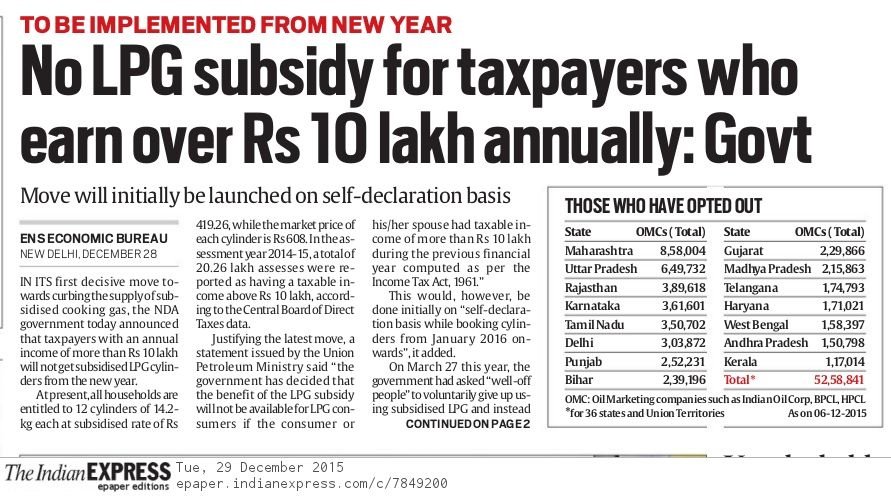
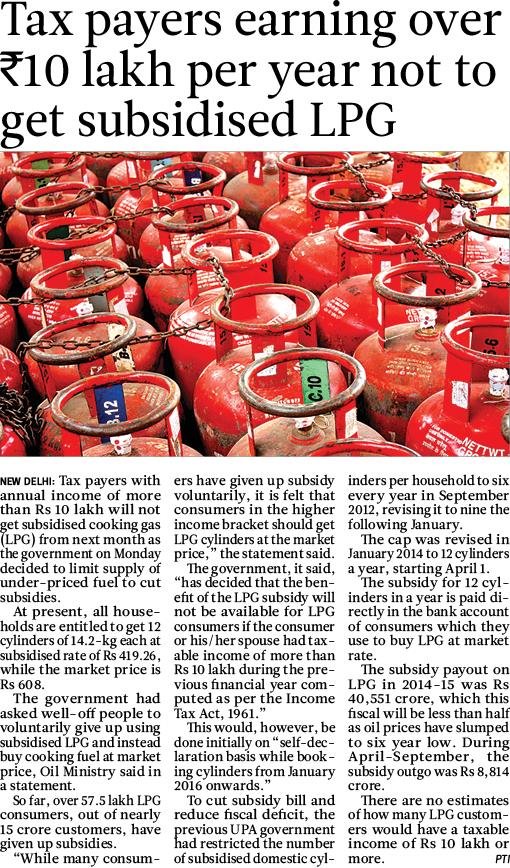
The government today decided to stop giving LPG subsidy to the affluent by making consumers with taxable income of more than Rs 10 lakh a year ineligible.“The government has decided that consumers with taxable income above Rs 10 lakh per year will not get LPG subsidy from January 2016,” said Petroleum Minister Dharmendra Pradhan in a tweet.“This is as per policy of present government that subsidy shall only be given to poor people who need it the most,” he wrote in another tweet. So far, 57.50 lakh consumers have opted out of subsidy voluntarily as part of the “GiveItUp” campaign of the government. Several corporate houses, celebrities and others had announced they would give up their subsidy.As on August 3, those opting out of the subsidy in Punjab stood at 46,858, Haryana 46,881 and Chandigarh 2,858.There are currently 16.35 crore LPG consumers in the country. With the implementation of the PAHAL scheme (Direct Benefit Transfer of LPG), the subsidy is being transferred directly to the bank accounts of 14.78 crore consumers.The government said while many consumers have given up subsidy voluntarily, it is felt consumers in the higher income bracket should get LPG cylinders at the market price.Fixing the threshold, the government has decided that the benefit of subsidy will not be available for consumers if the consumer or his/her spouse had taxable income of more than Rs 10 lakh during the previous financial year computed as per the Income Tax Act, 1961. This would be done initially on a self-declaration basis.“In keeping with the approach of trusting the citizens, this will be given effect initially on a self-declaration basis while booking cylinders from January,” a Petroleum Ministry statement said.The consumer has to declare that he/she does not have taxable income of more than Rs 10 lakh to avail of the subsidy.Those who gave it up

Punjab 46,858
Haryana 46,881
Chandigarh 2,858
Total (India) 57.5 lakh

EME, Jalandhar, lift GS Bains Liberal hockey tourney
NABHA: EME, Jalandhar, defeated CRPF, Jalandhar, 2-1 in the final to emerge champion in the 40th GS Bains Liberals all-India hockey tournament at PPS hockey grounds, on Saturday.
HT PHOTOThe winners — EME, Jalandhar — posing with the trophy on Sunday.Chief parliamentary secretary (tourism) Sant Balvir Singh Ghunas presided over the closing ceremony and gave away prizes to the winning and runners-up teams.
The winners were awarded `1 lakh while the runners-up received `50,000.
The chief guest also announced a grant of `2 lakhs for the organisers.
CRPF, Jalandhar, started on a positive note and managed to earn a penalty corner in the 19th minute. Bikash Kujur stepped up to the occasion and converted the penalty corner to put CRPF Jalandhar ahead.
After toiling hard for almost half an hour, EME Jalandhar finally managed to restore parity when Rakesh Minz scored the equalising goal for the team in the 52nd minute. Minz dribbled past CRPF defenders and sounded the board. Two minutes later, EME Jalandhar went 2-1 up as Biju Singh scored from a defencesplitting pass from Gurmeet Singh.
Despite their best efforts, EME Jalandhar managed to hold on to the lead and eked out a hard-fought 2-1 win to clinch the trophy.
88-yr-old and ageing: New Parliament House proposed
Tribune News Service,New Delhi, December 27
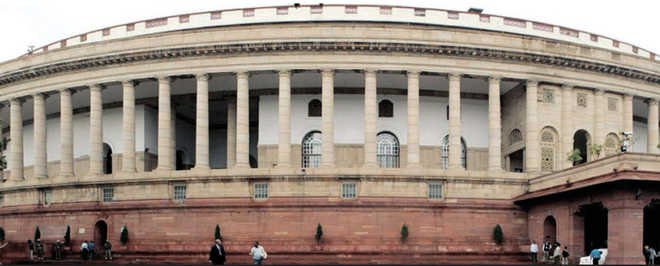
Speaker Sumitra Mahajan has again mooted a proposal to construct a new Parliament building. In a letter to Urban Development Minister M Venkaiah Naidu, she has said the existing 88-year-old structure is showing signs of “distress” because of ageing and will no longer be able to meet the growing demand for space.The Speaker even proposed two options for the alternative site — one within the Parliament complex and another across the Rajpath, a place where some defence and Delhi Police security barracks are located.Sources said the Urban Development Ministry would prepare a Cabinet note, which would be placed before the government to consider the proposal.Apart from citing the building bylaws, which stipulate life of buildings at 100 years, the Speaker in her letter also mentions that the number of seats in the Lok Sabha is likely to go up after 2026 “in accordance with the provisions of the explanation to clause (3) Article 81 of the Constitution”. The present seating capacity of the Lok Sabha is 550 without any scope for further increase. The full strength of the House is 545.Clause (3) of Article 81 determines representation on the basis of population brought out in the last Census (possibly in 2021). Through the 91st amendment to the Constitution in 2001, Parliament had extended the 25-year-old freeze on the total number and state-wise distribution of seats in Lok Sabha till 2026.In her letter, Mahajan has said: “On account of ageing of the Parliament House building and expansion in activities, staff, etc. the building has shown signs of distress and overutilisation… Under the circumstances, there is an imperative need for the construction of a new state-of-the-art Parliament building.”She argued that when the present structure was commissioned in 1927, the number of staff, security personnel, media visitors and parliamentary activities were limited, but over the years, the parliamentary activities had increased manifold.Since the building has been declared as “Heritage Grade-I” structure, there is very little scope for structural repairs.The Parliament House
- Designers: Sir Edwin Lutyens & Sir Herbert Baker
- February 12, 1921: Foundation stone laid by Duke of Connaught
- January 18, 1927: Inaugurated by then Governor-General of India Lord Irwin
- 6 acres: Area of complex
- 144: Sandstone columns
- 170.69 m: Diameter of complex
- Rs 83 lakh: Cost of construction
- 550: LS seating capacity
Major, wife booked for cheating
Tribune News Service,Bathinda, December 26
The police have registered a case of cheating against a Major deployed with the Army in Bathinda Cantonment and his wife for allegedly cheating a woman—also deployed as a Major— in the Army.The complainant is from Kota in Rajasthan.In her complaint to the police, the lady officer stated that Major Chand Singh developed physical relationship with her after promising to marry her. At the time of the incident, the Major was deployed at ‘Wireless Experimental Unit at the cantonment in Bathinda.Investigating Officer (IO) Charanjit Singh said initially, a case was registered against the accused Major and his wife at the Cantonment police station following a complaint received by the lady officer. The case, he said, was registered after the intervention of senior police officers and after completing the preliminary investigations in this regard.A case under sections 498-A, 406, 494, 376,493 and 496 of the IPC was registered at the Cantonment police station. No arrests have been made so far, the police said.
Army major booked for ‘raping’ colleague
BATHINDA: The Bathinda police have booked an army officer for allegedly raping his colleague on pretext of marrying her.
As per Cantonment station house officer Karamjit Singh the case pertains to 2009-2011 when the accused Major Chandan Singh and the complainant, also a Major, were posted in Bathinda.
“The woman, who is now posted at Kota, Rajasthan, alleged that the accused had solemnised a marriage with her in a temple,” said the SHO. Later, the:accused officer married another woman, says the complaint, The complainant has also filed a complaint with military authorities. Based on the ‘zero first information report’ by Kota police, a case has been registered against the Army officer and his wife, who is yet to be identified,” said the SHO. A case under Sections 376 (rape), 498 A (husband or relative of husband committing cruelty to woman) and 406 (criminal breach of trust) of the IPC was registered.
Indian Railways online ticket booking: ICICI Bank does a first, launches rail facility on website
Customers of any bank can use this Indian Railways online ticket booking service to book online rail tickets on the bank’s website itself, without visiting any other site.
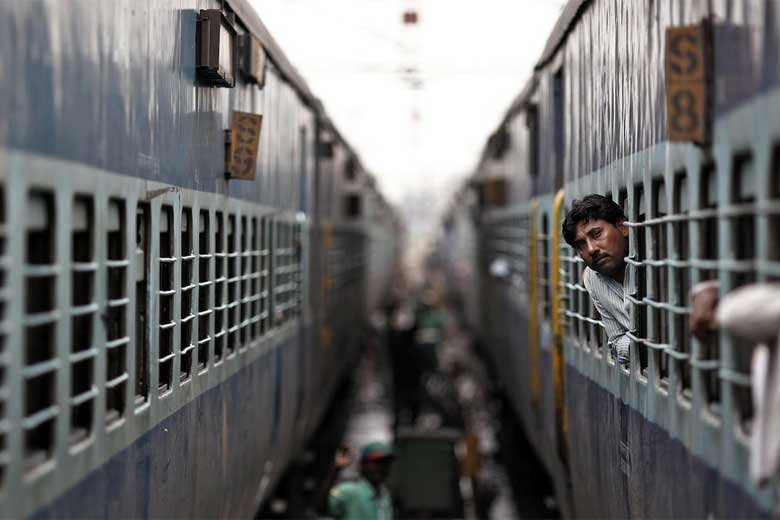
Indian Railways online ticket booking: ICICI Bank today announced the launch of a facility that allows users to book online rail tickets on its website icicibank.com. This facility is being offered in association with the Indian Railway Catering & Tourism Corporation Ltd. (IRCTC).
ICICI Bank is the first bank in the country to offer such a facility on its website.
Customers of any bank can use this Indian Railways online ticket booking service to book online rail tickets on the bank’s website itself, without visiting any other site.
Commenting on the launch, Rajiv Sabharwal, Executive Director, ICICI Bank Limited, said: “Online rail ticket booking on the Bank’s website for customers of any bank is yet another exciting service for the rapidly growing digitally savvy customer base in India. This service will soon be also available on the bank’s mobile banking app, iMobile as well as on its digital bank on mobile phone, Pockets.”
With this service, users can search for Indian Railways trains, book an e-ticket, cancel a reservation as well as check their PNR status among others. The website will display latest information for services including train options and ticket availability by connecting directly with the reservation system of the Indian Railways on a real time basis.
Users can pay for the rail tickets using their internet banking account, debit or credit card of any bank.
To avail this service, users have to do a one-time registration on the ICICI Bank’s website with their mobile number and user ID registered with IRCTC. Subsequently, they can purchase the tickets directly from the bank’s website.
Highlights of Indian Railways rail ticket booking on ICICI Bank website
· First bank in India to offer rail ticket booking on its website
· Customers of any bank can use the facility
· It will soon be available on the Bank’s mobile banking app, ‘iMobile’ as well as on its digital bank, ‘Pockets’






























