All posts by webadmin

Pak cheers NIA chief’s remark, India does damage control

Pak cheers NIA chief’s remark, India does damage control

New Delhi, June 3

The reported statement of the NIA chief that there is no hand of the Pakistan government or its agencies in helping the JeM carry out the Pathankot attack has triggered sparring between India and Pakistan with New Delhi saying that involvement of its nationals “is an accepted fact”.Even as the NIA backtracked on its chief Sharad Kumar’s statement, Islamabad said his remarks were a “vindication” of its long-standing position in that regard. The row started over a written interview by Kumar to a television channel in which he said, “So far, (there is) no evidence to show that the Pakistan government or any Pakistani government agency was helping Jaish-e-Mohammed (JeM) or Masood Azhar or his aides carry out the Pathankot attack.”Later, the NIA issued a statement saying the observation attributed to the NIA DG is “strongly refuted”. It said his statement had been misquoted. Ministry of External Affairs spokesman Vikas Swarup said, “I understand that the DG NIA has issued a clarification that his words are being misinterpreted. Let me clarify the position. The involvement of Pakistan’s nationals in the Pathankot air base attack is an accepted fact.” He further said “enough information” has also been provided to the Pakistani authorities through two Letters Rogatory to conduct investigation in Pakistan so that “all those associated in Pakistan with planning, support and execution of the attack are brought to justice”.  — Agencies


What Sharad said on Pathankot attackSo far (there is) no evidence to show that the Pakistan government or any Pakistani government agency was helping Jaish-e-Mohammed (JeM) or Masood Azhar or his aides carry out the Pathankot attack. – Sharad Kumar, NIA DG


No clean chit to Pak official machinery: RijijuThere is no question of a clean chit or any clarification in connection with the terror attack on the Pathankot airbase. Investigation is on – Kiren Rijiju, union minister of state for home.


clip


WANI BACKLASH 11 dead, Kashmir on edge 150, including cops, injured in widespread clashes

Majid Jahangir &

Suhail A Shah

Tribune News Service

Srinagar/Anantnag, July 9

A day after top Hizbul Mujahideen commander Burhan Wani’s death, the Kashmir valley witnessed protests and clashes that left 11 dead when security forces allegedly opened fire. More than 150 persons, including policemen, were injured in the day-long clashes as the security forces struggled to quell protesters in almost all districts. As a precautionary step, the authorities have suspended the Amarnath yatra.(Follow The Tribune on Facebook; and Twitter @thetribunechd)Burhan was killed on Friday in a gunfight in south Kashmir’s Anantnag district along with his two accomplices. The protests broke out immediately after the news of his death.  The separatists in Kashmir have extended the call for strike to July 10 and 11. Among those killed today were Amir Bashir Khan of Verinag, Saqib Manzoor Mir and Yawar Manzoor of Khundroo Achabal, Aijaz Ahmad Thakur of Siligam Ashmuqam, Mohammad Asif Dar of Halpora Kokernag and Showkat Ahmed of Arwani Bijbehara.

“There were incidents of arson and stone-pelting across the Valley. At a couple of places during crowd control, eight persons died,” Additional Director General of Police SM Sahai told mediapersons in Srinagar.  He said at many places the mobs tried to enter establishments of security forces to loot weapons. They attacked BSF posts and vital installations, he said. “A mob looted weapons at the Damhal Hanjipore police station  and opened fire, injuring three policemen. Twenty of our men were taken hostage. Three policemen are missing,” Sahai said, adding that 96 personnel were seriously injured.   “Last night, the Haal (Pulwama) minority camp was attacked. The CRPF men came under fire and some abandoned houses were set on fire,” he said. The ADGP said the militants also carried out an attack on the District Police Lines, Pulwama, which was repulsed. The trouble began late Friday night in Qaimoh area of Kulgam where the security forces allegedly opened fire at a youth protesting the killing of the Hizbul commander. This led to an attack on the BJP office in Kulgam.In Srinagar, curfew was imposed in old areas. Restrictions were imposed in Safakadal, Maharaj Gunj, Khanyar, Nowhatta, Rainawari and Maisuma. Mobile Internet  services and train services were suspended. Nevertheless, clashes and protests broke out in several parts of the city. Tens of thousands of people attended Burhan’s burial in south Kashmir`s Tral today. Forty funeral prayers were held for the slain commander. Appealing to the people not to let their children out on the streets, the Additional DGP said: “This kind of situation  does result in casualties that we have seen today, which is very unfortunate. We would have liked that not to happen.”


Soldiers told to work for return of complete normalcy

Soldiers told to work for return of complete normalcy
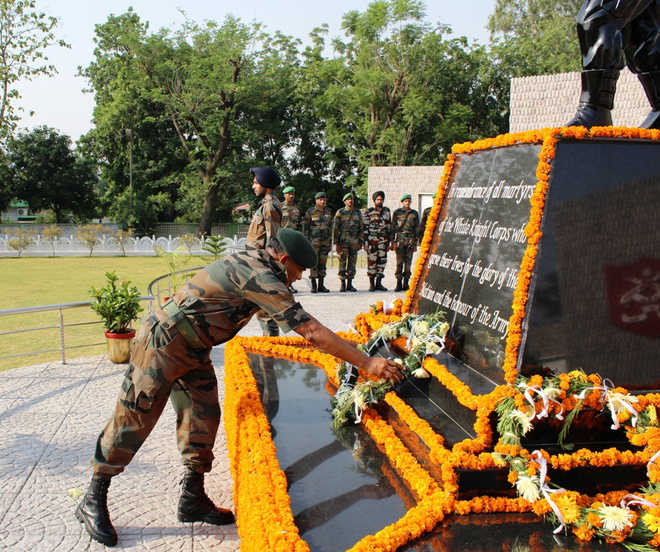
White Knight Corps GOC Lt Gen RR Nimbhorkar lays a wreath at the martyrs’ memorial in Jammu on Wednesday. A Tribune Photo

Jammu, June 1

General Officer Commanding (GOC) of the White Knight Corps Lt Gen RR Nimbhorkar today exhorted soldiers to keep combating militancy so as to pave the way for return of complete normalcy to the state.Lt General Nimbhorkar was addressing troops at Nagrota near here today on the 45th Raising Day of the White Knight Corps.The GOC complimented all ranks on their outstanding contribution to combating militancy and assisting the civil administration in regaining normalcy in the region, said defence spokesperson Lt Col Manish Mehta.The spokesperson said the GOC exhorted all troops to persist with same zeal and enthusiasm towards their profession to achieve new milestones.A solemn wreath-laying ceremony was conducted this morning with full military honours during which Lt General Nimbhorkar paid tributes to the martyrs at “Ashwamedh Shaurya Sthal”. He later interacted with the troops of the Nagrota Garrison. — TNS

Army Education Corps Day

Jammu: The Northern Command on Wednesday celebrated Army Education Corps (AEC) Day. A total of 432 soldiers of the command are set to appear for interviews to get into elite Army Cadet College at Dehradun. GOC-in-C, Northern Command, Lt Gen DS Hooda has complimented all ranks of the AEC fraternity for raising the human resource quotient in the northern theatre. He exhorted the Corps to maintain its momentum to ensure further enhancement in the educational standards  to be true with technological revolution and emerging challenges. — TNS


Next could be an all-women battalion

Parrikar: Combat role for women in Army, Navy soon; NDA, Sainik schools too may open doors

Next could be an all-women battalion
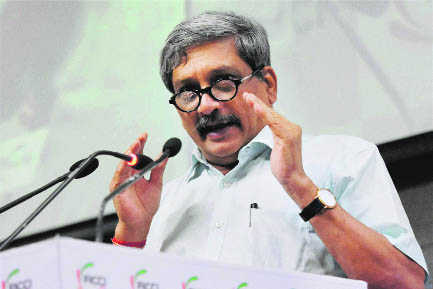
Defence Minister Manohar Parikar

Tribune News Service

New Delhi, July 4

Days after first women pilots were inducted for a combat role in the Indian Air Force (IAF), Defence Minister Manohar Parikar today said the government was looking for a greater role for women in combat, thereby, once again opening up the debate on the “pros and cons” of allowing women at the frontline.Parrikar mooted the idea of raising an all-women battalion and stationing women on warships. He said the “psychological barrier” had been broken with the induction of female fighter pilots. Three women were inducted into the fighter pilot stream of the IAF on June 18.The Defence Minister was speaking at a function organised by the Federation of Indian Chamber of Commerce and Industry (FICCI) Ladies Organisation on changing roles and opportunities of women in the defence sector. “Why can’t we have an all-women battalion if there is resistance among male soldiers over being led by female commanders,” he said.The only restriction today is infrastructure, Parrikar said, adding that induction of women through the National Defence Academy (NDA) and allowing girl students in Sainik schools can also be considered.Within the Army, the only question is a situation when a woman soldier is captured by the enemy. It could lead to furore on the political front.If the Army and the Navy are opened up for combat roles for women, India will join the US, Israel and Norway to have such a system.Parrikar said sometime in future he would sit with the chiefs of the three forces. “I don’t understand why we can’t place women on warships. At this stage, I will not support a submarine operation because submarines are designed for unigender or one area for staff. There are no separate areas for women. But warships can be modified and new ships can be designed to have facilities for women,” he said, adding that there was also a question of taking women officers through NDA.He said there were demands from across the country for Sainik schools to have girl students. “This cannot be done in disjoined manner otherwise girls will get into Sainik schools but will not get entry, all these aspects are being looked into,” he said.Speaking about the opportunities for women in the defence sector, Parrikar said low-end clothing line such as uniform for NCC cadets could be one area where women entrepreneurs can look for possible business prospects. He urged FICCI ladies organisation to come forward with a list of business propositions where they can partner with the defence sector and promote women entrepreneurs.In her welcome address, Vinita Bimbhet, president of FICCI Ladies Organisation, emphasised the crucial aspects of entrepreneurial role of women in the defence sector, which needed to be boosted to achieve the goal of inclusive growth.

WOMEN IN COMBAT ROLES SOON?

Defence minister Parrikar reignites debate on allowing women on the front line, says they could serve onboard warships in the future but not submarines NEW DELHI: Defence minister Manohar Parrikar on Monday floated the idea of allowing women in ground combat roles, reigniting the debate on whether they should be allowed to serve in the front line.

Speaking at a function organised by FICCI Ladies Organisation on the changing role of women in the defence sector, Parrikar asked why the army couldn’t have an “all-women battalion” if there was resistance among male soldiers to being led by female commanders. He said the decision to open up the fighter stream in the Indian Air Force to women about eight months ago had knocked down the “first psychological barrier” in the military to induct them in combat positions.

But the move met with resistance in the defence ministry. Parrikar said the file took four months to reach him as there were “many males” in the ministry, and he had to send several reminders to get the file moving. Three women are currently training to become India’s first combat pilots.

He said women could even serve aboard warships in the future, but not in submarines because they do not have separate areas to accommodate mixed gender crews. “There’s a thinking (in the military) that soldiers won’t listen to female commanders. I don’t agree with that. The sole restriction today is that of infrastructure,” said Parrikar

Parrikar said steps were being taken to induct women in Sainik Schools and — subsequently — the National Defence Academy.

Only a few countries — including Australia, Norway and the United States — allow women in all-combat capacities such as flying fighter jets, serving in infantry units and performing duties aboard warships and submarines.

The Indian army has had reservations about inducting women in close combat duties — most centering around physical contact with the enemy, lack of women-friendly infrastructure in forward areas, and physiological and cultural barriers.

Parrikar said while the government was considering opening up the fighter stream to women, some expressed fears over female combat pilots being shot down in enemy territory and taken prisoner. But such a possibility would be eliminated if they were assigned air defence missions in Indian airspace, he added. Parrikar knows that allowing women in front-line combat would require building a consensus and overcoming internal resistance. But he assured that gender parity in defence would be achieved smoothly.


India ‘running away’ from talks, says Pak President

India ‘running away’ from talks, says Pak President
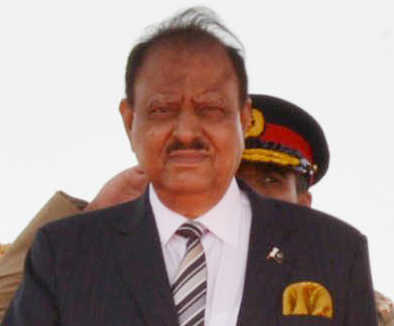
Pakistan President Mamnoon. — Reuters file photo

Islamabad, Jun 1

Pakistan President Mamnoon Hussain today accused India of “running away” from talks despite Pakistan’s offer of joint-probe in the Pathankot terror attack, even as he raked up the Kashmir issue, calling it an “unfinished agenda of partition” and the main cause of regional tension.Addressing the joint session of the parliament, Hussain said, “Despite Pakistan’s efforts for resumption of talks (with India) and its offer of joint probe in the Pathankot attack, the foreign secretary level talks are still suspended.Pakistan is concerned about it.””We believe the main cause of tension in the region is the Kashmir issue. It is part of unfinished agenda of partition of the sub-continent. Unless Kashmir issue is settled according to the wishes of people of Kashmir and UN resolutions, the problems of this region cannot be resolved,” he said.He said Pakistan is a peaceful country and wants its foreign policy to be based on friendship and brotherhood with all nations.”We do not wish to be aggressive towards any nation and intend to participate with honesty in national and global affairs,” he said.The President said that Pakistan wanted peaceful ties with all neighbours by addressing disputes through talks and accused India of “running away from talks with Pakistan”.He said that democracy has been strengthened in the country and it can now resist and absorb different kinds of crises.”Our political system has become strong enough to successfully face different kinds of crises. It means that our nation has come to the conclusion that sustainable progress and stability cannot be achieved without democracy,” he said, as he congratulated the lawmakers on completion of three years of parliament.He said Pakistan was making progress in the economic field and the country achieved 4.7 per cent growth in the outgoing fiscal years which will end on June 30.He said Pak-China partnership was important for national economic growth and the multi-billion dollar China-Pakistan Economic Corridor will be completed at every cost. — PTI


Terror In Dhaka: Is It Really ISIS? BY Lt. Gen Syed Ata Hasnain (Retd)

Terror In Dhaka: Is It Really ISIS?


SNAPSHOT

It may be possible that radical groups of Bangladesh led by the Jamaat-e-Islami (JeI) are behind the attacks.

ISIS as a sleeping partner with similar ideology on display allows morphing of the threat from home grown militants. It also throws all kinds of red herrings around.

Could this be why despite over a year of almost regular attacks on liberals, investigators are nowhere near establishing the linkages?

As pictures of the Dhaka terror outrage appear repeatedly on the visual media I am forced to revisit my own hypothesis on the problem of terrorism in Bangladesh. Terror is not new to it. Ever since its independence and particularly after the regretful assassination of Bangabandhu Sheikh Mujibur Rehman in 1975, Islamic radicalism has been prevalent in the country in one form or the other.

It needs to be recalled that the nine month period of genocide let loose by the Pakistan Army in 1971 was enabled by the connivance of elements which favored Pakistan and opposed the Awami League’s secular outlook. The events of 1975 were a near counter revolution by those opposed to Sheikh Mujib’s egalitarian approach. The backing of Pakistan and its ISI was always unmistakable.

Bangladesh’s history thereafter has been a struggle between the radicals and the moderates. With Prime Minister Sheikh Hasina more firmly in the saddle today, relations with India on a more even keel, denial of Bangladesh territory for the ISI’s nefarious activities in India’s North East and the proactive efforts of the government to bring to book the various perpetrators of the 1971 genocide and other radicals, there has been considerable consternation among the radical forces.

For the last two years or more, ever since the Bangladesh National Party (BNP) refused to participate in the elections, there have been noticeable efforts to put the government on notice and establish relevance by alternative means. This has been played by the targeting of liberals and bloggers who support secular and liberal ideology and of late members of the minority Hindu community. The identity of those who are behind this has been kept nebulous with ascription of most of the killings, to the ISIS.

In November 2015 the situation came to a head when the foreign media started to endorse the belief of some in Bangladesh that it was indeed ISIS which was behind the killings. The US and some other western countries issued travel warnings to their nationals. A few diplomatic missions in Dhaka commenced repatriating their families due to the threats. The situation became one of major concern for the Bangladesh Government affecting foreign investment and visits even by foreign delegations.

I visited Dhaka exactly at that time, early November 2015 at the invitation of the Bangladesh Army. My observations revealed to me that whoever was behind the attacks was selectively choosing targets with the intent of causing panic, discrediting the government and projecting a foreign hand as the sponsor. There had been one or two attempts near Gulshan, the high profile diplomatic enclave, and even the Indian High Commission had to remain on high security alert. The intent was to discredit the government’s capability in the eyes of the international community while weakening it internally.

The ISIS connection perplexed me. Skipping Afghanistan, Pakistan and India, where the efforts were primarily at recruitment what would ISIS hope to achieve in Bangladesh? It was in no position to make Bangladesh the bridge country for getting a foothold to move towards South East Asia and surely not the region to begin its campaign in South Asia.

To the supporters of the opinion that ISIS is deeply involved in Bangladesh it may appear that the group is attempting to display its international reach. From Paris to Brussels to Istanbul, ISIS has been active in Europe with a focus. Its war against the West is a war of retribution. In Africa it has surrogates such as Al Shabab and the Boko Haram. It supports them ideologically and may even have financial links. These are the potential areas to which some of the ISIS leadership could move if militarily displaced from Iraq and Syria. The conditions in Libya also support its presence. The Sinai has the terrain configuration to support it.

However, efforts in Afghanistan have not succeeded and in Pakistan it could just be commencing its approach with many of the splinter groups jumping on to the bandwagon. Bangladesh fits nowhere in the realm of the strategic buildup of ISIS except a public relations effort to project its enhancing reach.

It can yet be conjecture, as it was in November 2015, that a feasible explanation about the killing of liberal bloggers and now the high visibility terror strike is that the local home grown militancy revolving around the radical groups of Bangladesh led by the Bangladeshi Jamaat-e-Islami (JeI) badly needed a fillip. ISIS as a sleeping partner with similar ideology on display allows morphing of the threat from home grown militants. It also throws all kinds of red herrings around. This is why despite over a year of almost regular attacks on liberals, investigators are nowhere near establishing the linkages.

The terror attack at the high profile restaurant near Gulshan in Dhaka has succeeded in attracting international attention. Even Al Qaida in South Asia has claimed responsibility which makes various claims appear dubious. It however, achieves the aims of both, ISIS and the radical groups although ISIS’s role may be minimal.

It may also help in greater recruitment to its ranks from populous and impoverished parts of Bangladesh. If the AQ involvement is genuine then obviously the war of the terror groups has entered the subcontinent and would heat up.

Given the recent detentions in Hyderabad (India) it would cause some worry to India’s intelligence services. There is an immediate need for enhancing the already well-established cooperation between Indian and Bangladesh intelligence services.

The Bangladesh Army seems to have done well in the crisis although 20 civilians lost their lives; all six terrorist were neutralized with some firm decision making by the Prime Minister.

Also read

Jihad Comes To Bangladesh: Ramananda Sengupta on ISIS’ attempts at setting up a presence in Bangladesh

images

Lt. Gen Syed Ata Hasnain (Retd) is the former Corps Commander of the Srinagar based 15 Corps, and is currently associated with Vivekanand International Foundation and the Delhi Policy Group, two major strategic think tanks of Delhi

Have broken middlemen-ministry nexus: Parrikar

short by Bhavika Bhuwalka / 11:51 am on 28 May 2016,Saturday
Defence Minister Manohar Parrikar has said that under his tenure, the nexus that middlemen and arms agents had with ministry officials has been broken. He said, “The Ministry was in a fear psychosis and…a frozen mindset. I have managed to…create atmosphere of trust.” He added that officers now are not afraid of documenting negative views, something they avoided earlier.
By Snehesh Alex Philip and Priyanka Tikoo

New Delhi, May 27 (PTI) The nexus between middlemen, arms agents and government officials has been broken, according to Defence Minister Manohar Parrikar, who also said that investigators were on hot trail of suspects in the AgustaWestland VVIP chopper deal.

There was “fear psychosis and frozen mindset” when he inherited the ministry in 2014 and no one was ready to take any decision and changing that system was a challenge, he asserted.

“Under our tenure, we have broken the nexus that middlemen and arms agents had with officials in Defence Ministry,” Parrikar told PTI in an interview.

He said things have come to such a change that officers are not afraid of putting negative views on a file which they avoided earlier.

“The crux of the achievement is change in mindset. The Ministry was in a fear psychosis and was stuck up in a frozen mindset. I have managed to break this barrier of fear and create atmosphere of trust, if not full but partial that is good enough for the Ministry to start moving,” he said.

Parrikar, who assumed charge of the Ministry in November 2014 from Finance Minister Arun Jaitley, talked about wide- ranging issues concerning his Ministry including Rafale deal, AgustaWestland scam and acquisition programmes and described transparency, fast decision-making process and ease of doing business among his other successes.

On AgustaWestland probe, he said the investigators are hot on the trail of people, including journalists, who are linked to the VVIP chopper scam and the effort is to unravel the money trail with evidence.

Asked about murmurs that government has evidence against journalists in the VVIP chopper scam, he responded, “Who said we have evidence? I am not saying there is no evidence but evidence required in such matters need to be conclusive. Let them (investigating agencies) link.

“Sometimes you get evidence but it cannot be linked in a particular manner. Let them do their job. They are trying to crack open the money trail. It is not easy.”

Parrikar said there are many people whose tickets for foreign travel were booked through middleman Christian Michel.

“It has to show that it was done for a particular reason.

Let us assume, there is an air show and someone sends tickets.

This cannot be proved as corruption. Many a times, when marriages are held in Goa, the host sends air tickets to guests. But this is not corruption. Because he wants them to come there but if it happens too often, and for too many times, then it can definitely be a special favour. Then it starts going into the zone of corruption,” he said.

Parrikar stressed that the investigative agencies have been given a free hand. “The job of the political class is to ensure that officers should be allowed to function freely. To see they are not pressurised,” he said. .


The Practical Soldier: Leave Him to Find Solutions ::::Lt Gen Syed Ata Hasnain

The Practical Soldier: Leave Him to Find Solutions

My experience tells me that whenever the Indian Army is in crisis of functioning with relation to operational issues or under threat of failing in a mission the best solutions come from within the Service.

War gaming is the finest method of picking brains. No amount of imposed solutions will ever carry the stamp of acceptance the way a home grown solution will. I am saying this in reference to the Pampore incident.

Social media is livid that the Army seems to be getting the blame for something which was a failure related to SOPs of a different force. One is happy to see media releases from Badami Bagh, my old Headquarters, which pointedly emphasize on the need for inter force cooperation and finding solutions within.

The problem relates to command and control and division of responsibility. It has existed rather long but circumstances thus far favored continuing the ambiguity as it seemed to work well.

Water tight tasking sometimes creates more problems and shared responsibilities become an issue. Obviously the functional ethos of ambiguity is not going to continue and imposed solutions will probably ensure that. My strongest recommendation is that it must be left to the players on the ground and solutions will emerge.

The Army’s tasking system and the ‘be prepared’ task list is a wonderful exit valve which I would advise all to follow.

My purpose of this essay is not to do critique; that’s the worst thing to do when problems confront you. Mine is an anecdotal piece to highlight how solutions are usually well beyond SOPs.

It’s the practical ground commander or a senior officer with passion and experience who ensures success and defeats nefarious designs by sheer strength of personality and following by his command. So read on.

In June 1999 I was the Colonel General Staff of HQ Victor Force at Avantipur. The Kargil crisis was at its peak.

The ammunition for the artillery guns, which were proving a nuisance to the Pakistani intruders at the heights, was moving along the same National Highway which has been the focus in the last few days.

It was crucial that the road be secure; we just could not afford to have ammunition blown up on the road. Those were the days when terrorists roamed the countryside leading to our simultaneously handling five to six engagements in the area of responsibility. So the threat to the Highway was real and intense.

The ITBP was responsible for the ROP and the Rashtriya Rifles (my HQ) provided corridor protection. I cannot even recall if it was a written arrangement. All I remember well is that I had high tea and lunch at the ITBP Force HQ almost every week, sometimes twice.

My General Officer Commanding (GOC) was a man of the ground and together we went checking the ROP every other day and ended up at the ITBP HQ for tea and exchange of ideas. There was never a problem of ego. The ITBP officers, all outstanding professionals, would always welcome us and exchange views and implement the ideas.

On a certain afternoon of that blistering June; it was the operational environment which was hot, not Kashmir’s salubrious climate; I picked up the phone and asked to be connected to the Commander of 1 Sector RR at Anantnag.

The Army’s location at Anantnag is right next to the National Highway in the virtual civil lines of the town. It is called Khanabal. The convoys going and coming from Udhampur all halt here for tea and turn into a convoy ground.

It is a vulnerable time for the HQ because gates are open and the vehicles all bunched up while entering. The HQ duty officer told me that the Commander and the entire staff were out on the road reinforcing the ROP.

I chided him saying HQ have better things to do than reinforce ROP. In the evening I spoke to the Commander and inquired about this awkward practice. He explained me the vulnerability factor regarding the convoy, the ammunition being carried by vehicles and the lives at stake in the buses.

He then went on to state that he would never be able to live with his professional ego if a single man lost his life or a single vehicle was blown up in the area of responsibility of his Sector.

Technically, he was not responsible for the ROP but the sector area of responsibility was his and he took ownership of it. Written tasking or none he would use every resource to do the needful.

Thus from 4 to 5 PM, everyday every available hand of his HQ who could use a weapon and had one would be on the road protecting the convoy. Sometimes such decisions and actions set passion afire. The actual effect may have been marginal but the fact that the HQ staff and all soft elements were involving themselves in a robust task sent a very strong message to the units of the Sector.

It may be worth recalling that a 18 Km stretch of un-metaled road with 110 Hume pipe crossings which fell within responsibility of 1 Sector RR and was most vulnerable to IEDs was kept safe for move of ammunition through sheer frontline leadership by example. I often quote this example in leadership talks because in my experience this was one of the finest examples of cocking a snook at written SOPs.

In 2007, I had just taken over the Dagger Division at Baramula. A change was in the air. Chinar Corps in Kashmir had scored major successes in eliminating terrorist leaders and reducing infiltration while exploiting the LoC Fence.

The terrorists struck back, as it usually happens. A large number of standoff ambushes on the main Highway between Srinagar and Kupwara caused unacceptable casualties.

The large convoy with protection vehicles and the small tactical moves of unit convoys were all equally vulnerable. Men inside buses did not carry weapons due to problems of accounting while they were proceeding on leave and wore no bullet proof jackets (BPJs); well no one thought you need BPJs in a convoy.

The Army Commander at Udhampur stepped in. He checked from his staff why men were reluctant to wearing BPJs while moving in convoys, even if proceeding on leave. Pat came the answer from one bright spark. The BPJs were just too heavy to wear on long journeys inside a bus. Pat also came the decision of the Army Commander.

In order to empathize with the travails of the officers and soldiers who were now under orders to wear protective gear and carry weapons, the Army Commander and his entire staff at HQ Northern Command wore BPJs for their daily duties twice a week.

It was expected at every HQ. I do remember receiving the Army Commander at Baramula wearing my BPJ; it wasn’t too comfortable but then orders are orders.

Another direction from the same Army Commander to obviate major casualties in the case of failure to prevent an attack was that no bus would carry more than 20 soldiers and no truck more than 10. It led to logistics problems because that was not the optimum carrying capacity of the vehicles and more vehicles had to be employed and buses hired.

I am sure if the audit authorities had objected the good General would have ensured verbal and written slaughter against them.

indianarmykashmir1

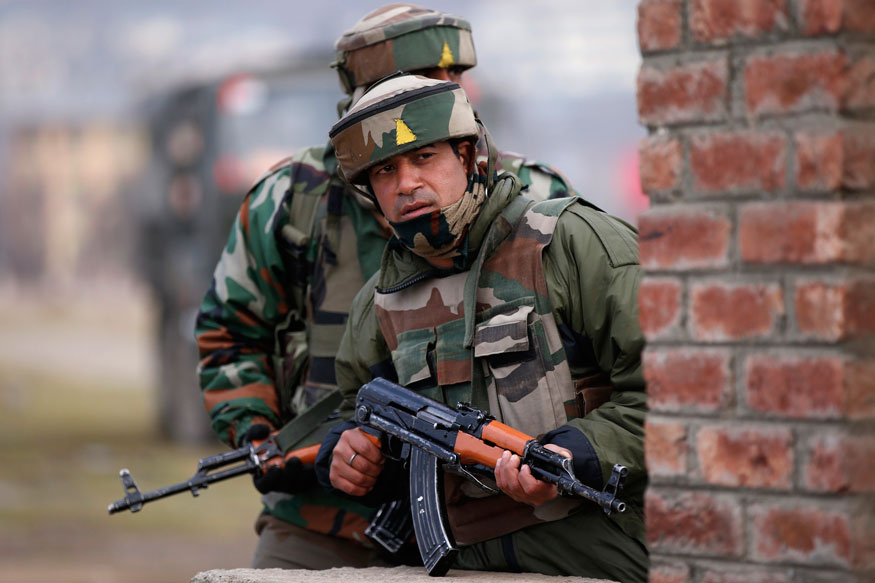
(Indian Army soldiers take their positions near the site of a gunbattle on the outskirts of Srinagar. (Photo: Reuters))

All service buses of Chinar Corps were hardened progressively; which meant that the sides of the buses were made bullet proof. The fuel consumption of the vehicle goes up drastically but lives are saved and soldiers travel mentally at comfort.

How did this idea come about? It was the same brigadier who used to turn out his staff to protect the convoy in Anantnag. In 2003, he was appointed GOC Dagger Division, in the rank of Major General. The convoy used to comprise large buses, which if fired upon from even standoff distances, were vulnerable as they were not hardened.

If an IED blasted in their vicinity the shatter effect of the glass windows would cause shards of glass to act as bullets thus causing casualties. The GOC wasn’t going to accept this and keep his men vulnerable. He visited the Central Vehicle Depot at Delhi Cantt, saw old and disused Vijayanta tanks lying there.

The skirt plates of the tanks, all hard armor plating, were cut from the hull, transported to Kashmir and welded to the sides of the buses. All glass windows were taped with broad transparent scotch tape to prevent shatter effect.

Disused industrial rubber lying at NHPC projects was picked up free of cost, melted and layered under the bus body giving it additional protection in the event of an IED attack.

In mid-2004, a stray Maruti 800 with a gas cylinder bomb and a suicide bomber (one of the rare cases in the Valley) dashed against a bus of the Dagger Division at Pattan on the same Highway. The terrorist blew the IED he carried.

It killed the driver of the bus but all occupants were safe; even the shards were limited. The Army took it from there and all buses were progressively hardened at the Base Workshop at Udhampur.

Frontline leadership of the Army can turn any negative situation on its head and practical solutions will always be found. We need to take inspiration from institutional memory, something the Army is terribly poor at. The Army Training Command at Shimla has a cell called the Center for Army Lessons Learnt (CALL).

It records all lessons from past operations. It should be the one tasked also to search its own data base for solutions when confronted with problems. Sending out bulletins is fine but in the rigmarole of everyday life these lessons do not get institutionalized.

My sincere advice to all who matter; let the forces in J&K be. Just sensitize them, express regret when failure takes place but do not impose solutions. There are enough good men and women who have the practical sense, patriotism and concern. They will find their own solutions.
8

NOTE ::

On social media we have been discussing all kinds of negatives and coming to all kinds of imposed solutions for road safety in J&K after the Pampore Ambush. I suppose anyone who is a practical leader of men just hates imposed solutions. I remembered the famous phrase – ‘Keep it Simple Stupid’ or KISS. The finest leadership and man management term.

I recalled that the write ups of mine on FB which drew max readership were never the negative and complex ones; they were always the ones written from the heart and kept simple. So I did just that. I am not trivializing a problem I can assure you because I am just too serious about professional issues but here is an article from the heart.

Take it apart if you wish.

One post on the Facebook page suggests that the KPS Gill model can be adopted for Kashmir. I have asked him to explain what is so fascinating about the KPS Gill model. If it weren’t for the Indian Army holding the periphery would it have worked. Your response to that is welcome.



Unlocking borders Indian-Iran reconnect

For too long the north-western borders have kept India away from a large landmass with which it had age-old ties. Prime Minister Narendra Modi’s Iran visit caps an effort of nearly 15 years to gain easy access into Afghanistan, Iran and Central Asian countries. India has now leased the Iranian port of Chabahar. It is tempting to view the leasing from the prism of Sino-India strategic rivalry, especially after Pakistan leased out its Gwadar port to China. There is no doubt Pakistan will keep a very anxious eye on the goings-on at Chabahar, a short distance from the troubled Balochistan. But there is more to Chabahar than strategic one-upmanship.Chabahar over time could become an example of a unique trilateral collaboration: Indian expertise using Iranian gas to add value to Afghan minerals. The goodwill for India in the long run, provided the trilateral cooperation keeps going, would be immense. However, Chabahar is not Gwadar when it comes to military use. The Sino-Pakistani friendship is in a very intense phase, Islamabad won’t object to China bringing in naval vessels at Gwadar. But the India-Iran ties, though on the upswing, are yet to evolve to that level. India also had to pay a price for the trading foothold. Iran saw New Delhi’s abiding interest in Chabahar as an opportunity to bring industry to this under-developed region. India will set up smelters and fertiliser plants in Chabahar but the proposed corridor to Afghanistan needs to be linked to busier channels of commerce to make it viable. This cannot be achieved if a route of commerce develops into a contest with China or Pakistan. Afghanistan and Iran may turn lukewarm as they would not like to be dragged into a game of proxy military contests. The US is also anxious and needs to be assured that the development of a transport hub and corridor is primarily meant to sidestep Pakistan’s outmoded strategy of blocking India’s access to its erstwhile north-western neighbours. A successful implementation of the corridor over time could increase the constituency for easier movement of goods across South Asia, to begin with.



Risky ride for security convoys in Kashmir

SITTING DUCKS Predictable long-distance routes and soft-shell vehicles allow militants to choose where, when and how they attack, exacting a heavy toll

Abhishek Saha

was attacked on Saturday. PTI FILEMAJOR ATTACKS ON CONVOYS OVER THE YEARSNARBAL CROSSING July 19, 2008 Army men dead in a powerful IED blast which ripped apart an army vehicle Attacker: Hizbul Mujahideen claims responsibility 10 HYDERPORA June 24, 2013 8 Army men dead Attacker: Hizbul Mujahideen claims responsibility PAMPORE Aug 11, 2014 8 BSF men injured Attacker: LeT suspected Feb 20, 2016 2 CRPF men dead Attacker: LeT suspected Srinagar Shopian BIJBEHARA June 3, 2016 3 BSF men dead Attacker: Hizbul Mujahideen claimed responsibility Katra Jammu Pahalgam Anantnag Jammu & Kashmir Doda UDHAMPUR Aug 5, 2015 2 ■ The CRPF bus BSF men dead Attacker: LeT suspected. Pakistani militant Mohammad Naved captured after the attack that Srinagar Jammu Punjab CHINA Jammu & Kashmir Himachal Pradesh INDIA ■

SRINAGAR: The Pampore ambush that killed eight CRPF men last week was the third militant attack on a security convoy in Jammu and Kashmir this year, underscoring the vulnerability of soldiers travelling in soft-shelled vehicles through dangerous terrain.

On Saturday evening, the men were returning to base camp from a practice session at a nearby firing range in a fourvehicle convoy when one bus came under attack from Lashkar-e-Taiba militants. The ambush wounded about 20 CRPF men.

At the wreath-laying ceremony the next day for those killed, director general of state police K Rajendra Kumar told reporters that such convoys are “sitting ducks” during surprise attacks. Evidence of what the top cop said lay in the state’s bloody past.

Earlier this month, three Border Security Force (BSF) troopers were killed and five more wounded after militants attacked their convoy on the SrinagarJammu highway in Bijbehara in south Kashmir’s Anantnag district. In this attack too one bus was singled out in a convoy of more than 20 vehicles on the way from Jammu to Srinagar.

In February, three militants attacked a CRPF convoy killing two and wounding seven in Pampore. Back in 2013, eight soldiers were killed when militants attacked an army convoy on the outskirts of Srinagar.

Security officials said convoys were vulnerable because their movement is predictable; since they travel long distances, the militants get to choose the location of attack; and they present the militants an opportunity to exact a heavy toll.

Inspector general of police SJM Gilani was of the view that convoys constantly court danger. “A convoy merges with the traffic on the road and the chain often breaks at some points. Therefore, though there is security, an isolated vehicle can be targeted,” he said.

Moreover, the vehicles used in convoys are often “soft”, not hard shell and bullet-proof.

CRPF DIG KK Sharma said militants get to choose the time and place of ambush as convoys wind their way through long distances. And when they occur, casualties are normally high. “Imagine throwing a stone in a dark cinema hall. It’s bound to hit somebody. The strike rate is quite high,” he explained.

Questions abound if the latest attack on the CRPF bus could have been foiled.

Defence minister Manohar Parrikar has ordered an inquiry into whether the standard operating procedure (SOP) was adopted by the CRPF personnel travelling in the convoy.

It has emerged that the attackers had been waiting in ambush in a car by the roadside with AK47s and grenades for the convoy’s arrival and the “road opening party”, a forward team that looks for looming danger, failed to detect them. Initial reports suggest that the CRPF personnel were slow in reacting to the attack.

Details are awaited and the army insists a tight security apparatus is in place to protect convoys.

“Drills are laid down (for the army) keeping in view all contingencies that could happen,” Srinagar-based army spokesman Lieutenant Colonel NN Joshi said.

CRPF DIG Sharma, however, said attacks on convoys are not specific to Kashmir. “Anywhere where there is militancy, convoys come under attack.”

Security officials believe better a safety ring and intelligence inputs can prevent such attacks. The CRPF on Sunday said some heavy-armoured mine protected vehicles (MPVs) were shifted from Maoistaffected areas to Kashmir to “effectively secure our men during convoy movements and road opening tasks”.