All posts by webadmin

‘Hang my head in shame’, Former Navy Chief pens emotional letter to President and PM Modi on Diwali

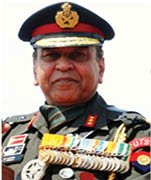
An open letter addressed to President Pranab Mukherjee and Prime Minister Narendra Modi written by Former Navy chief Admiral Laxminarayan Ramdas highlighted the ‘deep shame’ he felt pertaining to relentless attacks on minorities in the country.

The Magsaysay award winner wrote the following in his letter ::

Honourable President and Honourable Prime Minister,

It is with a heavy heart, that I write this open letter to you at a time when our beloved country and people are facing severe challenges and threats to our shared heritage.

I have served in the Armed Forces of India – joining soon after Independence as a 14 year old, to end up 45 years later Chief of the Indian Navy [1990 to 1993] I have witnessed many transitions in India – from the horrors of partition in 1947 to the very different world of digital connectivity that we see today.

I also write to you as one who was brought up in the Hindu faith. However, the Hinduism I knew and experienced was gentle, inclusive, and filled with extraordinary diversity. My religion taught me values of love and respect for all beings. My brand of Hinduism was not filled with the kind of violence, intolerance represented by the current brand of “Hindutva” that seems to be fanning the flames of division and fear across the country.

Today, as a veteran in my eighties, I am forced to hang my head in shame as I witness a series of incidents and assaults on our fellow citizens, especially minorities and Dalits. Our armed forces which I have had the honour to serve for 45 years, have been an exemplar of India’s secular ethos. Be it in ships and submarines, or in planes and battle formations, we do not discriminate on the basis of caste or religion – we train, we fight, we live, we eat and we die together.

So why are we bearing witness to increasing attacks on minorities across the country, ever since the present government came to power in May 2014? It appears that certain communities are being singled out for special attention – for instance Muslims. Today a Muslim has to prove his or her loyalty, and they are being repeatedly put in a situation where their places of worship are under attack, as indeed their eating habits, and other basic freedoms. The instances of completely unacceptable and unilateral mob behaviour leading to many deaths as well as direct insinuations being made by senior leaders, are too numerous and well known to be repeated.

There seems to be a systematic and well orchestrated attempt to impose a majoritarian single point agenda of creating a Hindu Rashtra in India – led by the RSS and their network of groups, which is disturbing to say the least. This in turn has resulted in a dangerous pattern of mob behaviour including intimidating and lynching people merely on the basis of rumours – in total disregard for the established rule of law. In many cases those responsible for implementing the law, have themselves displayed blatant partisan tendencies and behaviour.

Most shocking of all is the fact there has been no unambiguous condemnation of such actions and behaviour by those at the helm of affairs in the country. Sadly, time and time again, the response of the government seems to indicate an almost studied, but certainly not benign, indifference. The co-ordinated response of those in government seems to be to downplay the serious and vicious nature of these allegations and attacks – by terming them ‘sad’ and ‘unfortunate’ – whereas there should be outrage and a demonstrated will to ensure that this society will not tolerate such behaviour. That there are MPs, Cabinet ministers and elected Chief Ministers who are in the forefront of these comments and actions, leads one to believe that the ruling party and its satellite organisations are working to a plan.

I do not need to point out to the top leadership today, that this is playing with fire in a nation where minorities – especially Muslims and Christians, as also Dalits and adivasis, are already feeling discriminated and marginalised. Instead of treating this amazing diversity as our strength, today we are being seen by the international community as increasingly insular, parochial, intolerant, racist and even fascist. The violence visited upon vulnerable sections reinforces the image of India as an imperfect democracy where all forms of dissent are discouraged and human rights trampled upon with impunity.

The Prime Minister and his ministers in the government are sworn in by the President of India, and they take an oath pledging to uphold the Indian Constitution. Their failure to do so, as evidenced in the foregoing, is a serious matter and does not augur well either for national security or national integrity. The Central and State Governments must act swiftly, unequivocally condemn all such incidents and ensure that justice will be done and the guilty are punished. Such action alone will have a salutary deterrent effect on all those, be they fringe or mainstream, who are speaking and acting in many voices that are totally against and inimical to, our traditional ethos and the syncretic culture of our country and its people.

India represents a unique blend of peoples and cultures which have evolved over 5000 plus years in a constantly changing and dynamic process. This diversity and unique nature of our society and people can probably never be replicated anywhere on this earth – and for this reason alone, the concept of a single religious identity or mono culture represents an insult to this ancient civilisational heritage.

Honourable Mr President, Honourable Mr Prime Minister, you have both sworn to honour the right of every single citizen to freedom of speech, worship, association as brilliantly articulated in the Indian Constitution. As a former serviceman and a veteran, like you, I too have promised to uphold the same constitution. It is our bounden duty that the elected Government of this nation must honour the rights of every citizen of this land as amply spelled out in the Preamble of the Constitution and further elaborated in the Directive Principles of state policy. As Supreme Commander and the Chief Executive – this is what you must ensure and implement by all the powers vested in you by the people of India.

If we do not stem the rot now – it might be too late. Indeed we the people of India look to you to take all steps necessary to restore faith in our democracy and in the promise of bringing dignity, fraternity and equality to each of our citizens.

Haryana announces Rs 20 lakh and govt job for BSF soldier’s family

Haryana announces Rs 20 lakh and govt job for BSF soldier's family
Rai Singh is survived by wife Sunita and sons Hitesh, Paras and Karamvir. Tribune photo: Manoj Dhaka

Kheri-Sampla (Rohtak), November 22

The Manohar Lal Khattar government on Tuesday announced Rs 20 lakh and a job for the next of kin of head constable Rai Singh Indora, 39, who died after being hit by a mortar shell from across the border in Kashmir’s Rajouri sector.The announcement was made by Transport Minister Krishan Lal Pawar after Rai Singh was cremated with full state honors at the village here.“The Haryana government has decided to give Rs 20 lakh and a job to the next of kin of Rai Singh,” Panwar told ANI.“A park in Kheri-Sampla will also be named after Rai Singh and a statue of him would be installed at the place of his cremation,” he added.

(Follow The Tribune on Facebook; and Twitter @thetribunechd)

When asked as to whom the government would award the job, Panwar said, “The eldest son of Rai Singh is 16 and he can get it once he is 18.”Former Haryana chief minister Bhupinder Singh Hooda also attended the cremation and paid tributes to the martyr.“Not only Rohtak or Haryana but the entire nation is proud of the martyrdom of Rai Singh. On behalf of the entire Congress Party I pay respects to the martyr,” he said.Rai Singh is survived by wife Sunita and sons Hitesh, Paras and Karamvir.“Through his busy schedule, my father would find time to talk to us. He called daily, to enquire about our well-being,” Hitesh, 16, the oldest of the three, said.Rai Singh’s elder brother, Ramesh, who retired from the BSF in April, said the government should take care of the family of his brother.“The government should look at the plight of his kids. They have lost their father and their future must be secured by the government,” he said. ANI


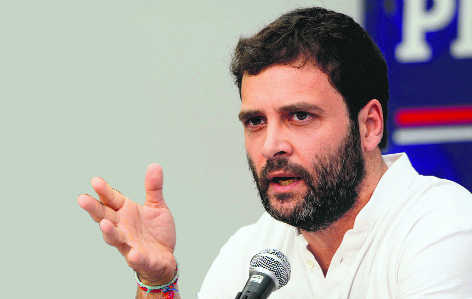
Motivate forces not by words but actions: Rahul

Motivate forces not by words but actions: Rahul
Rahul Gandhi, Cong vice-president

Tribune News Service

New Delhi, October 29

Congress vice-president Rahul Gandhi today chose Diwali eve to subtly accuse the government of reneging on its many promises to the armed forces. He said the forces must be motivated not merely by words but also actions.In a letter to PM Narendra Modi today, Rahul cited a range of issues affecting the Indian armed forces including disability pension, one rank one pension, implementation of the 7th Pay Commission etc to say, “Our solders risk their lives each day to defend the nation and it is our duty to show them that we care for them and their families not only through our words but also through our actions.”Rahul said he was saddened that in the last few weeks, actions taken by the government — far from assuring the soldiers — have indeed caused them pain and hurt.“Just days after our soldiers conducted surgical strikes, the disability pension system was converted to a new slab system that, in many instances, drastically reduces the pension received by these brave men in case of a disability. The roll-out of the seventh Pay Commission continues to keep our defence forces at a disadvantage and further exacerbates the disparity between them and civil employees,” Rahul said.He also cited with concern that the government had now downgraded the status of military officers vis-a-vis other civilian counterparts in a letter dated October 18.“Finally, contrary to what was promised, one rank one pension as implemented by the government does not fully meet the genuine demands of our ex-servicemen. They have been forced to come out on the streets to make their voice heard on this vital issue,” he said.


Gen Suhag in China on trust-building op

Gen Suhag in China on trust-building op
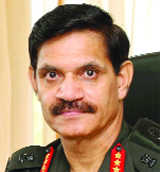
Army Chief Gen Dalbir Suhag

Ajay Banerjee

Tribune News Service

New Delhi, November 21

Army Chief Gen Dalbir Singh Suhag today led a military delegation to China as part of an effort by both countries to enhance high-level military exchanges aimed at building trust and ensuring peace along the 3,488 km disputed boundary on the Himalayan ridgeline.The Gen Suhag-led delegation’s four-day visit (November 21-24) is the second high-level military engagement this month. The 8th Annual Defence Dialogue (ADD) was conducted in New Delhi on November 8 between Defence Secretary G Mohan Kumar and Sun Jianguo, deputy chief of the Joint Staff Department of China’s Central Military Commission (CMC).Yet another interaction is coming up in December when Gen Zhao Zongqi, Commander, Western Theatre Command of People’s Liberation Army (PLA), visits Delhi.“The visit is aimed at engaging with China on subjects of mutual concern and shared interest, which include terrorism, humanitarian assistance and peacekeeping training,” an Army spokesperson said today.The visit coincides with a joint military exercise —‘Exercise Hand-in-Hand’—that is underway in Pune since November 16. Its theme is to “understand and practice” methods to tackle transnational terror. This is the sixth edition of the exercise — and first since December last when Beijing passed a law authorising its military to venture overseas on counter-terror operations and even sent some 5,000 troops to tackle the Islamic State in Syria.Both countries separately face transnational terror in their respective regions—India in Kashmir and China in Xinjiang (north of J&K in India). Besides, both have collective threat of their own youth joining the IS. On October 19, the two armies held their first-ever joint drill in Ladakh, J&K, the same place where the two fought in 1962.Will meet top gunsGen Suhag and his team will be visiting key military installations, including Infantry Division and Army Air Defence Brigades. The Army Chief is also scheduled to meet a number of dignitaries of PLA and CMC. 


Union Cabinet clears release of DA instalment to central employees

Union Cabinet clears release of DA instalment to central employees
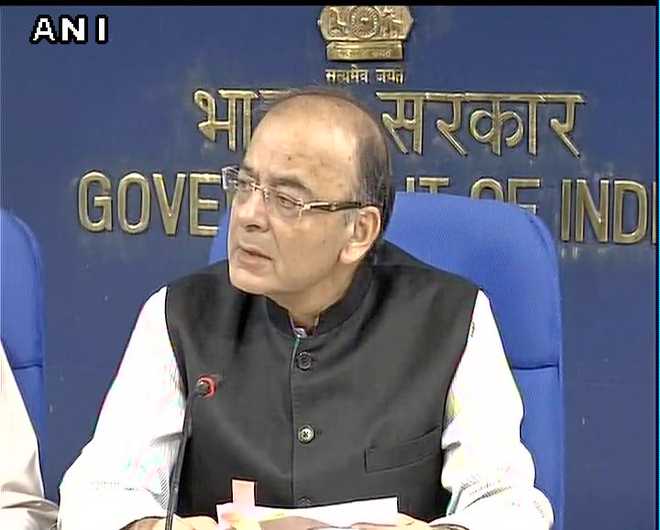
FM Arun Jaitley addresses the media. ANI

KV Prasad

Tribune News Service

New Delhi, October 27

The Union Cabinet on Thursday announced an instalment of Dearness Allowance for central government employees and dearness relief for pensioners at 2 per cent with effect from July this year.                     This was announced by Finance Minister Arun Jaitley, who was addressing the media after the cabinet meeting.

(Follow The Tribune on Facebook; and Twitter @thetribunechd)

The cabinet also cleared Rs 500 crore for horticulture under the PM package for Jammu and Kashmir.

It also announced a package for apple-growers. Indirect benefits were approved for allied sectors.                        The cabinet also approved setting up of a National Academic Depository as envisioned under Digital India, he said.


Soldier’s life no cheap, sir Dinesh Kumar in Chandigarh

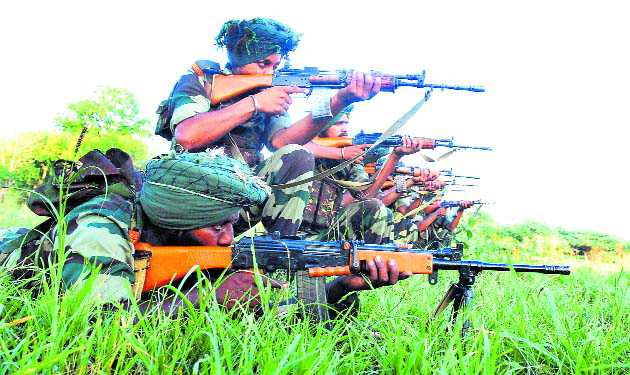
Ever wondered about the plight of the Army’s Infantry soldier! Dressed in battle fatigues, the semi-literate rifle-wielding soldier from a rural or semi-urban part of the country spends much of his career patrolling and guarding disputed borders with China and Pakistan in tough terrains that range from hilly jungles to very high-altitude barren, rocky mountains and glaciers and in extreme weather conditions. For the last 60 years, starting the Infantry soldier has been fighting a bleeding and fatiguing irregular war against terrorists and insurgents. Soldiers have silently suffered hostility, at best, indifference of sections of people in parts of J&K and some states in the northeast. Plus, they have to help in times of natural disasters such as earthquake, floods and landslides.Yet the Infantry’s 382 battalions, which comprise the largest arm of the Army, are also among the most neglected and lacking even in some basic equipment. Lost in the race for acquiring the more glamorous and highly expensive ‘big ticket; items such as tanks, artillery,

surface-to-air missiles, helicopters etc, the not-so-glamorous Infantryman does not evoke the same level of urgency even though it is the public face of the Army and bears the maximum casualties whether during war or peace. In April 2005 the Army conceived a major modernization plan for the Infantry with the fancy title of F-INSAS (Futuristic Infantry Soldier as a System). The project, spread over three phases and originally scheduled to have begun rolling out in stages from 2012 to 2020, is meant to upgrade, if not altogether revolutionize, the Infantry into an ultra-modern fighting machine. The aim is to provide the soldier with lethality, mobility, survivability, communications and situational awareness. The F-INSAS is based on five major technologies: (i) modular weapons; (ii) body armour and individual equipment; (iii) weapon sights and hand-held target acquisition devices; (iv) communication equipment to enable soldiers to transmit and receive complex voice, data and video systems; and (v) portable computers for soldiers and officers. The ambitious programme has made little progress and compares poorly with the ground realities 11 years after the project was conceived. Let alone modular assault rifles with interchangeable barrels (7.62 mm for counter-insurgency operations and 5.56 mm for conventional warfare), the Army has been unable to replace the existing and flawed 5.56 mm indigenously produced INSAS (Indian Small Arms System) rifle. A global tender floated in 2011 has been cancelled as all the competitors failed to clear the trials. The Infantry needs 1,85,000 new and better assault rifles which continue to remain elusive. But let alone buying new rifles, the Army has been unable to even change the orange colour of the existing INSAS rifles which compromises the camouflage of the soldiers thus putting them to risk.The Infantry presents a microcosm of the existing deficiencies in the Army which includes even basic and non-lethal items. Starting from 1,26,270 mosquito nets, 1,86,092 brown canvas rubber sole shoes with laces and 2,17,388 high-ankle boots, the Infantry is suffering a shortfall of 4,47,000 ski masks (required in the mountains) and three lakh bullet-proof vests, which can help protect the lives of soldiers in counter-insurgency operations and along the Line of Control. There is uncertainty over the current tenders for 44,600 carbines and 4,097 light machine guns that the Infantry is in dire need of even as about 1,000 Infantry combat vehicles need an upgrade. One other ‘small stuff’ is the need to replace the existing thin brown canvas shoes with proper sports shoes. Over 10 years later, the Army continues to await 8 lakh superior quality PT shoes for its troops. The Army is already suffering a woeful shortfall of ammunition including the Armoured Corps, Artillery, Air Defence and Infantry. So severe is the deficiency in ammunition that the Army’s War Wastage Reserve (WWR) has fallen from the required 40 days to between 15 and 20 days. In other words, the Army does not have ammunition enough to fight a war for more than 15-20 days. The depletion of the WWR is partly also because the Army is being forced to divert resources to raise a new Mountain Strike Corps (17 Corps). The first of its kind Mountain Strike Corps, sanctioned in July 2013 and to be raised by 2021, is being established at a cost of Rs 65,000 crore and will add 90,274 more soldiers and 32 new Infantry battalions. This will increase the number of existing Infantry battalions to 414. The WWR is expected to reach 100 percent only in 2019. Owing to delays in the F-INSAS project which has since been restructured and modified, the Infantry is a long way from becoming a fully networked all-terrain, all-weather personal-equipment platform with enhanced firepower and mobility for the digitalized battlefield of the future. The Infantry soldier’s wait has only become longer.

dkumar@tribunemail.com


MoD won’t accept Rs 5 cr from Johar

Tribune News Service

New Delhi, October 24

The Ministry of Defence has decided not to accept Rs 5 crore which film  producer Karan Johar had been asked to deposit in the armed forces’ battle casualty fund in lieu of his movie  ‘Ai Dil Hai Mushkil’ being allowed to be released. MoD sources said the battle casualty fund accepts only voluntary donations.There is a procedure for vetting each such donation. Donations to the fund are allowed income tax rebate. There can be no money coming in which is not voluntary, officials confirmed.


Stopped using term ‘strike’: Parrikar

Stopped using term ‘strike’: Parrikar
Defence Minister Manohar Parrikar

Panaji, October 23

Faced with a barrage of criticism from various quarters over his statements on cross-LoC strikes by the Army, Defence Minister Manohar Parrikar today said he has stopped using the word “strike”.The minister had faced flak from the Opposition for a flurry of remarks over the surgical strikes carried out by the Army in Pakistan-occupied Kashmir in September.“I will not touch any controversial issue. I have already stopped using the word ‘strike’,” Parrikar, who was in his home state of Goa, said during the inauguration of a helicopter engines’ maintenance unit in Sattari tehsil.On October 17, Parrikar had appeared to give credit to “RSS teaching” for the decision to launch cross-LoC surgical strikes even as he slammed those seeking proof for the Army’s anti-terror operation.He had also trashed claims of such operations under the UPA, provoking a counter-offensive from the Congress, which accused him of “blatant politicisation” of the issue. The Congress had demanded that the Prime Minister tame his “belligerent” minister and apologise to the Army. — PTI

‘Charis make better arms than OFB’

  • Defence Minister Manohar Parrikar on Sunday said the local ‘chari’ community, listed in backward class, probably makes better arms than the Ordnance Factory Boards
  • They (chari community) have skills with them. We need to harness that skill by giving training to switch over from age-old technologies which they are using to the latest ones,” he said

Have already stopped using the word strike: Parrikar

Have already stopped using the word strike: Parrikar
The minister had faced flak from the Opposition for a flurry of remarks over the surgical strikes carried out by the Army in Pakistan-occupied Kashmir in September. PTI file photo
Panaji, October 23

Defence Minister Manohar Parrikar said on Sunday he has stopped using the word “strike”, as he faces criticism from various quarters over his statements on cross-LoC strikes by the Army.

The minister had faced flak from the Opposition for a flurry of remarks over the surgical strikes carried out by the Army in Pakistan-occupied Kashmir in September.

“I will prefer to address the gathering in local language. I hardly get an opportunity to address in local language. But I promise you I will not touch any controversial issue. I have already stopped using the word strike,” Parrikar, who was in his home state of Goa, said during the inauguration of a helicopter engines maintenance unit in Sattari tehsil.

“You brought the term (strike) in your speech referring to labour issues,” he said on a lighter note after the speech by Chief Minister Laxmikant Parsekar during the event.

On October 17, Parrikar had appeared to give credit to “RSS teachings” for the decision to launch cross-LoC surgical strikes even as he slammed those seeking proof for the Army’s anti-terror operation.

The minister had also trashed claims of such operations under the UPA, provoking a counter offensive from the Congress, which accused him of “blatant politicisation” of the issue.

Condemning Parrikar for rejecting its claim of surgical strikes having been undertaken by the Army under UPA, Congress had demanded that Prime Minister Narendra Modi tame his “belligerent” minister and BJP chief Amit Shah, and apologise to the armed forces.

The surgical strikes were carried out on seven terror launch pads across the LoC, with the Army inflicting “significant casualties” on terrorists preparing to infiltrate from PoK. The strikes of September 29 came days after Prime Minister Narendra Modi warned that the Uri attack, which left 19 Indian soldiers dead, would not go unpunished. — PTI


The battle for Mosul and its fights:——-Lt Gen Syed Ata Hasnain (retd)

To what extent the US Air Force will follow humanitarian norms in Mosul cannot yet be assessed. The battle for the core of the city will be equally bloody contingent upon the will of the defender, the resources available and the effectiveness or otherwise of the isolation and investment of the city.

The battle for Mosul and its fights
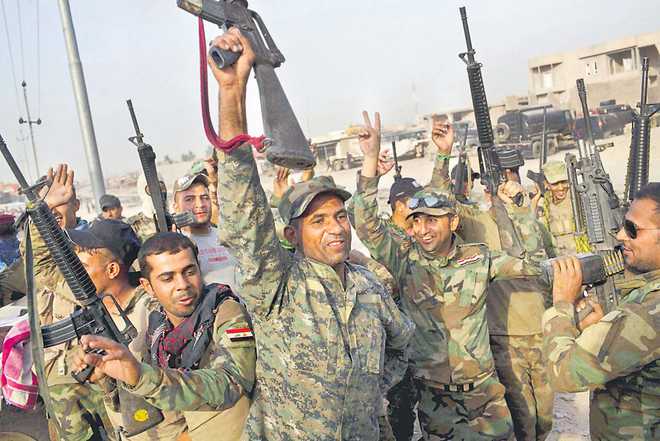
Retaking Mosul: Soldiers of the Iraqi army raise their weapons in celebration on the outskirts of Qayyarah, Iraq, on October 19, 2016. A senior Iraqi general called on Iraqis fighting for the Islamic State group in Mosul to surrender as the operation to retake the militant-held city entered the third day. AP/PTI
8

WITH ISIS (Daesh) under increasing pressure in Northern Iraq, it’s future in West Asia may well be decided by the battle for Mosul which began on October 17. Western electronic media is beaming live pictures of the hostilities which have not yet begun in earnest. However, it will be a long-drawn and tragically a very bloody affair. How are battles for major cities fought in modern times and what major issues will decide the outcome of this battle? Before delving into any detail it may be remembered that Daesh is not down and out yet. It has the resources, the will and the capacity to fight; especially since it’s so-called Amir, Abu Bakr Al Baghdadi is known to be in Mosul.Mosul is the second-largest city of Iraq, with a population which was earlier 2.5-million strong. Currently, approximately a little more than one million people reside there after Daesh defeated the Iraqi army in 2014. The presence of civilian population of this magnitude creates more problems for the attacker who has to restrict the use of firepower and tip toe around the populated zones, if the morals of warfare are implicitly followed. The defender, on the other hand, has the option of using the population as a human shield to prevent unrestricted movement of the offensive force. This isn’t conventional warfare so rules are grudgingly followed as is evident with the kind of destruction witnessed in  Fallujah a few months ago. Cities usually have suburbs and even further away from the city centre are  small rural clusters. These are used by the defender to prevent the offensive elements from closing with the city. Open stretches are mined with both anti-personnel and anti-tank mines and covered by missiles or anti-tank rockets to prevent tanks and infantry combat vehicles opening routes for the infantry. Once these peripheral zones are breached at the cost of heavy casualties, the defender will fall back on improvised explosive devices (IED) to cause more attrition as the battle moves into the city. The presence of population prevents the freedom of use of air power due to the high risk of collateral damage. In the case of the war in Syria and Iraq, estimates of civilian casualties from air strikes against cities have been extremely high. Entire stretches of Aleppo have been reduced to rubble and humanitarian considerations have not been in focus. To what extent the US air force will follow humanitarian norms in Mosul cannot yet be assessed. The battle for the core of the city will be equally bloody contingent upon the will of the defender, the resources available and, most importantly, the effectiveness or otherwise of the isolation and investment of the city. It is at that stage that the civilian population suffers the most. In Fallujah, one avenue of escape was kept open for the civilians to flee. Many Daesh fighters may attempt to exploit this opening too. What are isolation and investment? Before commencing the attack on a city, it is important for the attacker to cut off avenues of reinforcement or escape. The resultant isolation in the case of Mosul will ensure that Daesh fighters from elsewhere do not get in. Once the city is being reduced, there is no escape for Daesh to live and fight another day. The isolation involves placing tanks and  ICVs centred on infantry deployments which are occupied astride the roads and tracks which act as avenues. Since Daesh would have deployed in the rural clusters around Mosul to deny close reconnaissance and a foothold into the city it is important for the Iraqi army to push back a major part of these elements to afford launch pads, footholds and other multiple options for the direction of commencement of the main attack against the city. The intent is to keep Daesh guessing and address the crust of the defences to punch holes through which the attacking troops will be funnelled. The use of artillery to reduce the buildings from where resistance will be intense will be restricted but again contingent upon the discretion of the attacker. Once the penetrations have been effected, it becomes a slogging match. A city like Mosul is not closely packed with buildings. There are sufficient open spaces where helicopters can hover or land disgorging Special Forces who would target some specific objectives like command centres and communication facilities. The chief weapons of the infantry of the Iraqi army should be the rocket launcher to punch holes and destroy pill boxes; the sniper; and the flame thrower.  The term Iraqi army, is being generically used here to signify the attacking force. It is however well-known that the offensive against Mosul has three or even four elements. First, is the Iraqi army, largely Shia but with many Sunnis too. Second is the Kurdish Peshmerga of Masoud Barzani from the north. Third are the US Special Forces and air force. The  Shia militias are an important element, although there are reports that they may not participate unless things go wrong for the Iraqi army. The latest entrant is Erdogan’s Turkish army which is attempting to secure a role for itself in both Syria and northern Iraq to prevent undue influence and political significance to the Kurdish elements involved in the fight. The US has made it clear that the presences of any foreign armed elements require approval of the government at Baghdad and such approval has yet to be given. The planning, command and control and application of a force of such disparate groups with their diverse interests and operational methods will be a big  challenge. The possibility of some elements of Iran also being directly involved cannot be ruled out. Russia is unlikely to be directly involved but it has promised full support to the Peshmerga in terms of arms and equipment supplies. Russia has also provided helicopters and artillery equipment to Iraq with the intent of ensuring that it retains influence in a fight which will be dictated by US advisers and planners. The bewildering issue currently is the emerging relationship between Turkey and Russia which is apparently taking a positive turn. How the Russian support to the Kurds of any hue and nationality will be taken by the Turkish leadership is unclear at present. The factor which should be uppermost in all minds is the effect that the operations and the intensity of Daesh resistance will have on the civil population. The displacement of the large population is not something the United Nations Office for the Coordination of Humanitarian Affairs (UNOCHA) is fully prepared for, financially or from infrastructure point of view. For a change in Iraq the human angle is being looked upon with great concern but clearly resources do not match requirement. The challenge is greatly multiplied by Daesh’s propensity to remain unpredictable and resort to unethical practices such as a potential mass use of chemical weapons known to be in its possession. Finally, does the timing indicate any considerations other than military and strategic. With the US presidential election in another two weeks, could this have waited? That’s the question no one will answer for now.

 The writer, a former GoC of the Srinagar-based 15 Corps, is now a Fellow with the Delhi Policy Group.


Pak warns of action if India breaches Indus Water Treaty

Pak warns of action if India breaches Indus Water Treaty
Zakaria’s remarks come amid reports that India may review the 56-year-old Indus Water Treaty. File photo

Islamabad, October 20

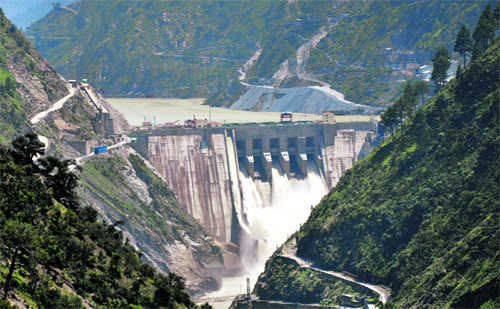
Pakistan on Thursday warned of “appropriate action” if India violates the Indus Water Treaty and said it was closely monitoring the situation, amid reports that New Delhi may revisit the key water sharing accord.“Appropriate action will be taken in line with the Treaty in case of any violation by India,” Foreign Office (FO) spokesperson Nafees Zakaria said at the weekly briefing.Pakistan was keeping a close eye on the situation, Radio Pakistan quoted him as saying.Zakaria’s remarks come amid reports that India may review the 56-year-old Indus Water Treaty.He said that India was making “desperate attempts” to divert attention from the “atrocities and human right violations” being committed in Kashmir.He said Pakistan was highlighting Indian brutalities in Kashmir at world fora and there had been “very substantive outcome” of these efforts but the international community remains concerned about the situation.Responding to a question, he claimed that India violated ceasefire on the Line of Control for more than 90 times this year.The notion of isolating Pakistan is “ridiculous”, Zakaria said, adding that India’s “negative attitude” had been exposed which is the biggest hurdle in the way of regional development and prosperity.He also termed the Indian treatment to the Pakistani artistes as “very disappointing and highly regrettable” as he deplored India’s decision to “use SAARC for its political ambition”, according to the report.Zakaria also referred to a media report quoting US Republican presidential candidate Donald Trump, who described tensions between India and Pakistan as a “very, very hot tinderbox” and offered to be “the mediator or arbitrator”.Zakaria noted that though Pakistan does not comment on media reports usually, in this case it welcomed the mediation offer.“We continue to urge our American friends including those in the administration to play their due role in resolving bilateral issues between Pakistan and India, particularly the Kashmir dispute,” he said.“And definitely Pakistan has welcomed in the past also any role of mediation, we welcome such offers,” he added. — PTI