All posts by webadmin

Parrikar announces govt job for martyr’s daughter

HAILING HEROES Visits families of Honorary Captain Fateh Singh, Havildar Kulwant Singh, promises all support

GURDASPUR: Defence minister Manohar Parrikar on Tuesday visited the families of Honorary Captain Fateh Singh and Havildar Kulwant Singh, who laid down their lives fighting terrorists at the Pathankot air force base.

HT PHOTODefence minister Manohar Parrikar at martyr Kulwant Singh’s house at Chak Sharif village in Gurdaspur on Tuesday.

At Jhanda Gujjran village, Parrikar announced a job for Fateh Singh’s daughter Madhu Radha and free education for his younger son Nitin, a Class-8 student. Fateh’s elder son Gurdip Rana, who is serving in the 15 Dogra Regiment in Sikkim, will be transferred to Tibri Military Station near Gurdaspur, said Parrikar.

The minister also announced that Pathankot martyrs would be treated as battle casualties and corresponding benefits would be provided to the families.

Even the injured would get all due benefits, he said.

At Havildar Kulwant Singh’s house in Chak Sharif village, the defence minister said the families of the martyrs belonged to the nation.

He said he will instruct the officials of the army brigade nearby to take care of these families and ensure that they don’t face any hardship.

10 LESSONS FROM THE ASSAULT

Counter-terror ops to protect India’s largest operational air base near Pakistan spilled over three days and raised several questions. Security experts give key lessons to be learnt from the incident.

1 MORE MEN ON THE BORDER

HT FILE/SAMEER SEHGALThe bold attack by terrorists has raised eyebrows.In J&K, a BSF company (about 100 men) guards an average frontage of 2.75km. In Punjab it covers 5.6km, underling an urgent need of more men and equipment on international border.

2 STRENGTHEN INTELLIGENCE

Garner more real-time actionable inputs, especially from human sources. Also need better-trained officers to glean such intelligence more effectively.

3 BUST NARCO ROUTE

Thriving cross-border drug smuggling network is suspected to be providing an extensive logistics support to terror outfits based in Pakistan.

4 HIGH-VALUE SYSTEMS

As militants in the region are increasingly targeting defence bases, special plans and sophisticated force are required to ensure fool-proof security.

5 BETTER TRAINING

Terrorists are known to improvise. Every counter-terror operation is a new learning curve. Training designs need to be constantly upgraded.

6 CORRECT INFORMATION

Declaring the operation’s success even before it got over was a public embarrassment. A unified command centre for media briefing is needed.

7 A CLEAR STRUCTURE

For operations involving multiple security agencies like NSG, army and police, a clear command and control structure can check any gaps in coordination at operation level.

8 BRIDGING THE GAP

Experts pointed out huge gaps in vigilance, planning, coordination and counterterrorism force application during the operations.

9 BOLSTER AIR SURVEILLANCE

Air surveillance on Punjab and Jammu borders is currently done more on a special basis. A routine arrangement can act as a better scanner and plug the loopholes.

10 SECURITY AUDIT

A thorough security audit, in a timebound manner, at all vulnerable military installations to plug gaps in the existing security architecture.

Gaping holes make airbase vulnerable

PATHANKOT: Even as combing operations continued at the Pathankot air base for the fourth day on Tuesday which had led to the death of seven security personnel while neutralising six terrorists, various agencies involved in the operation are still grappling with the question how the terrorists, armed with loads of ammunition managed to enter the heavily guarded air force base.

RAVI KUMAR/HTThe wall near the main entry of the Pathankot airbase is adjoining to the residential area of Dhaki village.The air force station is spread across over 1,900 acres and its perimeter is over 24 kilometres long. The entire perimeter is enclosed by a 10-foot wall with an additional two feet of barbed wire on top. The wall is guarded by raised defence pickets at every half and kilometres and the wall is lit up at night with hundreds of lights.

Even though the air force station seems like a heavily guarded impenetrable complex, the fact is that over the years, the boundary wall has been rendered porous and it is no wonder that crossing over or across the wall of the station would have been the least of the problems for terrorists.

Addressing a press conference at the airbase, union defence minister Manohar Parrikar admitted that there have been some “gaps” which he could see but the entire set of facts would be clear only after investigations. “The biggest question before me is that how did these (terrorists) enter the air base?” he said.

The wall, near the main entry of the base is abutting the residential area of Dhaki, earlier a village and now within the municipal limits of Pathankot. The houses in this area are built in a manner that their walls are common with the boundary wall of the air force base. At one point where a house is under construction, the construction material has been stacked next to the air force station boundary wall and all it would take is a skip and hop to get across.

Secondly, the wall on one large tract runs parallel to a seasonal nallah (water channel) which also had inlets inside the complex. These inlets are channelised from under the wall through pipes. But over the years the sand around the pipes has eroded and holes have come up which are large enough for anyone to slip through. While it is generally believed that the terrorists used such an inlet to enter the base, Mangal Singh Bajwa, a resident of Dhaki says that these inlets have been converted into breeding grounds to pigs and generally the owners of the pigs live close by. “If the terrorists entered the base through the inlet, they would have been noticed,” he pointed out.

The lighting of the wall is also not complete, said Ashwani Sharma, BJP president of Dhaki ward who lives barely a hundred meters from the wall. “There are many times when the lights go bust and are not repaired for months. We used to think that we are living next to an air force base and are safe, not realising that we are living in such an unsafe place which will be attacked by terrorists,” said Sharma.

Parrikar’s tough
posers to BSF, military officials

INFILTRATION Defence minister perturbed over Punjab’s porous border

NEW DELHI: Defence minister Manohar Parrikar on Tuesday posed tough questions to the Border Security Force (BSF) and top brass of the Air Force and Army on continued cross-border infiltration and security along the perimeter of the Pathankot airbase, which was breached by terrorists.

Parrikar visited the air base even as forces continued mopping up operation at the airfield following one of the worst terrorist attack on a defence installation in the country in recent times.

Top South Block sources said Parrikar wanted to find out whether the Defence Security Corps personnel at the Pathankot base had been put on alert after an alarm was sounded by New Delhi on an impending terror attack on January 1 afternoon.

Both the defence minister and home minister Rajnath Singh are extremely perturbed over continued infiltration of terrorists through the international border in Punjab despite patrolling by the BSF and want serious investigation on whether the terror network was mixed up with the thriving drug-smuggling network along the border.

Parrikar also questioned the Western Command Air Force brass on whether the DSC was put on alert and how did the JeM terrorists enter the airbase which had eight feet walls and round-the-clock patrolling.

Only one Air Force jawan died in directly fighting the Pakistani terrorists. While the NSG managed to kill all six terrorists, there are some unanswered questions in the run-up to the attack.

Firstly, killed taxi driver Ekagar Singh received seven calls from Pakistan on his phone on December 31 and his vehicle was found with a puncture at a totally different direction from where he was to pick up a passenger.

The question that is being asked by the internal security establishment is whether Ekagar Singh had gone to pick up the terrorists or was he involved in any drug smuggling network across the border.

Secondly, why did the terrorists not touch the Gurdaspur SP Salwinder Singh but tried to slit the throat of his jeweller friend Rajesh Verma. Thirdly, the Jaish-e-Mohammed note left by terrorists in the SP’s vehicle talks about attacks in Tangdhar, Samba, Kathua and Delhi in revenge for hanged Afzal Guru. This raises questions if Delhi is the next target of Azhar Masood’s cadres?

US aid to Pak will be used against India: Ex-Pak diplomat

Washington, December 8
As the US prepares to sell F-16s to Pakistan, the country’s former top diplomat has warned the Congress that such fighter jets would end up being used against India and not against terrorists.
Describing sale of such military hardware and even reported talk of a civil nuclear deal as an appeasement policy towards Pakistani military, the former top Pakistani diplomat has urged the US to tell the leaders in Pakistan that their ambition of rivalling India is akin to Belgium trying to rival France or Germany.
“The Obama administration’s consideration of a nuclear deal with Pakistan, just like its decision a few months ago to sell almost USD 1 billion in US-made attack helicopters, missiles and other equipment to Pakistan will fuel conflict in South Asia without fulfilling the objective of helping the country fight Islamist extremists or limit its nuclear arsenal,” said Husain Haqqani, the former Pakistani Ambassador to the US.
In a prepared remark submitted ahead of a Congressional hearing on ‘Civil Nuclear Cooperation with Pakistan: Prospects and Consequences to the Terrorism, Nonproliferation, and Trade Subcommittee of the Committee on Foreign Affairs’, Haqqani said Pakistan’s failure to tackle its jihadist challenge is not the result of a lack of arms but reflects an absence of will.
“Unless Pakistan changes its worldview and its compulsive competition with its much larger neighbour even in violation of international commitments, American weapons will end up being used to fight or menace India and perceived domestic enemies instead of being deployed against jihadists,” he said.
Currently, director of South & Central Asia at the Hudson Institute, a top American think-tank, Haqqani said competition with India remains the overriding consideration in Pakistan’s foreign and domestic policies. —PTI


Sharif dials Modi to help in terror probe

PM wants Pak to take firm action against perpetrators

Simran Sodhi,Tribune News Service,New Delhi, January 5

2016_1$largeimg06_Wednesday_2016_0100238832016_1$largeimg06_Wednesday_2016_010036799gallery

Pakistan Prime Minister Nawaz Sharif today phoned Prime Minister Narendra Modi and assured him of Pakistan’s support in investigations into the Pathankot attack. “Modi strongly emphasised the need for Pakistan to take firm and immediate action against the organisations and individuals responsible for and linked to the Pathankot terrorist attack,” the Ministry of External Affairs stated in a press note. Sharif assured Modi that his government would take “prompt and decisive action against the terrorists”. Sharif, who is on a visit to Sri Lanka, made the phone call around 3.30 pm, a day after India provided leads to Pakistan indicating the involvement of its nationals in the attacks. Sources said India had shared with Pakistan the telephone intercepts of calls made by terrorists to their alleged handlers and the location of those they had called in Pakistan. The  attackers had made about a dozen calls to numbers in Pakistan. The evidence provided by India to Pakistan includes call records from Bahawalpur and the addresses from where the calls originated. Sources say India has been able to identify the Pakistani handlers. It is understood that the leads and evidence have been provided to Pakistan by National Security Adviser (NSA) Ajit Doval.  Meanwhile, the fate of the Foreign Secretary-level talks is yet to decided. Sources say India has demanded action against the JeM top leadership and the arrest of Masood Azhar before the talks take place. Pakistan had on Monday said it was working on the “leads” provided by India. The US too has said that Pakistan must take action against the perpetrators of the Pathankot attack.

MK Bhadrakumar

Modi caught in a bind

War with Pak a non-option, but no retaliation will rile followers

2016_1$largeimg05_Tuesday_2016_223336265
Pakistan will keep up the pressure on serious negotiation, which India will find unpalatable.

THE terror attack on the Pathankot base is being simplistically interpreted as an attempt by the Pakistani military establishment to detract from Prime Minister Narendra Modi’s brilliant display of diplomacy to ‘drop by’out of the blue at Prime Minister Nawaz Sharif’s family estate in Lahore on December 25. But the state of play is far more complicated than that.Indeed, there is some sign of confusion also as to whether Prime Minister Sharif wouldn’t have been au fait with Rawalpindi’s sabotage plan. There is an overall lack of clarity in the government’s account of what is happening, compounded by the acute need to cover up the embarrassment over security lapses and the inept handling of the looming threat despite intelligence inputs in advance.  The Pathankot terror strike coincides with an attack on the Indian consulate in Mazar-i-Sharif, which also comes within a week of Modi’s visit to Afghanistan. The Pakistani objective appears to be to throw the gauntlet at Modi himself. Make no mistake, the ‘powers that be’ in Pakistan have challenged Modi to live up to his carefully-cultivated self-image as a tough leader who is capable of paying back terrorism with terrorism, waging ‘swift, short’ wars if need be, resorting to ‘hot pursuit’, while playing the subtle ‘great game’ in Afghanistan threatening to dismember Pakistan if push comes to shove.Today, Modi faces a big dilemma. If he decides to live up to his fearsome reputation and orders the subalterns to retaliate with force, there could be unforeseen consequences and the downstream developments will most certainly spin out of control. Washington has already raised the spectre of an India-Pakistan war, alerting the need for the international community’s intervention in the developing situation. No world capital, including Washington, has cared to point finger at Pakistan for staging the attack in Pathankot, which is a sad reflection on the Modi government’s failed containment strategy against that country.At any rate, with an economy in slow growth, the government needs to borrow money to wage a war and the balance of military power is so delicately poised that an outright victory over Pakistan would be far from certain. A stalemate will not serve India’s purpose either. What is beyond doubt is that a war will mean sudden death for Modi’s so-called ‘development agenda’, which has been struggling to take off after nearly 20 months into the 60-month term of the government.On the other hand, Modi cannot afford to disappoint his hardcore followers. They feel let down if he does not live up to his reputation for being a ‘forceful’ leader. Of course, if the Modi mystique wears off, there will be a political price to pay. And that could be damaging at a time when there are signs already that the nation is becoming sceptical of the Modi brand. The point with brand value is that once it begins to wear off, the dubious quality of the product begins to get exposed.The dilemma, however, is going to be even more acute if the government proceeds on the dialogue track as if nothing really changed after the Pathankot attack. The pitfalls could be many. To begin with, India will be entering the dialogue without a well-thought out strategy. The government has been blowing hot and cold on Pakistan and the current phase favouring dialogue may well be yet another whimsical phase, given the robust opposition to the very idea of dialogue among influential sections of opinion within the ruling circles.On the contrary, Pakistan has disclosed that it has already drawn up a six-month road map for the dialogue process to run its course, and that it hopes to make progress on some ‘doable’ issues. Does the Modi government have an action plan? Indeed, there are ‘doable’ issues, but does the Modi government have the political will to move forward? The Siachen dispute comes readily to mind. Again, Pakistan most certainly would expect discussions over the Kashmir problem. But the maximal agenda of the government would have us believe that all that needs to be discussed is the ‘return’ of POK and the Northern Areas, which rightfully belong to India.Meanwhile, Pakistan has made serious charges regarding India’s alleged covert support of terrorism directed against that country. It handed over to the Obama administration last October a bulky dossier in three volumes detailing its allegations with purported evidence. The Obama administration is yet to throw the dossier out of the window, and instead, the joint statement issued after Sharif’s visit to the White House mentioned that India and Pakistan should discuss their ‘mutual concerns’ over terrorism. (Interestingly, this is also the line taken by the US state department on the Pathankot terror strike.)Suffice it to say, the government’s Pakistan policies through the past 19-month period have come full circle. The core issue increasingly is the credibility problem surrounding the persona of Modi. The prevailing opinion in Pakistan is that Modi is a Hindu fundamentalist who built a political career by whipping up communal polarisation, and that calibrating the India-Pakistan tensions suits his and his party’s political agenda. Many thoughtful Pakistanis genuinely fear that Modi might trigger an armed conflict with Pakistan at some point as a means to divert attention from the lacklustre record of his government. All in all, therefore, Modi is caught in a bind. War is a non-option but lack of retaliation for the high-profile Pathankot terror strike disappoints his ardent followers. A decision to continue the dialogue track is the right thing to do, but this time around Pakistan can be expected to keep up the pressure on India to negotiate seriously, which the Modi government will find unpalatable for the simple reason that in their view there is nothing to negotiate except cross-border terrorism. A new cycle of terrorist violence threatens the country’s internal security.The obvious thing to do is for the government to proceed on the dialogue track with the full backing of a national consensus. This should have come naturally because after 19 months in power, Modi has virtually borrowed the farsighted vision of his predecessor Manmohan Singh to constructively engage Pakistan in dialogue. But the BJP is fixated on ratcheting up confrontation with the Congress. Modi has reduced foreign policy to a platform to embellish his political profile and is unwilling to share the limelight even with the Cabinet minister holding the portfolio. He and he alone must own up the responsibility if the India-Pakistan relationship touches a criticality barely 10 days after his dramatic touch-down in Lahore.—  The writer is a former Ambassador to Uzbekistan and Turkey


Voices of remembrance echo on Flag Day

2015_12$largeimg08_Tuesday_2015_011344462
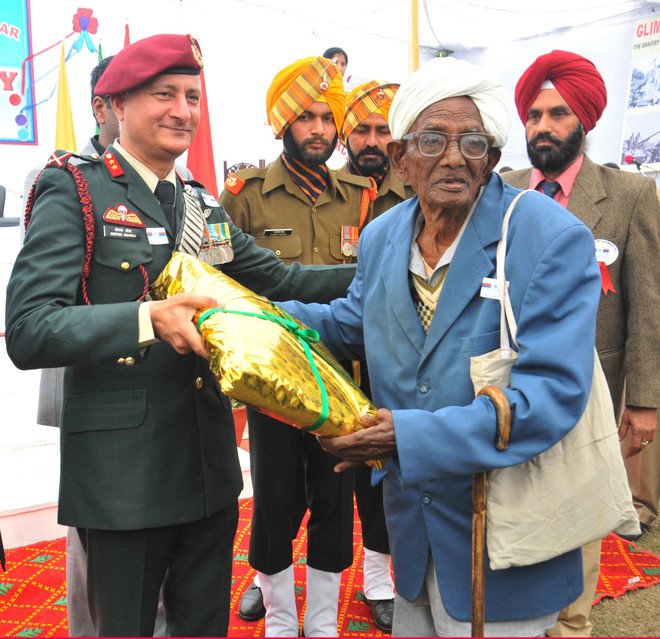
Chief of Staff, Vajra Corps, Maj General Deepak Dhanda, honours an ex-serviceman on the occasion of Armed Forces Flag Day in Jalandhar on Monday. Tribune Photo: Malkiat Singh

Rachna Khaira
Tribune News Service
Jalandhar, December 7

Voices of remembrance were heard on Monday when the nation stood together to observe the 66th Armed Forces Flag Day to bring alive the memories of those who made the supreme sacrifice of their lives in wars fought to retain the sovereignty of the country.
The day was observed with solemn gaiety at the Punjab State War Memorial in the city on Monday. Maj Gen Deepak Dhanda, SM, Chief Of Staff, Vajra Corps, was the chief guest on the occasion and Girish Dayalan, Additional Deputy Commissioner, was the guest of Honour on the occasion. The dignitaries infused patriotism with a new zeal into the atmosphere during their address to the armed forces personnel and students present.
“Naam, Namak aur Nishan’- Nishan means flag are inseparable to those wearing uniform until their last breath. It is a matter of immense pride for us to maintain the sovereignty of the national flag as we either hoist the flag in the enemy’s area by winning over or come back after getting draped in it,” said Gen Dhanda.
He also informed that Vajra Corps is working with the fully equipped Veteran Felicitation Centre (VRC) and Army placement cell here in the city. Since January 2015, nine officers and 157 Junior Commissioned Officers (JCOs) and 376 other ranks were rehabilitated after being given jobs in various fields. The Vajra Corps also donated Rs 1 lakh to the district administration as contribution to the Armed Forces Flag Day.
Speaking on the occasion, Girish Dayalan said as a civil servant, he was sensitised about the armed forces and the contribution of their families in their absence. “Keeping in mind the supreme sacrifice and contribution of armed forces here in the region, the district administration has decided to dedicate a mural to Mahavir Chakra winners from the district at the BMC Chowk,” said Dayalan.
He said the District Sainik Welfare Board at Jalandhar is on top for the last many years. “We have been on the top for years for collecting the maximum contribution on Flag Day. Last year, it was Rs 21 lakh. This time, we have already contributed Rs16 lakhs and are hopeful of touching the figure of Rs 30 lakh by the end of this financial year,” said Dayalan.
In his address, Brig (retd) Minhas, Vice-President, District Sainik Welfare Board, said the department has state-of-the-art infrastructure and has introduced many preparatory courses for various competitive exams for the wards of serving and retired personnel. “The department has made a legacy to serve the ex-servicemen and their families with compassion and zeal and we will maintain it forever,” said Brig Minhas.
Also present on the occasion were Col (retd) KPS Atwal, Distict Sainik Welfare officer (DSWO) and Col (retd) HP Singh, a former DSWO. The department also distributed sewing machines, blankets and cheques to the beneficiaries comprising war heroes and widows.
History of Armed Forces Flag Day
The First World War, which is celebrated every year as Armistice Day on November 11, was named as Poppy Day because the souvenirs of poppies were operated to benefit the ex-army men as well as their relatives. After getting the freedom from the British, the Indian Government decided to pay attention to the army men and their relatives.
A special commission constituted by the Government of India on August 28 in 1949 declared that Flag Day would be celebrated annually on December 7 to collect funds from the public by selling India’s flag for the well-being of the staff of the armed forces. Army men in India perform their duty for the safety and security of the people, so it is also the duty of the common people towards the army men who are ready to sacrifice their lives in the battle.
Importance and objectives
Armed Forces Flag Day in India is celebrated annually to remember all the sacrifices of the personnel of Army, Air Force and Navy. The event is organised to receive collaboration from the public to make available rehabilitation to the families of war victims, to offer welfare to the serving personnel as well as their relatives and to help in the resettlement and well-being of ex-servicemen and their relatives.
Fund set up in 1949
The original Flag Day Fund was set up in 1949 by the Defence Minister’s Committee The fund collection is managed throughout the country by the local arm of the Kendriya Sainik Board (KSB), which is a part of the Ministry of Defence The fund collection is managed both by official and non-official means through voluntary organisations Over the years, it has become a tradition to commemorate this day as an honour to the soldiers, airmen and sailors of India.
On Flag Day, all three branches of the Indian armed forces, the Army, Air Force and the Navy, arrange a variety of shows, carnivals, dramas and other entertainment programmes to showcase the talent of their personnel. India has the world’s third largest military force with 1.3 million active personnel, 1.15 million reserve personnel and 1.3 million paramilitary personnel.


Protest by defence staff on Nov 27

Dehradun, November 23
The All-India Defence Employees’ Federation has announced to observe a black day on November 27 to register their protest against the Union Government.
The federation is not happy with the Seventh Pay Panel Commission recommendations. Members of the federation would wear black ribbons on November 27 and hold a demonstration against the Union Government, said C Srikumar. — TNS


ਪਠਾਨਕੋਟ ਹਮਲੇ ‘ਚ ਸ਼ਹੀਦ ਹੋਏ ਪਿਤਾ ਨਿਰੰਜਨ ਨੂੰ ਸ਼ਰਧਾਂਜਲੀ ਦੇਣ ਪਹੁੰਚੀ ਨੰਨ੍ਹੀ ਧੀ

2016_1image_18_09_548425979c-ll 2016_1image_18_10_007570064nsg-camando_1451876350-ll 2016_1image_18_10_095261294niranjan4_1451898972-ll 2016_1image_18_10_170623757niranjan-kumar8_145188100-ll 2016_1image_18_10_276063212colonel-niranjan-kumar-1_0_0-ll

ਬੈਂਗਲੁਰੂ— ਕਰਨਾਟਕ ਦੀ ਰਾਜਧਾਨੀ ਬੈਂਗਲੁਰੂ ‘ਚ ਪਠਾਨਕੋਟ ਹਮਲੇ ‘ਚ ਸ਼ਹੀਦ ਹੋਏ ਰਾਸ਼ਟਰੀ ਸੁਰੱਖਿਆ ਗਾਰਡ (ਐਨ. ਐਸ. ਜੀ.) ਦੇ ਜਵਾਨ ਕਮਾਂਡੋ ਨਿਰੰਜਨ ਕੁਮਾਰ ਨੂੰ ਸੋਮਵਾਰ ਨੂੰ ਹਜ਼ਾਰਾਂ ਲੋਕਾਂ ਨੇ ਸ਼ਰਧਾਂਜਲੀ ਦਿੱਤੀ। ਪਿਤਾ ਨਿਰੰਜਨ ਨੂੰ  ਸ਼ਰਧਾਂਜਲੀ  ਦੇਣ ਲਈ ਉਨ੍ਹਾਂ ਦੀ ਨੰਨ੍ਹੀ ਬੇਟੀ ਵਿਸਮਯਾ ਵੀ ਪਹੁੰਚੀ। ਲੈਫਟੀਨੈਂਟ ਕਰਨਲ ਨਿਰੰਜਨ (35) ਐਤਵਾਰ ਨੂੰ ਪਠਾਨਕੋਟ ਵਿਚ ਇਕ ਬੰਬ ਨੂੰ ਨਕਾਰਾ ਕਰਦੇ ਸਮੇਂ ਸ਼ਹੀਦ ਹੋ ਗਏ ਸਨ।
ਕਮਾਂਡੋ ਨਿਰੰਜਨ ਦਾ ਜਨਮ ਬੈਂਗਲੁਰੂ ‘ਚ ਹੀ ਹੋਇਆ ਸੀ ਅਤੇ ਉਨ੍ਹਾਂ ਦੀ ਪੜ੍ਹਾਈ ਵੀ ਇੱਥੇ ਹੀ ਹੋਈ ਸੀ। ਉਨ੍ਹਾਂ ਦੇ ਪਰਿਵਾਰ ਵਿਚ ਪਿਤਾ ਸ਼ਿਵਰਾਜਨ, ਪਤਨੀ ਡਾ. ਰਾਧਿਕਾ ਅਤੇ 18 ਮਹੀਨੇ ਦੀ ਬੇਟੀ ਵਿਸਮਯਾ ਅਤੇ ਭਰਾ ਸਕਵੈਡਰਨ ਲੀਡਰ ਸ਼ਰਤਚੰਦਰਾ ਹੈ। ਸ਼ਹੀਦ ਦਾ ਮ੍ਰਿਤਕ ਸਰੀਰ ਐਤਵਾਰ ਦੇਰ ਰਾਤ ਉਨ੍ਹਾਂ ਦੇ ਘਰ ਪੁੱਜਾ ਅਤੇ ਉਸੇ ਸਮੇਂ ਤੋਂ ਹੀ ਉੱਥੇ ਲੋਕਾਂ ਦਾ ਤਾਂਤਾ ਲੱਗਣ ਲੱਗਾ।
ਨਿਰੰਜਨ ਦੇ ਮ੍ਰਿਤਕ ਸਰੀਰ ਨੂੰ ਅੱਜ ਅੰਤਿਮ ਦਰਸ਼ਨ ਲਈ ਬੀ. ਈ. ਐਲ. ਮੈਦਾਨ ‘ਚ ਰੱਖਿਆ ਗਿਆ, ਜਿੱਥੇ ਸਵੇਰੇ ਹਜ਼ਾਰਾਂ ਦੀ ਗਿਣਤੀ ਵਿਚ ਲੋਕ ਇਕੱਠੇ ਹੋ ਗਏ। ਨਿਰੰਜਨ ਦੇ ਪਰਿਵਾਰਕ ਸੂਤਰਾਂ ਨੇ ਦੱਸਿਆ ਕਿ ਉਨ੍ਹਾਂ ਦੇ ਪੁੱਤਰ ਦੇ ਮ੍ਰਿਤਕ ਸਰੀਰ ਨੂੰ ਜਲਹੱਲੀ ਹਵਾਈ ਅੱਡੇ ਤੋਂ ਕੇਰਲ ਸਥਿਤ ਗ੍ਰਹਿ ਨਗਰ ਪਲਕੱਕੜ ਲੈ ਜਾਇਆ ਗਿਆ, ਜਿੱਥੇ ਮੰਗਲਵਾਰ ਦੀ ਸਵੇਰ ਨੂੰ ਉਨ੍ਹਾਂ ਦਾ ਅੰਤਿਮ ਸੰਸਕਾਰ ਕੀਤਾ ਜਾਵੇਗਾ।


12 yrs on, 3,717 acres in Jammu district yet to be demined

Ravi Krishnan Khajuria
Tribune News Service
Jammu, November 20
2015_11$largeimg21_Saturday_2015_000730532

While mines and IEDs keep killing and maiming villagers in forward areas close to the border, mines remain embedded in 30,000 kanals (3,717.6027 acres) of fertile land in Jammu district alone.
These mines were planted during Operation Vijay in 1999 and Operation Parakram in 2001-02. For the Army, this land in Jammu was indispensable from the security point of view. Hence, it cannot be returned, at least for now.
Sayeed Ghulam Nabi of the Sabzian sector in Poonch said the mines posed a serious threat to lives of farmers, children, shepherds and cattle. “Those who die are fortunate because those who lose their limbs become a curse for themselves and their families,” he added.
Mines still existed in Sagra Gali, Krishna Ghati, Balakote, Brutti, Darra Sangla, Noorkote, Nakkarkote, Uppar Digwar, CRPF Dhok, Makhyari area, Forward Chaprian, Shahpur and Guntrian, added Nabi.
Rifat Arra of Terwan village said villagers living in forward areas walked on razor’s edge. “Besides Pakistani firing, the mines have killed and injured the poor. We fear going to fields and pastures because one never knows the exact placement of these mines, which drift in rain,” she said.
Junaid Khan of Guntrian said the mines had hit livelihood. He said the fear of stepping on a mine had reached such an extent that villagers staying in in hamlets had stopped cultivating their fields and grazing cattle.
He said while villagers got killed and hurt, they had not been paid any compensation by governments in the state and at the Centre.
The Army admitted that farmers whose land was used for mines and fencing had not been paid any compensation. Abdul Gani of Shahpur echoed similar views.
After Operation Parakram in 2001-02, the Army decided that certain portions of mined farmland would be demined and returned to farmers. Twelve years on, the process is still on.
On November 13, the Army demined 296 kanals (37 acres) in the Jourian area of Akhnoor in Jammu district. A total of 30,000 kanals of farmland in Jammu district was still mined, said official sources.
Jammu Deputy Commissioner Simrandeep Singh hoped that the Army would demine the land. It was stated in a survey that 1,076 persons died and 2,570 injured in mine and IED blasts in the state till 2012.


Woman of substance & silent service

04 Dec 2015
2015_12$largeimg03_Thursday_2015_225130717
A rare colour picture of the surrender ceremony of the 1971 war in Dacca.

The Navy Day is observed on December 4 to mark the Karachi attack. Since Mrs Indira Gandhi approved that audacious operation, it is also a day to remember her courage and dynamism.
Our nation state at 68 seems to have reached the nadir. The Parliament is paralysed by the politics of confrontation and intolerance. Let’s not despair, this phase of intolerance will pass and “multiplicity”, ( a word coined by our President), enjoyed over decades of Indian diversities of thought and culture, will prevail if we “pull together”. That naval phrase leads me on to our moment of glory of 1971, captured by the rare colour picture of the surrender in which 93,000 troops laid down arms. The 1971 events, unhindered by needless opposition in political circles as displayed today on Raisina Hill, showed the true mettle of our leadership. It is reflected in that historic moment depicted with Generals Arora and Niazi signing the surrender documents, watched by Admiral Krishnan, Air Marshal Dewan and General Jacob — a truly diverse India reflected in those names! The Navy came into its own after Independence, in the 1971 war because our Prime Minister did not hesitate to approve of Admiral Nanda’s innovative plan to attack Karachi with the newly acquired “styx” missiles. The Navy came out with flying colours.
Incidentally, another woman Prime Minister Margaret Thatcher was to follow suit 10 years later to order the sinking of the Argentine cruiser Belgrano in the Falklands War in the South Atlantic. Baroness Thatcher saw Mrs Gandhi as being much more hard-headed than other third world leaders. In Downing Street Years, she observes that “her policies had been high-handed but only a strong figure with a powerful personality could hope to successfully rule India”. In the backdrop of Indira Gandhi’s birth and death anniversaries, on November 19 and October 31, respectively, Henry Kissinger’s words in White House Years are apt: “She was relentlessly pursuing India’s national interests with singlemindedness and finesse”.
The terrible loss of our submarine INS Sindhurakshak makes me rewind to 1983. In Bombay’s Mazagon Docks, the “woman of the millenium,” amidst chanting of a Sanskrit invocation rendered by Suahasini Mulgaonker, witnessed the first rivet being driven for launching INS Shankul, our indigenous HDW submarine programme. Had we pursued it thereafter we would have been self-sufficient. Instead, we buckled under opposition pressure because HDW, like Bofors, became anathema in the public perception. It’s another matter that the Swedish gun proved its mettle in Kargil and saved our honour. On Mrs Gandhi’s return to South Block in 1980, she was addressing the annual conference of Naval brass. “There is no need to refer to the US and USSR as super powers”, she observed, “calling them just ‘big’ powers will do.” Inexplicably, she then veered round to another tack (probably influenced by our immaculate white uniforms) and expressed her anguish at the existing dirt and poor showing in the Capital — the Asian Games had just been given the green signal to go ahead (the Charan Singh ministry having said no to them) and there was work to be done. A memory worth reviving is when the results of 1979 elections were being declared and the Gandhis were in 12 Willingdon Crescent. There was a call from Playboy magazine wanting an interview with the PM elect. Rajiv, with a mischevious smile, brought the cordless telephone to his mother. Her reply was to tell them “an emphatic no”. She was a transformed Prime Minister. Little wonder that she promptly showed the door to a French journo who dared to ask her if she would bring back the Emergency. Go past No 1 Safdarjang Road and see how thousands, even after three decades, still queue up to peer at what were Indiraji’s private quarters. Finally, a small aside. Former Himachal Pradesh Governor, Admiral Rustam Khusro Shapoorjee Gandhi, at a Navy Day reception was escorting Indira Feroz Gandhi. Noticing the name tally of a young officer he said, “Madame, let me present to you Lieutenant Gandhi.” Her quick but witty response was, “Aren’t there too many Gandhis here today?” And here is a take from 1950. INS Delhi was on a cruise to Indonesia, carrying then current and two future Prime Ministers. Old Navy hands recall how Nehru’s dutiful daughter, knowing his penchant for a smoke, cut Panditji’s cigarettes into two to keep his tobacco consumption down.
The writer is a former Additional Secretary in the Cabinet Secretariat.


24 फीसदी वेतन बढ़ाने की सिफारिश

नयी दिल्ली 19 नवंबर (ट्रिन्यू/एजेंसियां)
केंद्रीय कर्मचारियों और पेंशनभोगियों के लिए बड़ा तोहफा पेश करते हुए सातवें वेतन आयोग ने वेतन, भत्ते व पेंशन में 23.55 प्रतिशत की वृद्धि और सैनिकों की तर्ज पर असैन्य कर्मचारियों के लिए भी ‘समान रैंक, समान पेंशन’ की व्यवस्था लागू करने की आज सिफारिश की। जस्टिस एके माथुर की अध्यक्षता वाले आयोग ने बृहस्पतिवार को वित्त मंत्री अरुण जेटली को सौंपी गई इन सिफारिशों के तहत केंद्रीय नौकरियों में न्यूनतम मासिक वेतन 18,000 रुपये और अधिकतम 2.5 लाख रुपये प्रतिमाह हो जाएगा। ये सिफारिशें एक जनवरी, 2016 से लागू की जाएंगी और इनसे 47 लाख केंद्रीय कर्मचारी और 52 लाख पेंशनभोगी लाभान्वित होंगे। इनमें सैन्य बलों के कर्मचारी भी शामिल हैं। जेटली ने कहा कि सातवें वेतन आयोग की सिफारिशों का फायदा निकायों को भी होगा। सिफारिशों में कहा गया है, ‘प्रतिशत के रूप में, वेतन, भत्तों एवं पेंशन में कुल मिलाकर सामान्य परिस्थितियों में 23.55 प्रतिशत की वृद्धि होगी। इसमें वेतन में 16 प्रतिशत, भत्तों में 63 प्रतिशत और पेंशन में वृद्धि 24 प्रतिशत होगी।’ आयोग ने अगले साल एक जनवरी से पहले सेवानिवृत्त होने वाले सरकारी सेवाओं के कर्मचारियों के लिए ‘समान रैंक, समान पेंशन’ का नाम लिए बगैर इसी तरह का पेंशन का एक संशोधित फार्मूला पेश किया है।
खजाने पर पड़ेगा 1.02 लाख करोड़ का बोझ : जेटली
केंद्रीय वित्त मंत्री अरुण जेटली ने कहा कि सातवें वेतन आयोग की सिफारिशों को अमल में लाने से खजाने पर 1.02 लाख करोड़ रुपये का बोझ जिसमें 28,000 करोड़ रपये रेलवे बजट में जायेगा। उन्होंने कहा कि सातवें वेतन आयोग की सिफारिशों को अमल में लाने से राजकोषीय घाटे पर 0.65 प्रतिशत का असर पड़ेगा। उन्होंने बताया कि सिफारिशों के अमल पर निगरानी के लिये व्यय सचिव की अध्यक्षता में एक क्रियान्वयन सचिवालय बनाया गया।
2014 में बना था आयोग, एक बार बढ़ी समय सीमा
सातवें वेतन आयोग का गठन 2014 में किया गया था और इसे अपनी रिपोर्ट 18 महीने में सौंपने के लिए कहा गया था। यह समय सीमा पूरी होने पर आयोग ने गत अगस्त में चार महीने का और समय मांगा था। इन सिफारिशों से केंद्र सरकार के 47 लाख सेवारत कर्मचारियों और 52 लाख पेंशन भोगियों को लाभ होगा।
खास बातें
47 लाख केंद्रीय कर्मचारियों और सेवानिवृत्त रक्षाकर्मियों सहित 52 लाख पेंशनरों को होगा लाभ
सशस्त्र सेना कर्मियों के साथ-साथ केंद्र सरकार के कर्मचारियों के लिये भी समान रैंक समान पेंशन
वेतन में सालाना तीन प्रतिशत वृद्धि और पेंशन में 24 प्रतिशत वृद्धि की सिफारिश
सैन्य कर्मियों की सैन्य सेवा वेतन 6000 रुपए से बढ़ाकर 15000 रुपए प्रति माह
मांगें नहीं मानीं तो बजट सत्र के दौरान हड़ताल : सातवें वेतन आयोग की रिपोर्ट शुक्रवार शाम अायी उससे पहले िदन में केन्द्र सरकार के 30 लाख कर्मचारियों की ओर से मांगों का पुलिंदा सरकार को सौंप दिया गया। बृहस्पतिवार को दिल्ली के जंतर-मंतर पर कर्मचारी संगठनों ने धरना दिया। धरने में रेलवे, रक्षा , डाक, आयकर, लेखा परीक्षण विभागों के कर्मचारी शामिल हुए। उनकी मांगों में वेतन पुनरीक्षण 10 के बजाय 5 साल में करना, भर्ती पर लगी रोक हटाना, ठेका प्रथा खत्म करना, अनुकंपा नियुक्ति पर रोक हटाने आदि शामिल हैं।

breakl line

ਸੱਤਵਾਂ ਪੇ ਕਮਿਸ਼ਨ: ਤਨਖਾਹਾਂ ਵਿੱਚ 23% ਵਾਧੇ ਦੀ ਸਿਫ਼ਾਰਸ਼

Posted On November – 20 – 2015
ਨਵੀਂ ਦਿੱਲੀ, 19 ਨਵੰਬਰ
ਕੁਝ ਹੋਰ ਨੁਕਤੇ
* ਘੱਟ ਤੋਂ ਘੱਟ ਤਨਖਾਹ 18000 ਪ੍ਰਤੀ ਮਹੀਨਾ; ਵੱਧ ਤੋਂ ਵੱਧ 2.25 ਲੱਖ
* ਤਿੰਨ ਫ਼ੀਸਦੀ ਸਾਲਾਨਾ ੲਿੰਕਰੀਮੈਂਟ ਕਾੲਿਮ
* ਗਰੈਚੁਟੀ ਦੀ ਹੱਦ 10 ਲੱਖ ਤੋਂ ਵਧਾ ਕੇ 20 ਲੱਖ ਕੀਤੀ
ਕੇਂਦਰ ਸਰਕਾਰ ਦੇ ਮੁਲਾਜ਼ਮਾਂ ਤੇ ਪੈਨਸ਼ਨਾਂ ਲੲੀ ਵੱਡਾ ਤੋਹਫ਼ਾ ਪੇਸ਼ ਕਰਦਿਅਾਂ ਸੱਤਵੇਂ ਤਨਖਾਹ ਕਮਿਸ਼ਨ ਨੇ ਤਨਖਾਹਾਂ, ਭੱਤਿਅਾਂ ਅਤੇ ਪੈਨਸ਼ਨਾਂ ਵਿੱਚ 23.55 ਫੀਸਦ ਦੇ ਵਾਧੇ ਅਤੇ ਸਾਬਕਾ ਫੌਜੀਅਾਂ ਦੀ ਤਰਜ਼ ’ਤੇ ਗੈਰਫੌਜੀ ਕਰਮਚਾਰੀਅਾਂ ਲੲੀ ੲਿਕ ਰੈਂਕ ੲਿਕ ਪੈਨਸ਼ਨ ਲਾਗੂ ਕਰਨ ਦੀ ਅੱਜ ਸਿਫ਼ਾਰਸ਼ ਕੀਤੀ ਹੈ। ਕਮਿਸ਼ਨ ਦੀਅਾਂ ਸਿਫ਼ਾਰਸ਼ਾਂ ਜਿਵੇਂ ਦੀਅਾਂ ਤਿਵੇਂ ਲਾਗੂ ਕਰਨ ਨਾਲ ਸਰਕਾਰੀ ਖ਼ਜ਼ਾਨੇ ’ਤੇ 1.02 ਲੱਖ ਕਰੋਡ਼ ਰੁਪੲੇ ਦਾ ਸਾਲਾਨਾ ਬੋਝ ਪਵੇਗਾ, ਜਿਸ ਵਿੱਚ 28450 ਕਰੋਡ਼ ਰੁਪੲੇ ਤੋਂ ਵੱਧ ਦਾ ਬੋਝ ਰੇਲਵੇ ਬਜਟ ਅਤੇ ਬਾਕੀ 73650 ਕਰੋਡ਼ ਰੁਪੲੇ ਅਾਮ ਬਜਟ ’ਤੇ ਪਵੇਗਾ। ਜਸਟਿਸ ੲੇਕੇ ਮਾਥੁਰ ਦੀ ਪ੍ਰਧਾਨਗੀ ਵਾਲੇ ਕਮਿਸ਼ਨ ਵੱਲੋਂ ਅੱਜ ੲਿਥੇ ਵਿੱਤ ਮੰਤਰੀ ਅਰੁਣ ਜੇਤਲੀ ਨੂੰ ਸੌਂਪੀਅਾਂ ਗੲੀਅਾਂ ੲਿਨ੍ਹਾਂ ਸਿਫ਼ਾਰਸ਼ਾਂ ਤਹਿਤ ਕੇਂਦਰੀ ਨੌਕਰੀਅਾਂ ਵਿੱਚ ਘੱਟੋ ਘੱਟ ਤਨਖਾਹ 18000 ਰੁਪੲੇ ਤੇ ਵੱਧ ਤੋਂ ਵੱਧ 2.5 ਲੱਖ ਰੁਪੲੇ ਮਾਸਿਕ ਹੋ ਜਾਵੇਗੀ। ੲਿਹ ਸਿਫ਼ਾਰਸ਼ਾਂ ੲਿਕ ਜਨਵਰੀ 2016 ਤੋਂ ਲਾਗੂ ਹੋ ਜਾਣਗੀਅਾਂ ਤੇ ੲਿਸ ਨਾਲ 47 ਲੱਖ ਕੇਂਦਰੀ ਮੁਲਜ਼ਮਾਂ ਅਤੇ 52 ਲੱਖ ਪੈਨਸ਼ਨਰਾਂ ਨੂੰ ਲਾਭ ਮਿਲੇਗਾ। ੲਿਨ੍ਹਾਂ ਵਿੱਚ ਹਥਿਅਾਰਬੰਦ ਬਲਾਂ ਦੇ ਕਰਮਚਾਰੀ ਵੀ ਸ਼ਾਮਲ ਹਨ। ਸ੍ਰੀ ਜੇਤਲੀ ਨੇ ਕਿਹਾ ਕਿ ਸੱਤਵੇਂ ਤਨਖਾਹ ਕਮਿਸ਼ਨ ਦੀਅਾਂ ਸਿਫ਼ਾਰਸ਼ਾਂ ਦਾ ਲਾਭ ਮੁਲਾਜ਼ਮਾਂ ਨੂੰ ਹੋਵੇਗਾ। ਕਮਿਸ਼ਨ ਨੇ ਪੇ ਬੈਂਡ ਅਤੇ ਗਰੇਡ ਪੇ ਦੀ ਪ੍ਰਣਾਲੀ ਖ਼ਤਮ ਕਰਨ ਦੀ ਸਿਫ਼ਾਰਸ਼ ਕੀਤੀ ਹੈ ਅਤੇ ਤਨਖਾਹ ਵਿੱਚ ਸਾਲਾਨਾ ਤਿੰਨ ਫੀਸਦ ਦੇ ਵੱਧੇ ਨੂੰ ਬਰਕਰਾਰ ਰੱਖਿਅਾ ਹੈ। ਨਾਲ ਹੀ ੲਿਸ ਵਿੱਚ ਕਰਮਚਾਰੀਅਾਂ ਲੲੀ 2.57 ਦੇ ਫਿੱਟਮੈਂਟ ਫੈਕਟਰ ਲਾਗੂ ਕਰਨ ਦੀ ਸਿਫ਼ਾਰਸ਼ ਕੀਤੀ ਗੲੀ ਹੈ।
ਨਵੀਆਂ ਸਿਫਾਰਿਸ਼ਾਂ ਮੁਤਾਬਕ, 2016-17 ਲਈ ਕੇਂਦਰ ਸਰਕਾਰ ਦਾ ਤਨਖਾਹਾਂ ਤੇ ਪੈਨਸ਼ਨਾਂ ਦਾ ਬਿੱਲ ਅੰਦਾਜ਼ਨ 4.33 ਲੱਖ ਕਰੋੜ ਤੋਂ 5.35 ਲੱਖ ਕਰੋੜ ਤੱਕ ਵਧੇਗਾ। 2016-17 ਦੌਰਾਨ ਤਨਖਾਹ ਤੇ ਭੱਤਿਆਂ ਦਾ ਕੁੱਲ ਖਰਚਾ 283400 ਕਰੋੜ ਰੁਪਏ ਅਤੇ ਐਚਆਰਏ ਉਤੇ ਖਰਚਾ 29600 ਕਰੋੜ ਰੁਪਏ ਤੱਕ ਹੋ ਜਾਵੇਗਾ। ਪੈਨਸ਼ਨਾਂ ਉਤੇ ਇਹ ਵਾਧਾ 176300 ਕੋਰੜ ਰੁਪਏ ਹੋਵੇਗਾ। ਇਸ ਵਿੱਚ 33700 ਕਰੋੜ ਰੁਪਏ ਦਾ ਵਾਧਾ ਹੋਵੇਗਾ। ਇਸ ਦਾ ਚੋਖਾ ਹਿੱਸਾ ਇਕ ਰੈਂਕ ਇਕ ਪੈਨਸ਼ਨ ਦੇ ਖਾਤੇ ਵਿੱਚ ਜਾਵੇਗਾ। ਪੈਨਲ ਦੇ ਚੇਅਰਮੈਨ ਅਤੇ ਕੁਝ ਮੈਂਬਰਾਂ ਨੇ ਸੁਪਰਐਨੂਏਸ਼ਨ ਦੀ ਉਮਰ 58 ਸਾਲ ਤੋਂ ਵਧਾ ਕੇ 60 ਸਾਲ ਕਰਨ ਦਾ ਸੁਝਾਅ ਦਿੱਤਾ ਹੈ। ਉਂਜ, ਇਕ ਮੈਂਬਰ ਨੇ ਇਸ ਨਾਲ ਅਸਹਿਮਤੀ ਵੀ ਪ੍ਰਗਟਾਈ ਹੈ। ਇਕ ਹੋਰ ਅਹਿਮ ਸਿਫਾਰਿਸ਼ ਵਿੱਚ ਗਰੈਚੁਟੀ ਦੀ ਹੱਦ 10 ਲੱਖ ਤੋਂ ਵਧਾ ਕੇ 20 ਲੱਖ ਰੁਪਏ ਕੀਤੀ ਗਈ ਹੈ।


India orders probe as Nepal briefly detains 13 SSB men

Security men entered neighbouring territory while chasing smugglers
Shaurya Karanbir Gurung
Tribune News Service
Kathmandu/New Delhi, Nov 29
2015_11$largeimg30_Monday_2015_020240184
Thirteen Sashastra Seema Bal (SSB) personnel, a few of them armed, were briefly detained by Nepal’s Armed Police Force (APF) after they crossed over into the neighbouring country while chasing some petroleum smugglers around 7 am today.
The APF released the personnel later in the afternoon and also returned their arms. The SSB, which guards the India-Nepal border, has ordered a court of inquiry into the incident.
Sources said the personnel, comprising a sub-inspector and 12 constables, were patrolling on the Indian side of the border with Nepal’s Jhapa district when they learnt of smuggling on the border between Kishanganj district in Bihar and Jhapa.
SSB Director General BD Sharma said two of the constables first chased down five smugglers, but in the process they inadvertently entered Nepalese territory since there was no border-marking. The two were detained by the APF. The remaining patrol team later crossed the border to rescue those detained.
Nepal, however, claimed the personnel entered 100 metres into its territory and fired at the unarmed Nepalese nationals while chasing a group of smugglers. However, the Indian embassy in Nepal said the border guards were chasing smugglers and fired at them in self-defence in the Indian territory.
Sharma admitted that the men should not have crossed over into Nepal armed, but called it an accident.
“We have ordered an inquiry, which will ascertain what happened, how it happened and who is at fault. We will take corrective measures to ensure such incidents do not recur. Though none of them have been suspended as yet, action will be taken on the basis of the inquiry report,” he said.
Sharma said six of them were armed and the other five were unarmed.
“They should not have gone without informing their seniors,” he said. Jhapa’s Assistant Chief District Officer Dambaru Prasad Niraula said the men were handed over to the Indian side after investigations. “They (SSB jawans) were quizzed on the reason for entering Nepal,” Nepal’s My Republica news portal quoted Nirauala as saying. (With PTI inputs)

How it happened

The 13 SSB personnel learnt of petrol smuggling on the border between Kishanganj (Bihar) and Jhapa (Nepal) around 7 am
Two of them chased down five smugglers, but inadvertently entered Nepal
The two were detained by the APF as rest of the patrol team entered Nepal to rescue them
Nepal claimed the personnel entered 100 metres into its territory and fired at unarmed Nepalese nationals
Ties under stress
Relations between India and Nepal have been strained in the recent months after Madhesis began to protest against the new Nepal Constitution
Madhesis are people of Indian origin who occupy the Nepal’s Terai region that is near the Indo-Nepal border
Protesters even blocked Nepal’s key border trade points with India, causing severe shortages of fuel and other essentials in the country

‘Won’t accept big brother attitude’>

Nepal will not accept the “big brother” attitude of India though it intends to maintain cordial bilateral relations with the country, a senior leader of ruling Nepalese CPN(UML) said in New Delhi on Sunday
Pradeep Gyawali, CPN(UML) secretary, also urged the Narendra Modi government to address the recent strain in the ties on a “priority basis”
He said if India wants to play a role in world politics, it will have to first have cordial relations with its neighbours