All posts by webadmin

Are we ready for another strike?

In the high-voltage cat and mouse game between terrorists and security forces, why is the jihadi usually ahead? HT examines the gaps and deficiencies in India’s counter-terror mechanism

THE MEN AND MACHINES THAT LIE AT THE HEART OF THE ANTI-TERROR MECHANISM CLEARLY NEED URGENT TRAINING AND UPGRADE

From page 01 Lieutenant Colonel EK Niranjan, who was killed in a recent terror strike at Punjab’s Pathankot airbase, was an old hand in the bomb disposal squad of the National Security Guard (NSG), the country’s elite commando force.

He knew the standard operating procedures and followed them meticulously — a check for booby traps by rotating a body 360 degrees from a distance using ropes to ensure there’s no hand grenade. He’d also gone through the drill to check for trip wires that could detonate an improvised explosive device (IED).

It was only after the standard checks and a mandatory wait of two to three minutes that Niranjan had approached the bodies of four terrorists killed during an encounter. He was trained to look for live bombs and neutralise them but still paid with his life.

Had it not been for the bureaucratic red tape that dogs the procurement of essential equipment for the elite commandos, Niranjan would have had jammers to ensure a remote-controlled IED was not set off. He would also have been wearing an advanced 9B bomb suit that the NSG sought from the home ministry soon after the 26/11 Mumbai attacks in 2008. The force is still waiting for these life-protecting suits.

The Pathankot attack is a painful reminder of everything that is wrong with India’s anti- terror response despite two detailed security reviews. One was done after the short but sharp war in 1999 over the icy peaks in Kargil where the army woke up only after Pakistani soldiers had entrenched themselves well within Indian territory and the second after multiple attacks in the heart of Mumbai.

In the high-voltage game of cat and mouse between terrorists and the security establishment, why does the jehadi usually win? Why does India still have chinks in its armour despite being repeatedly hit? Are we really prepared for another strike which can come — in the air or on land — sooner rather than later?

Pathankot prized open all the warts: the suicide squad crossed the international boundary without being intercepted by the Border Security Force. The attackers then managed to hijack an SP’s car and scale the high-security airbase and kill members of the Defence Security Corps despite an alert from the police officer. The 80-hour operation pointed not only to a botch-up by the stakeholders including Punjab Police, the air force, army and NSG but also to critical deficiencies.

The men and machines that lie at the heart of the anti-terror mechanism clearly need urgent training and upgrade, as HT found after critically examining three major terror strikes:

The hijacking of the Indian Airlines flight IC 814 at the break of this millennium, the 2002 Akshardham temple siege in Gujarat and the 26/11 Mumbai terror attacks. BULLETS THAT DON’T PIERCE In 2007, seven years after the IC 814 hijack, the NSG conducted tests on a simulator flight at its Manesar headquarters on the outskirts of Delhi.

The first test to take out a terror suspect in the cockpit failed. The 7.62mm calibre sniper bullet could only pierce the cockpit glass to be stopped dead due to its thickness.

The NSG asked for higher calibre sniper rifles manufactured by US-based Barret.

Two years later, eight such guns were bought but the anti-air hijacking unit got only one. The remaining seven were distributed to other units.

Aircraft intervention vehicles, which can approach a plane with hydraulic ladders at a high speed, are crucial during a hijack, but the NSG has only one and that too bought on a trial basis.

To access the exits of an aircraft, the NSG practices with hydraulic ladders mounted on gypsy platforms. These ladders weigh approximately 1,000 kg each and invariably topple when mounted on gypsy platforms, say insiders. An open platform also leaves the commandos exposed to firing.

After the hijacking in 1999 when 155 passengers were released only after Pakistani terrorist Masood Azhar and two other militants were set free, the government decided to deploy sky marshals equipped with Glock pistols. But only 15% of flights have these marshals and trials in 2007 showed that the 9mm bullets used in the Glocks could endanger both the plane and passengers.

The NSG wanted to place orders for specialised ammunition that suit inside-the-aircraft conditions while airborne. The tendering process for special grade ammunition has, however, still not begun. DOORS THAT WON’T OPEN The elite commandos of the NSG — crucial to the operations in Mumbai and Pathankot — can only be as good their tools. So, what slowed down the force at Mumbai’s iconic Taj hotel during the 26/11 terror strike?

HT put this question to NSG officials and they all pointed to the fact that they had to go from room to room with a master key. It became apparent that the force sorely needed hydraulic door busters in its inventory. Under the special powers of the NSG’s director general, five units were bought a year later, in 2009, but procurements were stalled because the ministry of home affairs (MHA) and NSG could not reach an agreement on whether the device should have a rotating handle or a pumping lever, sources revealed.

During the excruciating 80-hour battle in Mumbai, the NSG moved cautiously, guarding the corner walls. A specialised weapon called “corner shot” that allows an area to be scanned without exposing a commando would have helped. A 2009 MHA report marked “secret” agreed that corner shots “will negate unnecessary loss of life”. Thirteen corner shots were to be bought and distributed to the NSG’s regional hubs too, but so far only one has been procured, again under the DG’s special powers.

Once the corner is turned and the commandos come within close range of terrorists, under-barrel grenade launchers (UBGL) act as force multipliers. Inexplicably, launchers have been bought but the elite force is yet to place orders for grenades.

LESSONS NOT LEARNT

In September 2002, the NSG reached the Akshardham temple attack site in Gujarat at 10pm but had to wait till the next morning to gun down Lashkar-eTaiba (LeT) terrorists Murtuza Hafiz Yasin and Ashraf Ali Mohammed Farooq after cornering them in the outer section of the complex.

The elite force did not have guns equipped with night vision rifle scopes or binoculars. Thirteen years later — and this speaks of criminal neglect — the NSG had to halt operations in Pathankot for the same reason.

NSG officials say apathy towards their needs is evident from the number of letters written in the last two years to expedite sanctions to repair a total containment vessel (TCV) that has not been functional at one of its crucial hubs.

A TCV is a vehicle that ensures an IED or bomb is detonated in the safe confines of its walls and prevents any human casualty that can otherwise result from the shrapnel of an IED or bomb. Another reminder of why Niranjan need not have died.

UNIFIED COMMAND

Clear command and control are crucial during an ongoing terror attack and so is early intelligence. In Pathankot, concrete intelligence provided by SP Salwinder Singh was not acted on in quick time and confusion prevailed over how many terrorists had entered the base and also over who was controlling the operation. National security adviser Ajit Doval sent the NSG to Pathankot but on the ground, senior officers of the IAF, army and NSG were initially unclear on who was in charge.

This very lack of coordination between agencies was highlighted soon after the 26/11 attack. As a corrective measure, a joint operations centre (JoC) was set up at INS Angre in Mumbai to ensure that all agencies were connected real time to handle a situation.

Pathankot, however, showed that despite an attack in Punjab’s Gurdaspur district only six months ago, little thought had been put towards plugging the holes.

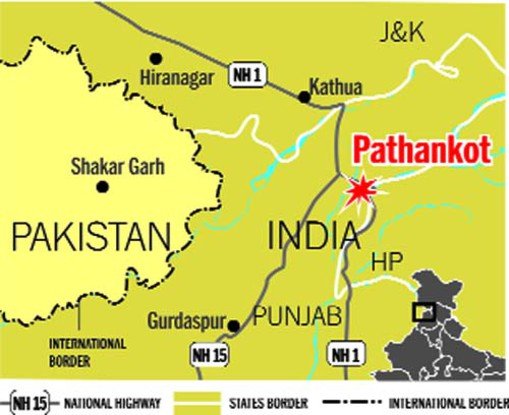
Jaish-e-Mohammad terrorists are believed to have crossed the international border through the same sector from where the Gurdaspur attackers had infiltrated into India.

This is probably where mock drills at the highest level could come in handy. In 2010, when the MHA put the drill in place, senior officers including secretaries and joint secretaries struggled to find the designated room in Rashtrapati Bhavan where the cabinet secretary’s office is located. Simultaneously, a team of Delhi Police commandos was seated inside the vehicle in 75 seconds — as per the drill — but was unable to move since the driver was having tea.

After the Indian Airlines hijacking and the 26/11 attacks, Pathankot is another sad and costly reminder of just how unprepared India is despite terrorism emerging as the number one enemy.

24/09/2002 AKSHARDHAM SIEGE

WHAT HAPPENED

Two terrorists went on a rampage after trying to enter the main complex, killing 33 and injuring 80 people. Siege ended after both the attackers were neutralised.

WHAT WENT WRONG

NSG officials did not have guns equipped with night vision rifle scopes or binoculars. The elite commandos had to wait until the next morning to kill the two terrorists.

26/11/2008 MUMBAI ATTACK

WHAT HAPPENED

In November, Lashkar-e-Taiba (LeT) attacked multiple targets including Taj and Trident Hotels, killing 166. The operation to silence the terrorists lasted 80 hours.

WHAT WENT WRONG

Mumbai Police and central agencies caught by surprise. Navy Seals sent in to grapple with terrorists who came by sea. Lack of equipment slowed down the NSG.

24/12/1999 IC 814 HIJACK

WHAT HAPPENED

Air India flight from Kathmandu to Delhi hijacked and taken to Kandahar, heart of Taliban territory. Three dreaded terrorists swapped in exchange for 155 passengers.

WHAT WENT WRONG

The plane was allowed to leave Amritsar. The NSG reached only after the hijacked plane had taken off. Masood Azhar formed the Jaish-e-Mohammad after being freed.

THE AFTERMATH

Force revamp after terror hit Mumbai in 2008

INCEPTION

Mumbai raised Force 1 after the 80-hour operation. Mumbai Police had a Quick Reaction Team but it could not be mobilised due to a lack of weapons and personnel.

UNFINISHED INVENTORY

What the NSG wants and what it actually got

Security agencies get caught up in a tussle among themselves

TURF WARS AND RED TAPE

Multi Agency Centre (MAC) functions under Intelligence Bureau (IB). More often, other agencies such as R&AW, Military Intelligence, etc, are reluctant to share information with IB. State police departments don’t share full interrogation reports on time. Lacks personnel strength in analysing intelligence inputs State police forces reluctant to let central agencies into their probes. Most recent example is that of Punjab police denying IB permission to question SP Salwinder Singh, whose car was hijacked by militants. IB finally questioned him at NIA office in Delhi NSG’s weapons and equipment division and operations branch manned by Army officers, who make requests for weapon upgradation with an IPS officer heading provisioning. Army officers often question the technical competence of civilian officers. NSG forwards requests to police modernisation division in home ministry (MHA) headed by IAS and other services. In absence of technical managers, MHA often delays NSG’s requisition files.
Lt Gen Satish Dua takes over as Col of JAKLI

Srinagar, February 25

General Officer Commanding, 15 Corps, Lt Gen Satish Dua on Thursday took over as the Colonel of Jammu and Kashmir Light Infantry Regiment. He is the first General to hold both the vital appointments in the Valley concurrently. A defence spokesperson said Lieutenant General Dua took over in a simple, solemn ceremony held at the Regimental Centre in Rangreth, Srinagar. “Lt Gen Satish Dua took over as the 21st Colonel of the Regiment from Lt Gen Ravi Nair, Director General Recruiting, who is set to hang his uniform on February 29,” said the spokesperson said. — TNS


Pathankot air base attacked; 8 dead

Five Pak terrorists gunned down | Two Defence Security Corps men, IAF commando killed, says Punjab DGP

Ravi Dhaliwal,Tribune News Service,Pathankot, January 2

2016_1$largeimg02_Saturday_2016_203724966gallery
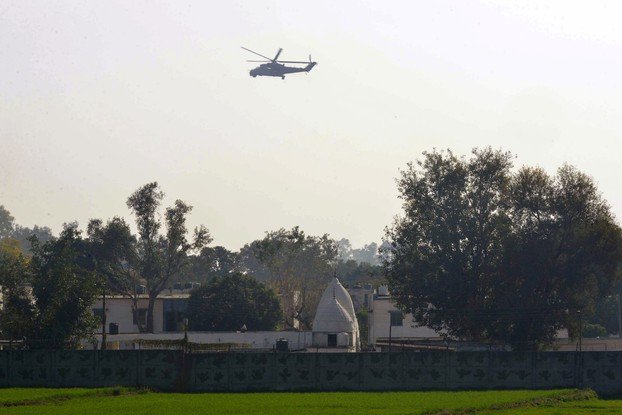
An Indian Air Force helicopter flies over an Air Force base in Pathankot on January 2, 2016. — AFP
2016_1$largeimg02_Saturday_2016_202931383gallery
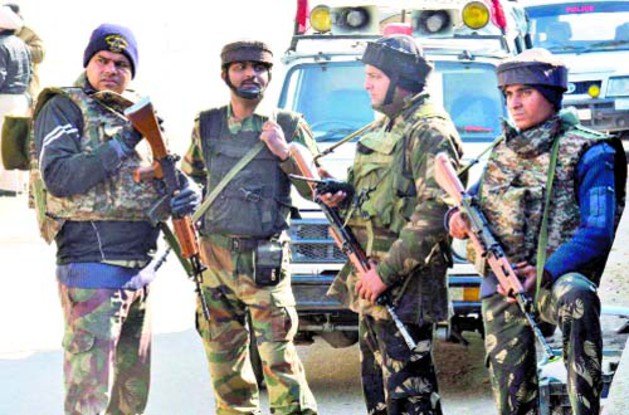
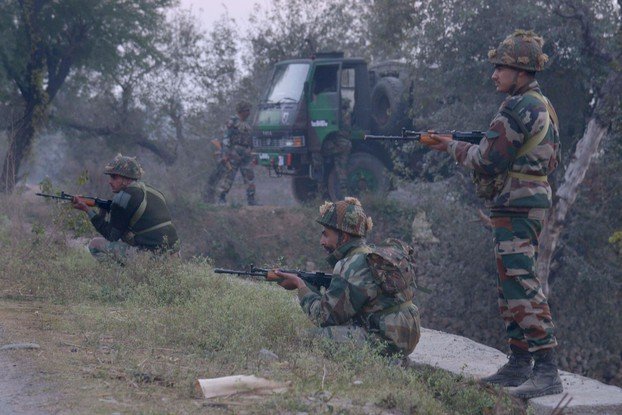
Army personnel stand alert near the Indian Air Force Base in Pathankot on January 2, 2016 during an attack on the base by suspected Jaish-e-Mohammad militants. — AFP

2016_1$largeimg02_Saturday_2016_202721282

2016_1$largeimg03_Sunday_2016_021020355gallery
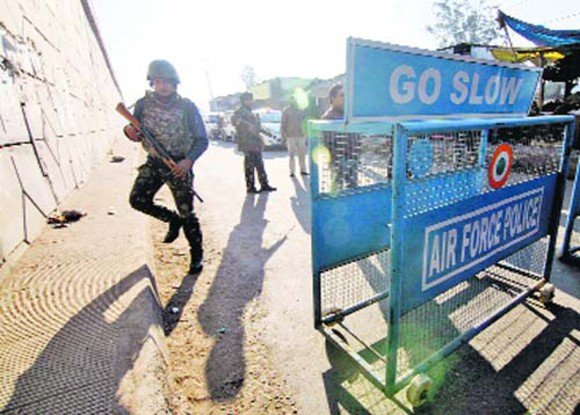
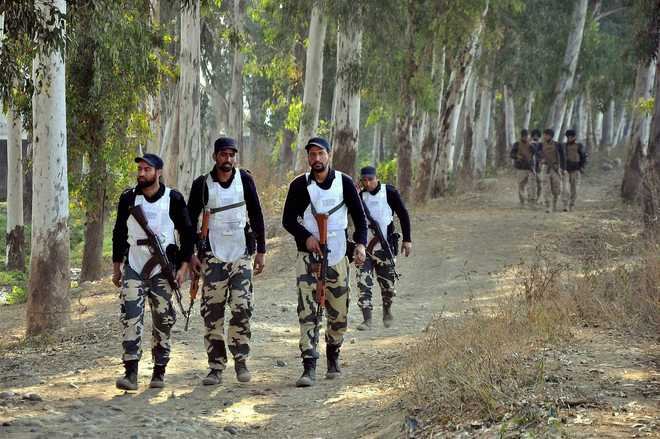
Security personnel stand guard next to a barricade outside the Indian Air Force base at Pathankot on Saturday. REUTERS

2016_1$largeimg02_Saturday_2016_184306144gallery 2016_1$largeimg03_Sunday_2016_021019813gallery 2016_1$largeimg03_Sunday_2016_021020940gallery

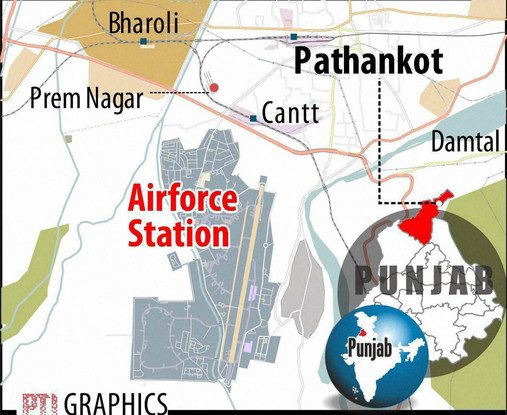
Dressed in army fatigues, a group of five terrorists, suspected to belong to Pakistan-based Jaish-e-Mohammad (JeM), entered the Pathankot Air Force base in the wee hours today and engaged security forces in a fierce gunbattle lasting several hours, before four of them were killed in the morning. The fifth terrorist could be neutralised at only around 7 pm, almost 15 hours after they struck. Punjab DGP Suresh Arora said two Defence Security Corps (DSC) men and an Air Force commando also died in the attack. DSC personnel are retired Armymen who are reemployed to undertake guard duties at static establishments. Earlier reports had put the number of DSC casualties at five. Arora said the terrorists belonged to JeM. The attack took place hours after the Pathankot police and the Army launched a massive combing operation in the area falling between Chakki river and the rear gate of the air base.Yesterday, a Gurdaspur-based SP-rank officer had claimed that five terrorists had kidnapped him at 3 am on January 1, before freeing him and his two acquaintances just outside the rear gate of the Air Force station an hour later. All security agencies had been put on high alert and the elite National Security Guards too had been rushed to Pathankot last night. The security agencies had been working on the theory that the five “Urdu-speaking fidayeen” could be targeting the strategic defence installations in this border city. Search operations were launched for these five suspects by 5 pm yesterday and by 8 pm, the entire city had virtually shut down. The terrorists are believed to have entered the air base from the rear gate and their target was said to be the hangars where combat aircraft, including a MiG-21 squadron and an MI-35 attack helicopter unit, are located. As the ultras snooped their way into the station around 3 am, the Air Force claimed they were detected by aerial surveillance platforms. By 5 am, nearly 300 Armymen were deployed along with Armoured Personal Carriers (APC). The IAF also used choppers for surveillance and engaged the terrorists with aerial firing. An IAF statement said they were contained immediately, preventing them from reaching the technical area. This is the second major attack in a city bordering  Pakistan. In July, three Lashkar-e-Toiba ultras had executed a terror strike in Dinanagar, killing seven people, including an SP-rank officer. Dinanagar is 20 km away from Pathankot.  Senior police officers said the target was to destroy military installations in and around Pathankot. “That is why they did not take the SP  hostage as it would have created a furore. They had bigger plans,” an officer said.

Combing of area to continue today

  • Combing and sanitising operation in the Pathankot Air Force station is to continue on Sunday as well
  • The five terrorists could have used multiple entry points. One was shot dead as he was scaling the 10-metre-high outer wall of the IAF station
  • The area where the terrorists were stopped and engaged in gunbattle houses the administrative complex, canteen, residential quarters, officers’ mess and airmen mess
  • Salwinder Singh, SP (Headquarters) in Gurdaspur till recently, who claimed to have been kidnapped by fiveterrorists on January 1, is being questioned by various security and Intelligence agencies

NSG led from front, cops formed outside cordon

  • In Saturday’s operation, Punjab Police formed the outer cordon, while the NSG commandos took charge. Punjab Police were controlling the surging crowds at the main gate while the NSG collaborated with the Army to execute the counter-attack.
  • Punjab Police had come under fire during the Dinanagar attack for not letting the Army take charge of that operation. Only senior Punjab Police officers were allowed to go inside the encounter site on Saturday. The DGP, Suresh Arora, arrived around 10.30 am.
  • Two attack helicopters and an NSG plane kept hovering over the station through the day.

Hafiz Saeed praises Pathankot attack, warns of escalation

Hafiz Saeed praises Pathankot attack, warns of escalation
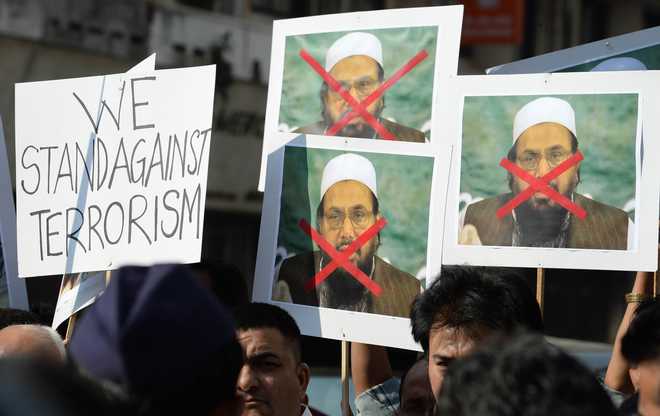
Protesters carry placards of Hafiz Mohammad Saeed, chief of banned Jamaat-ud-Dawa, during a protest against the attack on the Pathankot air base, in Mumbai on January 4, 2016. AFP file

Muzaffarabad, February 4

A Pakistani firebrand cleric has praised the Pathankot air base attack in India last month that threatened to scupper peace efforts between the nuclear rivals.Hafiz Saeed, alleged mastermind of the 2008 Mumbai attacks and leader of the banned Jamaat-ud-Dawa (JuD) group, encouraged further violence following the air base assault in Pathankot that left seven Indian soldiers dead.Addressing a rally of around 1,000 people in the disputed Pakistan-occupied Kashmir region yesterday, Saeed said: “800,000 Indian troops are committing genocide on Kashmiris. Don’t they have a right to carry out Pathankot style attacks for their defence?”Saeed, who remains a free man, also lauded Kashmiri militant leader Sayed Salahuddin, who heads the United Jihad Council (UJC) that has claimed responsibility for the attack.“You have only seen one attack on Pathankot. Matters could easily escalate.”Crowds at the rally shouted slogans including “The war will continue until the liberation of Kashmir” and “We are ready for jihad”.Indian officials believe another group — the Pakistan based Jaish-e-Mohammed (JeM) — was behind the siege.Saeed’s freedom and his frequent calls for jihad against India irk New Delhi, which considers JuD — a UN designated “terror organisation” — to be no more than a front for Lashkar-e-Taiba (LeT), the militant group blamed for the 2008 Mumbai attacks that left 166 people dead. — AFP


Umar Mansoor, Peshawar school plotter, strikes again

Peshawar, January 20

2016_1$largeimg20_Wednesday_2016_232318760

The Tehreek-i-Taliban Geedar group commander who claimed the deadly attack on Bacha Khan University in Khyber Pakhtunkhwa’s Charsadda Wednesday is Umar Mansoor, the de facto operational head of TTP in KP.Journalist Hasan Abdullah tells Dawn.com Mansoor is the faction’s commander specifically in Charsadda, Darra Adam Khel, Noshera and surrounding areas. “He had been very close to Hakimullah Mehsud’s inner circle and was also close to Umar Khalid Khorasani at one time,” says Abdullah.He adds while he is said to have shifted to Afghanistan after Pakistan’s military operation in 2014, Mansoor is reported to have crossed into Pakistan at several points.A Reuters profile titled ‘Pakistan’s most hated man: volleyball player, child killer’ described Mansoor as a 37-year-old father of three and volleyball enthusiast who is nicknamed “Slim”.His real name is Umar Mansoor and is also claimed by TTP to be the mastermind of 2014’s massacre of 134 children and nine staff at a military-run school in Peshawar – the deadliest militant attack in Pakistan’s history.A video posted on a Taliban wesbite after the Army Public School attack showed a man with a chest-length beard, who sought to justify the December 16 attack. The caption identified him as Umar Mansoor. The Taliban said the APS attack, in which gunmen wearing suicide-bomb vests executed children, was retaliation for a military offensive carried out by the Pakistani army. Six Pakistani Taliban interviewed by Reuters confirmed the mastermind was Mansoor. Four of them said he is close to Mullah Fazlullah, the embattled leader of the TTP who ordered assassins to kill schoolgirl activist Malala Yousafzai. Mansoor got a high school education in the capital, Islamabad, two Taliban members said, and later studied in a madrassah. Mansoor has two brothers and spent some time working in the city of Karachi as a labourer before joining the Taliban soon after it was formed, in late 2007, said one commander.His nickname is “naray,” a word in the Pashto language meaning “slim”, and he is the father of two daughters and a son, said another commanders. The Taliban video describes him as the “amir”, or leader, of Peshawar and nearby Darra Adam Khel. Mansoor deeply opposes talks with the government, the commanders said.“He was very strict from the start when he joined,” a commander said. “He left many commanders behind if they had a soft corner (of their heart) for the government.”— By arrangement with the Dawn

Pak’s ‘most hated’ man

  • Umar Mansoor, who claimed the deadly attack on Bacha Khan University in Khyber Pakhtunkhwa’s Charsadda, is the de facto operational head of Tehreek-i-Taliban Pakistan (TTP) in KP province
  • A Reuters profile titled ‘Pakistan’s most hated man: volleyball player, child killer’ described Mansoor as a 37-year-old father of three and volleyball enthusiast who is nicknamed “Slim”
  • He is claimed by TTP to be the mastermind of 2014’s massacre of 134 children and nine staff at a military-run school in Peshawar – the deadliest militant attack in Pakistan’s history

‘Hero teacher’ goes down fighting militants

Peshawar, January 20

2016_1$largeimg20_Wednesday_2016_232533812gallery
A rescuer helps a teacher on crutches walk out of Bacha Khan University in Charsadda on Wednesday. Reuters
2016_1$largeimg20_Wednesday_2016_232156557gallery
Assistant professor Syed Hamid Hussain
2016_1$largeimg20_Wednesday_2016_232159710
Survivors react outside Bacha Khan University. REUTERS

In a heroic act, a Pakistani chemistry professor in his 30s today lost his life while trying to protect his students using his licensed pistol against armed Taliban militants who stormed the university. Assistant professor Syed Hamid Hussain, 34, fought back against the terrorists as he warned students not to leave the building of the Bacha Khan university in Charsadda, some 50 km southwest of Peshawar.Students spoke of the hero teacher, who flashed his pistol but was gunned down by the militants besides 24 others, media reports said. Geology student Zahoor Ahmed said his chemistry lecturer had warned him not to leave the building after the first shots were fired. “He was holding a pistol in his hand,” he said. “Then I saw a bullet hit him. I saw two militants were firing. I ran inside and then managed to flee by jumping over the back wall.” Another student told television reporters he was in class when he heard gunshots.“We saw three terrorists shouting slogans and rushing towards the stairs of our department,” he said as he described seeing the chemistry professor holding a pistol and firing at the attackers. “Then we saw him fall down and as the terrorists entered the (registrar) office we ran away,” said the student.A traumatised sutdent said they saw several young men wielding AK-47 guns storming the university housing where many students were sleeping. They came from behind and there was a big commotion. We were told by teachers to leave immediately. Some people hid in bathroomsPresident Mamnoon Hussain confirmed Hamid was among the deceased and condoled his death.Netizens took to social networking sites like Twitter to hail the lecturer as a “martyr”. “Martyr of #education: Prof Hamid who was killed by terrorists in #BachaKhanUniversity #Pakistan,” tweeted journalist and academic Raza Ahmad Rumi.The official Facebook page of the university also said Hamid was among those killed. Teachers in northwest Pakistan were given permission to carry firearms in the classroom after the Peshawar school carnage of December 2014 in which Taliban militants killed over 150 people, mostly children. — PTI

Hailed as martyr

  • Assistant professor Syed Hamid Hussain, 34, at Bacha Khan university in Charsadda fought back against the terrorists as he warned students not to leave the building after hearing the shots
  • Students said the hero teacher flashed his pistol but was gunned down by the militants. Netizens took to social networking sites like Twitter to hail the lecturer as a “martyr”

OH PAKISTAN !

‘Four shot anyone, everyone they came across’

Peshawar, January 20

2016_1$largeimg21_Thursday_2016_003604917gallery
Victims’ relatives wait anxiously outside a hospital where injured were taken after the terror attack. AP/PTI
2016_1$largeimg20_Wednesday_2016_232017515
Rescuers shift an injured to a hospital following an attack by gunmen in Bacha Khan University in Charsadda, about 50 km from Peshawar, on Wednesday. AFP

Ayat Ibrahim was entering the South Block of the Bacha Khan University on Wednesday morning when she heard the first of the gunshots and huge blasts. Initially, the student, in her late 20s, had no idea that the university, named after the iconic Khan Abdul Ghaffar Khan, was under terrorist attack. It took only a few seconds for Ibrahim to realise the horrific truth.“I saw people screaming and running here and there, and people sprawled on the ground,” the traumatized student told IANS in a telephonic interview from Peshawar.Authorities would later blame the carnage that left 20 people, including students, dead on the Tehreek-e-Taliban Pakistan (TTP), which is at war with the Pakistani state. The TTP too claimed responsibility. “I couldn’t understand what was going on… And I could not see my friend who I had come to see,” she said. The attackers, four in all, opened indiscriminate fire at anyone and everyone they came across. They also hurled grenades, killing or wounding those trying to escape the bloodbath.There were some 3,000 students and staff in the university at the time of the attack besides about 600 guests. They had gathered in the campus for a poetry recital to commemorate the anniversary of Khan Abdul Ghaffar Khan, popularly known as Bacha Khan.Ibrahim was stunned but did what many other students did at the spur of the moment – she ran towards the university buses parked in the vicinity. As the buses began to fill up, the drivers drove away the vehicles out of the campus at top speed, saving numerous lives.Ibrahim told IANS that she had no idea how many people had been killed. But she guessed it would be a large number.Soldiers rushed to the university and engaged the terrorists, triggering gun battles that lasted over five hours.They managed to kill all four attackers. But by then, the university — set up in July 2012 — was badly battered with 20 students, academics and other employees dead and dozens wounded. — IANS

University bus drivers saved many

  • There were nearly 3,000 students and staff in Bacha Khan University at the time of the terror attack,besides about 600 guests. They had gathered onthe campus for a poetry recital to commemoratethe anniversary of Khan Abdul Ghaffar Khan,popularly known as Bacha Khan
  • Ayat Ibrahim, a student, said she was stunned by the attack but did what many other students did at thespur of the moment — she ran towards the universitybuses parked in the vicinity. As the buses began tofill up, the drivers drove away out of the campus attop speed, saving numerous lives

Vice-Admiral Bisht is FOC-in-C of Eastern Command

Vice-Admiral Bisht is FOC-in-C of Eastern Command
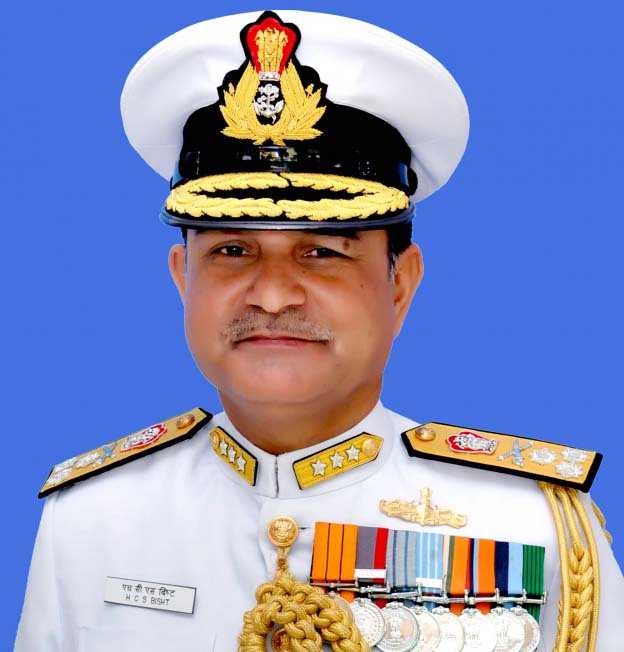
Vice-Admiral HCS Bisht

Tribune News Service

Dehradun, February 23

An former cadet of Sainik School, Ghorakhal, Vice-Admiral HCS Bisht, has been appointed the new Flag Officer Commanding In Chief (FOC-in C), Eastern Naval Command. Bisht spent his formative years in the school from 1967 to 1973.The Vice-Admiral was an alumnus of the National Defence Academy, Khadakvasla, Pune, and the Naval Academy, Kochi. He was commissioned in the executive branch of the Indian Navy on July 1, 1979, and is a gunnery specialist.He is a graduate of the 1992 batch of the Royal Naval Staff College, Greenwich (UK). He also attended the Naval Higher Command Course at the College of Naval Warfare, Karanja, Mumbai, in 2001 and completed the 47th NDC course in New Delhi in 2007.Vice-Admiral Bisht has held numerous important afloat, training and staff appointments which includes commissioning Commanding Officer of the Missile Corvette INS Kora, Commanding Officer of the Stealth Frigate, INS Tabar, and DA at the High Commission of India, Singapore. He is the submarine operating authority under whom Commodore Commanding Submarines (East) operate.Captain Rohit Dwivedi, Principal of Sainik School, Ghorakhal, complimented the Vice-Admiral on this prestigious appointment. He said it was a matter of pride not only for the school but also for the state. He added he was confident that the Vice-Admiral’s achievements would serve as a source of inspiration to the cadets.


Jay Mahakali, Ayo Gorkhali: Indian Army Gorkha jawan’s ‘khukri dance’ – Must Watch

454758-khukri-dance

Field Marshal Sam Manekshaw, once said, “If a man says he is not afraid of dying, he is either lying or is a Gurkha.”

His statement has withstood the test of time. The Gorkha regiment continues to be one of the most decorated of Indian Army units.

The Gorkhas may have made a name for themselves as fearless warriors but there’s one weapon in their armoury that’s as famous – if not more – than the soldiers who carry it.

‘s the Khukri. And, the Gorkhas evolved its handling into an art, even better, into a dance form.

Watch the amazing video:

https://youtu.be/77L7SbX2aGA

http://


JF-17 vs HAL Tejas: New Competitors on the Military Block

SOURCE: THE DIPLOMAT

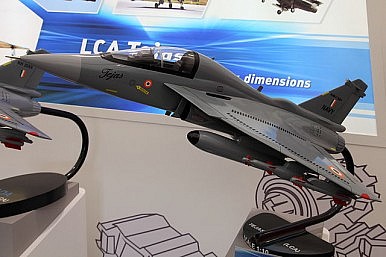
The Bahrain International Air Show slated to be held between January 21-23 at the Sakhir Airbase in Bahrain is supposed to be the first international symposium where India will showcase its indigenously built, but much delayed, Hindustan Aeronautics Limited (HAL) Tejas light combat aircraft. This move, reportedly taken at a “political level,” could place the Tejas as an export option in the future and will expose it to much wider scrutiny over its performance and offerings in the international market.

However, even though this may become an exciting time for the Tejas as a potential option for foreign militaries for their arsenal, it has an interesting competitor from its own neighborhood. The JF-17 Thunder fighter jet, jointly developed by China’s Aviation Industry Corporation of China (AVIC) and its Pakistani partner, Pakistan Aeronautical Complex (PAC), is also now in the export variety with similar attributes to those of the Tejas. In fact, at the Bahrain air show both the Tejas and the JF-17 are quite literally going to be pitted against each other, as they share parking space on the flight line tarmac right next to each other.

The HAL Tejas is still looking for its “carpe diem” moment, as the Indian Air Force, the project’s main beneficiary, has made no qualms in admitting that it is not pleased about the delays over the Tejas Mk II variant of the model that it urgently wants to induct into its fleet. Meanwhile, manufacturer HAL has offered the IAF a Mk 1A variant instead, saying the Mk II variant is not expected to have its first flight before 2019, or enter series production before 2024. On the other hand, the Block 1 JF-17s have already seen service with the Pakistan Air Force, and are now expected to be upgraded to Block 2 standards (which includes mid-air refuel capabilities and improved avionics).

Both India and Pakistan understand the worth of a fighter jet such as the JF-17 and the Tejas in the specific markets where they are likely to compete. The light, maneuverable, low-maintenance and comparatively cheap offerings represented by both variants could find many takers; however the fact that the JF-17 is available for purchase today has already given it a head start, even if its production output remains sluggish. Other countries such as Myanmar, Nigeria and Azerbaijan are known to have shown interest in the JF-17. Both India and Pakistan themselves have operated the MiG 21 (Pakistan as the Chinese license built version Chengdu F-7), one of the world’s most successful, duplicated, and cost-effective combat jets. Like the MiG 21 during its high-sales days, both the JF-17 and HAL Tejas could build customer bases in financially challenging areas such as Africa, Latin America and Southeast Asia, with many states looking for ‘low-end’ solutions to air defense needs.

The JF-17, now a predominantly a “for Pakistan by China” project (China does not operate the type in its military) made recent news after reports suggested that Sri Lanka was interested in purchasing eight JF-17s with further options. News of the deal came as Pakistani Prime Minister Nawaz Sharif made a state visit to Colombo; however, since the visit Indian apprehensions regarding the deal, attempts to sell the Tejas instead, and a recent quick visit by Foreign Secretary S Jaishankar seem to have stalled any such deal, if indeed one was in the making. Sri Lankan media outlets have said that the JF-17 discussion was “not on the table” with Pakistan, while an Indian defense news website has claimed that New Delhi is considering offering upgraded MiG 27s, a type already operated by Sri Lanka, free of cost to the country’s air force.

Even if India has, or in the future does manage to scuttle Sri Lanka’s attempts to procure the JF-17, the fact that it does not have the appropriate variant ready for IAF’s very own needs, let alone international suitors, is a wake up call to the country’s domestic military complex. India’s previous homegrown success story in military aviation, the HAL Dhruv or the Advanced Light Helicopter, also ran into turbulence with its only international military buyer, the South American nation of Ecuador had purchased seven of HAL’s Dhruv ALHs. However, since its addition to the Ecuadorian forces in 2009, four out of the seven helicopters have crashed. Two of the crashes were attributed to pilot error, but the other two were blamed on mechanical faults. Ecuador in October last year unilaterally cancelled its deal with HAL.

The new initiative by Indian Prime Minister Narendra Modi under his government’s flagship “Make In India” program, a drive to uplift India’s manufacturing sector, has accorded great importance to military development. India is currently one of the world’s largest importers of weapons despite having many indigenous flagship military programs, specifically in the aviation sector. However, a concoction of poor project execution, stretched resources, political oversight, and lack of culpability over failed programs have stalled or completely cancelled critical projects like the Intermediate Jet Trainer (IJT), forcing the armed forces to look abroad to plug gaps.

For Make In India to be successful, concrete moves to develop India’s R&D sector and involving the private sector heavily into the fold with pro-market policies will be essential. India has huge potential not only to successfully service its own military needs, but to become an exporter of arms in the extremely competitive global military industrial complex, but only if it applies correct policies, political will, and strategic tact.

While the HAL Tejas remains a proud symbol of Indian industry, the fact that it took nearly three decades for the project to get where it is today should be made into a handbook for the government and associated agencies on how not to botch critical national security projects in the future. As of today, the JF-17 with its operational experience makes more sense for potential buyers. India may have had some influence in Sri Lanka’s interests for the JF-17, but it may not have the same leverage if other neighbors such as Myanmar or even Bangladesh consider the same option.

Kabir Taneja is a journalist and researcher specializing in foreign affairs, energy security and defence.


शहीद ओमप्रकाश की ससम्मान अंत्येष्टि

Posted On February – 22 – 2016

शिमला,22 फरवरी (निस)
ओम प्रकाश की शहादत पर न केवल उसके पिता नेक राम बल्कि पूरे देश को गर्व है। नेक राम का कहना है कि अपने बेटे के अधूरे सपनों को अब वह खुद समाज के सहयोग से पूरा करेंगे और उनकी बेटियों को बेहतर शिक्षा देंगे। जम्मू कश्मीर के पम्पोर में आतंकियों से लोहा लेते शहीद हुए ओम प्रकाश का पार्थिव शरीर आज उनके गांव चिक्खर लाया गया।
उनकी पार्थिव देह चायल स्थित हेलीपैड तक हेलीकॉप्टर से लाई गई जहां से सेना और स्थानीय प्रशासन के अधिकारियों की मौजूदगी में उसे उसके पैतृक गांव चिक्खर लाया गया। शहीद ओमप्र्काश का आज ही उनके पैतृक गांव में पूरे राजकीय सम्मान के साथ अंतिम संस्कार कर दिया गया। इस मौके पर ज़िला प्रशासन की और से एस डी एम ने ओम प्रकाश को श्रद्धासुमन अर्पित किये जबकि सेना की टुकड़ी ने उन्हें सलामी दी। ओम प्रकाश के पिता नेक राम ने दैनिक ट्रिब्यून से कहा कि उनकी अंतिम बार 20 फ़रवरी को ओम प्रकाश से बात हुई थी और उसने 7 मार्च को छुट्टी आना था। ओम प्रकाश इससे पहले जब छुट्टी आया था तो अपना नया घर बनाने के लिए निर्माण का सारा सामान एकत्र कर गया था। इस बीच, राज्यपाल आचार्य देवव्रत और मुख्यमंत्री वीरभद्र सिंह ने लांस नायक ओम प्रकाश की मृत्यु पर गहरा शोक व्यक्त किया है।

जोगेंद्रनगर के राजकुमार राणा आंतकी हमले में शहीद

मंडी (निस) श्रीनगर-जम्मू राष्ट्रीय राजमार्ग पर पम्पोर में सीआरपीएफ दल पर हुए आतंकवादी हमले में जोगेंद्रनगर के कांस्टेबल राजकुमार राणा शहीद हो गये।
सीआरपीएफ में बतौर चालक तैनात कांस्टेबल राज कुमार राणा सीआरपीएफ की रुटीन गश्त पर थे कि आतंकवादी हमले का शिकार हो गये। लगभग 40 वर्षीय राज कुमार राणा की शहादत का समाचार सुनते ही उनके घर में शोक प्रकट करने वाले नाते रिश्तेदारों व अन्य लोगों का तांता लग गया।