All posts by webadmin

Make GST foolproof Shun exogenous considerations to save its spirit

Make GST foolproof

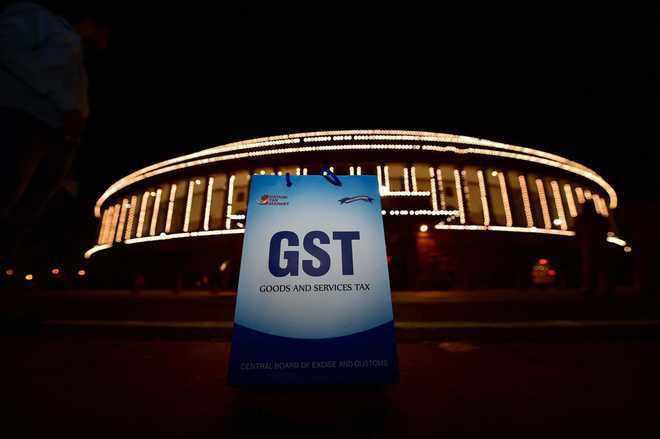
Prime Minister Narendra Modi is on the ball — there cannot be a common GST rate for milk and Mercedes in India where the gulf between the rich and the poor is wide and there are huge income disparities. But all essential goods and services that are consumed by the poor can be easily exempted from GST. For example, all unbranded consumables essential for the living, including milk, should be kept in the zero duty slab. However, branded items, including milk packed in cans and cartons, should attract a higher tax rate. In a poverty-ridden country like India, Mercedes is rightly perceived in the category of sin goods and should fall in the highest tax bracket. Taking into account the socio-economic inequality, there cannot be one tax rate in the country. But, this does not justify multiple tax rates that have made the GST structure complex and convoluted.   Besides standard tax slabs — 0, 5, 12, 18 and 28 per cent — there is an array of tax rates such as special rates for gold (3 per cent), precious stones (0.25 per cent), yacht and aircraft for personal use (3 per cent), cess and so on. After one year of implementation of the GST, the government must try to minimise the tax slabs without “fear and favour” to certain industrialists or industries. For example, items in the 12 per cent and 18 per cent can be easily merged into one slab of 15 per cent without sacrificing any revenue. Similarly, special rates could be assimilated in the main slabs by trimming the lowest rate of 5 per cent by a hundred basis point. Addition of valuable items in the slab will not only raise revenue, but also provide relief to the consumer who is currently paying 5 per cent duty on items like insulin and khakra. Thus, the principle of reasonableness, without pride, prejudice and politics, can easily resolve the problem of tax multiplicity from a reform that was initiated to simplify the complex indirect tax regime.  Admiringly, Arun Jaitley has given hints that tax slabs could be rationalised with the improvement of GST collections. But, it should be the other way around. Tax collection will increase by minimising rates, simplifying procedures and making compliance easier.
ACROSS THE BORDER Pak’s experience with lateral entry

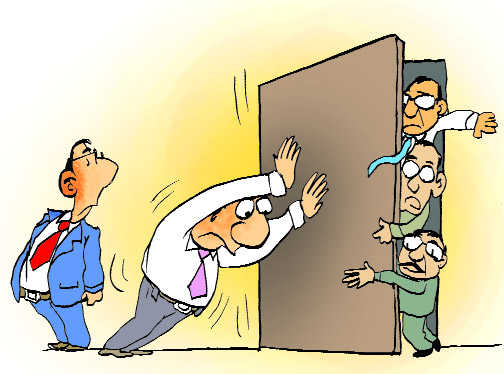
Inviting applications for lateral induction may be an effort to improve governance, but it also speaks volumes about the tension between the political masters and the bureaucracy

Pak’s experience with lateral entry

Illustration: Sandeep Joshi

Ayesha Siddiqa

The Government of India recently invited applications to recruit talented people as lateral entrants at the level of joint secretaries. As per the announcement, the search is for 10 outstanding individuals with expertise in revenue, financial services, economic affairs, agriculture, cooperation and farmers’ welfare, road transport and highways, shipping, environment, forest and climate change, new and renewable energy, civil aviation and commerce. Once selected, these people will be hired on contract for a period of three to five years.While this may be seen as an effort to improve the government machinery, this speaks volumes about the tension between the political masters and the bureaucracy. The system of lateral entry into the service is likely to increase sourness of the relations and may have negative implications for the bureaucracy.  This is indeed a system that is used in Pakistan. There are two methods for lateral inductions in Pakistan. The first method is more structural as there is almost a 10 per cent quota for military personnel to get inducted into certain branches of the civil service, such as administrative services and the police. According to this method, the select number of armed forces officers bypasses the civil service examination by only appearing for the interview. A second method is inducting military personnel or politically favoured civilians into the foreign service at ambassadorial positions. The lesson is that while semi-lateral entry at the juniormost level tends to create less problems as the system of joint training tends to develop a sense of camaraderie, the senior-level inductions are extremely problematic. Bureaucrats already serving in the system tend to feel sidelined, thus, discouraged to work or improve their performance. Notwithstanding the lack of independence of Pakistan’s Foreign Office from the politically powerful army, the lateral entries at senior levels add tremendously to hurting the organizational ethos.Unlike Pakistan’s bureaucracy that was systematically weakened by both military and civil governments alike, the Indian bureaucracy grew as a force to reckon with. Indeed, the civil service was the backbone on which the political class depended, resulting in India earning the title of a civil-authoritarian state. Masters of state’s rules and regulation, the bureaucrats have stuck to their power, a situation that a strong political government seems to want to change. The signal that is sent through this advertisement is that the government is willing to bring in new people to shake the system. The South Asian bureaucracy trained in colonial traditions is indeed not a friend of people. It tends to generate power by complicating matters. However, what is required is a broader structural analysis of the system and its overall re-engineering rather than such temporary changes that are ridden with problem. For instance, it is incomprehensible how a joint secretary would navigate the old guard in a period of three to five years. The time it would take even the most talented person to learn the tricks, the contract would be over. The permanent corps feeling insecure would also tend to create problems for these joint secretaries. Moreover, there would be a temptation for politicians to manipulate lateral entrants,  adding to existing ailments of bureaucracy. If there is one thing that India could learn from Pakistan is how politicisation of bureaucracy, especially in the administrative services, revenue services and police weakens the state rather than strengthening it. The bureaucracy is the backbone of a state that needs to be handled carefully. The strengthening of regulatory frameworks and increasing level of accountability and transparency need to be considered. The colonial bureaucracy had well-trained men who were dedicated to protect interest of the British Crown. The culture has continued which needs to be changed. The process requires the vision of a genius that may be lacking in the Subcontinent at this juncture. The writer is author of Military Inc and research associate SOAS South Asia Institute


BRO help sought to widen Keylong-Killar highway

BRO help sought to widen Keylong-Killar highway

Dipender Manta

Tribune News Service

Mandi, June 28

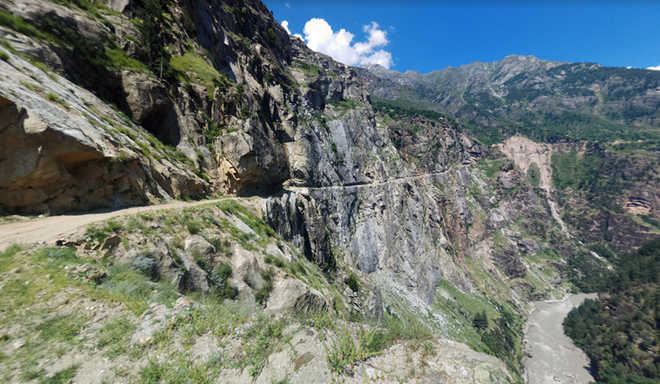
The people of the Pangi region in Chamba district are facing the problem of poor mobility between Keylong in the tribal district of Lahaul Spiti and Killar in Chamba district because of poor road condition. The road is narrow and bumpy due to which Himachal Road Transport Corporation is finding it tough to run its new model buses (star buses) on the route. The star buses are bigger in size as compared to the old buses.Regional Manager of the HRTC at Keylong Mangal Chand Manepa said a trial of 37-seater star bus was conducted on this route. During the trial the roof of the bus got stuck with rock cliffs at several places.Talking to The Tribune, Manepa said, “During the trial of a star bus on this route it was found that the road was not suitable for its plying. At several places the rooftop of the bus got stuck with cliffs on the roadside, which may pose a threat to the commuters for safe traveling. However, when we removed the carrier of the bus the trial was smooth.”“The old model buses are not in good condition but we have adequate number of new model star buses. To facilitate the people of Pangi region with better transportation facility we have urged the Border Roads Organization to widen this road”, he said.A large number of tourists and people from Lahaul and Pangi region use this 140-km-long road for travelling in summer season either to visit Lahaul or Chamba or vice versa.But bad condition of this road makes the journey tedious and risky.The Regional Manager stated that the HRTC wanted to run the 47-seater star bus service on this route to cope up with the rush of passengers provided the BRO develops the road for smooth travel. BRO Commander Colonel AK Awasthi was not available for the comment.Bus trial on the routeRegional Manager of the HRTC at Keylong Mangal Chand Manepa said a trial of 37-seater star bus was conducted on this route. During the trial the roof of the bus got stuck with rock cliffs at several places.


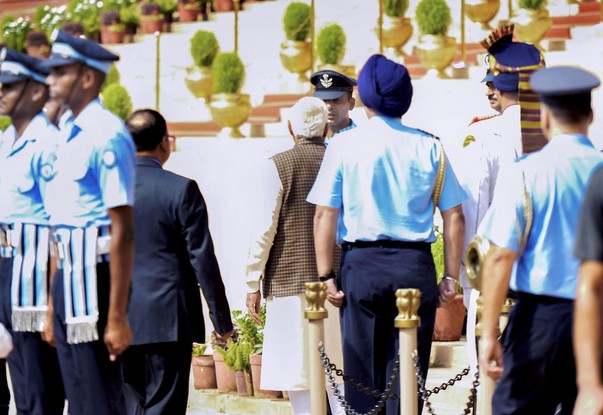
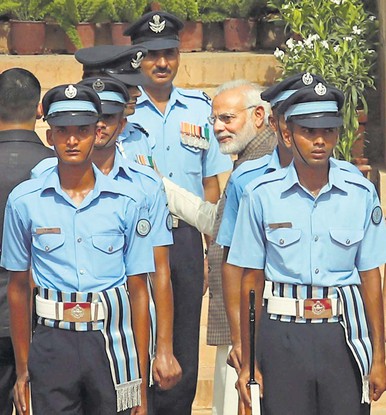
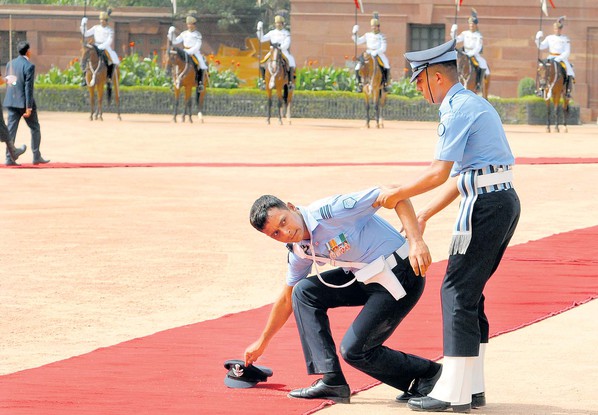
Take care of your health: PM Modi to airman who fainted at guard of honour

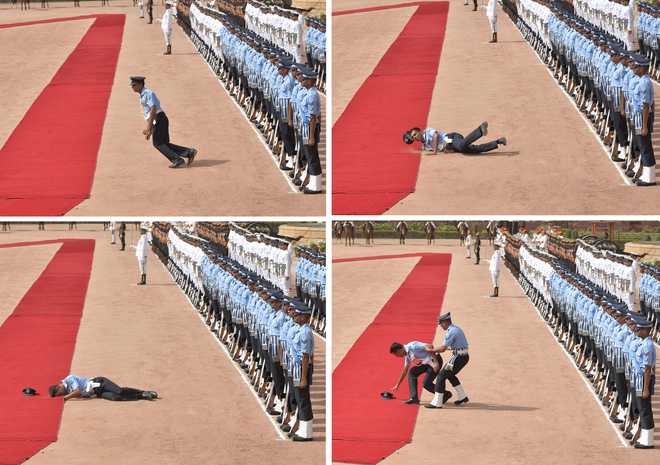
A member of the IAF, on Guard of Honour duty, faints during the ceremonial reception of Seychelles President Danny Antoine Rollen Faure at Rashtrapati Bhavan, in New Delhi on Monday, June 25, 2018. PTI

Prime Minister Narendra Modi interacts with an IAF soldier who fainted while presenting the guard of honour to visiting Seychelles President Danny Antoine Rollen Faure during his ceremonial reception, at Rashtrapati Bhavan in New Delhi on Monday, June 25, 2018.  PTI

New Delhi, June 25

The summer heat took its toll on an IAF personnel who collapsed during the guard of honour ceremony organised at the Rashtrapati Bhavan for visiting Seychelles President Danny Faure.Faure, who is on his first bilateral visit to India, was accorded a ceremonial welcome at the Rashtrapati Bhavan by President Ram Nath Kovind and Prime Minister Modi on Monday morning.After the ceremony ended and the dignitary had left, Prime Minister Narendra Modi walked up to the airman and enquired about his health.Modi asked him to be careful about his health.After spending a few minutes with him, Modi left for his official residence, sources in the Prime Minister’s Office said.The airman had fainted when the guard of honour was being presented to the visiting dignitary. He was attended by his colleagues and others present there. – PTI


Governor takes charge, Centre adopts hard line

KASHMIR CRISIS NIA likely to question Hurriyat leaders

NEWDELHI/SRINAGAR: Security forces are preparing to resume counter-insurgency operations in Jammu and Kashmir and the government is set to mount pressure on the leadership of the separatist Hurriyat Conference, officials said on Wednesday, as Kashmir governor NN Vohra took charge of the state administration and put the assembly under suspended animation.

PTICRPF men stand guard near the Kheer Bhawani temple that was swarmed by devotees for an annual fair in Kashmir’s Ganderbal.

As Jammu and Kashmir came under Governor’s Rule, a day after the state’s nearly 40-monthold coalition government collapsed, home minister Rajnath Singh said that the Centre will not tolerate terrorism any longer, after ending a monthlong halt on counter-insurgency operations.

“Elimination of terrorism and restoration of peace in Kashmir is our biggest target,” Singh said on a visit to Lucknow, a constituency he represents in the Lok Sabha.

He warned militant groups against any misadventure. “Our security forces are ready to foil any such activity,” said

Singh.

President Ram Nath Kovind gave his assent to Governor’s Rule in the state on Wednesday, a day after the Bharatiya Janata Party (BJP) ended its alliance with the Peoples Democratic Party (PDP), forcing chiefminister Mehbooba Mufti’s resignation.

Governor Vohra made the recommendation in a report he sent to the home ministry on Tuesday night.

On Sunday, the Centre ordered security forces to resume counter-insurgency operations in J&K, ending a month-long halt for the Islamic holy month of Ramzan.


Day 1: Governor reviews security, wants strong response to terror

Day 1: Governor reviews security, wants strong response to terror

Governor NN Vohra chairs a security review meeting in Srinagar on Wednesday. Tribune photo

Tribune News Service

Srinagar, June 20

Governor NN Vohra reviewed a wide range of security management issues relating to the state with senior civil, police, Army and Central intelligence agency officers in a meeting held at Raj Bhawan here on Wednesday.The meeting also reviewed important security issues related to the annual Amarnath yatra which is scheduled to commence on June 28, and identified certain issues to be dealt with on an urgent basis.Referring to a recent incident, the Governor stressed the need for prompt action being taken to ensure the safety and security of people at large by making full use of all available technologies.While reiterating the importance of maintaining constant surveillance of the ground situation, the Governor directed that immediate action must be taken on reports received from any quarters regarding any problem arising from security management. He directed the Chief Secretary to closely monitor and ensure prompt redressal of all difficulties and grievances relating to the felt needs of people and, besides, see that there was no delay in the implementation of welfare measures and developmental works on the ground.The Governor stressed the need of a cohesive action being taken to enforce constant vigil on the International Border and Line of Control, effectively maintaining internal security and ensuring the safety of protected persons, sensitive establishments and installations. In this context, he asked representatives of all the security forces and agencies to identify all existing gaps and ensure coordinated action on the ground for providing prompt and strong counter terror responses on all fronts.The meeting was attended by Lt Gen Ranbir Singh, Northern Command chief; BB Vyas, Chief Secretary; SP Vaid, Director General of Police; Umang Narula, Principal Secretary to the Governor; RK Goyal, Home Secretary; Muneer Ahmad Khan, ADGP, Home Guards and Security; and senior officers of the Central intelligence agencies.Resolve grievances of people: Vohra  The Governor directed the Chief Secretary to closely monitor and ensure prompt redressal of all difficulties and grievances relating to the felt needs of people and, besides, see that there was no delay in the implementation of welfare measures and developmental works on the ground. The Governor stressed the need of a cohesive action being taken to enforce constant vigil on the International Border and Line of Control, effectively maintaining internal security and ensuring the safety of protected persons, sensitive establishments and installations.

Yatra security reviewed

The meeting also reviewed important security issues related to the annual Amarnath yatra which is scheduled to commence on June 28, and identified certain issues to be dealt with on an urgent basis. The Governor stressed the need  to ensure the safety and security of people. 


Aurangzeb’s killing leaves family traumatised; yet spirit to serve country remains intact

Salani (Poonch), Jun 17 (PTI) Their beloved Aurangzeb did not return home for Eid, abducted and killed as he was by terrorists, but as they struggle to come to terms with their grief, the resolve of the deceased rifleman’s family to serve the country’s armed forces has only strengthened.

“My son has laid down his life for the country. He was a brave soldier. I and my sons will also sacrifice (ourselves) for the nation. We want goons to be wiped out,” said Mohammad Hanief, Aurangzeb’s father and a former Sepoy of the Jammu and Kashmir Light Infantry.

Youngest of Aurangzeb’s four brothers, 15-year-old Aasim eagerly awaited the rifleman’s return on Eid with all the gifts including his much needed cricket bat. But what transpired has left Aasim shaken to the core. But still, it has not shaken his will to join the Army.

Aasim was on the phone talking to Aurangzeb, when the latter was abducted.

“My brother (Aurangzeb) was on his way to Poonch in a private vehicle. He was talking to me. I heard a shout ordering the vehicle to stop. I thought there was some checking. I never imagined militants were kidnapping my unarmed brother,” he said.

Aurangzeb of 44, Rashtriya Rifles, was abducted and killed by terrorists in Pulwama district when on way home for Eid. He had been part of Major Rohit Shukla’s team that gunned down Hizbul Mujahideen terrorist Sameer Tiger.

The Army jawan had boarded a private vehicle in Shopian for Rajouri. Terrorists intercepted the vehicle as it approached Kalampora and abducted the jawan. His bullet-riddled body was found at Gussu village, about 10 km from Kalampora, in Pulwama district.

Aurangzeb had talked to me on mobile and promised to bring new clothes and gifts including a cricket bat, Aasim said. “But he did not come rushing and as usual hugged me. He came in a coffin. I do not need any gift of clothes but only my brother. They killed an unarmed person,” the young boy cried.

But, despite the immeasurable loss, his spirit remains unbroken.

“I will join Army like my brothers and father,” Aasim said. For residents of Aurangzeb’s native Salani hamlet, joining the forces is a way of life.

As the coffin, carried by Army jawans and officers on a serpentine track from Sagra army helipad to reached village Salani, Aurangzeb’s parents, Hanief and Raj Bi, brothers, Mohmmad Kasim, Tariq, and five sisters wept bitterly.

Thousands from the area had gathered and shouted patriotic slogans.

I give PM Modi 72 hours to avenge my son’s death or else we are ready to take revenge on our own. Kashmir is ours. We must not let Kashmir burn. Instead, we must eliminate the goons who are destroying the Valley, Hanief said.

In a video, widely seen on social media, an emotional Hanief can be seen asking why Pakistani flags were being waved in Kashmir.

Kashmir is ours. Why is Pakistan’s flag flying in Kashmir? Why not the Indian flag? The Indian flag should be hoisted here, Hanief says in the video.

“The State government does not allow Army to work on anti militancy operations. They (Army) would teach stone-pelters and militants a lesson if they are given free hand to work. But this government does not allow them,” Hanief is heard saying. PTI AB ADS ADS


Soldier, 2 militants killed; Bandipora ops continue

Soldier, 2 militants killed; Bandipora ops continue

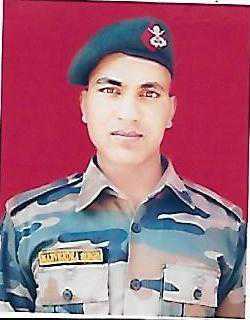
Rifleman Manvendra Singh

Majid Jahangir

Tribune News Service

Srinagar, June 14

A soldier of the Army’s counter-insurgency unit and two unidentified militants were killed in a gunfight in north Kashmir’s Bandipora district where security forces are battling a group of highly motivated militants from the past five days.The gunfight broke out in the wee hours at Panar forest in Bandipora, over 60 km from Srinagar, where a massive combing operation has been underway since June 9.“In the ongoing operation, two terrorists were killed and one Army soldier was martyred,” Srinagar-based defence spokesman Col Rajesh Kalia said.The operation, he said, was still in progress. The identities and group affiliation of the slain militants could not be established immediately.Defence sources, giving details about the operation, said militants ambushed an Army patrol of the 14 Rashtriya Rifles in the Bandipora forest area in the wee hours in which Rifleman Manvendra Singh got injured.“He was airlifted to the Army’s 92 Base Hospital in Srinagar, but was declared brought dead on his arrival,” a source said. “The militants fled after the ambush, but Army men chased them and in the gunfight that followed, two terrorists were killed,” the source added.The ongoing operation has been termed as a “difficult one” by the defence sources. “Primarily, it is a difficult operation and militants are still hiding in the jungle. There are some pockets where there is civil population and we are combing the area very carefully,” a defence official said.The massive anti-militancy operation in Bandipora was launched last Saturday to track down a group of freshly infiltrated militants which was hiding in the area.Prior to Thursday’s gunfight, security forces and militants have exchanged fire at least six times in the large forest area over the past five days. But each time, the militants had managed to give the forces the slip. The Army, however, has maintained a tight cordon around the forest to ensure that militants don’t manage to escape.The first contact with the militants was established on Saturday evening when an Army patrol was fired upon by militants. The fire was retaliated and the exchange of fire lasted briefly.

Combing underway

  • A gunfight broke out inthe wee hours at Panar forest in Bandipora, over 60 km from Srinagar, where a massive combing operation has been underway since June 9.
  • In the ongoing operation, two terrorists were killed and one Army soldier, Rifleman Manvendra Singh of Kabiltha village in Uttarakhand was martyred.

From the brink of death, to a gentleman cadet

DEHRADUN: When 27-year-old gentleman cadet (GC) from Tamil Nadu Rajshekhar was commissioned, from the Indian Military Academy as Lieutenant in the Indian army here on Saturday, it was no less than a miracle. Not too long ago, doctors at the Dehradun military hospital ruled out his chance of survival as he had suffered multiple organ failure after collapsing during a routine drill in the academy.

VINAY SANTOSH KUMAR/HT■ Tamil Nadu’s Rajshekhar after the passing­out parade in Dehradun.

“I suddenly collapsed due to dehydration during the pahla kadam exercise in which cadets were required to run a distance of 10km with heavy loads on their back,” Lieutenant Rajshekhar recalled. Doctors said his kidney and liver had suffered 70% damage. He had to be confined to hospital for 40 days.

“I was admitted at the hospital’s intensive care unit (ICU) for 18 days and at the high dependency unit (HDU) for 22 days. Doctors clearly told my trainers that I won’t survive,” Rajshekhar said. In fact, the IMA was abuzz with rumours of his death as two GCs had already died that year while doing the exercise.

When he started recuperating, doctors advised him to quit the course citing his medical conditions. Even his mother and brother gave him a similar advice. “I was not prepared to give up. After being discharged from the hospital, I started working out in the gym for four hours daily and it paid. I not only survived, but became fit enough to complete the course in time,” he said. “My company commander and platoon commander gave me invaluable support while I was in hospital,” he added.

At the passing out parade, he got the best motivator award for his never say die attitude. Hailing from Maidanbatti, a small village in Madurai district of Tamil Nadu, Lieutenant Rajshekhar learnt to fight against all odds as a teenager. He lost his father in 2005, when he was in Class 10. To support the family, his mother, Santhi, took up tailoring jobs as both Rajshekhar and his brother were in school at that time. “It was not an easy journey till this day. It was full of hardships and struggle, but I never gave up as I was determined to achieve my dream of serving my country,” the army officer said.

He got his first posting, attached with the 12 Assam Rifles, in Siachen, the world’s highest battlefield.

“It’s nothing compared to the medical conditions I fought and survived,” the army officer said as he’s gearing up to take up the new challenge


Among army’s new officers’ sons of postman, carpenter

DEHRADUN: Four hundred and fifty seven gentlemen cadets, including 74 from seven friendly countries, attended the passiong out parade at the Indian Military Academy here Saturday. The parade is the last step before they are commissioned as Lieutenants in the Indian Army. Among those who are set to don the olive green are some who battled several odds.

L Surchandra Singh is the son of a carpenter from Manipur, Rangat Singh is the son of a contractual postman in Jammu and Kashmir and Indrajit Chougule is the son of a school teacher from Maharashtra.

Surchandra said, “I worked hard to achieve my dream to join Indian Army. After performing good in studies in my school, I pursued rest of schooling in Jawahar Navodaya Vidyalaya in my district.“Then I joined NDA in Pune and from there IMA. My parents are proud of me today,” said Surchandra whose father works as a carpenter in Thoubal district of Manipur. He said he was the only man in his village to join army. Rangat Singh said, “My father is a postman on contractual basis. It was not an easy life for us as he had to feed a family comprising me, my mother and my elder & younger brothers. I did my schooling from government school in Jammu.”

After completing his education, he said he joined Indian Air Force (IAF) as corporal but was not getting that excitement in the job with the IAF. Singh was present at the event with his family and wife with whom he got married in December, 2017.

“I was not getting that zing in IAF, so decided to give a shot to IMA and got selected. Now, when I am an army officer, I want to live my life to the fullest while serving my country,” said Singh while smiling towards his wife Vaishali. Chougule, son of a government school teacher in Maharashtra, shared a similar story.

He said as a pass out of Sainik School, it was obvious for him to join the army. “Despite the humble background, my parents always supported me in pursuing my dream and today they are proud of me for which I am grateful,” he said.