All posts by webadmin

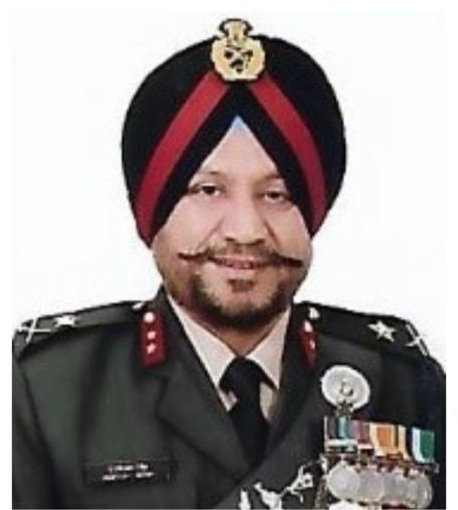
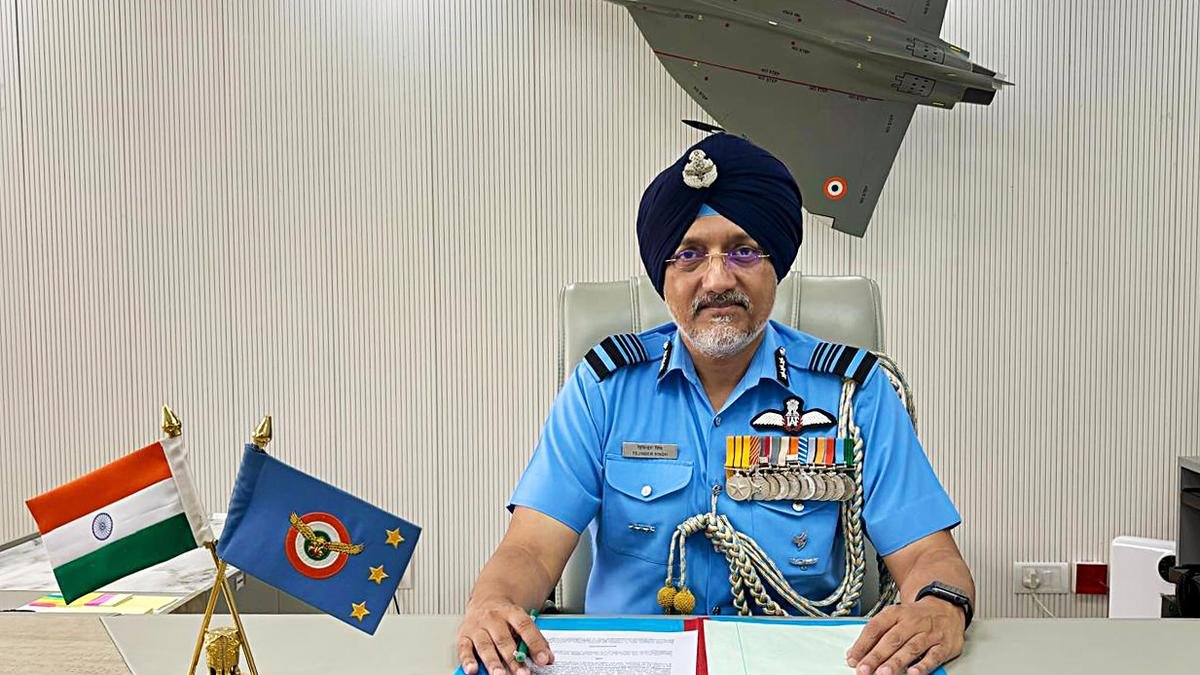
General Dalbir Singh, COAS on commencement of#ArmyCommanders’

 Conference today addressed the Army Commanders. He stressed upon the necessity of maintaining a very high degree of vigil & operational preparedness along the disputed borders, speeding up of Army’s Modernisation & Capability Development Initiatives and monitor & maintain internal health, values & ethics in all formations and units. The Conference will culminate on 30 April 2016. #COAS

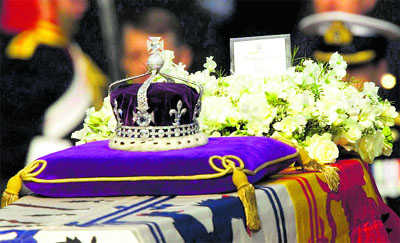
How Duleep Singh ‘handed’ it to the Queen

Priya Atwal
A treaty, which the young Sikh royal had no choice but to sign, read, “The gem… shall be surrendered by the Maharajah of Lahore to the Queen of England.”

At a Supreme Court hearing on the Kohinoor issue on Monday, Solicitor-General Ranjit Kumar surprisingly stated on behalf of the Culture Ministry that “the diamond was neither stolen nor forcibly taken away”. Instead, Kumar claimed, the stone had been “gifted” to the East India Company by the former rulers of the Punjab. The Supreme Court justices themselves then cautioned Kumar, advising that such a stance would threaten India’s ability to later stage any further claim to the diamond. This appears to have prompted the government to issue a new statement on Tuesday evening, in which it was asserted that their views had “not yet been conveyed” and that the Solicitor-General had merely “informed the honourable court about the history of the diamond”. How could the Solicitor-General come up with his narrative, which is dramatically at odds with the records of Punjabi history.One document in particular sealed the fate of Maharaja Duleep Singh, the Sikh Empire and the Kohinoor diamond in one fell swoop: the 1849 Treaty of Lahore. This treaty was presented to the Maharaja to sign after the Second Anglo-Sikh War of 1848-9, at a moment when an anti-British rebellion by Punjabi soldiers and ‘sardars’ had been clinically suppressed by the Company. This was a rebellion in which the boy king had himself played no part, but for which he was made to suffer the consequences, as the then Governor-General, Lord Dalhousie, had decided that he would no longer allow the troublesome nature of Punjabi independence to thwart British imperial ambitions in India. Dalhousie’s Secretary, Sir Henry Elliott, was duly dispatched to Lahore at the end of the war, and he told Duleep Singh and his courtiers that they were to sign away the kingdom without hesitation, or face much harsher consequences.The treaty presented by Elliott to the boy Maharajah included clauses for the takeover of the Punjab and all its state property by the Company, as well making provisions for a life pension for Duleep Singh and his family. It also featured a distinct clause about the Kohinoor, which read thus: “The gem called the Koh-i-Noor, which was taken from Shah Sooja-ool-moolk by Maharajah Runjeet Singh, shall be surrendered by the Maharajah of Lahore to the Queen of England.”If the Kohinoor was intended as a gift by the Maharajah to Queen Victoria, the use of the term “surrender” in this document would certainly suggest that it was given unwillingly, to say the least. It would even seem that the British Queen herself was aware of Duleep Singh’s sensitivity on the issue – as can be seen from an account written by Lady Lena Login (wife of the Maharajah’s guardian, Sir John Spencer Login), who was present when Duleep was briefly reunited with his lost gem at Buckingham Palace, in the summer of 1854.Lena Login wrote in her memoirs that the subject of the Kohinoor was deliberately not mentioned in Duleep Singh’s presence, since it was a painful reminder of the loss of his dynasty’s imperial sovereignty. However, the matter was brought up by the Queen soon after her first meeting with Duleep Singh, when she privately asked Lady Login whether “the Maharajah ever spoke of the Kohinoor, and if so, did he seem to regret it?” The Queen offered to show him the diamond once again, thinking that it might please her new Indian friend, but only after it had been ascertained by the Logins that it would not provoke an awkward or angry reaction from him.A few days later, Lady Login stood spectator with great trepidation when the Queen surprised the Maharajah during his portrait sitting at the palace, bustling into the room with the diamond and several Beefeaters in tow. In a tale that is now famous, Duleep Singh reportedly trembled as he took the precious stone in his hand, gazing at it intensely and noting how it sparkled much more than before, but was also much smaller to hold since Prince Albert had ordered its re-shaping. Lady Login recorded her fear that he would hurl the jewel out of the window in a fit of rage, but this quickly melted into relief when, instead, the Maharajah turned and bowed low before the Queen, “expressing in a few gracious words the pleasure it afforded him to have this opportunity of himself placing it in Her hands.”Perhaps this is what the Solicitor General is referring to as the “gifting” of the Kohinoor. However, the existence of a treaty and the presence of royal guards surrounding the Maharajah surely make it clear that this was far from a free-willed act, despite his dignified and magnanimous approach. What other choice did he really have?One wonders what good a relatively narrow debate over a wretched stone could provide for healing the long-lasting wounds inflicted by British imperialism on South Asia; but if we are going to have one, let our legal authorities at least do their history homework before getting on with it.The writer is reading for a DPhil in History on nineteenth-century Anglo-Indian royal relations, at Lady Margaret Hall, Oxford.


China firm on Azhar stand Doval in Beijing to discuss boundary issue today

Beijing, April 19

China today maintained that its decision to block the bid to get JeM chief Masood Azhar banned by the UN was in accordance with “facts and relevant resolutions”, a statement that came a day after two senior Indian ministers raked up the issue with their Chinese counterparts.China was in “sound communication” with all relevant parties, including the Indian side over the Azhar issue, Chinese Foreign Ministry spokesperson Hua Chunying said ahead of the crucial boundary talks tomorrow between National Security Adviser Ajit Doval and his Chinese counterpart Yang Jiechi. Doval arrived in Beijing this evening.As both External Affairs Minister Sushma Swaraj and Defence Minister Manohar Parrikar raised the Azhar issue strongly yesterday in their talks with their counterparts asking China to review its stand, Hua once again reiterated that Beijing’s decision was in accordance with “facts” and “relevant” UN resolutions.“As for the listing matter, China has already expressed its position. We support the UN central coordinating role in the world campaign against terrorism and China has taken active part in the world cooperation against terrorism,” Hua said.“We oppose double standards in counter-terrorism campaign. We have been dealing with the listing matter in accordance with the facts and relevant resolutions. We are also in sound communication with all relevant parties including the Indian side,” she said. China’s assertion came in the backdrop of Swaraj’s remarks at the Russia-India-China (RIC) foreign ministers meet in Moscow where she warned the international community of “serious consequences” if it continues to adopt “double standards” in dealing with terrorism.China’s “hidden veto” in blocking India’s bid to get Azhar banned by the UN has cast a shadow on the Sino- India boundary talks beginning here tomorrow. While Swaraj raised the Azhar issue with Chinese Foreign Minister Wang Yi in Moscow, Parrikar said he took up the matter with top defence officials yesterday. — PTI


Rafale deal: French team likely to visit India next month

Rafale deal: French team likely to visit India next month
The sources said the price for 36 Rafales, as per the UPA tender, keeping the cost escalation and dollar rate in mind, comes to a little over Rs 65,000 crore.

New Delhi, April 17

A high-level team from France is expected to arrive here next month to firm up the order for the purchase of 36 Rafale fighter aircraft by India as both countries have managed to narrow down their differences over pricing.

The development comes nearly four months after Prime Minister Narendra Modi and French President Francois Hollande signed a memorandum of agreement to purchase 36 Rafale combat jets.

The Indian side has been negotiating hard to bring down the price with Defence Minister Manohar Parrikar refusing to buckle under pressure even as questions were being raised about the delay in signing the contract.

The deal comes with the clause of 50 per cent offsets, which will be a bonanza for the domestic industry as it will lead to business worth at least 3 billion Euros and creating new jobs in India.

The tough part of the negotiations that began in July 2015 was to get the French side to agree to 50 per cent offsets in the deal.

Initially, Dassault Aviation, makers of Rafale, was willing to agree to reinvest only 30 per cent of the value of its contract in Indian entities to meet the offset obligations.

The French side finally agreed to invest 50 per cent of the value following a phone conversation between Modi and Hollande late last year.

The commercial negotiations, as in the pricing of the planes, equipment and other issues, actually began only in mid-January this year.

“It is correct to say that differences over pricing as more or less being settled. A final deal should take place next month if all matters go as scheduled,” a defence source said.

Government sources said the deal has not been concluded yet but it is in “final stages”.

The sources said the price for 36 Rafales, as per the UPA tender, keeping the cost escalation and dollar rate in mind, comes to a little over Rs 65,000 crore.

This includes the cost involved in making changes India has sought in the aircraft, including Israeli helmet mounted display and some specific weaponry, among others.

“The effort is to bring down the price to less than Euros 8 billion (Rs 59,000 crore),” the sources said.

The expectation is that the final deal will be clinched by May-end.

Under the proposed deal, French companies, apart from Dassault Aviation, will provide several aeronautics, electronics and micro-electronics technologies to comply with the offset obligation.

Companies like Safran and Thales will join Dassault in providing state-of-art technologies in stealth, radar, thrust vectoring for missiles and materials for electronics and micro-electronics. — PTI


Rs 59,000 cr Rafale jet deal finalised for :36 Rafales

€7.89-bn Rafale jet deal finalised
A French Rafale fighter aircraft. AFP file photo

36 Rafales for Rs 59,000 cr

Ajay Banerjee

Tribune News Service

New Delhi, April 15

India has finalised the Rafale fighter jet deal to purchase 36 jets from Dassault Aviation of France after negotiating teams from either side narrowed down their differences.

India has agreed to pay 7.89 billion euros (nearly Rs 59,000 crore) for the deal, top sources have confirmed. The Indian team has managed to bring down the deal price by nearly 11 billion euros.

This comes four months after Prime Minister Narendra Modi and French President Francois Hollande signed a memorandum of agreement (MoU) to purchase the 36 jets.

It was earlier expected that the final deal would be clinched in another month’s time by the middle of May.

The delivery of first of the jets will be made some 18 to 20 months later. The Indian Air Force (IAF) needs new fighter jets since its fleet of fighter jets is at its lowest in a decade.

The deal comes with the clause of delivering 50 per cent offsets that will create business worth at least Rs 22,000 crore for Indian companies.

French companies will provide several aeronautics, electronics technologies under the offset obligation to Indian companies. French companies Safran and Thales will join Dassault in providing radars, thrust vectoring for missiles and materials for electronics.

Sticking points gone

  • 11 bn euros Price brought down by Indian negotiators
  • 22,000 cr business for Indian firmsthrough 50% offsets in deal
  • Oct 2017 delivery of the firstbatch of jets to start

Cool comfort Keep your home naturally cool this summer by following a few simple steps

Sukhmani

As the temperature rises this summer, so does the cost for cooling your home. So this time, try using the air-conditioner less and cool your homes naturally by following a few simple tips. Fundamentally, the idea is to minimise sources of heat and remove built-up heat from inside.n Keep the sun out. Keep the house closed during the day. Don’t let in unwanted heat and humidity. Ventilate at night, either naturally or with fans.n Install outdoor window drapes and awnings, especially on windows facing the sun (east-facing windows in the morning and west-facing windows in the afternoons). Use insulated window films.n Up to 30 percent of unwanted heat comes from your windows, so utilising shades, curtains and the like can save you up to 7 percent of your bills and lower indoor temperatures by up to 10 degrees.n Install white window shades, drapes or blinds to reflect the heat away from the house.n Get rid of internal heat. The most common sources are appliances, electronic devices and lighting. Be aware from where the heat is coming. Now if you have air-conditioning, use it wisely. Don’t put lamps, televisions or other heat-generating appliances next to your air-conditioning thermostat because the heat from these appliances will cause the air-conditioner to run longer. The heat they produce will make it think your house is warmer than it really is, and your system will run harder than it needs to.n You should also try to avoid heat-generating activities, such as cooking, during the hottest part of the day. If you are cooking, use your range fan to vent the hot air out of your house. By reducing the amount of heat in your home, you will have to use less energy to cool it.n Paint your roofs with a specially formulated reflective white paint. This will help keep the house cool.n Humidity makes the room air feel warmer, so reduce indoor humidity. Minimise mid-day washing and drying clothes, showering, and cooking. And when you must do these things, turn on ventilating fans to help extract warm, moist air.n Along with the ceiling fans, use portable fans as well. Remember that even a mild air movement can make you feel 3 to 4 degrees cooler. Try a simple trick – fill a mixing bowl with ice (or something equally cold, like an ice-pack) and position it at an angle in front of a large fan, so that the air whips off the ice at an extra-chilled, extra-misty temperature. Trust me: it’s magic!n Switch to cotton sheets in your bedroom. Cotton is a smarter move this time of the year, as it breathes easier and stays cooler. And as an added bonus, buy yourself a buckwheat pillow or two. As buckwheat hulls have a naturally occurring air space between them, they won’t hold on to your body heat like conventional pillows do.n Temperature sometimes drops early morning and late evenings. When that happens, open up your windows and let the cool air in.n Ditch the incandescent lights. Incandescent bulbs waste about 90 percent of their energy in the heat they emit, so tossing them out will make a small difference in cooling your home while lowering your electric bill.n Avoid landscaping with lots of un-shaded rock, cement, or asphalt on the south or west sides because it increases the temperature around the house and radiates heat to the house after the sun has set. Plant shade trees around the house.


With wit and charm, Duke and Duchess floor Delhi

NEW DELHI: “I’m here in my status as a groupie,” said the seasoned African diplomat as she stood in the long queue of people waiting to greet Prince William and his wife Katherine Middleton.

AJAY AGGARWAL/HT PHOTOBritain’s Prince William and the Duchess of Cambridge, Katherine Middleton, during their visit to the India Gate on Monday.That summed up the tone of the reception organised at the British high commissioner’s official residence on Monday evening for the Duke and Duchess of Cambridge. The invitation letter stated “No photographs please” but that didn’t deter those in the queue from whipping out their smartphones as the royal couple emerged from high commissioner-designate Dominic Asquith’s residence. There were few complaints from the men and women, attired in heavy saris and dark suits, even though they had waited from almost an hour-and-ahalf to get a glimpse of the couple.

Prince William, second in line to succeed his grandmother, Queen Elizabeth, and a pilot in the Royal Air Force, stopped at the head of the queue to speak to an aviator from the Indian Navy. What he was most interested in knowing was what sort of aircraft the officer flew.

The soundtrack was a curious amalgam of folk music by a troupe from Rajasthan and brass-laden tunes from the James Bond movies by the Royal Air Force band. Many tapped their feet as the music shifted from “Dama Dam Mast Qalandar” to the theme from “You Only Live Twice”.

Prince William endeared himself to the audience when he made a brief speech at the event, which also was a celebration of Queen Elizabeth’s 90th birthday next week. “It’s important that everyone here tonight understands that I’m here as the Queen’s representative. She may be my grandmother but she’s also very much the boss,” he said, drawing peals of laughter.


NIA issues warrants against Masood

NIA issues warrants against Masood
Masood Azhar

New Delhi, April 8

A National Investigation Agency (NIA) special court in Mohali today issued arrest warrants against Pakistan-based Jaish-e-Mohammed (JeM) chief Masood Azhar and three others wanted in January’s Pathankot air base attack case.“In the Pathankot terror attack case, the judge of the NIA special court issued arrest warrants against the accused wanted in the case — Maulana Masood Azhar, Abdul Rauf, Kashif Jan and Shahid Latif,” said SK Singh, Inspector General, NIA, who is heading the probe into the attack.On March 28, when the talks between the NIA and the Pakistan Joint Investigation Team (JIT) on the probe began, the Indian agency had shown the JIT evidence of the Pakistan link, including the involvement of the JeM in the attack. — TNS

In touch with India on JeM chief: China

  • China says it is in “contact” with India over Beijing’s decision to block New Delhi’s move to ban Pathankot mastermind Masood Azhar. A Chinese official said: “China remains in contact with all relevant parties, including India on this matter… China opposes all forms ofterrorism.” PTI

  • 04f98bcc-bf52-4755-89c8-3786f46fc044 63542

India 6th biggest military spender in ’15: SIPRI

short by Nihal Thondepu / 12:21 pm on 08 Apr 2016,Friday
The Stockholm International Peace Research Institute (SIPRI) has ranked India 6th in its biggest military spenders list for 2015. SIPRI’s study found that India’s military expenditure was $51.3 billion last year. The United States topped the list with military expenditure of $596 billion. Notably, another study had recently ranked India as the world’s fourth largest military spender.